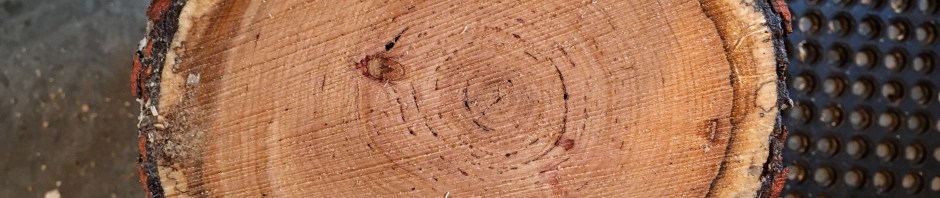
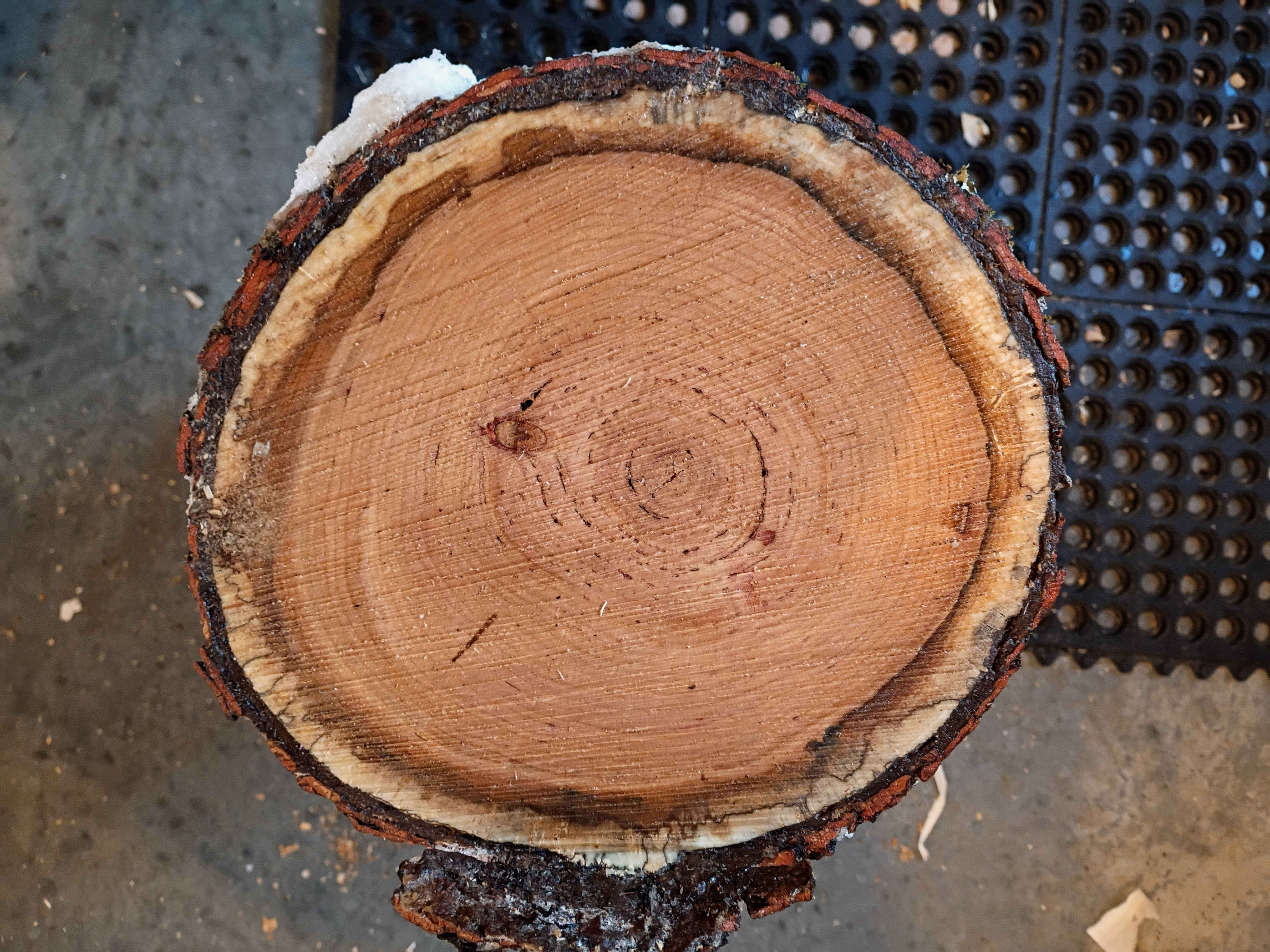
Between the holidays and other things, I was a little out of rhythm in the workshop for a while. But this past week, I made some progress on several projects, including the prep work for some cherry bowls. The cherry tree (Prunus serotina) had fallen a few years ago and had been undisturbed since. The bark was still intact. Anticipating the coming deep snow, I cut a couple lengths from it and was happy to find the heartwood in great shape, and green. The sapwood is toast, but the decay stopped dead in its tracks at the heartwood, right at that thin dark ring.
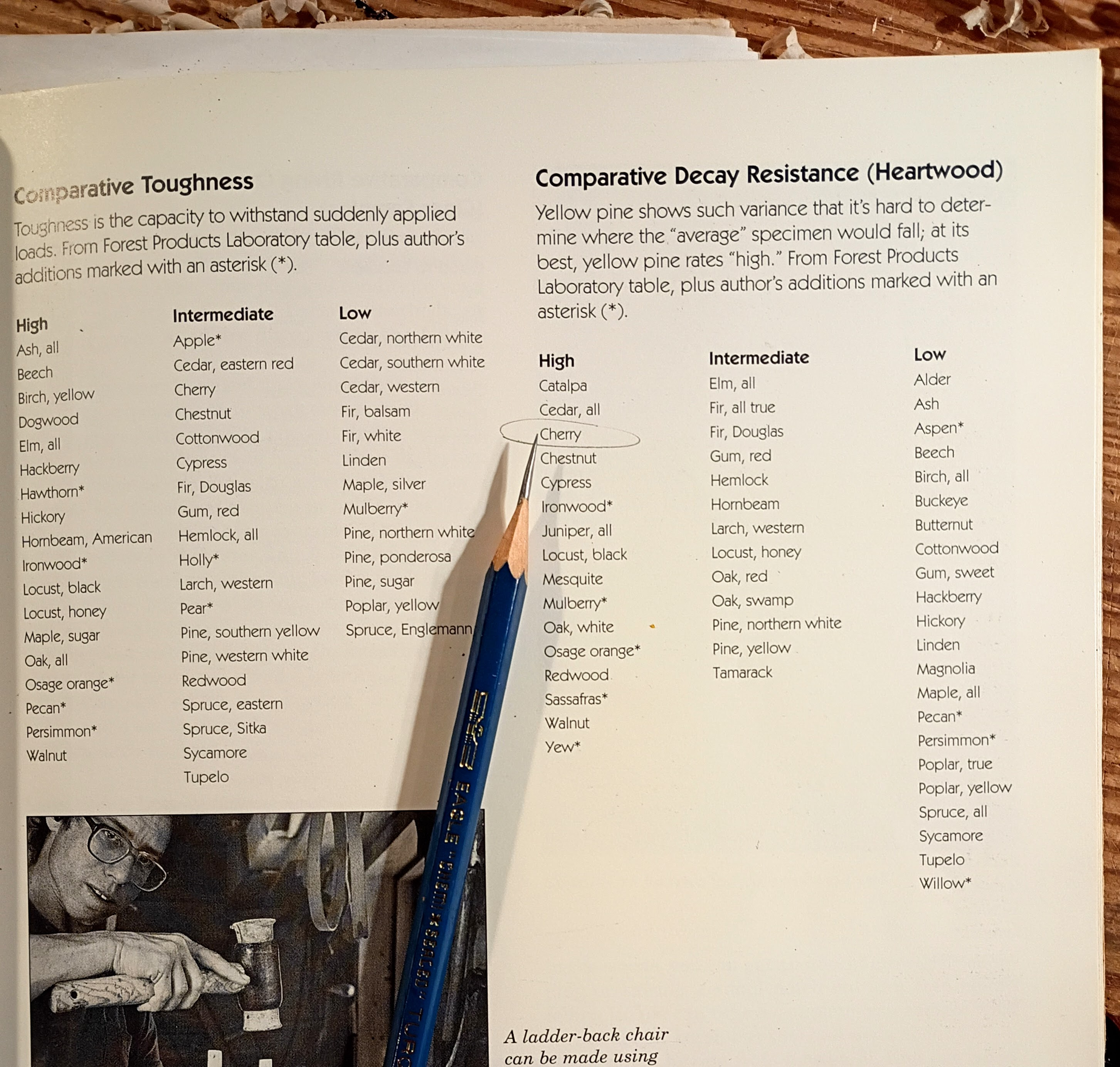
If this had been maple or a host of other species, there would have been no chance after that much time. Below is a page from one of my favorite books, Green Woodworking by Drew Langsner. I still refer to it often, and I’m reminded of it even more frequently. Below is a page that includes a helpful reference chart on decay resistance.
I was thinking of making a long bowl form this whole length, but when I split it, an impressive twist was revealed.
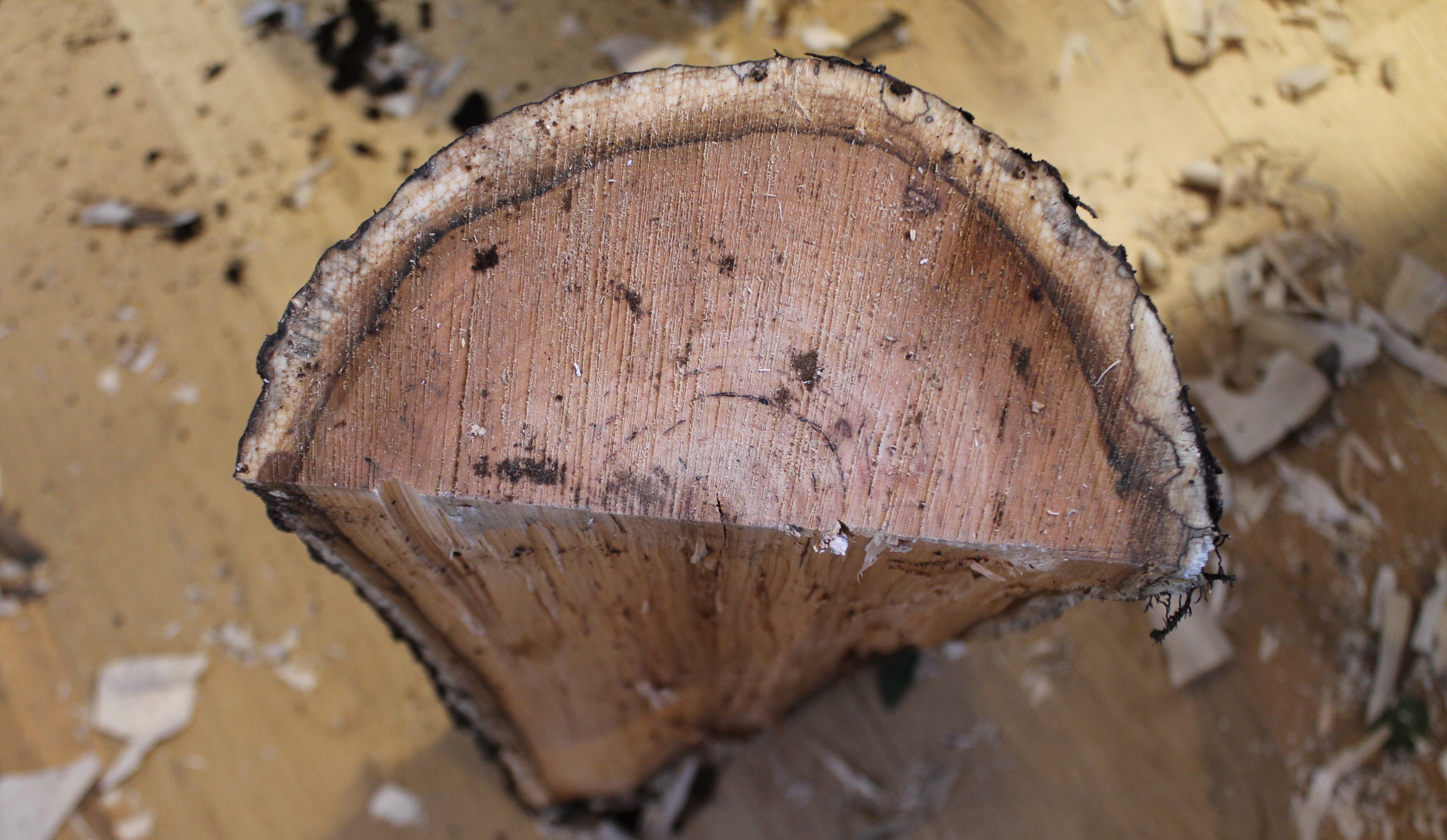
I cut it into shorter lengths to reduce the cumulative twist from end to end. So, shorter bowls.
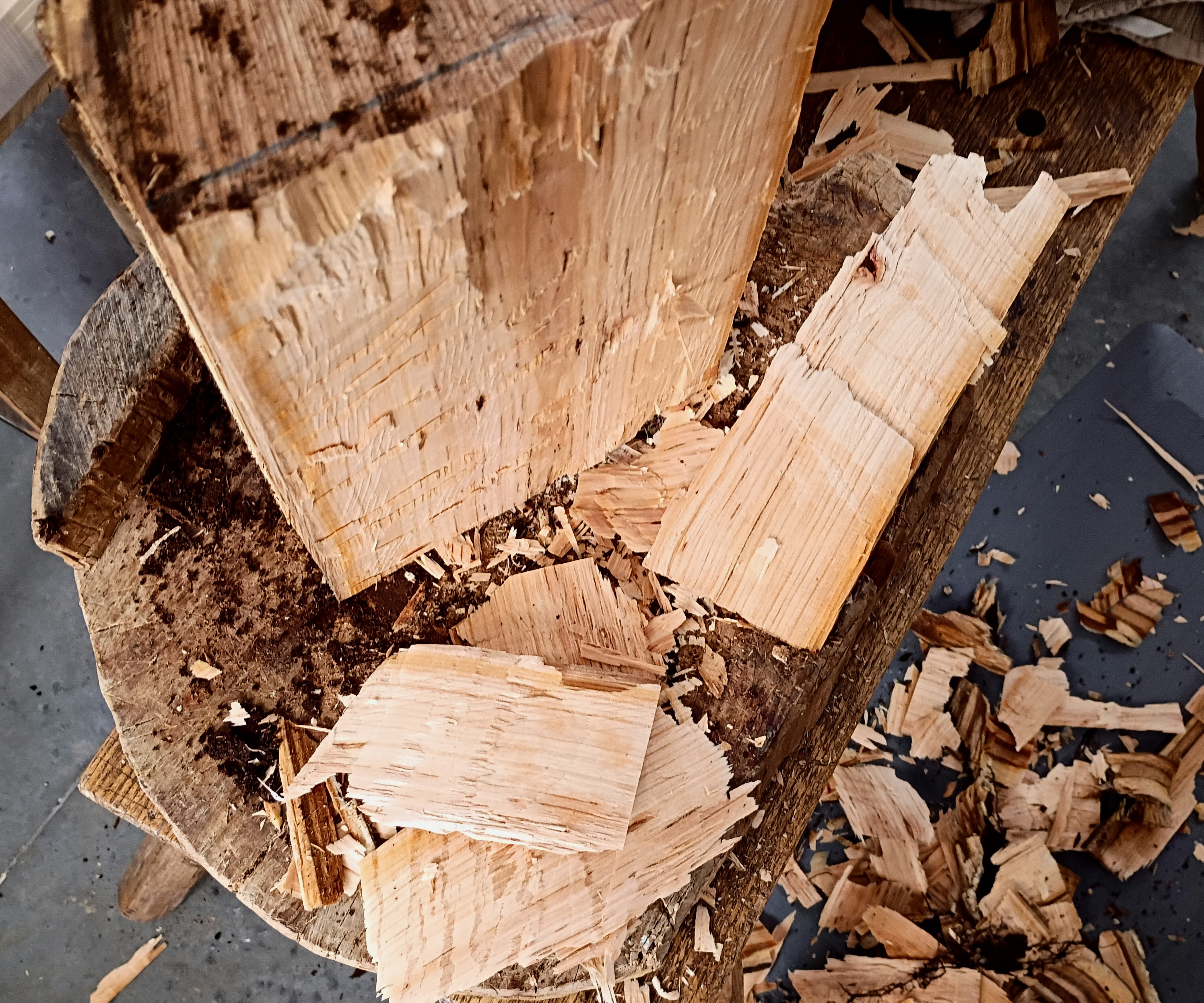
As I hewed a flat surface, I tested those chips by flexing them to make sure the wood was still strong and sound with no unusual breakage indicative of significant decay. Good stuff it seems.
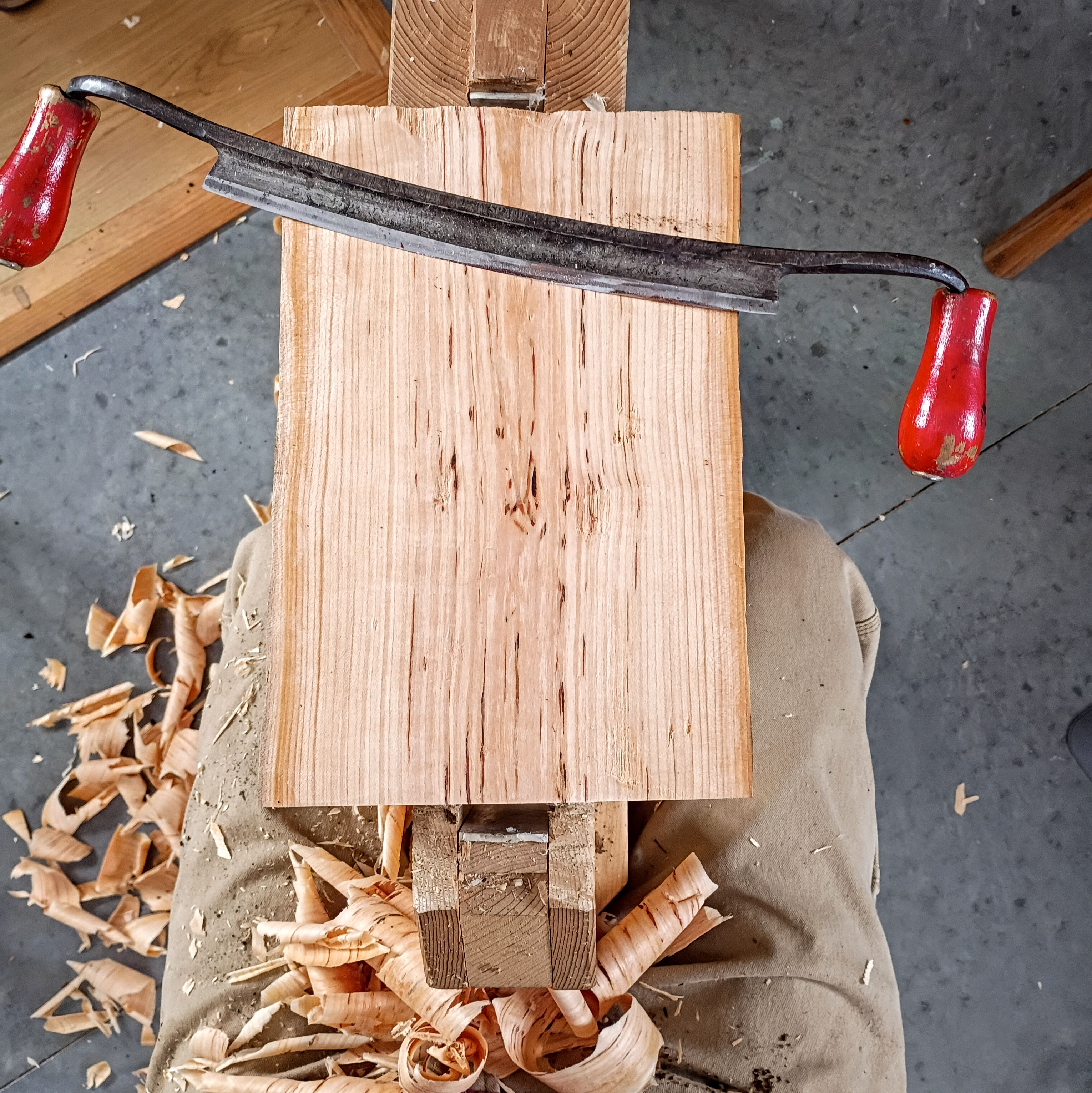
I finished flattening the surface with a drawknife at the bowl horse. Another chance to get to know this particular piece of tree.
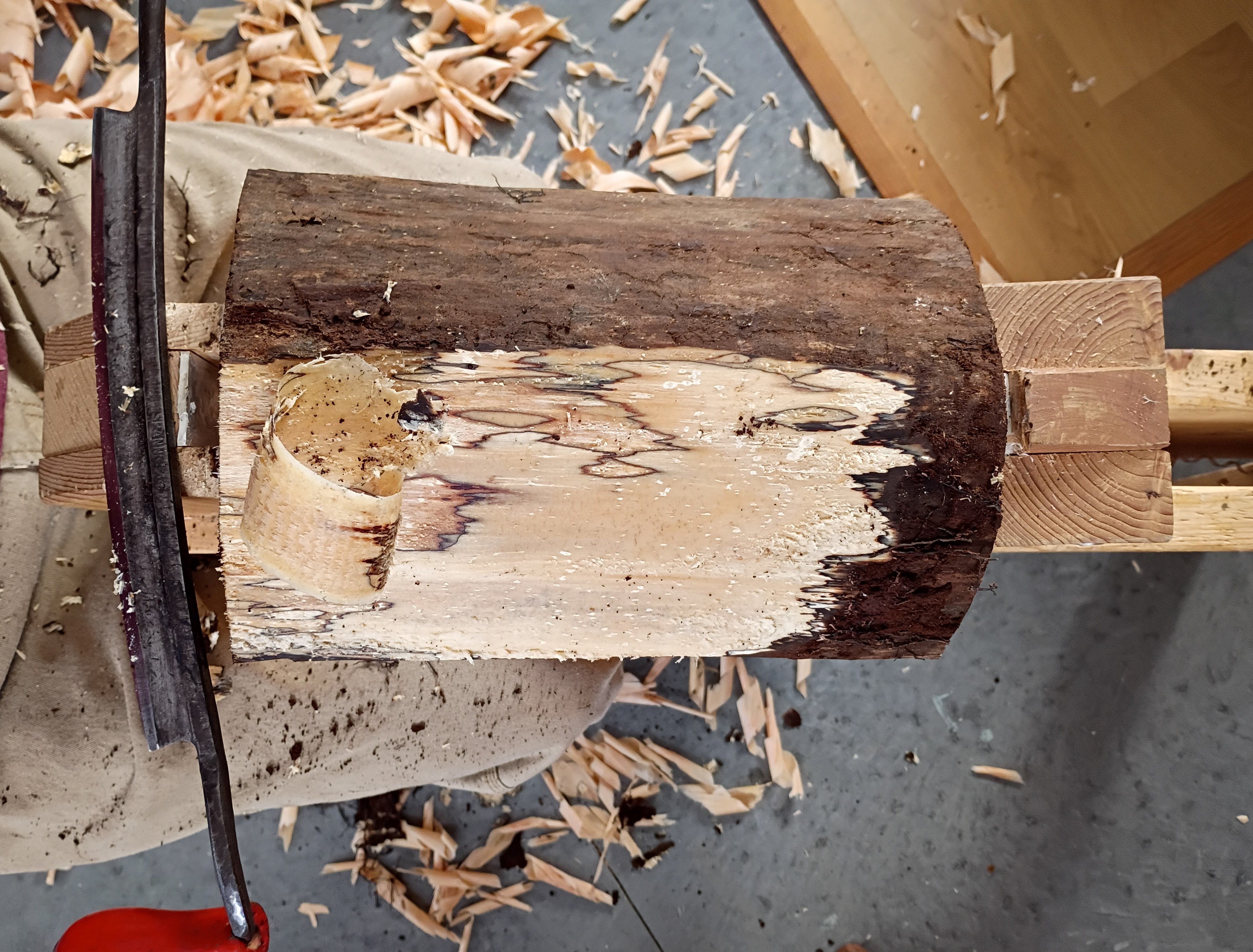
Then I flipped it over and shaved away the punky sapwood before striking a compass arc on each end. Shave down to those lines, and my arch-top bowl blank is ready for layout.
I recorded a little video as I did that. At first it may seem like three minutes of random and rapid drawknife work, but there’s a method to the madness. I start by reaching back about 3/4 of the way along the blank and making a series of cuts to remove the excess wood above the line that is facing me. Once I’m to the line all along the arch, I flip the bowl end-for -end and do the same in that direction. Even though I can’t see the line on the opposite end now, I know that it is right where the surface meets the end. So, I can start the drawknife at the very far end and remove the wood from there to the line in front of me. I’m not in a race; the speed and momentum of the knife facilitates the cutting and helps to assure a straight flat path of the knife from line to line. And it’s just such a joy, along with the scent of these green black cherry shavings filling the shop.
As the snow whips around and piles up outside the window this morning, I’m glad that I have these cherry logs inside.
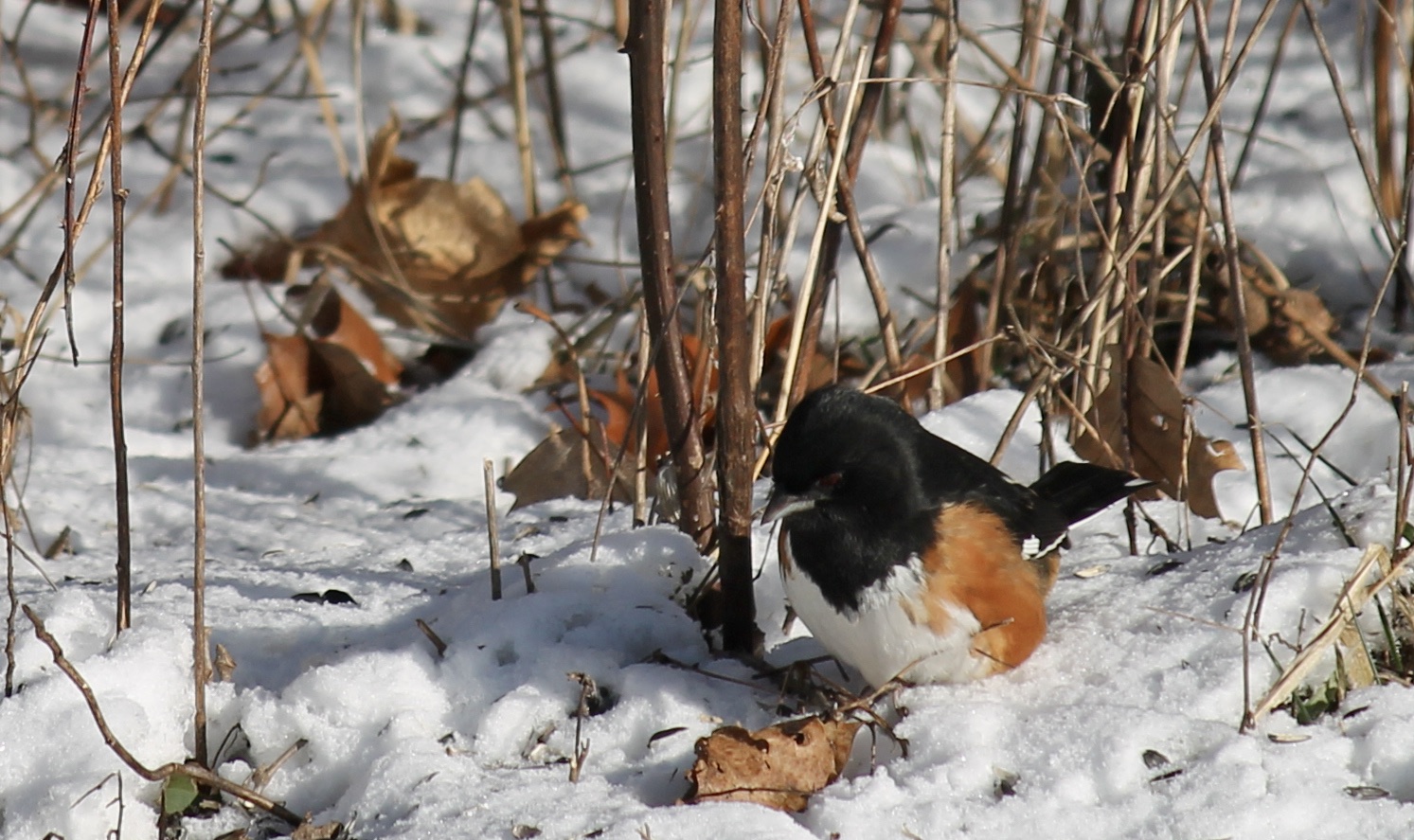
I hope this Eastern Towhee that I watched and snapped a few photos of yesterday has a spot sheltered enough from today’s storm. He must not have noticed the range map that says he’s supposed to be further south this time of year.
What wonderful camouflage. Those side patches are just about the color of dried oak leaves and, incidentally, black cherry wood.

 David Fisher, Carving Explorations
what do you do with all your chips?
LikeLike
I cook over some of them outside, and most of the others end up on walking trails.
LikeLike
we start fires with ’em, make compost piles, bed the chickens, and still there’s more! I don’t think I could safely do prescribed burns on my acre, but I could probably do patchwork burns…IF I could dry and store all those chips and shavings…staging and storage…I need to build a barn!
LikeLiked by 1 person
Sounds like another good reason to build a barn, Kiko! Spring is around the corner…
LikeLike
Fine video Dave!
Since moving from NY to FL, my horse sits idle. I certainly miss being able to get out to the hardwood forests around us and find all sorts of woods. Here in Fl, we have Live Oaks that I haven’t tried carving and dozens of palm species that I can’t imagine carving. … other than pineapples from the grocery.
Add to that, living in a community that is so organized that there’s no fallen wood to harvest, it gets tough to find bowl material.
Does anyone know of a service that can ship an occasional wet black cherry log?
THANKS for the blog updates!
LikeLiked by 1 person
I’m bundling up to go out and shovel the drive once again this morning, yet I still feel sorry for your lack of wood, Bob. I think a semi-annual wood gathering trip would be a good idea. You’d only have to go up to the Carolina’s I suppose, but I’m not sure. Having a log sent sight-unseen is a bit chancy. I’ve seen whole logs, cherry or otherwise, that are unsuitable for carving for one reason or another.
LikeLike
THANKS Dave,
We’ll be close to freezing for a couple of days each January, but we always say “At least we don’t have to shovel it.”
Be careful with your back.
LikeLiked by 1 person
Liked the video–and of course you got some nice shots of the Towhees–neat.
LikeLiked by 1 person
Thanks, Marie!
LikeLike
Hi David
I do like cherry. Thanks for sharing.
Out of curiosity, how often do you woodwork/carve in retirement? I’m two and a half years out from retirement myself. I’m hoping I can get 4 productive hours a day in the shop followed by other hobbies I’d like to do more of.
Sincerely,
Joe
LikeLiked by 1 person
Well, Joe, I consider myself more like self-employed, or something. Regardless, I’m in and out of the workshop pretty much every day for varying amounts of time. It’s hard to say, because there is no steady pattern to it, and I don’t keep track. Just depends on the season and what else needs my attention. I know that I can’t not do it. I just love the process.
LikeLiked by 1 person
Pingback: Three Shrinkpots and a Bowl Available | David Fisher, Carving Explorations