
Making and using shrink pots for grain and food storage is an ancient practice. In one of the greatest woodworking books, Woodworking in Estonia, Ants Viires, dedicates several pages (89-95) to it. In various regions of Estonia, these containers were known as “ummik” or “umku, umpu.” He asserts that these containers made by hollowing out a log or branch predate coopered containers. He goes into welcome detail on methods. For example, Viires explains that often the hollowed log would be put into boiling water or soaked to expand further before the bottom was inserted. But he states, “We also have evidence of the insertion of the dry base into the green wood container without ‘boiling’ or soaking; this may be considered an older method.” I guess I’ve only made “old school” ummiks. More on Woodworking in Estonia later.

I made this grey birch pot (above) fifteen years ago and it has stored ground flax seed ever since. I pop off the top every morning and sprinkle some flax seed on my oatmeal, because I live on the edge like that. A plastic container would be just as practical, but it wouldn’t give me as much joy or be so pleasing to the hand and eye.
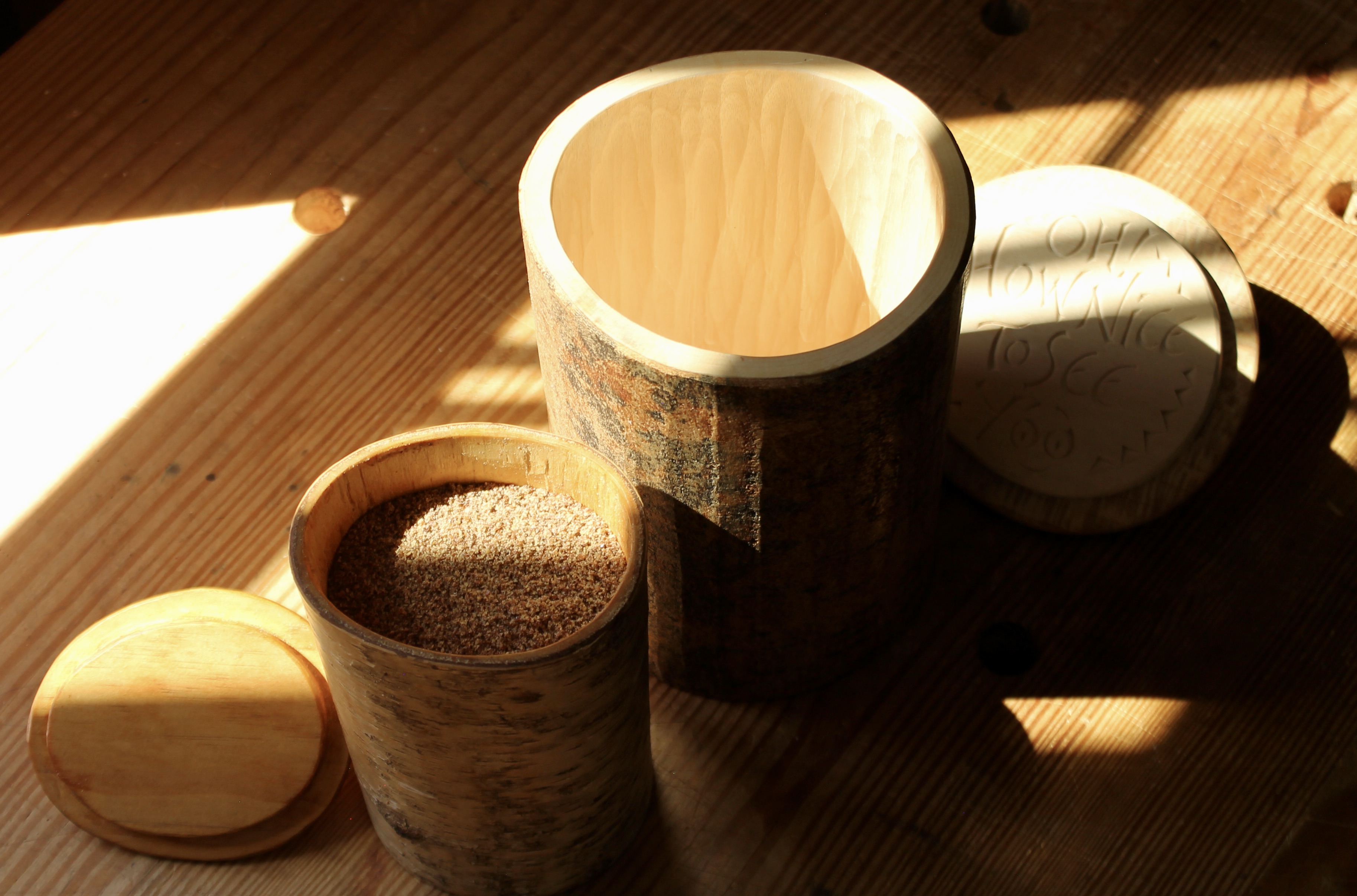
There’s the grey birch pot in the lower left beside the larger black birch container I just finished.
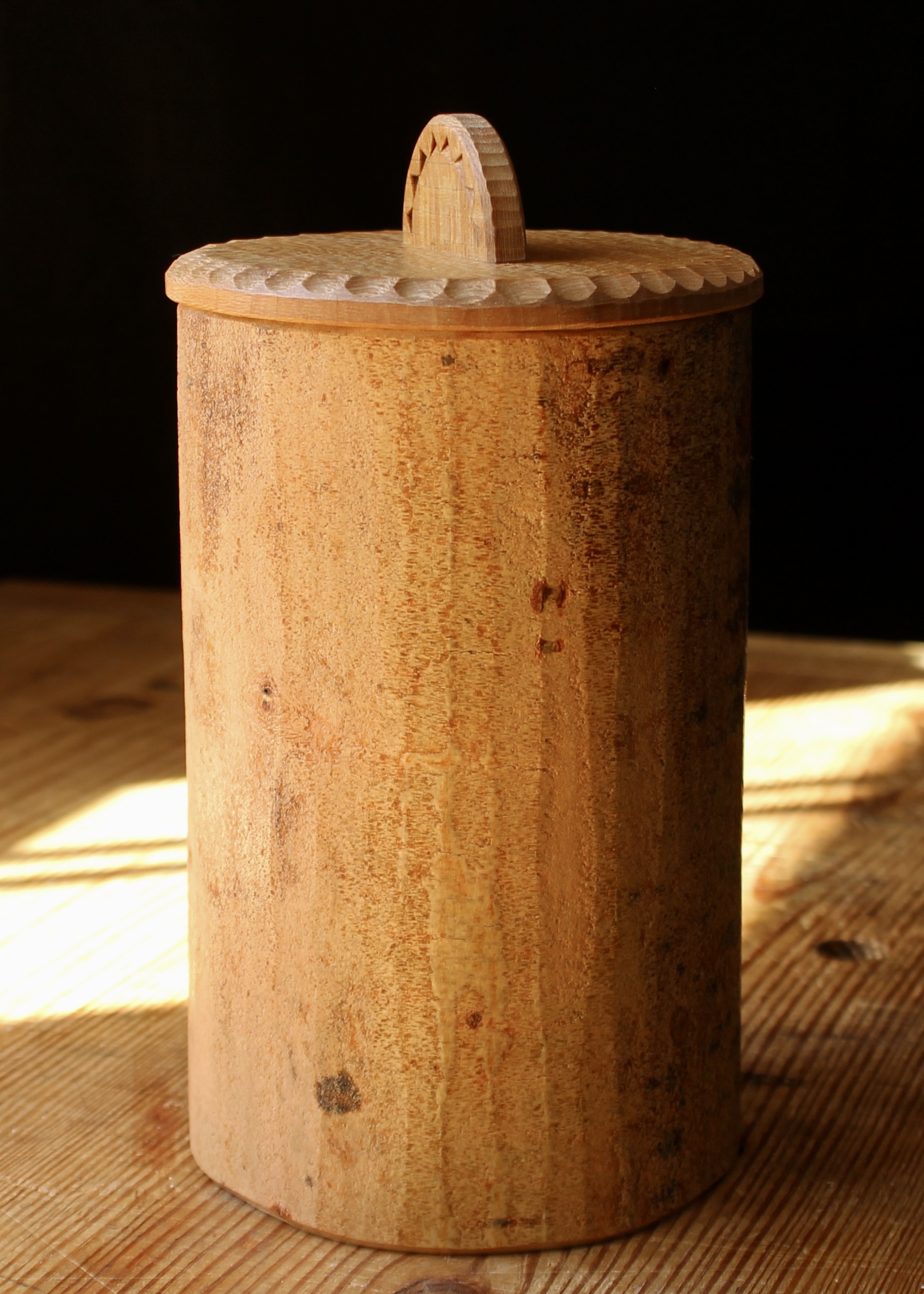
This black birch bark wasn’t smooth like paper birch or grey birch. So, while I left the bark on, I shaved the outer surface away with a drawknife, leaving a series of subtle vertical facets. On one side the bark was dappled, on the other side not so much.
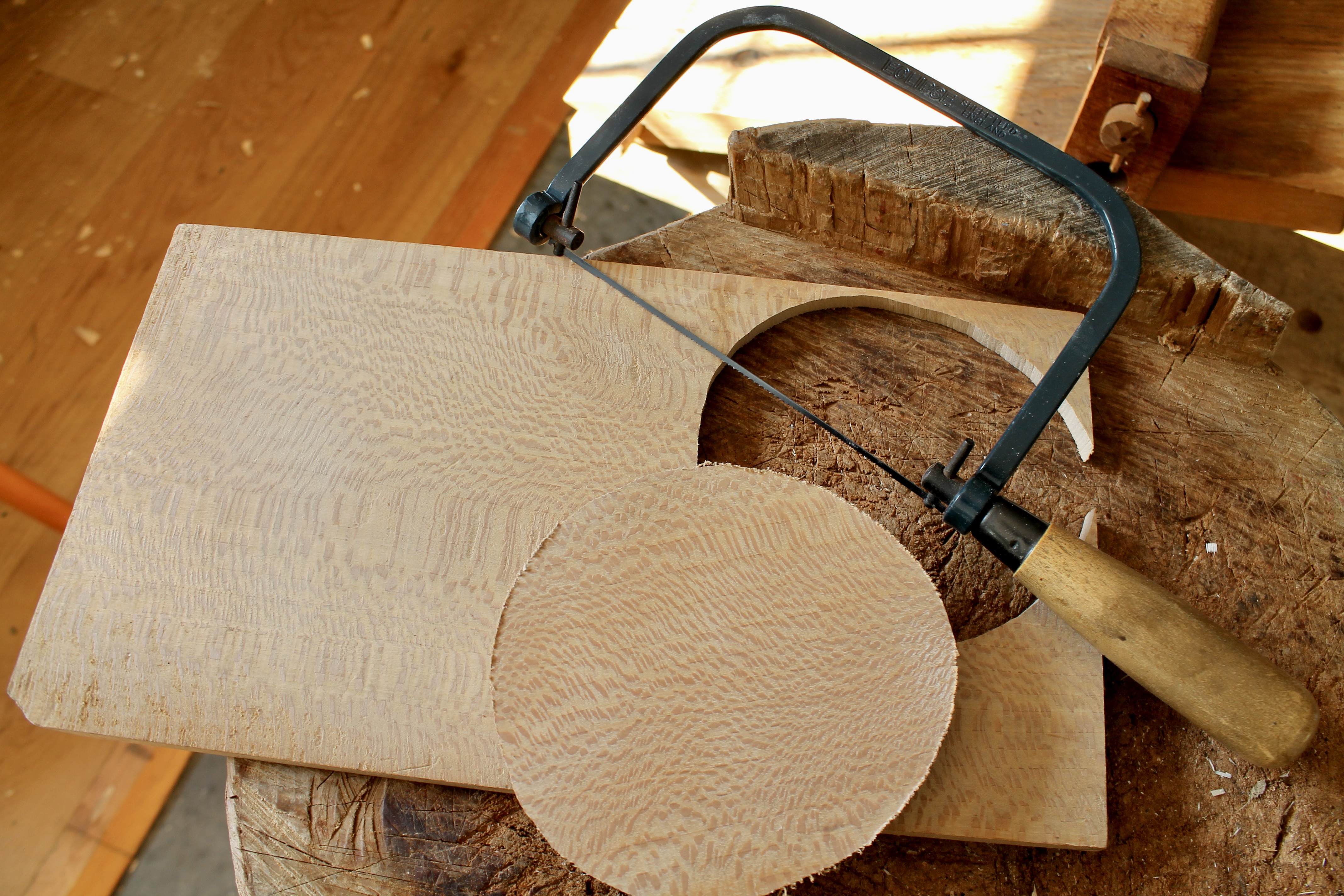
Shrink pot lids, should the pot need one, can be projects all their own and can certainly take longer than the pot itself. I made the lid from some quarter-sawn sycamore I’ve been hanging onto.
One of the tools I use pretty regularly, but hardly seem to mention, is a coping saw. I don’t have a band saw, but even if you do, I think a coping saw should be hanging near your bench. It’s such a simple thing, and so effective. You can get fancy ones, but I’ve gotten good service from this Eclipse model that’s available for around twenty bucks. There are similar ones made by many different brands. A pack of 6 1/2″ blades will last a long time. I prefer the finer blades, like an 18 or 24 TPI.

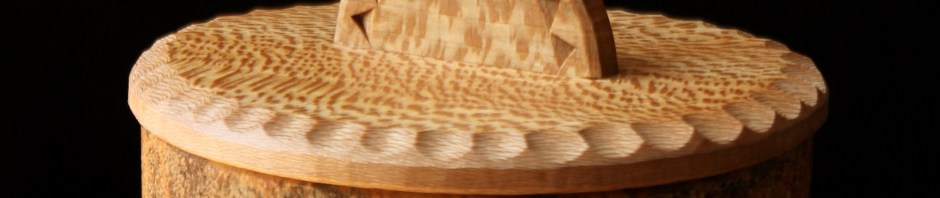
A shot of the finished lid. I decided to make the handle/finial out of the same sycamore and suggest a rising sun. Especially appropriate if the pot stores your morning oatmeal or coffee.
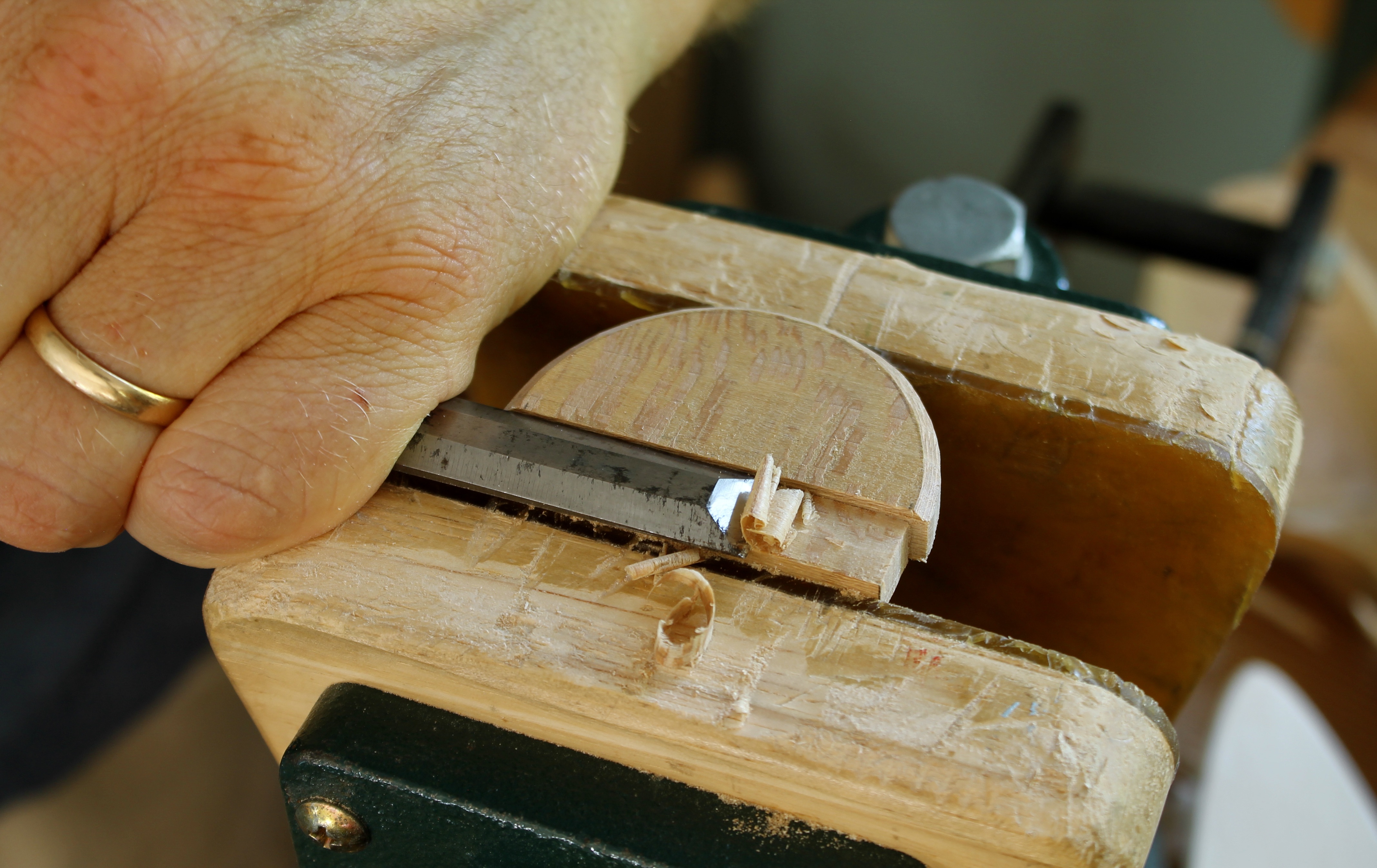
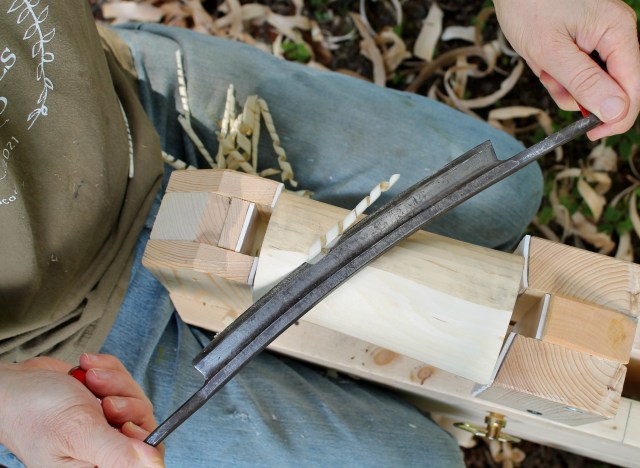
The handle is joined to the lid with a long tenon. I’m shaving the tenon cheek with a chisel in the photo above.
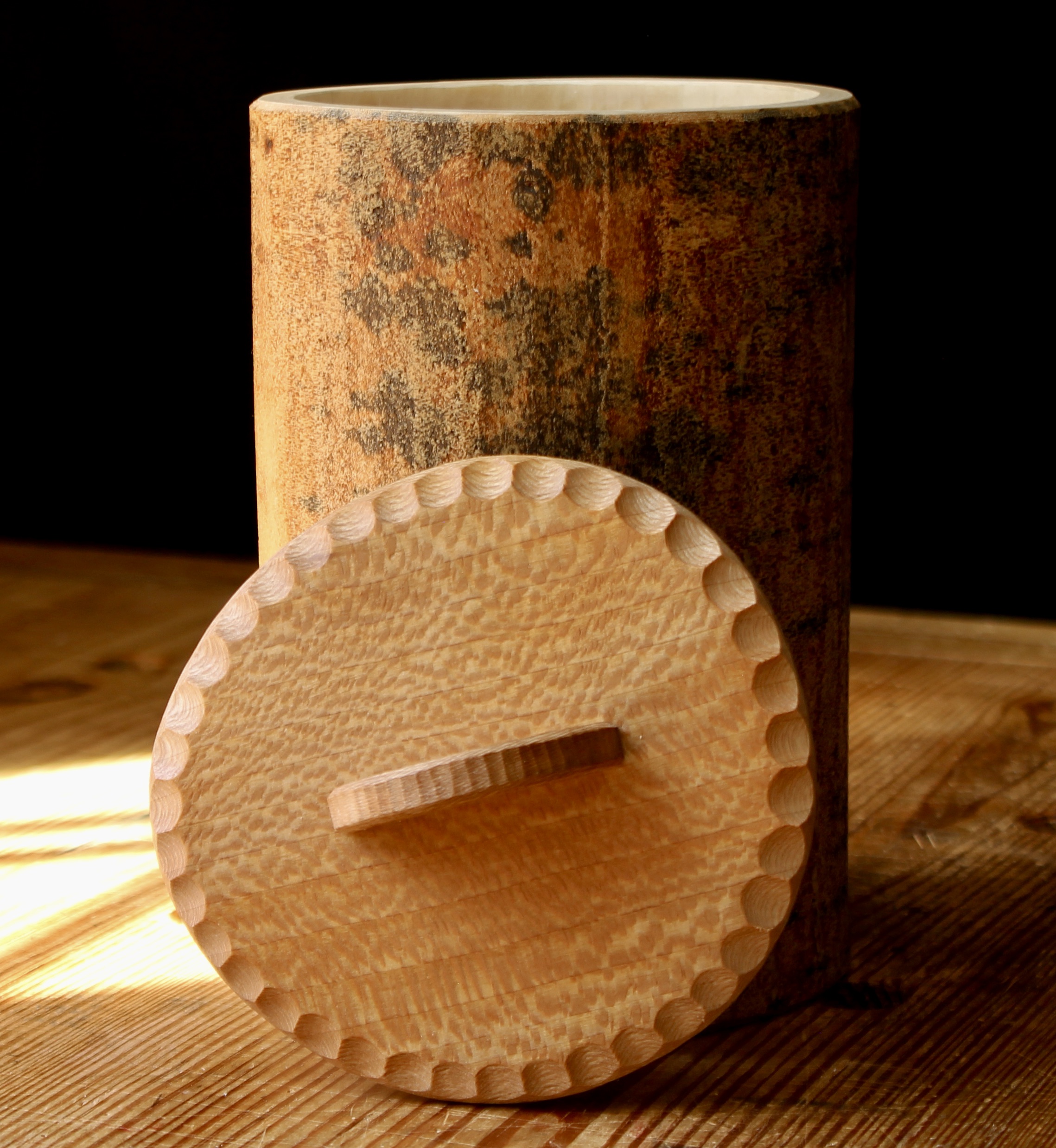
There’s another angle of the finished lid. The rabbet on the underside of the lid can be carved from the lid piece itself, or a separate piece of wood can be glued to the underside of the lid. In this case, I shaped a thin basswood board to a snug fit then glued it on. When the glue dried, an idea came to mind and I hurried and went ahead before I talked myself out of it.
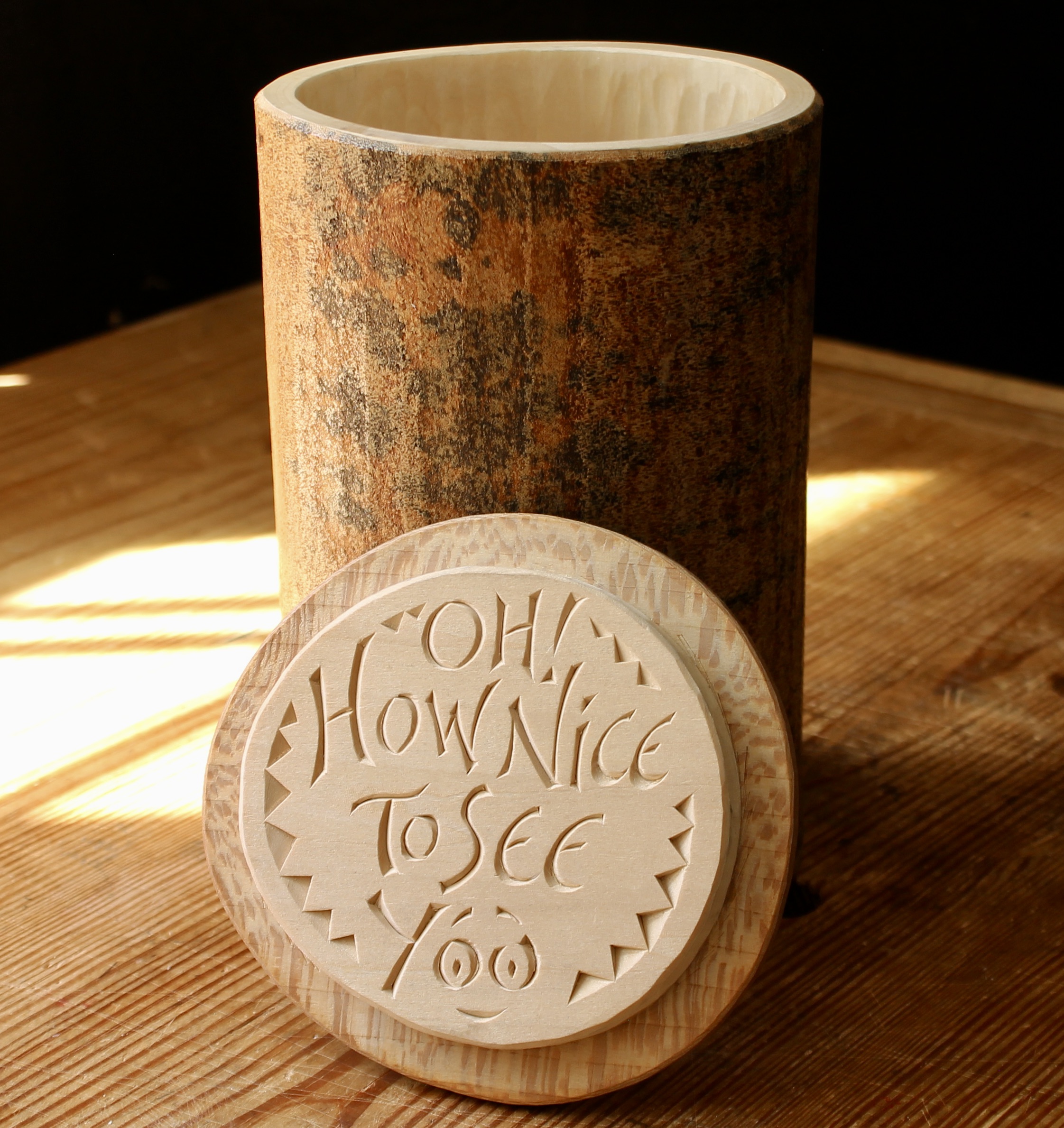
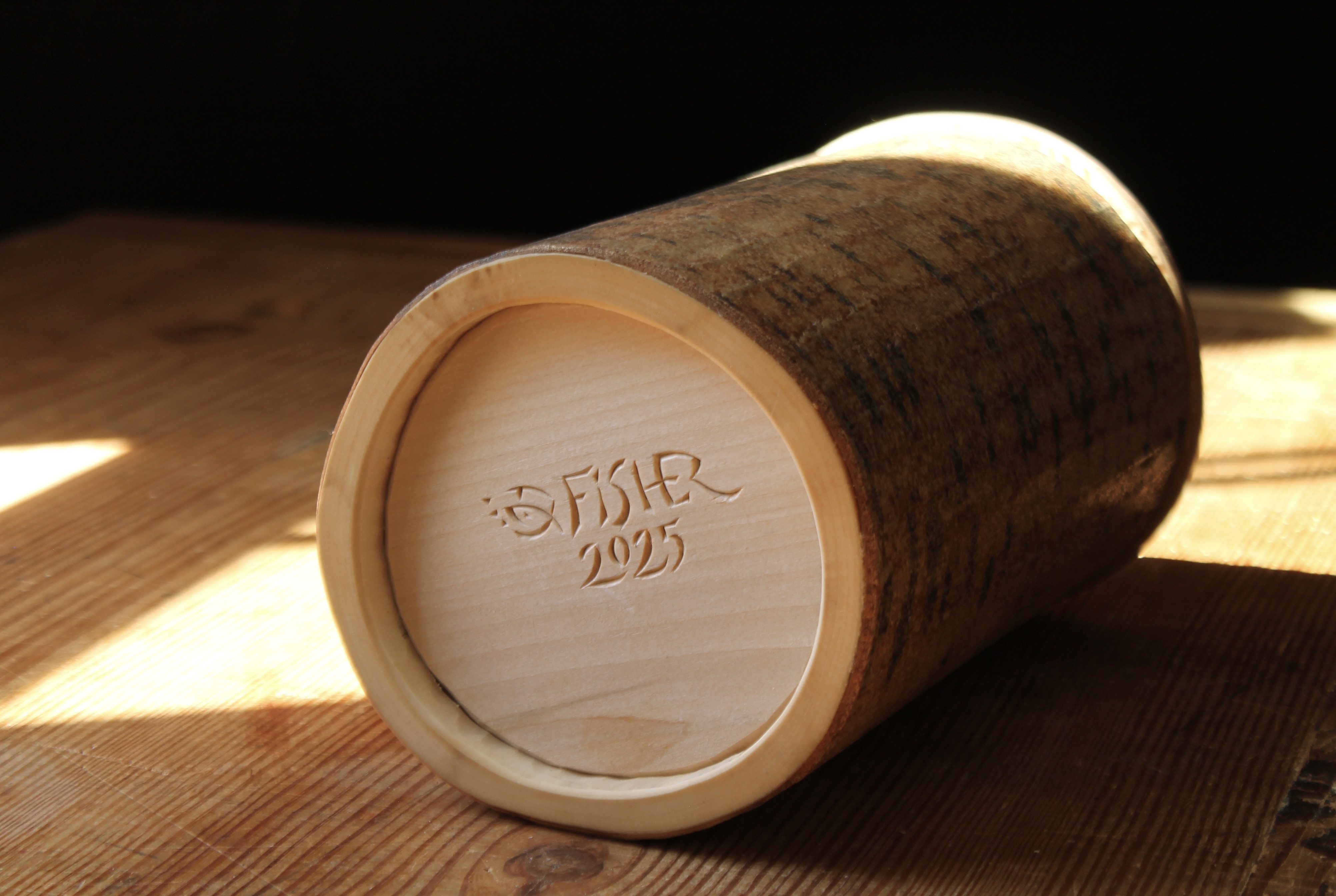
Linseed oil and beeswax on the outside of the pot and lid, no finish at all on the inside. It’s 9″ high and 5″ wide. By volume, it will hold nearly 1 1/2 quarts, about 45 fluid ounces (1.3 liters).
I want to finish this post with a return to Woodworking in Estonia, because I can’t emphasize enough what a treasure it is.
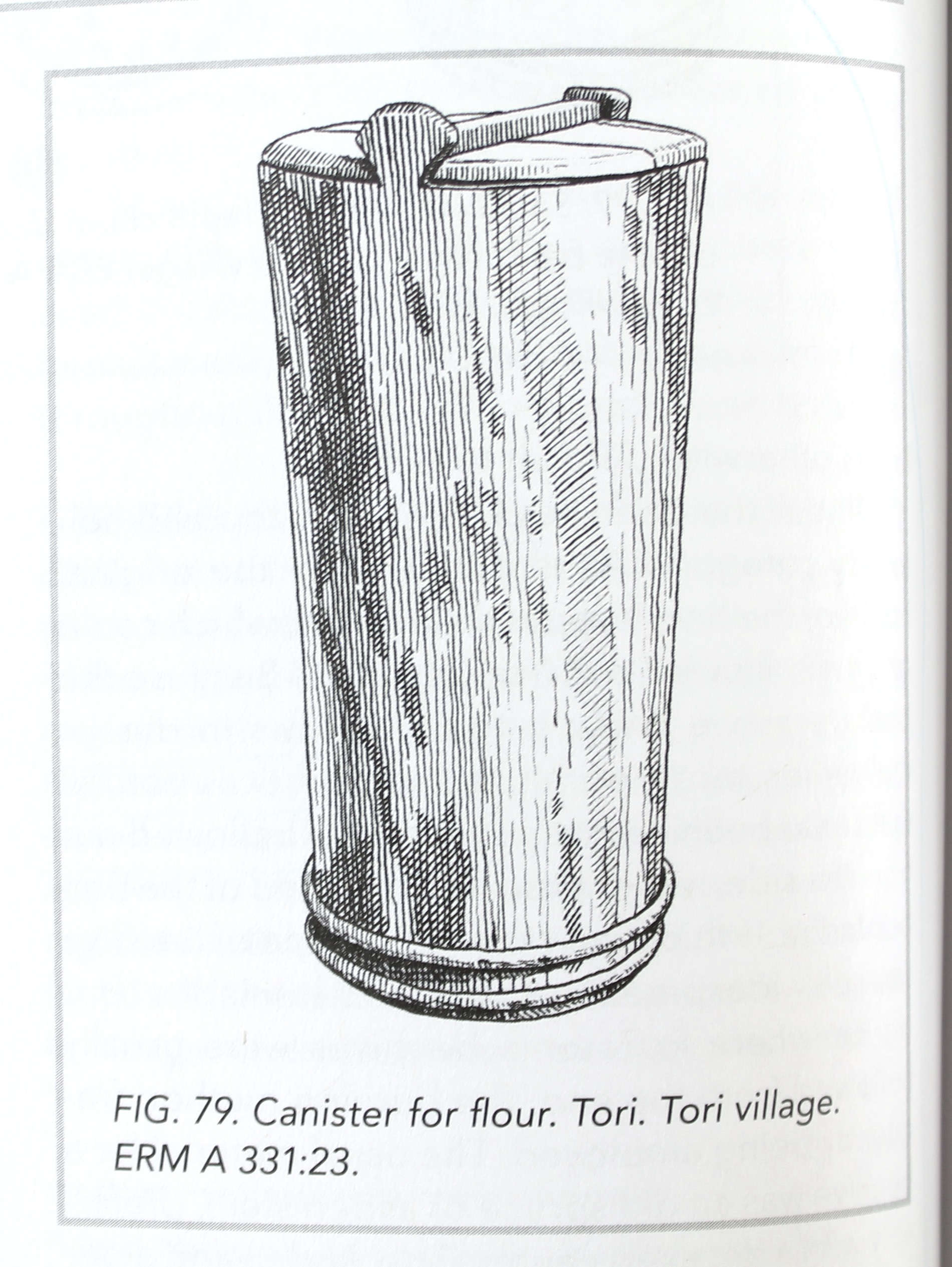
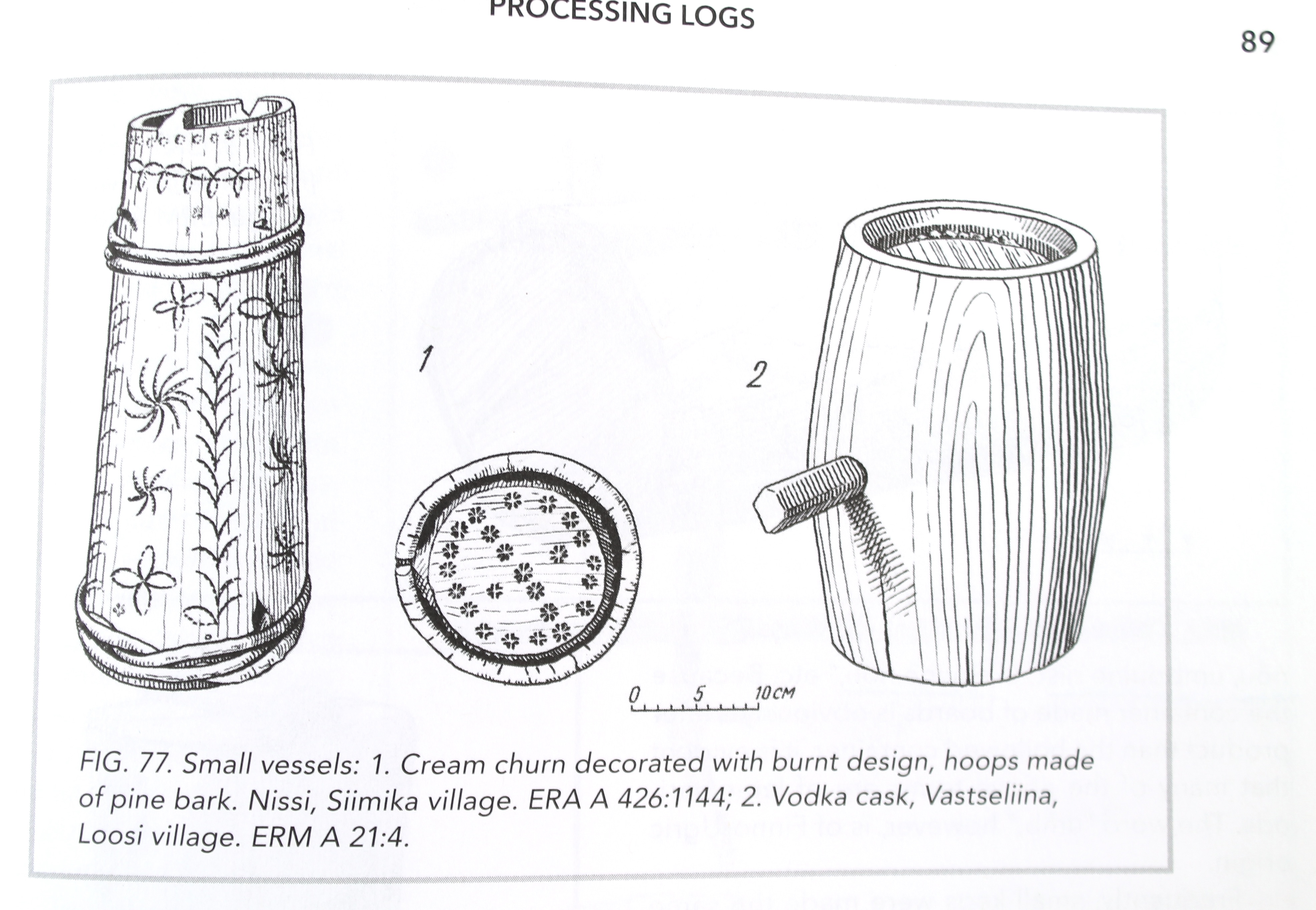
There are hundreds of illustrations and photographs in the book. Above and below are just a couple of the ones from the “shrink pot” section.
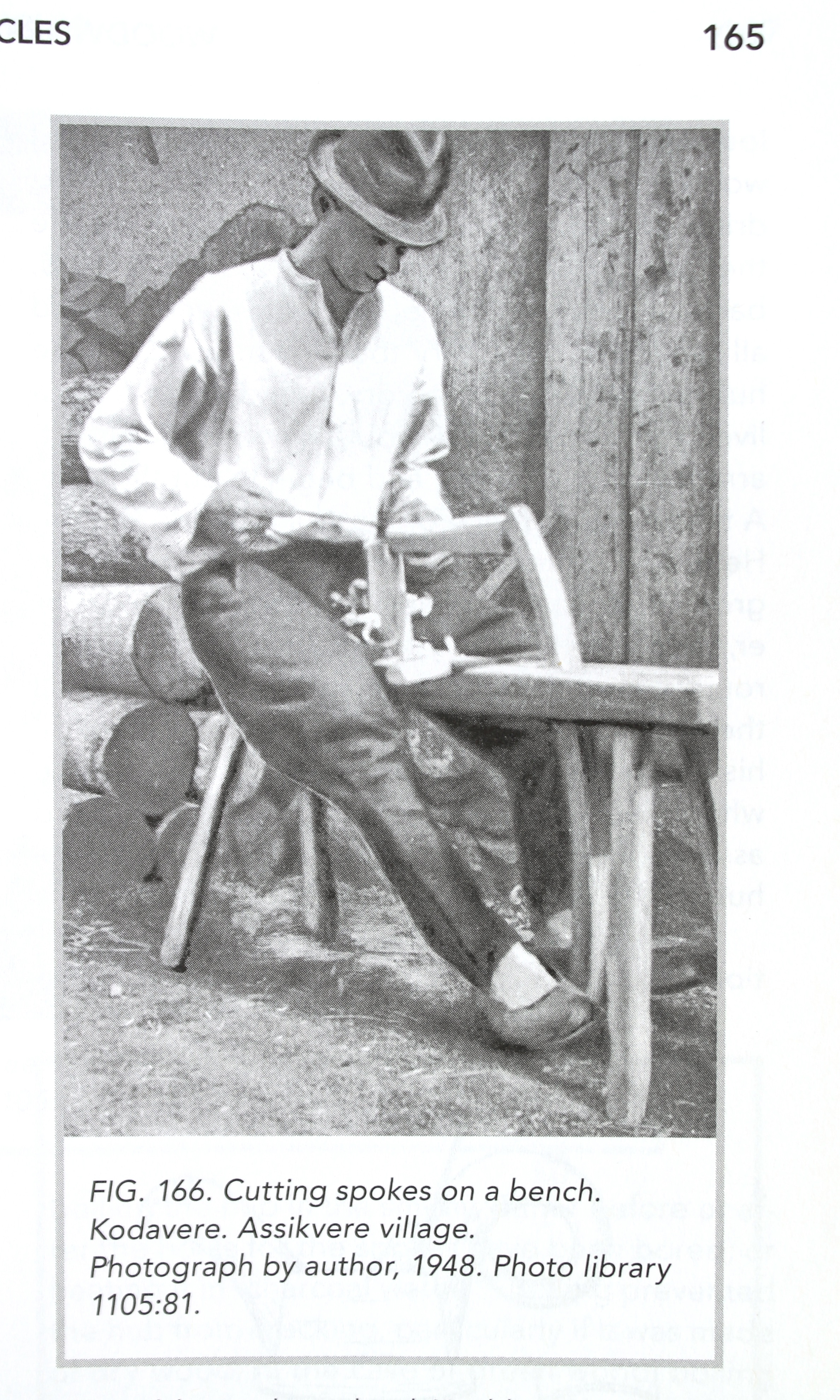
There are so many interesting and practical methods for work-holding discussed and pictured in the book. Check out these two below. Both of them feature horses that hold the work with pressure from end to end, like a “bowl horse“. I was delighted to see this when Lost Art Press published and made it widely accessible in 2016. This allows the craftsperson access to the entire upper surface of the workpiece. Works great for shaving shrink pots too.

 David Fisher, Carving Explorations
very cool
LikeLiked by 2 people
David;
Do you have any classes scheduled in 2026 as yet?
Thanks, Mark
LikeLiked by 2 people
I’m getting the details sorted out, Mark. My thoughts as of now are to teach classes in June and October of 2026 at Pete Galbert’s. One, or both of those will be shrink pots. I may add more. As soon as anything is official, I’ll announce through a blog post.
Thanks for your interest!
LikeLike
Thanks
I was really hoping more for a bowl class. I love going to Pete’s,but
Elsewherewould be ok
LikeLike
Thanks for the feedback, Mark. The bowl class may work out in 2026 as well. I’ll sort it out soon.
LikeLike
Lost Arts Press is going to be indebted to you for this wonderful write-up, especially if all your other readers are as intrigued about the book as I am :>) My copy is now on the way.
LikeLiked by 2 people
I’m guessing that the key to valuing “Woodworking in Estonia” is to concentrate on the pictures and (mostly) ignore the text. I got so annoyed by his extensive etymology of words and terms that I put it in the library book sale. Probably a mistake…
LikeLiked by 2 people
Well, I like the text too, but everyone has their individual preferences, of course. My recommendations are just based on my experience and opinions. You can always pick up another copy if you’d like. Meanwhile, some lucky person at the book sale surely appreciated your donation.
LikeLike
I’ve had this book for a number of years and just love it, text and pictures. My favorite is Fig. 69 on page 79 of a man sharpening an axe. So much for fretting about having a whetstone with a flat surface.
LikeLiked by 2 people
Yep, that’s a great shot! Thanks for the reference.
LikeLike
I am writing this from Estonia and proud as ever when Ants Vires’ book gets a mention. Traditional woodworking is still going strong here thanks to Meelis Kihulane. He was lucky enough to get to know Vires and work with him for a few years before he died. Meelis has build up a woodworking school called Edeva Eremiidi Puutöökool where he teaches and keeps alive the crafts which the book documented.
LikeLiked by 2 people
William, Thank you very much for sharing this information. I am very happy to hear it! I found the website for Meelis’ school: https://edeveremiit.ee
I don’t speak Estonian, but I was able to copy and paste some things into a translation program. Along with the photos, it’s enough to get an idea of the great things that are happening there. Thanks again!
LikeLiked by 1 person
David, I’ve sold many shrink pots at a local art gallery, I once referred to them as the original tupperware, of course the name ended up in the items description which I didn’t think was appropriate and it was changed. They are a blast to make, no end to the creativity you can exhibit. Thanks for your continued inspiration, I will check into this book. JReed
LikeLiked by 2 people
Pingback: Woodworking in Estonia: From Ants to Meelis | David Fisher, Carving Explorations