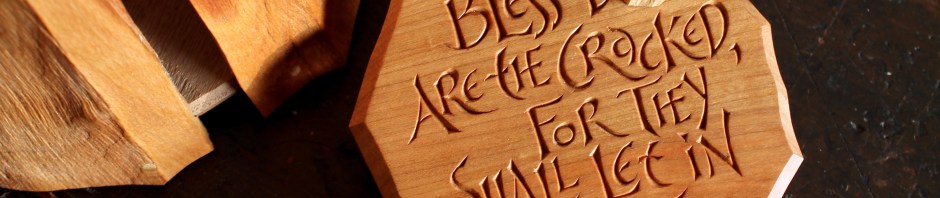

I roughed out this cherry shrink pot with split sides a few years ago. It cracked a couple days into drying, leaving a 1/2″ wide gap. It’s a rare occurrence, but sometimes you get lucky.
My first inclination was to burn it. After all, I’ve got lots of uncracked shrink pots waiting to be finished. But I kept it around, hoping for the right time and inspiration. I started thinking about a line attributed to Groucho Marx, a play on the Beatitudes:
Blessed are the cracked, for they shall let in the light.

So, recently I returned to the long-neglected shrink pot. Although the bottom was still in its groove, I pinned the sides to the bottom board with some bamboo pins (skewers) to make sure it stayed that way. After checking that the bottom surface sat flat, I marked the top surface parallel by spinning it around against a stationary pencil point as in the photo above. Then I sawed and planed it to the line.

I wanted a cherry lid, but I didn’t have any dry cherry boards around. I grabbed a chunk of dry cherry from the firewood stack and sawed off both checked ends.
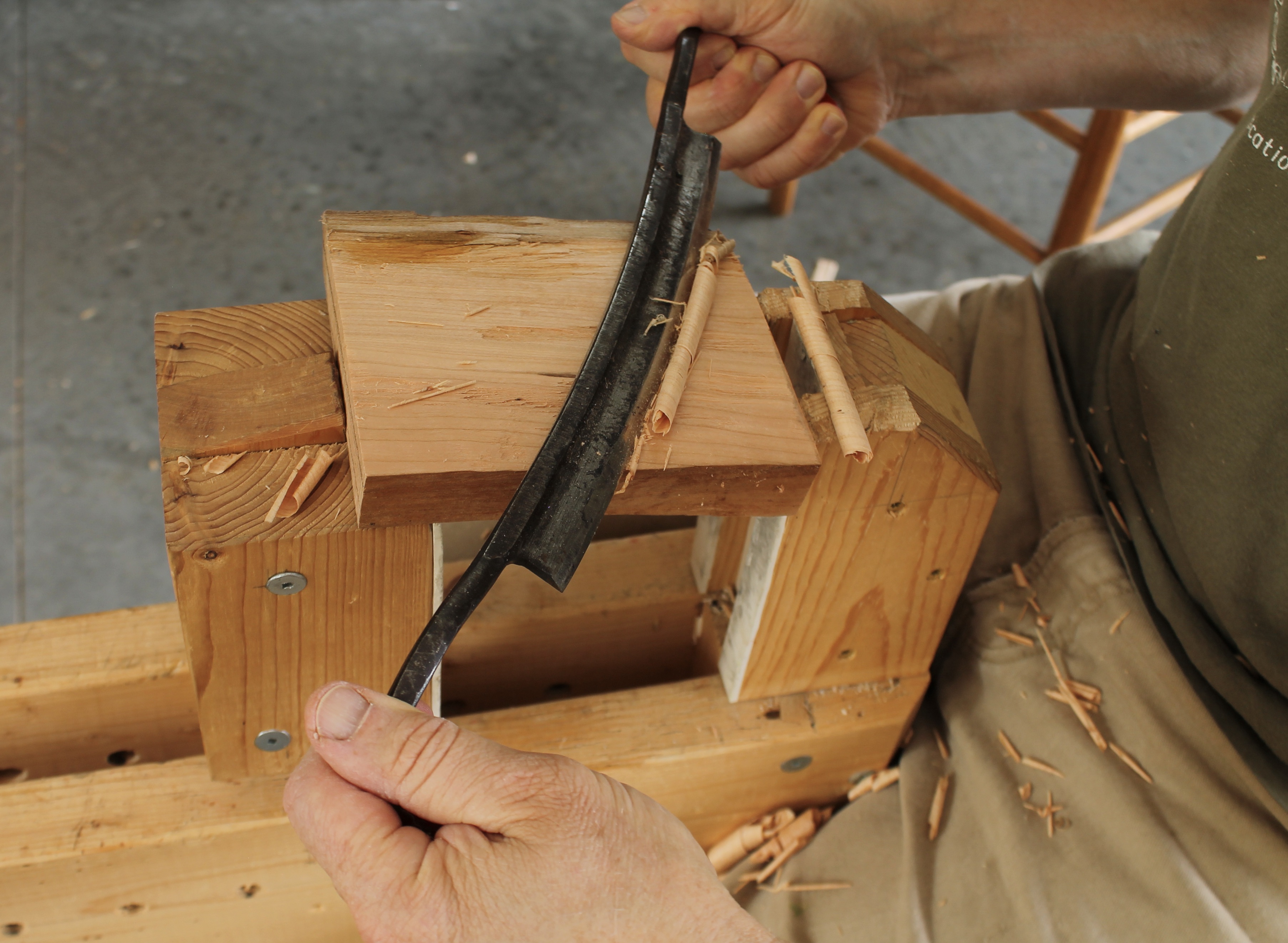
I flattened the short piece that remained with a drawknife, then a plane. With a coping saw and knife, I shaped the lid to match the irregular exterior of the pot, then carved a rabbet to match the interior. After working out the lettering through some sketching on paper, I drew it again on the lid and carved the words.
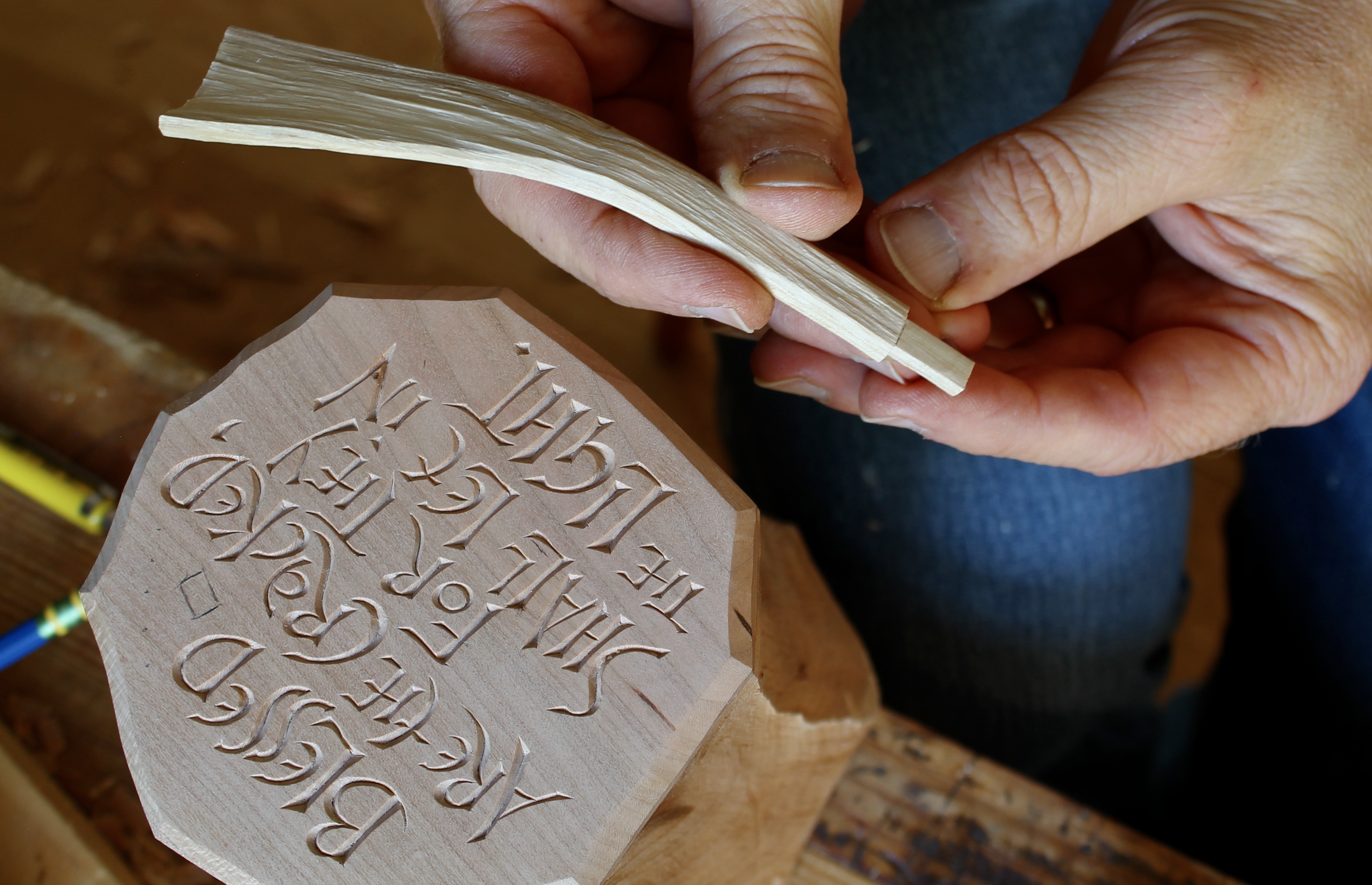
I returned to the firewood pile again and found a curving piece of dry hickory. I split out a thin piece and carved a tenon onto one end. The mortise is outlined in pencil on the lid in the photo above.
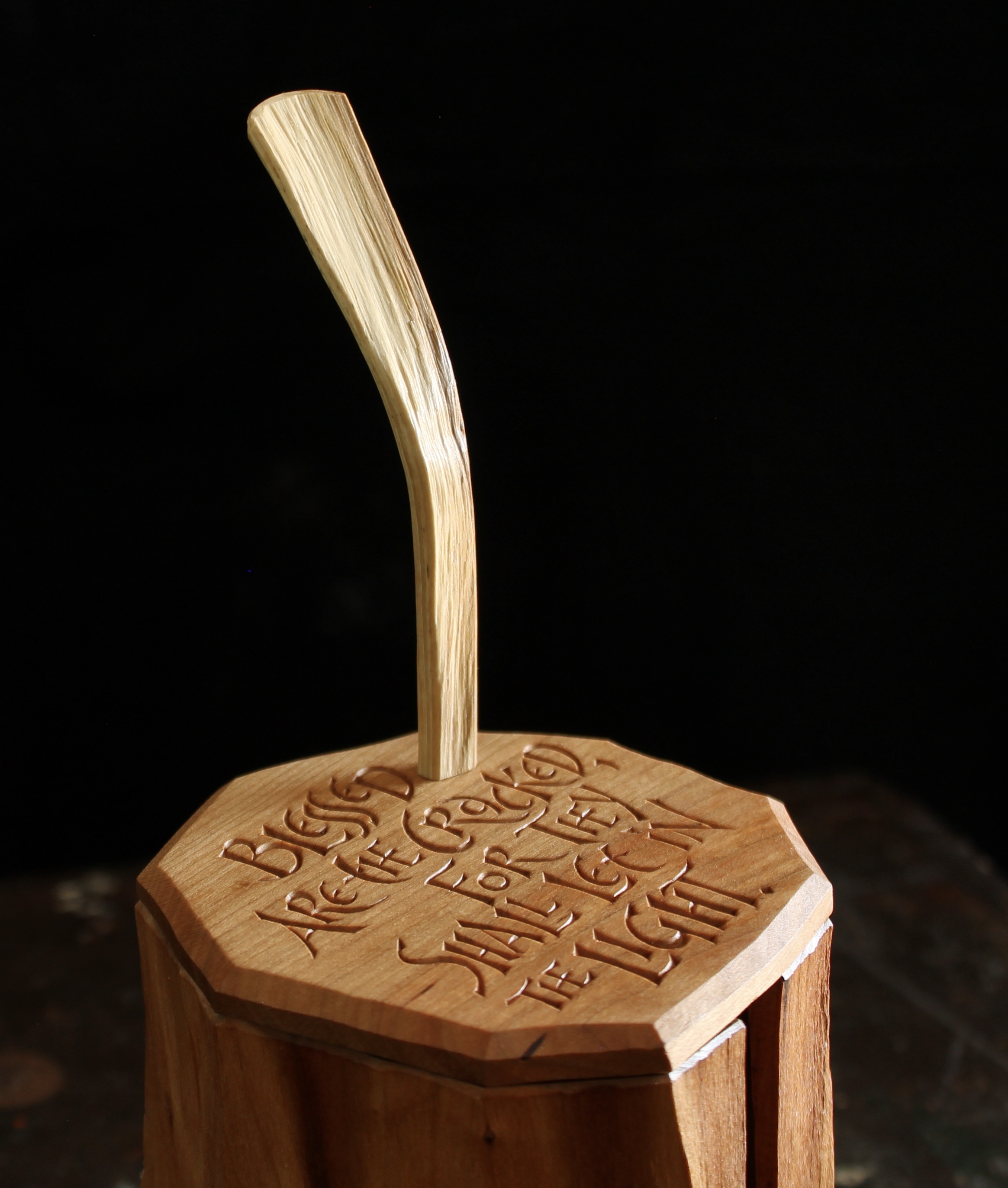
There it is in place on the finished lid. It’s a comfortable handle and finial.

These are the three tools I used to carve the lettering. The gouges just for the tighter curves of these small letters. The letters range from 1/4″ to 3/4″ in height.
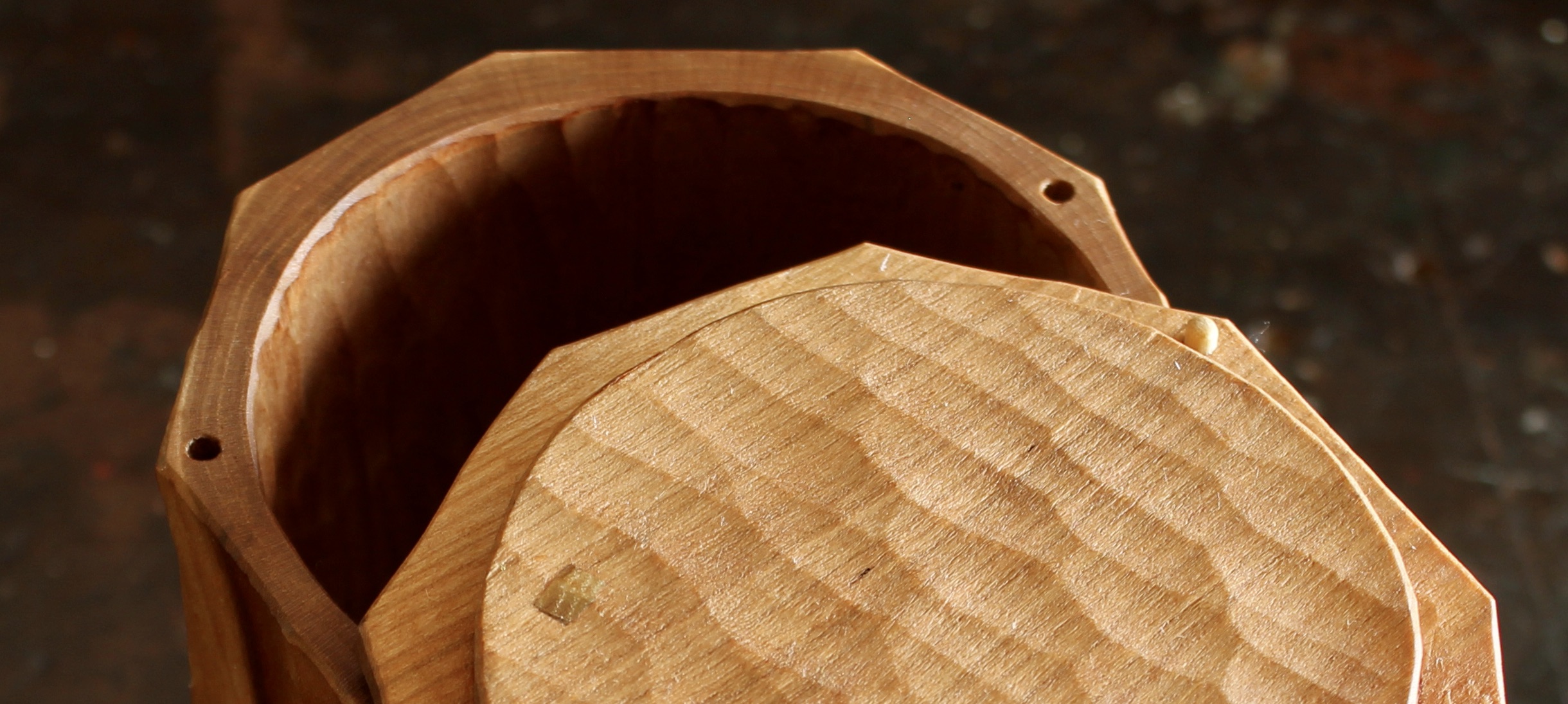
To keep the lid from rotating at all, I inserted two registration pins into the lid. The bottom of the finial tenon can be seen on the underside of the lid, too.
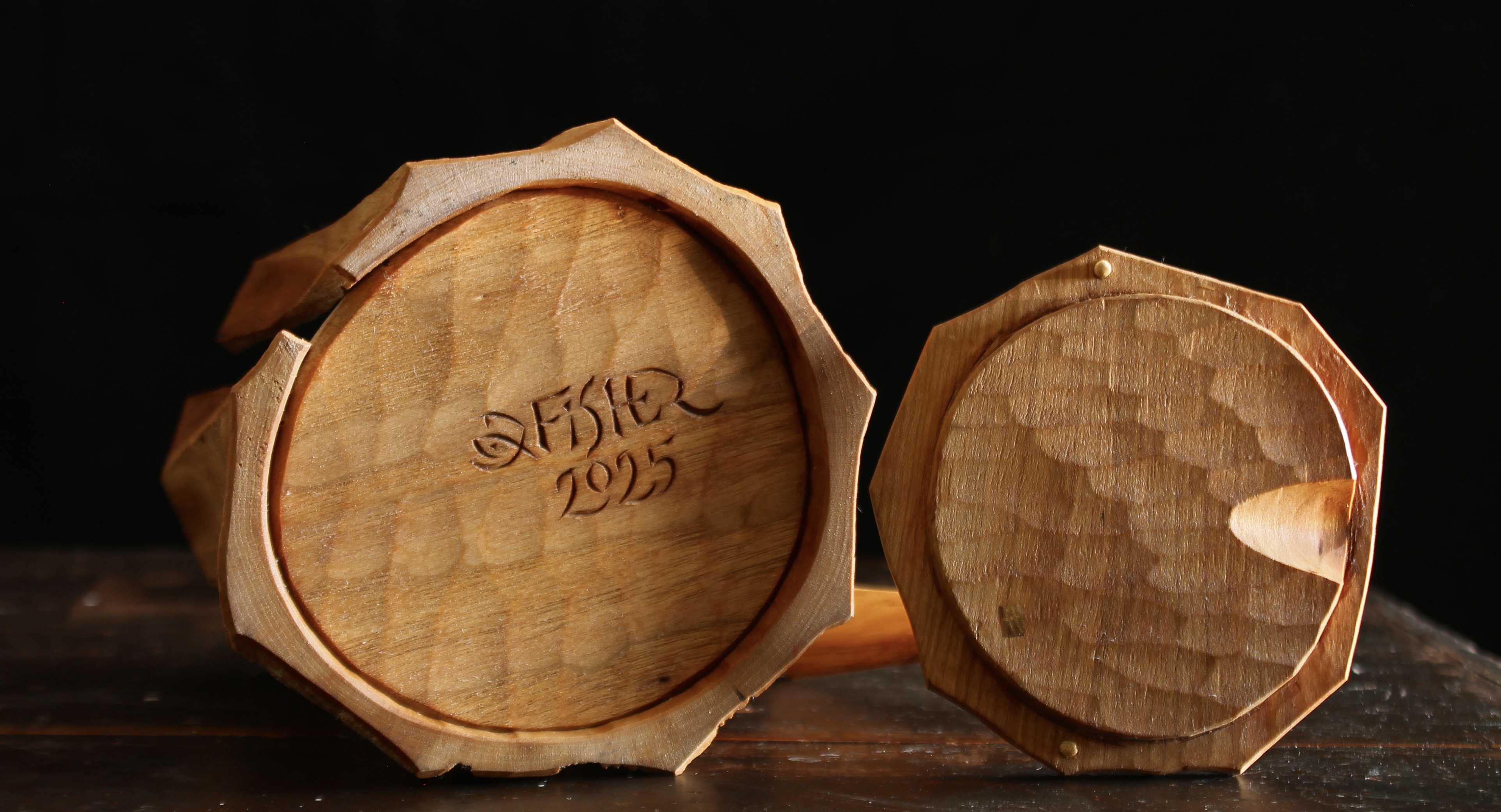
The bottom of the pot and the bottom of the lid.

This one is available for purchase. The exterior is finished with linseed oil. The color of the cherry has already deepened a little beyond that in the photos after a couple days in the intense sunlight to cure the oil. 10 1/2″ high overall (6 1/4″ to the top of the lid) and 5 1/2″ wide at the base. $725 includes shipping. If you’re interested, please email me at dandkfish@gmail.com. Thank you. Update: SOLD
I’m planning to teach classes on (uncracked) shrink pots next year at Pete Galbert’s. I’ll get a course description together soon and get it posted to Pete’s site. Shrink pots offer many possibilities and I’m excited about it. I’m looking forward to making more designs in the coming months, so you’ll be hearing more about them.


I love the texture of the split sides! Makes me think of Leonard Cohen’s take on the same line:
There is a crack, a crack in everything
That’s how the light gets in
LikeLiked by 2 people
I like the Leonard Cohen connection to the quote. Thanks. I’ve always loved the naturally split surface of wood, and I’d like to experiment with it more. I have a few ideas in mind.
LikeLiked by 1 person
Lovely Cracked Pot!
Many year ago Wille Sundqvist told me an Old Country Swedish sloyd woodworkers saying that “The light shines in the dark.”
Wille was referring to the minimal light in the far north during winter. At the low angle the light rakes across surfaces and shows us details and variations that disappear with ‘better lighting.’ Of course, most woodworking was done during winter, and houses didn’t have electrical wiring. So the low angle light is what was there. This effect can be somewhat replicated by adjusting a conventional (perhaps gooseneck) lamp with the bulb at a low angle.
Drew Langsner
LikeLiked by 1 person
Thanks for sharing that story from your time with Wille, Drew. Too much light or light coming from too many directions certainly makes a carved surface disappear. I’ll keep that saying in mind…
LikeLike
We’ve had quite a few storms in our area this summer and I’ve seen a few branches piled up. So shrink pots feel like a good idea. Oddly enough, I was reviewing your shrink pots/tubes posts.
This would be a great class. Thank you for sharing your latest ideas.
LikeLiked by 1 person
Just make sure to cut back beyond any checks in those branches, Phil, and you’ll be ok. Whether it’s bowls, shrink pots, spoons, whatever, I’m convinced that the most common reason for cracking as the piece dries is undetected minor checks, assuring a crack from the beginning. Especially with pieces cut to short lengths, say 16″ firewood lengths, the checking can be very deep after just one sunny day. With long lengths and bark intact, you buy a lot of time.
I’m really looking forward to teaching shrink pots. There are so many fun and interesting options and forms, including lettered inscriptions, and it teaches so much about the nature of wood and wood movement. And they can be so useful as well as beautiful. Should be exciting.
LikeLiked by 1 person