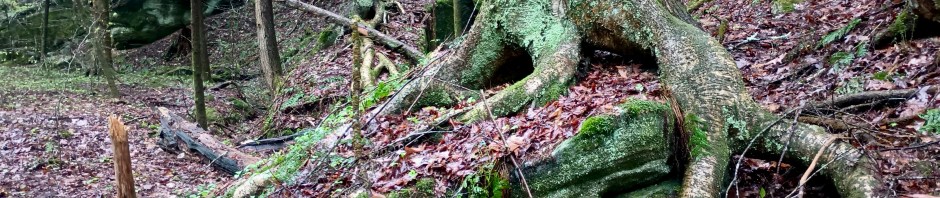

Over the weekend, a friend and I headed to the Allegheny National Forest, less than a two-hour drive from my home in western Pennsylvania. We hiked up along a small stream, fishing a little along the way. A steady light rain soaked us and we didn’t catch a single fish. It was great. The yellow birches alone were worth it.

This is the sort of scene that I marveled at all along the journey. A huge yellow birch (Betula alleghaniensis) growing atop a rock, a bit of light visible beneath its trunk. When I returned home, I read this in one of my favorite tree books:
Fortunately, yellow Birch produces great quantities of seed, and it travels miles, on the autumn winds, by its little winged nutlet coats... If the lodgment of the seed is no more than the moss rime on an old rock, the sapling sends its roots straddling down the boulder till the soil is reached.  A favorite forest site is an old log, which is straddled in the same way as the rock; when the log decays the Birch is left on stilts of its own roots.

-- A Natural History of Trees by Paul Culross Peattie, 2nd Ed., 1966
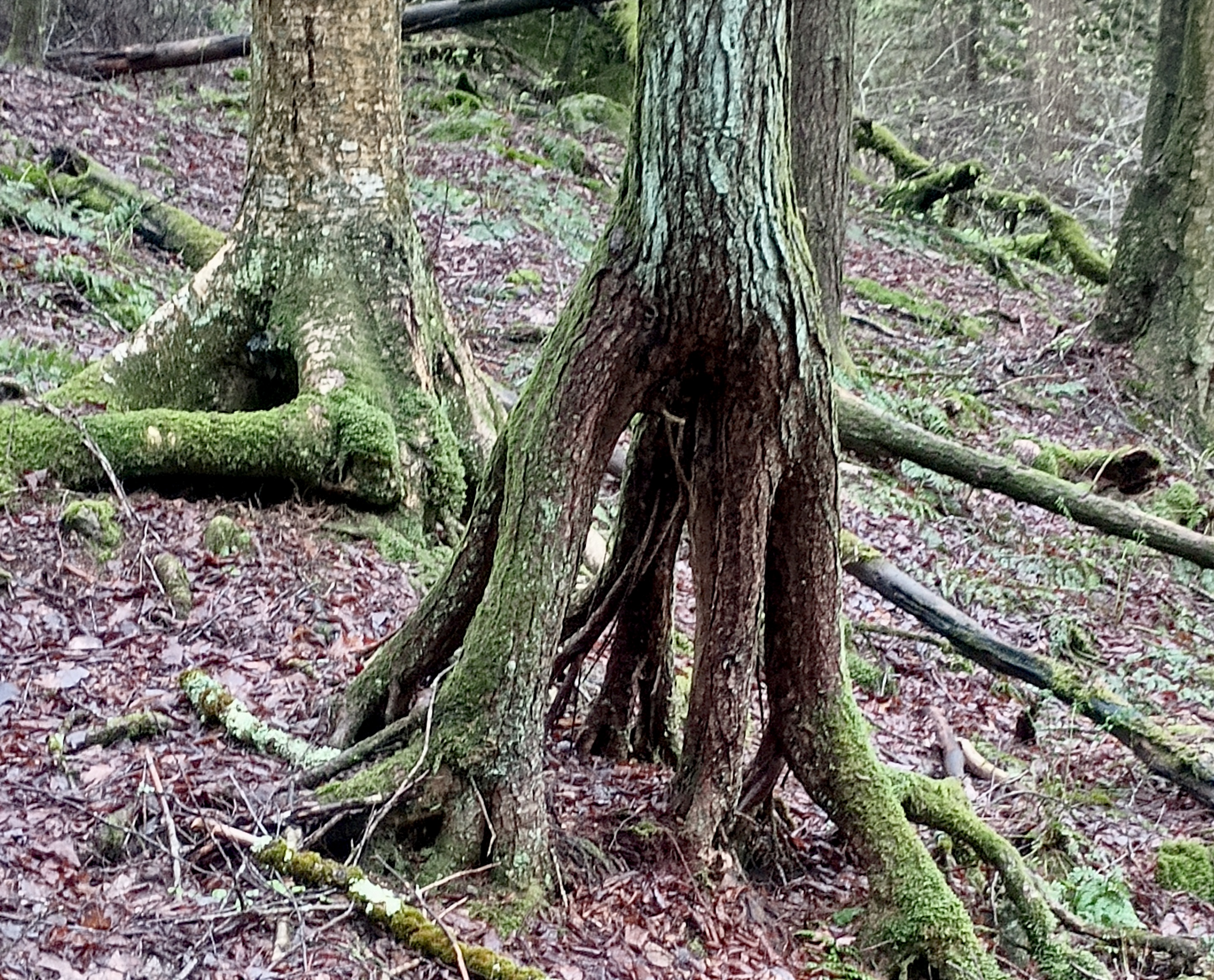
There, above, are a yellow birch in the background and an eastern hemlock in the foreground that have both pulled off the same trick as described by Peattie at the end of the excerpt. The birch around a fallen log, and the hemlock over a stump, both long since gone.
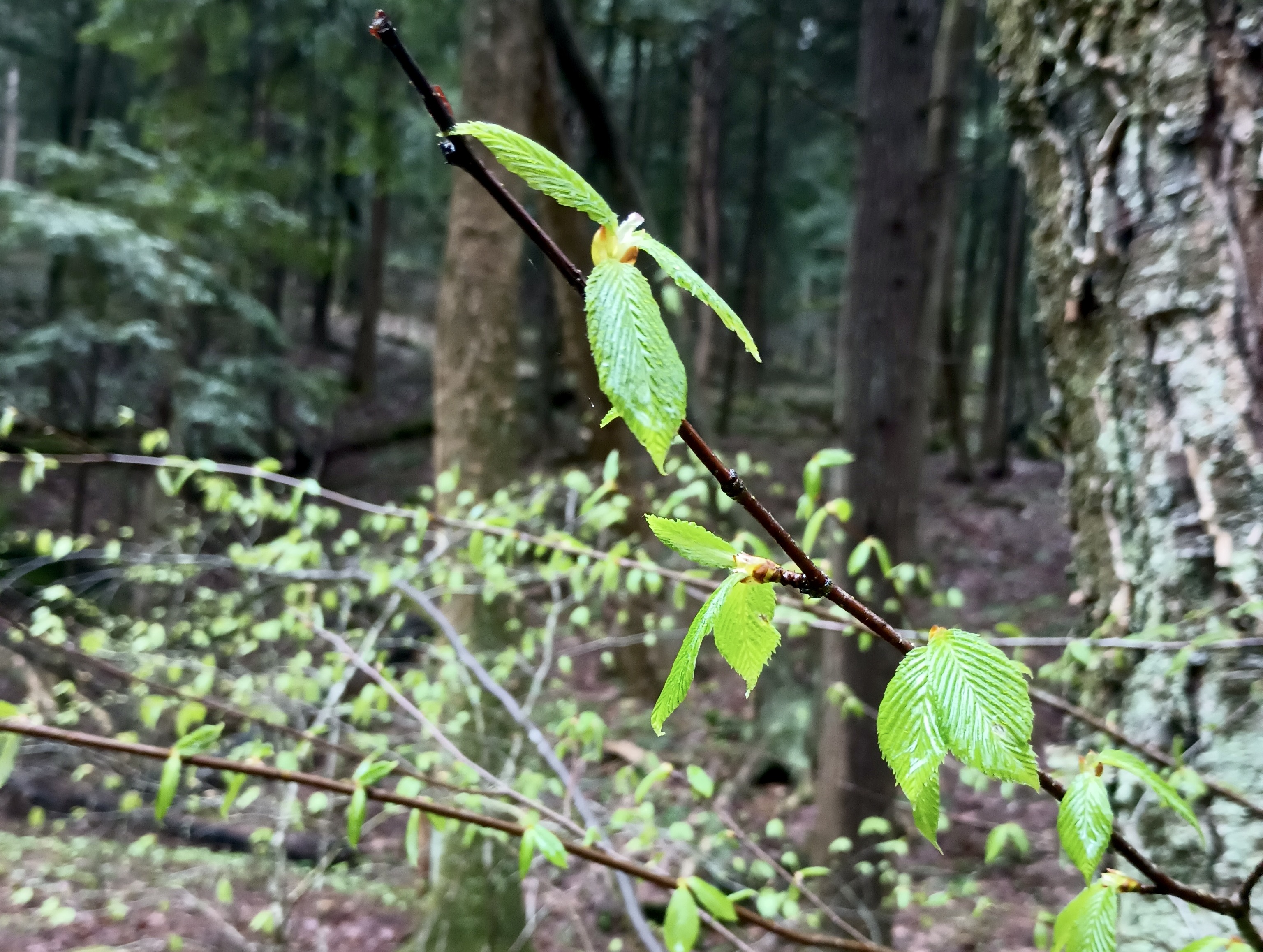
Continuing the timeless cycle, young birches were showing off their new leaves all along the stream side.
I’ve been reading a book recommended to me by my friend, Marie Pelletier. Thoreau and the Language of Trees by Richard Higgins is a collection of, and commentary on, Thoreau’s writings related to trees. One section references a journal entry from 4 January 1853. Thoreau wrote about a large stand of yellow birches he encountered in Concord:
I must call that swamp of E. Hubbard’s west of the Hunt Pasture, Yellow Birch Swamp. There are more of those trees than anywhere else in town that I know. How pleasing to stand beside a new or rare tree! And few are so handsome as this.
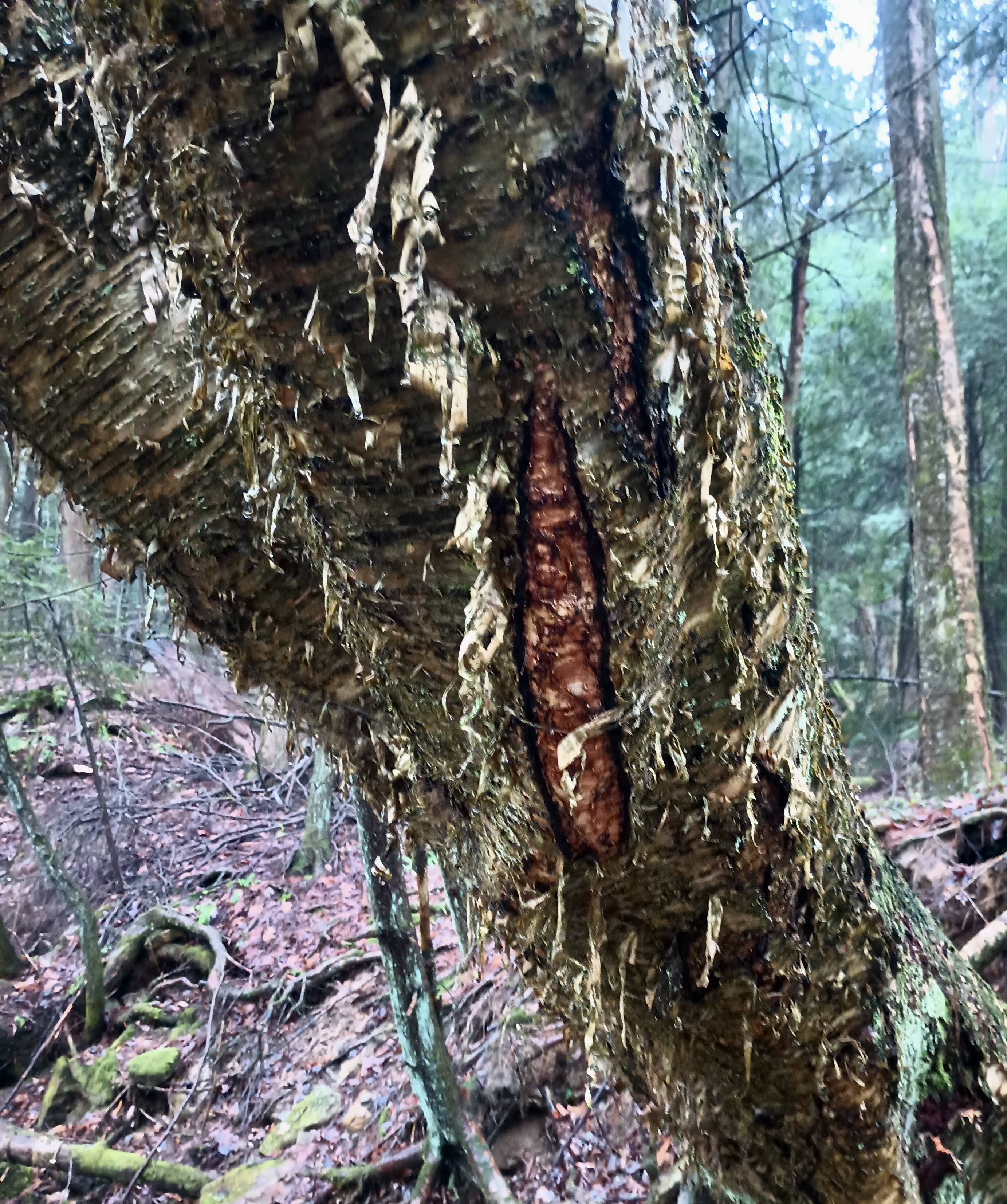
Thoreau goes on to describe the bark of the yellow birch, the same bark I was looking upon streamside, in glowing terms:
The top is brush-like as the black birch; the bark an exquisite fine or delicate gold color, curled off partly from the trunk, with vertical clear or smooth spaces, as if a plane had been passed up the tree. The sight of these trees affects me more than California gold.
Here is a link to the full journal entry if you’re interested.
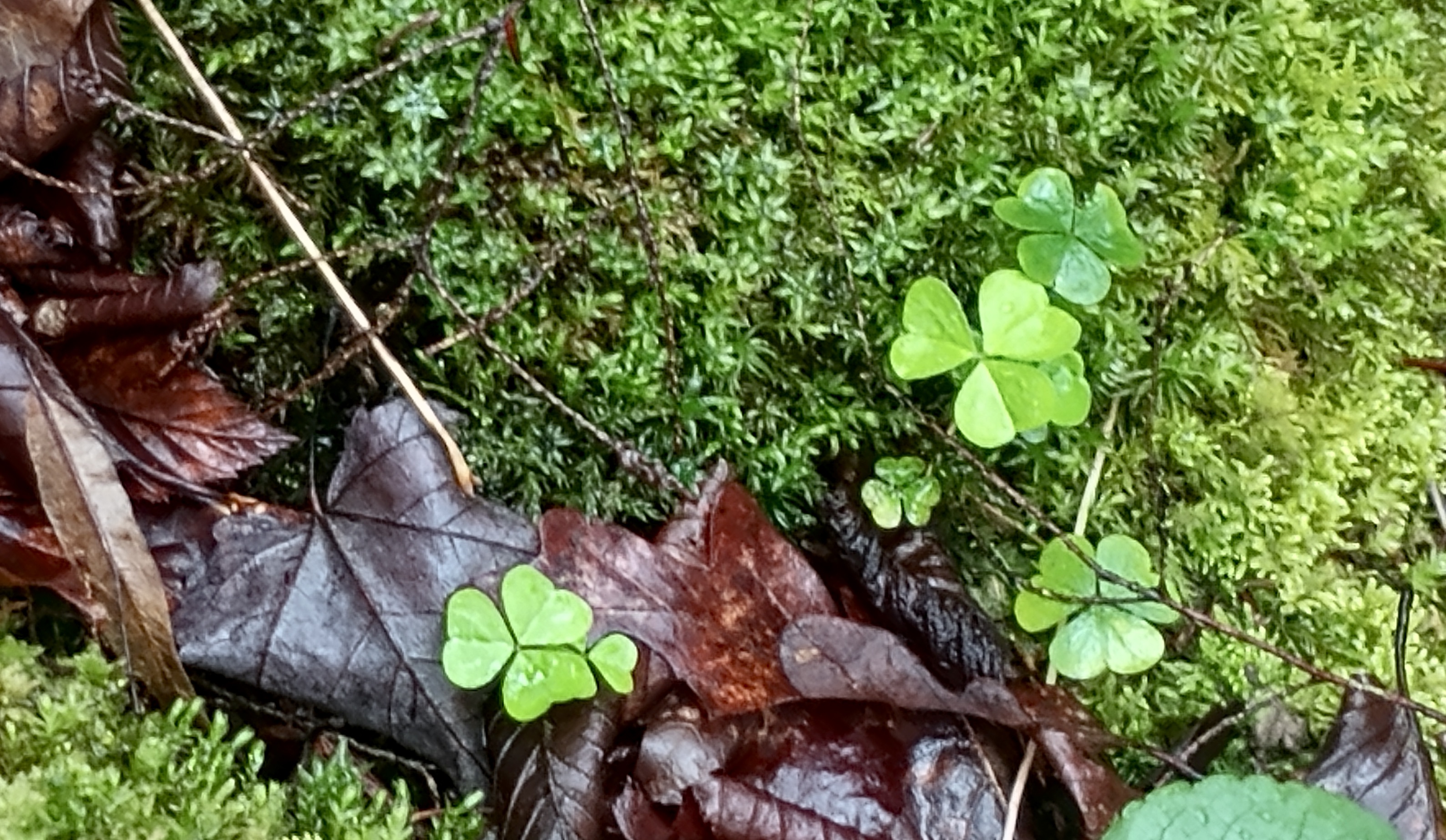
Beneath the birches, the ground was rich with composting leaves and a thick carpet of moss, peppered here and there by the triple hearts of wood sorrel…
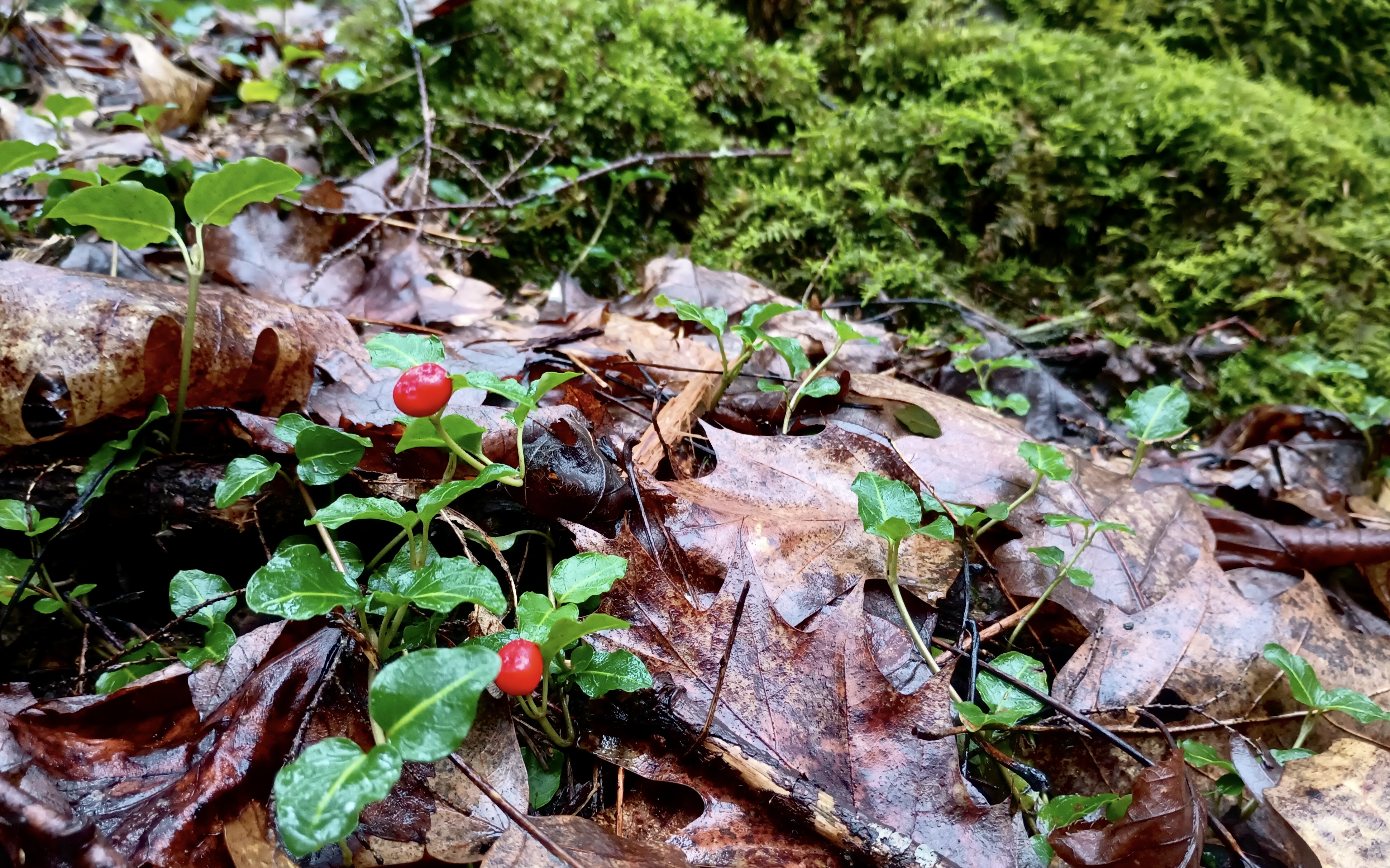
… and the red of partridgeberry.
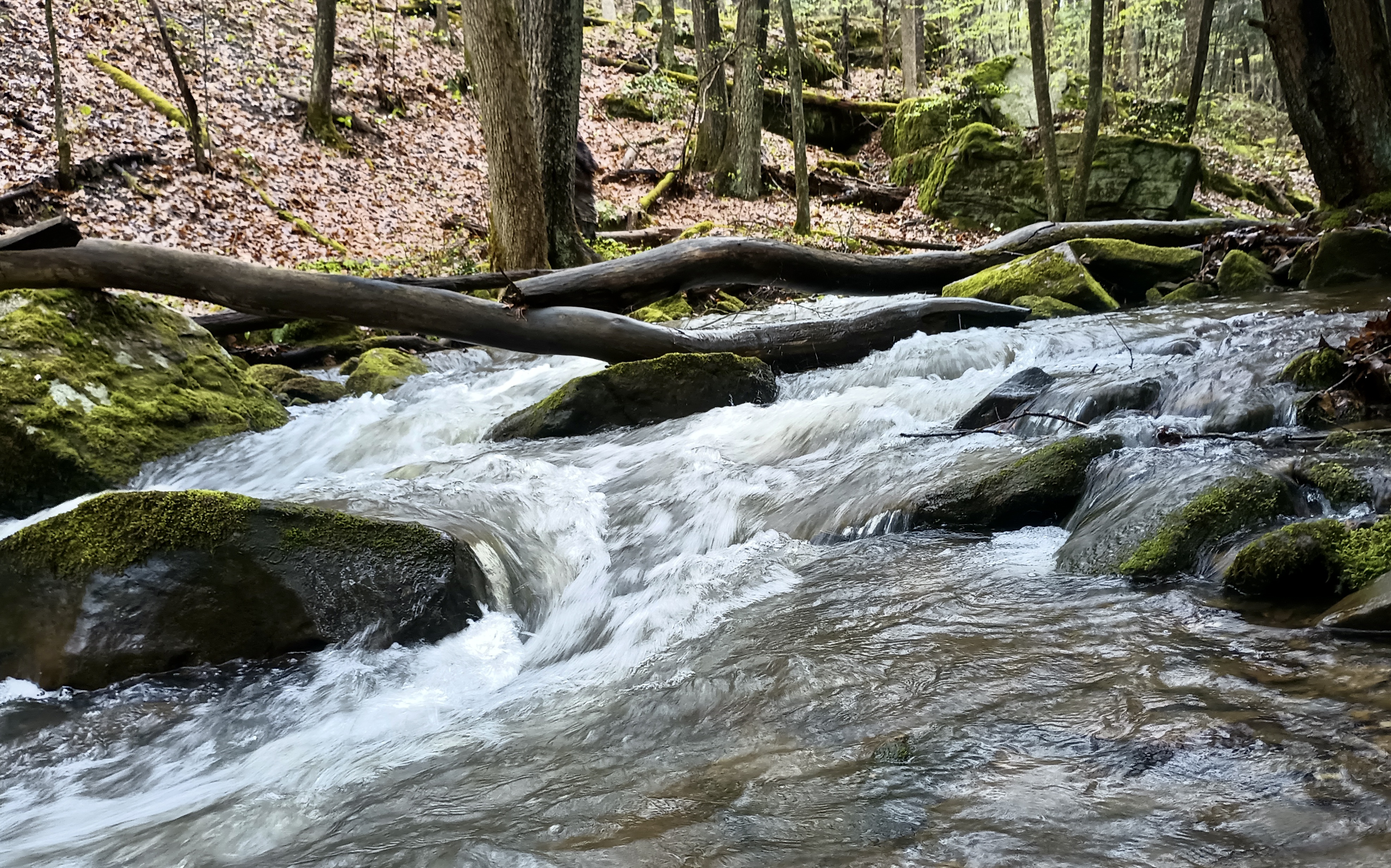
Walking back with the flow of the brook, water dripping from the brim of my hat, I thought of these lines by Gerard Manley Hopkins (and also of not rolling an ankle):
What would the world be, once bereft
Of wet and of wildness? Let them be left,
O let them be left, wildness and wet;
Long live the weeds and the wilderness yet.

-- Gerard Manley Hopkins, "Inversnaid", (1881)
 David Fisher, Carving Explorations
That’s beautiful David! Thank you
LikeLiked by 2 people
The photos and the words you chose made me feel like I was walking along beside you, Dave. And I didn’t catch any fish either…..
LikeLiked by 2 people
Thanks, Drew. I took the photos with my Motorola cell phone — a dying breed!
LikeLike
Thank you for this bit of cool green loveliness, Dave — Sue in North Carolina
LikeLiked by 2 people
Thanks, Sue. I’m sure your leaves down there are way ahead of ours.
LikeLike
great post–
LikeLiked by 2 people
Lovely post, thanks.
LikeLiked by 1 person
David,
This is a great post. The fleeting foundations of roots! After reading about this survival strategy of the Yellow Birches, I ordered a copy of Peattie’s book. Nice poem too. It has rained up here in Massachusetts for most of the week. We are getting a bit soggy but the spring growth is very happy.
Thanks,
Nat Cohen
>
LikeLiked by 2 people
Hi, Nat! Glad you ordered the book. You’ll enjoy it. Peattie’s writing is far beyond a typical guidebook and Paul Landacre’s plentiful illustrations are a joy.
LikeLike
I love your stre
LikeLike
Thanks Dave for the delightful read today, and the several, good tree book references.
Stay well.
Cheers,
Michael
LikeLiked by 1 person
Thanks for the post David, Mother Nature at it’s best! I love the Yellow Birch for shrink pots, leaving the bark on, showing off its beautiful golden colors and textures.
LikeLike
We camped Daniel Boone National Forest recently, but maybe we’ll have to add this to the list!
LikeLiked by 1 person