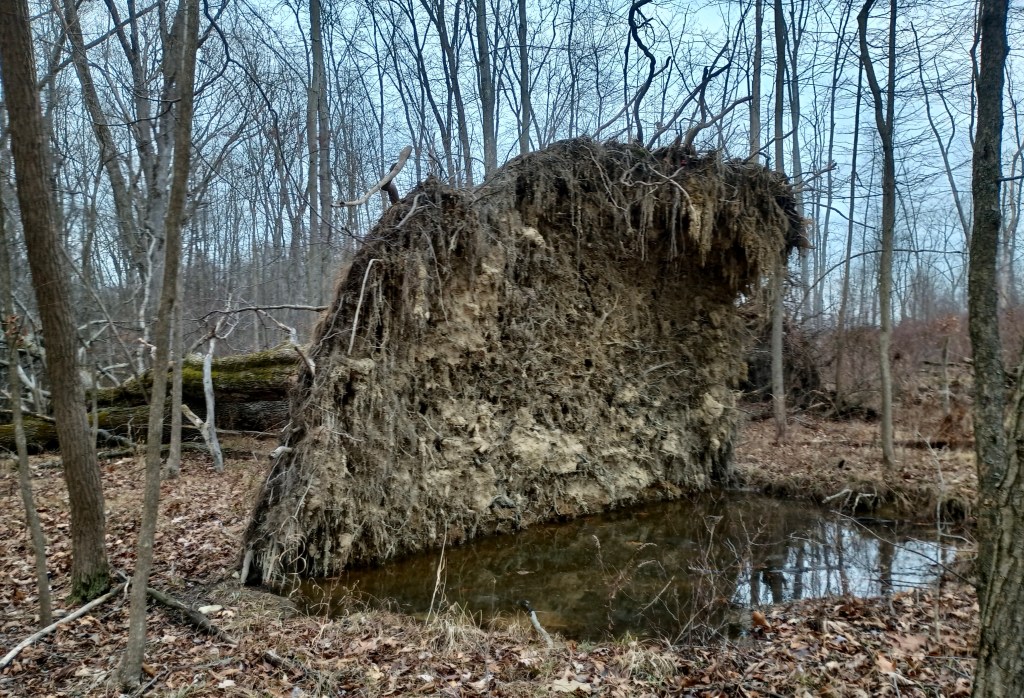
A walk through the woods often makes me stop in my tracks. It may be something as simple as an interesting lichen on a rock or a deer bed. Other times it’s a phenomenal thing like this huge maple uprooted by the wind. I took the photo a couple weeks ago. The top of the root mass is 11 or 12 feet above the ground. It will be interesting to see what little creatures are living in the resulting pool in the spring.
As I walked alongside the prostrate trunk in awe and even reverence, I spotted a couple nice crooks among the many branches. Here are some shots as I carved a ladle from one.

Sometimes they pop right open, sometimes they don’t. This one didn’t! I just keep working at tough ones like this with a couple wedges, severing the interlocked fibers at the edges with a chisel or careful axe chops. Eventually it opens up. It’s that upper portion I want, on the inside of the bend. The outer part is pierced at the bend by the remnants of a branch that broke off.
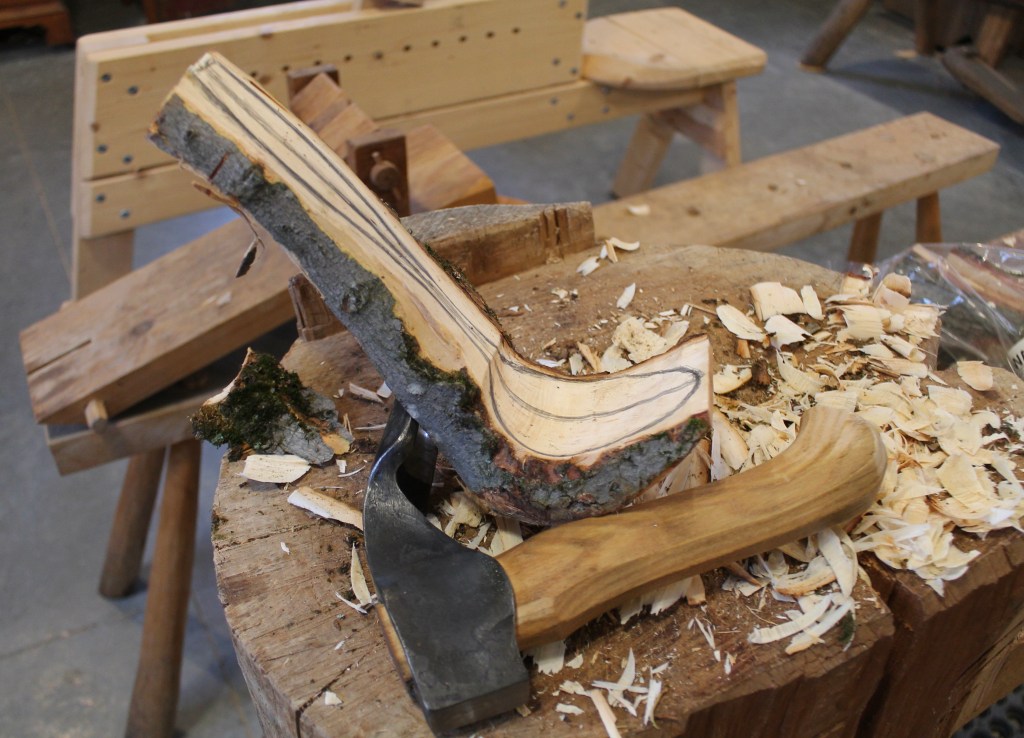
After it was free, I shaped it up a bit with axe and adze, working across grain with the adze to form the top of the bowl. Then I drew a basic outline on the fresh surface. I find that any soft dark pencil works well for marking on the green wood. I used to get water-soluble “greenwood” pencils, but I don’t bother any more. A regular pencil, especially soft like a 4B or similar, works great.
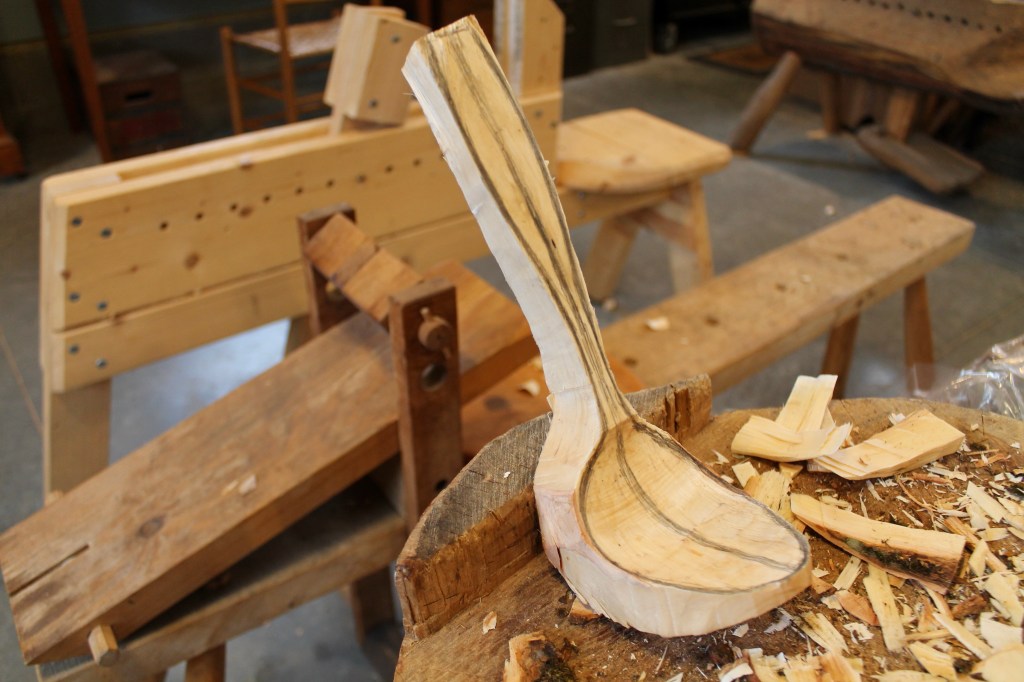
I hewed away wood beyond the perimeter with an axe.
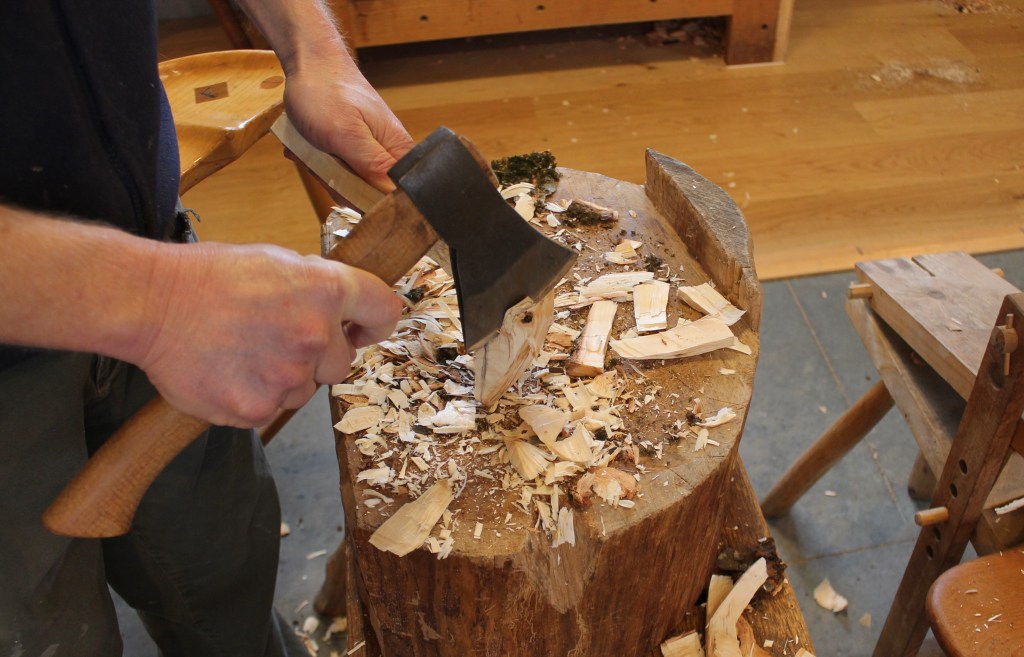
Then I sculpted the contours further with the axe, bringing the ladle to basic shape, ready for knife work.

For a hollow this big, I clamp the spoon in a vise and remove much of the waste with a gouge. Then I need to go with hook knives to continue shaping the hollow.

The back of the hollow is deep and undercut. I marked up a photo above to explain a cutting technique I find to be effective for that area. Oftentimes, when carving, the wood moves more than the knife. This is one of those times.

A sloyd knife handled the rest.

Ready for drying in the photo above. After it was dry, a few days later, I went back at it with the knives.
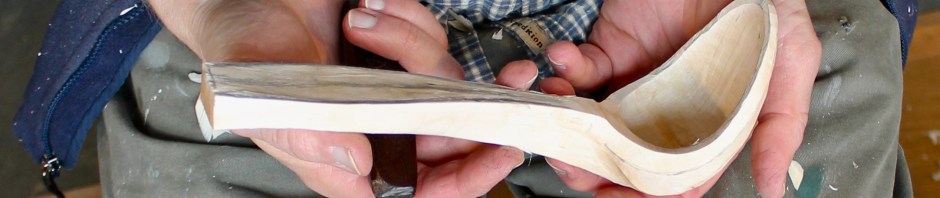
I’ve now finished that ladle and some other spoons. I need to take a few photos, then I’ll be posting them soon. Update: A couple photos of the finished ladle below:
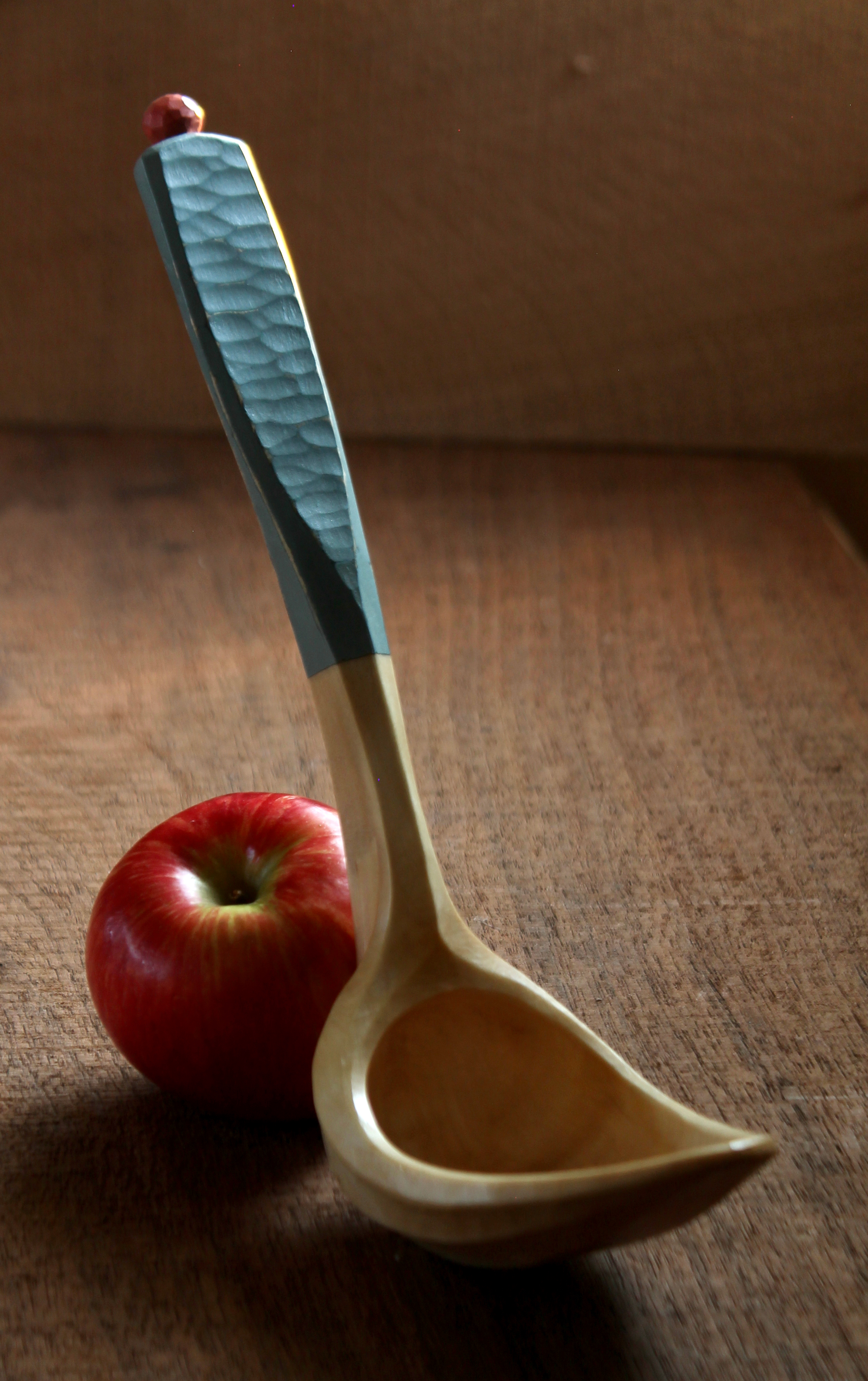
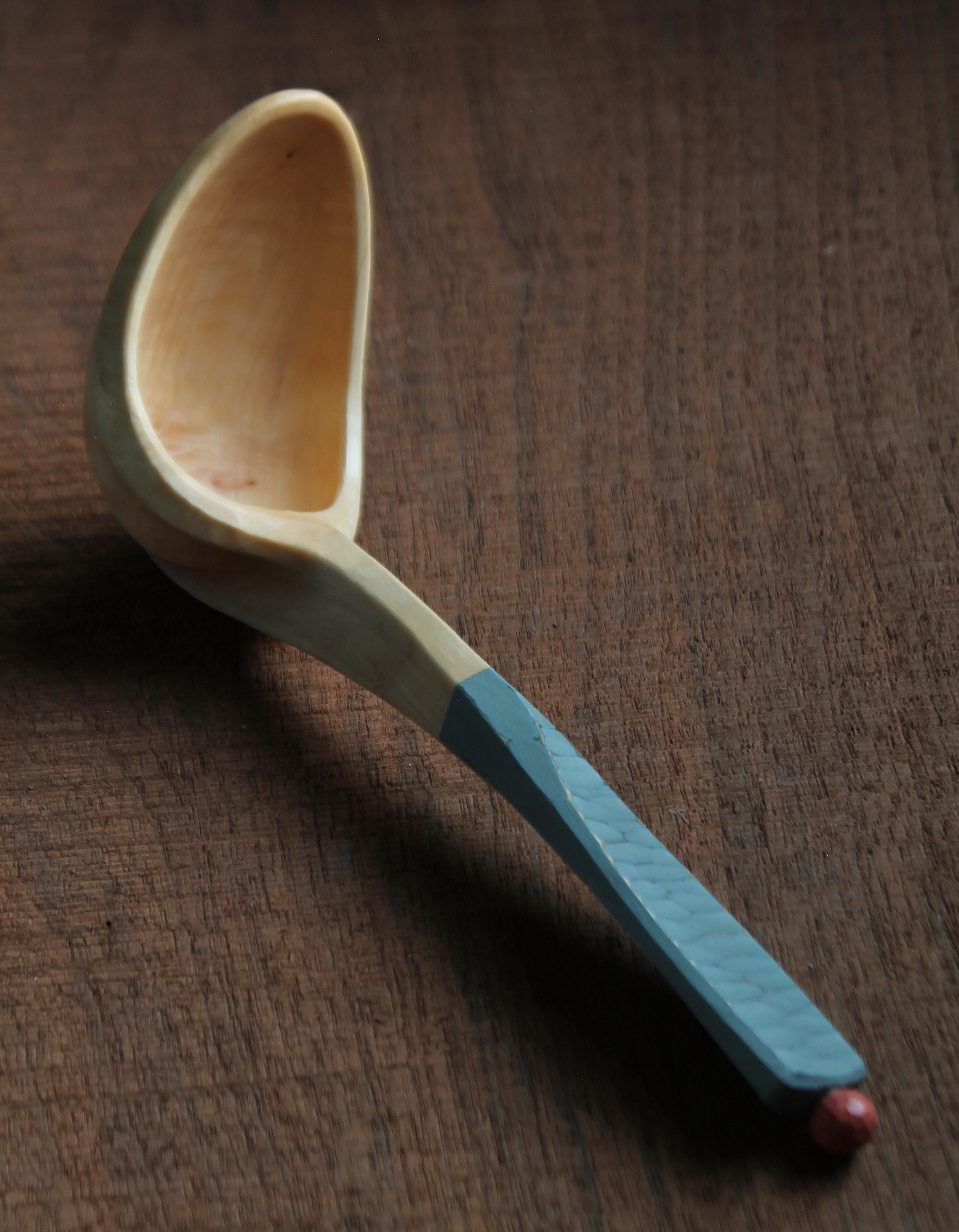

Back to the woods. There’s the root ball now. I was able to walk out on the ice for a close look.
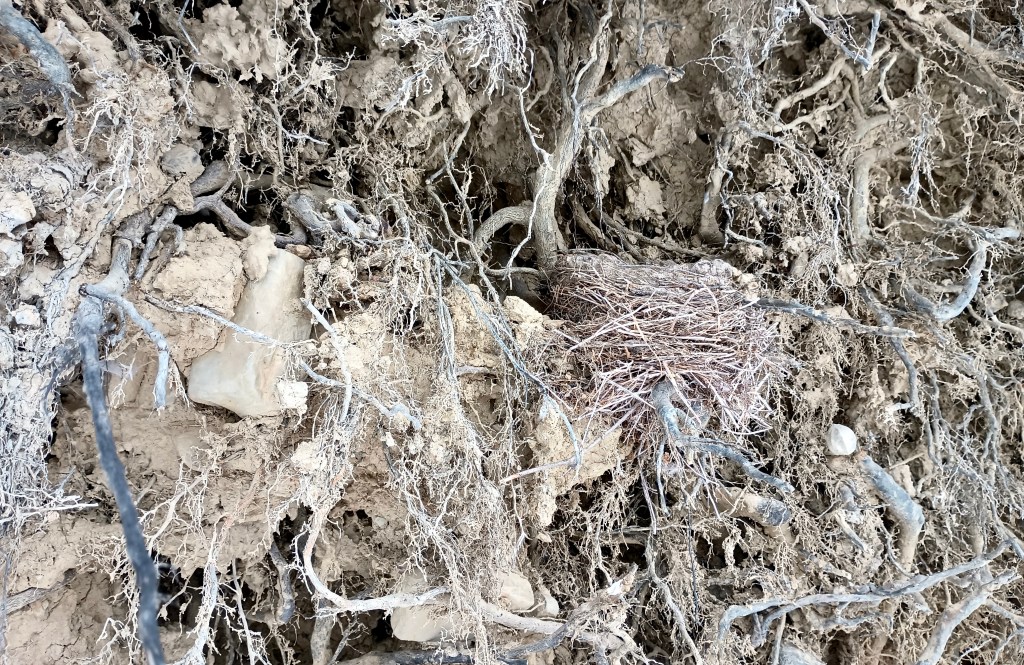
I’m not the only one that has visited. I almost missed it.
 David Fisher, Carving Explorations
Dave, I believe there is a bird nest at the center, a bit right and up. @ at 2 o’clock.
Cheers, Mike O’Briem
LikeLiked by 2 people
yup looks li
like it–
LikeLiked by 1 person
Good eye, Mike!
LikeLike
And a very nice ladle too, with good carving information. Thanks.
LikeLiked by 1 person
Treasures found during your walks. The ladle looks great. look forward to the finished piece and embellishment. The bird nest is interesting!
LikeLiked by 2 people
Wow, that’s quite a root ball! An enormous pin oak planted on the curb here in Saint Louis City did the same thing. All the earth and utilities were wrenched from the ground in one massive chunk. We certainly stopped in our tracks when we saw that on our urban walk!
Looking forward to seeing the ladle progress. What axe are you using there?
LikeLike
Wow! I’ll bet that was a sight to see.
The axe I’m using there is a Robin Wood Axe: https://wood-tools.co.uk/tools/the-robin-wood-axe/
LikeLike
Over the years the root ball will rot and condense. The root hole will fill. What’s left is a pillow and cradle. In the Northeast, the hurricane of 1938 created a lot of these after all the tree knockdowns.
LikeLiked by 1 person
Thanks. Your comment led me to research more about the hurricane of ’38. Really interesting.
LikeLike
Pingback: Six Spoons | David Fisher, Carving Explorations
Hiya, Dave. What brand of carving hook are you using? From where I’m standing, it looks like a Narex. Would you care to share any information?
LikeLike
I’m using two different hook knives in successive photos. In the first, I’m using the old version of the Mora 162 double-edge hook knife. I like how it dips sharply in a deep U; especially good for excavating deep areas and working back and forth with the double edge. The new version of the 162 is an improvement overall, but the old style had its advantages. In the next photo (with the red notes) I’m using a Svante Djarv large hook knife (right handed). I bought that years ago from Drew Langsner’s Country Workshops. I think at one point they called it the “Big Brother” hook knife. Ken and Angela at the Maine Coast Craft School took over with the line of tools like CW used to carry. There are many more hook knives out there to choose from now.
LikeLike