
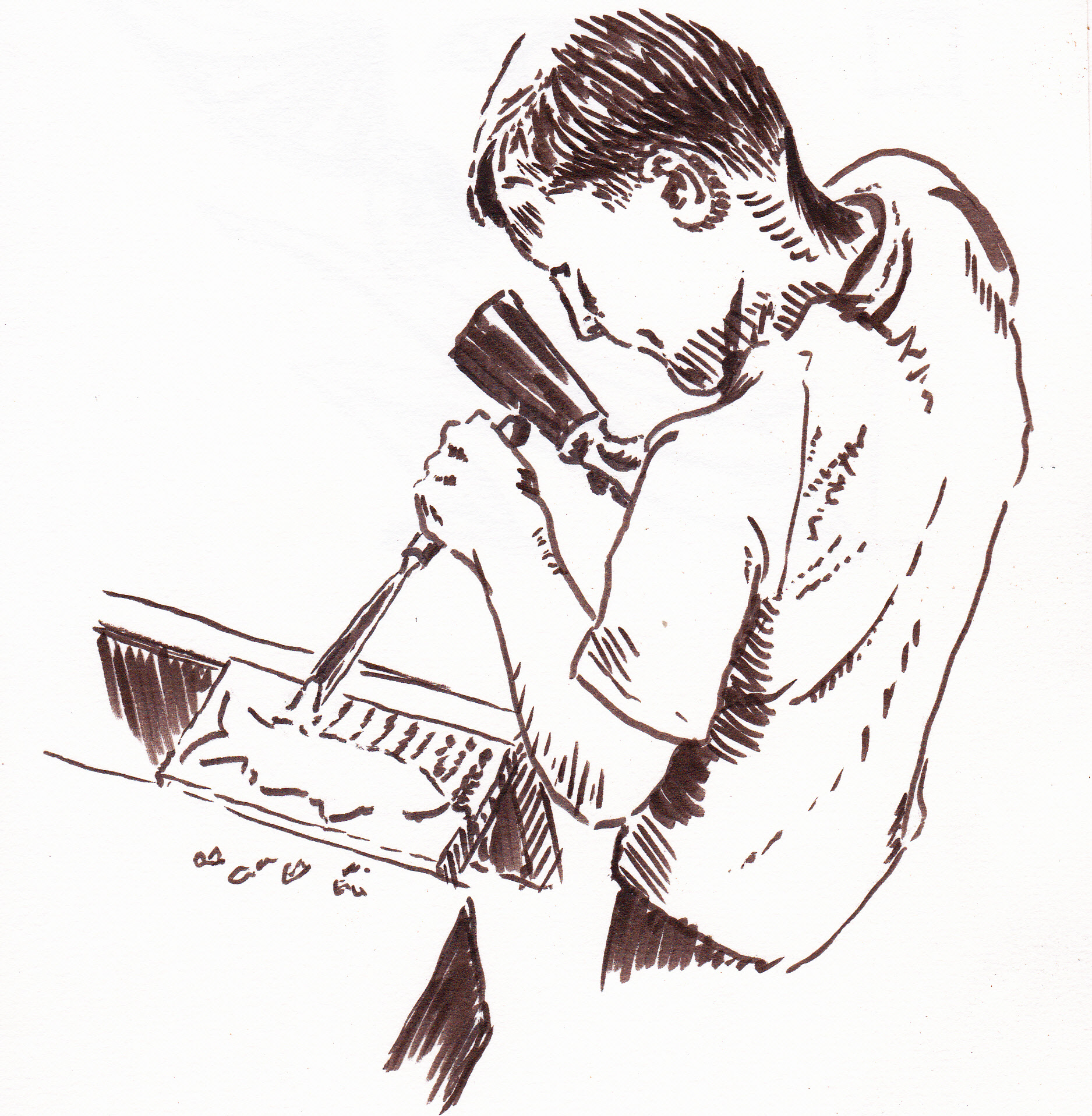
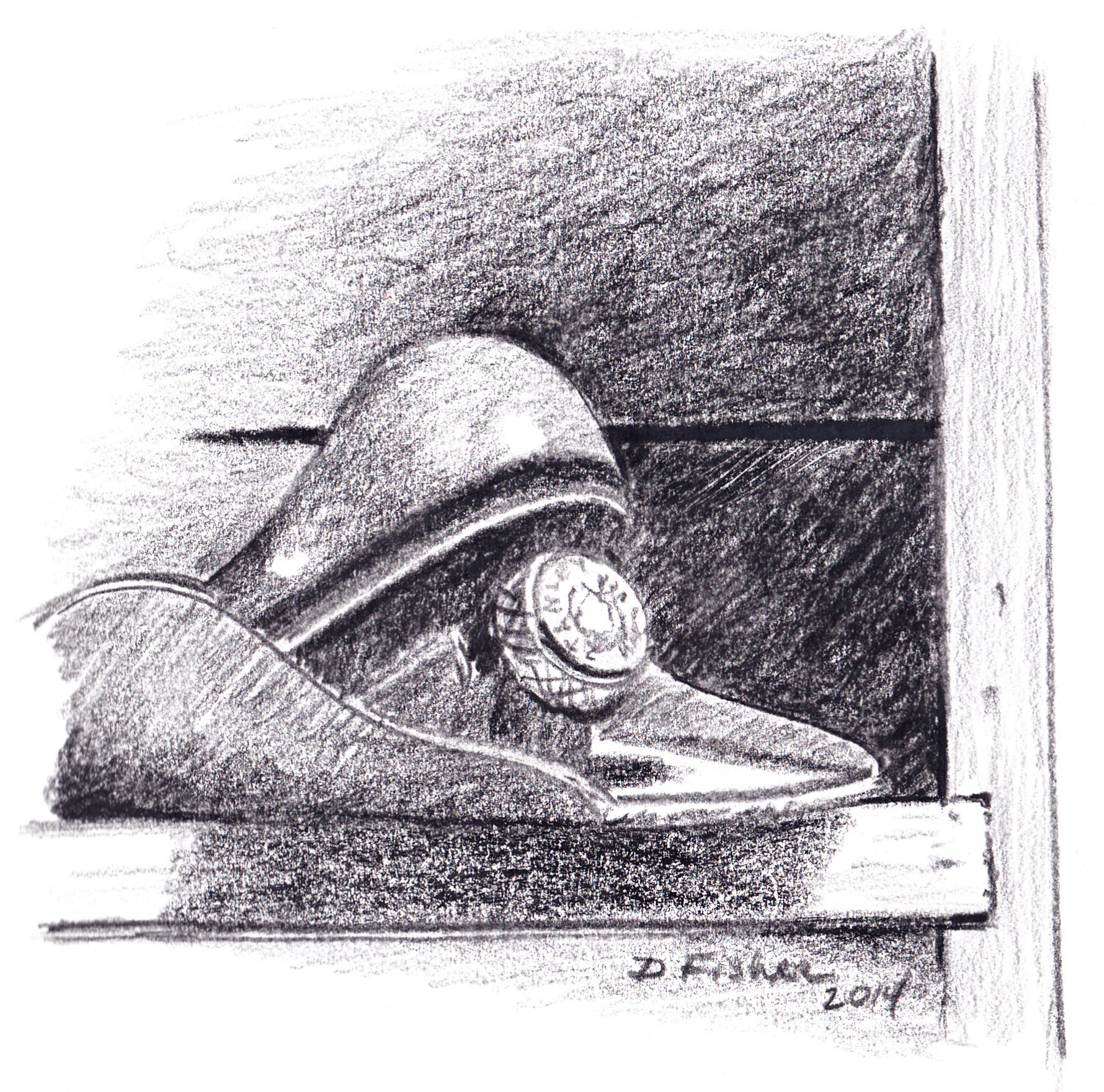
A recent young guest to the shop relief-carving a fish with mallet and gouge
Ten years ago, when my son was six, I gave him a pocketknife. My wife thought this was stupid. Within a day, I was with him at the emergency room watching him get stitches in his finger. This was rough, as was the look on my wife’s face when I returned home.
I guess I was impatient. I wanted him to gain confidence with tools from an early age and all that. But the fact is, limited hand strength and dexterity can make it difficult to control a sharp knife for young folks. Forcing a situation too early can instill fear and opposition, rather than confidence and excitement. I don’t think there is a magic age for such things; much depends on the individual.
But, in my experience, kids want to carve. In fact, kids want to create in many ways. The more we can encourage them to draw, write, feel, build, and explore in the real world, the less they may wish to immerse themselves in a virtual world. So, when opportunity presents itself, carve with them.
My son’s finger healed, and the two of us made lots of projects over the years. At sixteen, my son, at least for now, knows more than me, but there are still curious younger kids around on occasion. Here’s what I’ve learned since that trip to the ER:
- For young kids, keep the projects simple. They can achieve success and learn some fundamentals.
- They may not be as interested in bowls and spoons as I am. Give them a lot of choice. If they want to carve Spiderman or a monster truck, then think of a way to simplify the image and go with it.
- Consider a simple relief carving project for starters. I’ll explain why…
Last week I had a nine-year old in the shop (see top sketch) who loves to go fishing. We found a picture of a catfish in a book and drew a simple version onto a small plank of basswood. With a mallet and a v-tool, he ran a trench along the outline of the fish, not concerned with occasional deviations from the pencil line. Opportunities came up to talk about grain direction, raising and lowering the handle, and so on. But, overall, I just let him get a feel for things and make little mistakes.
 After the v-trench was done around the fish, I showed him how to remove the background simply with a deep gouge (a number eight or so). Using the mallet, he tapped from the outside edge in until the chip released at the v-trench. A few simple indications of gills and fin texture with the v-tool and gouge, and the carving was done. Half an hour, tops. He painted it with some acrylic craft paint, but markers work well too.
He loved it, and wants to carve some more. He felt confident. Working with a mallet and gouge allows smaller hands to remove wood efficiently, and there is never a hand in range of the cutting edge. Softer wood like basswood is a big help as well.
A mallet and gouge is a great way for a kid (or an adult for that matter) to carve a bowl as well. A lot of material can be removed, and it’s safer and cheaper than an adze. And, of course, working safely with a knife will come as well. Even if it means some stitches along the way.
In creating, the only hard thing’s to begin;
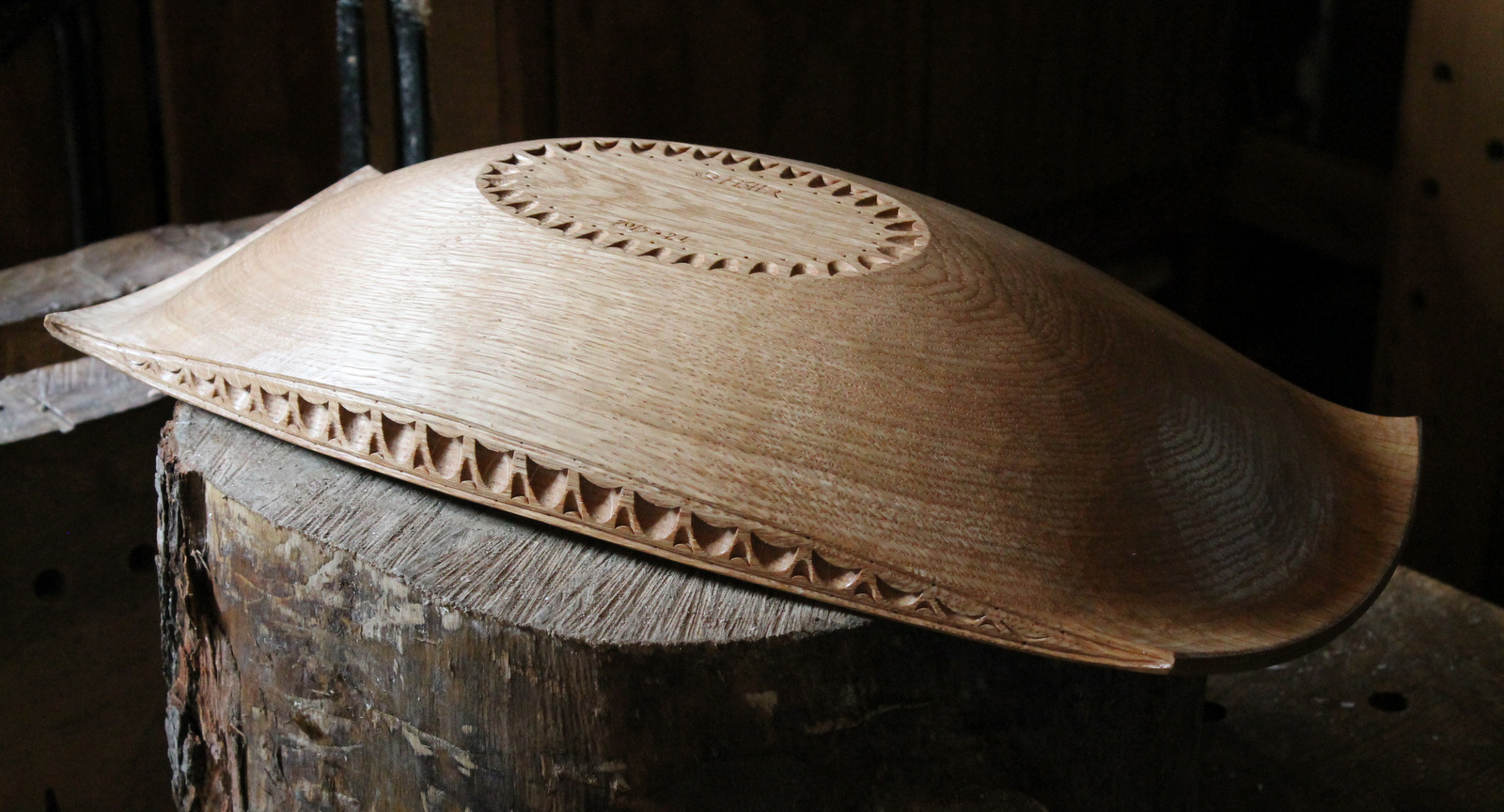
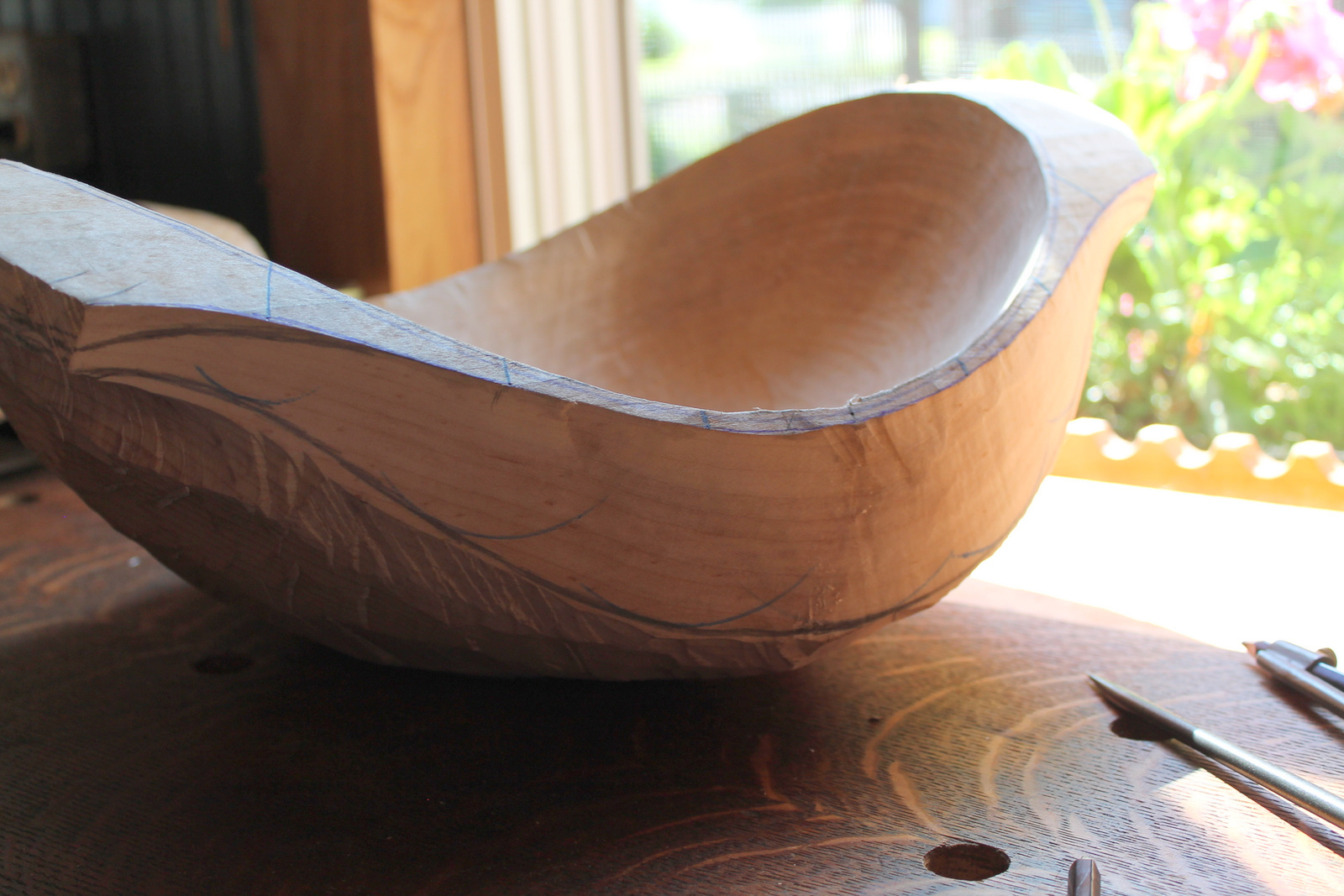
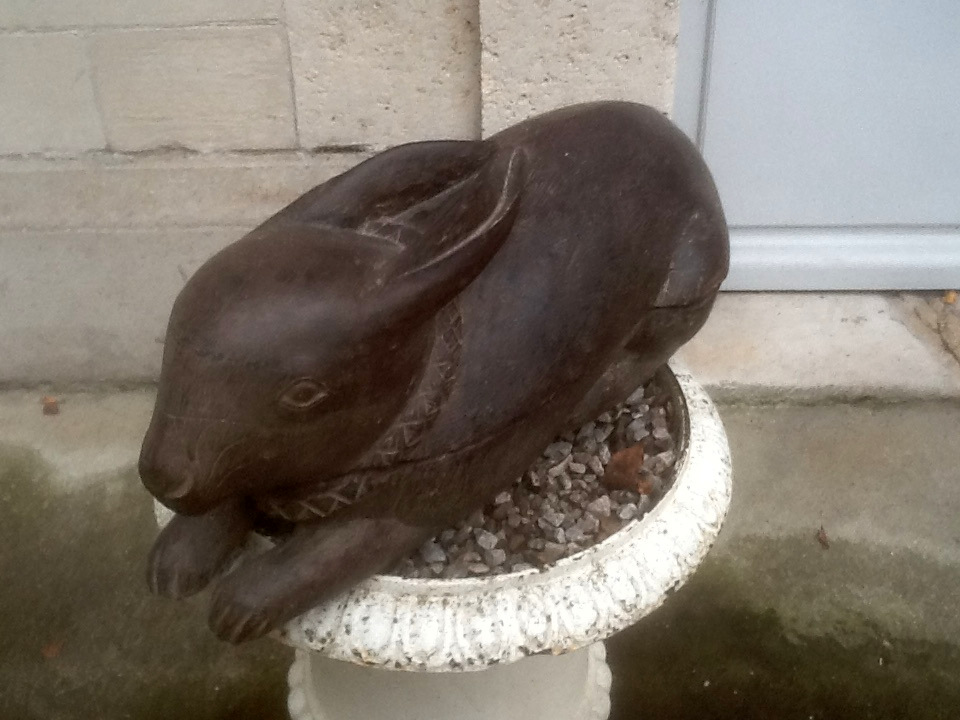
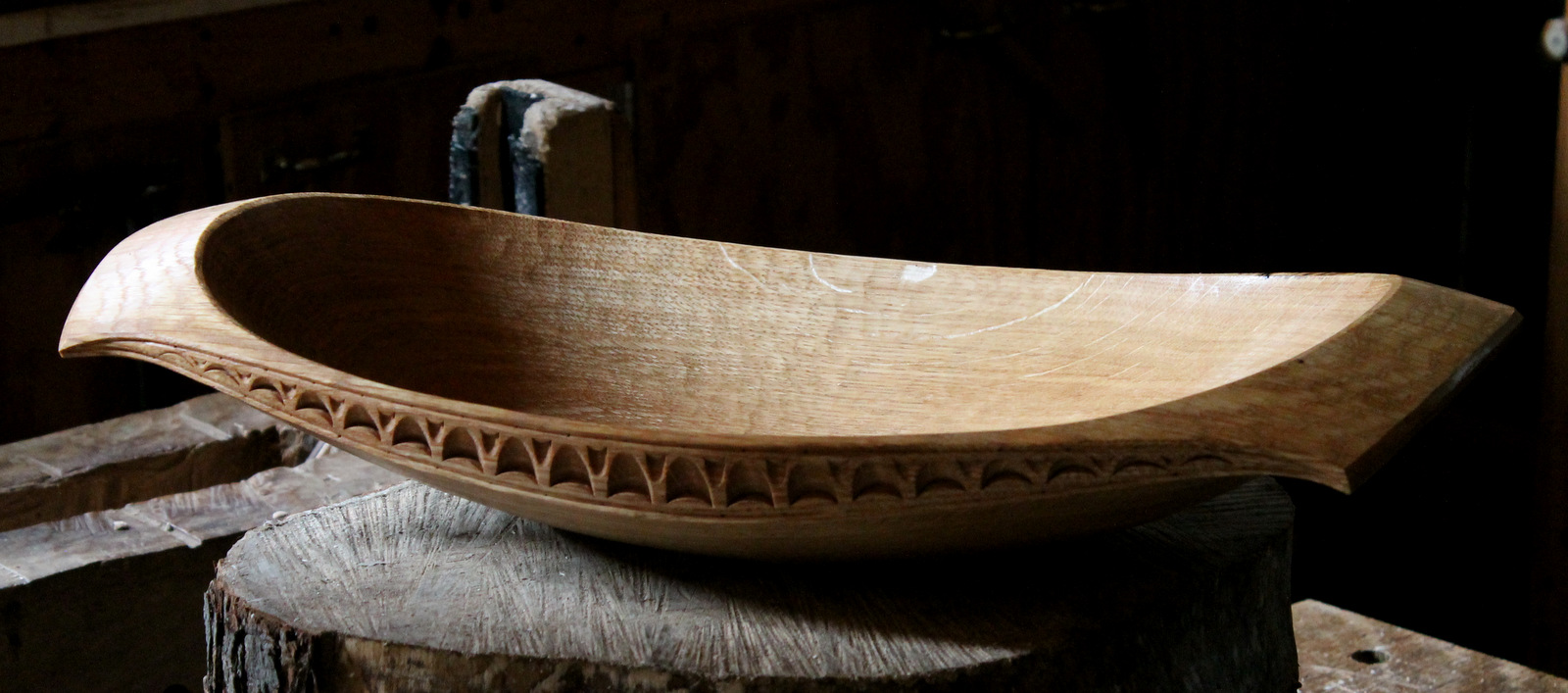 I wonder if James Russell Lowell ever carved an oak bowl? In these two previous posts (here and here), I discussed the beginning stages of this bowl of white oak. I like the result, but I might wait forty years or so before trying another!
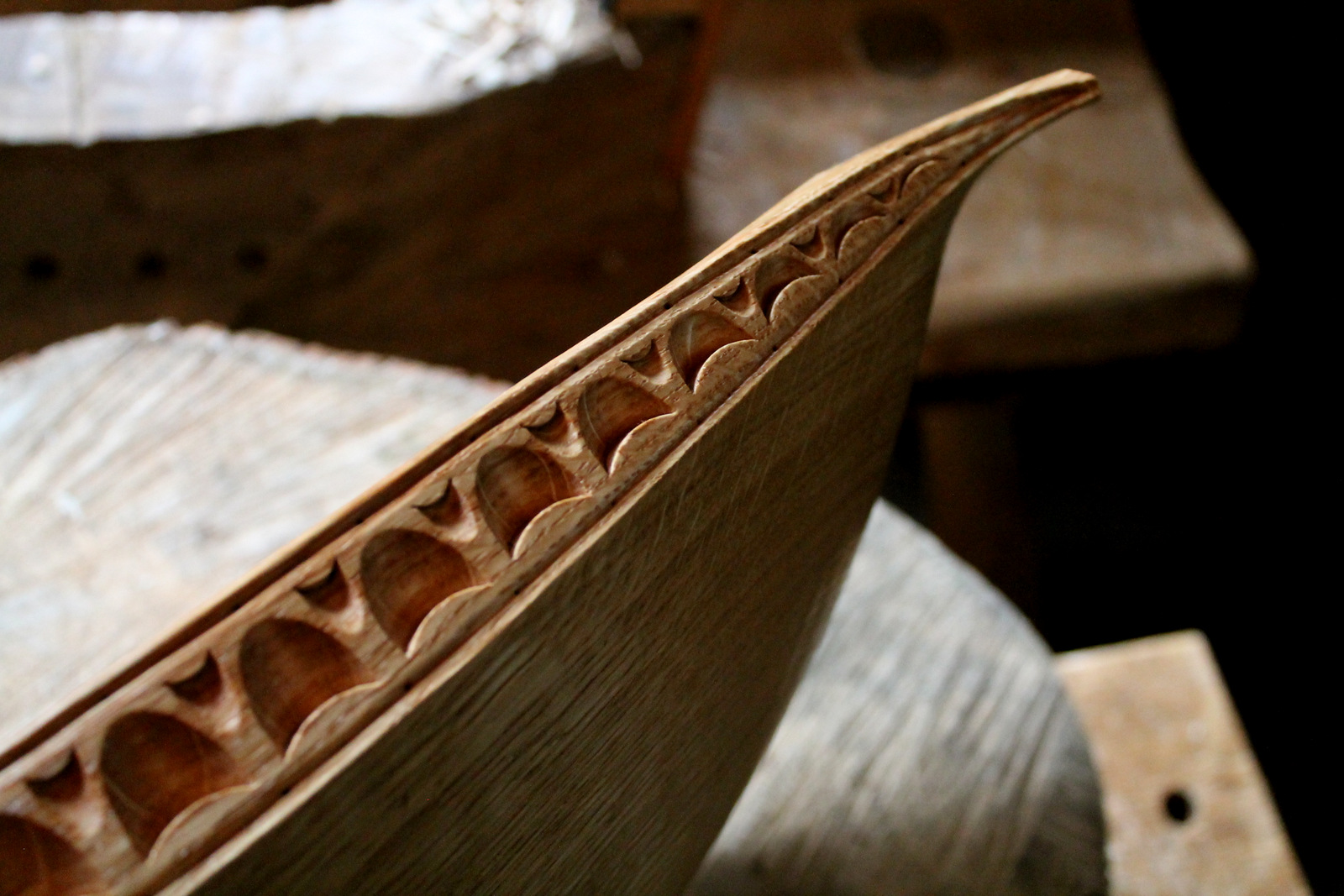
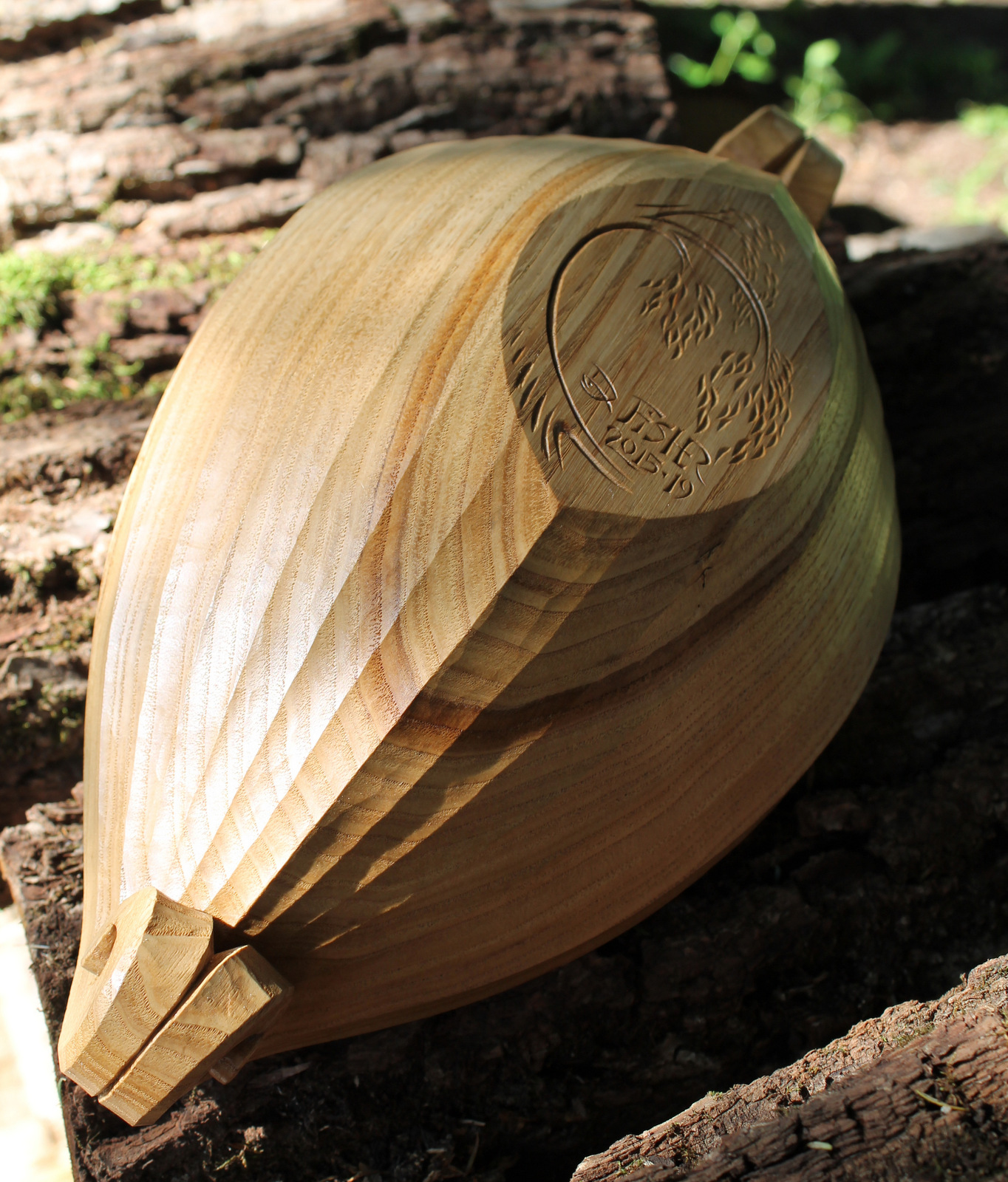
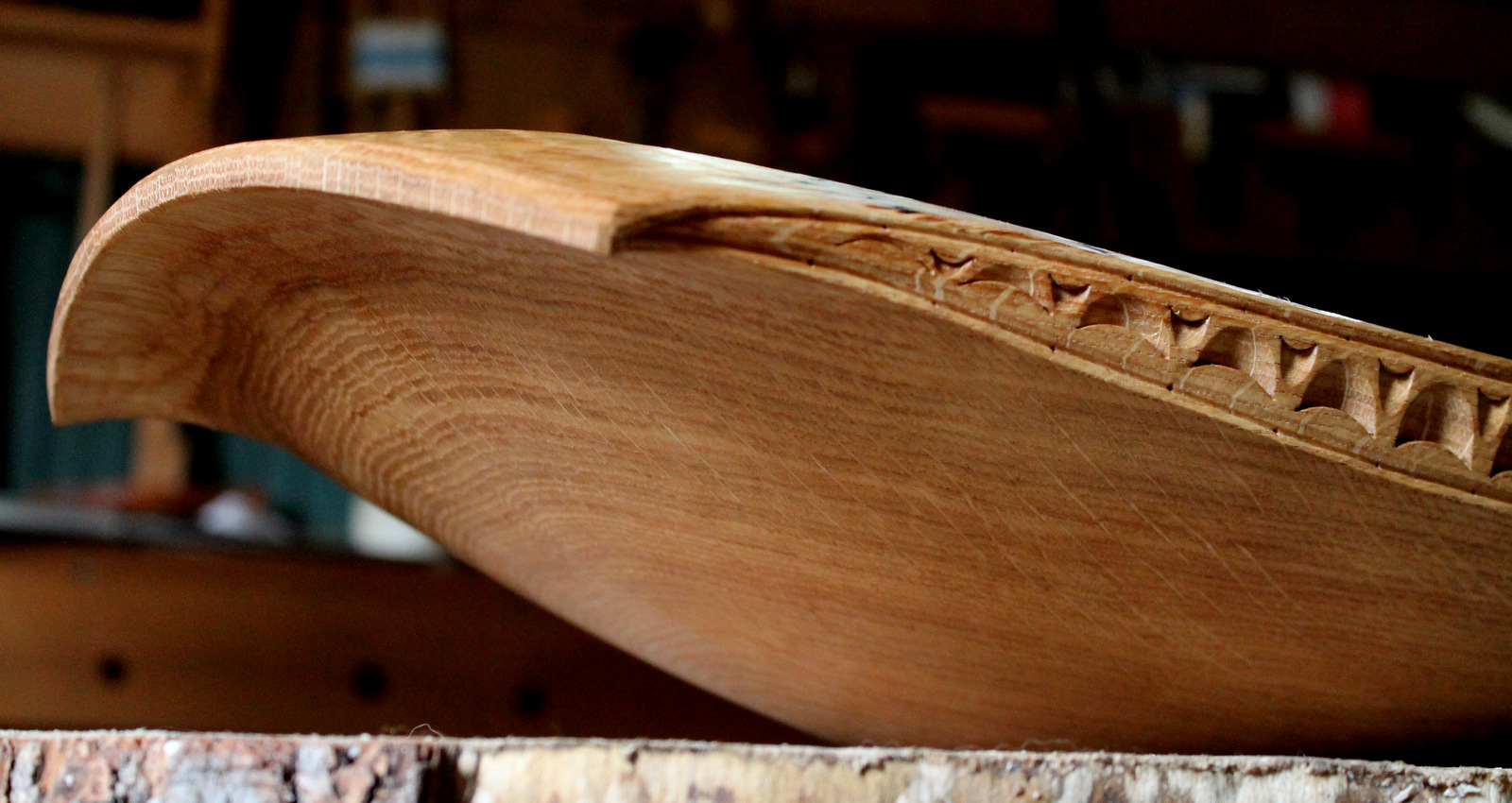 I thought the character of the oak called for some bold gouge cuts, albeit on a sleek form; a relationship similar to that of the hardy Northmen on their graceful oaken longboats. This oaken vessel is 23 3/4 inches long, 11 1/4 inches wide, and 4 1/2 inches high.
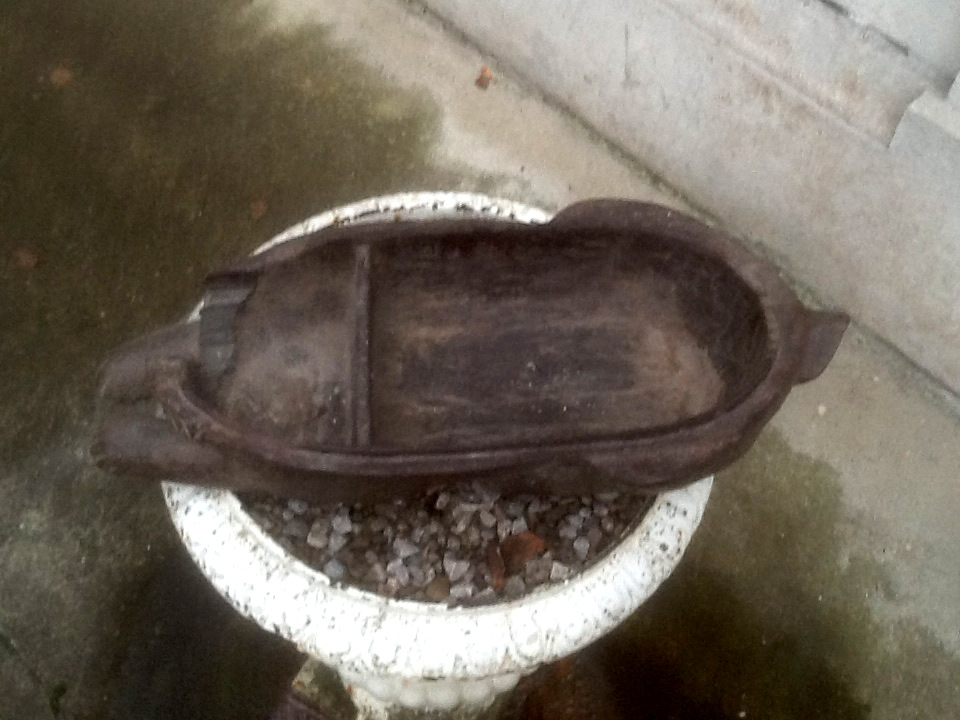
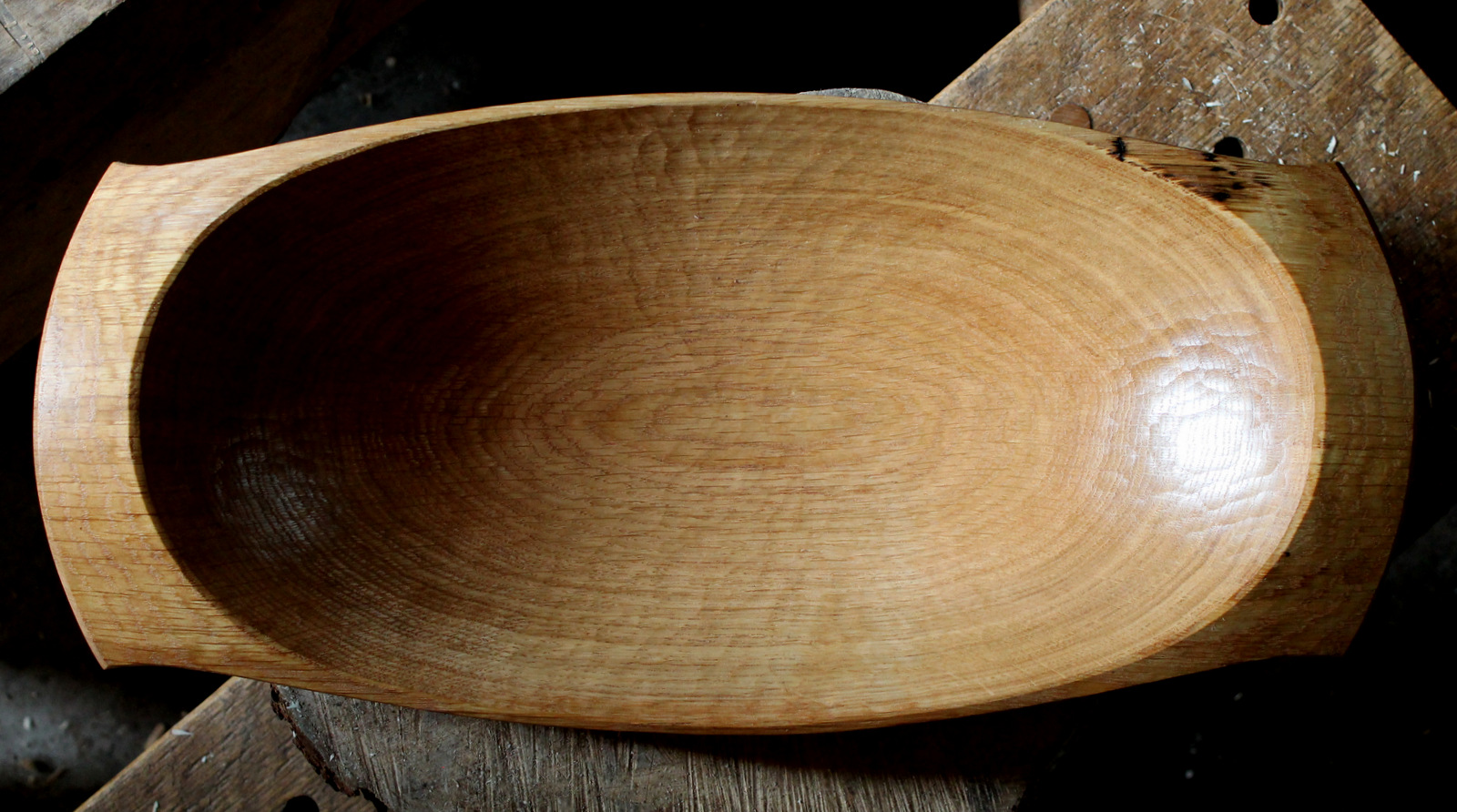 In this overhead shot, the grain orientation is visible, as well as the “character stains” resulting from bugs digging around in the log at the fringe of the sapwood.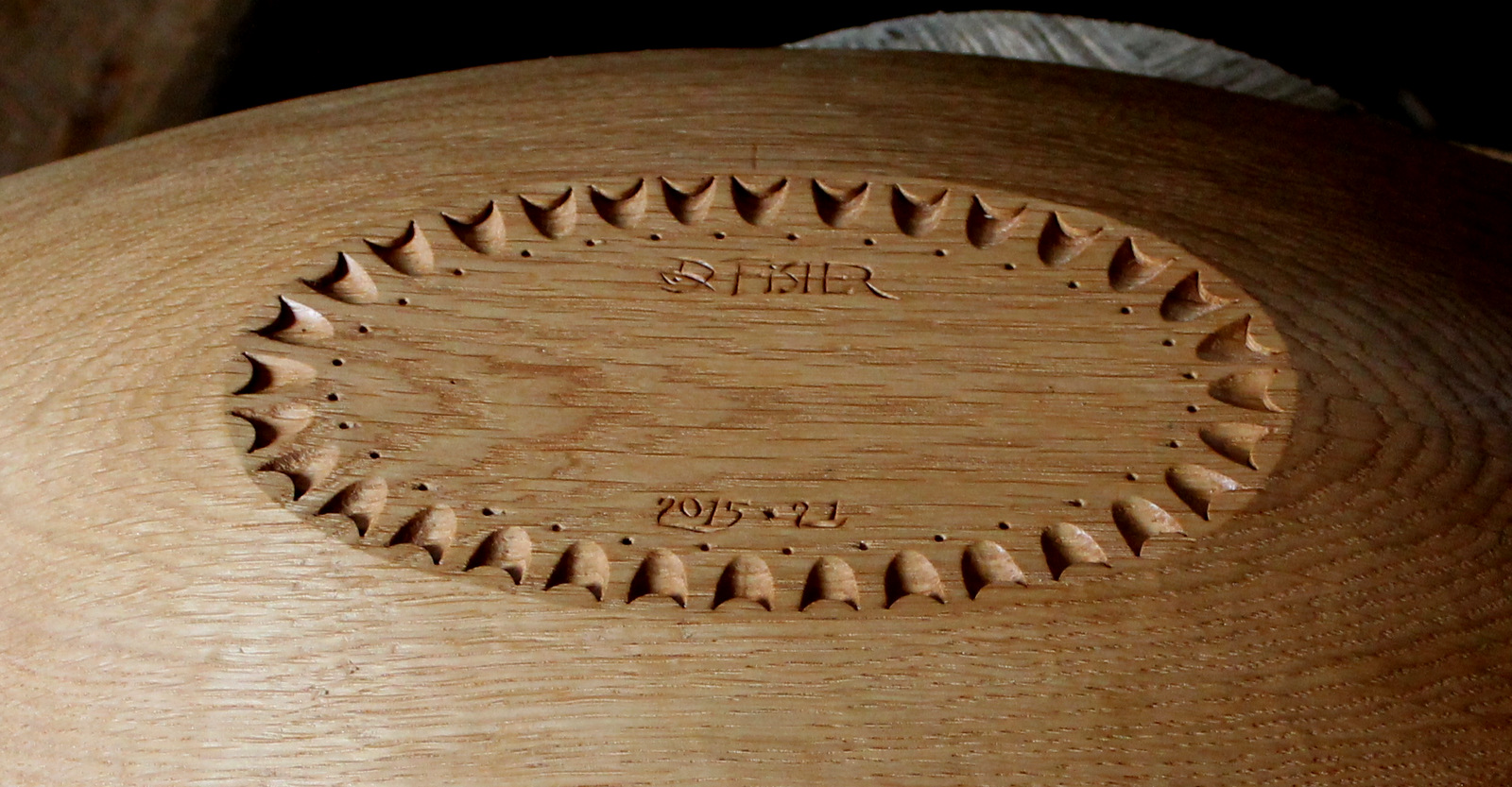
















 David Fisher, Carving Explorations