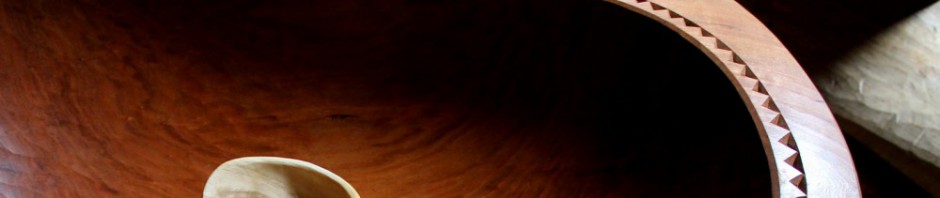

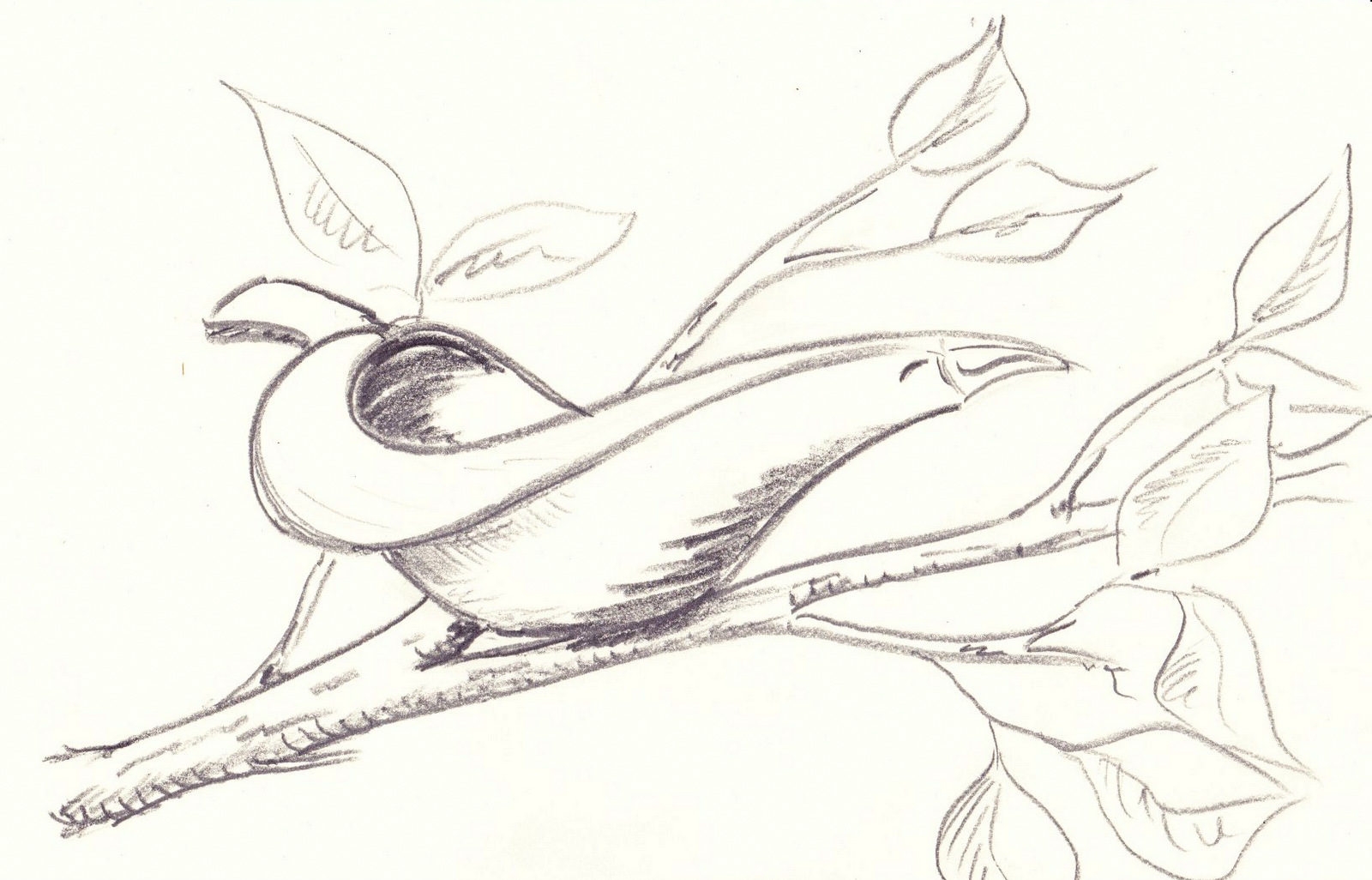
That was my first thought when I was asked recently to make one; well, the bowl part of one. Turns out that a saz is a long necked Turkish lute (I found the photo of the one above — I had nothing to do with making it). The most notable feature is a deep teardrop shaped bowl-like resonator. They can be various shapes and sizes. The earliest ones were carved from one piece of wood, but today most are formed from thin strips of wood bent over a form and joined together. Walnut and mulberry are traditional woods for this.
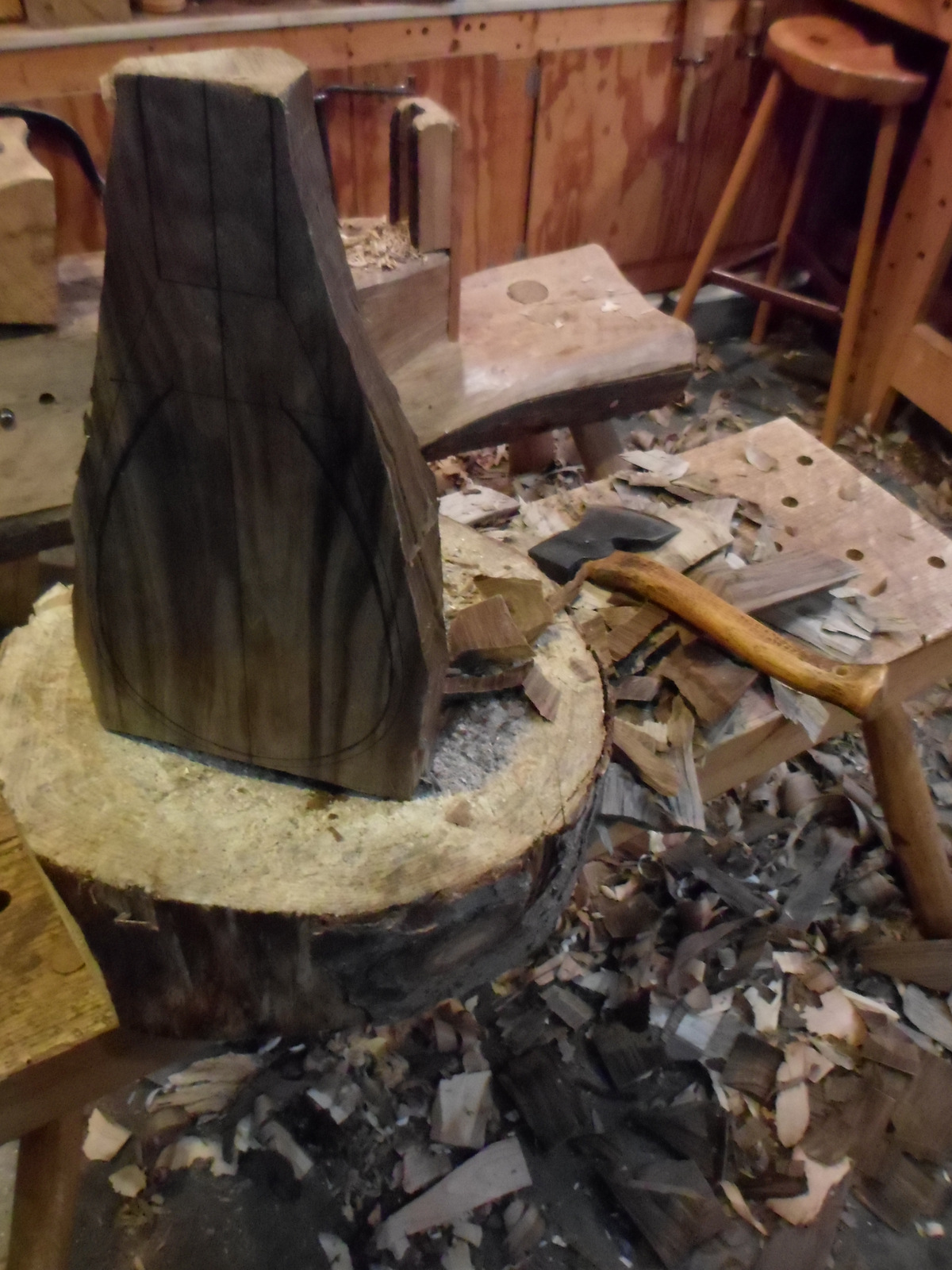
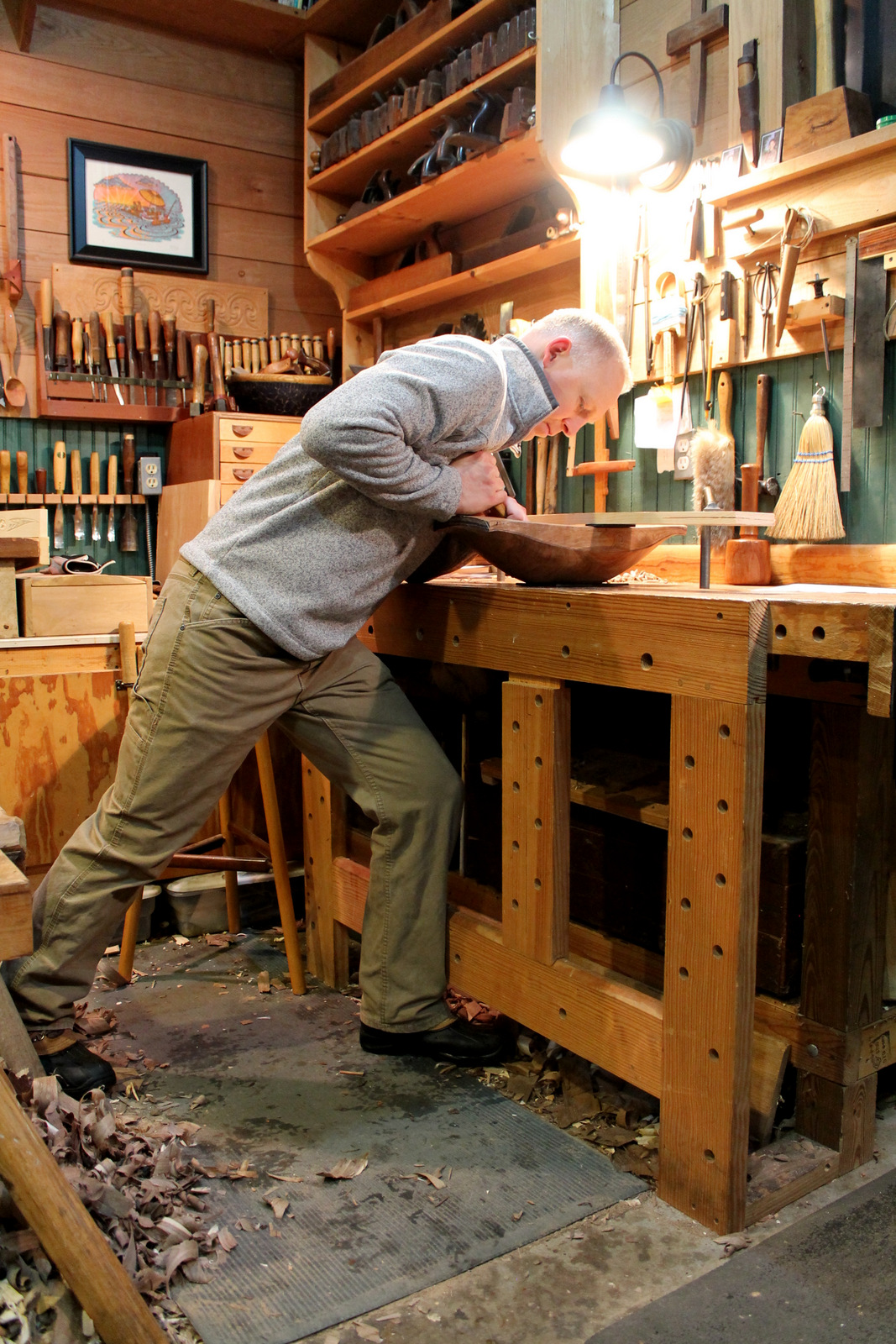
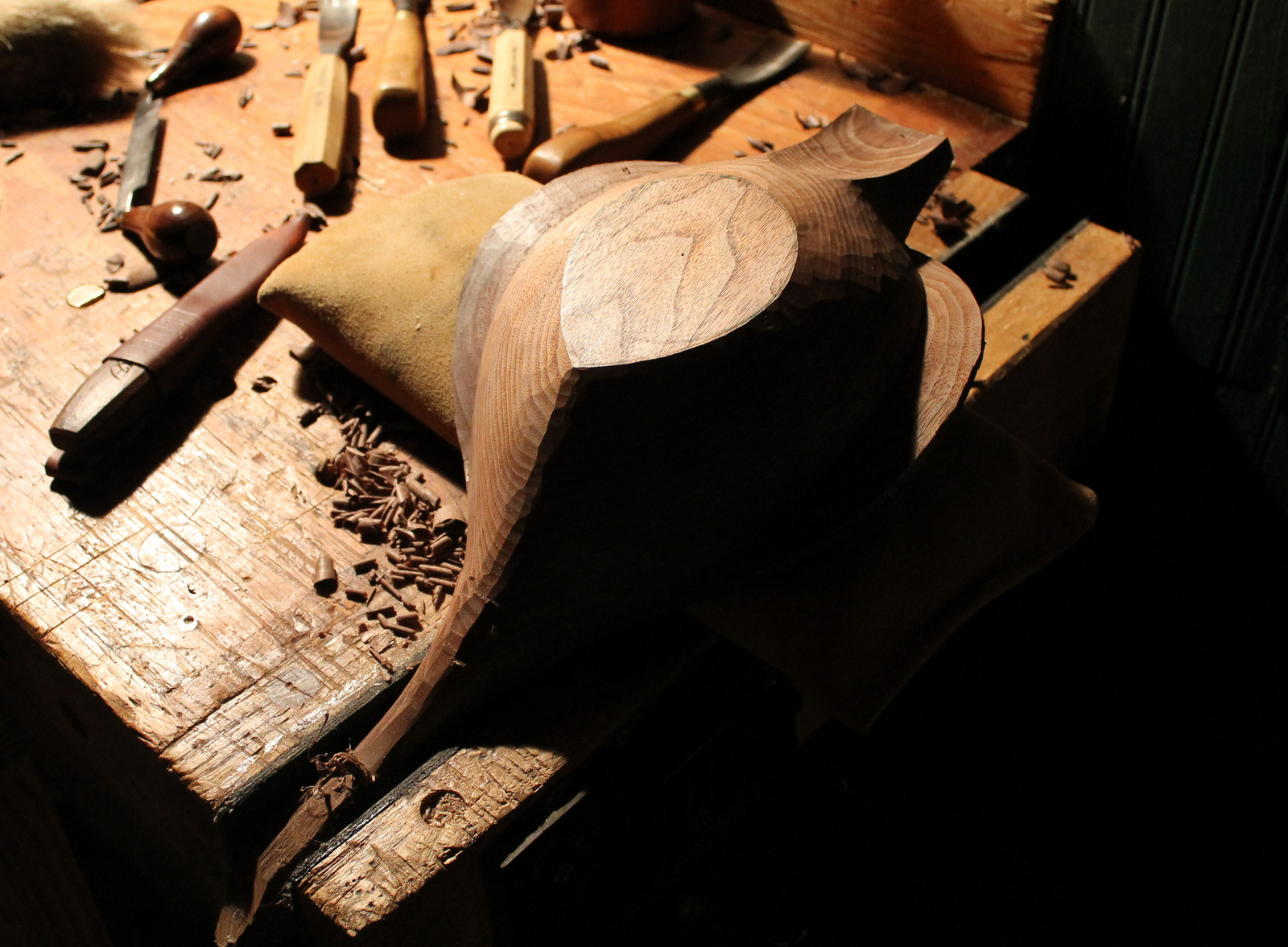
Hewing has just begun.
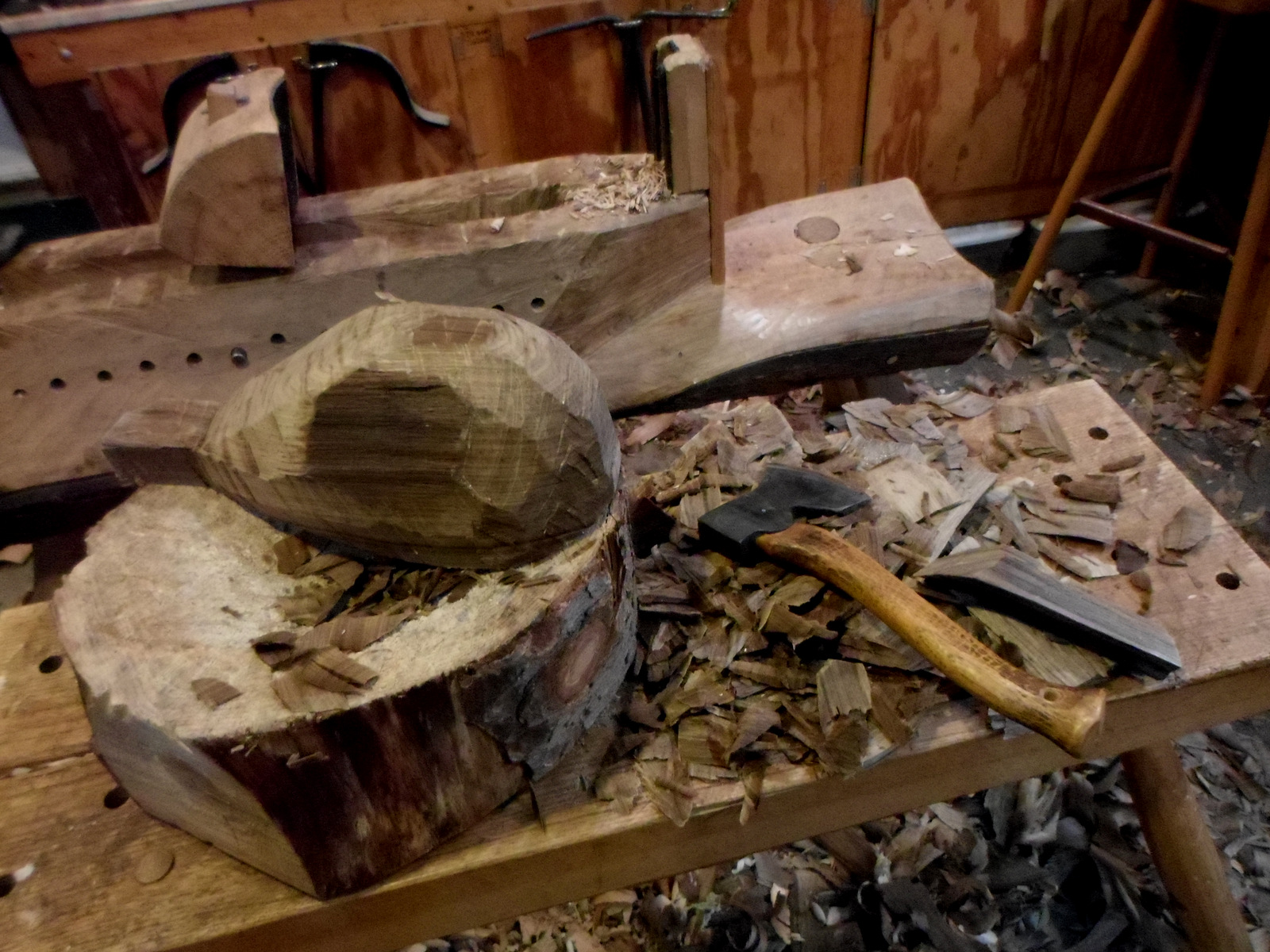
Further along…
My brief learning process began when I was asked to carve a traditional resonator bowl for a saz from walnut. This video of Turkish master Bekir Tekeli was a big help and a lot of fun to watch. Wait ’til you see his adze, a cool vise concept, and more.
So I began with a walnut log, flattened the upper surface, and laid out the outline. As far as saz size goes, I think this is on the smaller side. The hollow is seven inches wide, 5 inches deep, and about 12 inches long. I broke my usual sequence by shaping the outside before hollowing the inside. I was concerned about hatchet blows near the delicate and vertical end grain, if the bowl had already been hollowed.

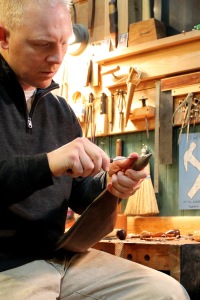
After refining with a spokeshave.
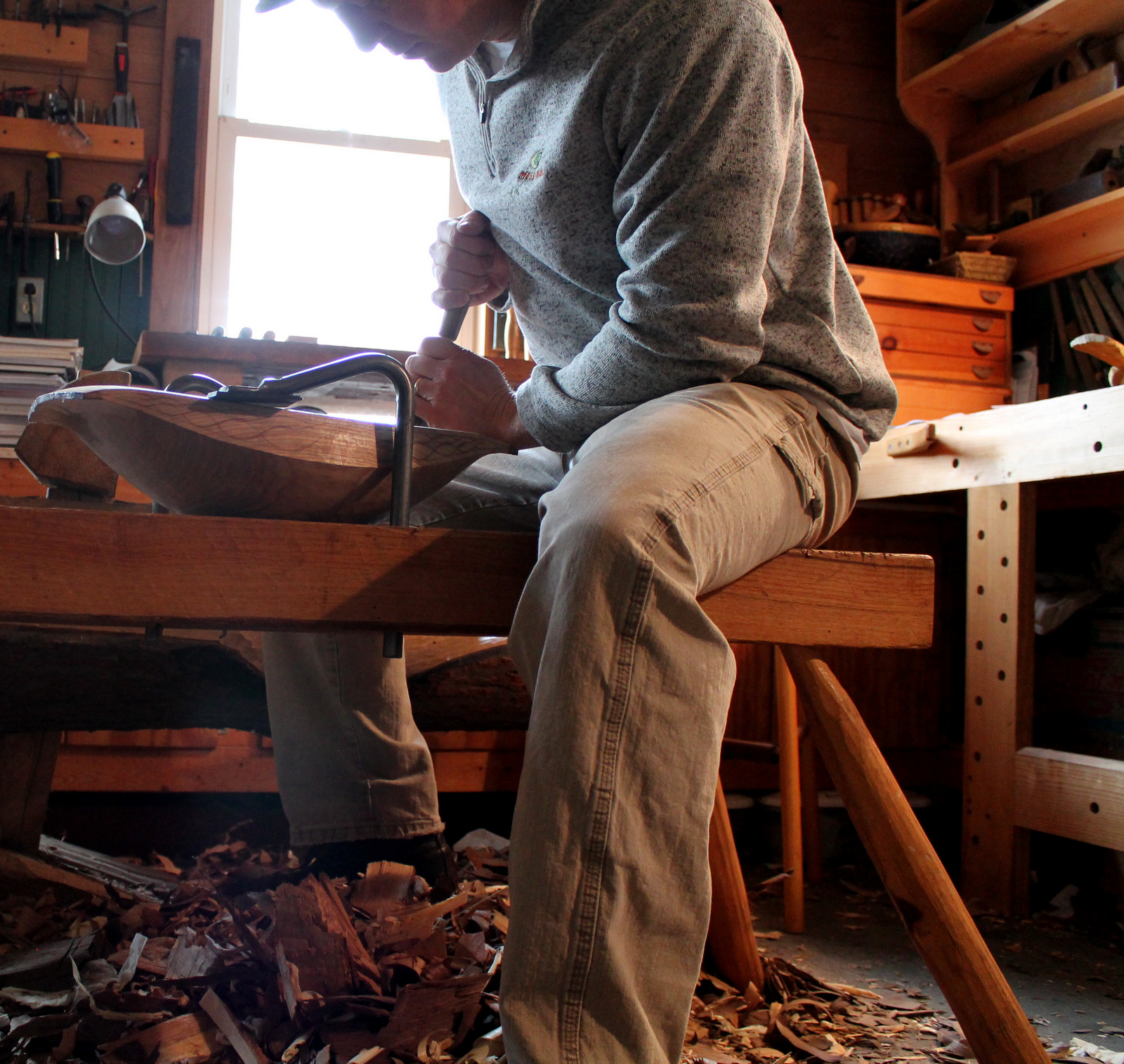
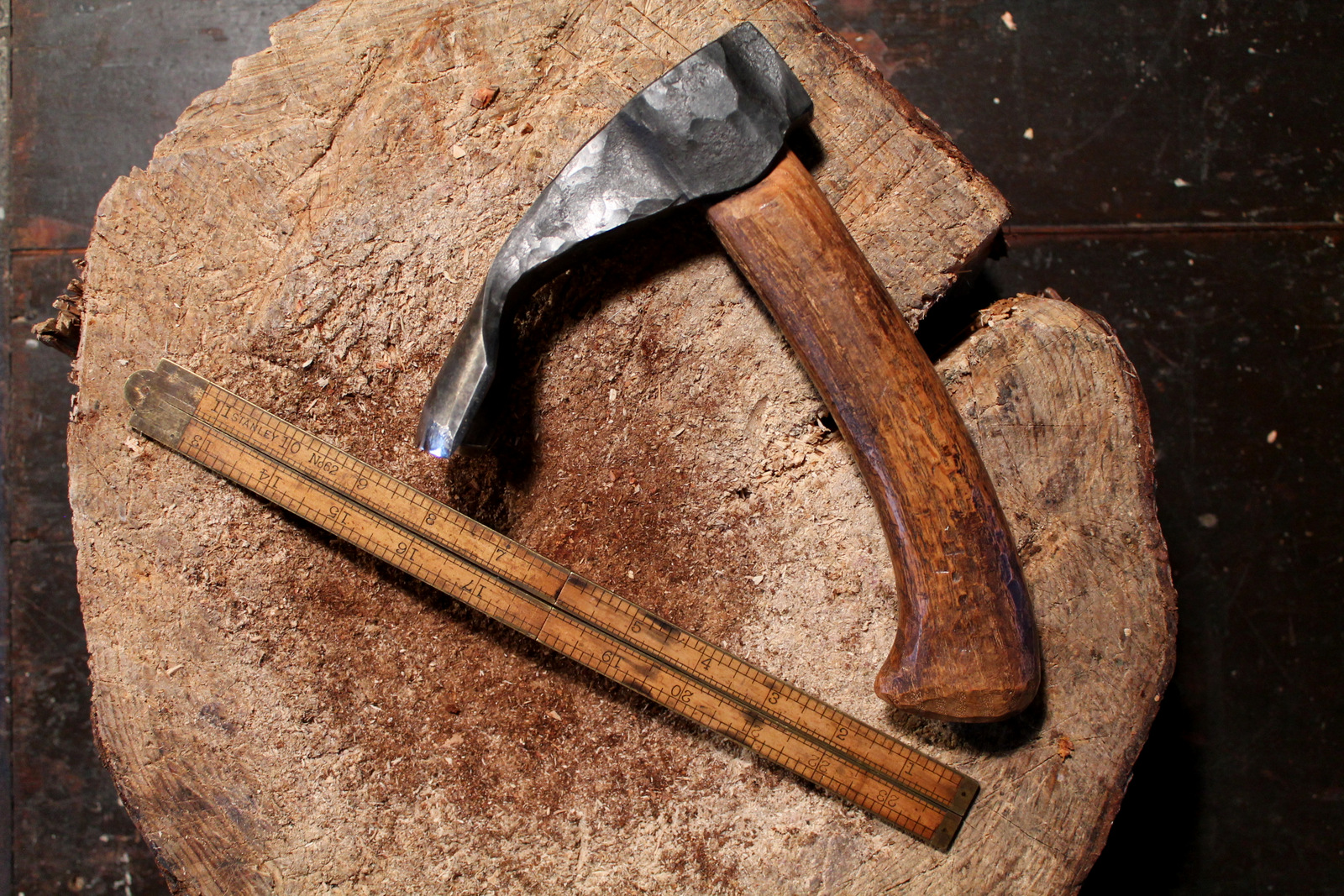
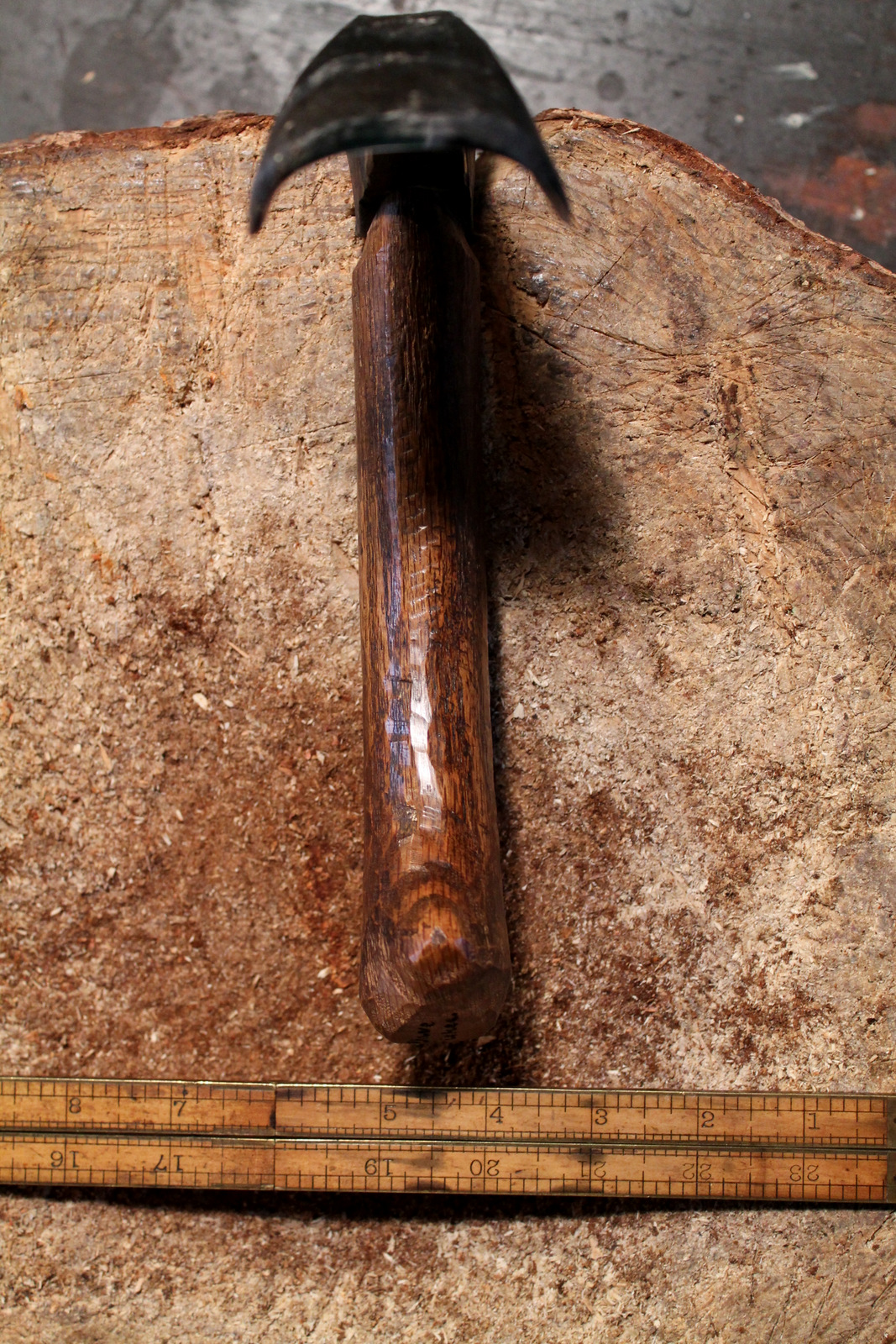
For the hollowing, I roughed out the cavity as much as possible with an adze, then turned to bent gouges. But what saved the day for me for a hollow this narrow and deep was a  twca cam. I bought a twca cam blade from blacksmith Nic Westermann a while back, and this was the first time I had really put it through its paces. What a pleasure to use. I can’t say enough about how it performed. Nic’s blade was perfect, and the long handle provides a lot of leverage, reach, and control.
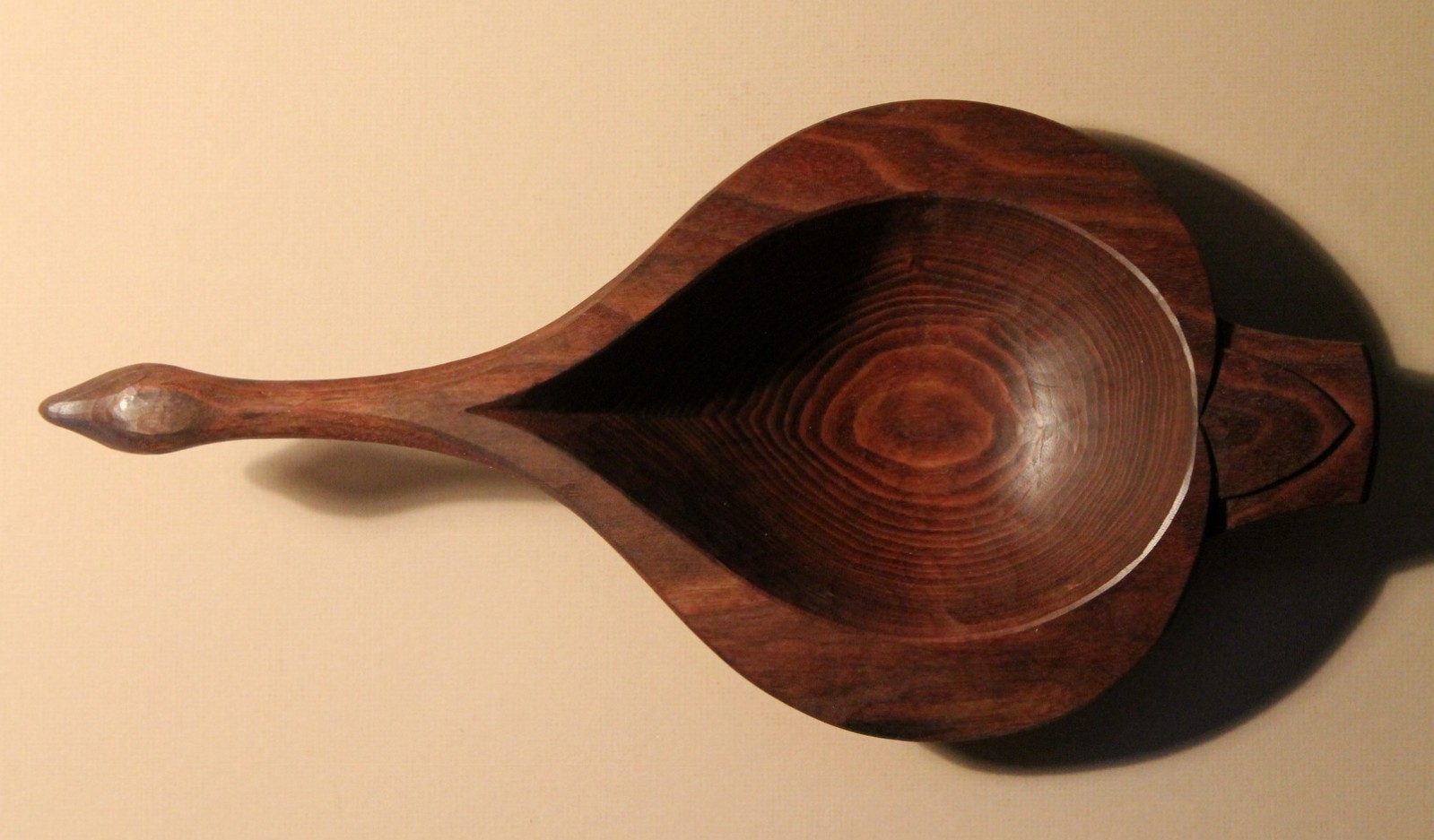
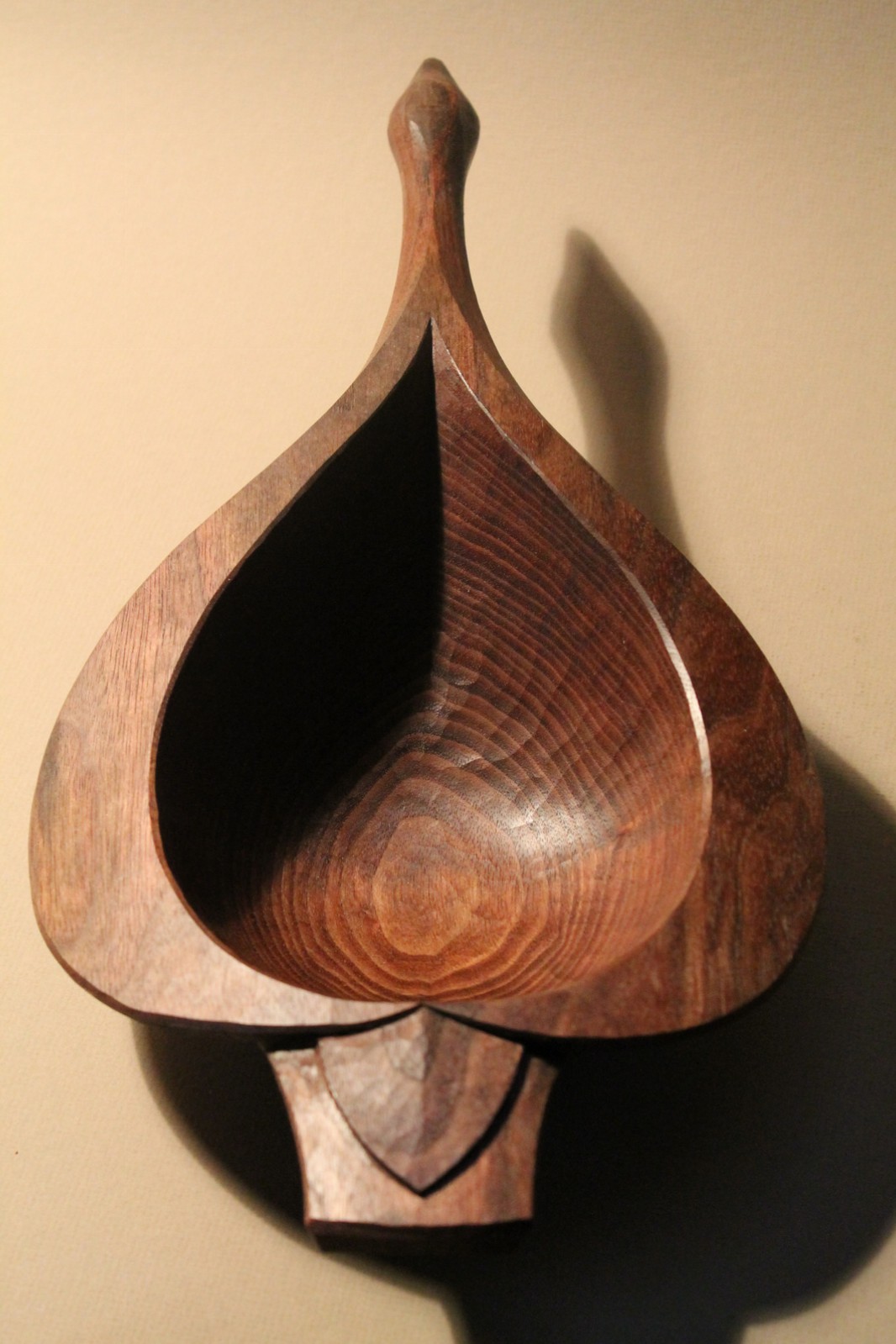
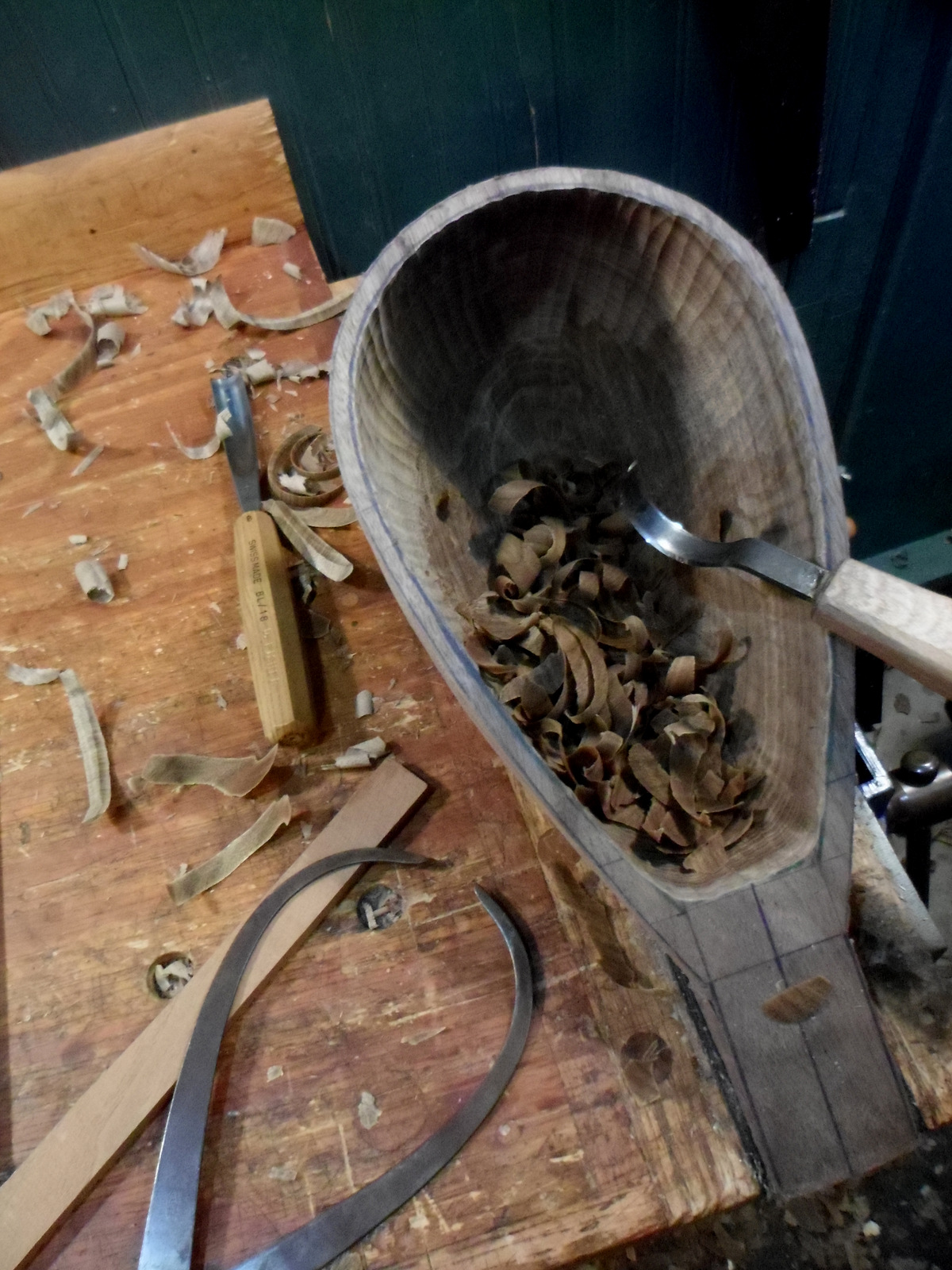 Now it has been carved green to a pretty consistent wall thickness of 1/4 inch. I’ve got it wrapped like a mummy in an old sheet to control the drying a bit. I’ll keep my eye on it. If all goes well, I’ll refine things all over after it’s dry. The extension on the neck will allow the luthier to make his own adjustments and connections.
These few paragraphs have just revealed the sum total of my direct experience with luthiery. But this woodworking world has given me the good fortune to be in contact with a few that really know what they are doing like Scott Kinsey, Otis Tomas, and, locally, Vern Swartz. Check out Otis’ book The Fiddletree; quite a testament to the life of a tree and the connection between craftsmanship and music. It even comes with tunes!



















 David Fisher, Carving Explorations