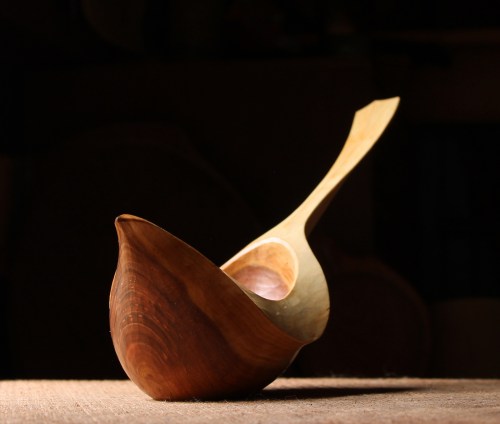
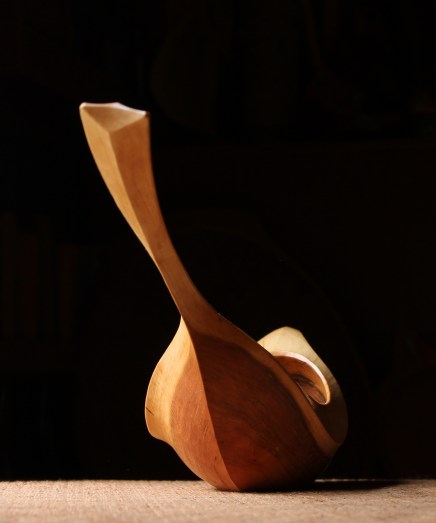
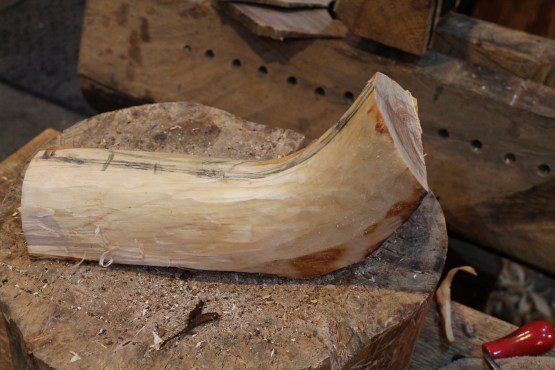
“One word, no spaces,” specified Jennie Alexander when she requested this sign. Not only was I not going to argue with the one who coined the term, I was thrilled for the opportunity to make something so meaningful for someone so influential on my greenwoodworking journey. Talking with Jennie and getting to know her better recently has been a joy. An example of her kindness is the gift of the Bengt Lidstrom bowl that I wrote about back in April.
In the top photo, the sign sits on a chair I made fifteen years ago after discovering Alexander’s book and video “Make a Chair from a Tree.” I still have the pages of notes I made as I prepared to dive in as well as the print-outs of Jennie’s encouraging email response to my questions. Most importantly, I still have the creative excitement that I felt when riving and shaving those first greenwood rungs. Jennie’s website tells a bit of her story and still has a lot of helpful information.
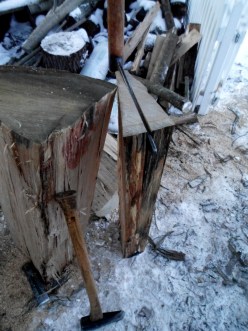 When I mentioned the sign project to Peter Follansbee, he said without hesitation “Well, it has to be carved in riven oak.” The relationship and collaboration between Follansbee and Alexander goes back decades, beginning at Drew and Louise Langsner’s Country Workshops. Fortunately, I had already riven a board for the sign from a white oak log back when snow was still on the ground.
After planing, I set the board aside and returned to it recently. I planed a fresh surface and transferred the design I had worked out after making lots of thumbnail sketches and a full-scale drawing.
Rather than make the baseline for the lettering flat, I made it follow the subtle curve of the grain through the board.

To hold the board (29 1/2″ x 8″) for carving, I used holdfasts to cantilever it beyond the edge of the workbench, allowing me to work from either side of the board without repositioning it.
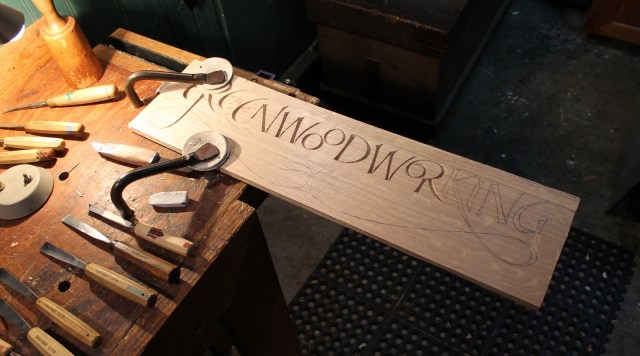
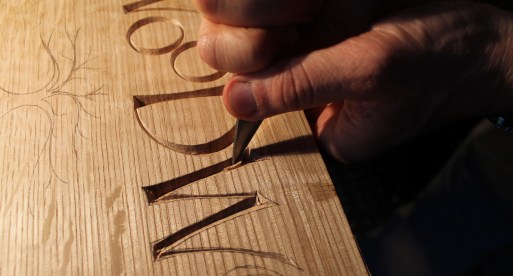
Different situations and different wood species call for different cutting techniques. This white oak is too hard to just dive in with a knife, especially for letters this large. I removed much of the wood with a v-tool, but no matter how carefully it is used, it does not leave the letters nearly as crisp and clean as they can be.
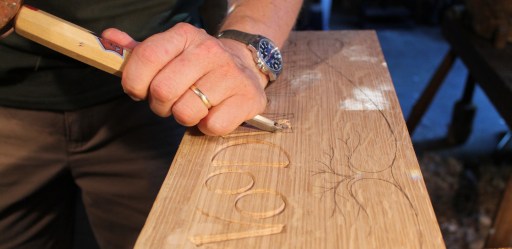
So gouges and chisels jump into action.


I did use some knives at times, and I’ve been experimenting with mill knives from Hyde Tools.
These mill knives are purchased with handles and blades as separate components. The blades come with various grinds, but can be reground into whatever shape one wants. The handles are a bit rough, but a little work with sandpaper and oil makes them more comfortable, like the bottom one (which is a smaller size as well) in the photo below. The set screw allows for blade removal or for the present blade to be extended or withdrawn, even completely into the handle for travel.
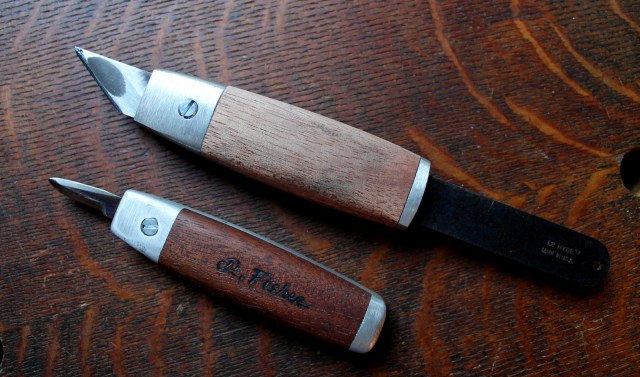
I’ve found the steel to be good, taking and holding an edge well.

Below is a blank I reground to mimic my pen knife blade. Some of the original factory grind is visible on the now rounded-over upper side.

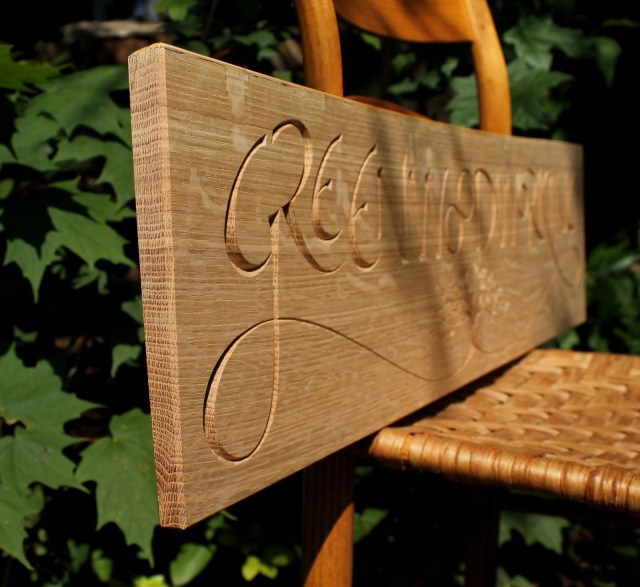
Here are some more photos of the sign — finished, except for a coat of oil that it may get.


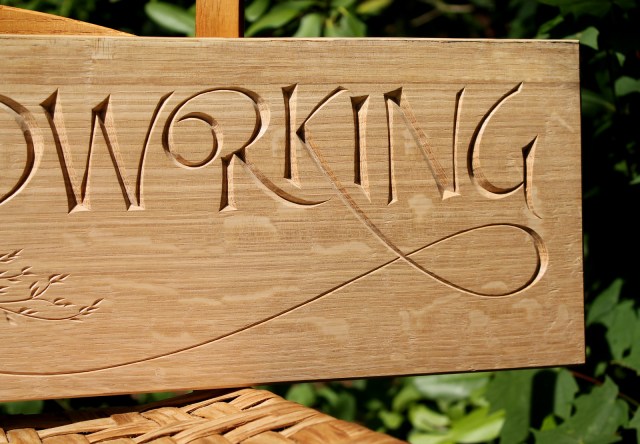

I planed the backside as well, but not so much as to remove all evidence of the riving.

The view from the end reveals the tapered shape from the riving as well.
Jennie’s enthusiasm, research and greenwoodworking continue to be a special influence for many people. As she has often said, “Wood is wonderful!”












 I’ll have mine in the mail before long. Beautiful cool day today, perfect for carving.