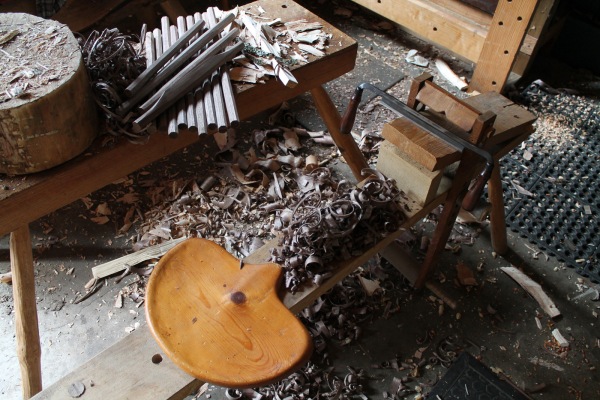
Every once-in-a-while, I get an itch to make another post-and-rung chair. I really haven’t made too many, but I love the processes: riving the parts, shaving at the horse, weaving the seat. My first was fifteen years ago, following my discovery of the encouragement given to so many by Jennie Alexander through the book and video Make a Chair From a Tree.
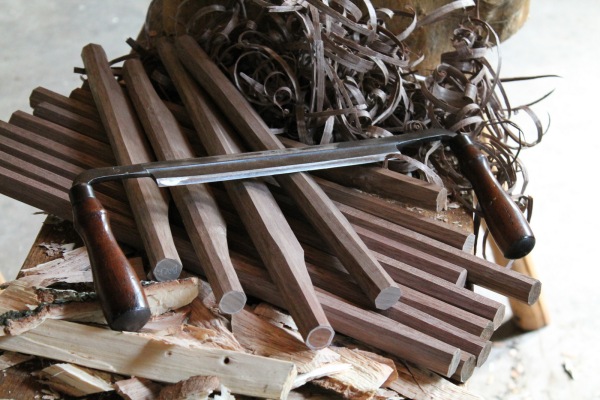
I started this one, a rocking chair, several months back with part of a straight-grained walnut log that also had a section with a natural bend just right for the back posts of a chair. After the parts were riven, I began refining them at the shaving horse, beginning with the rungs so that they could begin drying.
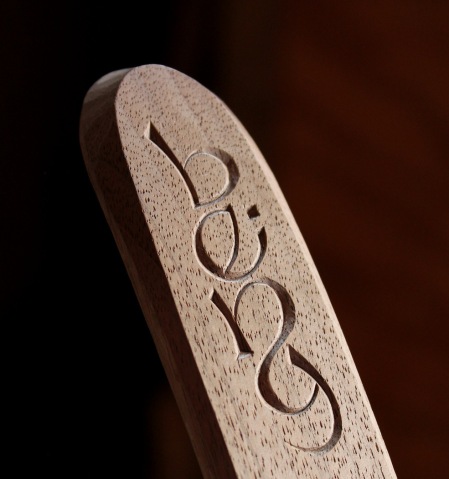
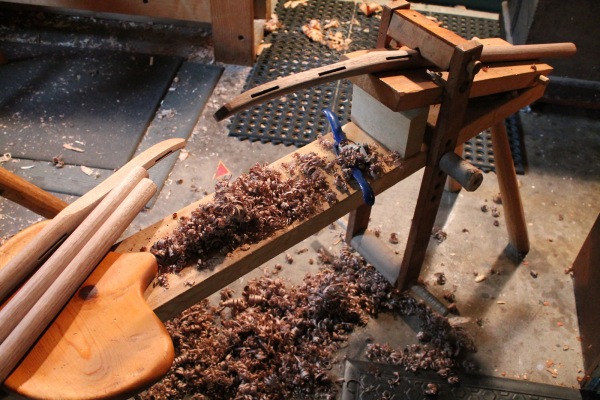
After the back posts had been shaved, mortised, and dried a bit, I had one more thing in mind for them prior to assembly. I was making this chair for a friend who loves to pick a guitar and play a fiddle. I wanted to personalize the chair with some carved lettering, and I had been thinking.
My friend is a big John Steinbeck fan and has a signed copy of Cannery Row. I hadn’t read that one, so I listened to the audio book while carving. I loved it, and I felt like I knew the complex characters, including, of course, Doc. Doc is the most respected figure on Cannery Row, admired by everyone including the otherwise self-serving Mack and the boys.
“Doc would listen to any kind of nonsense and turn it into wisdom. His mind had no horizon – and his sympathy had no warp. He could talk to children, telling them very profound things so that they understood. He lived in a world of wonders, of excitement. He was concupiscent as a rabbit and gentle as hell. Everyone who knew him was indebted to him. And everyone who thought of him thought next, ‘I really must do something nice for Doc.”
But it wasn’t until I followed up by listening to the sequel to Cannery Row, Sweet Thursday that “the line” jumped out at me. It was in another description of Doc. Steinbeck writes, “Being at ease with himself put him at ease with the world.” I started sketching letters.
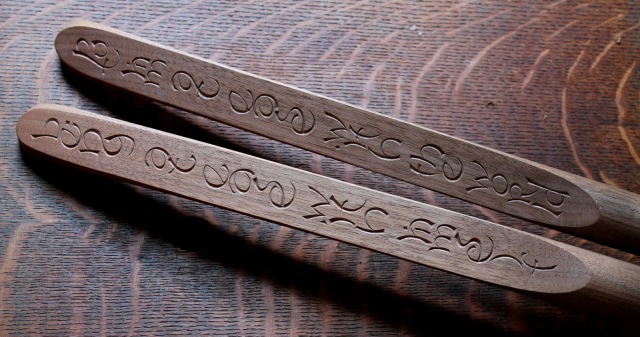
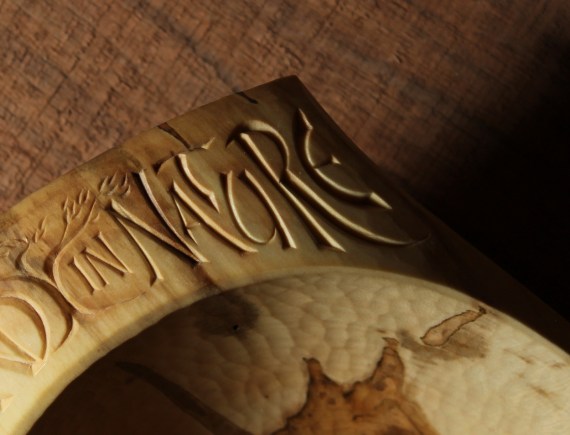
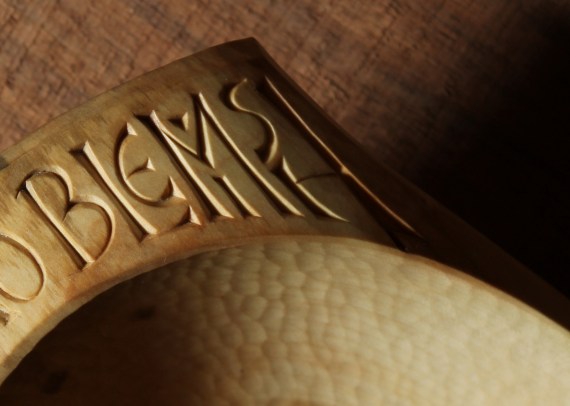
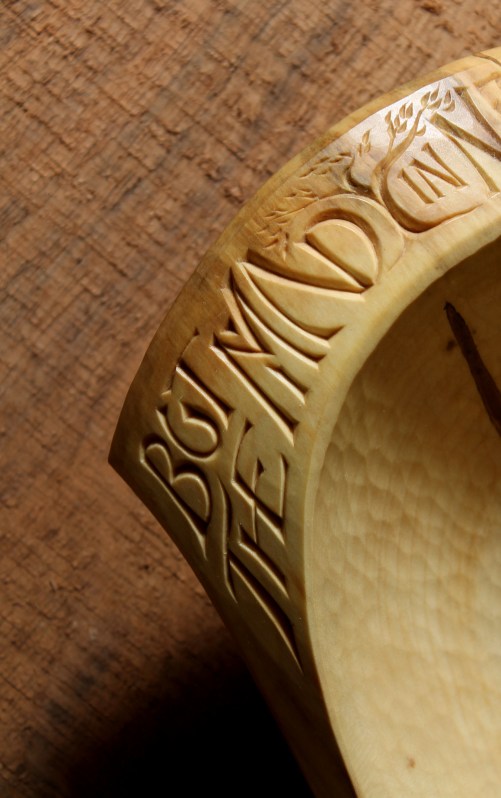
I decided on curving forms that would read as a general pattern from a distance, but reveal itself as an inscription upon closer inspection. I drew them on with pencil, then got to work with my knife.
Overall, the work on the chair was very intermittent. I finally got around to the bottoming a few days ago, when Kristin and I wove the hickory bark seat.
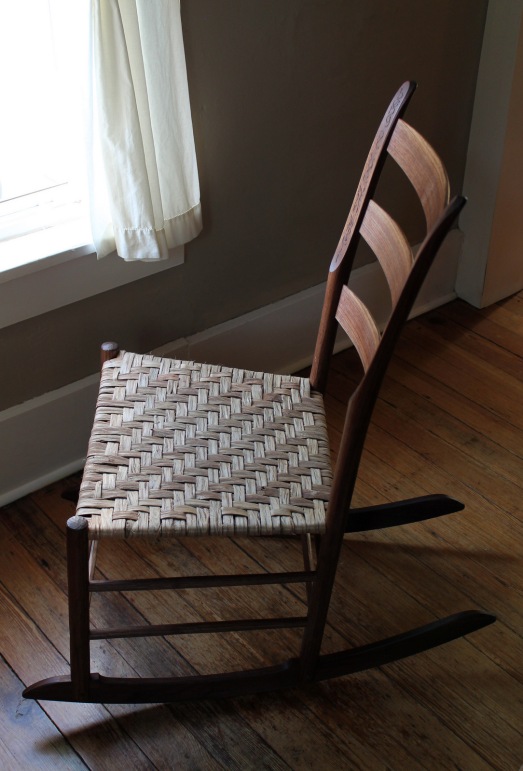
I’m not going to get into the business of making chairs, and this one has it’s share of “character,” but I do like how it feels. With fiddling and guitar playing in mind, I gave it a relatively low seat, no arms, and a supportive back that’s not too wide. The fact that it’s a rocker gives it some versatility in positioning one’s body, as the seat angle changes when sitting forward to play a guitar, for example. Well, that’s my thinking anyway.
If you’d like to make a chair from a tree, grab your axe. Here’s a short list of books to get you started:
The Chairmaker’s Workshop by Drew Langsner
Make a Chair from a Tree by John Alexander
Green Woodwork by Mike Abbott
Chairmaker’s Notebook by Peter Galbert
The Woodwright’s Workbook by Roy Underhill
Make a Joint Stool from a Tree by Jennie Alexander and Peter Follansbee

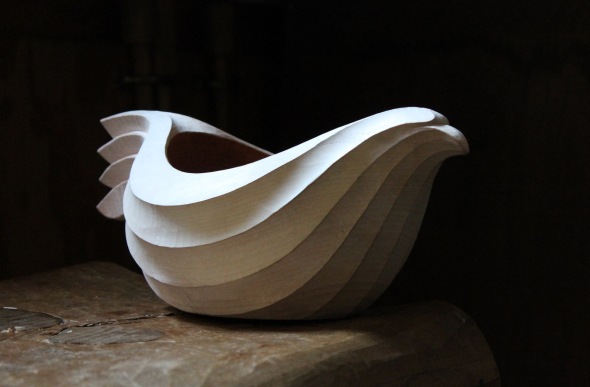
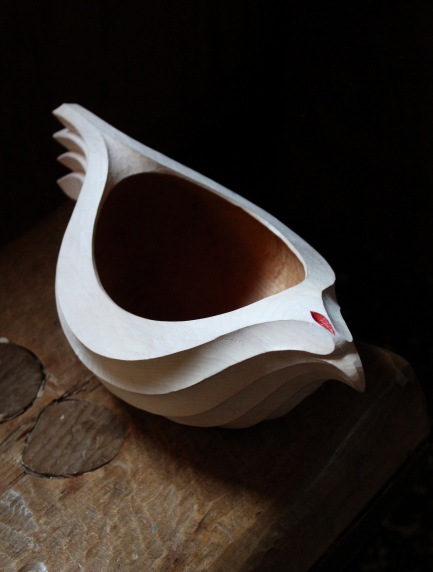
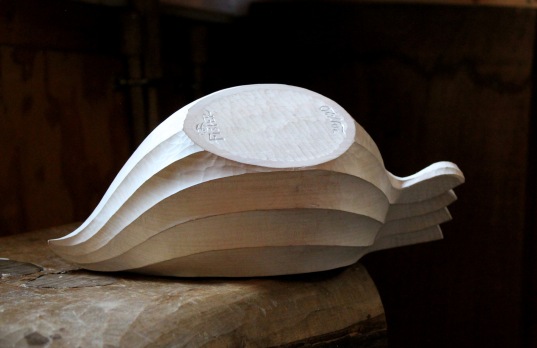


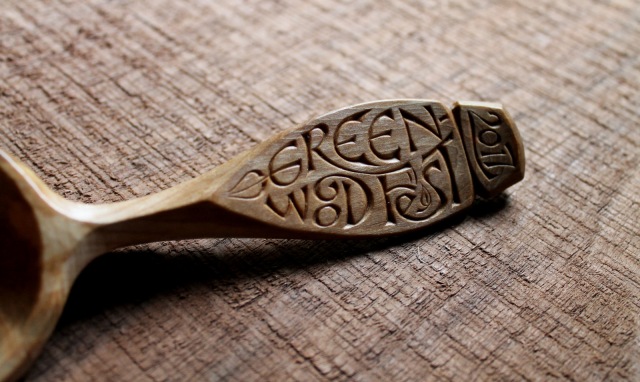
 Meanwhile, I’ve been finding time to make some wood chips and I’ll have some things to share on the blog soon. I even had some fun designing a logo for a great guy some of you may have met at Greenwood Fest. Mike writes a bit about his new adventure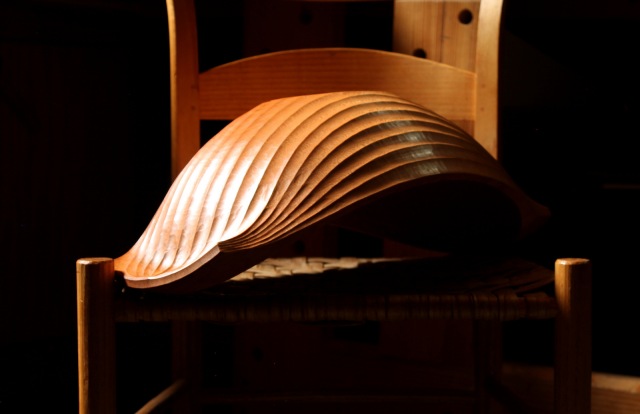




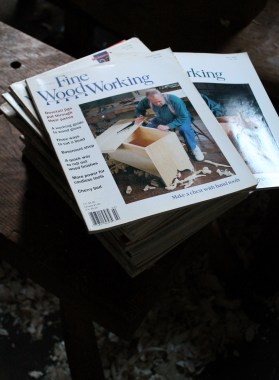 Like a lot of people, I have stacks of old Fine Woodworking Magazines in my house, and I owe a good deal of my woodworking education to them. My copies, going back to the 90s, bring back a lot of memories for me. When a new issue would land in the mailbox, everything slowed down a bit.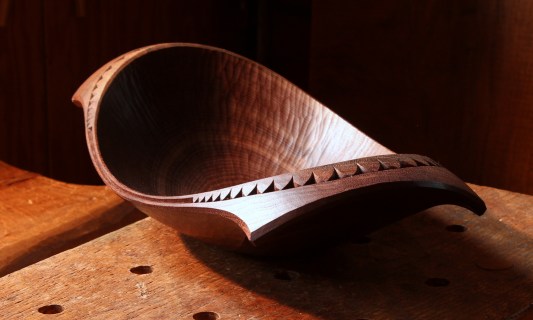


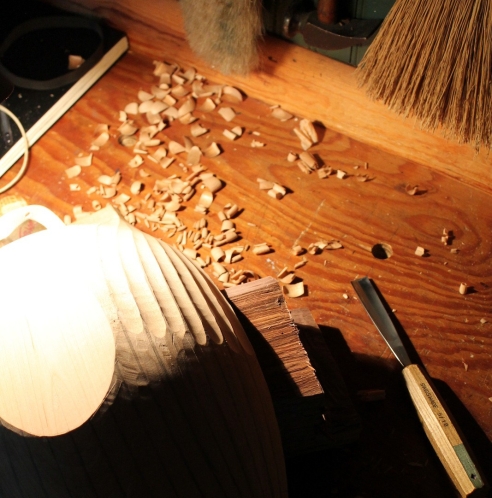
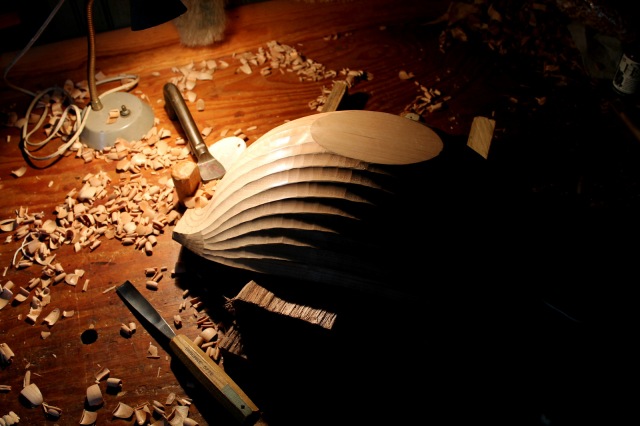
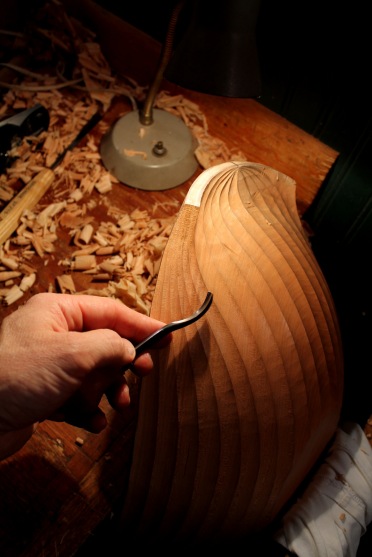
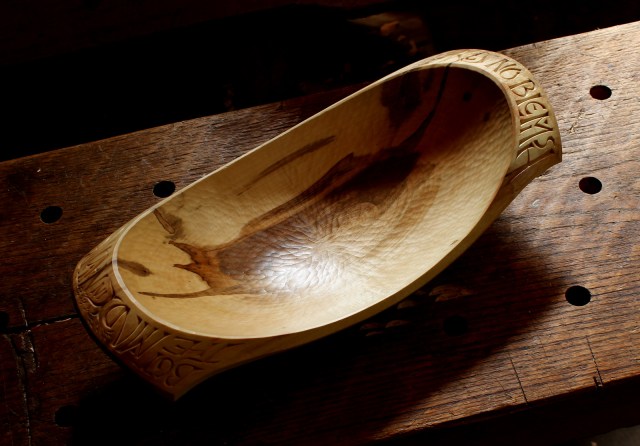
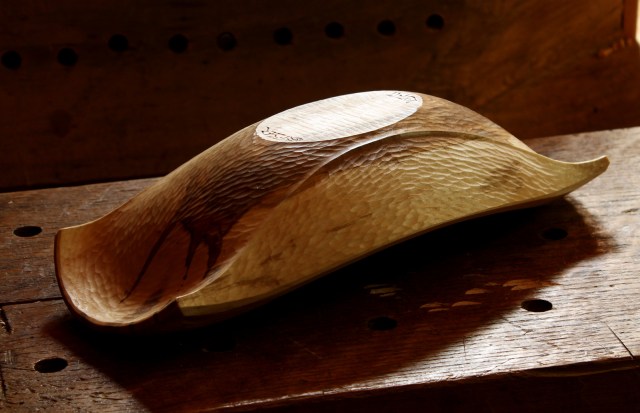
 As I was carving this one, I was thinking about how similar it is to spoon carving. For those who have done some spoon carving, it will be a natural transition to carve little sculptural bowls like these — sort of a gateway drug. Just think of the tail as the spoon handle and stick a bird head in the front. Unlike a typical spoon bowl, the hollow is deepest in the front, even a bit undercut.

