Carving Round Bowls can be Super

IMG_6630

If you’re going to make round bowls, why not use a lathe?  Well, because I’m chicken.  There’s something about a twenty pound chunk of wood spinning around at five hundred rpm that makes me not want to poke it with a bar of steel.  I like my chunks of wood to sit still in front of me.

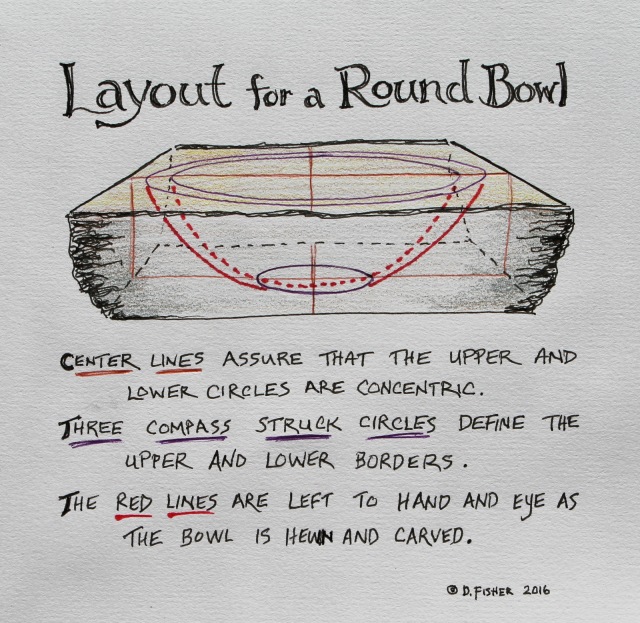
There may be other reasons, but the simple fact is that round bowls can be made without a lathe, so go ahead.  The layout couldn’t be more simple, and the adze work is straightforward as well.
IMG_6696

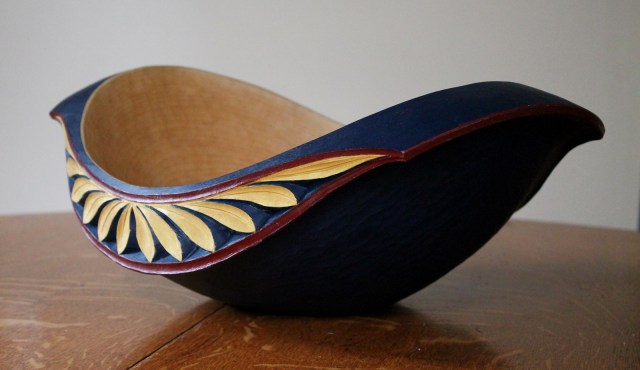
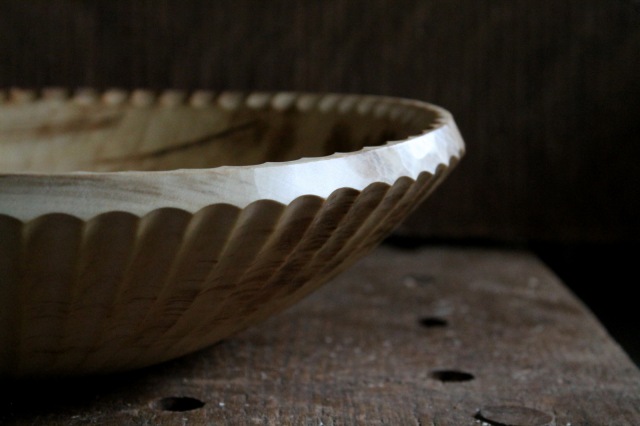
Not long ago, I wrote a post about carving the flutes on the maple bowl in the top photo.  Here are some photos of the finished bowl.

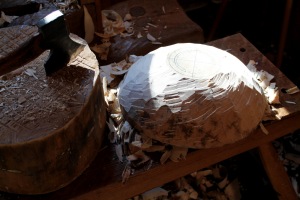
After hollowing the inside and hewing the outside, I usually turn to a spokeshave on round bowls to fare the outer surface.  By holding the bowl up at arms length, symmetry issues are easily seen.  I run my hands over the surface often as well.  Fingertips can read dips and bumps that the eye may miss.  And what you do miss is okay too; the bowl will move anyway.
IMG_6613

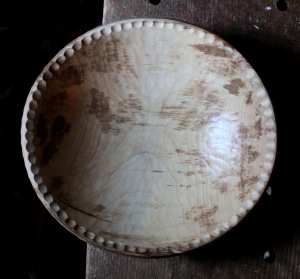
Roundish Maple Bowl

The movement green wood goes through as it dries is more evident in round bowls than oblong bowls with bilateral symmetry.  The rim will not be completely flat after drying; it will likely be crowned a bit along the central axis running with the grain.  And the bowl will shrink to a slight oval as it shrinks more across the grain.  This maple bowl, for example ended up 14 1/2″ long with the grain and 14″ across the grain.  But maybe perfectly flat rims and perfect circles aren’t necessary — certainly not always.  It’s nice to have a bowl that let’s its hair down once in awhile.
IMG_6711

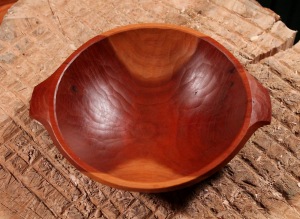
My carved round cereal bowl has been serving me well.   It’s about seven inches across, not including the little handles.

Some of the round bowls I’ve carved over the years can be viewed on the gallery page of my website.


Posted in bowls, carving, layout, sketch, Uncategorized | Tagged , , , | 24 Comments

Proof of the Workmanship of Risk

IMG_6679

Brought into the light.

Yesterday was a beautiful sunny day and it put me in the mood to do a little early Spring cleaning in the shop.  Scattered around were these reminders of the “workmanship of risk.”  That was, of course, the phrase coined by David Pye to describe how a guy like me can ruin the job at any moment.  Look upon this pile; here lies the grisly proof of the workmanship of risk.

Errors in judgement, lack of patience, failure to assess the wood, or simply a bad swing have led these pieces to be tucked away in dark corners of the shop like repressed memories.  They only survive, I guess, because I shoved them away hastily to get them out of my sight.  Perhaps I should take a cue from Eric Goodson’s great post today (perfect timing, Eric) and creatively rescue one or two.  Regardless, it’s alright.  There is more wood and the workmanship of risk has its rewards.

I have gotten better at taking these things in stride, and my theatrics at the moment of dread are slightly less animated.  I have learned a little from experience.  I remember how disheartened I’d get when I struck out in Little League.  Then I’d be up to bat hoping not to strike out instead of focusing on getting a hit.  And that’s no way to bat.

Embrace the workmanship of risk.  In all of the history of Major League Baseball, the man who went up to the plate and struck out more times than any other….was Reggie Jackson.  Whether it’s a bat or an adze — keep swinging.


Posted in bowls, carving, drying, quotes and excerpts, Uncategorized | Tagged , , , | 20 Comments

Dancing with Nature

IMG_6563

What a privilege it is to collaborate with Nature.  Green wood is a medium that has a lot to say; there is no blank canvas.  Nature is a dance partner, and she usually takes the lead.

IMG_4299

Goose-inspired bowl carved last year.

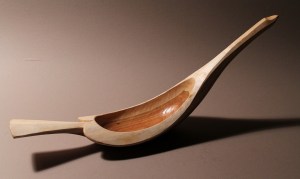
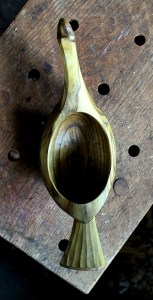
Especially in pieces like the bowl to the left, the natural form in the tree has much more influence on the design than I do.  I wrote about that bowl early last year in this post, including a discussion of how I went about making it.  I won’t bother repeating the whole discussion here, but I found a culled cherry tree recently and saw another bird in part of it (top photo).  I’ve begun to hew and hollow it, and I thought I’d share some photos of my progress.

This slideshow requires JavaScript.

Taking into account the unique character of this crook, I’ve decided on some design differences from the one referenced from last year.  A few things to point out in the slide show above: After splitting, I hewed the split surfaces by working with the adze across the grain; I then flattened the bottom surface further with a plane; I adjusted the upper round of the body with a drawknife, then sketched some rough outlines on the upper and lower surfaces; After doing some basic hewing of the body, I hollowed with adze and gouge.  Hopefully, I’ll finish the green stages this weekend.

For the portion of the hollow near the neck, I wanted an undercut area that couldn’t be reached with a bent gouge.  A spoon gouge may have worked, but it was a perfect use for the twca cam.  I recorded a simple video of working with the twca cam — nothing special, but I thought it might be useful to somebody:


Posted in bird bowls, bowls, cherry, finding wood, green woodworking, layout, nature, tools, Uncategorized, video | Tagged , , , | 3 Comments

On Flutes and Aging

IMG_6541

I don’t know much about cheese or scotch, but I’ve heard they can improve if you just let them sit around awhile.  The same might be said for wood sometimes.  This maple bowl underway is from a log that hung around in my shop longer than planned, sealed in a plastic bag.  By the time I got to it, it had developed some nice coloration — early spalting of a sort, I guess.  So, if you’d like to promote character development in maple, try procrastinating. Just don’t wait too long or you’ll have mushy maple.

IMG_6360

The bowl during hewing.

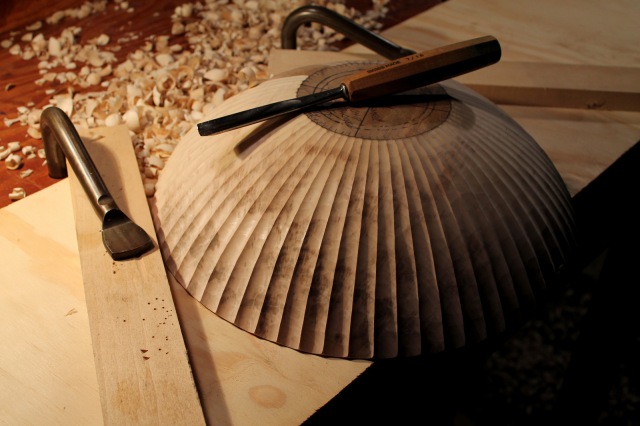
I carved a round bowl from this piece, then carved flutes around the exterior surface.  The fluting itself came after hewing the exterior with an axe, then refining with a spokeshave.  To maintain some consistency in the fluting, I paced around the bottom perimeter and the top perimeter with dividers until I arrived at the same number of divisions around each circle. Lines connecting the marks indicate the arrises between the flutes.

Each flute is carved from the base of the bowl to the rim.  My set up for this can be seen in the photo.  The boards and the holdfasts form a sort of funnel to keep the bowl from sliding forward, but still allow the bowl to be rotated freely as the carving proceeds from flute to flute.  The plywood piece just serves to protect the benchtop as the gouge plunges downward at the end of the flute.

I still have some carving to do on this piece, then I should have some more photos to share sometime.


Posted in green woodworking, holding, layout, patterns, Uncategorized | Tagged , , | 12 Comments

It’s Not Easy Bein’ Green

IMG_6543

So here is the finished little sumac bowl that I discussed in this earlier post.  No coloring of any kind has been added to this piece; the wood is just that wild.  I like the color against the little tangerines.  Well, at least that’s what I still want to call ’em; I guess they call them “cuties” or something now.  Anyway, they’re not full-size oranges, the bowl is 12 1/2″ long, 4 1/2″ wide, and 5 3/4″ high.

IMG_6517

Sumac bird bowl

This crooked sumac trunk allowed for the rising neck and tail of the bird, and I also went with the flow of the grain from above.  Bird bowls like this are fun to carve, combining elements of bowl carving and spoon carving.  For example, the undercut hollow has to be cut largely with a hook knife while the piece is held in the opposite hand.

IMG_6545

The bold grain of sumac, the color will continue mellowing over time.

I resisted doing any decorative carving other than the line of chips running along the wing edges.  Decorative carving on a bold prominent grain pattern like this would be like writing on wrapping paper: hard to read.

By the way, they say sumac fluoresces under a black light, but I haven’t tried it.  Must have left my black light at a rave.

I’ll pop this onto the website, and get back to a couple larger bowls in progress.

And how could I leave this out:


Posted in bird bowls, bowls, patterns, Uncategorized, video | Tagged , , , | 8 Comments

Jason Lonon

Adze by Jason Lonon

Adze by Jason Lonon

Today, we are lucky to be experiencing a revival of traditional toolmaking, and there are many smiths making excellent tools.  However, there has been a bit of an exception when it comes to the adze.  About six months ago, I wrote a post about the shortage of quality adzes available without a long wait and what a challenge it is to make an adze that works well.  Jason Lonon is up to the challenge, and I hope that it will help end some of the adze-deprived frustration out there if I mention him.  But keep in mind, I don’t have any connection with Jason and he did not seek my endorsement.  I just think this information may be helpful to those waiting for a good adze.

Although tools tend to build up over time, I try to keep a relatively small basic toolkit.  Of course, there are lots of tools I’ve never tried.  For all the bowls I have made, I have really only used two adzes — primarily the Hans Karlsson adze that I highlighted as part of my thoughts on adze design nearly a year ago.  The Karlsson’s have found it difficult to keep up with the increased demand over the last couple of years, and admirably, they won’t compromise the quality of their tools in an attempt.  I certainly won’t give up mine.

Recently, I bought an adze from Jason, sort of a smaller version of my HK, with a 1 3/4″ wide edge and a weight of about 24 ounces.  I like this style with the shallow sweep in the middle of the edge and the raised lips that allow for a big bite.  However, Jason makes adzes in different sizes and with different profiles.

Jason lives in North Carolina where he has practiced many types of woodworking in addition to blacksmithing.  This background has helped him produce a tool that works sweetly.  He has thought long and hard about the geometry of the head, the bevel, and how it all relates to the handle.  The handle is hand carved and fitted very well.  In short — this is a great adze.

You can check out Jason’s website and Facebook page.  I have no idea if you’ll have to wait if you want and adze, but if you do, it will be worth it.


Posted in adze, tools, Uncategorized | Tagged , | 13 Comments

Painted Bowl


IMG_6738Several weeks ago, I wrote a post about carving the side panels of this maple bowl.  Since then, I’ve completed the painting — a slow process.  Not just because artist’s oils dry slowly, but more so because I did a lot of thinking about and experimenting with the color scheme.  Normally, in carving, my considerations involve line, light, and shadow.  Color throws a whole other factor into the mix, and it can be intimidating.  I was really pleased with the form of the bowl; especially the deeply sculpted curves.  I didn’t want to take a chance and ruin it, but the relatively plain maple seemed to call out for a little more, a little risk.  I won’t be going wild with a paintbrush on all my stuff, but I’m glad I did on this one.

IMG_6503

I made copies of this sketch in order to sample color combinations.

To experiment with different color combinations, I drew a basic sketch of a portion of the bowl, then made several xerox copies.  I used colored pencils at first, then  painted sample sections directly onto the paper.  I used lots of paper, but finally decided on what you see above.  Once that was settled it was time to paint the bowl itself.

IMG_6752I used high quality artist’s oil paints and thinned them with a little linseed oil to a consistency that wasn’t too thick or too thin.  Jogge Sundquist uses artist’s oils on most of his work, and is an expert in their use.  Over the summer I talked with him about the amount of oil to add, and he explained that there is no rule — “Until it is just right.” It even varies among colors and pigment types.   You can also add thinner (turps or even citrus thinner) instead of oil to create more of a stain.  Anyway, it is fun stuff to mess around with.  I don’t know if it is just right, but I like it.
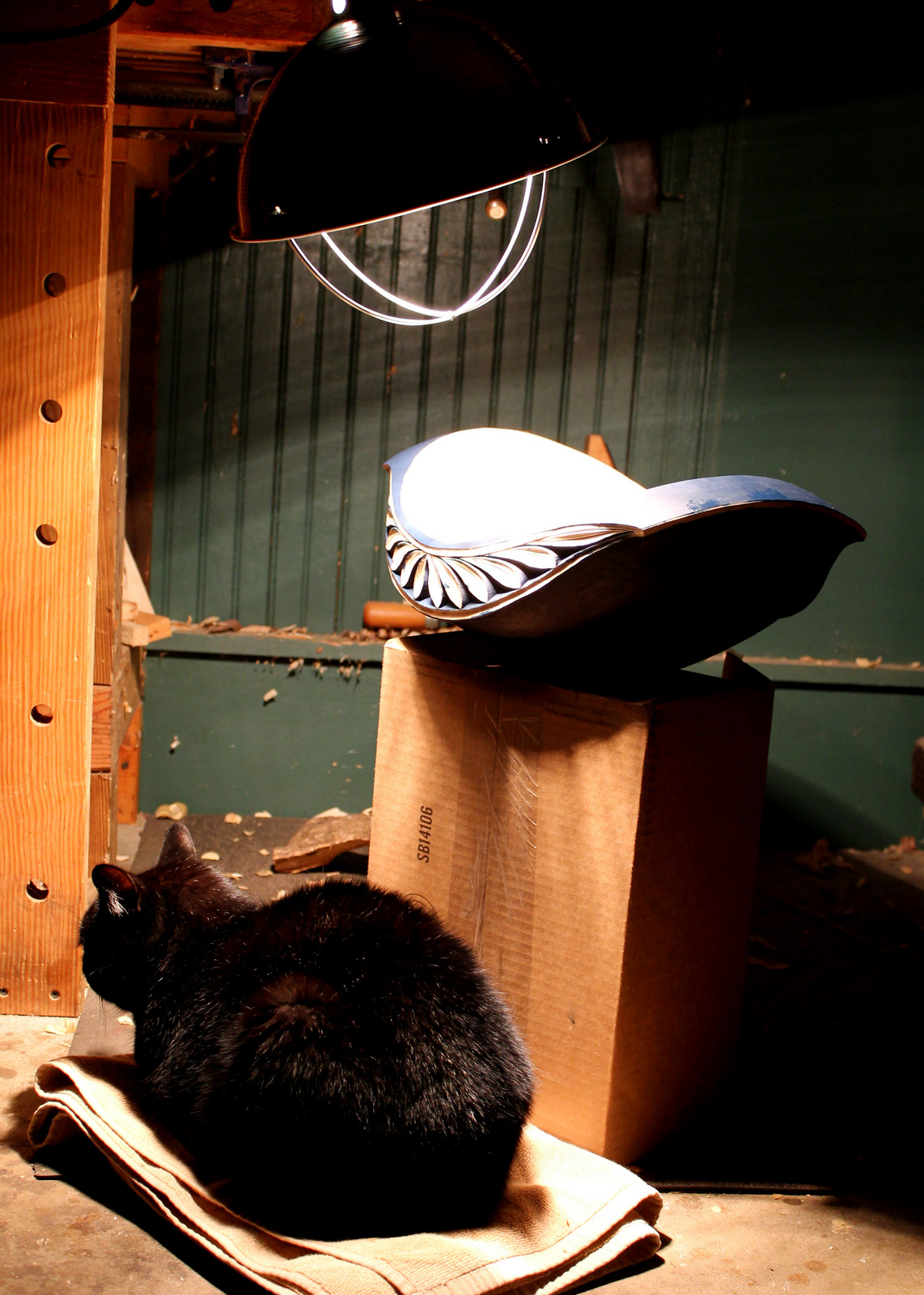
IMG_6325Compared to the paints most of us are used to, artist’s oils take a long time to dry — it can be over a week to be dry to the touch!  Since I painted the colors in sequence after each dried, I sped up the drying process with a heat lamp — which our cat, Mavis, appreciated as well.  After the painting was completely finished, I treated the interior of the bowl with a few coats of flax seed oil, then another over the entire bowl, paint and all.

The dimensions are 17 1/2″ long, 12″ wide, and 6 1/2″ high.


IMG_6501


Posted in bowls, drying, paint, patterns, Uncategorized | Tagged | 11 Comments

Great Wonders

SAM_2641

If I say to my neighbor, “Come with me, I have great wonders to show you,” he pricks up his ears and comes forthwith; but when I take him on the hills under the full blaze of the sun, or along the country road, our footsteps lighted by the moon and stars, and say to him, “Behold, these are the wonders, these are the circuits of the gods, this we now tread is a morning star,” he feels defrauded, and as if I had played him a trick.  And yet nothing less than dilation and enthusiasm like this is the badge of the master walker.

— John Burroughs, The Exhilarations of the Road (1875)

Posted in quotes and excerpts, trees, Uncategorized | Tagged | 4 Comments

Some Spoons For Sale

IMG_6473

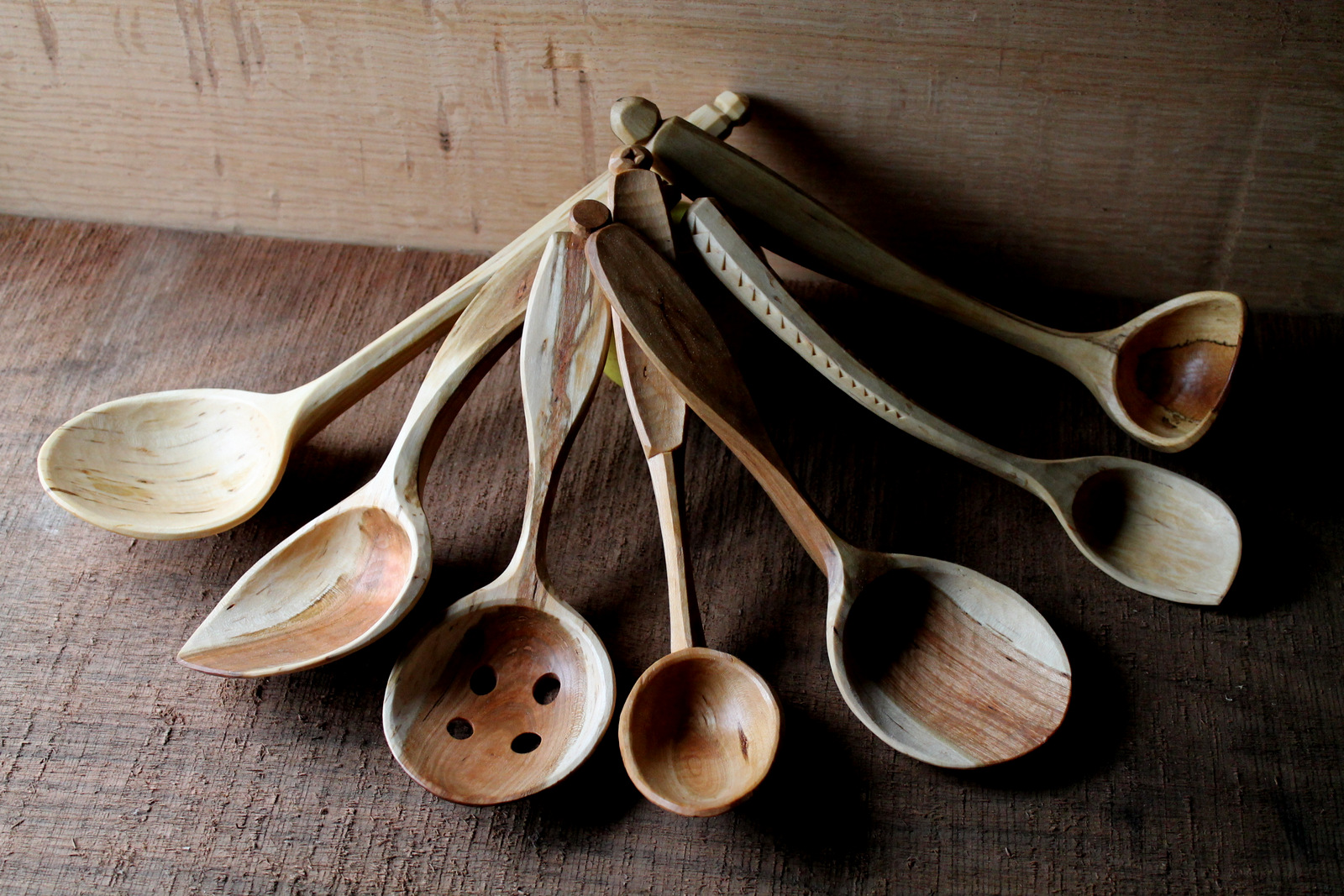
As I mentioned in my last post, I’ve been carving some spoons from crooks.  Here are seven of them, and I’m offering them for sale.  I’ll provide photos and a brief description of each one below, but there are some things they all have in common.  Each of them is carved from a crook, and the grain flows through the handle and the bowl of the spoon. These are all serving/cooking spoons of one form or another, and they are ready to use. I’ve treated all of them with food grade flax seed oil, and experience has shown that spoons like these hold up very well over years of use.  Six of the seven are carved from Pennsylvania black cherry, the other sycamore.  I’ve carved all of them, start to finish, with axe and knife — no sandpaper.

If you’d like to purchase one, let me know with a comment below — or an email at dandkfish@gmail.com if that doesn’t work.  You can pay through Paypal or by sending a check in the mail.  If Paypal is your preference, I’ll send an invoice to your email through Paypal. As usual, I’ll keep things simple and include shipping within the U.S. in the price listed. For shipping outside of the U.S., there will be an additional charge, and we’ll figure that out later.

Click on a photo for an enlarged view.

#1: A cherry serving spoon/ladle with a nice wide bowl.  The translucence of cherry sapwood (as opposed to the heartwood streak along the middle of the underside) is evident in the left photo.  It is very durable and strong.  11 3/4″ x 3 3/8″  —  $85 includes shipping.  SOLD

IMG_6405  IMG_6406

#2: This cherry spoon has an octagonal handle that sweeps away from the bowl to the right, following the curve of the grain.  Tough for lefties.  9 1/4″ x 2″ — $55 includes shipping.  SOLD

IMG_6423  IMG_6424

#3: If you’re like me, and don’t like too much sauce in your baked beans, then this is the spoon for you.  Striking heartwood running through this cherry spoon.  8 1/2″ x 3″ — $70 includes shipping.  SOLD

IMG_6409  IMG_6411

#4: I really like the lines of this cherry serving spoon. 10″ x 3″ — $ 70 includes shipping. SOLD

IMG_6427  IMG_6426  IMG_6425

#5:  This cherry server/ladle has narrower, deeper bowl as well as some different design details and texture.  10″ x 2 1/8″ — $75 includes shipping. SOLD

IMG_6431  IMG_6433  IMG_6432

#6: I went with the flow of this wonky cherry crook.  I love the feel of it in the hand — very solid with a deep, wide bowl. 9 3/4″ x 3″ — $80 includes shipping.  SOLD

IMG_6416  IMG_6419  IMG_6413


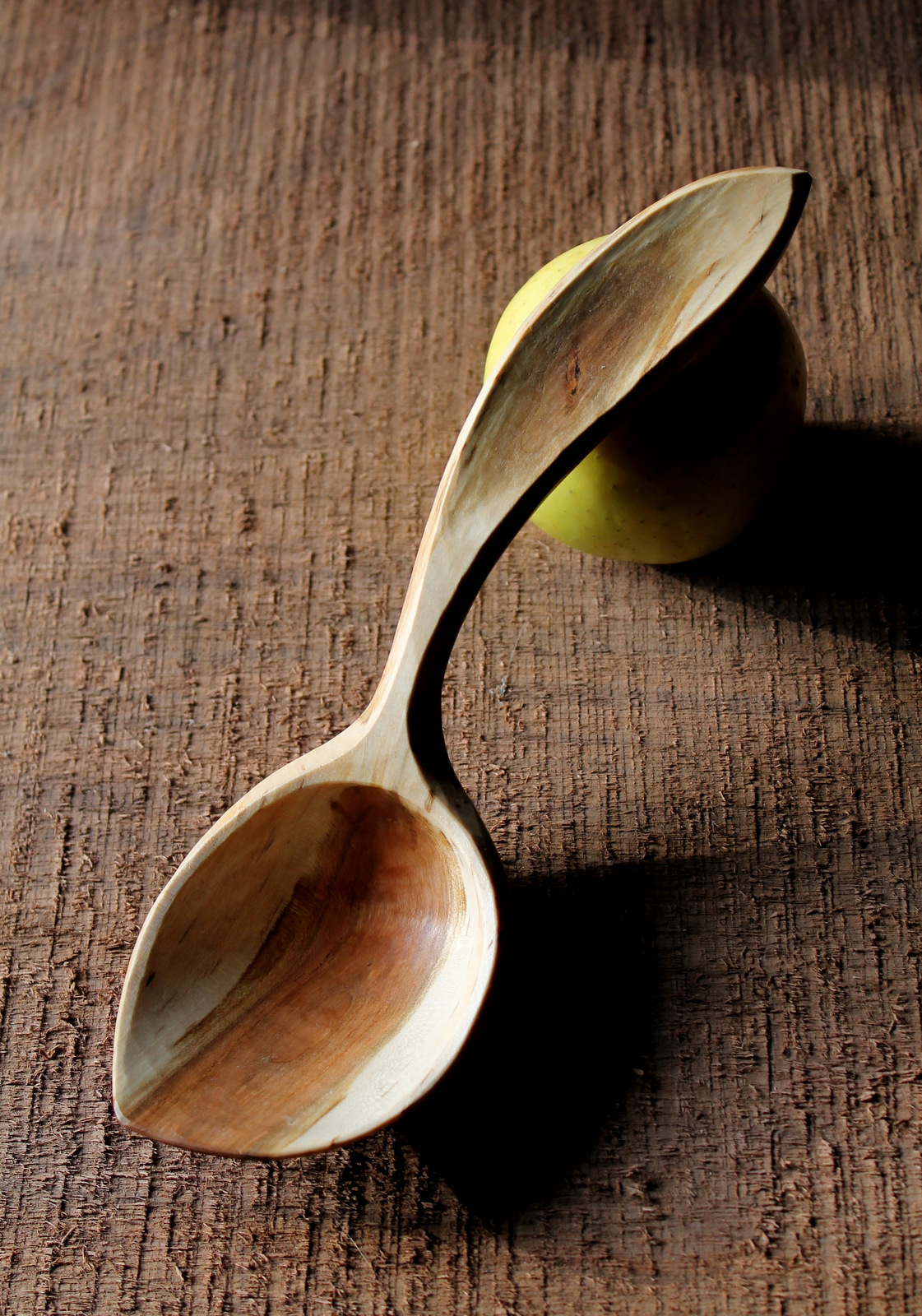
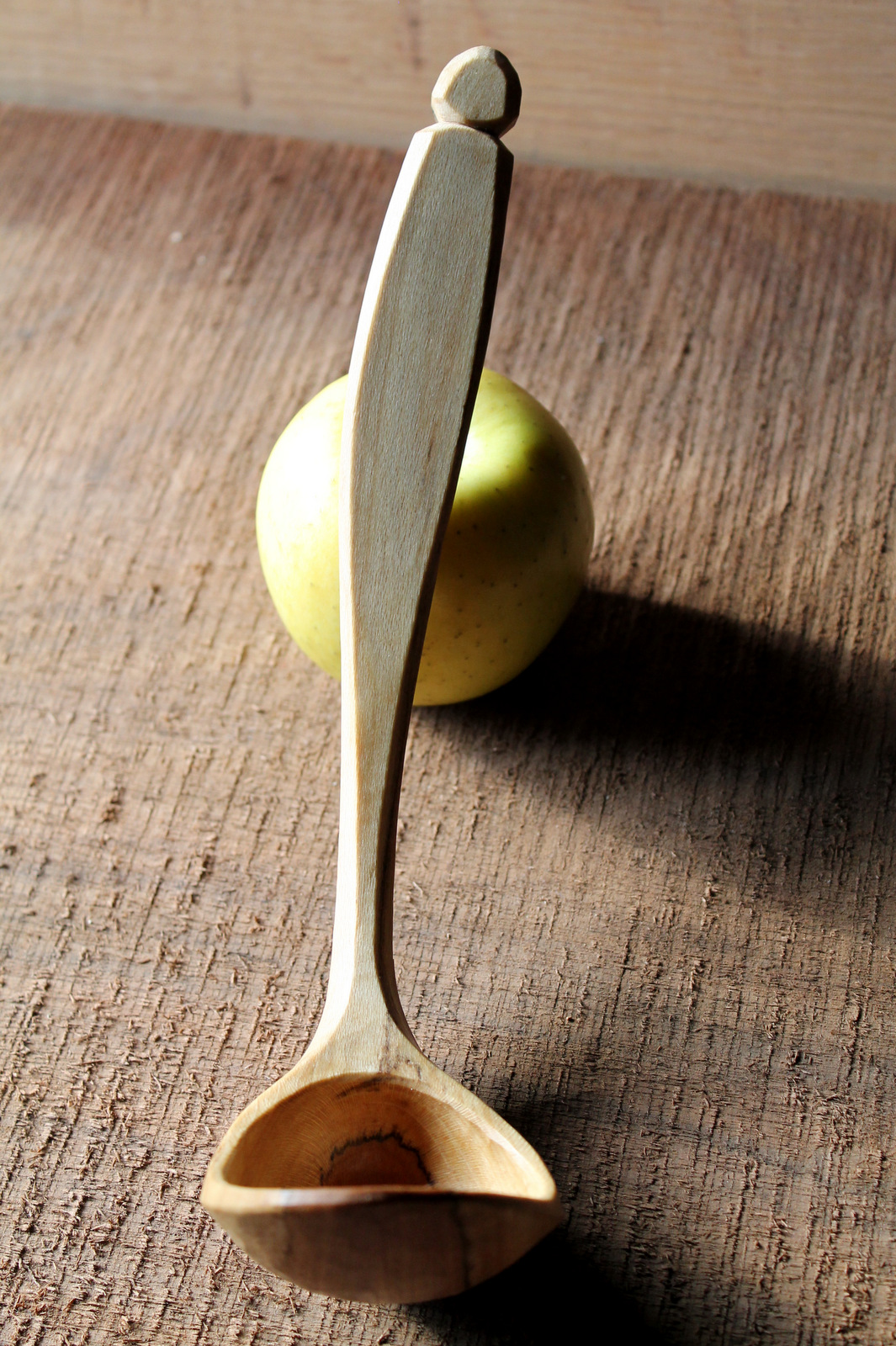
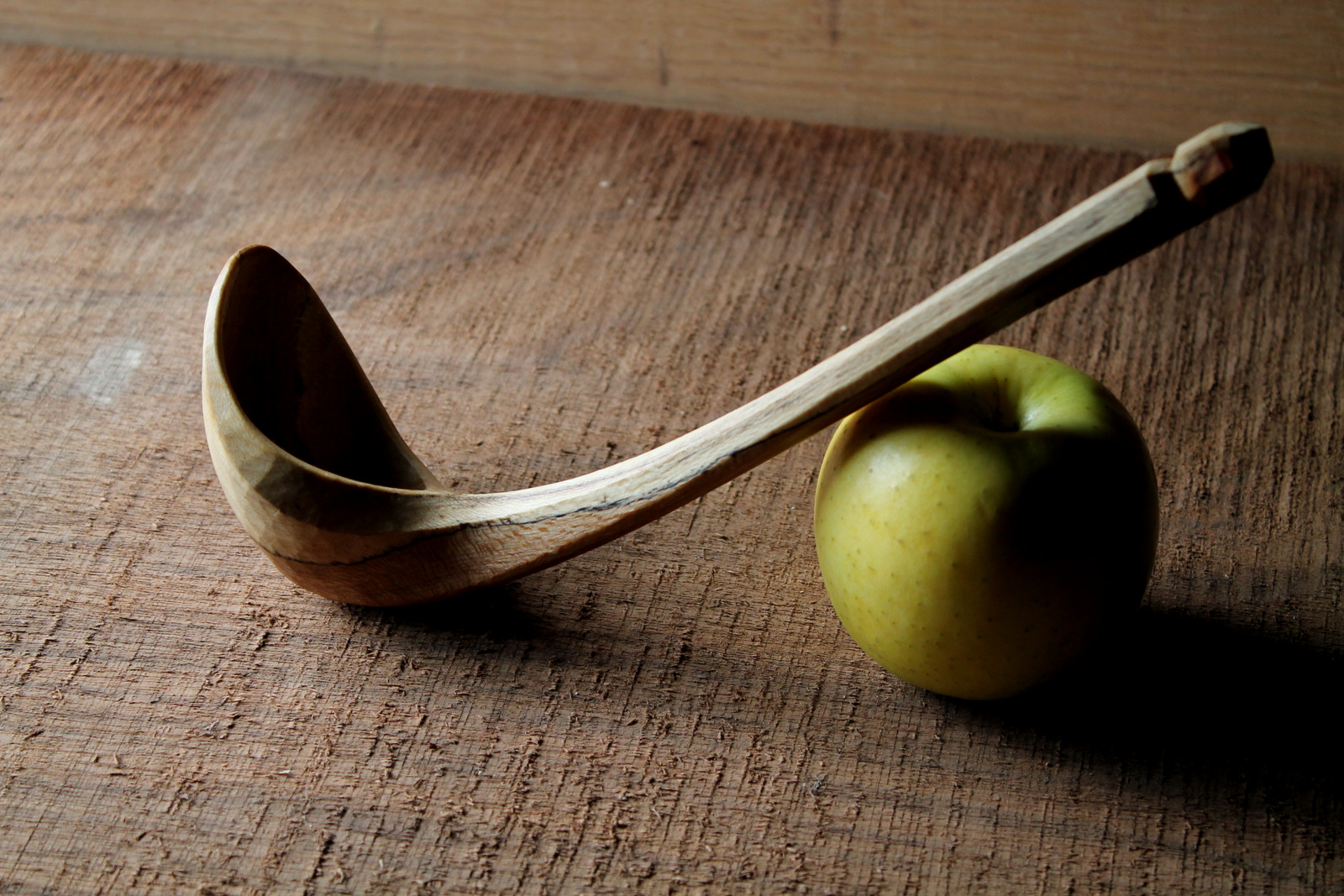
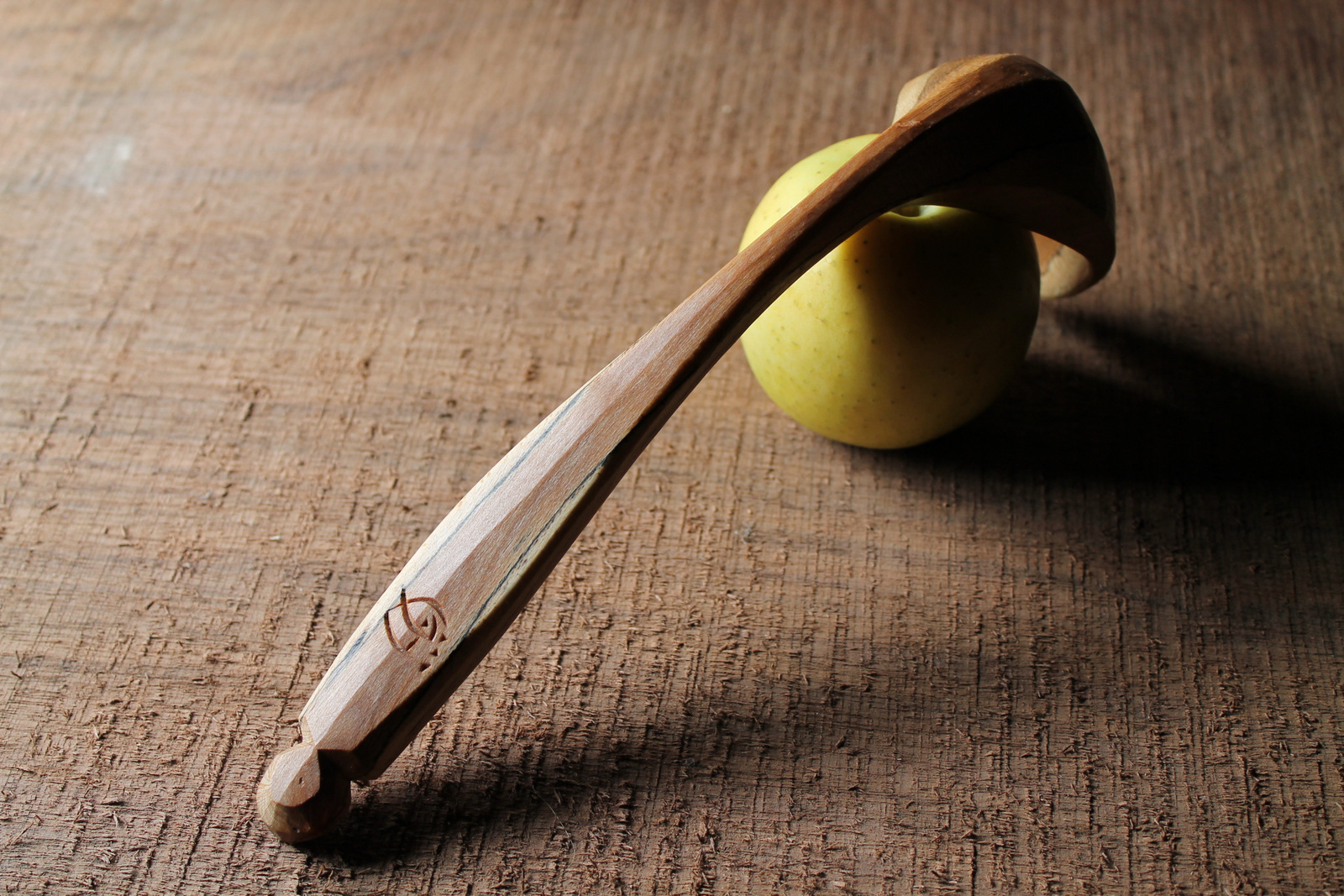
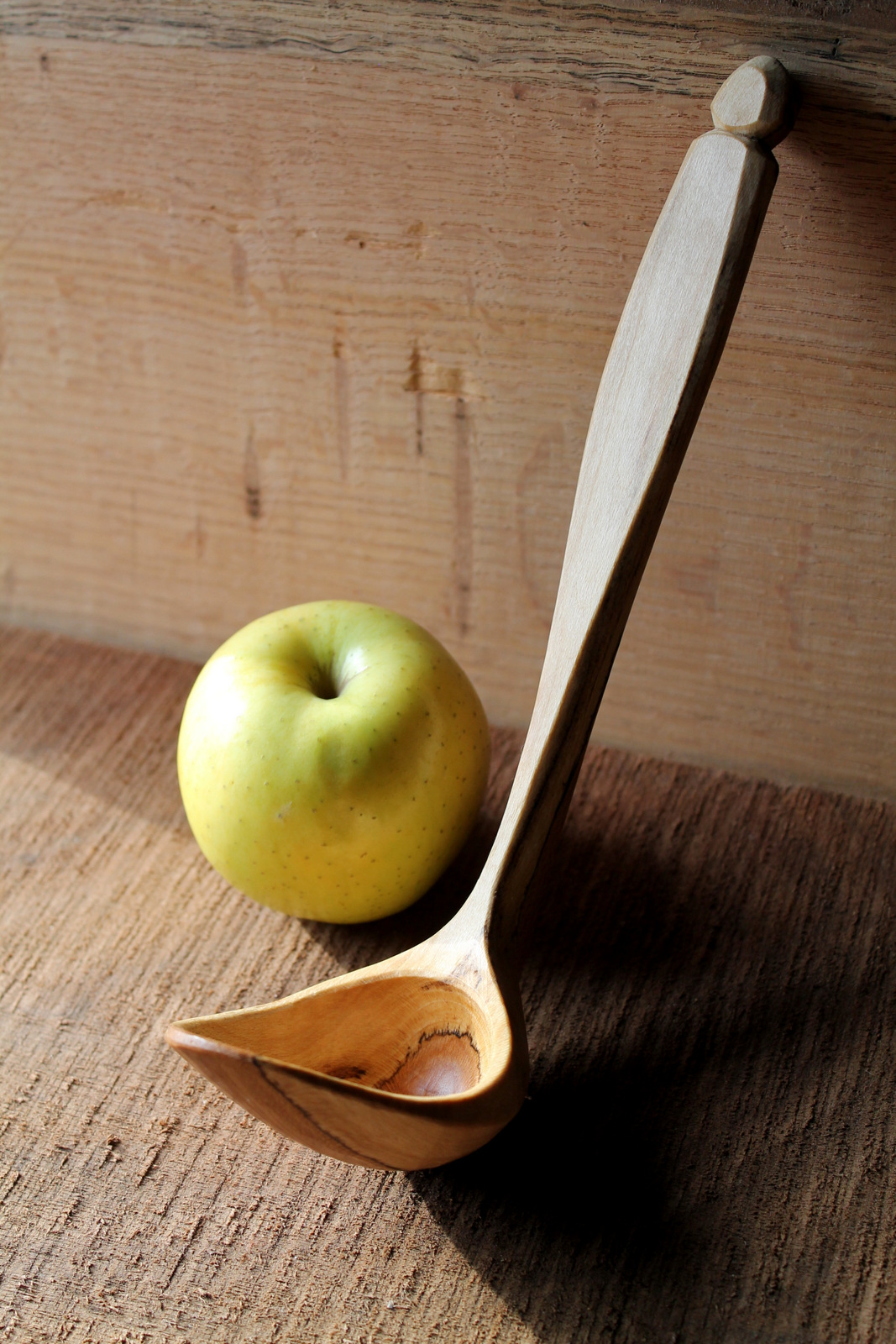
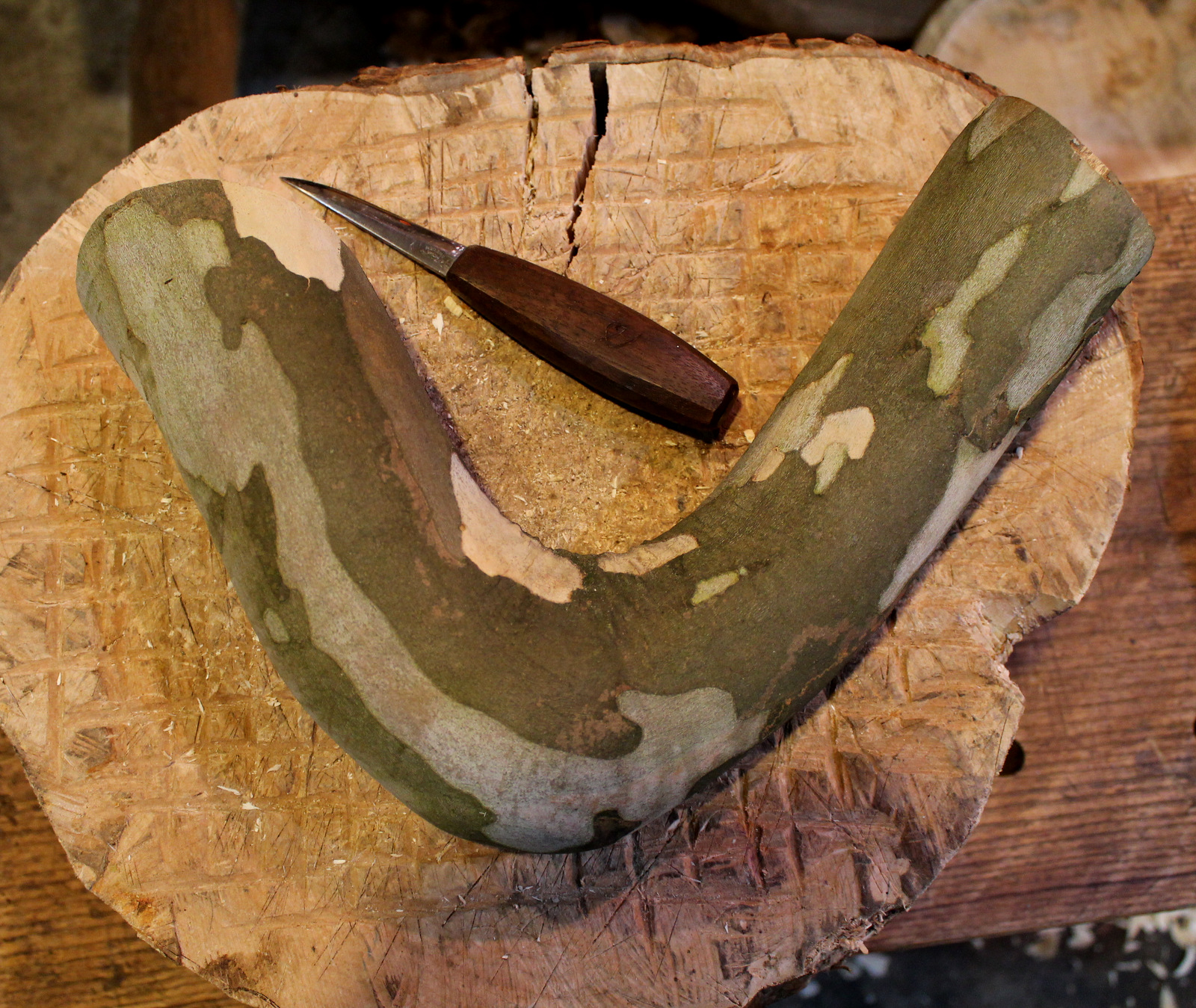
#7:  And finally, a sycamore ladle.  It takes an extreme and rare bend in a crook to have the grain run through a ladle like this (It came from the crook in the bottom photo).  I love the contrast between the heartwood and the sapwood and the dark streak between them.  10″ x 2 1/2″ —  $90 includes shipping.  SOLD

IMG_6435  IMG_6442  IMG_6439  IMG_6445

It takes a radical crook like this one to have the grain run true through the bottom of a deep soup ladle. This one is in sycamore.

Posted in cherry, spoons, Uncategorized | Tagged | 12 Comments

Finding the Spoon in the Crook

IMG_6178

I like making spoons from crooks.  It makes for strong elegant spoons that let the tree be a design partner.  Besides, I like discovering the crooks.

It takes a radical crook like this one to have the grain run true through the bottom of a deep soup ladle. This one is in sycamore.

It takes a radical crook like this one to have the grain run true through the bottom of a deep soup ladle. This one is in sycamore.

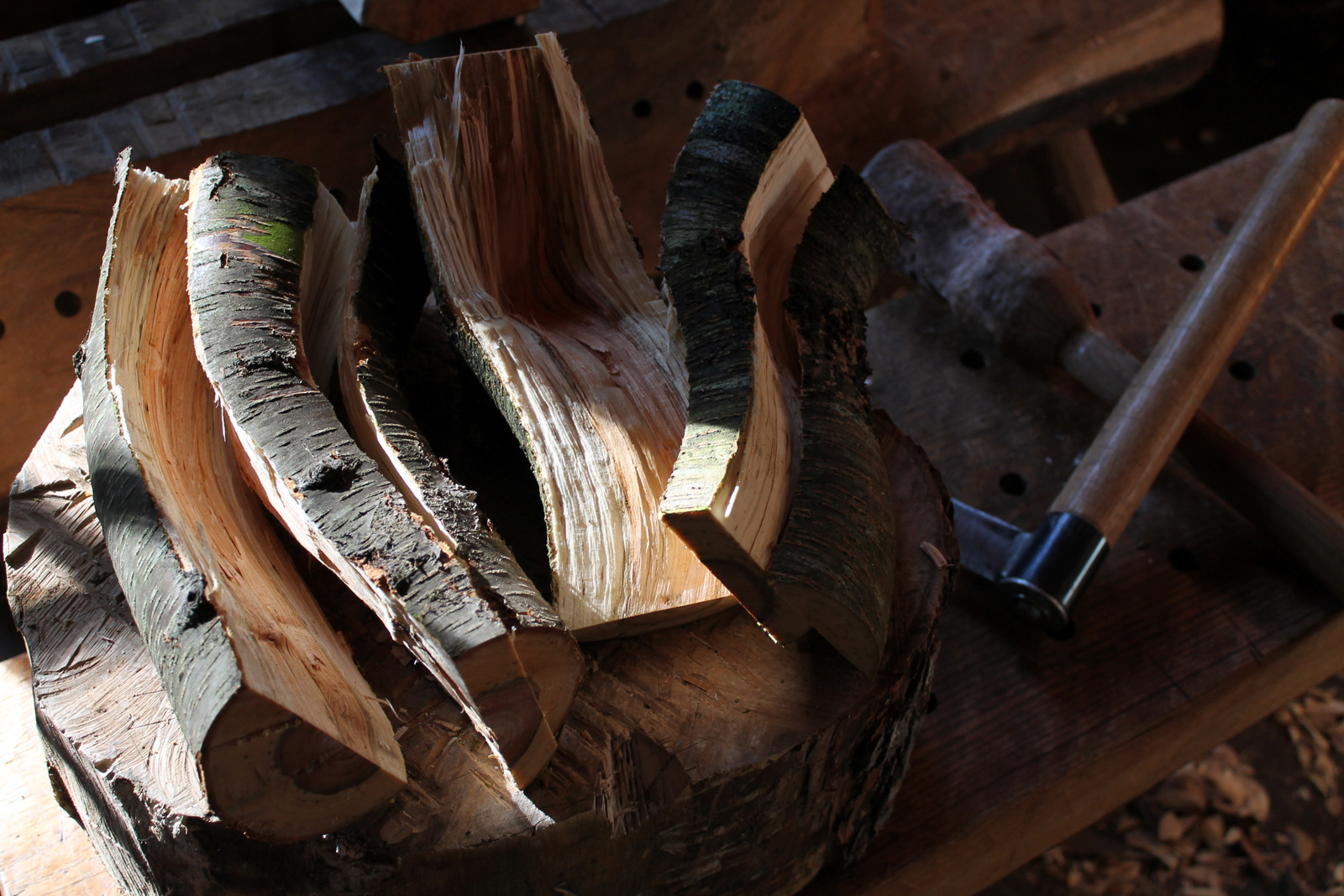
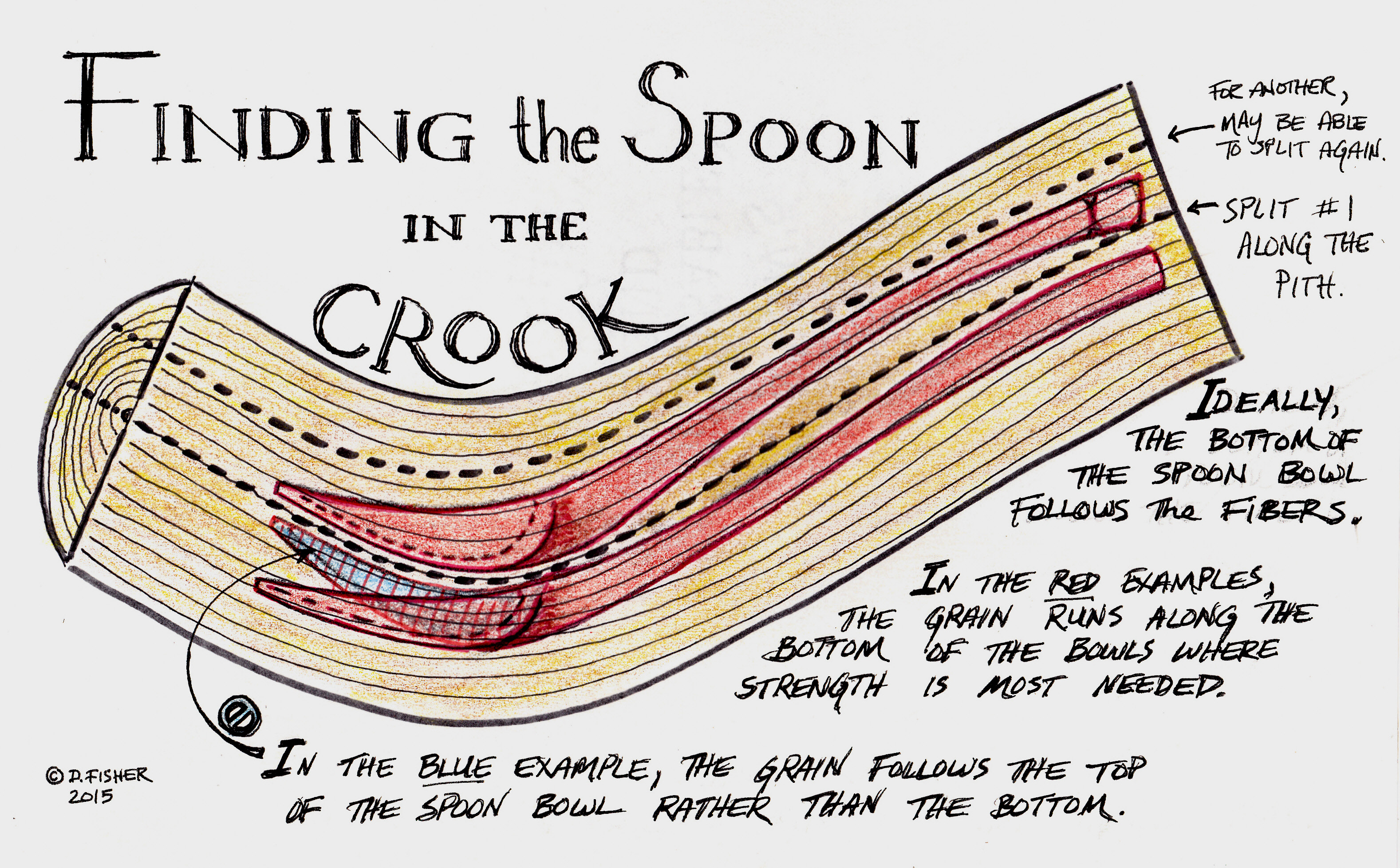
When a crook is split, the sinuous ergonomic profile of the spoon is revealed.  There it is.  Step back and relax.  The tree has spoken.  Of course, there is still plenty of room for design within the strength of those fibers, but ideally  the fibers will run through the handle and along the bottom of the spoon bowl.  So when forming the “wedge” of the bowl, I remove wood above the bowl rather than below.  If a crook is particularly uncooperative, there is room for compromise — as evidenced by spoons carved from straight-grained blanks.

Finding the Spoon in the Crook_NEW

I’ve been finding some good crooks lately.  I’ve got some photos to take, then in the next post, I plan on offering some of the spoons I’ve been carving from them.


Posted in cherry, finding wood, green woodworking, sketch, spoons, trees, Uncategorized | Tagged , | 5 Comments