Bowl for Beginners and Beyond

IMG_8144

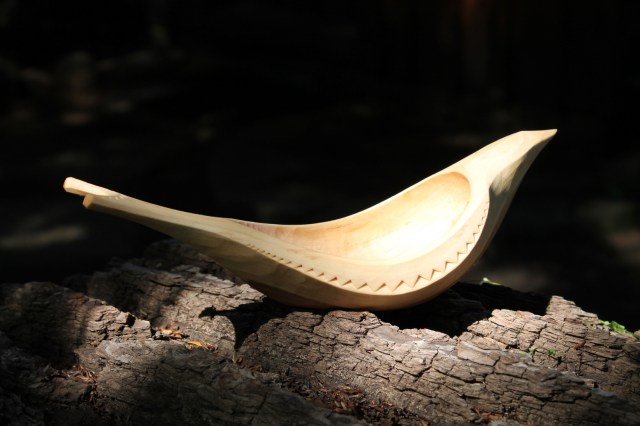
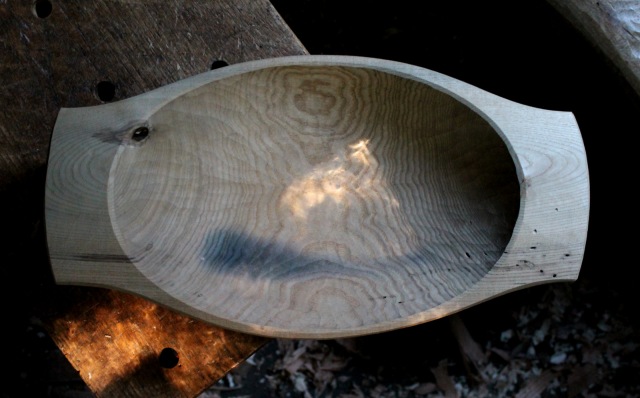
I had been thinking about an ideal bowl design for the Plymouth CRAFT class, now only a month away.  This sample bowl is the result of those thoughts.  In addition to providing challenges for development of various skills, I wanted the bowl to be useful, beautiful, and reasonable for students to achieve in a two day class.  But, even outside of a class, I think this is an ideal design for a beginner bowl, and one that provides a foundation that can be built upon as one’s skills improve.  In fact, more advanced students may wish to explore some of those options during the class.

One challenge of a two day course is the lack of drying time.  Therefore, when carving this sample bowl, I carved it, start to finish, in one go — green.  In fact, as you see it in the photos it is still green.  I’ll get a better surface finish if I go back over some areas after it dries; then again, I could just leave it dry then put on some oil.
IMG_8153

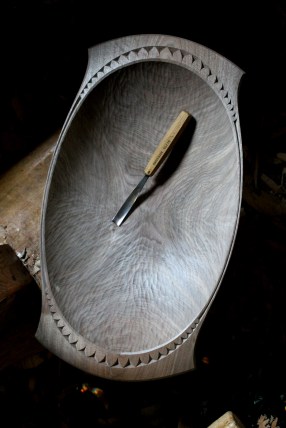
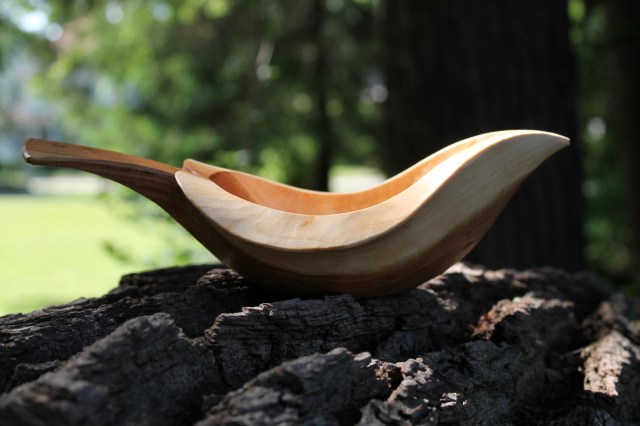
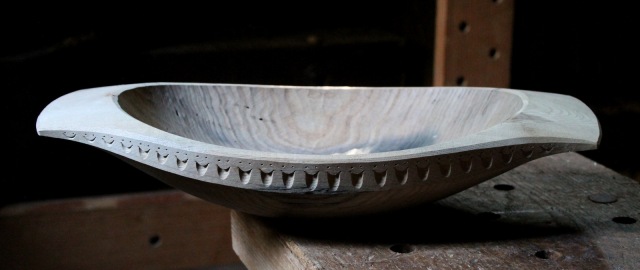
My sample bowl is in sassafras — twisted, bug-eaten, iron-stained, knot-holed sassafras.  But it is a relatively soft hardwood that is easy to work, and I had some around.  I started with a log of about twelve inches in diameter.  The bowl is about 18 1/2″ long, 9 3/4″ wide, and 4″ high.  Notice in the above photo that, as the sidewalls approach the corners of the handles, there is no outward return of the line.  This is just one example of simple design considerations that make the bowl easier to execute; the tool can exit right off of the handle without concern for grain direction issues.
IMG_8123

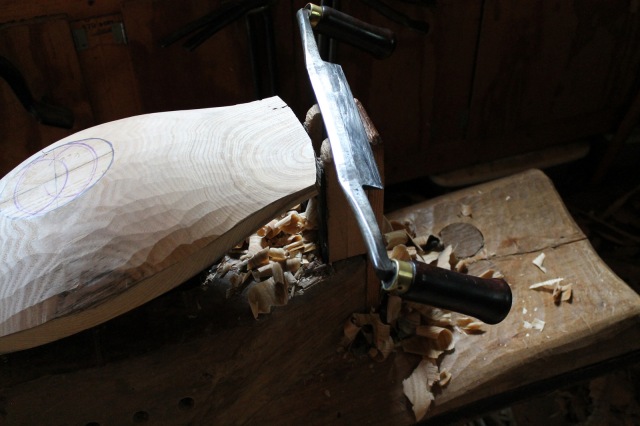
There is also no major undercutting beneath the handles.  The drawknife is able to flow right around the outside of the bowl and off the end of the handle.
IMG_8149

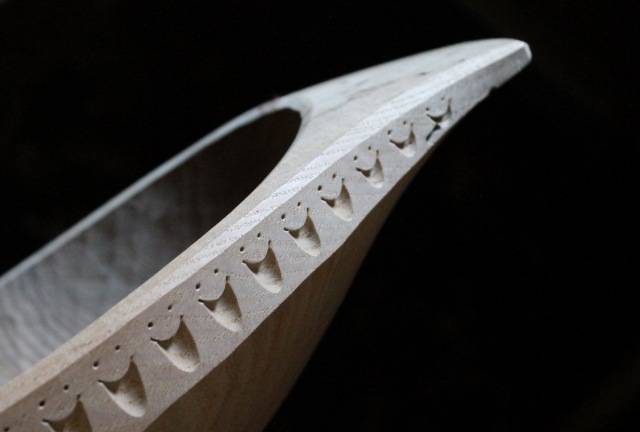
Elements like the arched rim add visual interest, and the side panel provides an opportunity for a variety of decorative carving.  In this case, I carved a series of simple gouge nail cuts, then jabbed the points of dividers above them.  Creates a simple cheery design!

So now I have the bowl wrapped in an old towel while it dries.  This sassafras is funny stuff.  As it dries, you can hear it snapping and crackling — very faintly, like Rice Crispies.  The only wood I’ve ever noticed to do that.  Scares me as I’m waiting for the “POP!”  The towel serves as a partial barrier to moisture loss, slowing the drying while avoiding mold.
IMG_8124

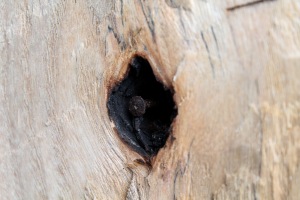
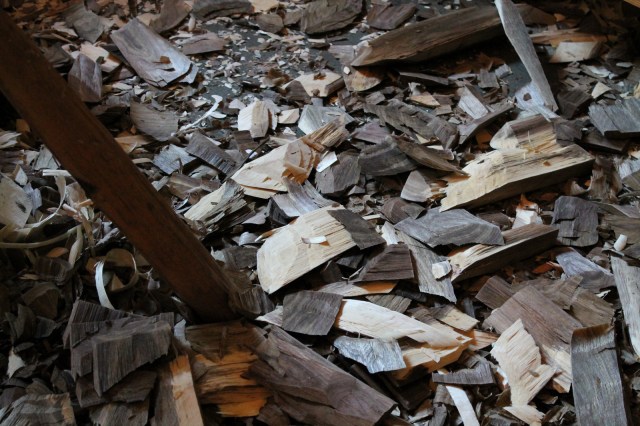
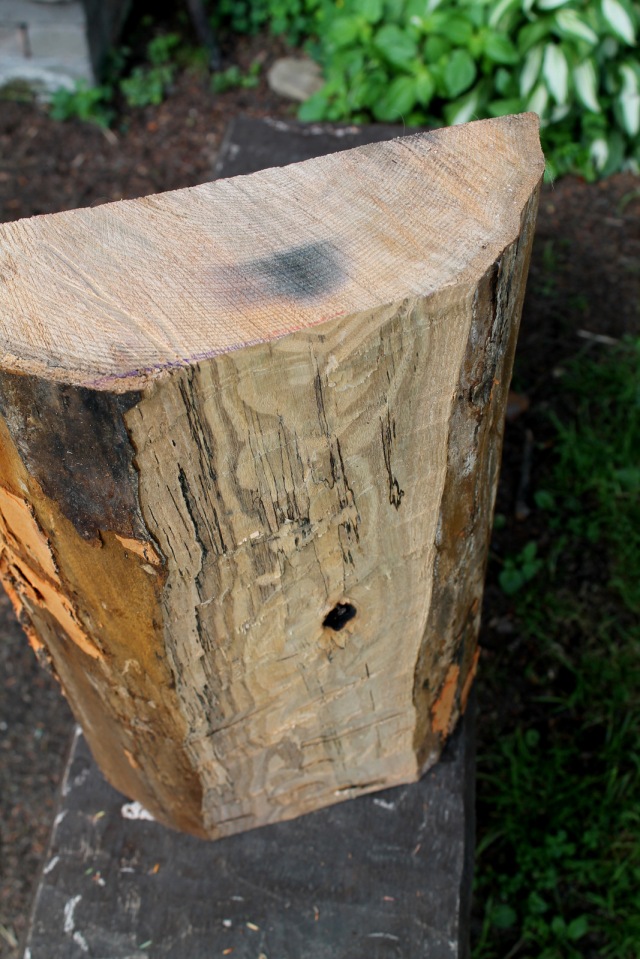
IMG_7990But one more thing — about that odd blue streak you may have noticed in the bowl.  The photo above shows another piece of the same sassafras tree.  Tannin-rich species such as oak, chestnut, and sassafras will react with iron, creating a bluish streak.  So, if you see something in the end grain like that in the above photo, beware!  I didn’t heed the warning, and it was almost too late for my axe when I noticed this embedded nail.
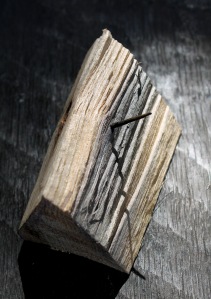
IMG_8130I had to reject that chunk.  In the case of my bowl, I was able to split off a piece containing the nail that caused the blue streak (left) and proceed with the bowl.
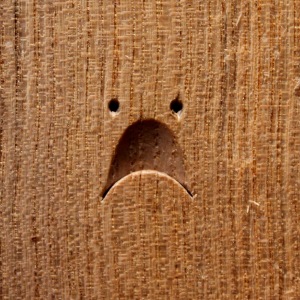
 

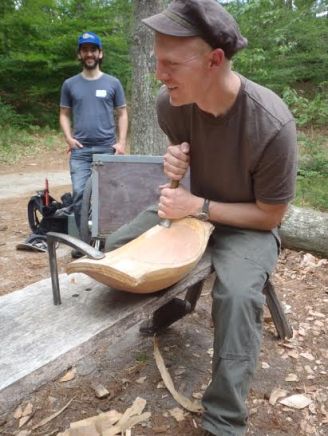
IMG_8163So, especially when working with yard trees or roadside trees, watch out for embedded metal.  If your adze hits that nail, you’ll look like this:


Posted in bowls, classes, drying, finding wood, layout, patterns, proportions, teaching, trees, Uncategorized | Tagged , , | 7 Comments

Necklace for a Bowl

IMG_8087

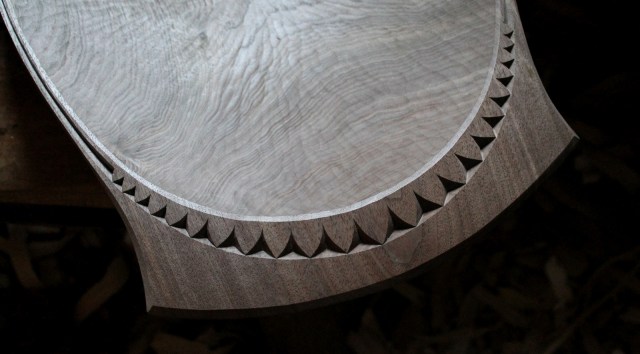
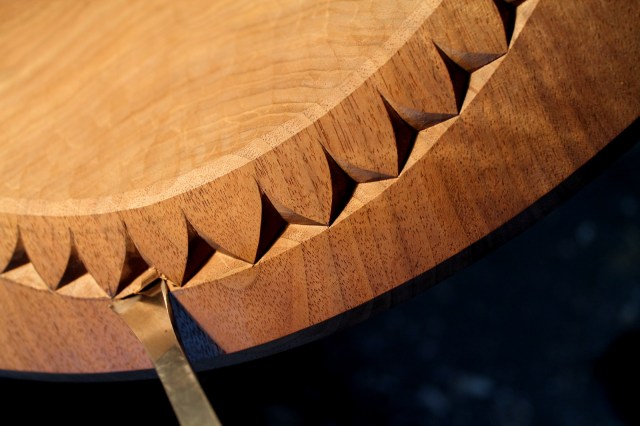
At least that’s the way I see a design like this — draping like a necklace around the rim.  l like how the facets of the recesses catch the light and shadows in different ways.  I’ve done several versions; one of them can be seen in the lead photo of my blog as a whole.  That version is simpler to layout and cut thanks to it’s parallel border, smaller chips, and straight cuts (as compared to this variation that I carved again today with larger, curved recesses that gradually diminish in size).

IMG_8028

IMG_8045Careful slicing with a drawknife leaves the upper surface of the handles cut clean and very subtly faceted.
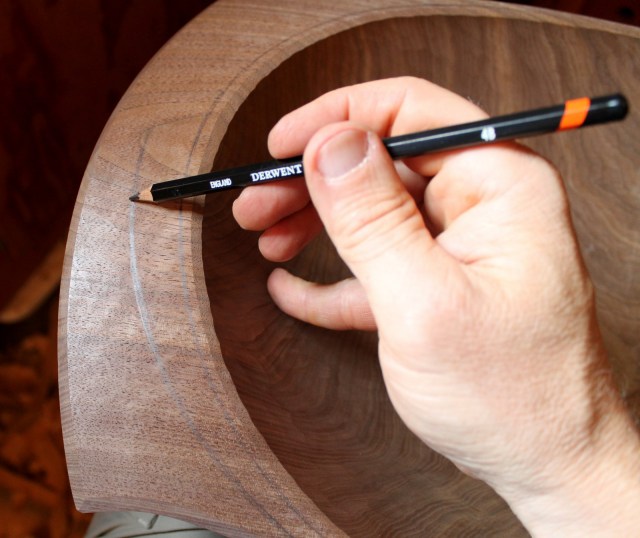
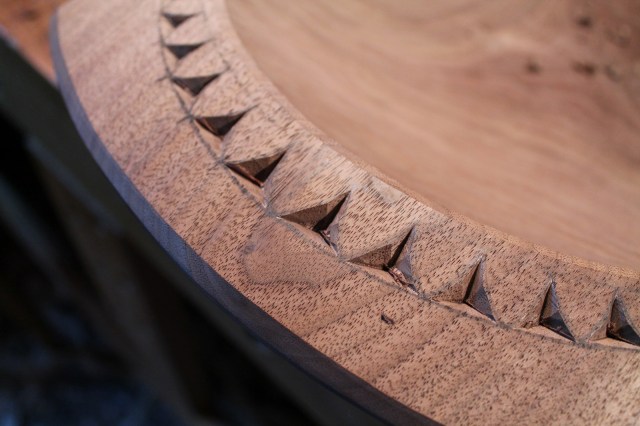


On these dry finished surfaces, I use a soft pencil (not water soluble), so that the wood is not indented and the graphite can be erased with a good non-abrasive eraser.  I just sketch on the outline by eye, using my little finger as a sort of pivot point to help with control.

IMG_8048

Recesses this large (about 3/4″ across) can’t be excavated in one chunk.  I remove much of the bulk with a v-tool and chisel…

IMG_8062

…then finish things off with careful curving slices of a skew chisel.  (My little work light casts an odd yellowish hue.)

IMG_8075

The long recesses along the sides start with a v-tool, but get cleaned up and trimmed with a knife.  Take your time.

IMG_8085

IMG_8093The carving gouge provides some size perspective; roughly 24″ x 14″.  Ready for oil.
 

Posted in carving, layout, patterns, tools, Uncategorized, walnut | 5 Comments

Back in the Swing

IMG_7979

Give me six hours to chop down a tree and I will spend the first four sharpening the axe.

— Abraham Lincoln

Although this is a widely known quote attributed to Lincoln, he probably never said it. Besides, Lincoln wouldn’t have required six hours to chop down a tree!  Regardless, my axe has now recovered from the sands of Plymouth and the chips are flying once again in the shop.

I have a number of projects underway and more in my mind.  Among them is an example bowl that will be the aim for the Plymouth Craft class at the end of July.  I have been thinking about the specific elements of a bowl design that is manageable for students to get to a complete pre-drying state in a couple days (with just light finishing cuts to go), while still possessing grace and pleasing lines. So, if you’ve signed up, or are thinking about it, more on the specifics will be coming before long.  I want folks to learn the concepts and skills, but also end up with pleasing and enduring bowls in their homes.

And I also want to get back to offering some bowls for sale on a somewhat regular basis. Now it’s back to swinging that sharp axe…


Posted in axe, bird bowls, quotes and excerpts, sharpening, teaching, Uncategorized | Tagged | 3 Comments

Birding

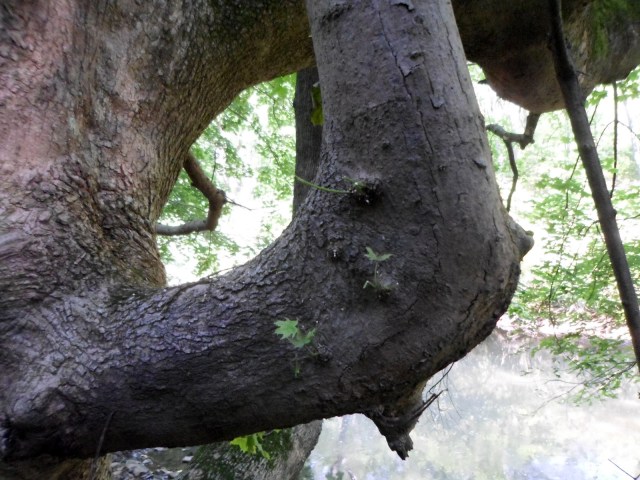
SAM_2840While on a morning walk today, I spied a bird in this big branch crook.  The whole upper section of the branch above the crook had already died, so it was a good choice to collect. Smaller crooks will usually pop open with a fro, but larger ones like this often demand some wedges and tenacity.

To drive the wedges, I like to prop the crook up against a post or tree.  The bottom edge bites into the ground, which prevents it from sliding (usually).  Often it is necessary to work wedges in from both ends, but there can still be some stubborn cross fibers binding the halves together.  You can work at those cross fibers with an axe, but be careful not to hit the steel wedge!  Wedges can also be inserted from the side.  With some perseverance, you’ll end up with a mangled half to work with.  Hopefully, I’ll be able to wrangle some sort of bird from this piece of maple.  More on that someday…

Speaking of birds, I thought I’d share some photos of our hands-on fast and furious bird carving session from the Fest.  We had less than three hours, but everyone had the basic bird form well underway, but with plenty of carving refinements to go.  If you’re in one of these photos in the slideshow, and don’t want your wife to know you were at Greenwood Fest, let me know and I’ll remove your shot!  And I think I missed some folks, so sorry if I didn’t catch you with the camera.  It was a great group of carvers and a lot of fun.

This slideshow requires JavaScript.

Posted in bird bowls, bowls, carving, finding wood, green woodworking, nature, trees, Uncategorized | Tagged , | 1 Comment

Surround Yourself

Greenwood Fest demo

Arturo has my back!  (Thanks, Paul, for the Photo)

We’ve all heard the sage advice about surrounding yourself with good people. Over the past several days, I found myself in just such a lucky situation.

I normally muddle away on my own, surrounded by logs, tools, and books. Thanks to Peter Follansbee’s encouragement, I came out of the shop in September for a special trip to Maine and Lie-Nielsen Toolworks.  I felt the magic of being with a group of people who share a love for creating.

When Peter and his friends at Plymouth Craft presented me with the opportunity to be a part of Greenwood Fest, I jumped at it. Now that I’m home, I’m reflecting on that same feeling, but on a larger scale.

I, indeed, was surrounded by good people; from the staff at Pinewoods Camp, to the other instructors, to the volunteers that kept the whole thing running, to the people that traveled from far and wide with hatchets and knives.  I was able to meet and talk with people whose work I admired, and some that were new to me.  I enjoyed hearing their stories and sharing time and laughs among the wood chips.

SAM_2832

Bill enjoyed the visit to Elizabeth’s 17th century house, but would have trouble living there!

It also takes outstanding people to run an outstanding organization, people like those behind Plymouth Craft, led by Paula Marcoux. Without exception these were dedicated, creative, inspiring folks that, in some cases, even opened their homes to us.

After working with the folks that are Plymouth Craft, I am even more pleased that I’ll be returning to Plymouth at the end of July to work with them again to teach a bowl carving class.  As Jogge often says, “I am so happy.”

I neglected to take many photos, although I will share some from a rare moment when my camera was with me in a future post. My lack of a smart phone, and the site of my “dumb” phone, generated some laughs.   Below, I’ll direct you elsewhere for some great shots from the Fest, and there are many more to be found.  There you’ll see some of the good people that made this event so memorable. Meanwhile, I’m full of creative energy and ready to get back to work in the shop.

Peter Follansbee’s related blog posts:

Who Cooks for you?

Three Days of Peace Love and Sloyd

Shots from Greenwood Fest I

Rick McKee’s beautiful, poetic tribute.  Rick is as skilled with words as with an axe:

Growth Rings

A Riving Home always has great stuff, and now a thoughtful post about the Fest:

Coming Back Down to Earth


Posted in Uncategorized | 4 Comments

Shrink Tubes

IMG_7852

I wrote about shrink boxes in this post a few months back.  What I call shrink tubes are just long skinny shrink boxes.  The nature of their shape means it is nearly impossible to reach into the interior and reshape things with a knife, but you don’t have to.  Just bore a hole and leave it alone.

For the cherry shrink tube above, I bored the hole with a two inch diameter T-handle auger.  It is about 12 1/2″ long.  I carved a lid for this one, with a lace that can secure the lid or slide above it to be slung over a shoulder.  Sure to become very trendy among fashionistas.  This was sort of a prototype, and I think I can simplify things a bit on future designs.

These are great canvases for some lettering and decoration. On this one, I carved the Latin phrase solvitur ambulando — “It is solved by walking.”  As seen in the slideshow below, I had some fun with a walking person design and on the bottom as well.

This slideshow requires JavaScript.

I think my favorite projects with these shrink tubes are pencil cases.  These are very kid-friendly projects as well.  Imagine a kid picking a branch, boring a hole, working with a spokeshave on the outside, and painting.  Relatively quick and safe for little hands.  Fitting the bottom may require a little more help.

Any size bit will work, but this one, in aspen, was made with a one inch auger bit.  It will hold about five or six pencils/pens.  I’ve begun some of the free-form letter carving on the outside, but still have more of the verse to go.  I painted it black, then cut through it.

IMG_7866

Carving lids can be a pain.  This lid couldn’t be more simple and convenient.  I use a kneaded eraser like a cork.  Kneaded erasers are very effective at erasing, and work like stiff Silly Putty.  Actually it only takes half of the eraser in the package below. Form it into a rough shape, jam it in the top, and it holds very tight.  Pop it out, and you have an eraser to go with your pencils.

Shrink tubes can have all sorts of uses from tool storage to, I guess, a very cool presentation box for a Cuban cigar.

Posted in cherry, green woodworking, Lettering, shrink box, Uncategorized | Tagged , , , | 14 Comments

Happy New June

emma shave horse_NEW

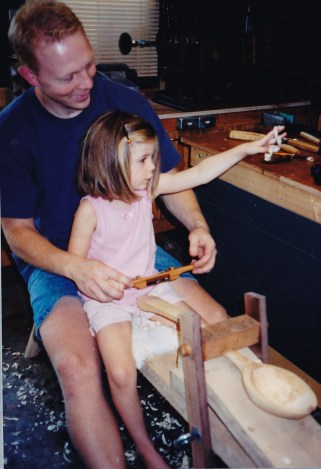
Fifteen years has seen many changes, among them smaller spoons.

Another school year has ended around here. Always an exciting time for me, but this year particularly so.  My wife, Kristin, and I watched the older of our two children, Emma, graduate from high school yesterday.  While it makes me nostalgic and in wonder of where the time has gone, we are all focused on the possibilities and adventures ahead.

So, while some mark the new year in January, for me June has always felt like my time for renewal and reflection.  I have been fortunate to have ever-increasing creative opportunities, and I appreciate all of you that have taken the time to visit the blog, share comments, or support my work.  I am excited for the new opportunities June brings, starting with Greenwood Fest this weekend.

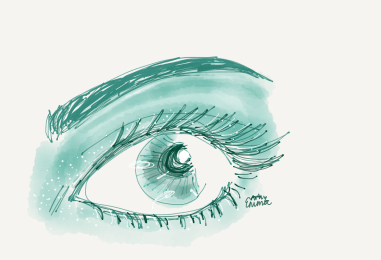
Emma doesn’t spend much time at the shaving horse anymore, but she can draw rings around me and her boundless creative mind is a constant inspiration.  Now that June has arrived, she and I will both have more time for making things, including shavings.

Emma eye sketch


Posted in green woodworking, sketch, Uncategorized | 1 Comment

Chips


IMG_7664

Wood chips have a lot to reveal if you look closely.  I think they have a beauty and fascination all their own, a feeling that is shared especially by children.  At demonstrations, kids always pick up chips.  It seems that they see something special, or at least free, in each one.

Here is a revealing example from the pile (above) that was forming as I hollowed a large walnut bowl last weekend (same chip, two views).

IMG_7662IMG_7661

I described my hollowing method awhile back in this post.  Rather than working gradually from the top down, I work in layers outward from the upper center — sort of like removing layers from a halved onion, but starting in the middle.  The distance at which I decide to take my next bite with my adze determines the thickness of each “layer.”

On the face of this chip, you can see the tool marks left from the adze when the layer in front of it was cut away.  It also shows the action of how the adze removes chips like this when hogging away material.  As the adze cuts downward along the back side of the chip, the pressure ultimately splits the chip out along the grain and it pops free along the underside.  The three partial splits within the chip result from the same pressure.  By working from the inside out, space is provided for the chip to release and pop free, taking advantage of the weakness along the grain.

As the shaping turns to the exterior and the axe, more unique chips are produced: slabs of various shapes and sizes, and fragile end grain chips that fall apart when they land.

IMG_7683IMG_7693

I think this vigorous sculpting is the most fun part of making a bowl, but much remains to be done….and each one of these little chips below takes as long to make as the big chunks in the photos above.

IMG_7712

Chips have character.  They’ve even drawn the attention of poets.  In his Song of the Broad Axe, Walt Whitman described the axemen hewing a mast from a long pine log and “The butter-color’d chips flying off in great flakes and slivers.”

Smell them, cook over them, shim with them, write notes on them, mulch a path with them.  Chips are fragrant, useful, revealing, even beautiful.  They are one of the resultant joys in this way of work.


Posted in adze, axe, green woodworking, tools, Uncategorized, walnut | Tagged , , | 1 Comment

Birds Ready to Fly to Plymouth

IMG_7615

In addition to starting some larger walnut bowls, I’ve been working to get some examples finished to take to Plymouth for the Greenwood Fest in a couple weeks.  Among them are some lettering examples, a couple medium-sized bowls, and some bird bowls to go along with the hands-on session.  Now that I’ve got some of the bird bowls and a couple small ale bowls oiled up, I thought I’d share some of the photos.  After the Fest, I’ll have to sort out what I’m doing with them.

I’ve been playing around with some designs inspired by different birds or types of birds. Each of these is carved from a branch crook:


IMG_7612

This one, seen at the top of the post as well, was inspired by the swallow.  Cherry, about 10 inches long.

IMG_7617

Robin type.  On this one I extended the hollow all the way to the tip.  Cherry, 9 1/2 inches long.

IMG_7635

I really like this little guy.  Wren.  Aspen, only 5 1/2 inches tip to tip.

I’ve shown these ale bowls below before, pre-oil.  Now oiled, the contrast between the cherry sapwood and heartwood is much more evident, at least until the sapwood color mellows over the years to come.

IMG_7651


Posted in bird bowls, bowls, cherry, Uncategorized | Tagged , , | 10 Comments

Jolly Good Ale and Old


Monks and Beer

William Stevenson was a sixteenth century English clergyman and playwright who also wrote this charming drinking song.  In it, we find reference to ale bowls, both “scour’d” and “lustily troll’d.”  And all wives should take notice of the generosity demonstrated by Tib.  Might be fun to learn and sing, even if you don’t plan on getting “wrapp’d and thoroughly lapp’d.”

Jolly Good Ale and Old by William Stevenson (1530?–1575)

I CANNOT eat but little meat,
My stomach is not good;
But sure I think that I can drink
With him that wears a hood.
Though I go bare, take ye no care,
I nothing am a-cold;
I stuff my skin so full within
Of jolly good ale and old.
Back and side go bare, go bare;
Both foot and hand go cold;
But, belly, God send thee good ale enough,
Whether it be new or old.

I love no roast but a nut-brown toast,
And a crab laid in the fire;
A little bread shall do me stead;
Much bread I not desire.
No frost nor snow, no wind, I trow,
Can hurt me if I wold;
I am so wrapp’d and thoroughly lapp’d
Of jolly good ale and old.
Back and side go bare, go bare;
Both foot and hand go cold;
But, belly, God send thee good ale enough,
Whether it be new or old.

And Tib, my wife, that as her life
Loveth well good ale to seek,
Full oft drinks she till ye may see
The tears run down her cheek:
Then doth she trowl to me the bowl
Even as a maltworm should,
And saith, ‘Sweetheart, I took my part
Of this jolly good ale and old.’
Back and side go bare, go bare;
Both foot and hand go cold;
But, belly, God send thee good ale enough,
Whether it be new or old.

Now let them drink till they nod and wink,
Even as good fellows should do;
They shall not miss to have the bliss
Good ale doth bring men to;
And all poor souls that have scour’d bowls
Or have them lustily troll’d,
God save the lives of them and their wives,
Whether they be young or old.
Back and side go bare, go bare;
Both foot and hand go cold;
But, belly, God send thee good ale enough,
Whether it be new or old.

Posted in bowls, historical reference, quotes and excerpts, Uncategorized | Tagged , , | Leave a comment