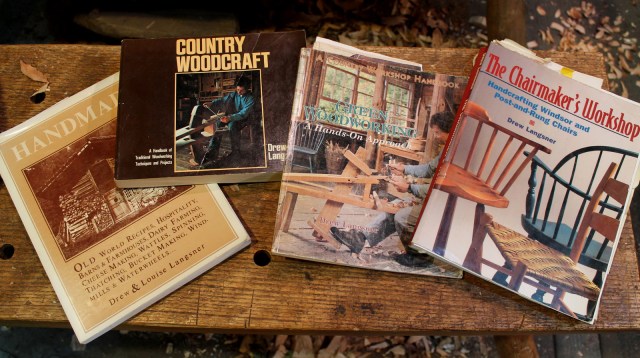
 There was a time when I didn’t know an adze from a hoe in the ground, then I found Drew Langsner. Here was a guy who could make anything from a tree, and explain the process in writing so that even I could understand it. His Green Woodworking book and this article were my guides as I started really sorting out how to carve bowls. If you don’t have his books, you’re missing out.

Me (left) talking with Drew and Louise Langsner in Maine, 2015 (photo by Peter Follansbee)
Although Drew and I had corresponded a bit, I had never met him in person. So I was thrilled to get a chance to talk with him and his wife Louise at a Lie-Nielsen event in Maine a couple years ago. I’m looking forward to catching up again at Greenwood Fest this year, where they will be Guests of Honor.
Today, Drew and Louise sent out this newsletter informing everyone of the “closing down” process for Country Workshops. Included are reminders of the past, news of the present, and thoughts on the future.
There is also some exciting news for the many folks out there seeking the quality tools that Drew has supplied through Country Workshops. Drew provided unique access to only the best quality tools long before they were in the present state of wild demand. Now Kenneth and Angela Kortemeier will be stepping in to supply many of the same tools through their new craft school in Maine. I enjoyed talking a bit with Kenneth in Maine, and he is a great guy. Hopefully, Drew taught him how to sweet-talk Hans Karlsson.
As you can see in the newsletter, Drew is enjoying his new fantastic explorations in art. He and Louise are sure to continue living lives with the same spirit of adventure and curiosity evident in their first book, Handmade, published in 1974. In it they travel through Europe, sharing and documenting the lives, homes, food (check out Louise’s Garden Kitchen blog) and traditions of rural villagers. The Afterword begins with, “Looking back, as well as ahead, we see our year abroad as the beginning of a much longer journey.” That journey continues and has already touched the lives of many, many people — myself included. Here’s to Drew and Louise and their new adventures.
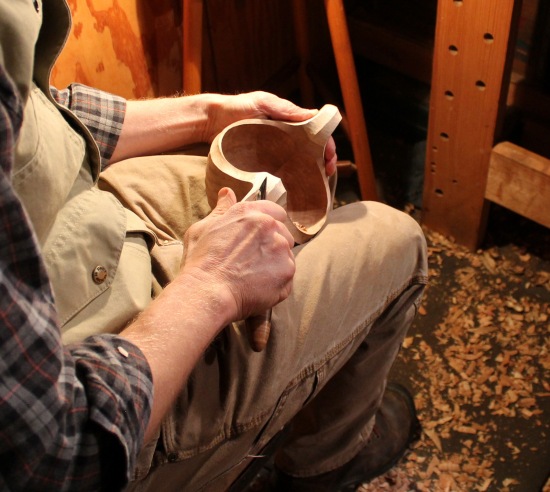
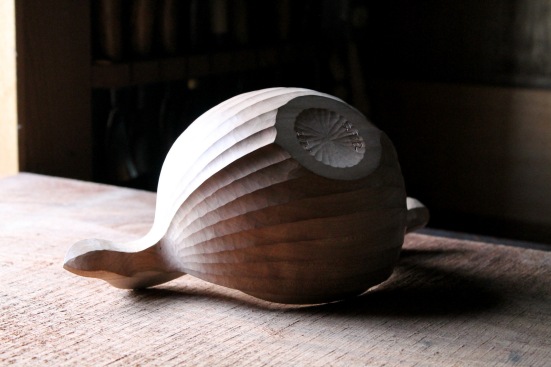
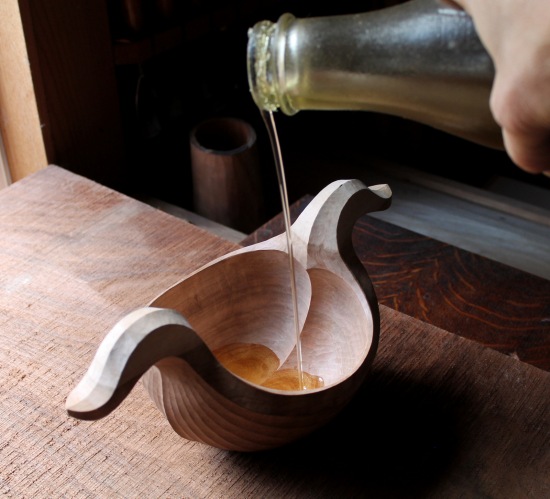
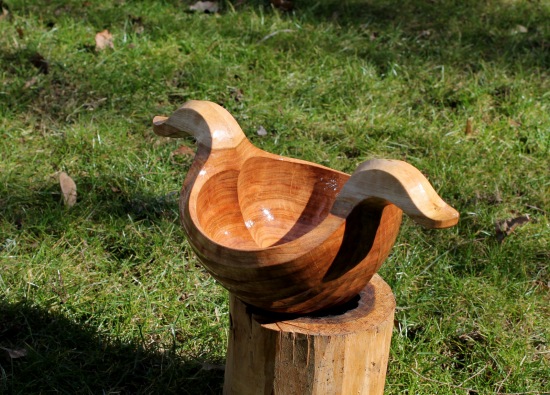

 “Let’s see where this road goes,” my dad would say as he turned the car onto an unknown route. We’d wander around back roads, unencumbered by any sweetly demanding GPS voice. We would see old farms that were new to us, and stop to look down into an unknown stream. I often assumed we were completely lost. Yet we always, magically it seemed, found the way home, richer from the adventure.
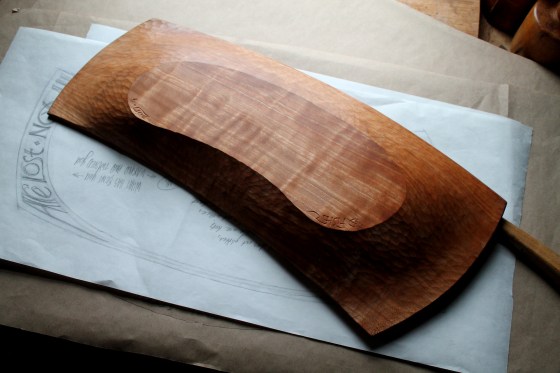

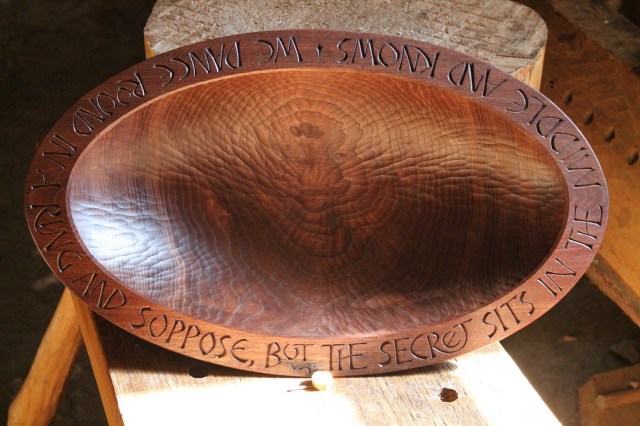
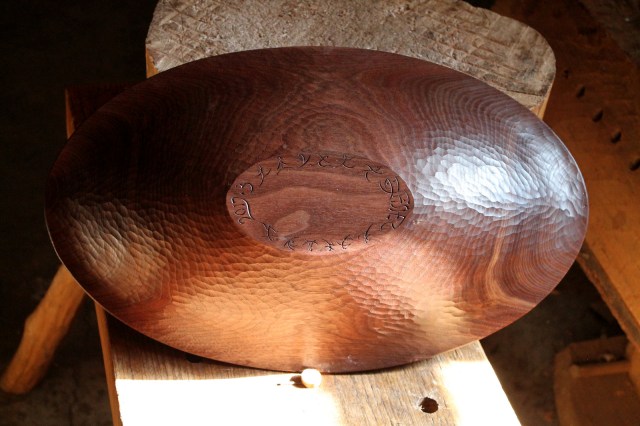


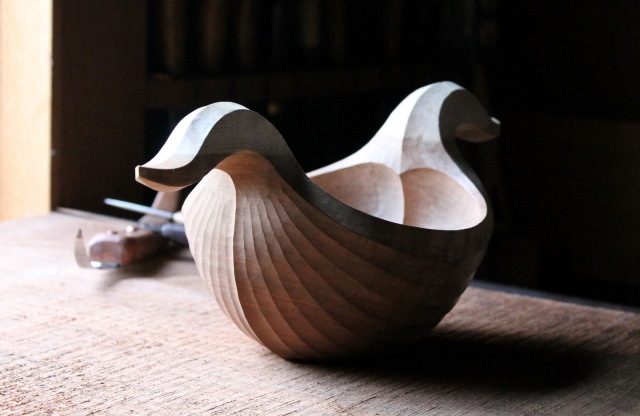
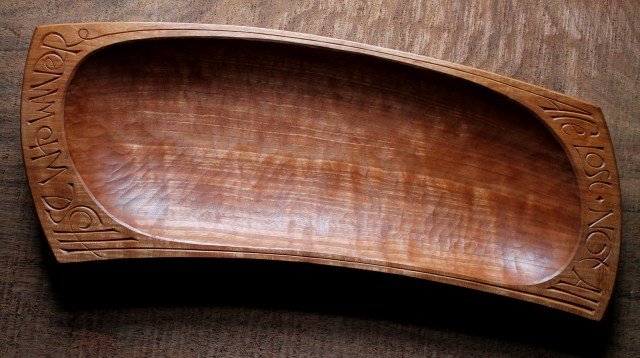
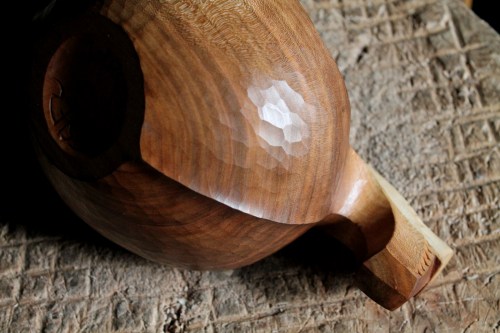 This one in cherry brings to my mind a team of workhorses, a lovely thought. I live in an area where one can still see Amish farmers working with teams of horses, but I’ve not had the opportunity to spend much time on a farm, and, admittedly, my knowledge of horses is so limited that I may have a difficult time distinguishing a mare from a stallion. Still, whenever I am around one (like Sue, the beautiful haflinger at the home of my brother-in-law and sister-in-law), there is no denying the magnificence and magnetism of a horse, and it is easy to understand why they have a special place in the hearts of so many.
 Since I listed a spokeshave on my tools-to-bring list for the Greenwood Fest class, I’ve received a couple questions about choosing and using one.
 After doing all the hollowing and hewing at the block, refine the surfaces with a spokeshave. The bowl can be held steady by leaning into it while the opposite end is registered in a notch in the edge of the block or against a stop on the far side. A couple woooden pegs could substitute for the integral upper stop.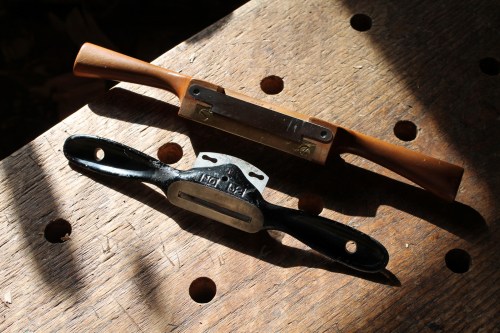
 The one’s I use most are a standard metal shave by Stanley and a low angle shave I made from a Ron Hock blade and some apple firewood many years ago. I do prefer the old Stanley #52 to their #51. The handles are lower — more in line with the blade, so it’s easier to control.


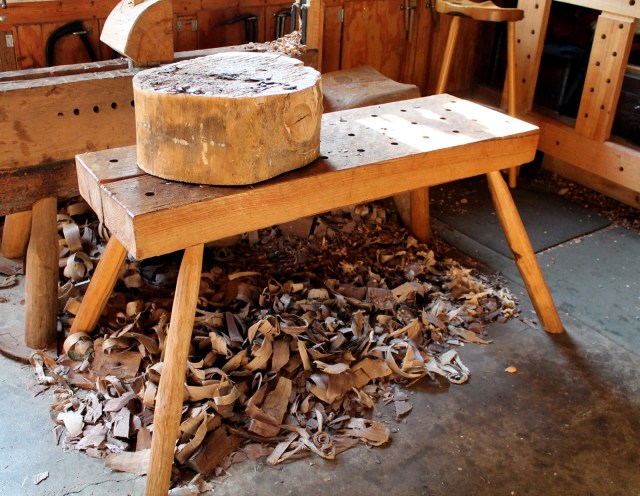
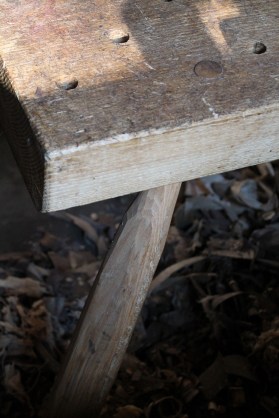 The height of the low bench (a little over 23 inches — or just above my kneecap) makes it handy for all sorts of general shop tasks, like sawing. The heaviness and widely splayed legs make it stable, yet it is still portable and fits into my small shop well. In construction, it couldn’t be more simple. The dimensions of the top aren’t critical; I had been given this oak timber (44 x 14 x 3 1/2 inches), and the size has worked out well. The legs can be anything tough and strong like oak or hickory. Mine are actually four roughly-shaved quarters of a hop hornbeam log. I wrote a post a while back about how I execute these joints — you can check it out
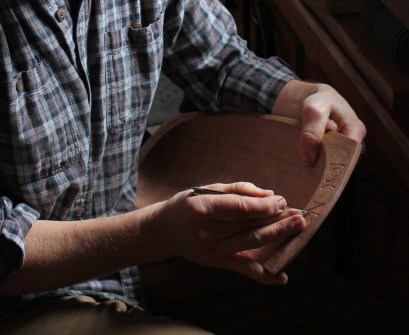
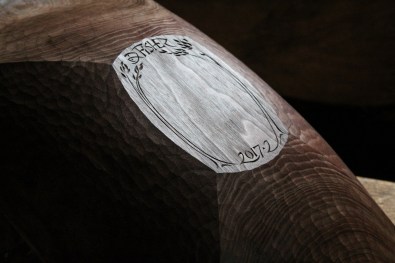
  And you can sit down to do some decorative carving on the rim (if you don’t feel like standing at the high bench). Here’s how I shaped the rim of the bowl after the bench photos had been taken.


