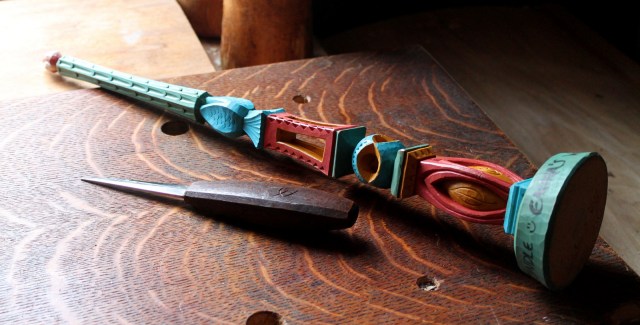
 About a year and a half ago, at Greenwood Fest 2016, Jögge Sundquist taught a class on carving a Swedish distaff, traditionally used for holding flax or other fibers while spinning. As Jögge explained, when a man proposed marriage to a woman, he carved an ornamental distaff as a gift for her. The skill reflected in the carving would be a reminder of his qualities as a potential partner and mate. If she accepted the gift, all was set, no need for words or a jumbotron proposal.
 I had started a distaff then, but hadn’t gotten around to it since. I’ve finally finished it as a little Christmas gift for my daughter, my wife having been fooled, I mean wooed, by me many years ago.
With the vibrant colors and whimsical bold patterns, it was a fun, if temporary, exploration into Jögge’s style, and it reminded me that Jögge’s book, Slöjda I Trä, will soon be out in English (Sloyd in Wood).
The photo at left shows Jögge’s colorful book. My copy is in Swedish, but the photos of Jögge’s amazing work are in a universal language, as are the wonderful pen and ink illustrations.
 Many of you know that Jögge’s biggest woodworking hero is his father, Wille. Wille’s book, Swedish Carving Techniques is a must-have book if you’d like to carve spoons and bowls.
That book is not only an incredible resource for technique and method, but also design considerations. Before I read that book, I thought of a wooden spoon as an object with a straight handle behind a flat oval. Wille opened my eyes to the sculptural potential in household objects like spoons and bowls. Objects that are a pleasure to look upon, hold, and use.
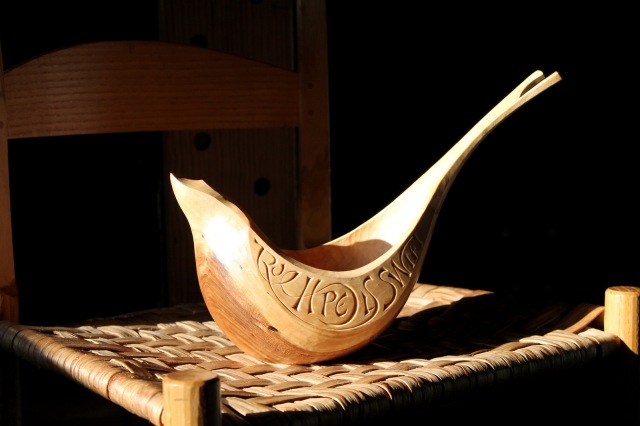
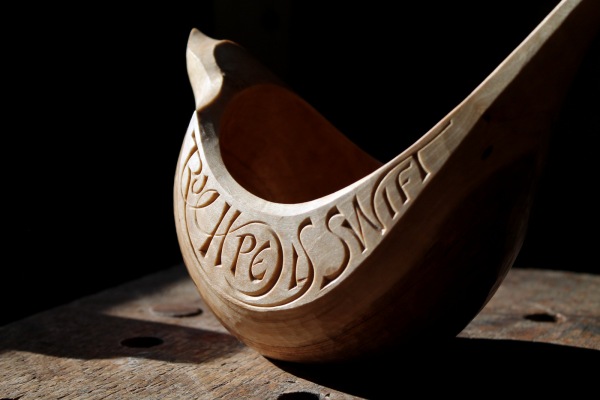
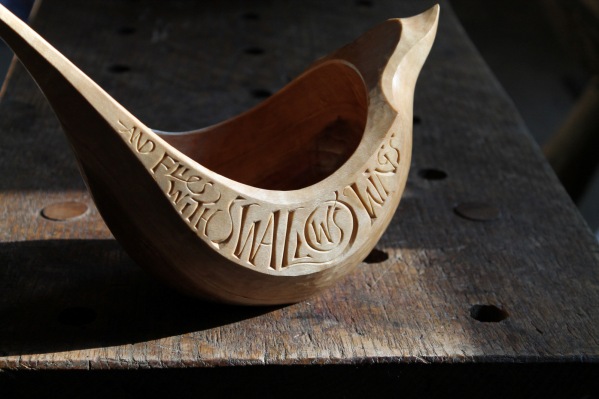
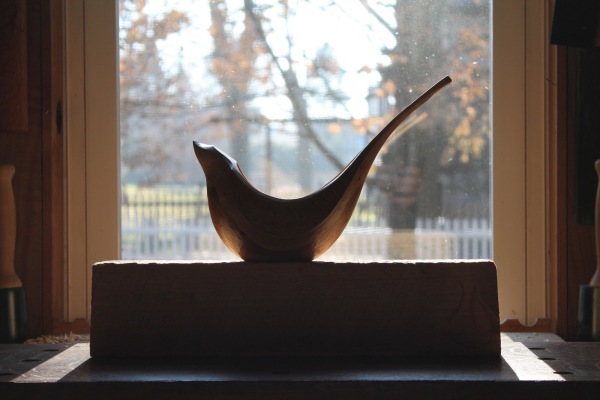
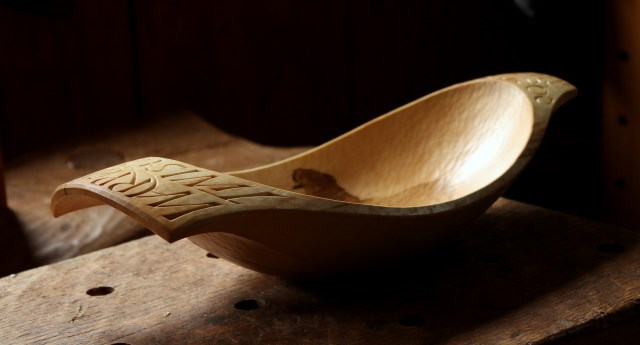
I’ve been carving some more spoons recently, and those ideas still guide the way I work. Here’s one example recently finished that I think reflects Wille’s influence.


Back in 1982, long before my spooncarving introduction, Wille taught a spooncarving workshop at Country Workshops. Drew Langsner informed me today that during that event, Rick Mastelli filmed Wille carving a spoon from start to finish. The video was just posted to youtube yesterday, and it’s a must-see: https://www.youtube.com/watch?v=yWeB_kFcZ34
I’ve already decided to pay tribute to Wille at Greenwood Fest 2018 by wearing the same outfit he wears in the video.
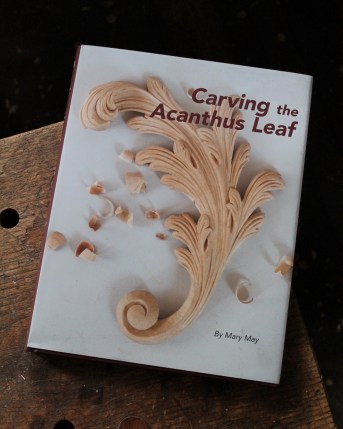 And before I leave the subject of carving books, I’ve got to suggest another great one, just published. Carving the Acanthus Leaf by Mary May is a spectacular book. I was captivated by the story of Mary May’s childhood and inspirational journey into woodcarving. It is interwoven into an incredibly well-researched exploration of the acanthus leaf and its interpretation across many cultures. Along with general advice on the selection of carving tools, sharpening, and such, are step-by-step instruction s for carving many different styles of acanthus, all richly photographed along with clear plans. Truly an incredible accomplishment that will help many carvers.















 David Fisher, Carving Explorations