
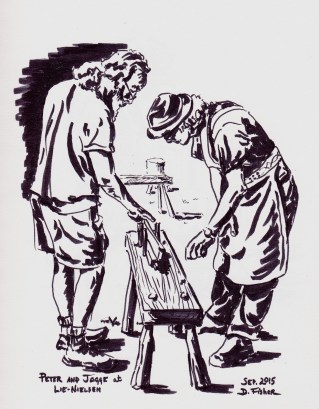
I’ve been getting a lot of good questions from people that, unable to find a good bowl adze, wish to make the most out of a less-than-ideal adze or refurbish an antique adze head. I’ve written about adzes in several posts, but I thought it would be helpful to pull some ideas together here in this post. With that in mind, I sketched some ideas above based on the first adze I bought over fifteen years ago, made by Pfeil, that I’ve reworked.
Here are some references that might also help if you’re looking to adjust or tune your adze:
- Although one adze is versatile enough to many different things, there is no one perfect adze head shape, inner/outer bevel relationship, or set of angles. Having a general understanding of how adze geometry and bevels work allows you to determine what will work best for you. Although far from comprehensive, This post should help, and there is a lot of good information in the comment section as well.
- In the sketch above, I have a simple diagram on grinding a new bevel. It can involve a lot of work, which requires patience and frequent cooling of the edge. To grind the outer bevel, I would essentially use the same technique for grinding a gouge bevel described in this post. And once the grinding is done, this post shows how I go about honing the edge of an adze.
- Some more good news: Blacksmith Jason Lonon plans to focus on lots of adze production this year, so hang in there.
- There’s other stuff about adzes on the blog here. Check under the “adze” category to the right.
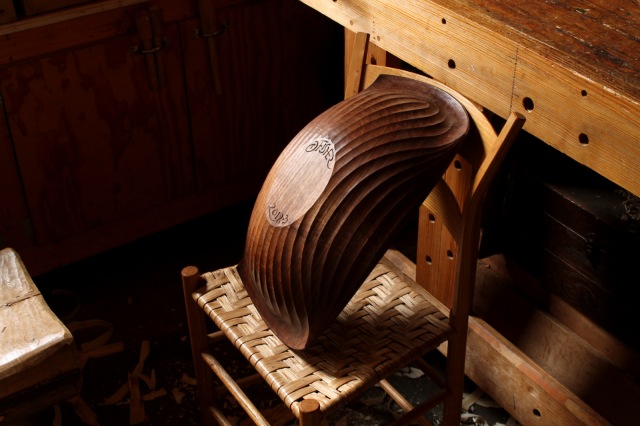
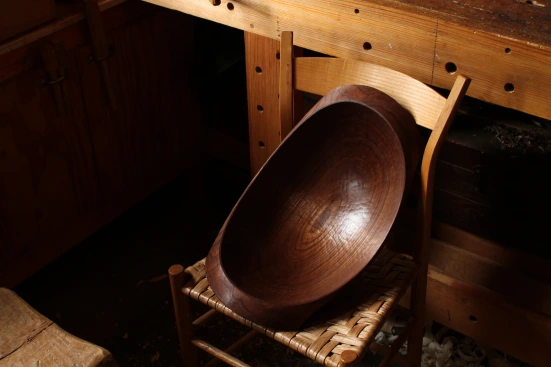





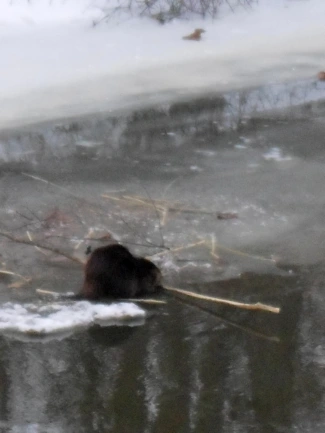

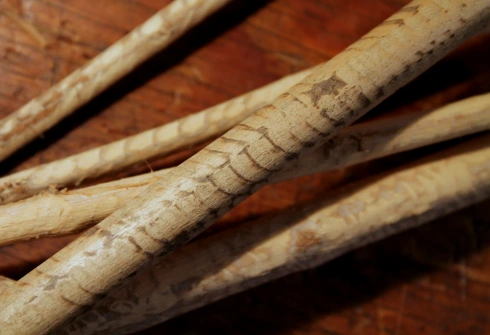 I keep a few beaver-chewed sticks in the shop, and I marvel at the lovely pattern left on the surface, better than the tool marks left by any gouge. I even made a bowl once on which I left the handles and rim straight from the beaver’s teeth.

 When you screw up or things just aren’t going right, take a walk. You might see a beaver while you’re out, or a sunset as you near home to help put it all in perspective.






 David Fisher, Carving Explorations