Welcome Sign

img_9628.jpg

I’ve never come across a redwood tree in my neck of the woods, but now I’ve carved the wood for the first time.  I’ve had this board (18″ x 9 1/2″ x 1″) kicking around since it was given to me at least twenty years ago.  It was reportedly salvaged from a picnic table out west if I recall.

I love it when a good use finally comes to mind for a board that’s been gathering dust, and so this one would fit the bill for a simple welcome sign to hang on the wall outside our home.  I had some fun with the design as I sketched the letters and the tree onto the board.  Carving it was, well, a bit of a learning experience.

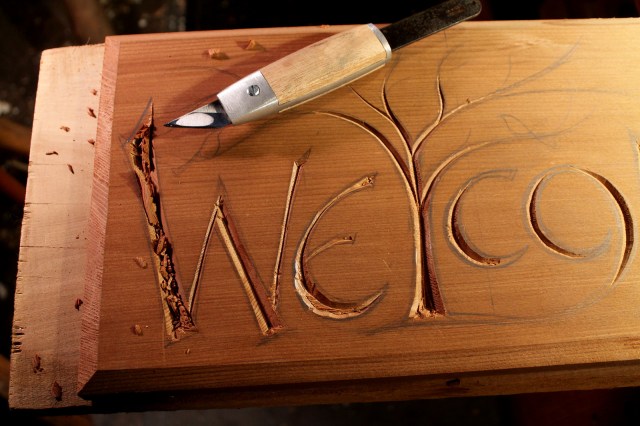
This redwood board, at least, was brittle and very soft.  The tools had to be particularly sharp and have fine bevel angles to cut at all cleanly.  There was some gouge work on the tightest parts of the curves, but I stuck with the knife as much as I could.  The photo below shows a shot after getting rid of some excess material with a V-tool, then just starting in on the W with the knife.  You can get some sense of the brittleness.  I had to be particularly careful at the acute junctions between elements to assure that the short grain didn’t break away.

IMG_9622

But, anyway, it’s redwood so it should hold up well outside.  I’ll brush some oil on it and pop it onto the house.

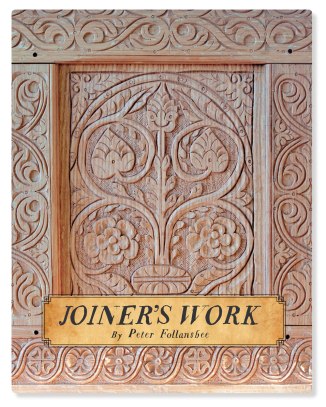
Joiner's Work dust jacketMeanwhile, I welcome the news that Peter Follansbee’s book is now out in the real-deal print form.  Hold it, smell it, hear the pages turn — and read it, of course.  Bring your copy to Plymouth CRAFT’s Spoon Day next month and ask him to sign it; I’m going to.


Posted in Lettering, trees, Uncategorized | 10 Comments

Thoreau and the Wooden Tray

IMG_9681

Not long ago, a friend referred me to an unabridged entry in Henry David Thoreau’s journal.  Here’s the first paragraph:

October 19, 1858:

Barrett’s apprentice, it seems, makes trays of black birch and of red maple, in a dark room under the mill. I was pleased to see this work done here, a wooden tray is so handsome. You could count the circles of growth on the end of the tray, and the dark heart of the tree was seen at each end above, producing a semicircular ornament. It was a satisfaction to be reminded that we may so easily make our own trenchers as well as fill them . To see the tree reappear on the table, instead of going to the fire or some equally coarse use, is some compensation for having it cut down . The wooden tray is still in demand to chop meat in, at least . If taken from the bench to the kitchen, they are pretty sure to crack, being made green. They should be placed to season for three months on the beams in a barn, said the miller.

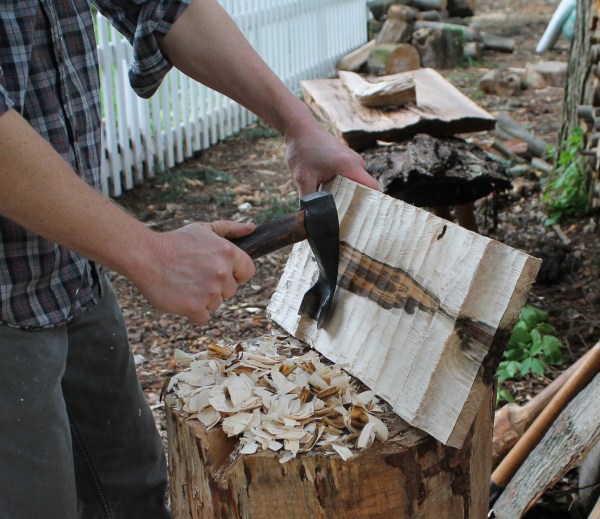
That inspired me to grab my axe, adze, and a maple log.  Thoreau leaves out some details about the appearance of the trays he saw in the room under the mill, so I filled in my vision with the basic form of this serving board I  made a couple years ago.  Then it was to the chopping block.
IMG_9639

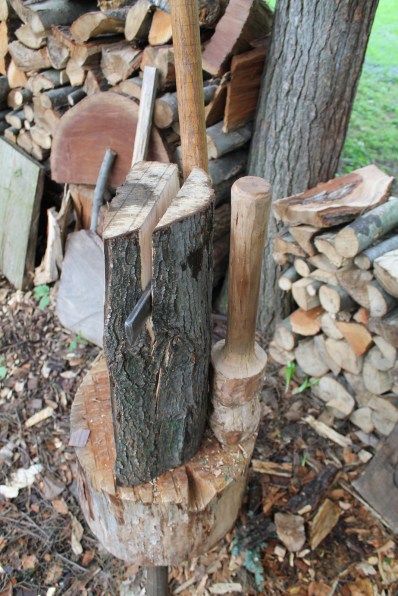
After splitting the log in half at the pith, I had laid it on my workbench to scribe double lines on each end.  Using the workbench as a reference assures that the lines on both ends are in the same plane.  then I split the majority of the waste away with a froe.   The swirl in the bark was a clear sign of an internal knot, but this was the log I had available.
IMG_9644

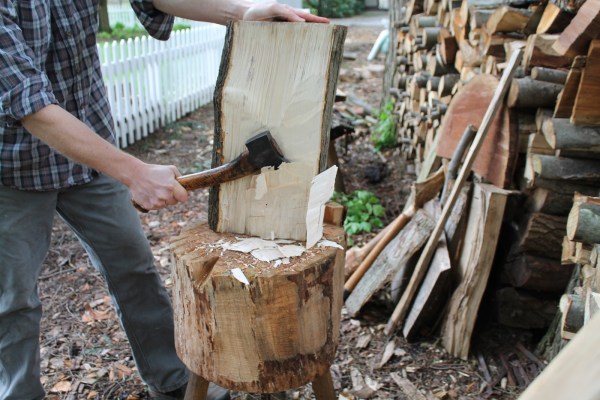
I hewed away most of the material from both faces with an axe.
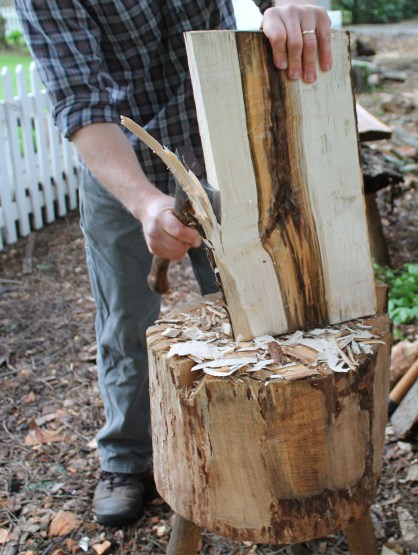
IMG_9646

Then continued with the axe to straighten up the edges a bit.
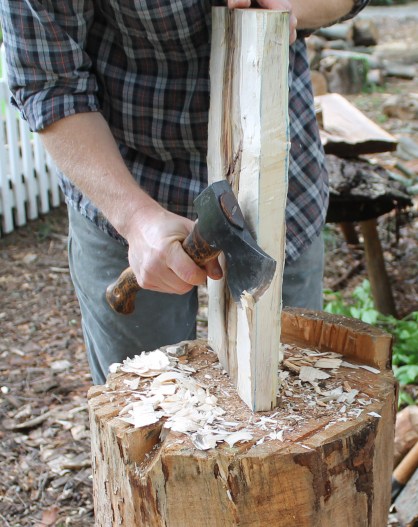
IMG_9650

After connecting the lines from the ends along the sides, I trimmed to the line with the axe, but just along the edges.
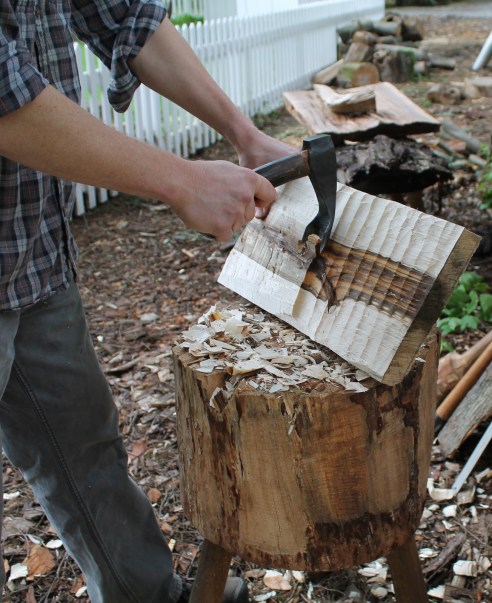
IMG_9653

Because the fibers were all over the place around that big knot, I worked across the grain with the adze to flatten the field.
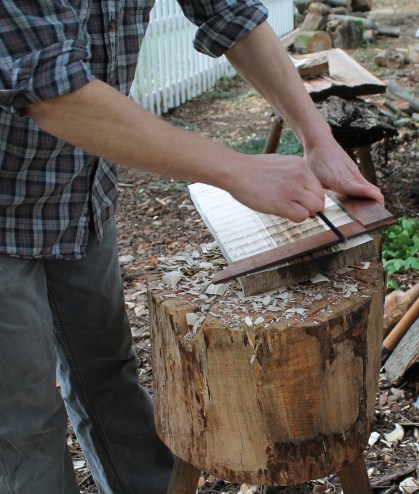
IMG_9657

I went ahead and marked the ends square….
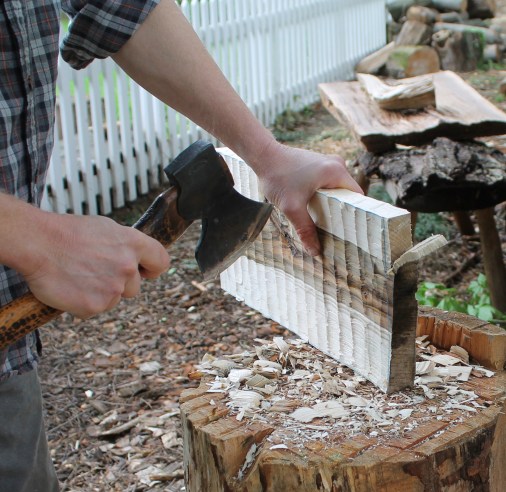
IMG_9659

…then trimmed them with the axe.

IMG_9663

Material to the sides of the eventual “feet” was removed with the adze.
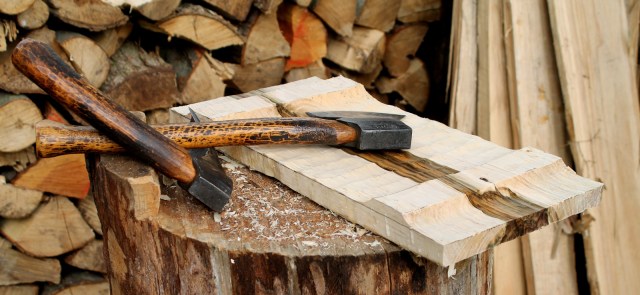
IMG_9689

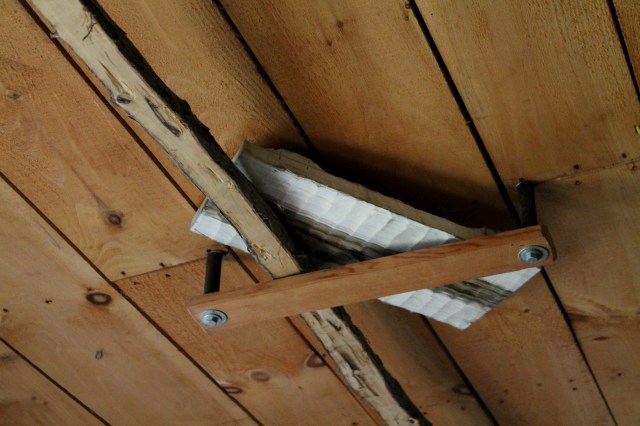
And that’s it for now.  I’ll let it season, then finish if off with some final carving of the surfaces.
IMG_9691

According to Thoreau and the miller, it should be three months in the beams of a barn.  I don’t have a barn, so there it is tucked up below the ceiling of my workshop, destined to tumble onto my head when I least expect it.

Triggered by the trays, Thoreau went on in the journal entry to serve some food for thought.  Chew on it as you wish:

I was the more pleased with the sight of the trays because the tools used were so simple, and they were made by hand, not by machinery. They may make equally good pails, and cheaper as well as faster, at the pail-factory with the home-made ones, but that interests me less, because the man is turned partly into a machine there himself. In this case, the workman’s relation to his work, is more poetic, he also shows more dexterity and is more of a man. You come away from the great factory saddened, as if the chief end of man were to make pails ; but, in the case of the countryman who makes a few by hand, rainy days, the relative importance of human life and of pails is preserved, and you come away thinking of the simple and helpful life of the man, -you do not turn pale at the thought, – and would fain go to making pails yourself . We admire more the man who can use an axe or adze skillfully than him who can merely tend a machine . When labor is reduced to turning a crank it is no longer amusing nor truly profitable ; but let this business become very profitable in a pecuniary sense, and so be “driven,” as the phrase is, and carried on on a large scale, and the man is sunk in it, while only the pail or tray floats ; we are interested in it only in the same way as the proprietor or company is .

— Henry David Thoreau, Journal, October 19, 1858.

It’s worth remembering that Thoreau had experience working in a factory, albeit manufacturing pencils rather than pails.  In fact, his innovations to the processes, including those for grinding and mixing graphite, were vital to the success of the Thoreau family pencil business.
Posted in adze, axe, green woodworking, historical reference, quotes and excerpts, Uncategorized | Tagged , | 11 Comments

Fluted Dragon

IMG_9603

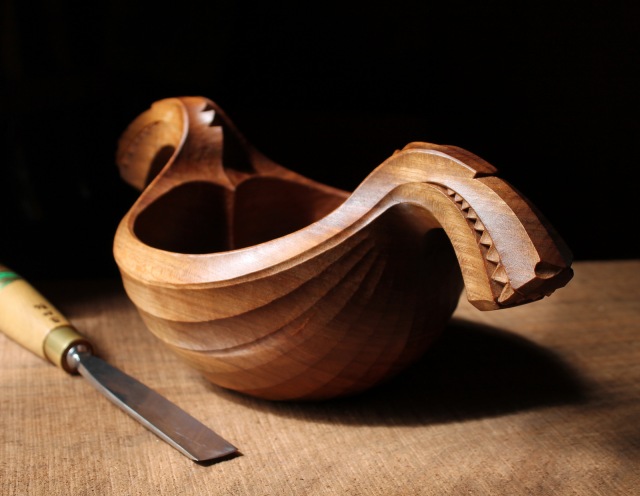
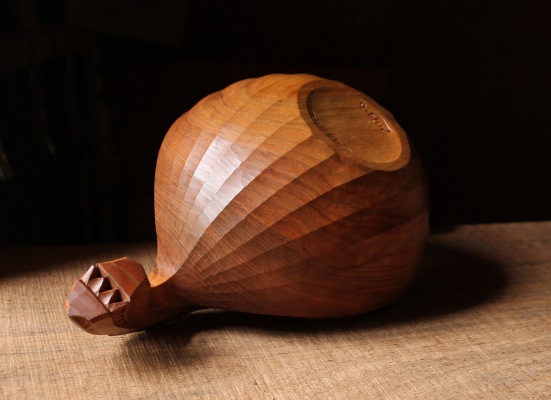
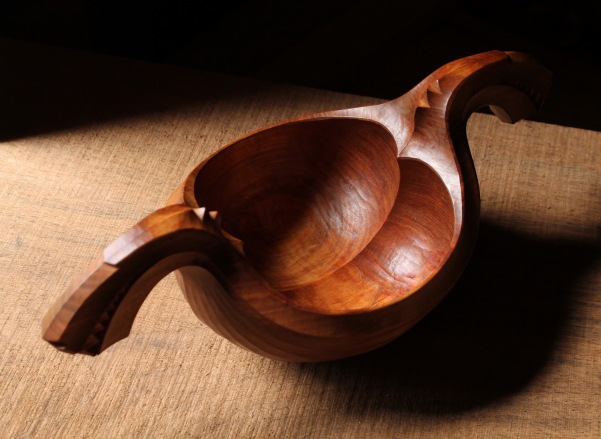
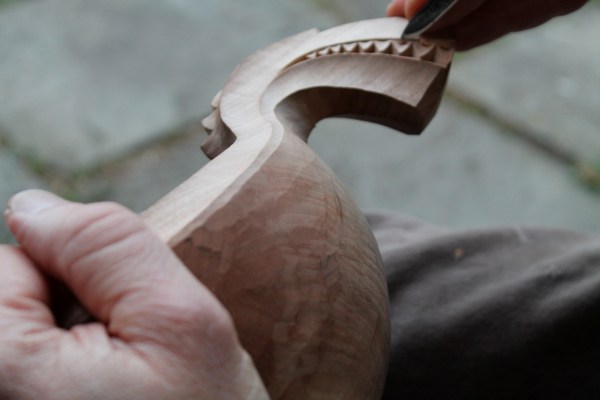
Here’s the ale bowl from my recent post on orthodontics, now completed.  I carved flutes along the exterior of this one.  The gouge I use for fluting depends upon the effect I want and the curvature of the exterior itself.  In this case, the bowl has a tight curvature, so the shallow curve of this #4 20mm gouge interacted with that surface well, although many other choices would have worked too.

I also have to keep in mind the thickness of, especially, the side walls.  The vertical end grain areas are left relatively thick.  I don’t measure, but at the middle of the sides I like the walls to be around 1/8″ – 3/16″ thick (3 or 4 mm).  If I don’t leave enough allowance for the material removed by the fluting… well, you can imagine the trouble.

IMG_9584

There is a subtle texture left along each flute from each forward push of the gouge through the dry (at this stage) wood.  Here was that cherry wood last summer:

IMG_7086

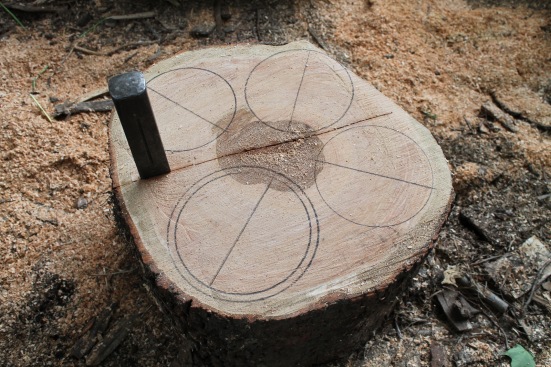
I wrote about busting up that log in this post.  I think this bowl was from the blank in the top right of the photo.

IMG_9592

All said and done, it’s 13 1/2″ long and 6 1/2″ wide.  Ready for ale.

Posted in ale bowls, cherry, patterns, proportions, Uncategorized | Tagged , , | 15 Comments

Yup’ik Bentwood Bowls

Among the many traditions of bowl carving is the Yup’ik method of bending a separate length of wood that attaches to the hollowed base and serves as a higher rim.  The interaction between material, hands, eyes — and teeth — to create the form and a tight connection is simply wonderful.  I stumbled onto the short video above that features Yup’ik traditional scholars sharing memories of how these objects were made.  The video also includes some close ups of the bowls.

I’m still pretty clueless, but one thing I notice is the thickening of the rims along the straighter portions of the bowl.  Seems to me that the wood has been made thinner where they want a tighter bend and vice versa.  This would facilitate controlling the curvature at various points along the rim while bending without a form.  Much to learn just from the short video and the accompanying information, drawings, and photos at this website through the Smithsonian Institution.

Posted in bowls, historical reference, Uncategorized | Tagged , | 17 Comments

Dragon Orthodontics

IMG_9511

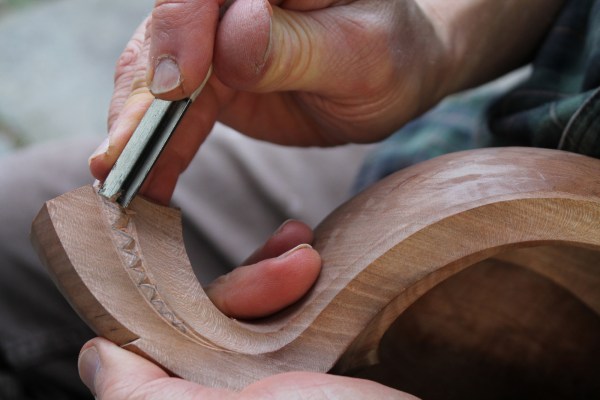
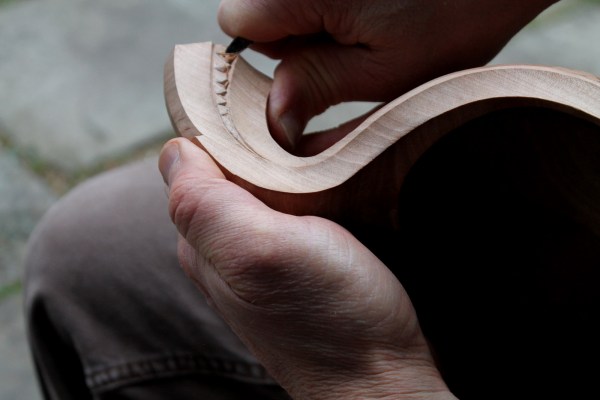
I roughed out this cherry ale bowl during the green stage months ago, and now I’ve gotten around to refining it in the dry stage, including carving a set of choppers, a point of pride for any dragon.

IMG_9499

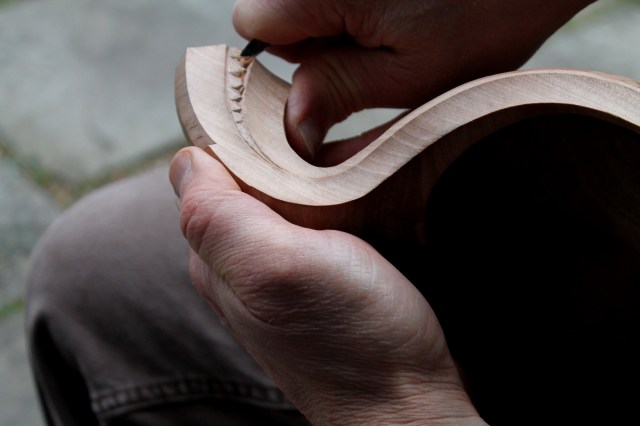
After sketching on a zig-zag guideline, I begin to make the triangular chip cuts that create the shadows beneath and between the teeth.  In dry cherry, I typically remove some of the bulk with a v-tool before turning to the knife.

IMG_9504

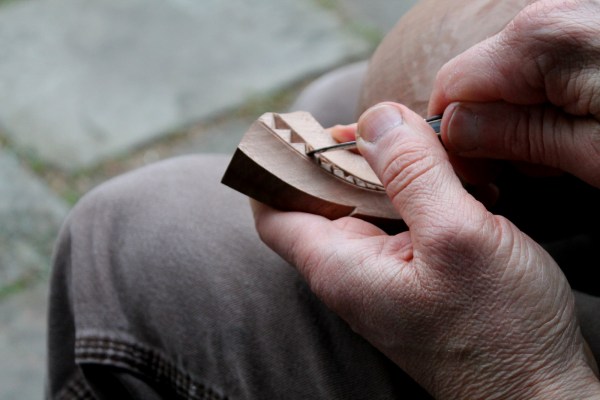
I use the “coping” blade on my pocket knife that is thin and noses down to the straight edge.

IMG_9506

Considering the grain direction, I clip the bottom of the triangle first, using my left thumb as a fulcrum and levering the blade along the cut.

IMG_9511

Changing grips, I cut the forward walls behind each tooth.

IMG_9515

Then the back wall in front of each tooth.  I’m aiming for crisp walls with sharp junctions to catch distinct shadows.

IMG_9523

To add some simple form to each tooth, I grab a small gouge with a medium sweep.

IMG_9522

I run it from the point of each tooth to the upper lip.

IMG_9530

Blurry photo, but I then delicately slice off the chips still attached to each tooth at the upper lip with the pen blade.

IMG_9539

I’ve still got a lot of carving to do on this bowl; some surfaces, chamfers, refining junctions, and the teeth that wrap around the front.  In the meantime, he’s at least ready to chew.

Posted in ale bowls, carving, cherry, patterns, tools, Uncategorized | Tagged , , , | 10 Comments

A Couple Shrink Pots and Spoons

IMG_9392

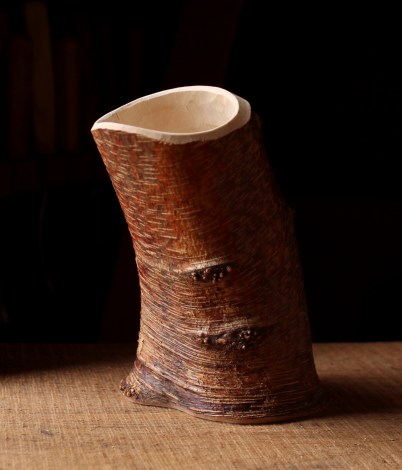
I made a couple shrink posts from sections of birch with personality that I just couldn’t resist.  The bark seems so alive and dynamic — warts and all.  The bending nature of these pieces added just a bit of extra challenge to the  hollowing.  The irregular shape just requires the carving of a matching bottom.

Here are a couple slideshows of them (To see the slideshow, you need to view the blog post in your web browser):

This slideshow requires JavaScript.

This slideshow requires JavaScript.

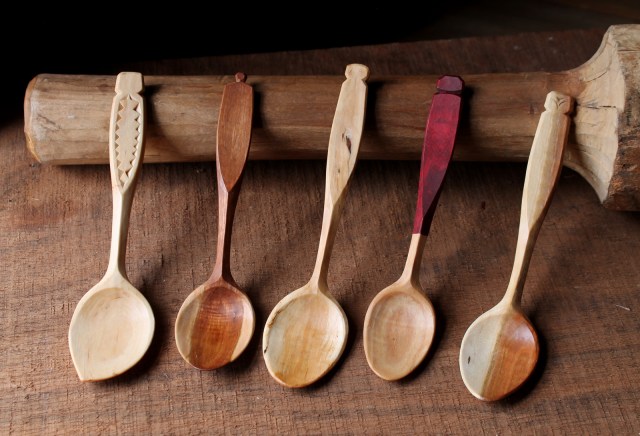
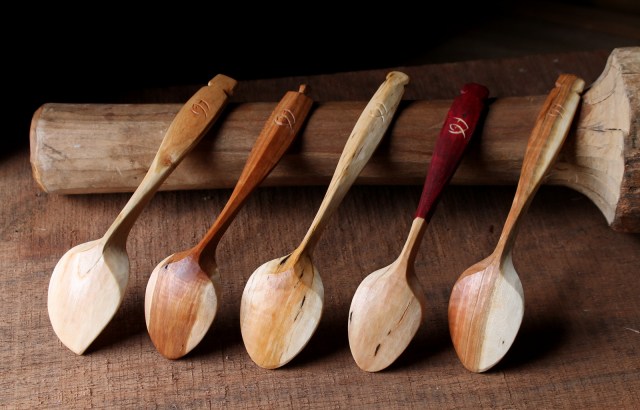
I finished some eating spoons.  These were all carved from black cherry crooks and it really shows how much difference there can be not only from heartwood to sapwood, but also between individual trees.

IMG_9280IMG_9278

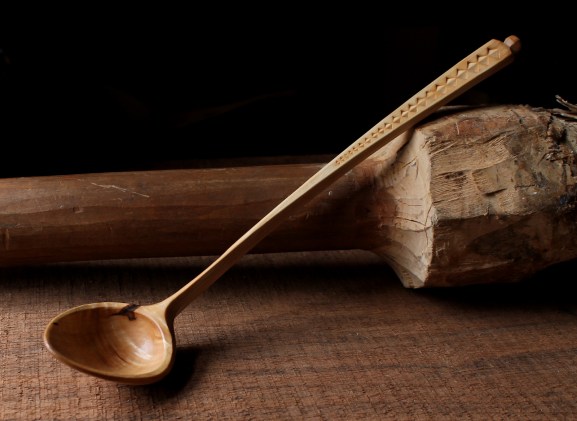
And here’s a long slender serving ladle carved from a good maple crook.  The thin handle flows with the grain off to the side.

IMG_9305


This slideshow requires JavaScript.


Posted in finding wood, shrink box, spoons, Uncategorized | Tagged , | 21 Comments

Let Follansbee be Your Guide

IMG_1971

About a decade ago, my mind was blown by the boxes and furniture that Peter Follansbee was talking about on his blog.  There he was splitting up oak logs into boards and joining them together.  Well, how do you not go ahead and try that?!

IMG_9257

What a joy it is to rive and plane green oak and stand amid the fragrant shavings.  And on top of that, you get incredible, stable stock.  Then there’s those stunning  patterns to carve boldly.  I devoured information from Peter’s posts in order to make several pieces.  Some of these became gifts, and others still serve in our home, like the toolbox above.

And now Peter has put everything together, the patterns, the methods, the tools, the classic designs, and the decades of experience and research into a new book published by Lost Art Press — Joiner’s Work.  Here’s a photo of it below.  Has there ever been a better dust jacket?

Joiner's Work dust jacket

This book is truly a treasure trove of inspiration and information.  It reads as if Peter is right there in your shop guiding you with Follansbee wit and hard-won wisdom and knowledge.

Although Peter leads you step by step, the projects don’t require you to follow a rigid set of measurements and orders, rather they encourage you to loosen up and work with what the tree offers and adapt accordingly.  Peter focuses on the concepts and attitudes that empower you — although he’d never put it that way.   You can adapt to your preferences: start with sawn boards, or just carve panels if you don’t want to build pieces, or build the furniture and nix the carving, or use walnut instead of oak.

Read Peter’s blog post here to learn more about his road to this book.  And there’s more information about the book here at Lost Art Press.  Buying books can be like buying tools — better to buy one great one than two mediocre ones.

Posted in books, carving, green woodworking, historical reference, publications, Uncategorized | Tagged , | 2 Comments

Beaver Connections

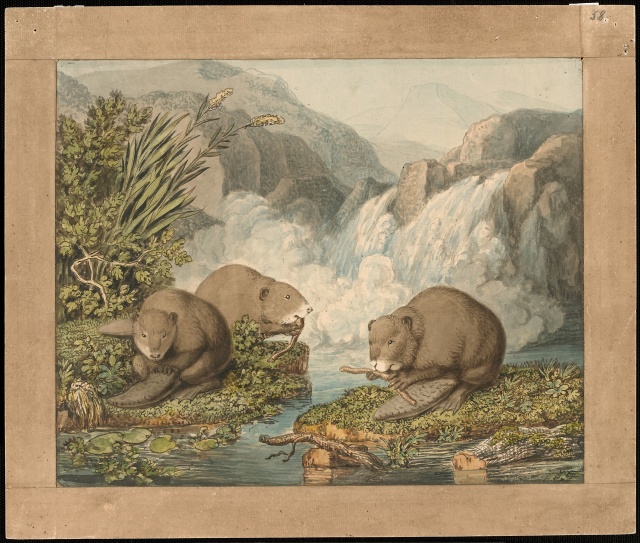
Three Beavers

Three Beavers Building a Dam, J. H. W. Tischbein, German, c. 1800.  Courtesy of the Art Institute of Chicago.
Since sharing some photos of beaver activity in a blog post a couple weeks ago I’ve made a few more beaver connections.  One goes way back to Aesop.
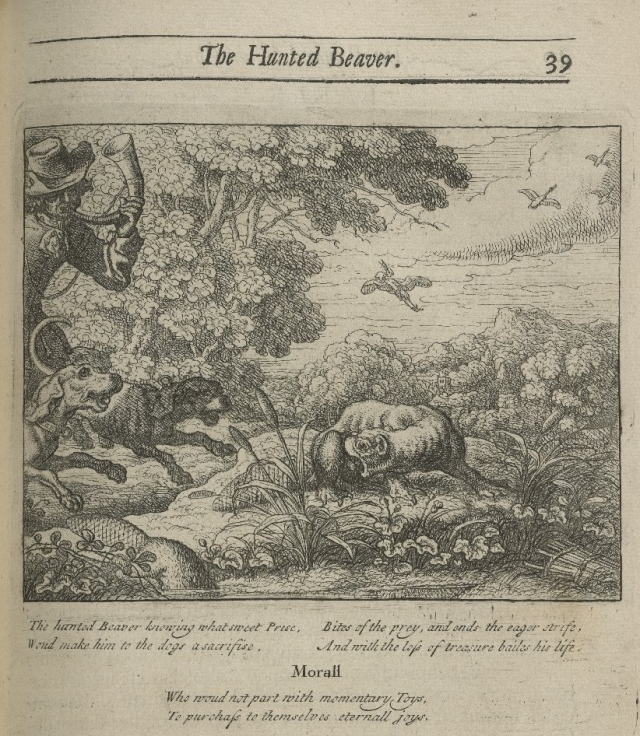
A703, 39

“Aesop’s Fables with His Life: in English, French and Latin,” 1687. Folger Digital Image Collection

If, like me, you weren’t familiar with that unsettling story, this should help to explain the illustration.

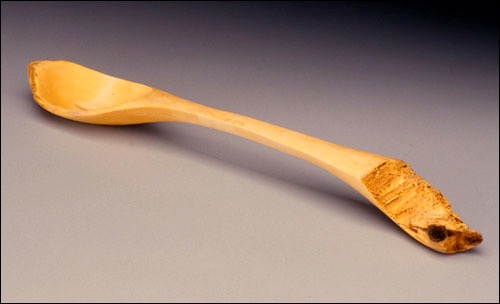
Now for a  much more inspiring beaver connection.  Barry Gordon shared a couple photos of spoons he made in collaboration with beavers:

Barry Gordon beaver spoonBarry Gordon beaver spoon 2

Barry has been carving spoons for a long time, and has a gift for finding potential in unusual pieces of wood.  Check out his beautiful work here.

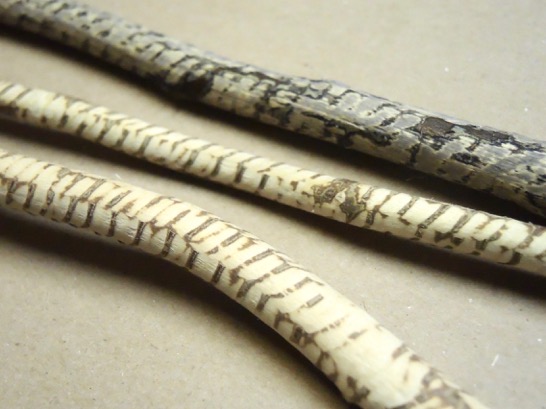
Drew Langsner is busy with many creative endeavors, including one that I think you’ll hear more about before long.  He shared this photo of the pattern left behind on some beaver-eaten sticks Louise had collected:

Langsner Beaver Sticks

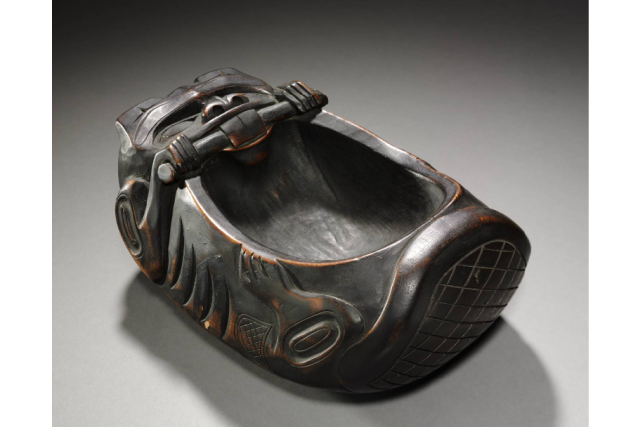
This Northwest Coast bowl, carved around the turn of the 20th century, captures a bark-eater in the act

Beaver Bowl Cleveland MA

Beaver-shaped Bowl, c. 1890-1920, courtesy of the Cleveland Museum of Art

It all inspired me to texture this big cherry hanger with my hook knife.  My teeth wouldn’t cut it.

IMG_9152

Posted in finding wood, green woodworking, historical reference, nature, spoons, Uncategorized | Tagged , , , | 10 Comments

Spoonfest and Täljfest, Summer 2019

IMG_9083

In between other projects, I was able to spend some time roughing some spoons from a bunch of crooks I’ve gathered this winter.  I already mentioned that I’ll be doing some of that at the Plymouth CRAFT’s big Spoon Day in Buzzards Bay in June.  Now I’m excited to say I’ll be making chips August 1-4 across the Pond in England at Spoonfest 2019.  What an incredible experience it is sure to be.  I’m looking forward to seeing old friends, meeting new ones, learning, teaching, demonstrating, and walking those Edale hills.  Having never been out of the States other than a couple excursions into nearby Canada, this alone would have been a thrilling adventure.  But then there’s more…

IMG_9073

I’ll also be taking my adze to Sweden.  A few days after Spoonfest, I’ll be at Sweden’s Sätergläntan school for Täljfest 2019.  I’ll be teaching some workshops and demonstrating, along with trying to take in all that I can from the other presenters and the inspiring surroundings, including pieces by Bengt Lidström and Wille Sundqvist.

IMG_9084

In the meantime, I’ll pick away at the spoons.  Old Man Winter is cooperating with plenty of cold storage for them outside.  In like a lion…

Posted in classes, events, spoons, teaching, Uncategorized | Tagged , , | 11 Comments

Icy River Walk

SAM_4416

I like walking along the river near my house, really more of a creek.  The ebb and flow of the water and the seasons always brings something new to see.

SAM_4377

As the water level receded last weekend, ice ornaments sparkled from the branches just above the flow of the Little Shenango.

SAM_4405

Beyond the river bank, the ice took different form.

SAM_4422

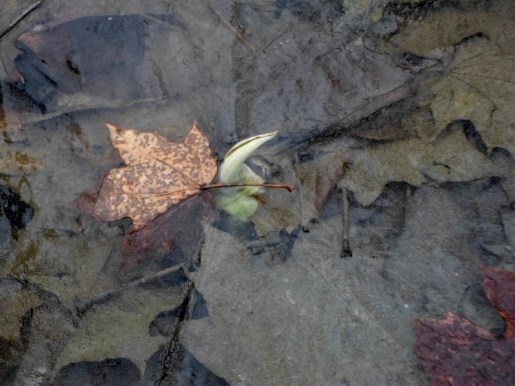
Shallow pools in the floodplain had frozen over, capturing yesterday’s maple leaf and tomorrow’s skunk cabbage.

SAM_4442

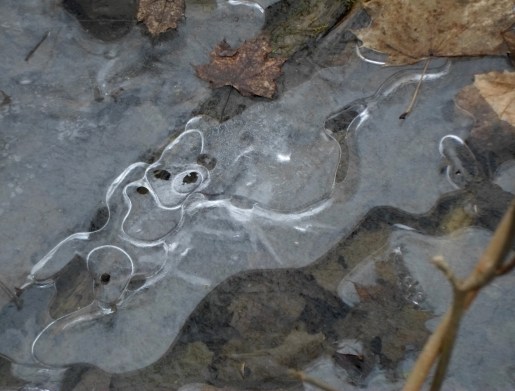
There are pictures in the ice too.  I can’t be the only one that sees a happy fish there.

SAM_4432

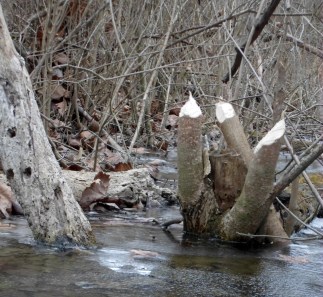
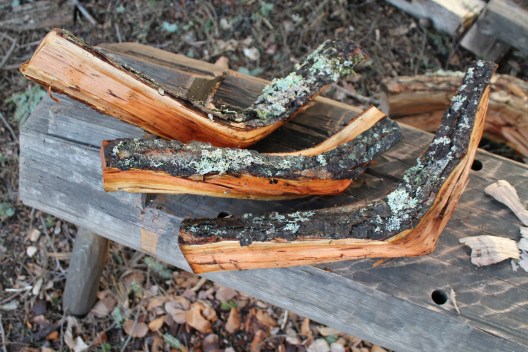
There were also fresh signs of coppicing above the ice,

SAM_4444

but this wasn’t cut with an axe or billhook.

SAM_4457

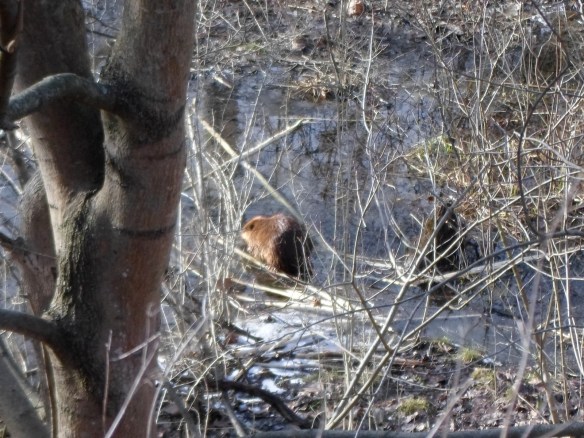
I spied the woodworker yesterday afternoon and watched from a distance as she (or he?) munched on bark in the pool — now free of ice.  There may be some spoonwood laying down there.

IMG_9040

Until I can take a closer look, I’ve got some cherry branch crooks to work into spoons.  Got to stay in practice for the big Spoon Day in Buzzards Bay!  I’m looking forward to learning from some of the best spooncarvers around and to simply being part of what is sure to be an inspirational day in June.  Checkout the lineup and the details at this link.  We’ll have a blast.  Hope to see you there.

Posted in classes, events, nature, spoons, Uncategorized | Tagged , | 10 Comments