Beyond Words

When I was beginning to make things out of green wood, I purchased a couple VHS tapes from Country Workshops.  One, filmed in the Swiss mountains, follows Ruedi Kohler as his skillful hands make a coopered bucket.  The other takes the viewer to Sweden and into the workshop of Bengt Lidstrom as he carves fantastic bowls from log.  Few words were spoken; even fewer in English.  No problem.

There was no language barrier, because words weren’t necessary.  These craftsmen spoke volumes with the movements of their tools and the sound of sharp steel slicing wood. There is something about learning from simple observation.  Maybe it’s the satisfaction of interpreting part of the story for oneself, solving the puzzle.  Maybe it’s the beauty of the process, unbroken by words.  Whatever it is, you’ll see it in the videos below. Drew made them available on YouTube awhile back and they are also available at his store at Country Workshops.

Meanwhile, I’ve been thinking about proportions, golden and otherwise.  I’ve got a post in mind about that.  Maybe this weekend.

Posted in Uncategorized | 4 Comments

Folkstreams

A visit to the Folkstreams website can provide a person with some healthy perspective.  It is a rich collection of films of varying length on a wide spectrum of traditions, including handcrafts.  There’s much more to see, but to begin with I’d recommend these:

The Last Shovel Maker

The Pirogue Maker

Alex Stewart: Cooper

Ben’s Mill: Making a Sled

Final Marks: The Art of the Carved Letter

They are enlightening, inspiring, and thought-provoking.  Even better than the Alex Stewart film is the Book Alex Stewart: Portrait of a Pioneer by John Rice Irwin.  It was recommended to me a few years ago by a friend.  It is a special book.

Posted in books, video | Tagged | 3 Comments

A Windfall Goose

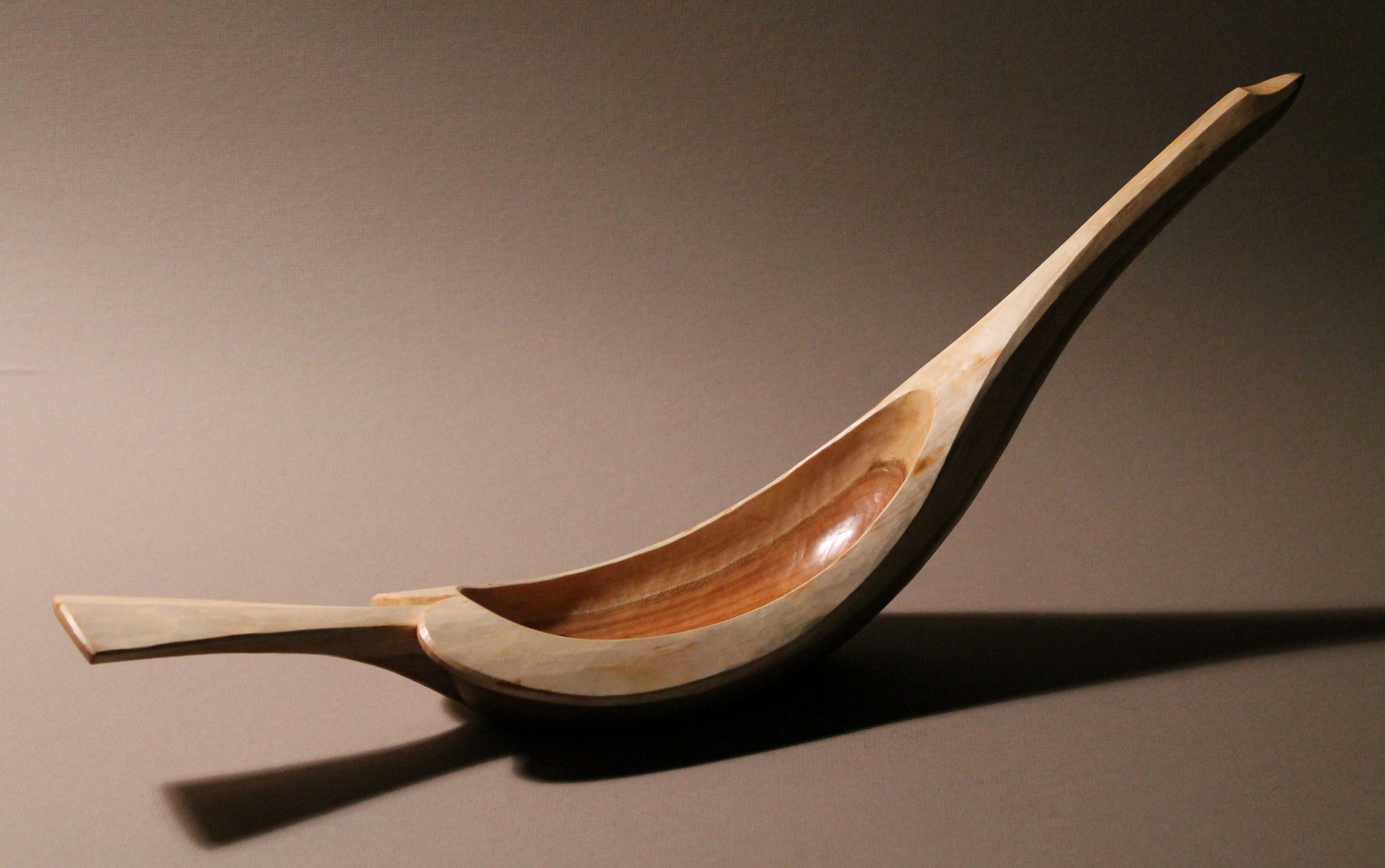
IMG_4286

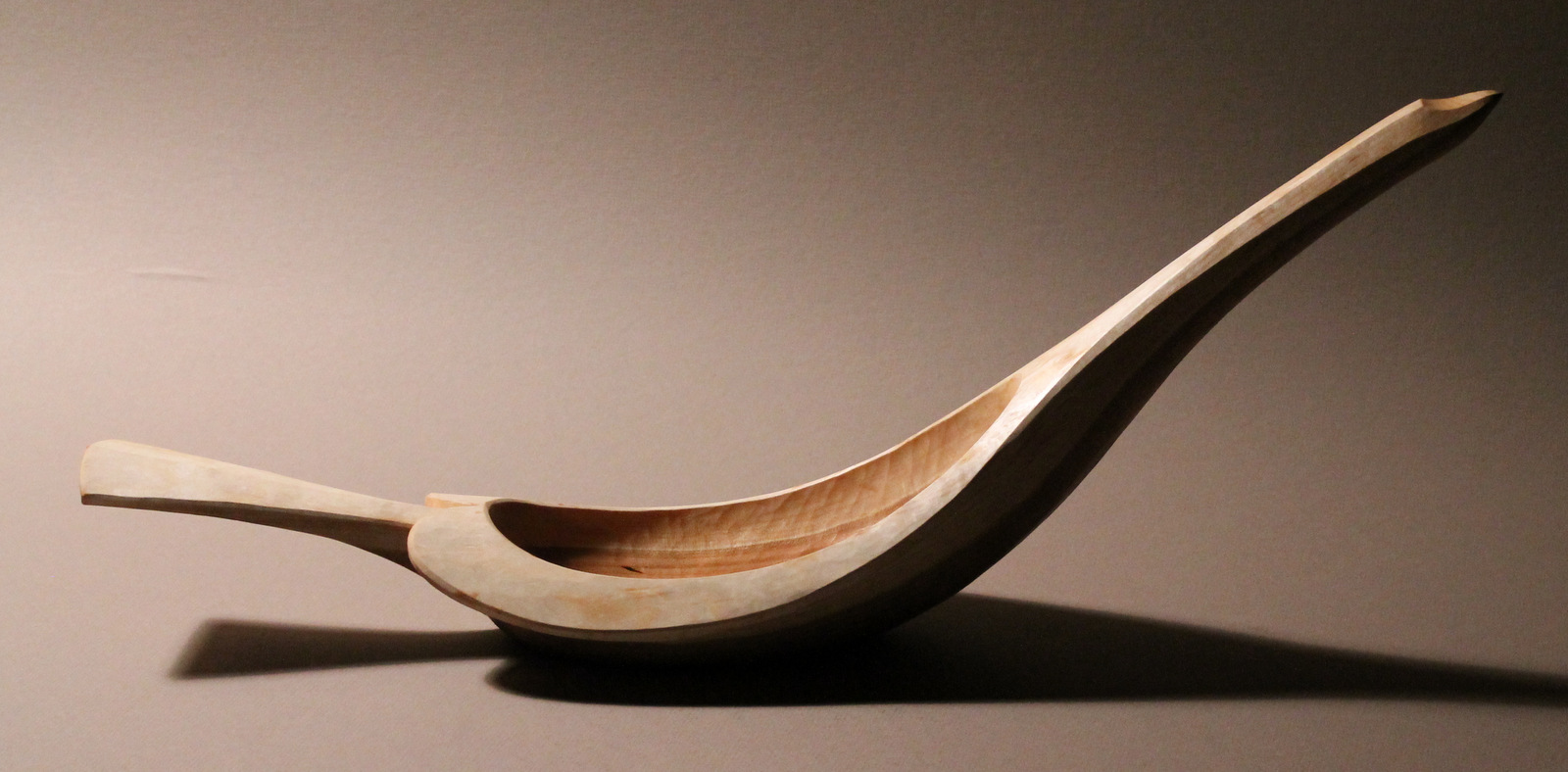
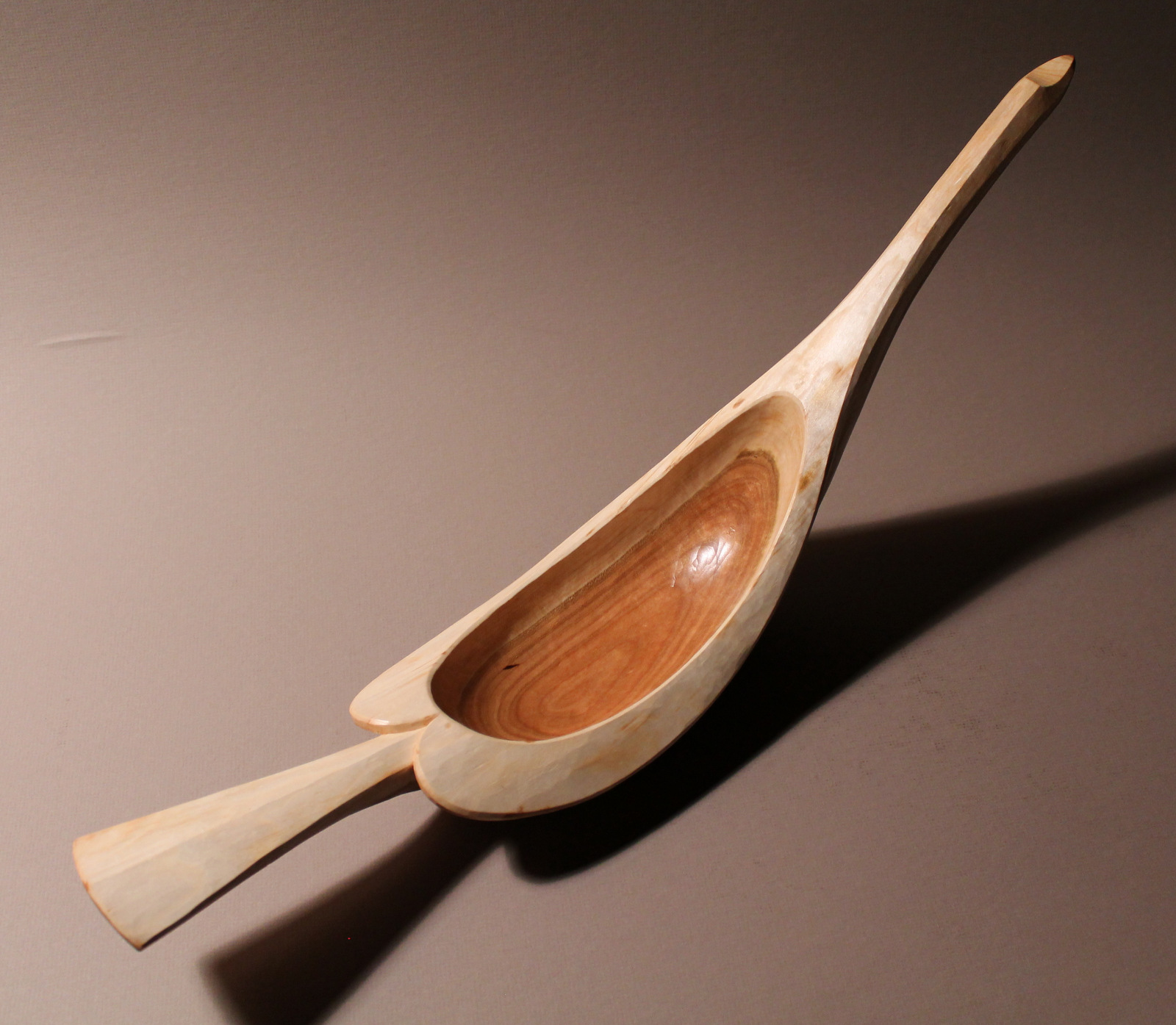
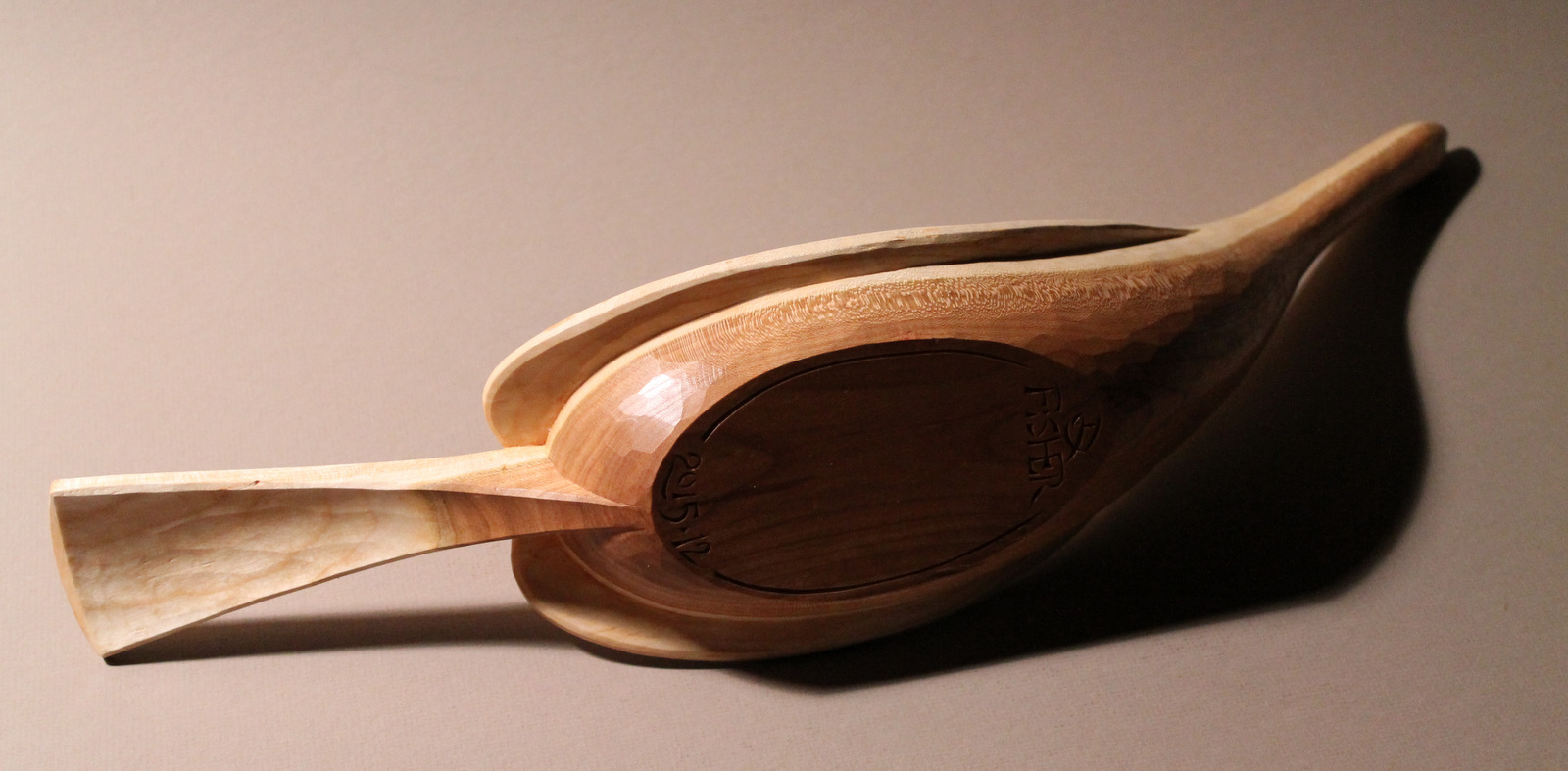
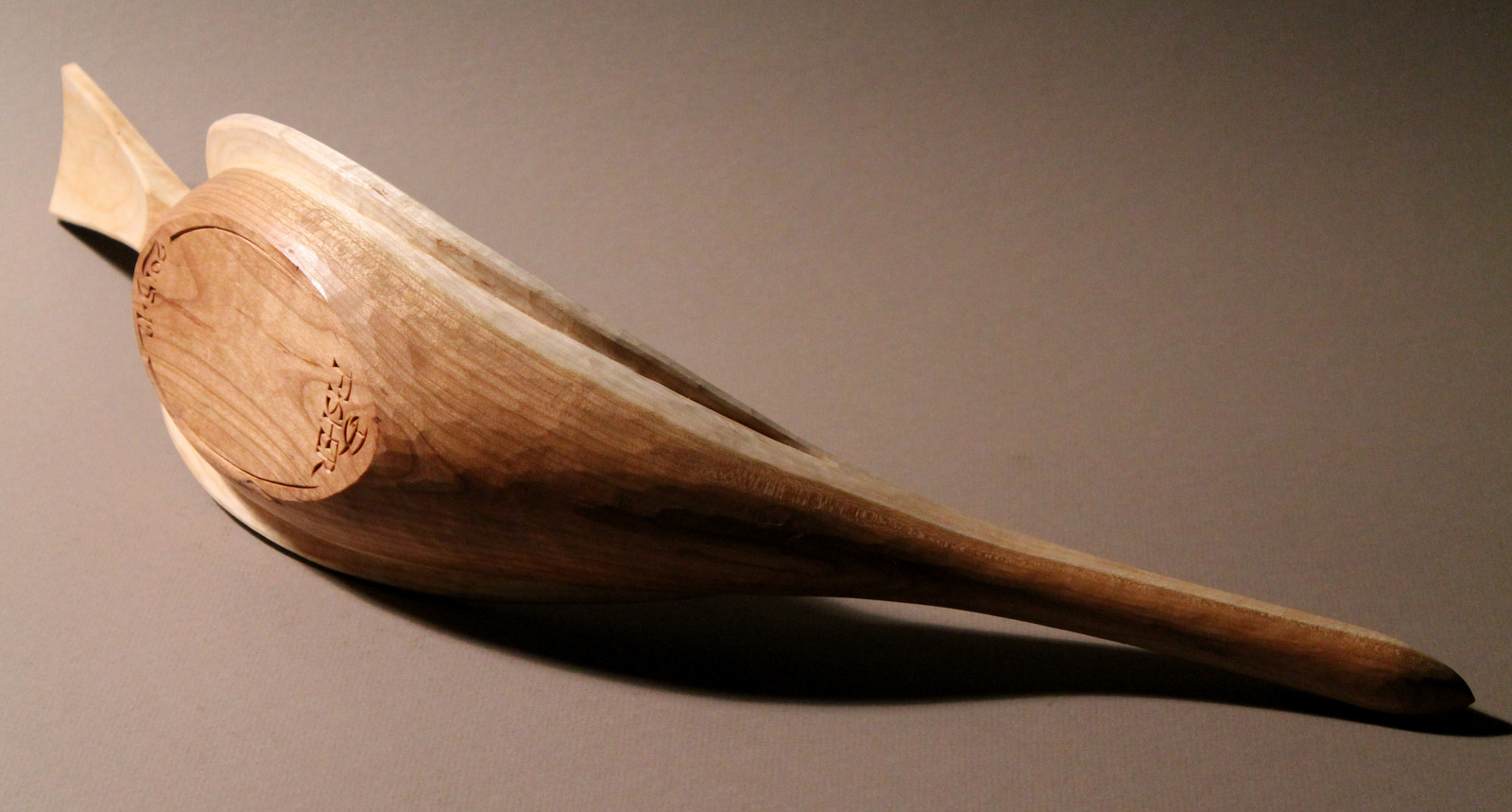
I found this stylized goose bowl in the curve of a wind-fallen cherry tree.  Usually, we think of “finding” spoons in the crooks of tree branches, but I occasionally find bowls as well. Grain flowing through the form allows for lightness, and the line between the sapwood and heartwood flows right along the piece from the tail through the neck.  The tree has done much of the designing.

Below are some photos showing a few stages along the journey of this piece.

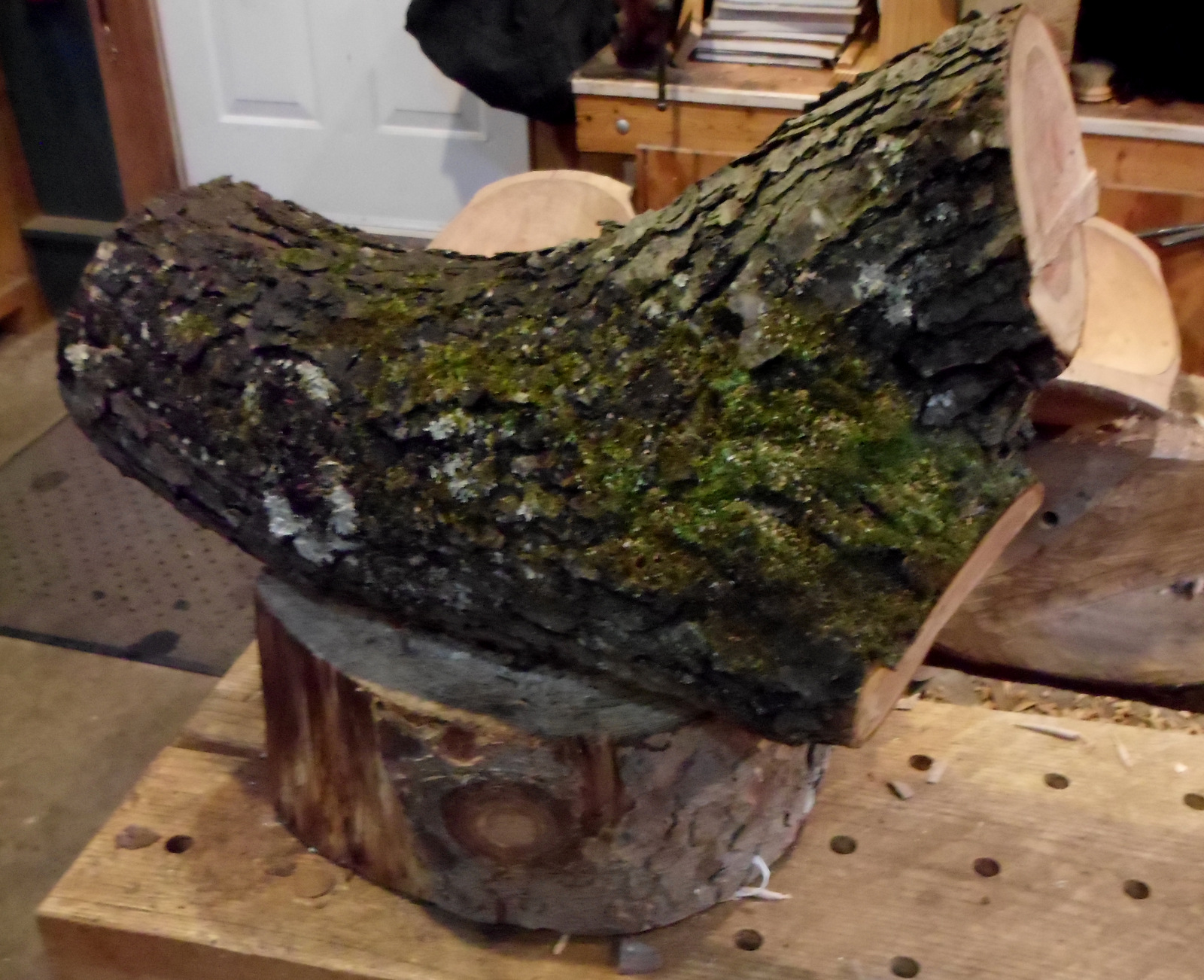
SAM_1995

I discovered the wind-fallen tree on a walk near the river. The cutting with a folding saw and the carry back home is all part of the fun. The bowl is in the upper portion of the log in this shot; tail to the left, head to the right.  As for scale; the log is about two feet long and the branches about 9 or 10 inches in diameter.

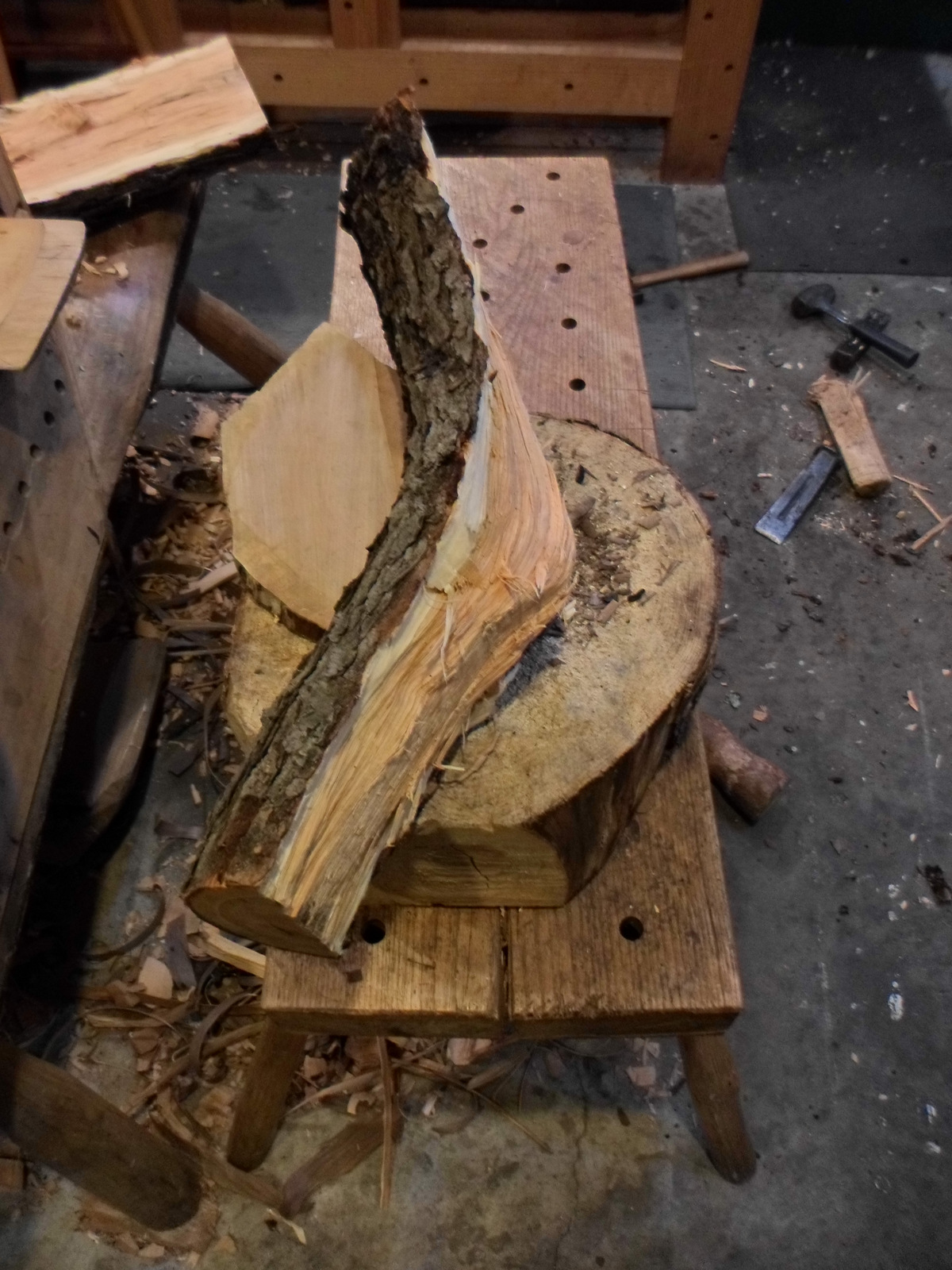
SAM_1997

The upper portion has been split away from the rest of the Y. The pith (center) of the branch runs along the right edge in this shot. The pith can’t remain in the middle of a piece. The tail is to the rear and the head is in the foreground.

SAM_2000

I have just shaved off the bark with a drawknife and hewn the sides a bit. Layout on a piece like this is basically freehand. I sketch on a rough center line from end to end and then a general sketch of the bowl cavity and outline on the upper surface. Then on to the sculpting with axe, adze, knives, and gouges.

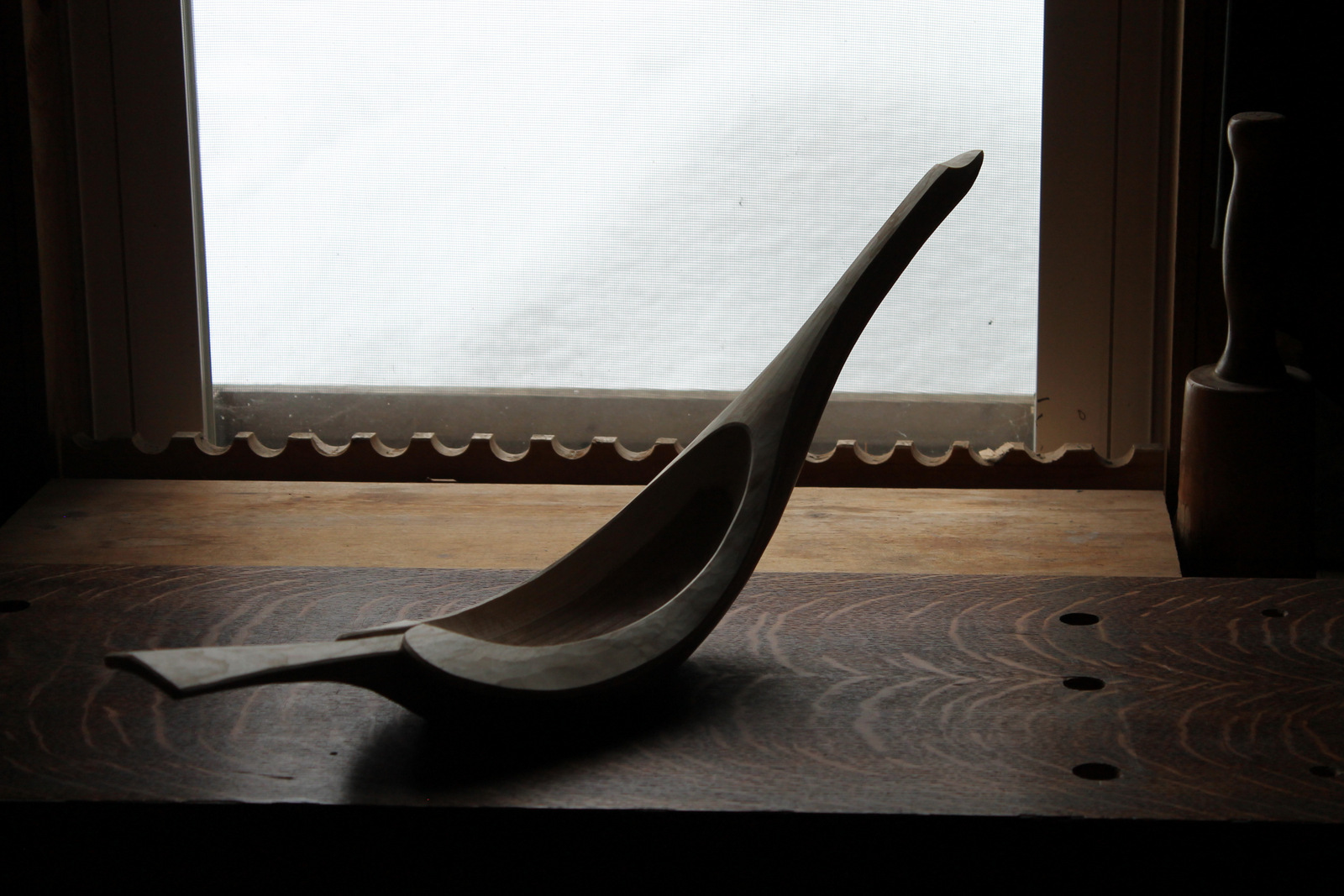
IMG_4271

Out of the log and admiring the snow.

IMG_4292

Finished, it is 22.75 inches long, 5.25 inches wide, and 8.75 inches high.

Here are a few more thumbnails.

IMG_4298  IMG_4289  IMG_4284

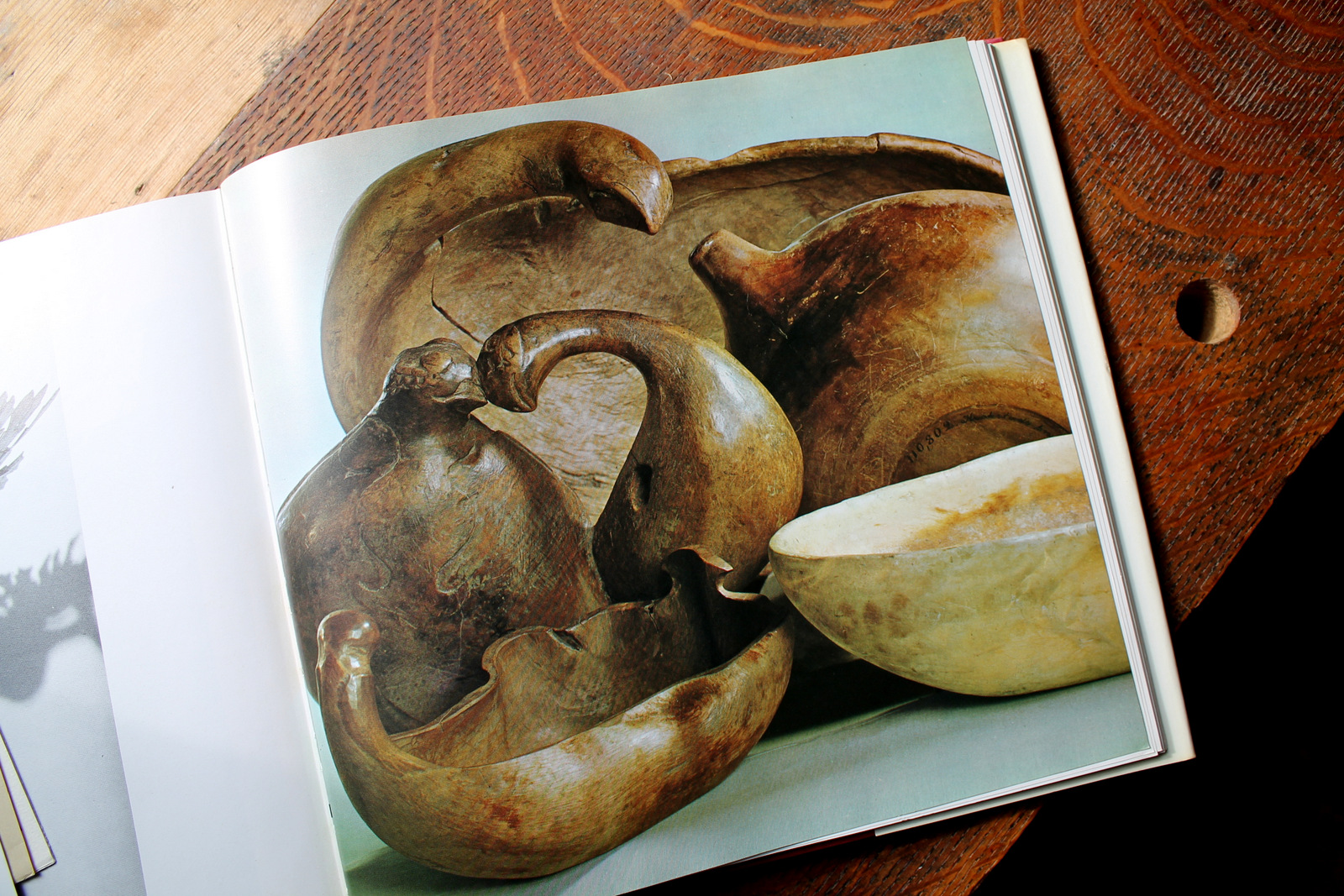
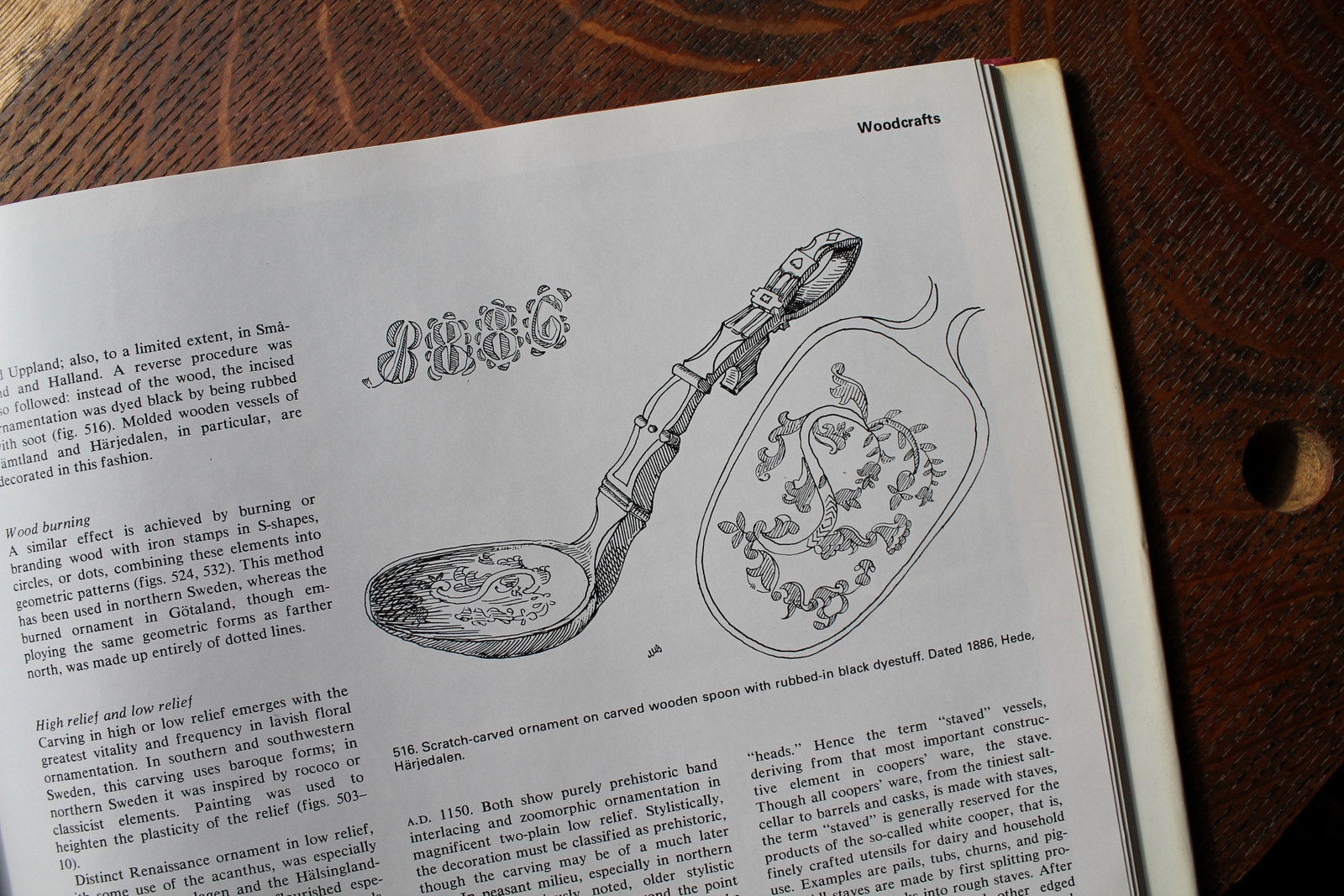
In the encyclopedic book Swedish Handcraft by Anna-Maja Nylen (1976), there is a wonderful chapter on woodcrafts.  Much of the book is dedicated to fiber arts.  Here are a couple photos from my copy.  I’ve included the caption for the first, which applies to this post.  If you’d like to get a copy, this link might be helpful.

IMG_4304

“Bowls carved out of wood. The shape of each bowl has been determined by the natural properties of the wood, whereby animal and human forms have been “found” in nature’s own forms. Lima and Mora, Dalarna, dated 1806; Offerdal, Jamtland; Hede, Harjedalen, with the incised date 1816; and Krokstad, Bohuslan.”

IMG_4305

There are lots of great illustrations like this.


Posted in bird bowls, books, finding wood, layout, Uncategorized | Tagged , , , , , | 7 Comments

Contentment

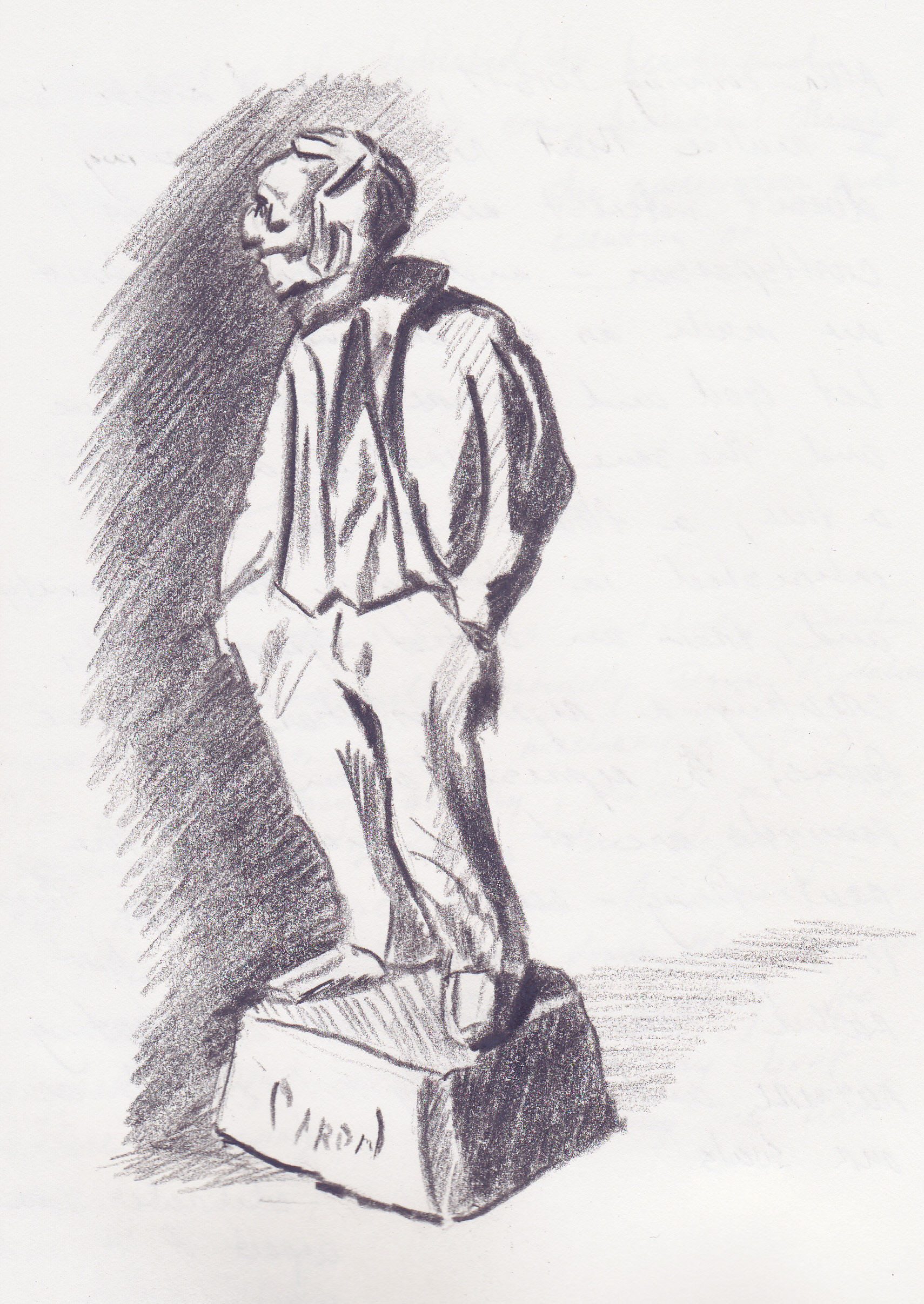
Old Man Carving Sketch_NEWTwo old men, radiating contentment… Their trade seemed to have been a refuge for them. Perhaps their serenity came from making things that gave pleasure to others.  Or making things they knew would outlast them, give them a little power over the grave.  Leaving behind physical evidence that they had lived and were creative agents in the world.  Maybe it was that they had spent a lifetime swimming in a sea of harmonious form, that this had osmosed into them, and then as the years went on it began phosphorescing out in a cloud of benign tranquility.  Or was it something in the activity of woodcarving itself that gave them, at last, their moral radiance?

— David Esterly, The Lost Carving: A Journey to the Heart of Making,   Viking 2012

Also by David Esterly:  Grinling Gibbons & the Art of Carving, V&A 1998


Posted in carving, quotes and excerpts, sketch | Tagged , , , | 3 Comments

Books

IMG_4258I have received some emails lately asking for book recommendations, both for bowl/spoon carving and for the decorative carving that I do on some bowls.  Bear with me, and I’ll get around to some recommendations regarding bowl carving as well as relief/decorative carving.

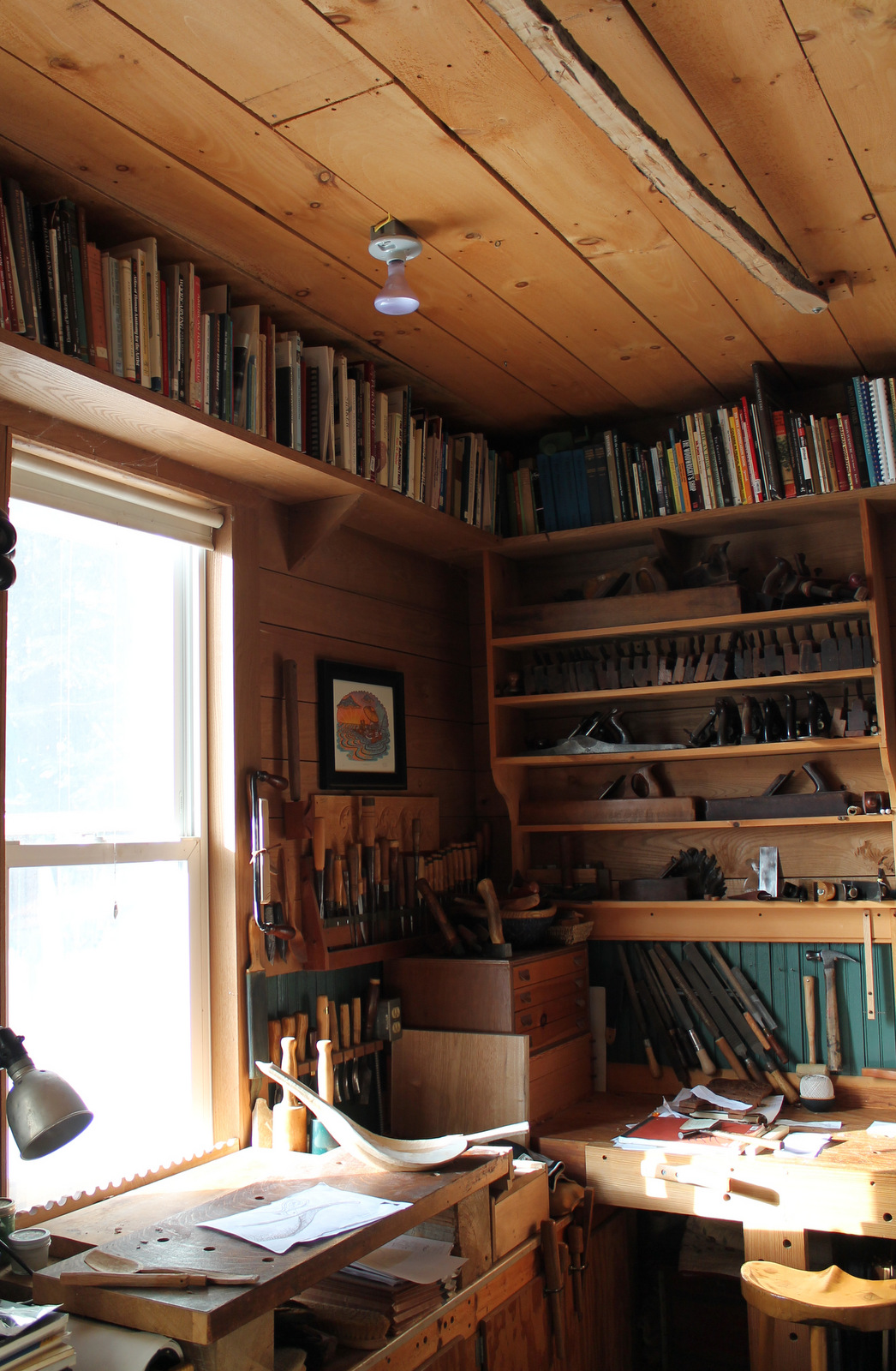
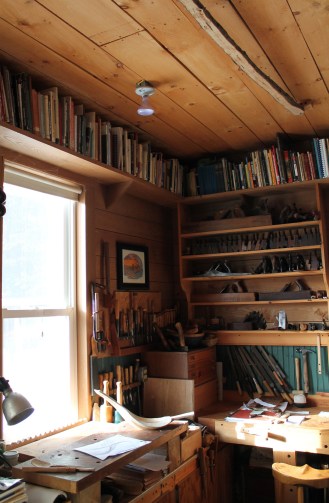
As the years have gone by, I’ve gathered together quite a few books related to various arts, crafts, and other subjects that interest me.  You can see some of them in the photo — up near the nine-foot ceiling.  There’s stuff up there on everything from timber framing to making woodcut prints.  Not exactly a convenient location, but the house is small and the shop is smaller, so it is a good use of space.  By the way, my workshop is a one-car attached garage that hasn’t had a car in it since we bought the old place nearly twenty years ago.

Part of my remodeling of the old garage was installing that upper shelf around much of the perimeter.  When I want a book, I climb up and teeter around on the workbench or the sink like a drunk mountain goat; and I won’t find many books on bowl carving there.  The books available about bowl and spoon carving are few and far between, especially when compared to the number of titles dedicated to other aspects of woodworking.

Robin Wood wrote a good, thorough book about the history of the traditional turned wooden bowl several years back, but there is no book that I know of that does a great overview of the history of bowl carving, especially across cultures.  Most of what is available now seems to be centered around the Scandinavian tradition.  A book that explored bowl carving across time and traditions would be fascinating.  Until we see that,  I’ll list a few, most of which many folks are already aware:

Swedish Carving Techniques by Wille Sundqvist — in print again and a must-read for anyone wishing to carve spoons and bowls.

Carving and Whittling: The Swedish Style by Gert Ljungberg — this one is definitely worth having.  Some good history and design ideas.

Green Woodworking by Drew Langsner — great overall, and a section on bowls

Celebrating Birch by North House Folk School — lots of good craft ideas with birch, includes a chapter on bowl carving

Boxes and Bowls; Smithsonian Institution Press  — a beautiful collection of images with some text.  Work is in the Northwest Coast Indian tradition of North America.

If you’ve got any other good recommendations, post a comment and share with others.

Most of the decorative carving on bowls is one form or another of relief carving.  I was buying books on that before I got into bowls.  When I got my first job and first apartment (no more easy access to Dad’s basement workshop) over twenty years ago, I bought a couple books on beginning carving and five Pfeil Swiss Made tools.  I carved at the coffee table in the evenings and just kept going.  There are hundreds of books available on carving.  Many are very good, but I’ll keep this simple and recommend the books that, in my experience, are the best out there for general carving instruction.  They are by Chris Pye.
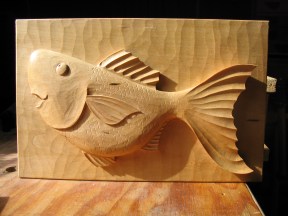
oc fish high reliefHere is a link to Chris’ books at his website. He also has a video series that one can subscribe too.  Tools for Working Wood also sells some of Chris’ stuff.

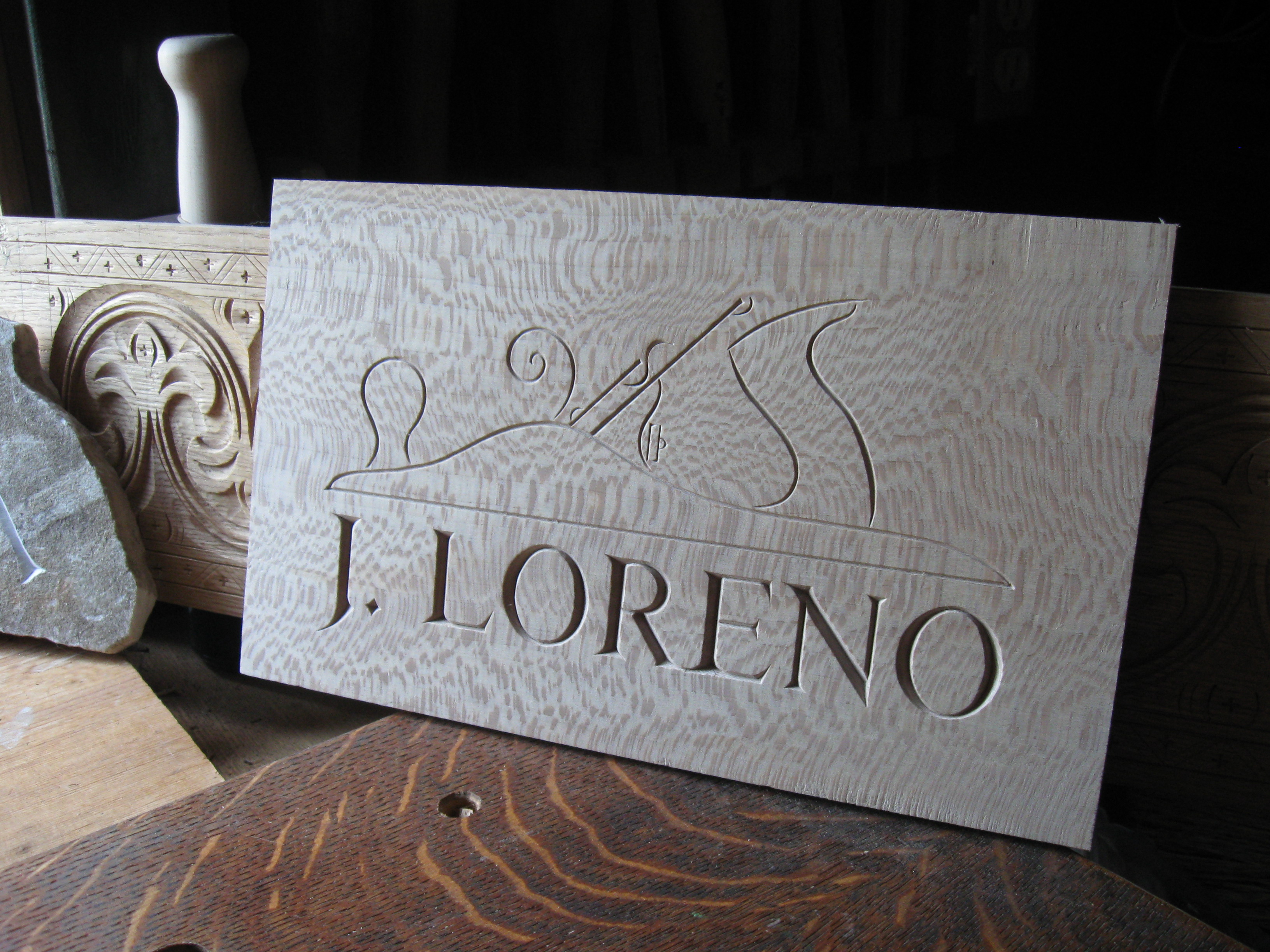
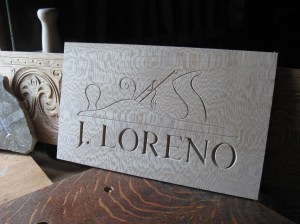
Chris is extremely thorough in explaining why he does things in a certain way.  Everything from sharpening to certain grips.  There are also specific exercises.  I carved this high-relief fish years ago based on one exercise in Chris’ relief carving book.  One can learn a lot from one fish.  Chris also has a great book on carved lettering.
oc loreno sign

Another great source is Peter Follansbee’s blog, books, and videos. When I saw Peter’s carvings for the first time, I was blown away.  The boldness, the geometric nature, the logic of the layout, the sharp contrast of shadow and light — well, I loved it all.   Peter has provided a golden resource of technique and patterns through his blog, books, and videos. It is a different, wonderful approach to carving, and Peter has done more than anyone to keep it going.  These are ideas that can be adapted to bowl decoration as well.

If it is pattern books you’re looking for, there are lots out there, depending on what style you’re seeking.  You could start by searching the thin books published by Dover with lots of images.

I like sculpting the bowls themselves best, so I’ll grab my axe…
 

Posted in books, carving, Uncategorized | Tagged , | 4 Comments

The Axe: Your Personal Instrument

IMG_4262

In the days when the forests were falling the axe was a personal instrument, a man took pride in its temper and keenness.  Men would say, “That fellow Anderson,–he’s got a wonderful axe.” And somebody else would agree, “Yeah, I reckon Anderson’s got one of th’ best axes on Conewango Creek today.”

                — Old Time Tales of Warren County (Pennsylvania) by Arch Bristow (1932)

If you want to be like Anderson, the good news is there are many fine axes being made today that can become your personal instrument. I like my Granfors Bruks carving axe, and I discuss it a bit here.  I like its weight, but others find it heavy.  It’s personal.

Robin Wood has some new videos available on his blog that compare axes and demonstrate sharpening of axes and other tools with simple materials and techniques.  If you’re searching for keenness, check them out.  One place to take a quick look at some options available in quality carving axes is at this page at Country Workshops.

SAM_1722

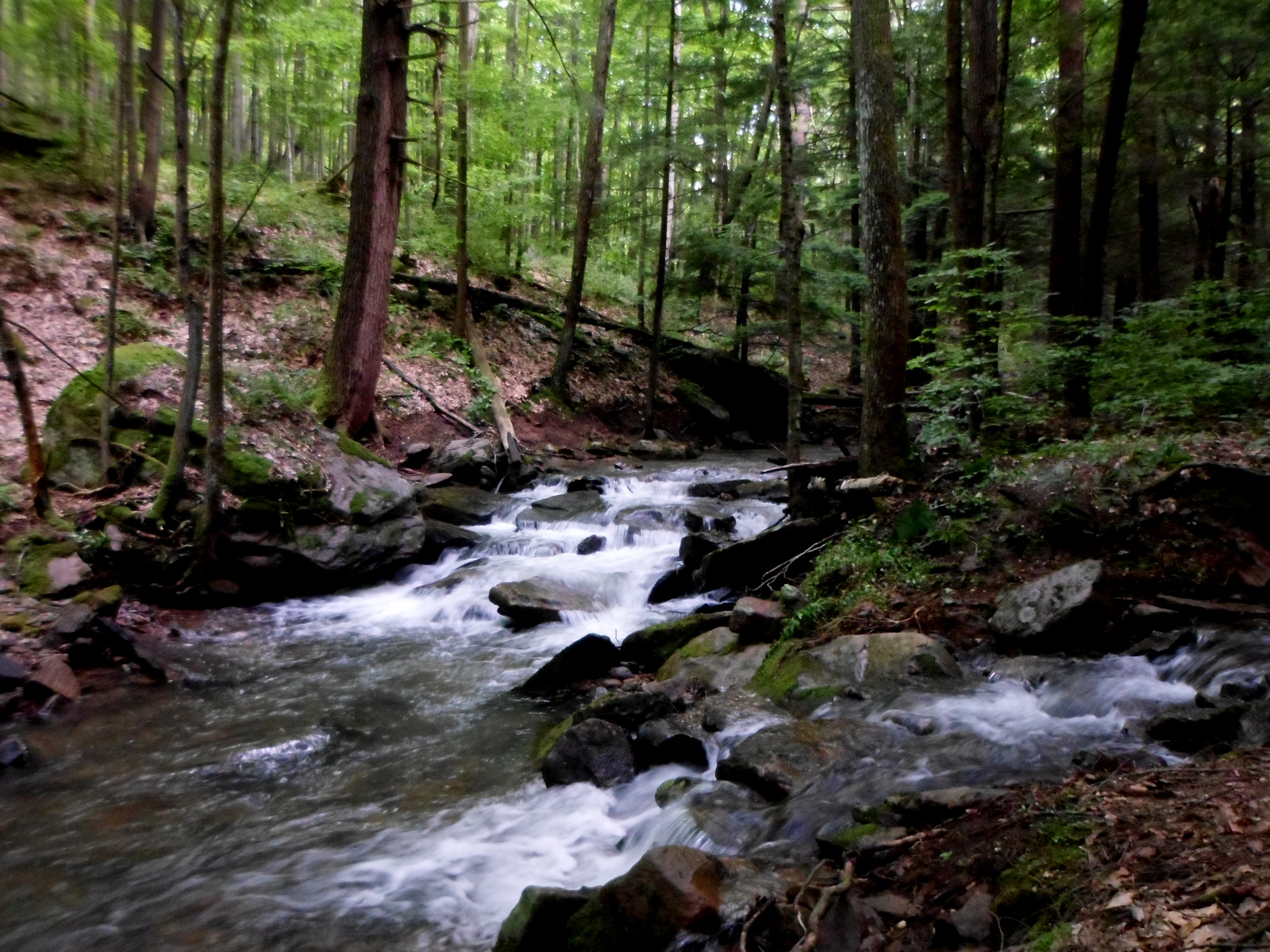
A June day in the Allegheny National Forest

By the way, today the trees are doing well in the Warren County that Arch Bristow wrote about.  Whenever I head up there, a couple hours northeast, I slip into the Allegheny National Forest.  It is a special treat to hike along these mountain steams and, for a moment, wonder at the beauty of a native brook trout.

Posted in axe, quotes and excerpts, Uncategorized | Tagged , , , | 2 Comments

Basking in the Sunshine

IMG_4223

The plus side of the cold temperatures lately has been beautiful clear sunny skies.  I propped up this cherry bowl in the window to bask in the sunshine and help along the curing of the flax oil.  I do this twist carving with a couple knives and a gouge or two.  The constant narrowing of the field toward the handles means that the curves and dimensions of the pattern are constantly changing, and the knife is free to adjust.

SAM_1892 IMG_4211

The two knives I use for this are pretty commonplace.  One is just a standard utility knife blade that I have ground to a gentle curve.  The other is the pen blade of my pocket knife. It requires some pressure in cherry; softer woods would be ideal.

IMG_4205This is how I hold the bowl against the front apron of my work bench.

Last year, I carved this same style of twist pattern on a similar style of cherry bowl and made a short video of the process. You can check it out below.  This pattern is an example of just one of the many variations of the guilloche design.  In this case, the pattern tapers; on furniture pieces it is often laid out between parallel lines.  There are a lot of possibilities to check out at Peter Follansbee’s blog.  Here is a great post by Peter about the possibilities of the guilloche and other patterns.

Posted in carving, cherry, holding, layout, patterns, tools, Uncategorized, video | Tagged , , , , | 1 Comment

Hollowing with an Adze

IMG_6511

Following up on my last post about adze design, I wanted to share a series of photos that show the procedure for my adze work.  At the stage of the first photo (above), I’ve hewn and hand planed the upper and lower surface of the future bowl from a half of a walnut log.  I have laid out the line of the inner hollow and the outer perimeter of the rim and handles.  This one is around 21 inches long and 12 1/2 inches wide.  I’ve hogged out much of the bulk of the hollow with the adze.  The rough adze work to this point goes pretty quickly — maybe twenty to thirty minutes.  Lots of fun and chunks of wood flying all over the shop.  Then things ease up and slow down as I get closer to the line.

Once I am within an inch or so of the sides and bottom, I use the adze (often my smaller adze) to cut across the grain along the short axis of the bowl.  This establishes an even curve across the width of the bowl and establishes the final depth (see photo below).  It also lessens the possibility of having a split or cut run into the opposite side of the bowl as the far side is hollowed.  This trench now becomes the landing zone for the final strokes of the adze as it cuts from upper rim to the trench.  The rest of the adze work will be done in a direction generally perpendicular to the trench — cutting “downhill” with the grain.

At this stage, I usually try to leave about 1/2 inch bottom thickness.
Along the long axis, I cut a channel from the rim to the trench, then continue that procedure to the left side rim.
Now on to the right side.
When working the right quadrant, I like to tip up the log to allow for a more natural swing.
Running a hand along the  surface can reveal areas to address further.
Running a hand along the surface can reveal areas to address further.
Adze work done on one half.
Adze work complete.  The bottom of the trench is still visible here and there.  All will be cleaned up with gouge paring after hewing the outside and drying.
Adze work complete. The bottom of the trench is still visible here and there. All will be cleaned up with gouge paring after hewing the outside and drying.


Posted in adze, bowls, holding, layout, Uncategorized, walnut | Tagged , , , , , | 13 Comments

Do You have an Outie or an Innie?

Illustration, Adze Bevels_NEW

I have some general information on tool selection at my website, but I’d like to focus more specifically on the adze in this post.  It is probably the single most expensive tool used for this work, so it pays to choose wisely. After all, your grandchildren might be using it someday.  I only know two adzes well, but they’ve taught me some things about adze design.

SAM_0667

My Hans Karlsson Adze head with custom handle

SAM_0672

Edge-on view of my Hans Karlsson adze

I’ll start by showing some photos of the adze I use the majority of the time.  The adze head is made by Hans Karlsson in Sweden.  The Karlsson’s have a small family forge in Sweden that makes excellent tools.  They are designed well, with much consideration for how they will be used.  Mine was purchased years ago through Drew Langsner’s online Country Workshops store.  It is marked H-161 there.  As far as I can tell, it is the same one available from these suppliers based in the U.K.: Woodsmith and  Woodland Craft Supplies.  They have other adzes there of various sizes made by HK and other good makers.

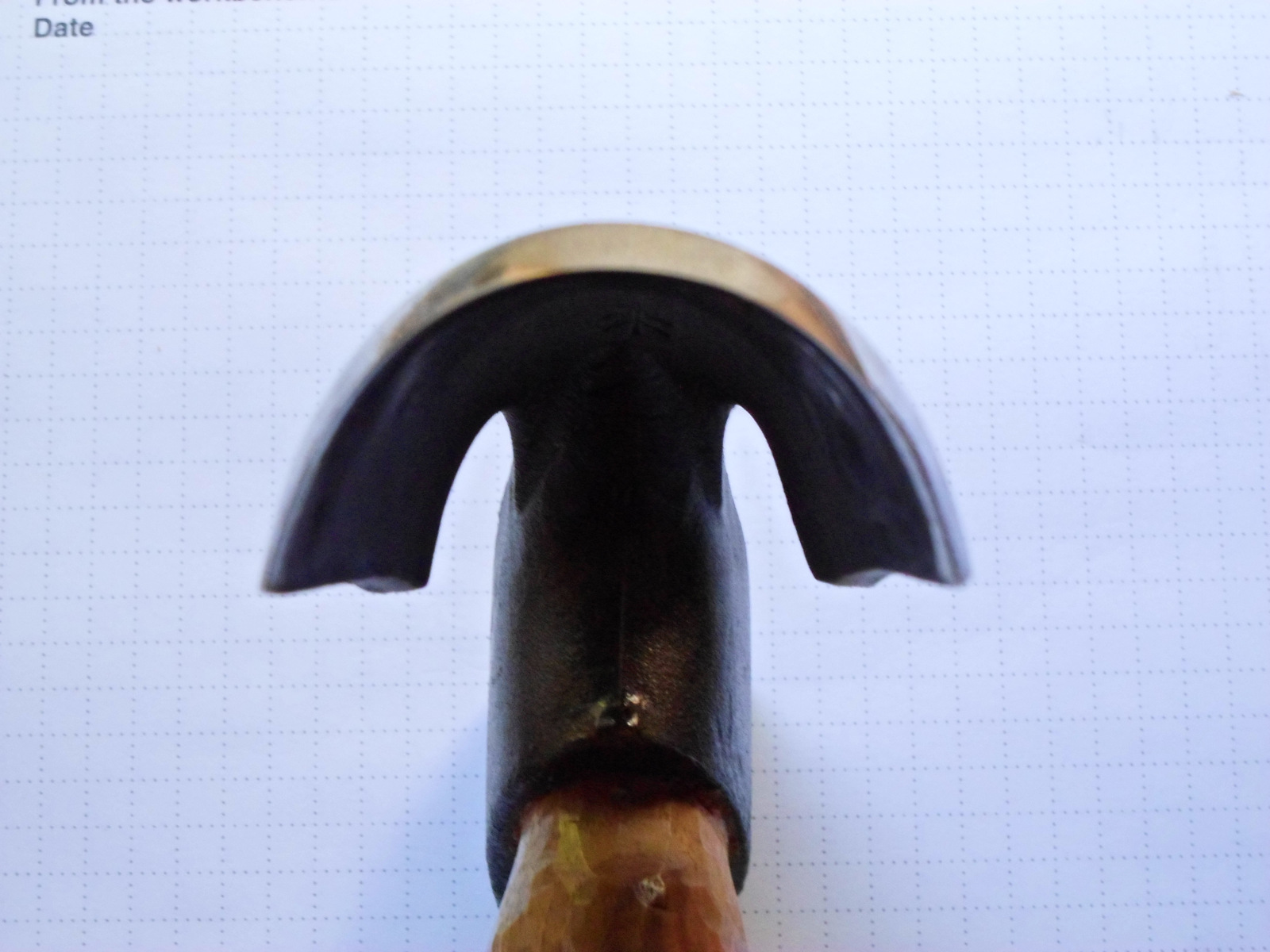
My HK adze arrived sharp and ready to go (except for the lack of a handle, but that was my choice).  It has an outer bevel that is maybe declined eight to ten degrees from the line of the head.  A shorter inner bevel strengthens the edge by making the total edge angle around thirty degrees.  It enters the wood easily and the weight of the tool propels the edge through.  The steel holds an edge under heavy blows, and sharpens easily.  All I have done through many sharpening is to maintain it as it came.

My other adze is a good example of how much work will be involved if you buy something poorly designed for bowl carving (even if the product description says “perfect for making bowls”).  Before I had any idea what to buy, I purchased this adze made by Pfeil Swiss Made.  Their carving gouges are excellent, but they missed the mark on the design of this tool.
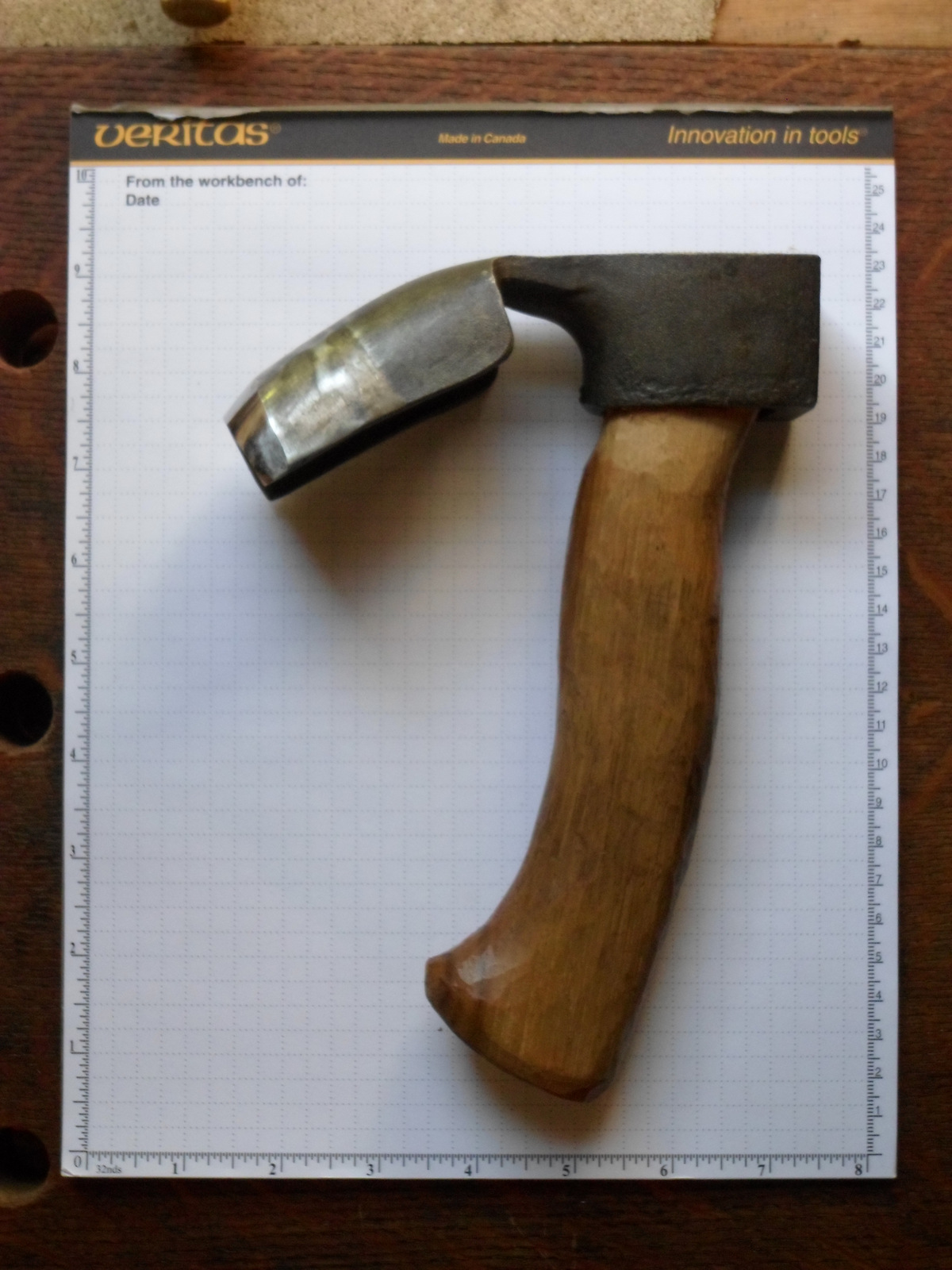
The handle is poorly designed in relation to the geometry of the head, and there is no outside bevel at all.  It lacks the concentrated weight of the HK that helps propel the edge through the wood.  It doesn’t arrive very sharp. In spite of all that, it will indeed remove wood from the hollow of a bowl; I carved some bowls with it.  It took lots of tweaking to get it to work better.

After grinding away a lot of steel (carefully avoiding overheating) and adding a new handle, I now have a nice little adze perfect for tight hollows due to a combination of three factors:  a tight sweep of the edge, a tight curve along the top of the adze, and a pronounced outer bevel (now).  I guess you could say it has a tighter turning radius than the HK, but the HK provides a much smoother ride.

SAM_0669SAM_0670

There may be some uses for which an adze with an outer bevel is undesirable.  For hollowing bowls, you want some degree of outer bevel.  I hope my drawing at the top offers some explanation as to why.  Another way to think about it is like this: an adze is like a carving gouge on a stick.  When used for carving work, gouges have outer bevels.  They provide the carver with the freedom to control the course of the tool and come into, and out of, a hollow.

For bowl carving, outies are the best.

One last thought.  If you can’t afford a good adze, but you want to start bowl carving, consider buying a gouge instead.  Better to buy a good gouge than a bad adze.  You’ll still need that gouge after you save enough for a good adze anyway.  You can hog away wood pretty quickly with a large gouge and a mallet.  I’d suggest something like a #8 sweep bent gouge (long bent) 25-35 mm wide.  It might also be a good option if you don’t feel safe swinging an adze.

Posted in adze, tools | Tagged , , , | 55 Comments

Paring….continued

Scan

I was reminded of this sketch I had done awhile back in response to an emailed question. I thought I’d post it up here as a follow up to last weekend’s post “Prepare to Pare.”  It should be easy to print out after clicking on it.

Posted in Uncategorized | 9 Comments