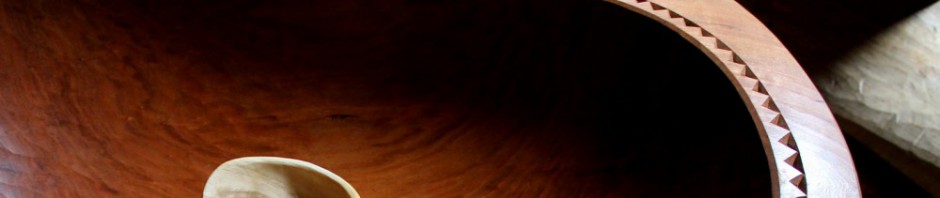
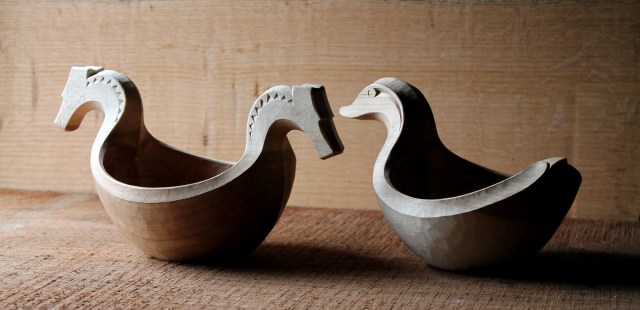
 I finished carving a couple personal-size ale bowls over the weekend. These are the two I mentioned having roughed out in my recent post about ale bowls. I haven’t oiled them yet, but I thought I’d share some photos of them in the raw.
Neither is an exact copy of any particular historical piece. The horse-head bowl is based much more closely on the most common design among the original examples, while the specific design of the “ale-duck” is more of a departure. Honestly, the design for the ale-duck came about after a roughly-hewn horse head broke off of that bowl during the very early stages. Indeed, hewing small bowls of this shape is a real challenge with axe, adze and gouge! I was dreaming of band saws!
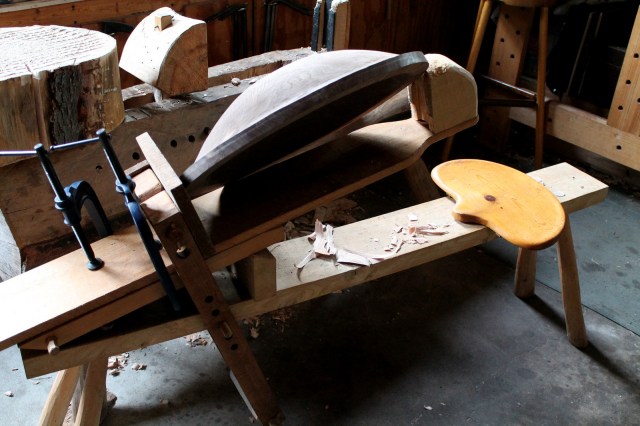
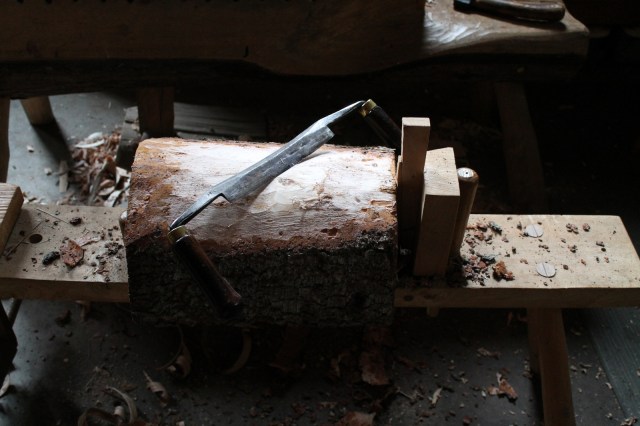
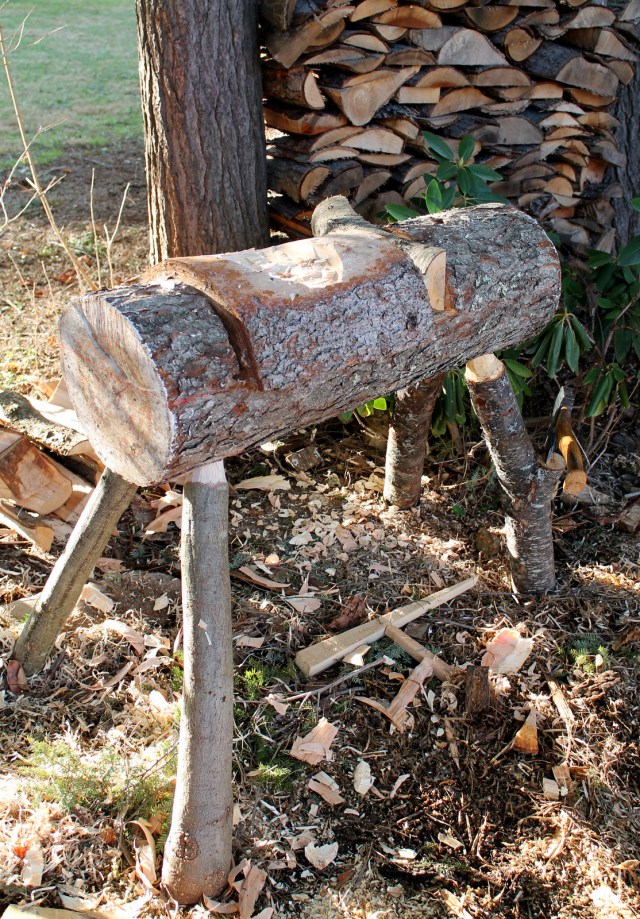
 I was too focused on the hewing to take many photos, and the process would be difficult to explain here anyway. But the photo to the left shows how I initially hewed the blanks. It might be tempting to start with a whole round log, but you have to split it first to eliminate the pith from the piece.
Both of these bowls were carved from black cherry (Prunus serotina). For one, I oriented the bowl with the sapwood (bark side) down, and the other with the heartwood down. The horse head bowl has the sapwood at the top, a color difference that will show much more strongly when I oil the bowls. The horse heads will be much lighter than the rest of the bowl, as will the lower half of the duck.
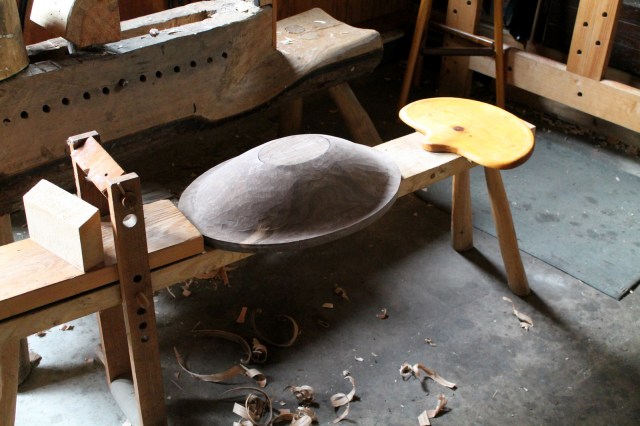
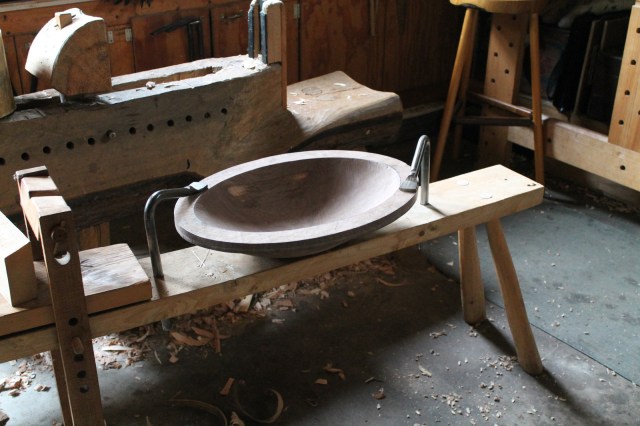
 These are difficult to clamp or hold in a device of any kind, especially after the rough carving. Much of the shaping must be done while holding the bowl using a variety of knife grasps. In the photo to the right, I am using a hook knife to shape the hollowed outer rim.
These bowls would hold around 14 ounces of ale. The horse head one is 9 1/2″ long and 5 1/4″ wide.
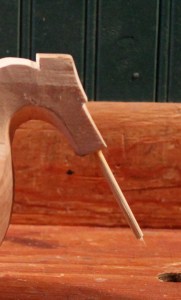 To guard against the future breakage of the horse heads, I drilled a hole and glued a length of bamboo skewer in each. Now that the wood is dry, the neck areas seem quite strong in spite of the grain orientation. The thickness of the raised center ridge helps in that regard as well.
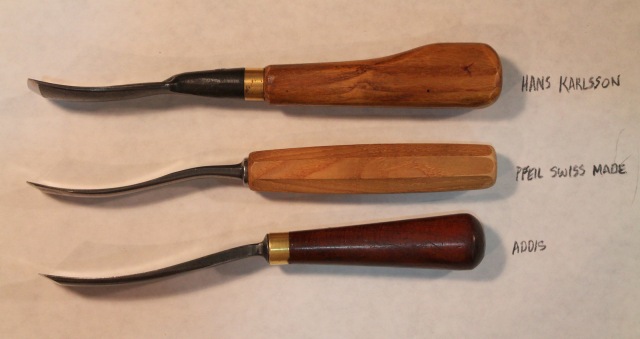
The inner hollow is deep and undercut; plus the horse heads always seem to be getting in the way while carving the hollow. I found that a couple bent knives from Kestrel Tool near Seattle, Washington came in very handy here. I bought the blades and made my own handles, an easy and straightforward job. They send instructions and rivets as well. Unlike most carving hooks, Kestrel normally puts the bevel on the inside of the curve. This worked well in these limited access areas, since the very sharp edge bit instantly, yet was still thin enough to rotate through the cut. Below are a few shots of these tools. Kestrel sends a little length of radiator hose as a blade guard, and it works pretty well. The particular blades that I have from Kestrel are the E and the #3. Kestrel makes a number of other tools as well, including adzes, which I will have to try someday.
I really enjoyed the challenge of these two little bowls, and there are lots of design possibilities. I think I’ll carve some more in the future, including some large enough for passing around.
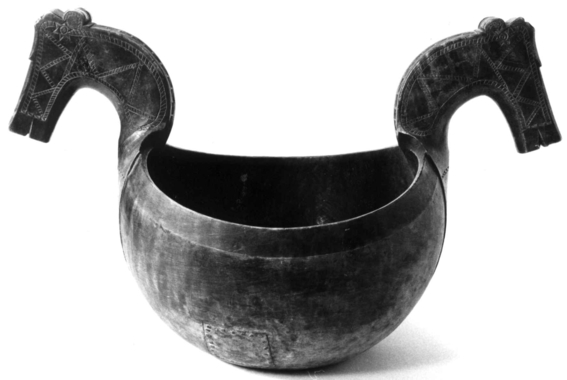
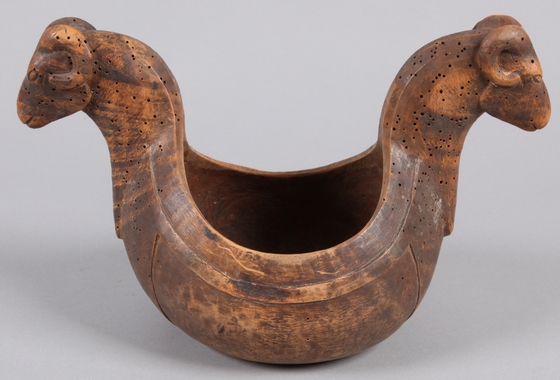
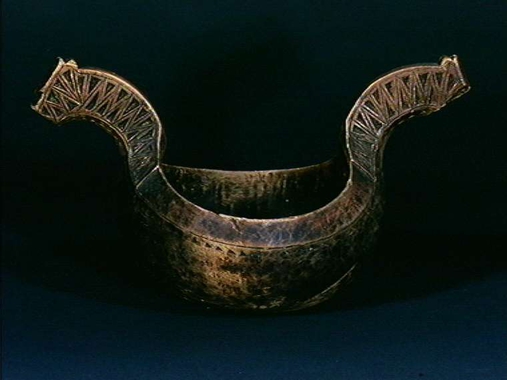
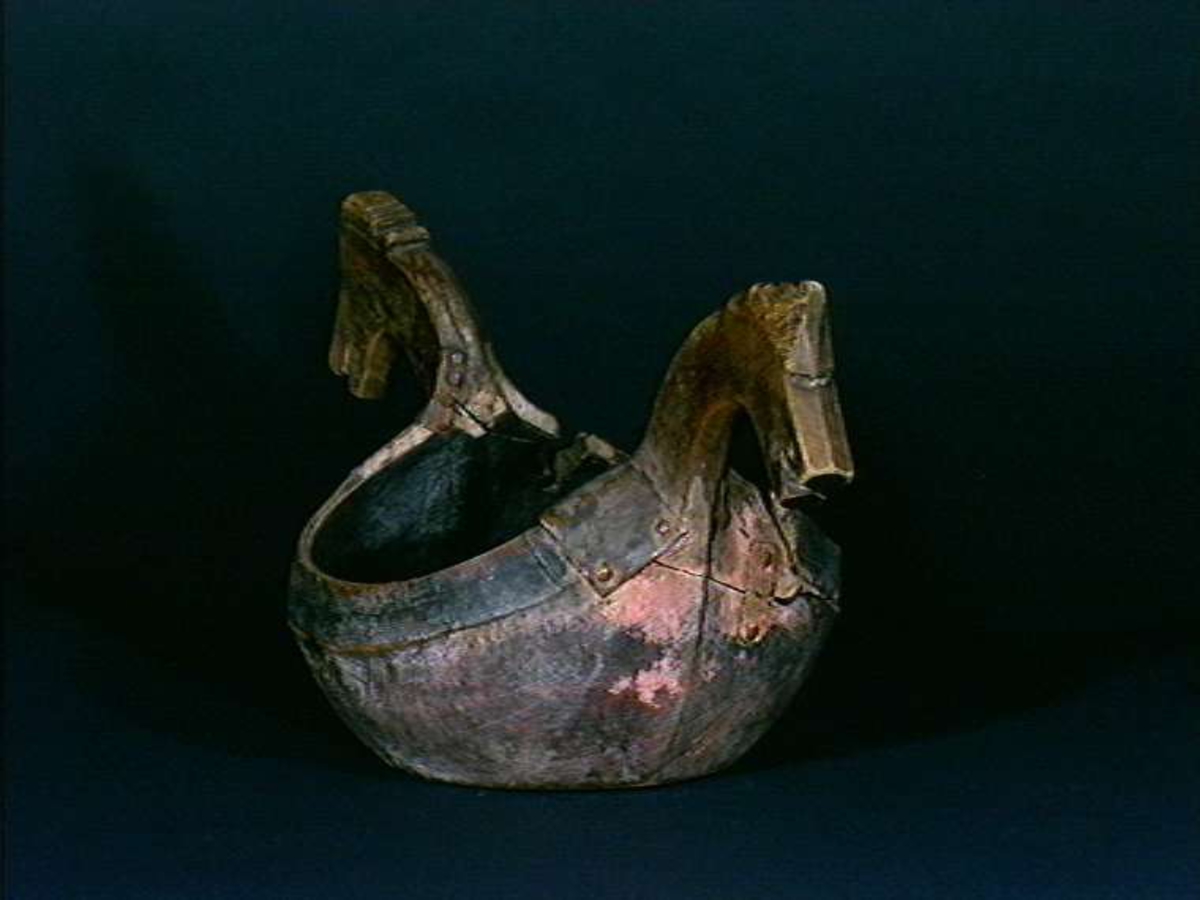
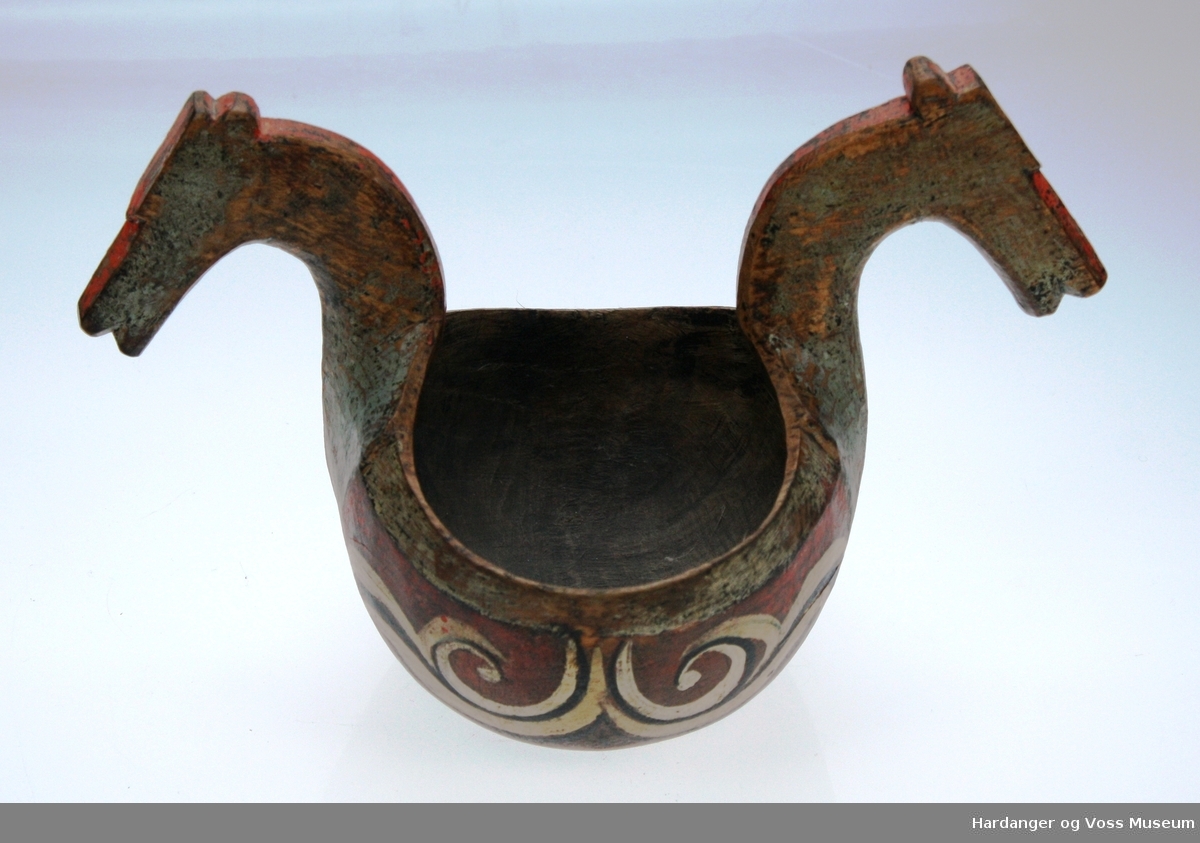 I also noticed that some seem to have been carved from crooked logs. You can see the grain rising away through both horse heads. Initially I wondered if there might have been some steam bending after the bowl was carved; with the horse heads flexed back and in toward the center of the bowl. I don’t think that would be possible, considering the end-grain orientation of the area stressed while bending, but it’s just a thought. I know that the sidewalls of some dugout canoes were bent after carving to widen them, but this feat would be very different.

 Nearly all of my work is left from the sharp edge of a paring gouge. I discussed the process and tools in some detail in



 To all spoon makers, past or present and known or unknown, throughout the world for providing us with basic utensils that may feed our body but are also often beautiful small sculptures that feed our mind and soul. You bring beauty to our lives.



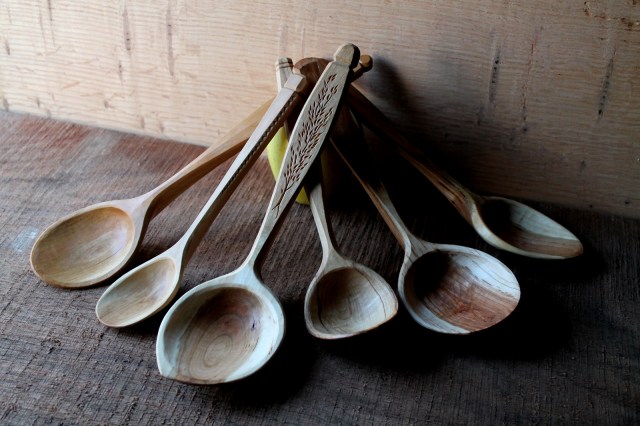


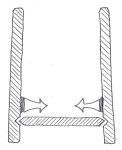 Many of those reading this will already be familiar with the general idea: Hollow out a green branch, cut a groove around the interior near the bottom, and the cylinder will shrink around the bottom board, locking it in the groove. Just below is a link to a pdf file of a brief description with photos of the process that I created for a demonstration at a local festival a few years ago:
 Although often called shrink boxes, you’ll also here “shrink pots” and of course many names in other languages. In Jogge Sundqvist’s book in the left photo, completely in Swedish, they are “Krympburk.” In fact, I think I made my first shrink box about ten years ago after reading Jogge’s book — well, I can’t exactly “read” it, but the pictures are so good that the procedure is clear.

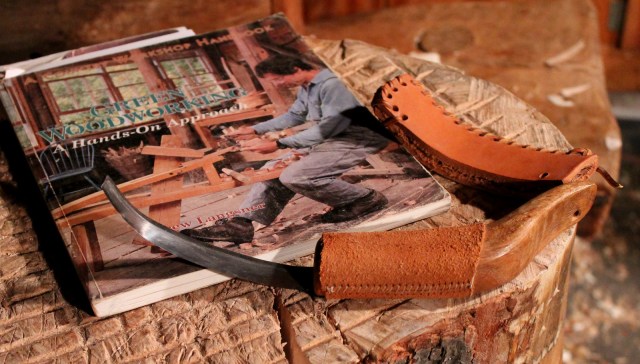 Any one of a variety of slicing tools can be used to remove excess wood and shape the interior: sloyd knife, hook knife, twca cam, etc. Wonderful cross-grain shavings roll out of the box as it and the knife are rotated opposite one another. One tool that I particularly enjoy using for this job is a crooked knife that I made from an old file several years ago, based on directions in Drew Langsner’s essential book


 David Fisher, Carving Explorations