Convergence

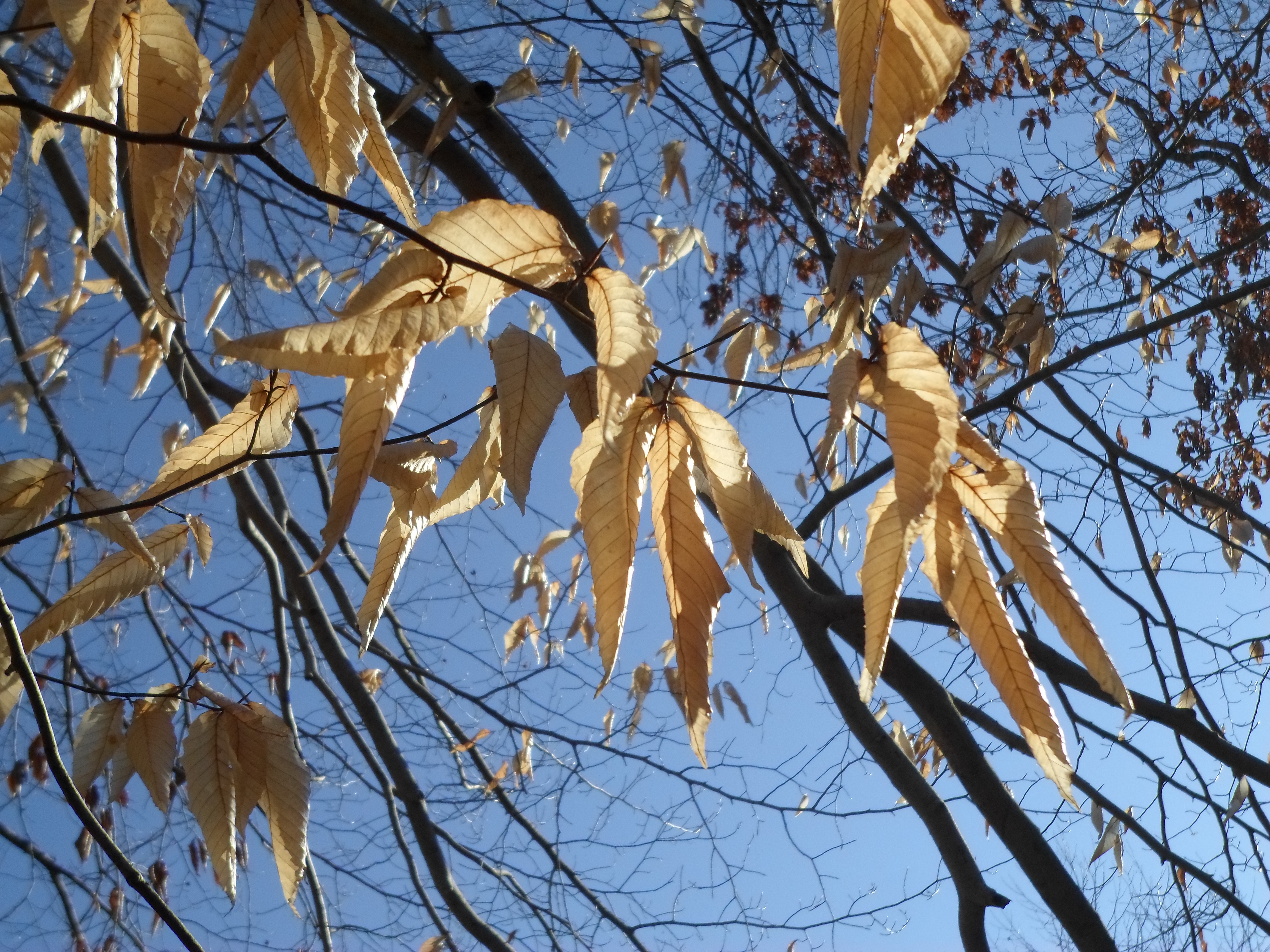
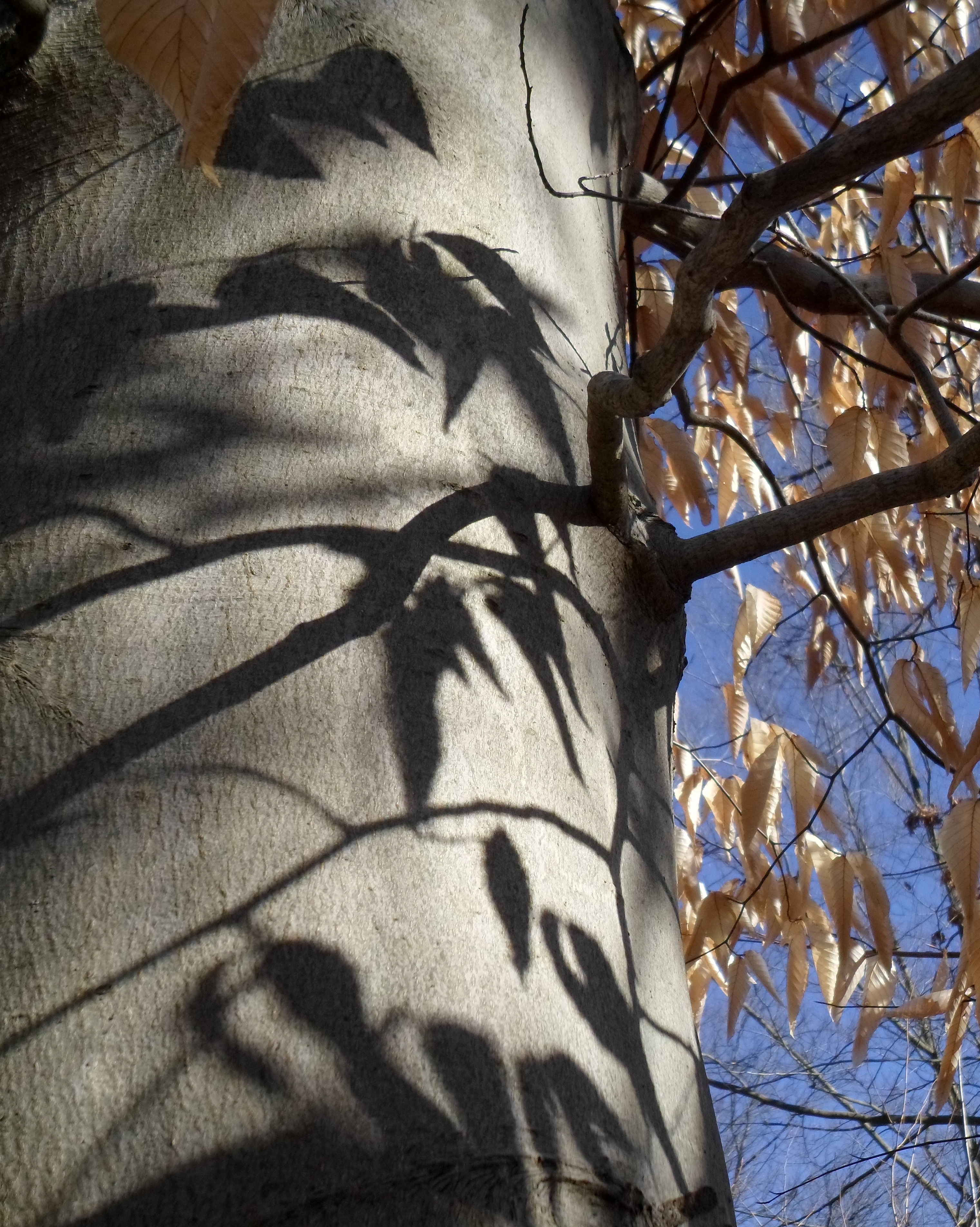
IMG_6195

Each life converges to some centre
Expressed or still;
Exists in every human nature
A goal,

Admitted scarcely to itself, it may be,
Too fair
For credibility’s temerity
To dare.

— Emily Dickinson, from Each Life Converges to some Centre

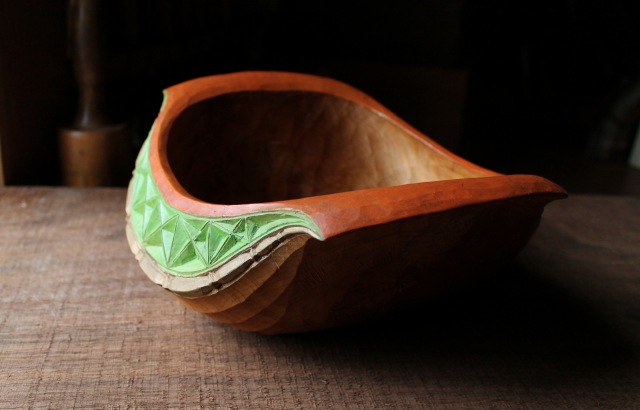
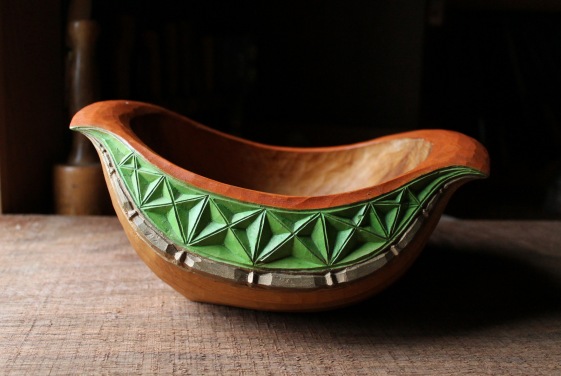
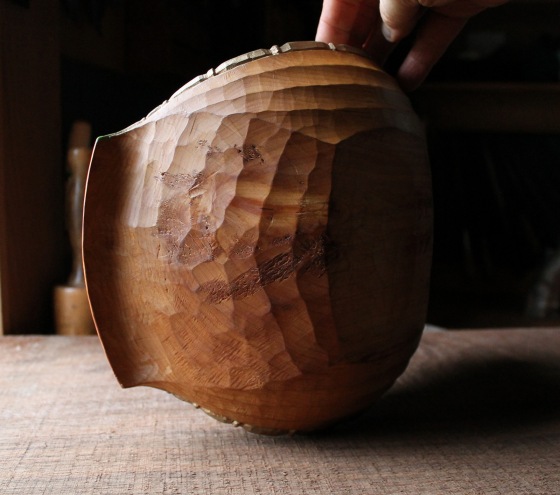
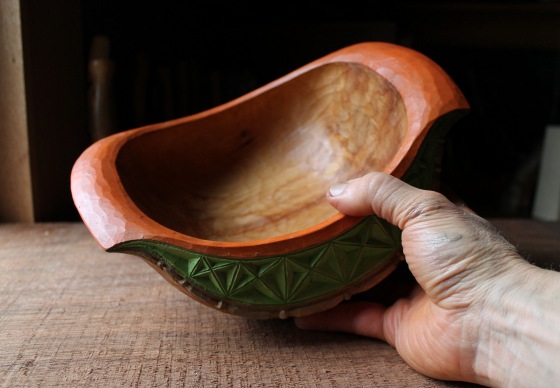
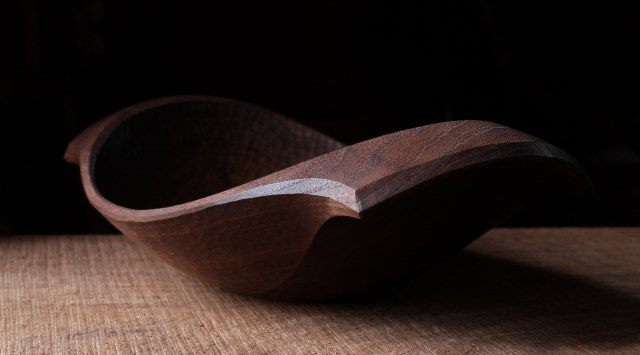
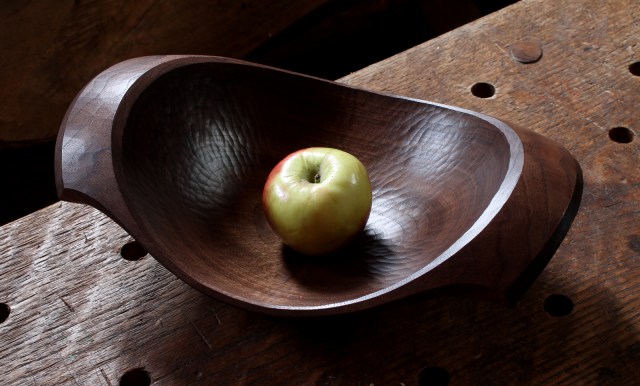
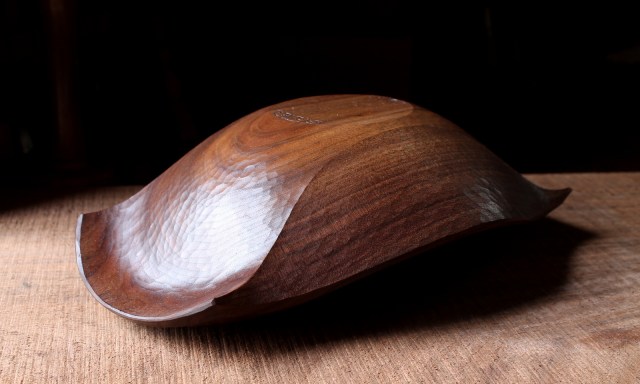
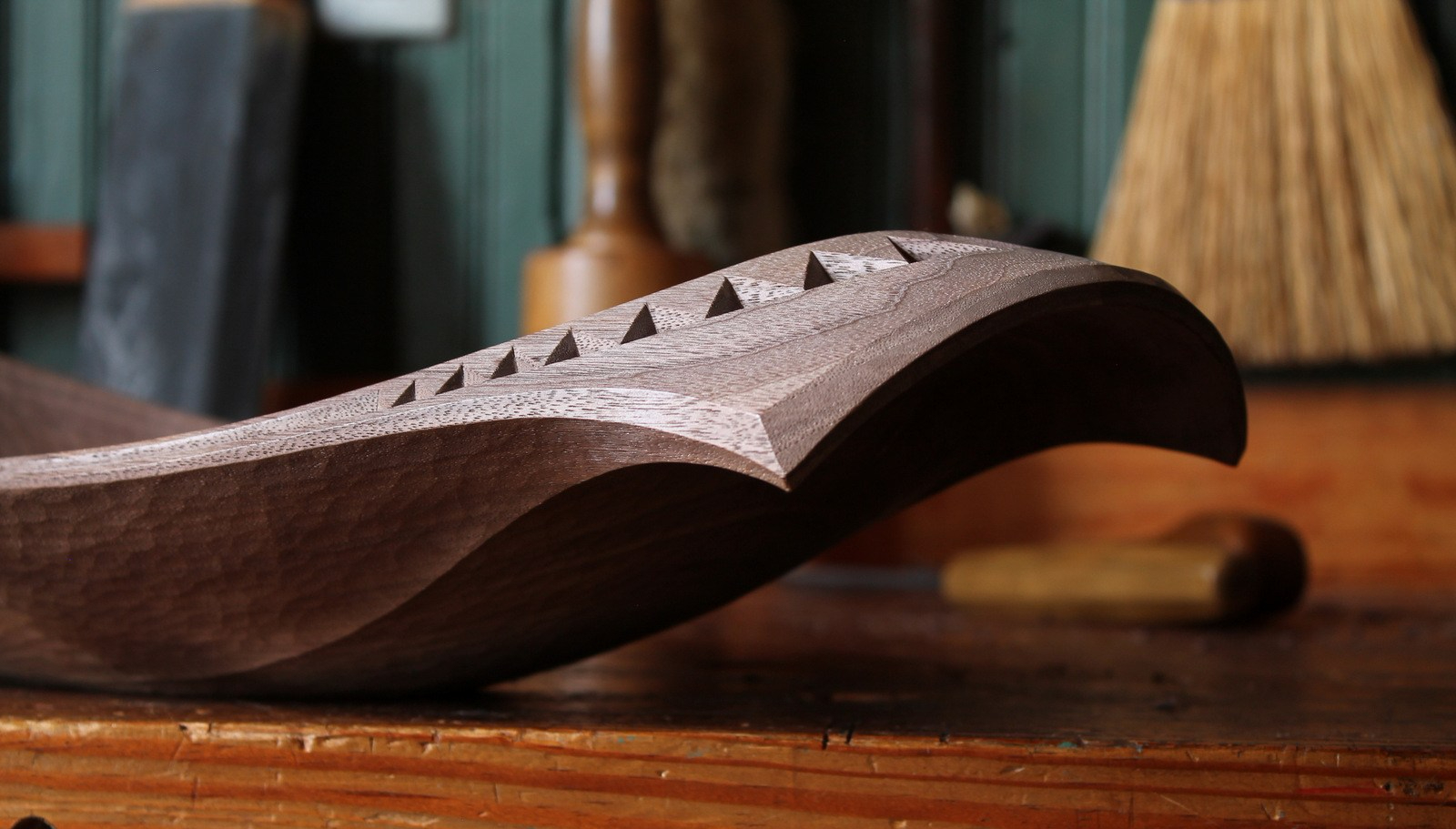
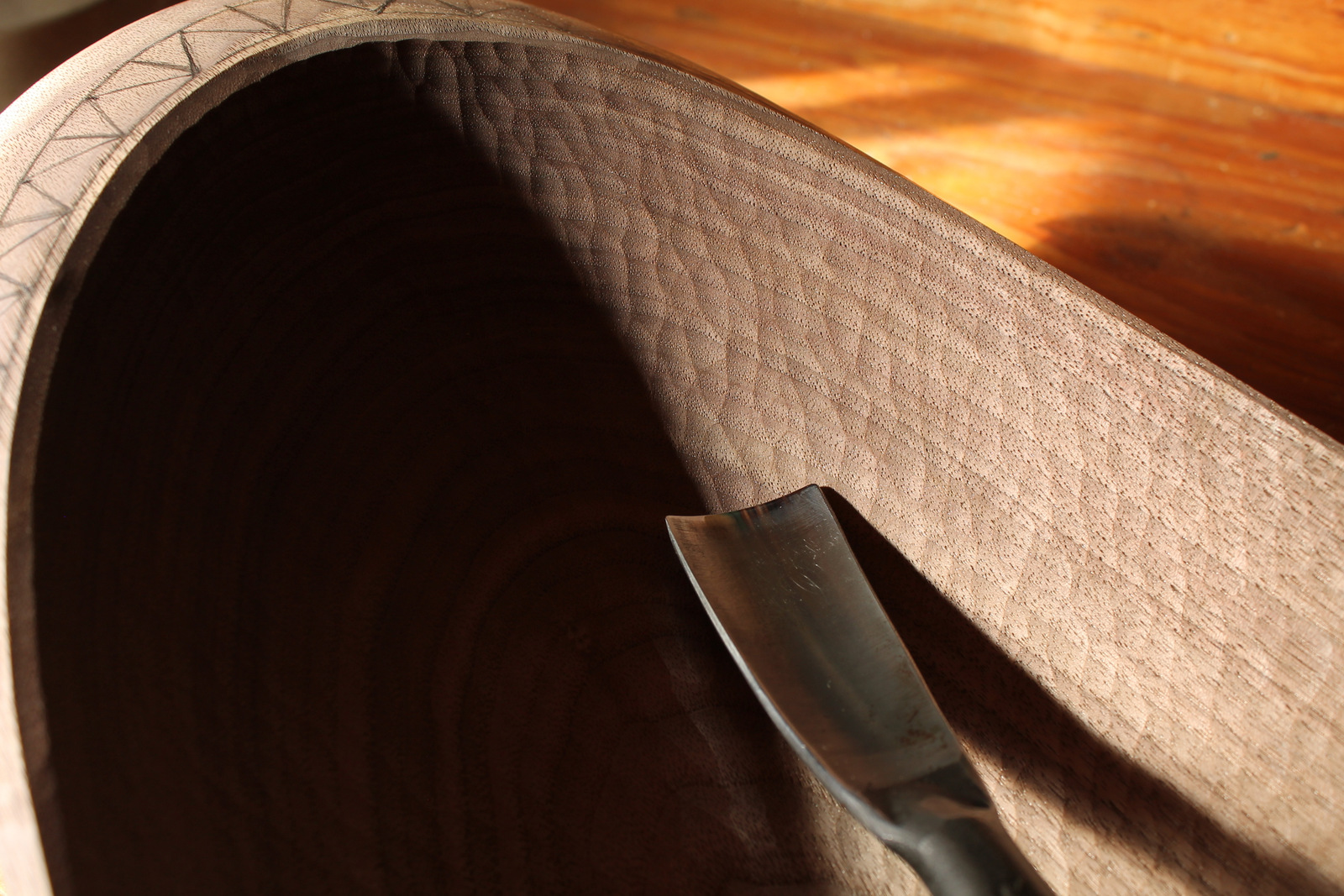
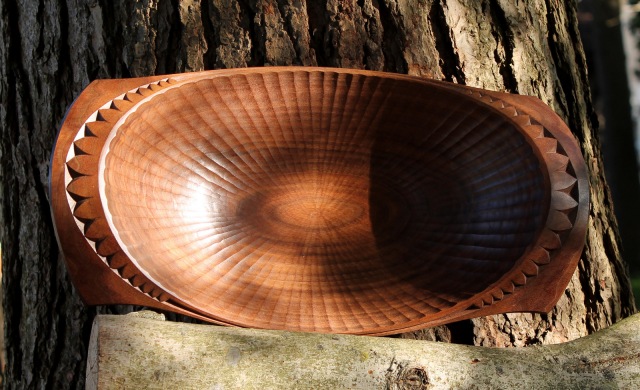
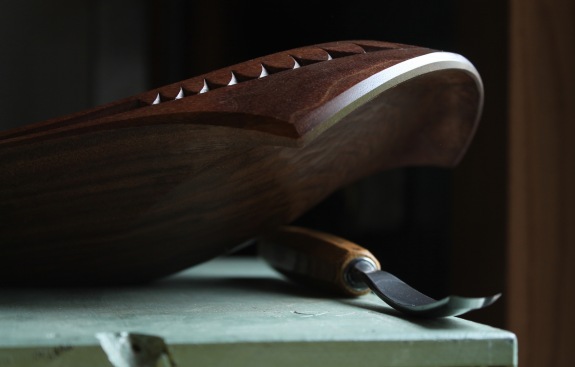
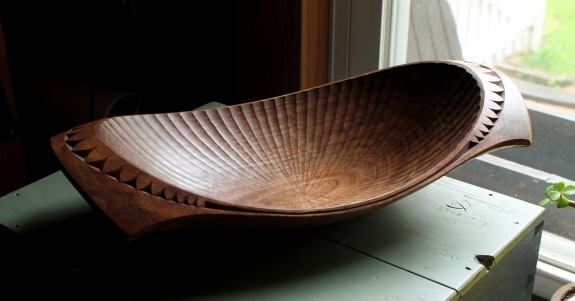
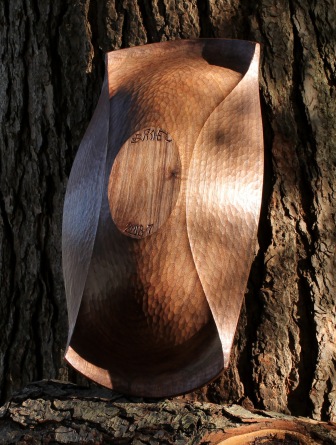
Whether the flutes of this walnut bowl radiate outward or converge inward may depend upon your point-of-view or mood, but from the perspective of a carving gouge, they converge.  To work into supported fibers, the cutting edge begins at the rim of the bowl and sweeps downward to the center.  I carved the same design not long ago in cherry.  You can see it in this post.  I forgot to take any process shots with this one, but I’ll include various photos of the bowl as I discuss the procedure a bit.
IMG_6219

In both cases, the flutes were carved with a long-bent gouge, #5 sweep 16mm wide.  A steeper sweep would make the ridges between flutes a little too pronounced and possibly vulnerable in use.  While a shallower sweep like a #3 makes it more difficult to distinguish the ridges and define the flutes.
IMG_6239

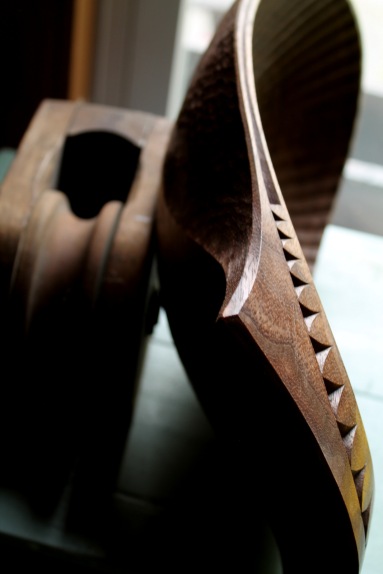
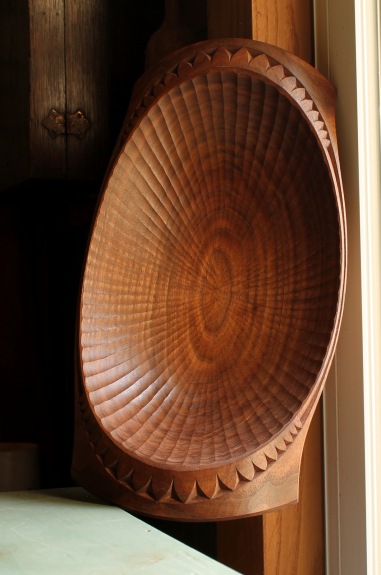
I don’t draw any guidelines before carving the flutes.  The width of the gouge itself keeps the width of the flutes at the rim reasonably similar.  I do like to put a little pencil mark in the center of the hollow.  That is my target point as the gouge makes its way downward and toward the center.  As the edge proceeds from rim to center, I ease up on the downward pressure exerted by my left hand on the shank of the tool, allowing the flute to simultaneously decrease in width and become more shallow.  This creates a tapering flute.
IMG_6224

I work my way around the bowl in a rough pass, then go back around once again more carefully.  When I see I have around six or seven flutes to go on the first pass, I adjust the spacing for the remaining flutes just a touch to make sure I carve a full flute next to where I began.  After a couple passes, I try to leave it alone.  I want the subtle variations and tool marks from the hand process to remain.
IMG_6236

I think on another bowl with converging flutes someday, I may incorporate Emily Dickinson’s thoughts with some carved lettering.  Lot’s of ideas for that and other pieces, I know I haven’t posted much for sale lately, but soon.
IMG_6187

Posted in bowls, carving, patterns, quotes and excerpts, Uncategorized, walnut | Tagged , , , | 25 Comments

Learning at FWW Live

IMG_6152

It’s classic advice to surround yourself with interesting, inspiring, uplifting people.  Sometimes you can create that environment, and sometimes you just get lucky and find yourself in such a situation like I did last weekend.  I had been invited to demonstrate and discuss bowl  carving at Fine Woodworking Live in Southbridge, Massachusetts.  So, I demonstrated and discussed, which was a wonderful experience thanks to the enthusiasm and great questions from the attendees.  However, what I did most at the event was learn.

My education started Friday morning when I assisted Peter Follansbee as he taught fifteen students spoon carving.  At Greenwood Fest, Peter and I are usually presenting simultaneously, so this was a golden opportunity to watch him teach.   I learned a lot from that, as well as from Peter’s auditorium presentation on the “Green Woodworking Renaissance.”  Watch a presentation by Peter and you’ll achieve a deeper understanding, laughing all along the way.  Although he humbly downplayed his significant role in this renaissance, Peter shared his broad and valuable perspective on how we’ve reached a point where adzes are a hot commodity and fresh shavings are falling to the feet of more and more woodworkers.

The trend continued with an intensely thought-provoking keynote address by Peter Galbert, entitled “A Chairmaker’s Journey.”  Pete’s talk was a fascinating story of a voyage of discovery, richly illustrated.  He shared practical wisdom on aesthetics and techniques, as well as insight into the philosophical approach that has made Pete’s journey as a maker so meaningful.

I continued to learn from Pete’s demo on spindle turning.  Although I have no woodturning ambitions, it was a good indication of how transferable knowledge and skills are.  I gained so much perspective from Pete’s demonstration regarding aesthetics, sharpening, material considerations, even courage.  Same goes for my experience with Mary May’s demonstration of carving a ball-and-claw foot.  I don’t anticipate a ball-and-claw footed bowl, but that’s beside the point.  I was able to gain a new perspective on many things from tool choice to methods of layout to envisioning a design.

I’ve just scratched the surface, but that will have to do.  The line-up of presenters was incredible, and I was fortunate to get to talk with many of them.  I was inspired by them as well as the attendees and students.  Just a rich environment of people sharing knowledge, ideas, and laughs with one another.

I was so involved in taking things in that I never thought to take even a single photo.  That’s poor discipline for a guy with a blog.  So I’ve included a couple sketches of  a spoon that Peter Follansbee gave me at the event.  I was compelled to sketch it to learn more about it and because I like it.  Already looking forward to hanging out with Peter again, and a whole host of characters at Greenwood Fest in just over a month.

IMG_6129


Posted in carving, classes, events, sketch, spoons, teaching, Uncategorized | Tagged | 2 Comments

Transferred Touch

IMG_5828

Things men have made with wakened hands
are awake through years with transferred touch, and go on glowing
for long years.
And for this reason, some old things are lovely

warm still with the life of forgotten men who made them.

— D. H. Lawrence, “Things Men Have Made”, from Pansies (1929)

Not long ago, a person who has been a great influence on my woodworking informed me that I’d be receiving a carved wooden bowl in the mail; had had it for years and was passing it along to me.   I’ll write more about that person in a special post to come.

A couple weeks ago, the package arrived on my porch.  I can’t fully explain what I felt upon opening the box and holding a bowl carved twenty years ago by Bengt Lidstrom, but to say the least, I was thrilled and overwhelmed.

IMG_5830

I wrote a post about Bengt Lidstrom over two years ago, including a link to an extensive article about him from a Swedish museum.  Bengt’s work has been inspirational to me.   To now have a piece made by his hands, to hold it and learn from it, is an incredible gift.  As D. H. Lawrence suggests about such objects, this bowl is “warm still” with Bengt’s life and will continue to be for years to come.

I’ve rolled this bowl over in my hands every day, and I thought I’d share a few things I’ve noticed about it, and learned from it.

IMG_5843

At about 11 inches long, 10 inches wide, and 5 inches high, it did not require a grand piece of wood, in terms of size or quality.  The birch log he used was far from perfect.  It has a knot running along one end wall, for example.  Don’t let the limitations of available material stop you from making the best of it.  The strength of Bengt’s design just brushes those issues aside.  He considered the unique nature of the piece he was working with and made it sing.

IMG_5835

All surfaces of the bowl come alive with Bengt’s confident cuts.  No need to drive yourself crazy with the “perfection” of every facet.  The surface is vigorous yet soft.  The bowl beckons to be touched.  The flow of the form is a feast for the eyes as the light changes throughout the day, but to me the bowl reveals the most by being held.  To feel the texture, the thinness of the undercut sidewall — just enough to allow for the depth of decorative carving on the side panel.  Even the sounds of tapping fingertips resonating through the wood…   Again, to quote Lawrence, this bowl is “awake through years with transferred touch.”

IMG_5839

This bowl has many more stories to tell and lessons to teach, but I’ll mention just one more for now.  The bottom of the bowl is carved with “BL 99.”  He was 83 when he carved this bowl, and there’s a lesson and encouragement in that for us all.

IMG_5832


Posted in bowls, finding wood, historical reference, patterns, proportions, quotes and excerpts, Uncategorized | Tagged , | 31 Comments

The Three Stages

IMG_6077

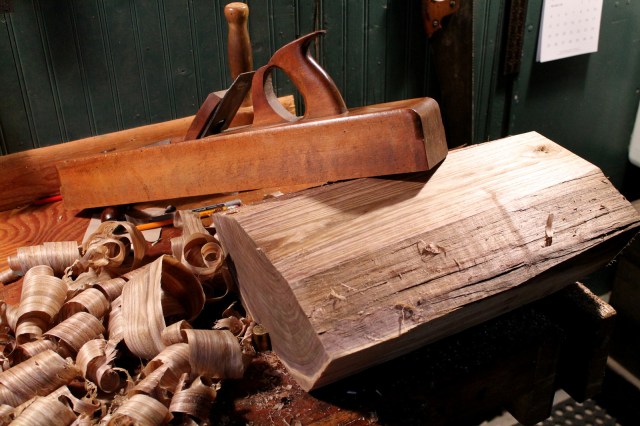
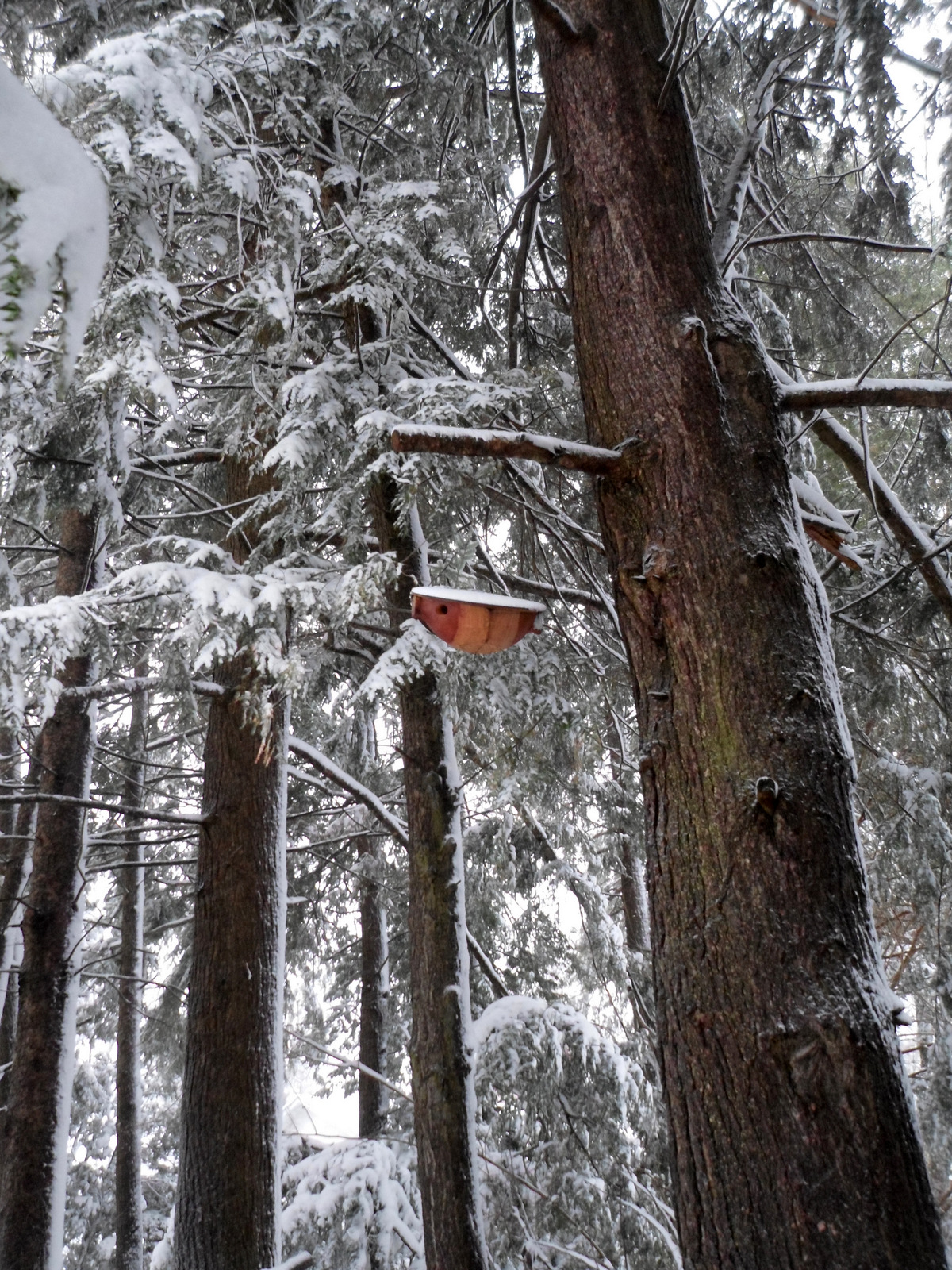
I’m preparing a couple blanks for my program at Fine Woodworking Live in two weeks.  I noticed I had walnut bowls sitting around in three stages, so I’ll call them Larry, Curly, and Mo.  Larry is a log section — a bowl in waiting.  Curly was roughed out from a green log a couple months ago and is in limbo.  Mo has been through the dry-carving stage, oiled and ready for action.
IMG_6079

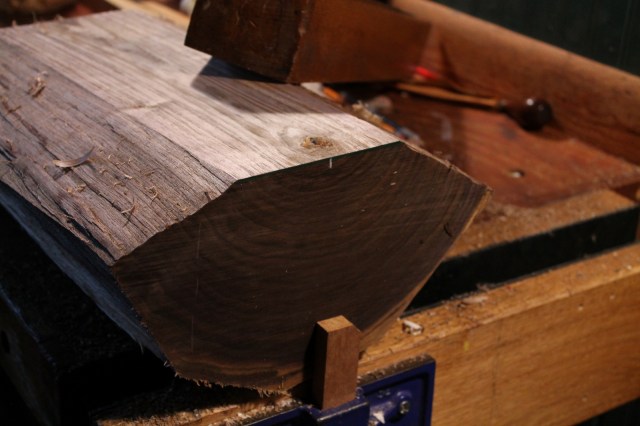
Here’s Larry after I split off the white sapwood and the angle near the pith with a froe.  I cleaned up what will be the bottom surface with a plane.

IMG_6081

Especially on a relatively wide blank for an “upside-down” bowl, it’s not necessary to start with a complete half log and flatten the entire width.  The foot of the bowl won’t be that wide anyway.

IMG_6021

IMG_6025

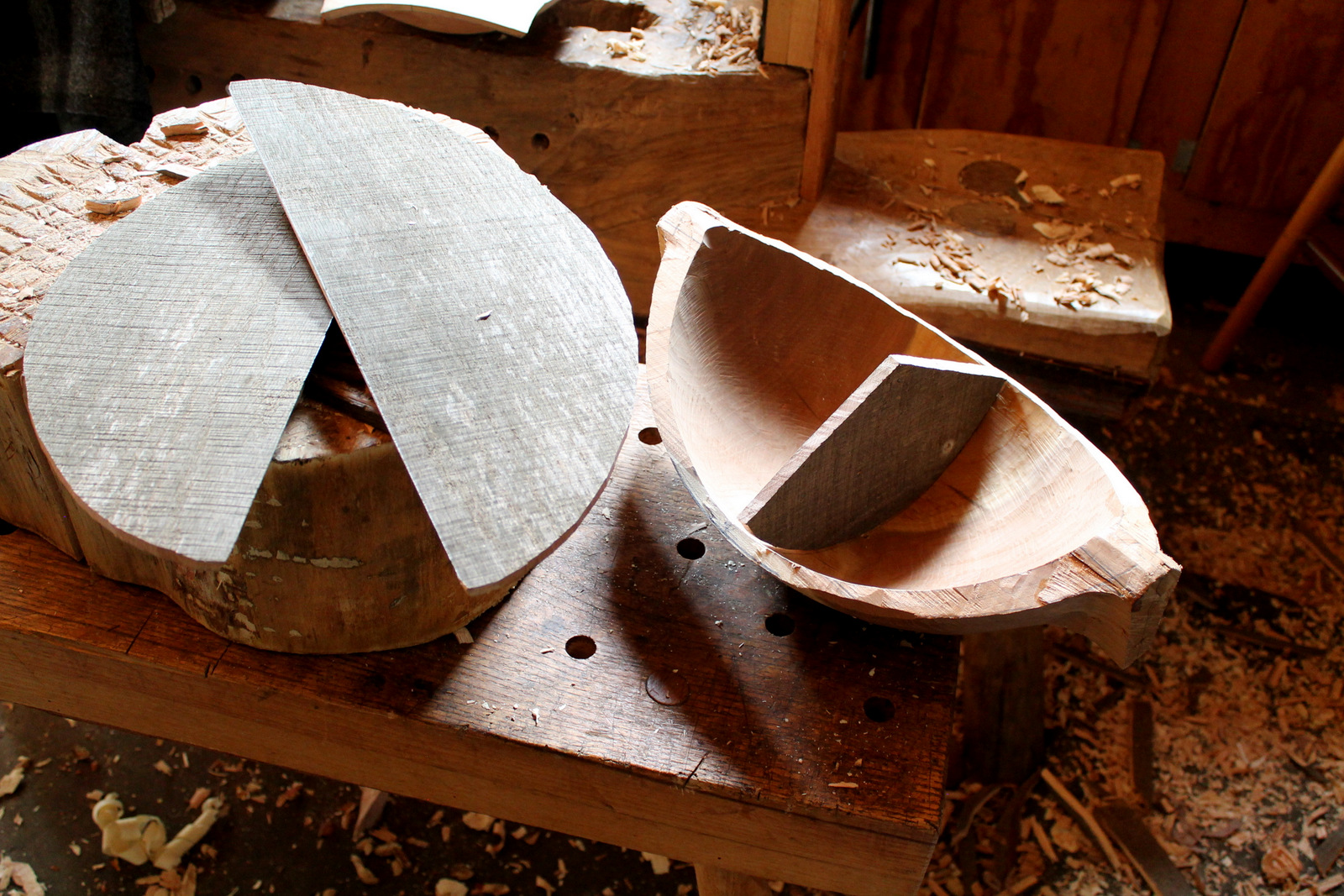
Mo’s relatively modest in size and soft-spoken.  13 1/4″ long, 8 3/4″ wide, 4″ high.  I used a subtle texture and no bling on this one.
IMG_6019


Posted in bowls, finding wood, green woodworking, holding, layout, Uncategorized, walnut | Tagged , | 5 Comments

Memorial Bowl

IMG_5963

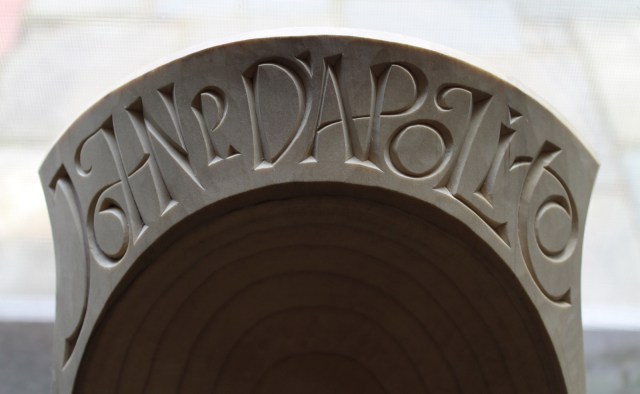
This tulip poplar log came to me with a history.  John’s son-in-law explained to me that John watched this tree grow and would often comment on its simple beauty and growth when they were together.  A couple years ago, John passed on.  Since then, John’s humble but special tulip poplar had to come down and I was asked to make a bowl as a reminder that both would be missed.

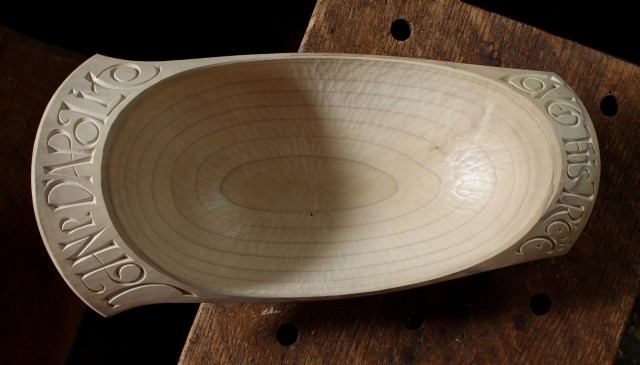
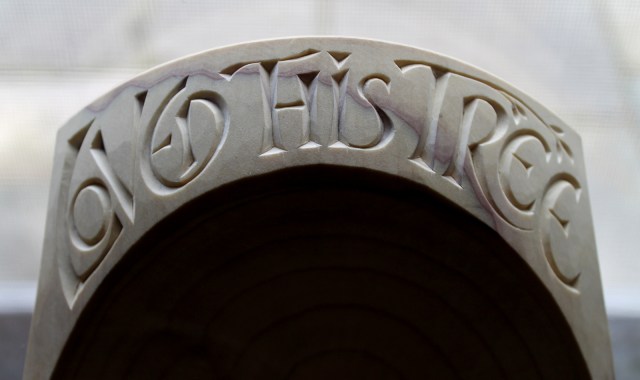
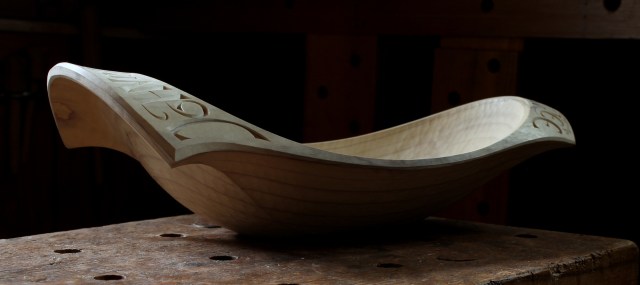
After some thought, I decided on an asymmetric form that followed the flare of this butt log and the simple meaningful message “John P. D’Apolito loved this tree.”  I never knew John, but I think this short message reveals something of him and mankind’s relationship to nature, and it feels good to know that it will be in his daughter’s home.

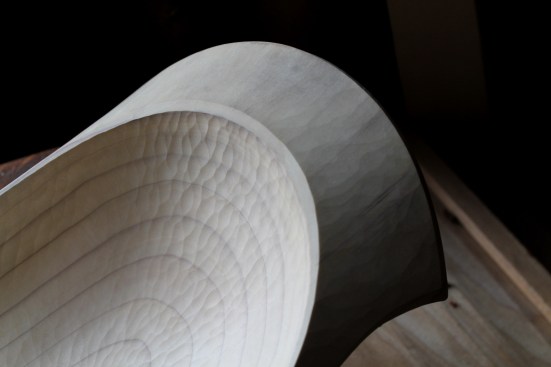
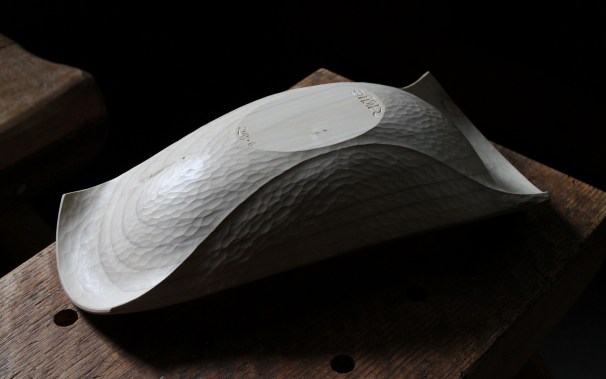
I shared the early progress on this bowl at the end of this post.  Here are a couple photos following the post-drying carving stage, but before the lettering.

IMG_5881

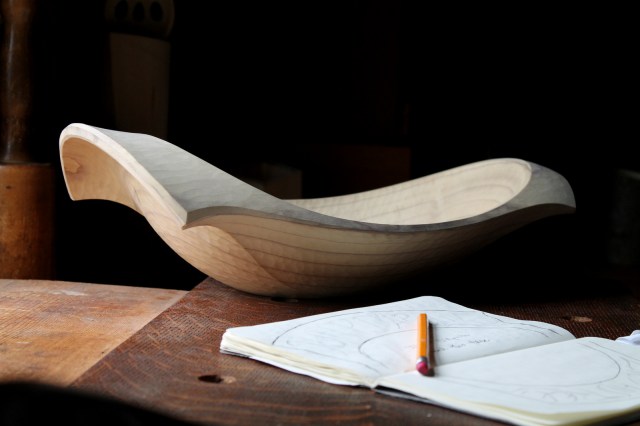
Interior from the gouge, handle from the drawknife.

IMG_5920

Upside down

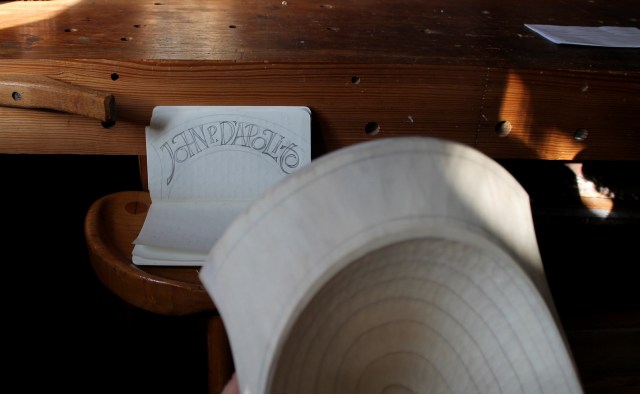
I worked out the lettering design on paper before drawing on the bowl itself.  I sketched the general shape of the handles in ink, then played around with the lettering in pencil.

IMG_5875

Once I liked it, I propped up the sketchbook and drew the idea fresh onto the handle.  Same thing for the “loved this tree” handle.

IMG_5886

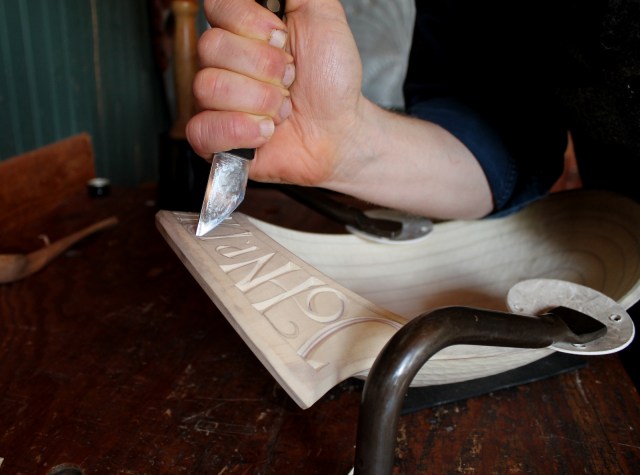
Even then, they’re only pencil lines — strong suggestions.  The knife has the final word.

IMG_5892

When bowls are attacked.

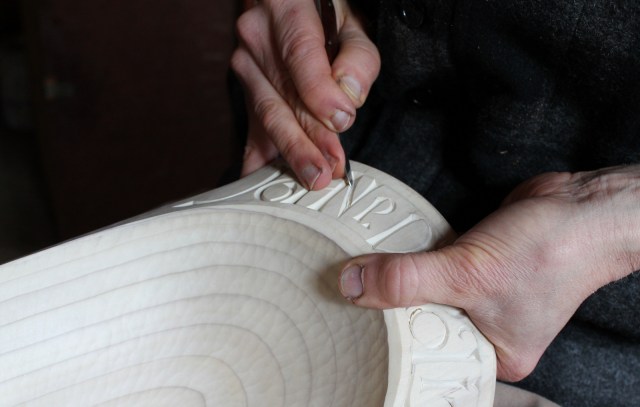
My specific tools and techniques vary depending on the hardness of the wood, size of the letters, and other variables.  For this tulip poplar, I hogged away much of the material with a larger knife.  My left hand would normally be involved as well for control.  I made refinements with the penknife blade.  Slow and steady.

IMG_5896

Phew.  Here is one handle finished…

IMG_5935

…and the other

IMG_5939-001

I’m always fascinated by how the appearance of v-incised lettering, and a bowl for that matter, changes with the angle of light and point of view:

This slideshow requires JavaScript.

Some oil and it’ll be all ready for action.

IMG_5985

17 1/4″ long,  8 1/2″ wide, and 5″ high

Posted in bowls, Lettering, nature, trees, Uncategorized | Tagged , , | 10 Comments

Gate Horse?

sam_39531.jpg

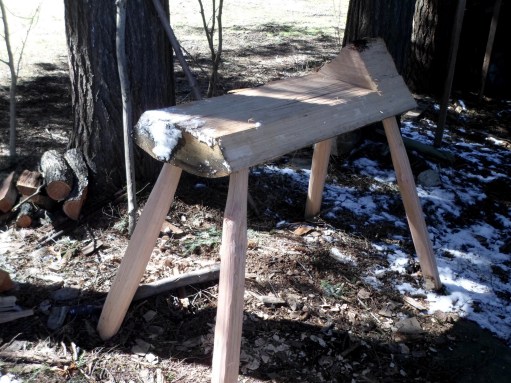
Last week I was splitting up a white oak log.  I used some of the pieces to throw together a low bench to be left outside.  I was ready to shave the ends of the legs down to two inch round tenons and stumbled onto this arrangement with the picket fence and gate that happened to be right beside where I was riving the oak.

SAM_3956

With the gate opened all the way, I set the oak piece on the rails, between the pickets.  Opening the gate changes the angles of the pickets relative to the stock, effectively gripping the wood.  The pulling motion of the drawknife only makes the grip tighter as it tends to pull on the gate.  Might come in handy out there on occasion.

SAM_3937

Backing up a bit, here’s the first split of the white oak log.  If you know just where to hit it, it will pop open like that with just one blow of a small axe.

SAM_3944

Not really, of course.  Wedges are needed in the early stages.

SAM_3948

Once the bolts are smaller, I can rive off some of the more gnarly stuff near the pith.

SAM_3951

I continued to split some nice straight-grained bolts into thinner boards.  I have a project lined up for one of these boards, so we’ll be seeing it again someday.

SAM_3966

Here are the four legs, tenons shaved.  I just roughly cleaned up the rest of the riven length.

SAM_3959

These legs aren’t going all the way through, so no tapered mortises.  I just eyeballed the angles and bored four 2″ holes into the body of the bench.

SAM_3968

I drove the legs in and popped it upright.  The body of the bench is simply a quarter section of the log with a portion of the center split away to create a rough flat.  Sometime, I’ll flatten the top a little more and bore some holes for holdfasts and pegs.  The triangle on the end will have its peak knocked off, leaving a raised lip.  I’ll cut off the legs to lower the bench and get it all sitting level.

Won’t be long until I’m carving bowls under the hemlock trees.


Posted in green woodworking, holding, tools, Uncategorized | Tagged , , | 11 Comments

Spring Snow and Wood Storage

SAM_3933

A book that I return to often is The Heart of Thoreau’s Journals edited by Odell Shepard.  One interesting aspect is comparing Thoreau’s notes for a particular time of year to my own observances; his March to my March.

Thoreau writes often about birds and bird-song; geese, thrushes, tanagers, and nighthawks all within a few pages.  In spite of our wintry March this year, the birds still sing the hope of spring.  A couple weeks ago, I heard the message from a chorus of red-winged blackbirds that had returned to the tall grasses at the edge of a pond along my walk.  Flocks of puffed-up robins and cedar waxwings were gulping down the remnants of berries on our backyard trees.

With snow covering our ground now, the peepers have remained quiet, but Thoreau wrote about hearing a tree frog on March 21, 1853:

“Ah! then, as I was rising this crowning road, just beyond the old lime-kiln, there leaked into my open ear the faint peep of a hyla from some far pool.  One little hyla somewhere in the fens….If the hyla has revived again, may not I?”

A week later, on March 28, Thoreau makes a funny reference to his frog-listening:

Grey Tree Frog, Hyla versicolor
(Credit: Mark Roth, USGS UMESC. Public domain.)

“My Aunt Maria asked me to read the life of Dr. Chalmers, which however, I did not promise to do.  Yesterday, Sunday, she was heard through the partition shouting to my Aunt Jane, who is deaf, “Think of it!  He stood half an hour today to hear the frogs croak, and he wouldn’t read the life of Chalmers.”

Spring also means an end to easy wood storage for me, as winter’s gift of a free extra large freezer comes to an end.  The question of how to keep greenwood green has many answers.  Here are my thoughts.

The obvious solution is to just carve it rather than store it.  Of course, that is easier said than done, but one strategy is to rough out several pieces rather than finishing one before moving on to the next.  That allows you to move through the wood supply, while leaving the after-drying stages for later.

To store green wood it is simply a matter of retaining the moisture.  The bark does a good job of this if it’s intact, and I paint the ends of the log with a couple coats of latex paint.  Alternatively, and for pieces that are already split, I put them in a garbage bag and seal it tight.

For species that are light-colored and/or are not decay resistant, the moisture combined with warm temperatures can lead to staining and relatively rapid decay.  So, if I need to store such wood longer term, I reduce the bulk as much as possible first.  I split the rounds in half and have a good look.  No need to store the rejected pieces, other than in the firewood stack.  Then I reduce unnecessary bulk from the good pieces, bag them, and beg for some space in the freezer or fridge.  This is much more realistic for spoon blanks than bowl blanks.  Pull out pieces as needed to carve.

You can get more creative with underwater storage and that sort of thing.  Whatever works for you.

These early spring snows set off the hemlock trees as well as my rejected cherry bowl that I converted into a duplex birdhouse.  Still waiting for tenants; it was worth a shot!

IMG_1998
This was last summer.  I think the heat got to me.

A pile of spoons that didn’t work out will thaw out soon and be ready to fuel some marshmallow roasting.

SAM_3900

And I finished a bowl today that I’ll post about soon…

Posted in drying, finding wood, green woodworking, nature, quotes and excerpts, Uncategorized | Tagged , | 14 Comments

Bookplates: Ex Libris

IMG_5702Digital media has it’s place, but there’s just something about a book.  Much of that something is a book’s appeal to our senses: the smell of a book, the heft of a book, the feel of the paper against the fingertips and the soft swishing sound of turning the page.  A book is more than the ideas or the story inside.
When I pick up and open a book that we read to our kids, a flood of warm memories rushes out of it.  When I take down a woodworking book from the high shelf in my shop and notice the bits of wood shavings lodged inside and my notes written in the margins, it’s a reminder of an exciting journey.

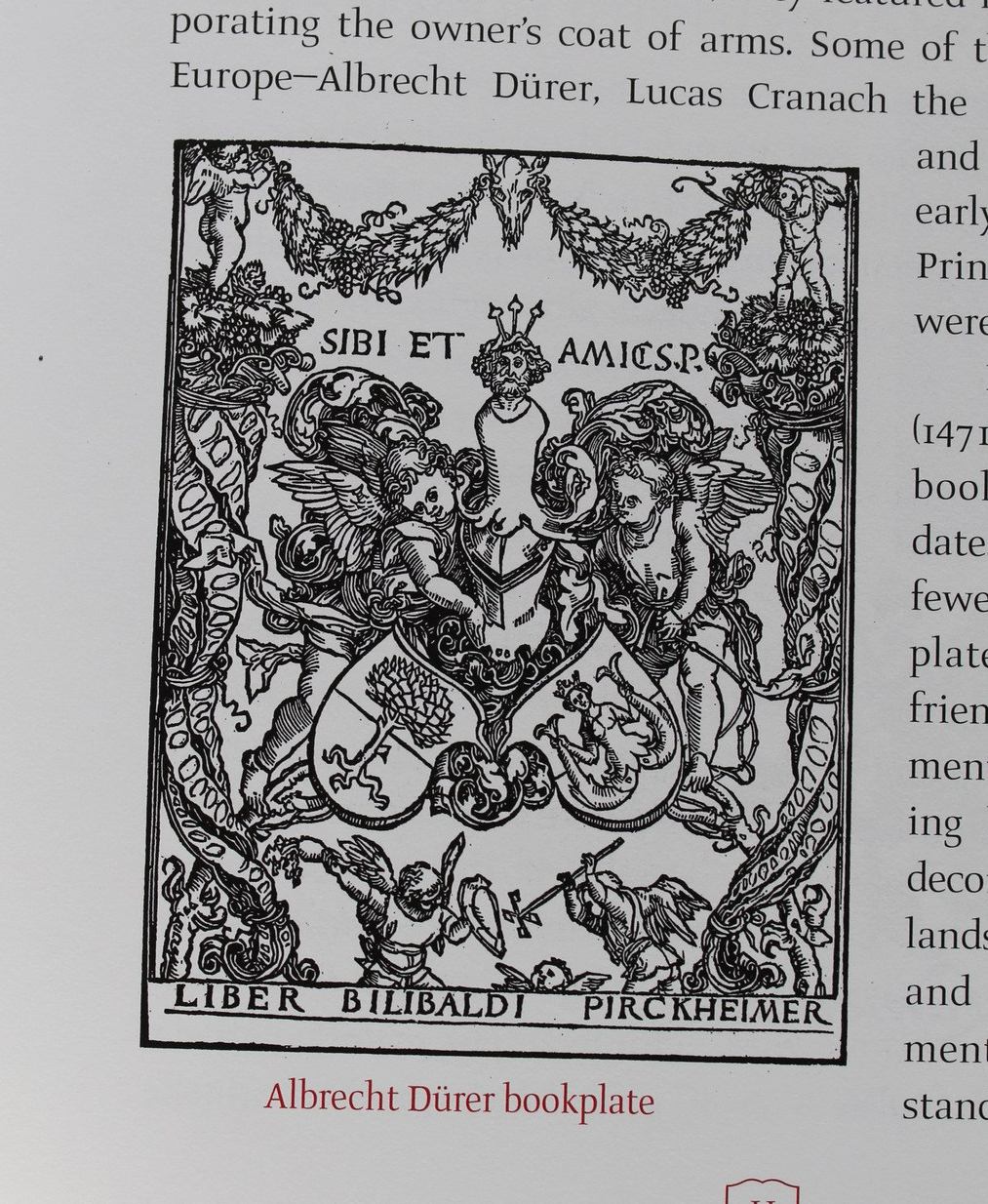
People have felt this way about books for a long time.  Beginning in the fifteenth century, book owners began commissioning bookplates to be pasted inside the covers of their treasures.  These early bookplates were most often coats of arms and highly decorative.  Albrecht Dürer created at least twenty bookplate designs.

IMG_5693

Bookplate by Albrecht Dürer from the The Art of the Bookplate by James P. Keenan

By the mid nineteenth century, books had become widely available to the middle classes and many began commissioning bookplates that reflected their lives, character, and/or passions.  This interest continued into the twentieth century, and artists such as Eric Gill and Rockwell Kent designed many bookplates.  Ex libris is Latin for “from the books of” or “from the library of.”

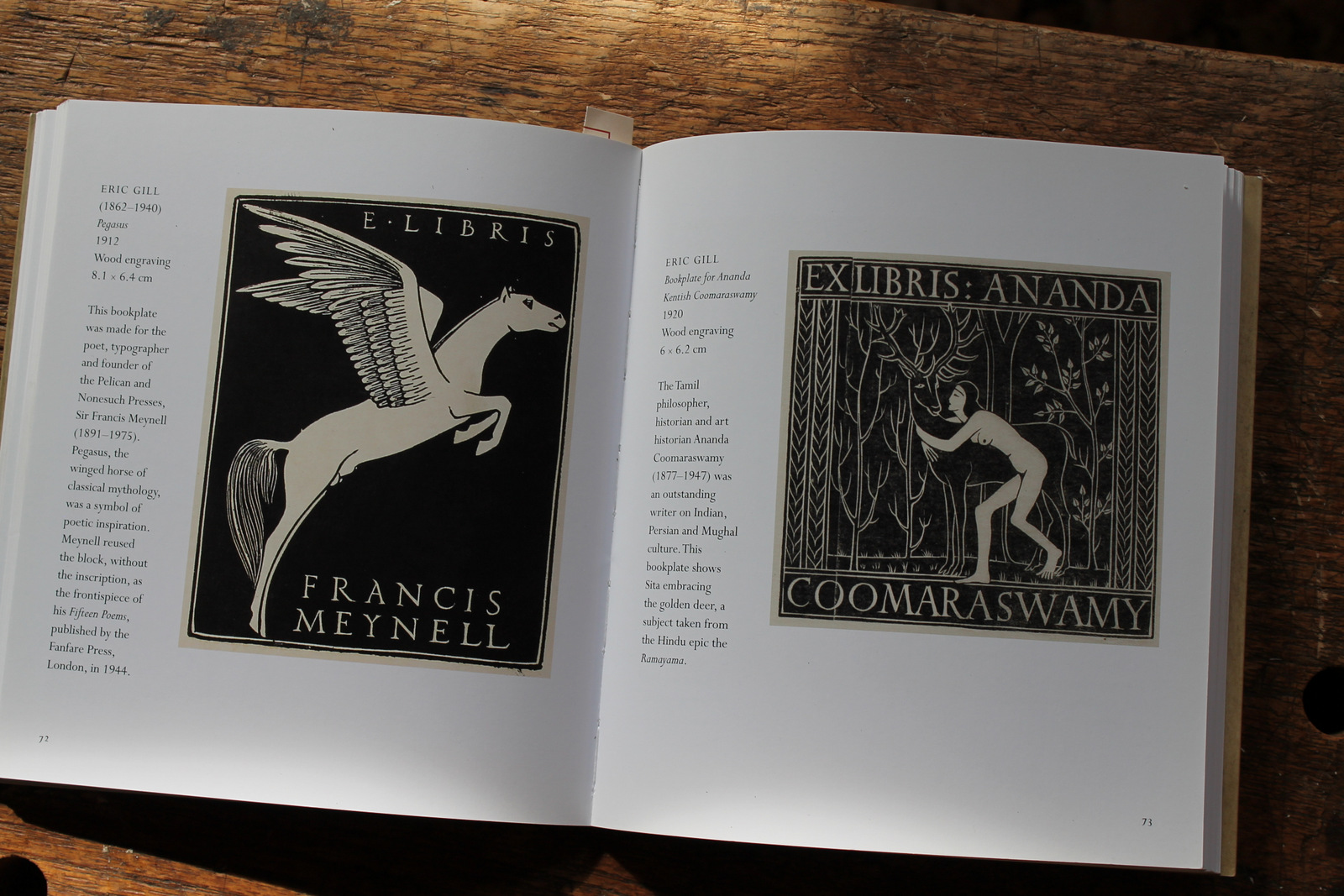
IMG_5692

Bookplates by Eric Gill from Ex Libris: The Art of Bookplates by Martin Hopkinson.

In addition to custom designs for individuals, book lovers could select one of the many general designs, often with a space for the owner’s signature.

IMG_5688

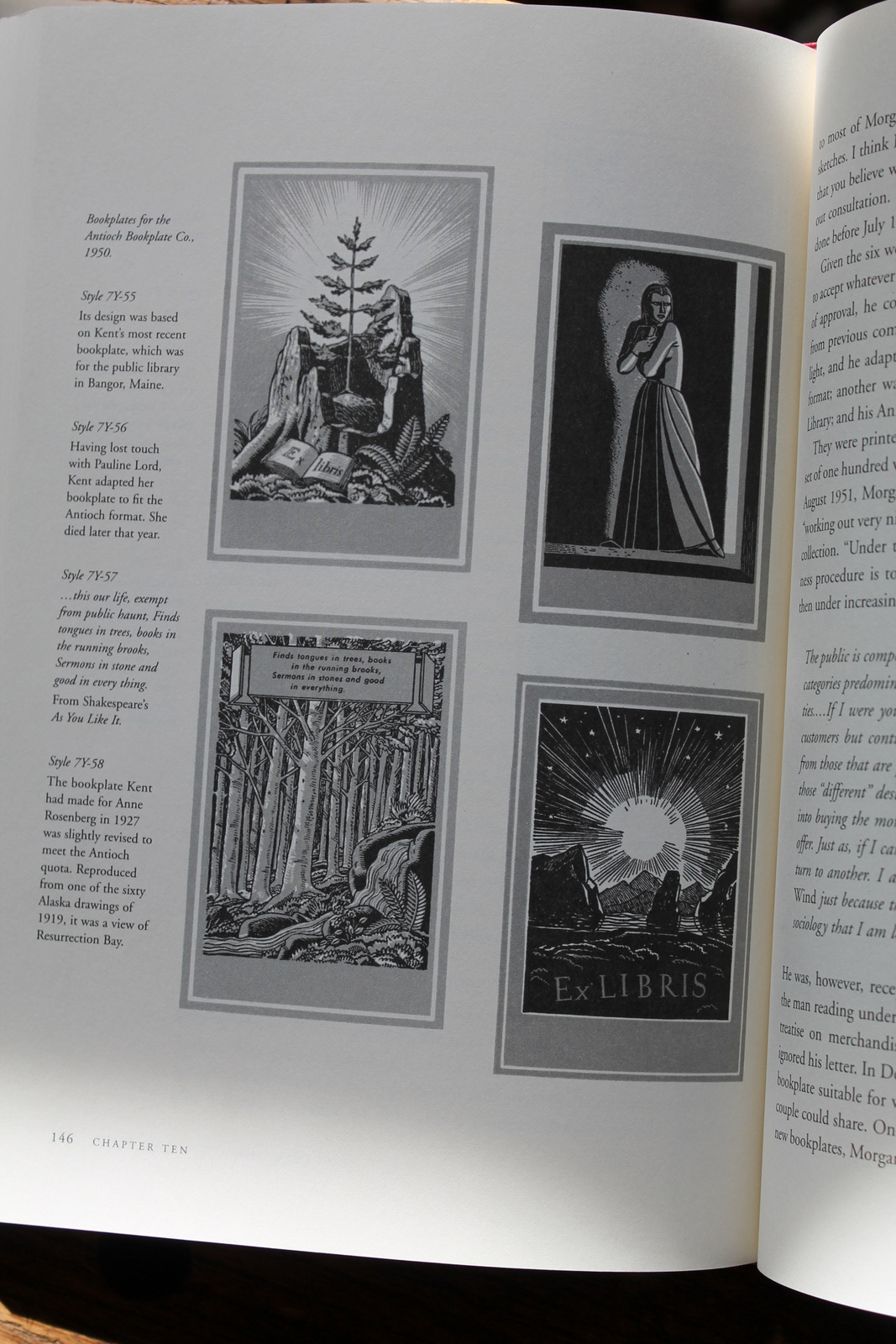
Bookplates by Rockwell Kent from Rockwell Kent: The Art of the Bookplate by Don Roberts.

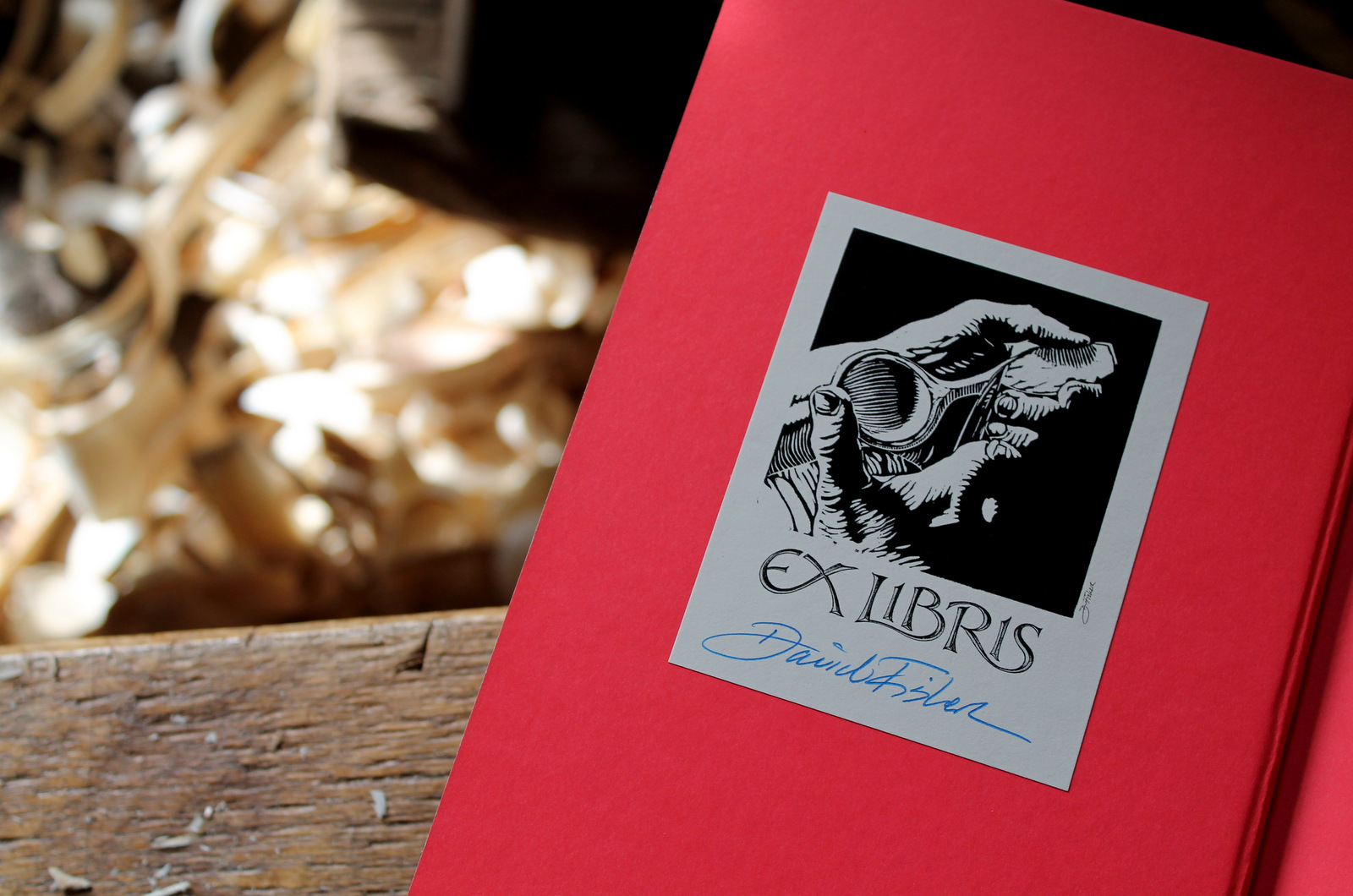
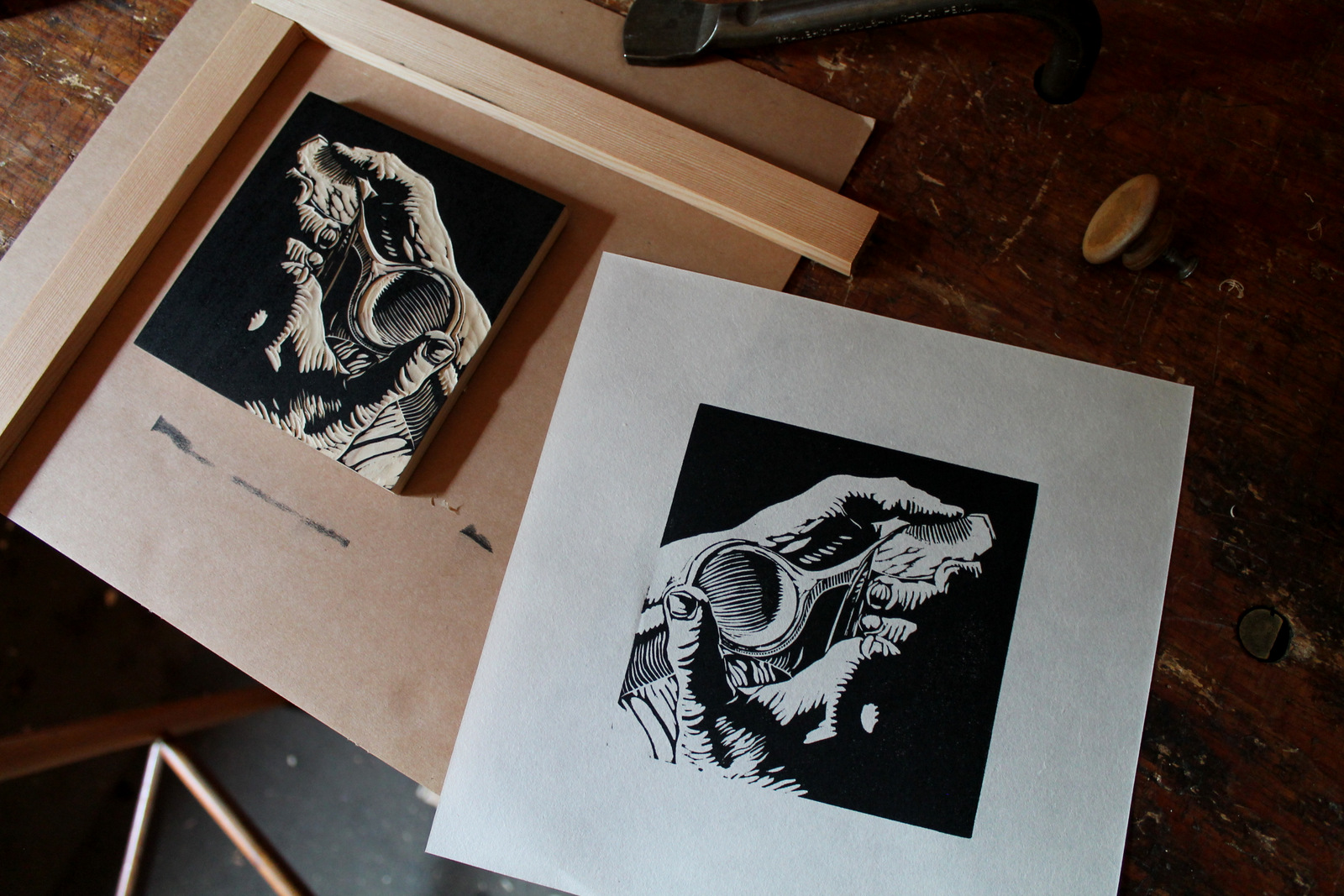
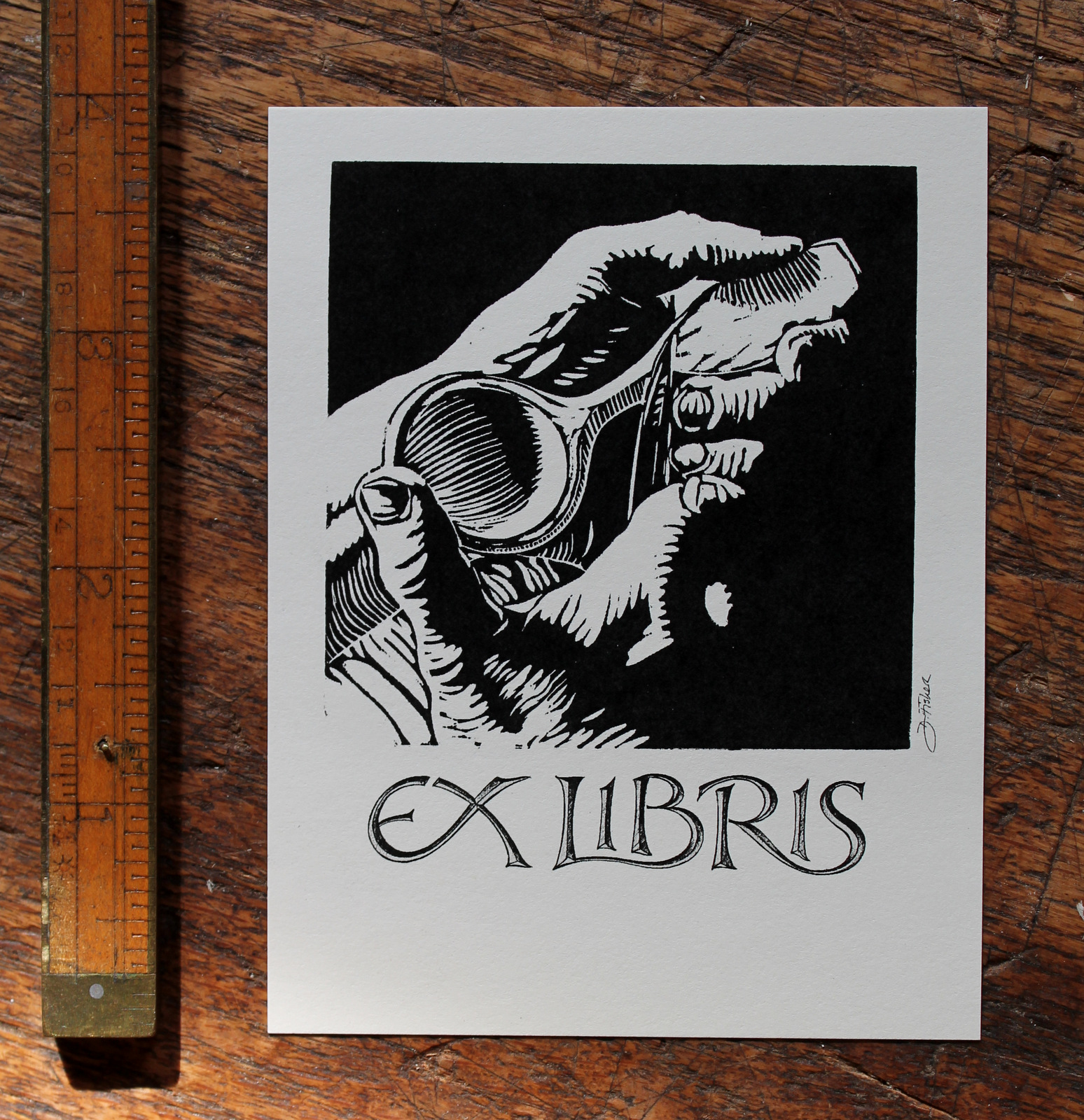
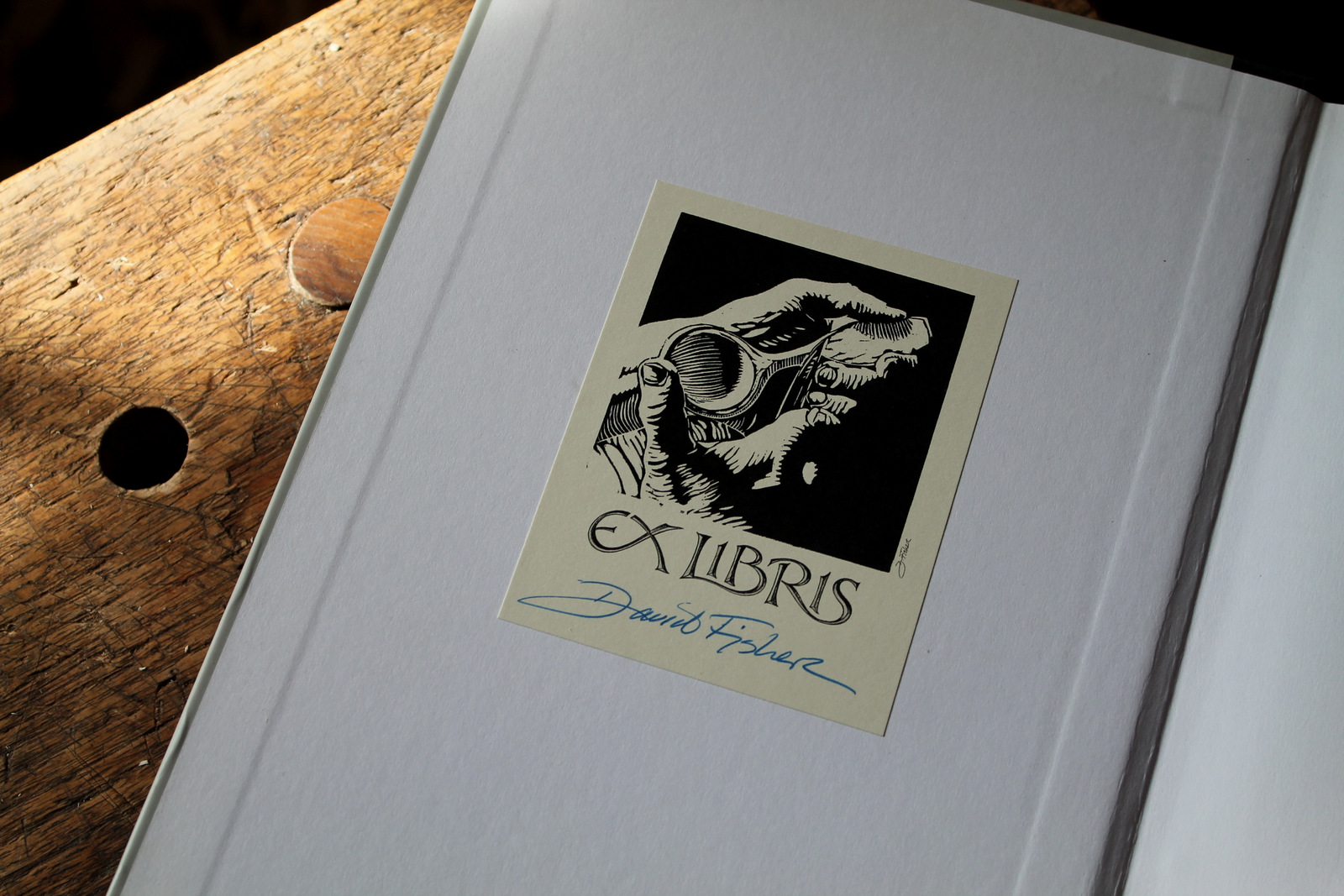
Inspired by the tradition, I designed a bookplate for those of us who have a love of greenwood carving.  The heart of the design is the woodcut that I did last year and wrote about in this post.  All of the prints in that limited edition are gone, but now I have the bookplates.

IMG_2366

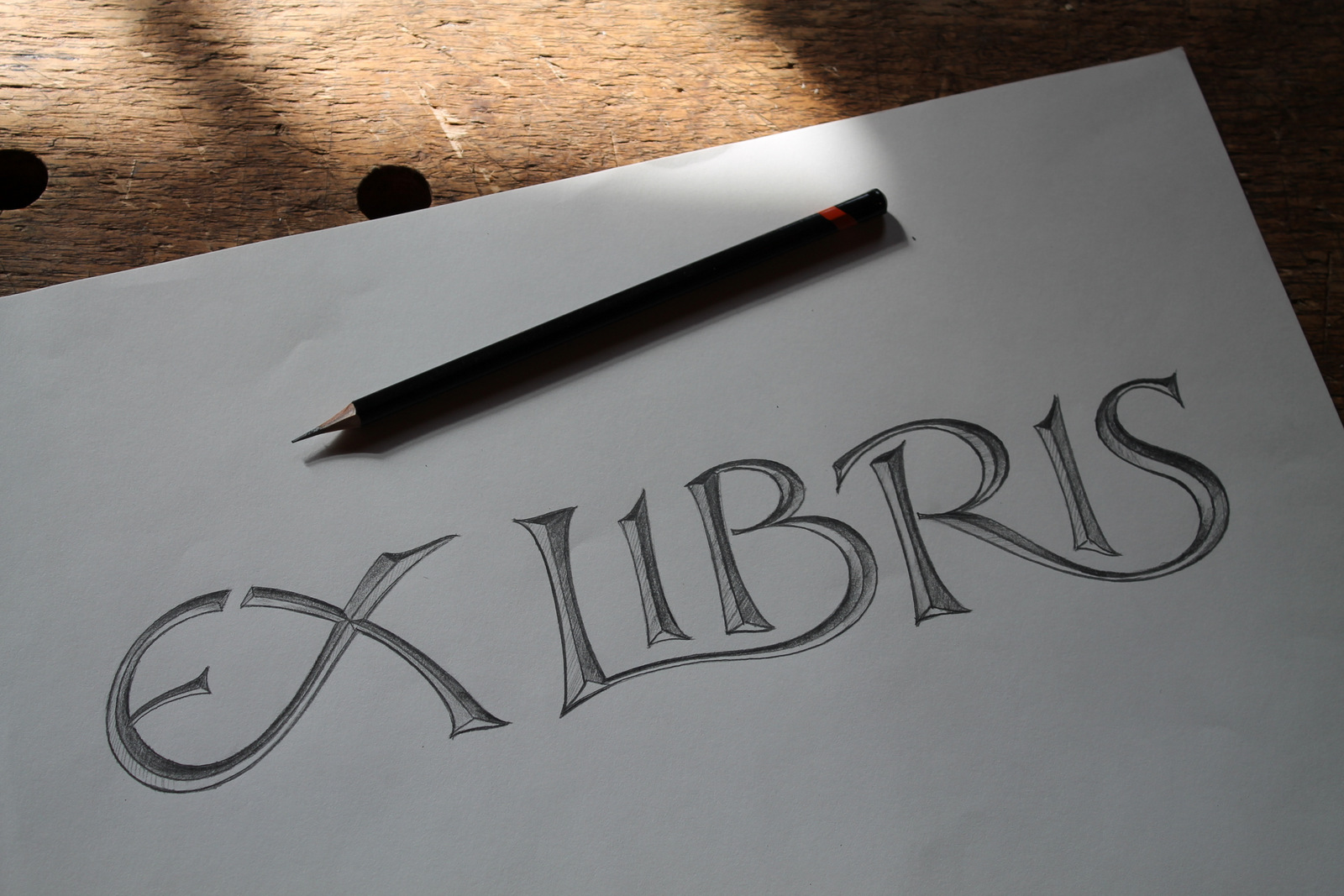
I found a really nice self-adhesive paper made in Ohio in a natural cream color.  The paper, the adhesive, and the ink are all acid-free.  To go along with the image, I drew ex libris in the style of incised carved lettering.

IMG_5683

I took the special paper, the print, and the lettering drawing to the independently-owned print shop about 1/2 mile down the road.  Their printing expert, Ben, and I sorted out all of the details, and now I have the bookplates, ready to mail.  They are 4″ x 3″.  If you don’t want to use it for a bookplate, just snip off the ex libris part.

IMG_5700

If you’d like to purchase some, here’s how to go about it.   I want to keep the logistics on this as simple as possible, for my wife, Kristin, especially, since she’ll be handling a lot of this.

  • Bookplates are $1 each.  Minimum order 10, but beyond that you can request as many as you wish, no particular increments.
  • Pop an envelope in the mail with a check or cash.  If you send a check for $17, we’ll send you 17 bookplates.  No need for order forms or invoices.  Just make sure you include your address on the outside or within the envelope.  No need to send a return envelope; you’ll receive your bookplates in a clear protective sleeve inside a padded envelope.  Shipping is free.
  • My address is: Dave Fisher, 395 S Main St, Greenville, PA 16125
  • We will take international orders, but that involves extra fiddling and fees; add $5 per order.  For international requests, we’ll use Paypal for payment.  Email me with how many bookplates you’d like and your address, and we’ll go from there.

IMG_5670


Posted in books, Lettering, sketch, Uncategorized, woodblock prints | Tagged , , , , , | 8 Comments

Walnut Necklace

img_5660.jpg

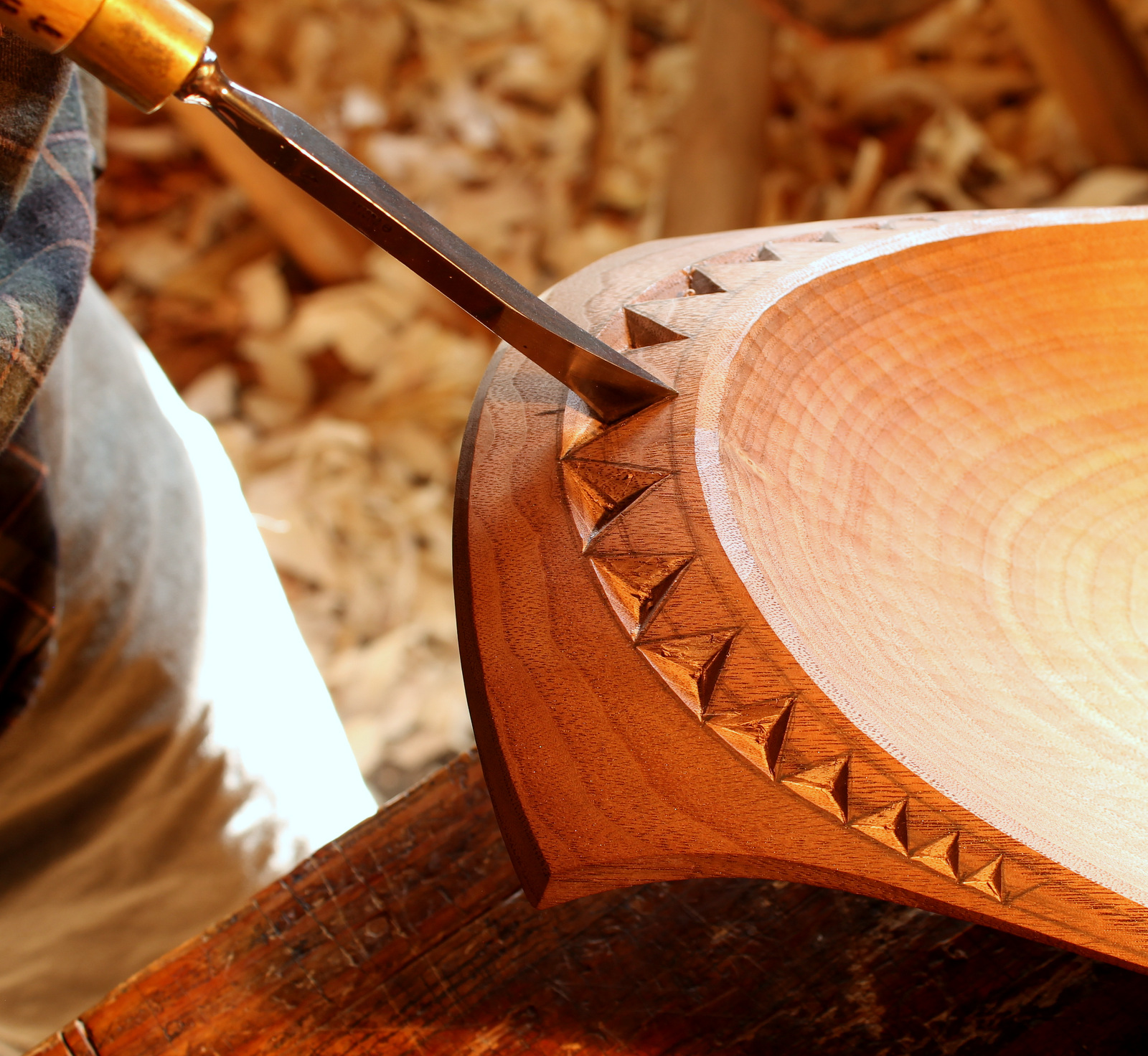
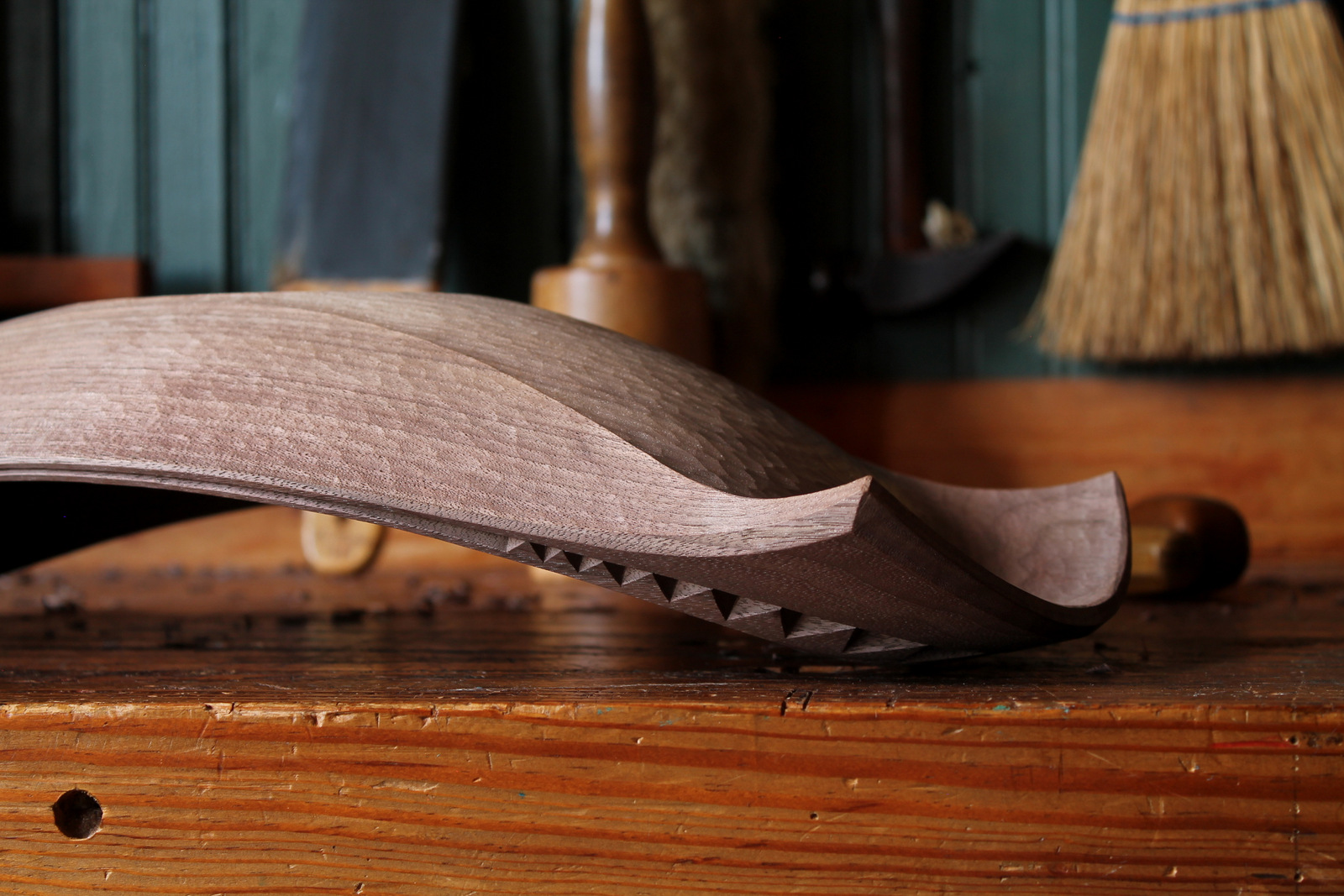
I just finished the carving on this walnut bowl.  I snapped a few photos while carving the “necklace” around the rim.  But first, a point about gouges:

IMG_5605

One gouge can be pretty versatile, depending on how you use it.  You can vary textures by changing the length or width of cuts.  This gouge is 30mm wide with about a #6 sweep.  But this relatively subtle texture was created with it by only using a small portion of the edge with each cut.  Another way to think about it is to remember that in the standard system, gouge sweep is relative to the width of the gouge, so, for example, using a small portion of a #8 25 mm gouge will result in the same cuts as a #3 8mm gouge; they are based on the same radius of curvature and will inscribe approximately the same circle.

This series of photos follows the necklace carving, but this time rather than arched side walls, the side walls are straight.

IMG_5629

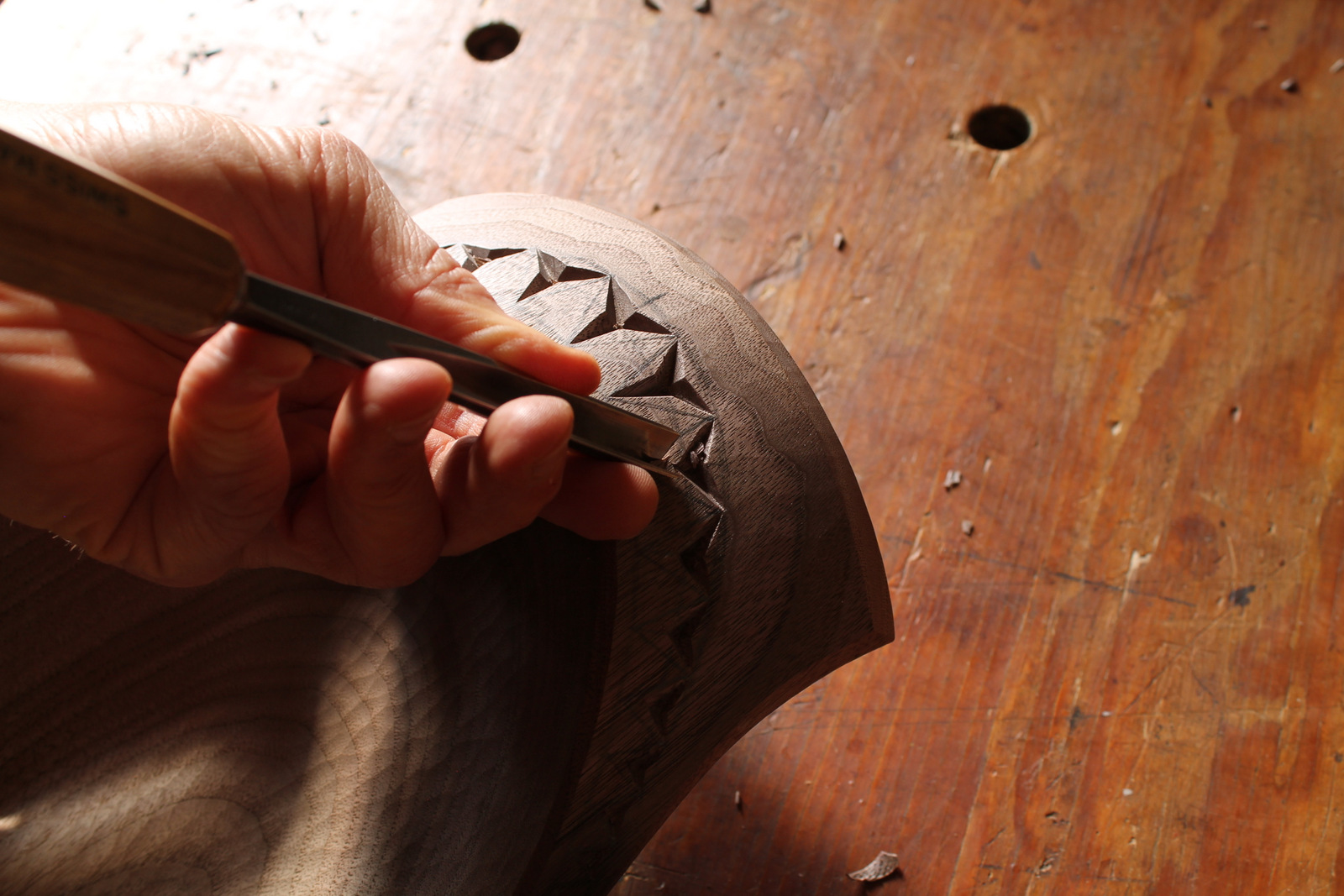
After layout, I get some material out of the way by coming in to the center from each corner with a v-tool.

IMG_5630

Then I continue to use the v-tool, tipping it over to remove more excess closer to the edges.

IMG_5631

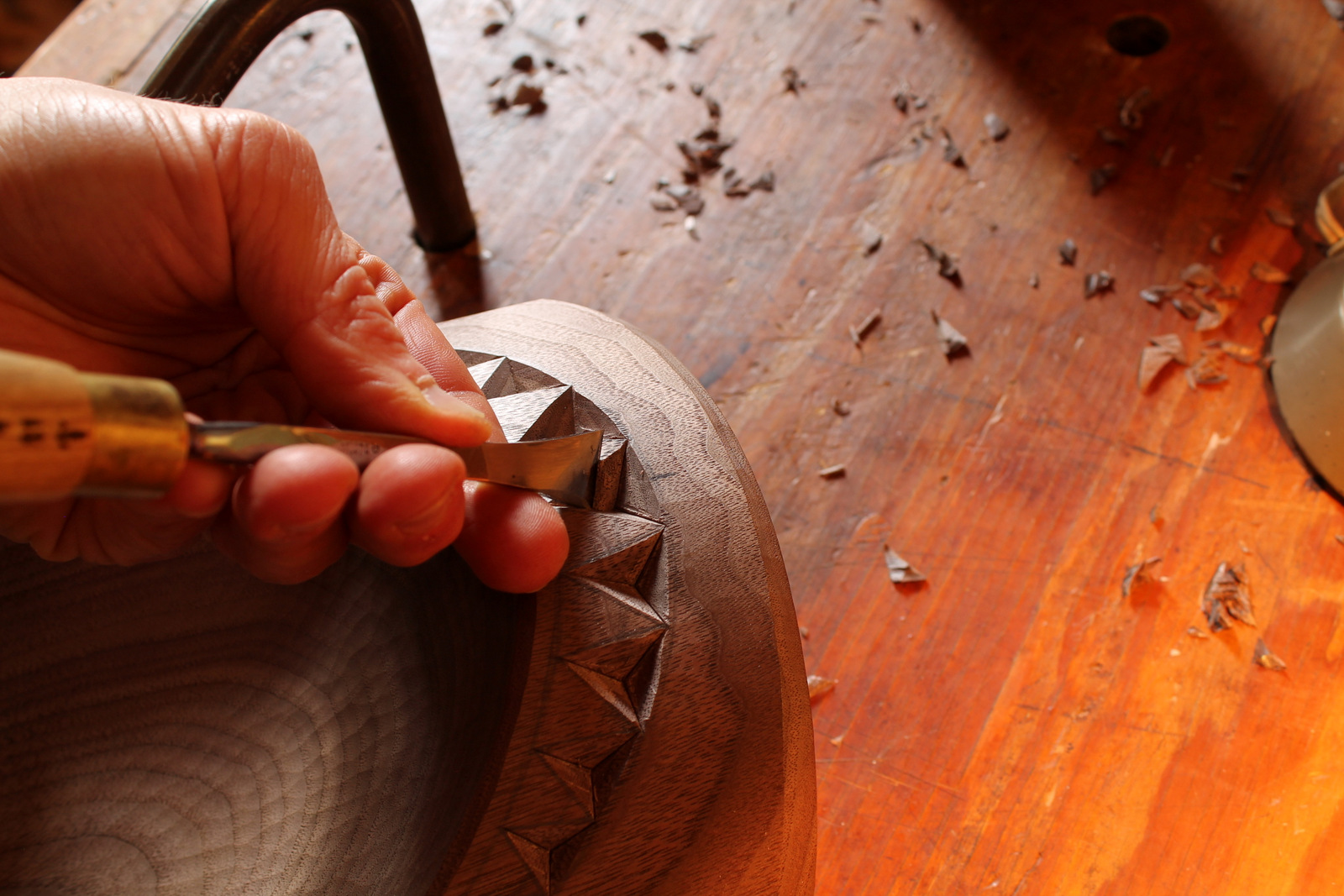
I stab into each junction with a skew chisel.

IMG_5635

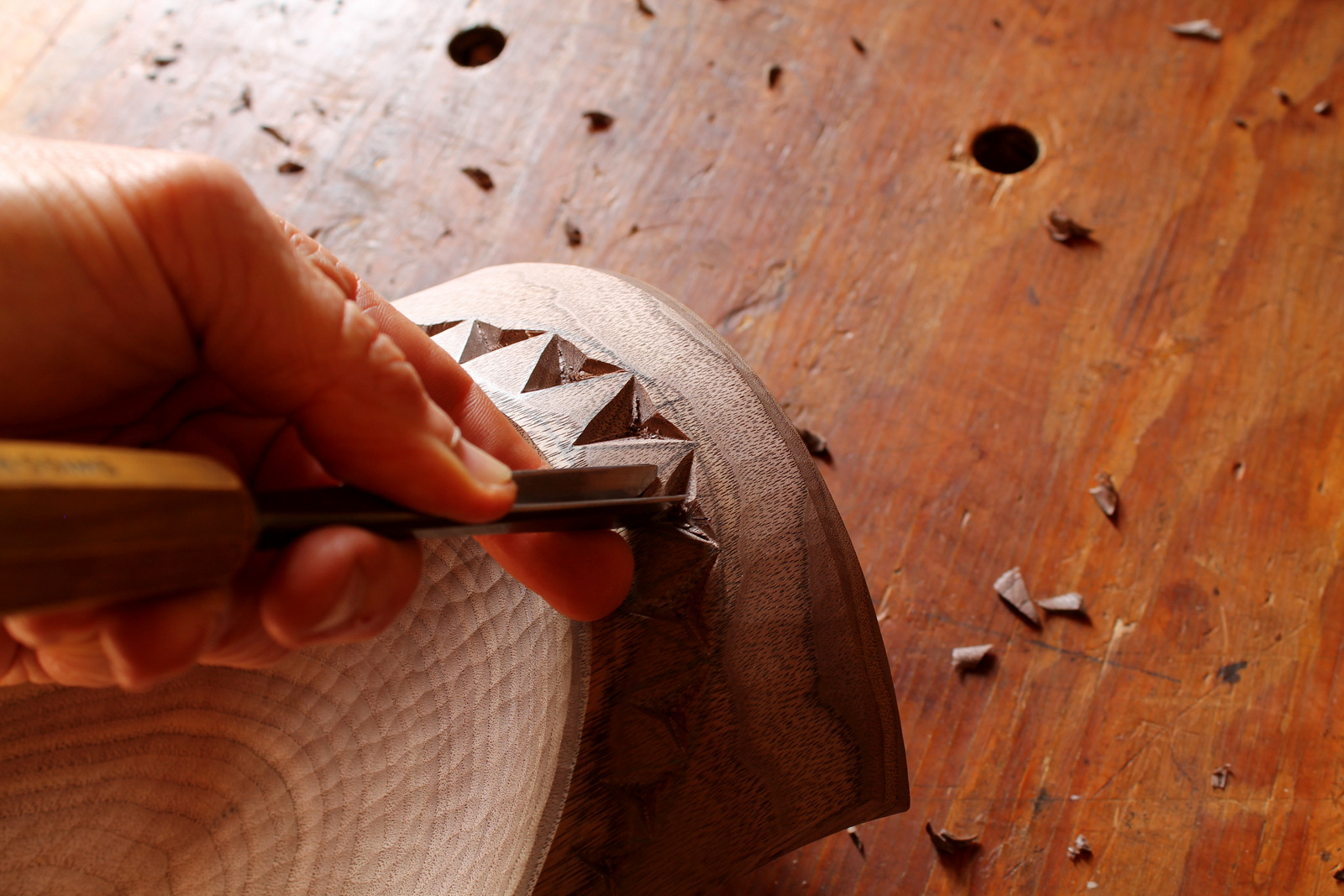
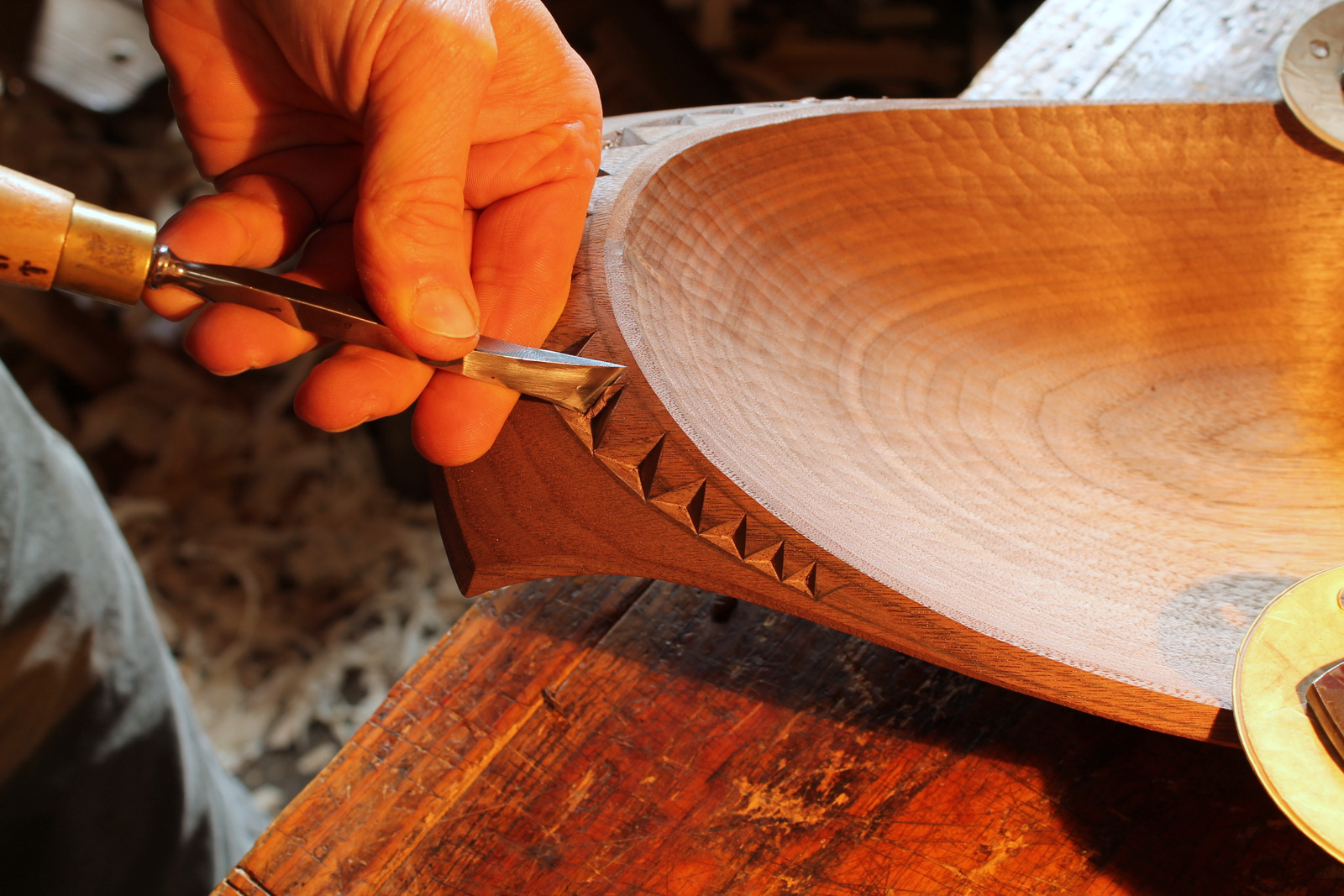
Working on the side walls first, I pare with the skew chisel.

IMG_5636

Once I get further around the rim, I need to switch directions to work with the grain for clean cutting.


The end walls are sliced in a continuous movement that follows the curvature of the outer sweep of the necklace.

IMG_5652-001

Tidy up the junctions as necessary.  Take your time.  The outer wall of the chips should appear to be continuous.

IMG_5664

Ready for oil.


Posted in carving, patterns, Uncategorized, walnut | Tagged , | 25 Comments

“When I am Among the Trees”

SAM_3915

Around me the trees stir in their leaves

and call out, “Stay awhile.”

The light flows from their branches.

Mary Oliver, from the poem “When I am Among the Trees”

SAM_3913

Posted in nature, quotes and excerpts, trees, Uncategorized | Tagged | 8 Comments