Walnut Tray and Autumn Leaves

This black walnut tray started out as an experiment in rehydrating kiln dried wood. One of the carvers in my October class asked me if I had ever tried soaking a block of kiln dried wood to bring it back to a green moisture content. I hadn’t.
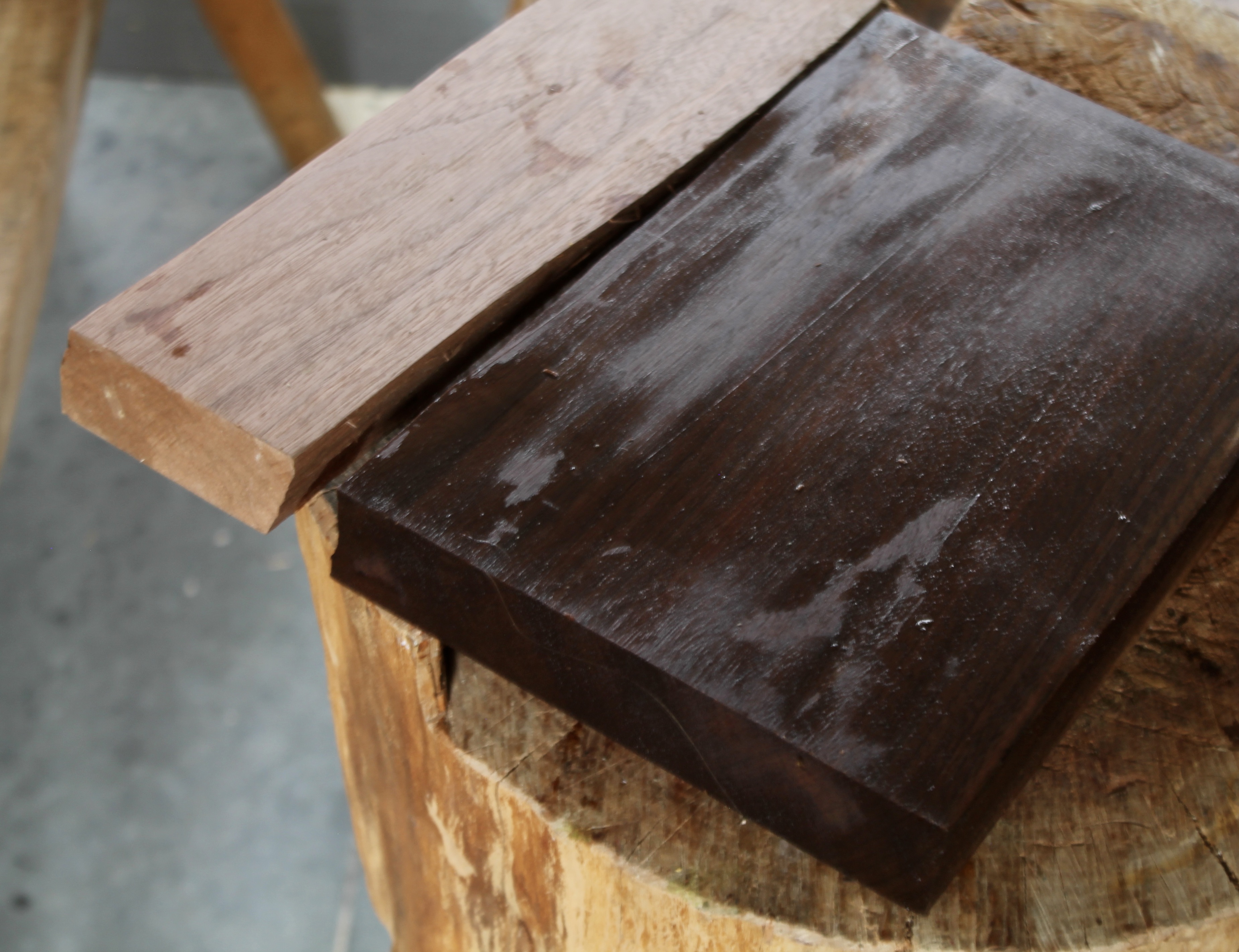
So, after I returned home, I took a piece of kiln-dried black walnut, 12″ x 8″ x 1 1/2″ and submerged it in a bucket of water for over three days. A rock held it under the surface the entire time. That’s it on the right above, with an unsealed piece of the same board to the left.

It didn’t work. Even after three days, the water saturated the wood only about 1/2″ deep into the end grain and maybe 1/8″ deep on the face grain. Beyond that, it was like carving, well, kiln-dried walnut. The good news is that steel is harder than kiln-dried walnut, so I went ahead and carved the tray. I was curious if the water soaking would lead to any cracks as the moisture dried from the end grain. No problems. Maybe a few weeks in the water would have soaked the wood to the core? I’m not sure. Maybe some other time.

Meanwhile, the tray worked out well. It’s 11 3/4″ long x 7″ wide x 1 3/8″ high. One potential use is for holding stationery. A5 size fits nicely with a little extra room for a pen or pencil. Of course, there are lots of other possibilities.
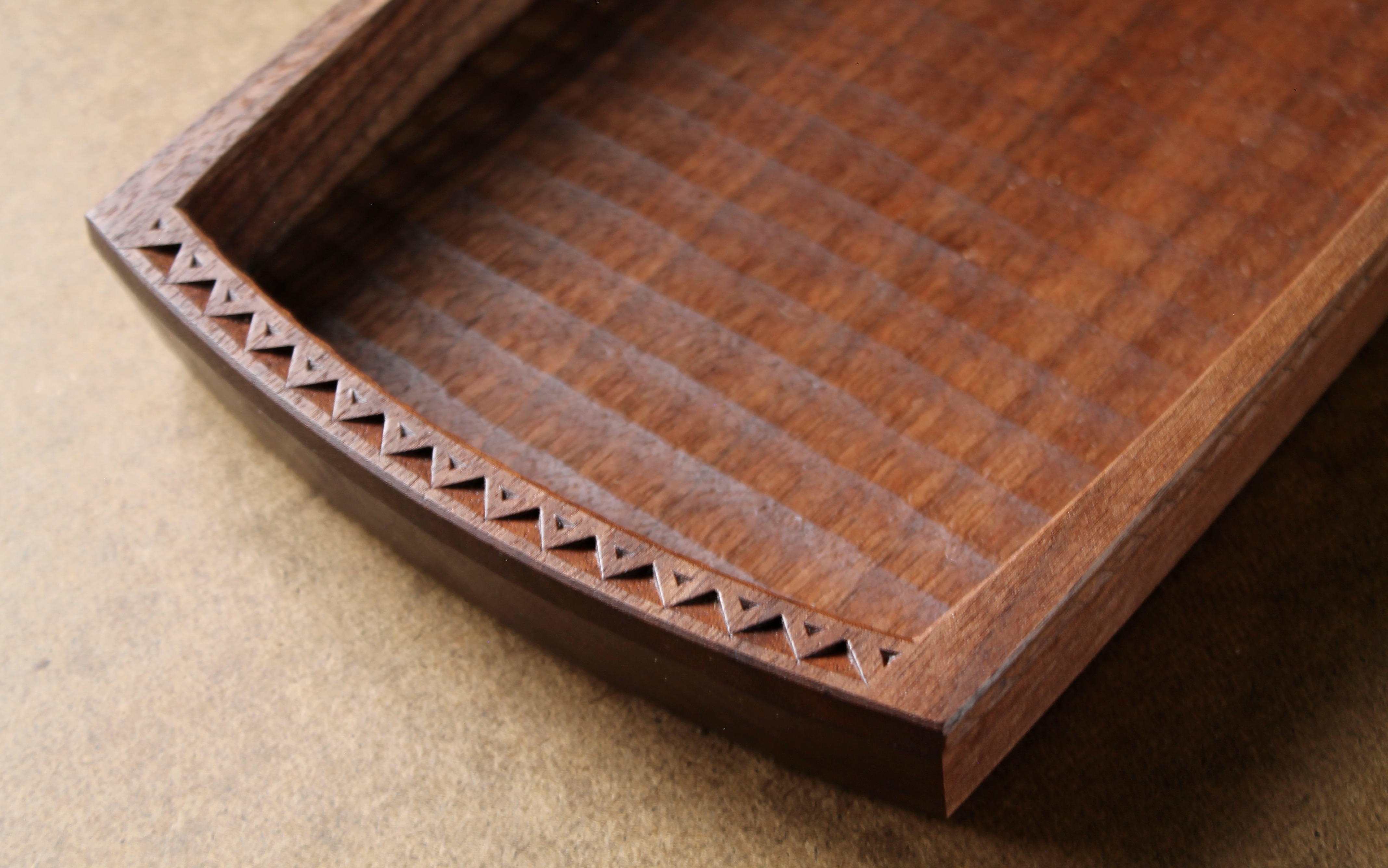
I did some chip carving on the ends and just below the rim on the sides.

There’s the plan view. Another project from a plank, and this one can be made from a 6/4 plank. Maybe you’ve got a chunk of 2×8 laying around? The layout was done with a compass and drawing bow, the same techniques used for the Bowl-from-a-Plank.

When I flipped it over to carve my mark and year on the bottom, an idea struck me. The windows over my workbench treat me to a view of trees. There’s quite a variety in a short space at the back edge of the yard: maple, tupelo, red oak, tulip poplar, hickory, black cherry, beech… I sketched, carved, and painted a representation of their varied fall colors on the bottom.

The paint is milk paint. Mixes from sample packets from RMP. I cut pads from veg tan leather to protect the tabletop and the trees. Finish is a blend of pure linseed oil and beeswax.

This one is available for purchase. $675 includes shipping. If you’re interested, email me at dandkfish@gmail.com. Thank you. SOLD

Every autumn, I’m reminded of Peanuts comic strips. The falling leaves theme is one that Charles Schulz returned to many times. Here’s one of my favorites:

A last shot, outside. Only the oaks and beeches are holding onto their leaves now.

Posted in bowls, nature, trees, Uncategorized, walnut | Tagged , , , , | 16 Comments

Three Shrink Pots

I’ve finished three shrink pots that are available for purchase. I’ll provide some details about each of them below. If you’re interested, please email me at dandkfish@gmail.com. Prices include shipping. Thanks.

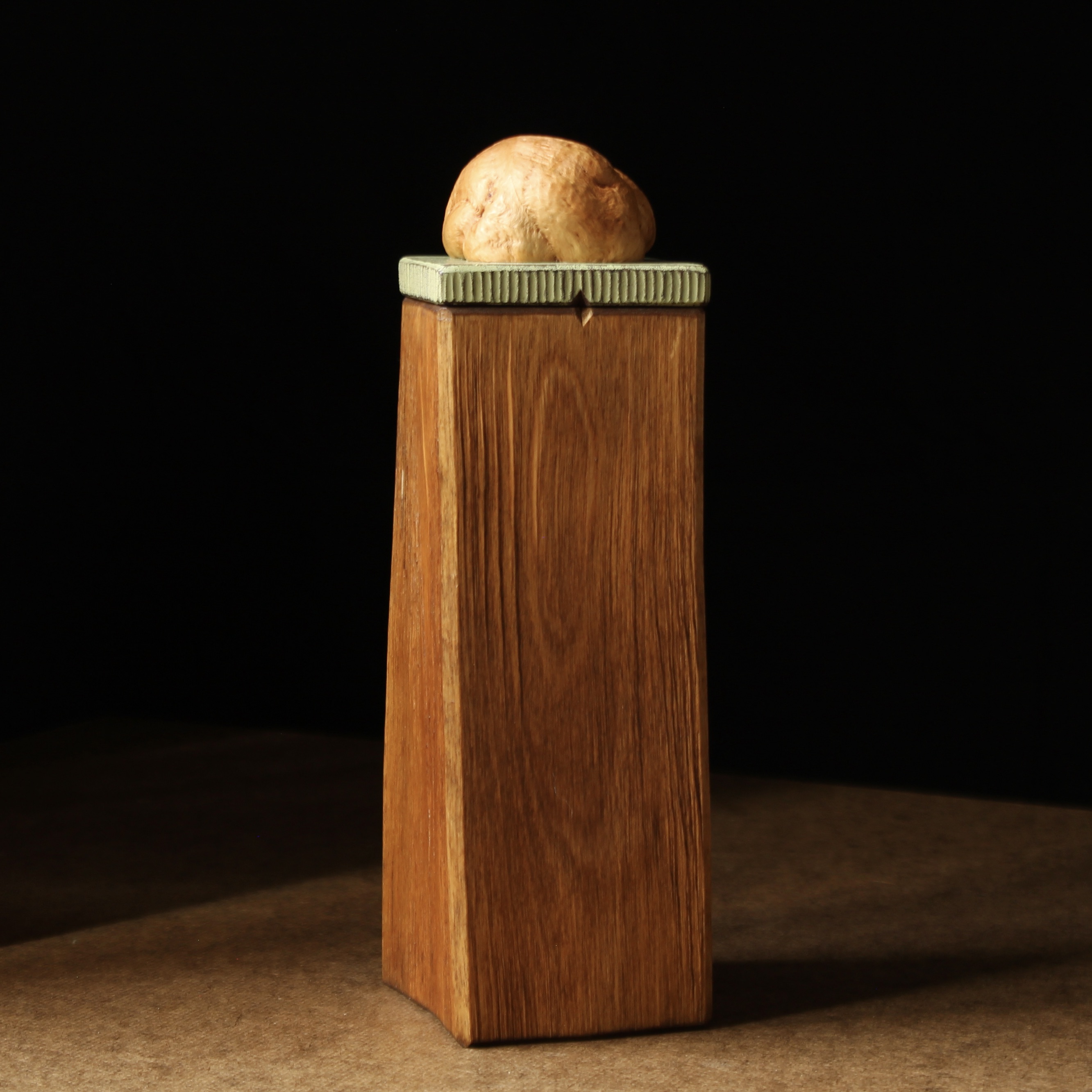
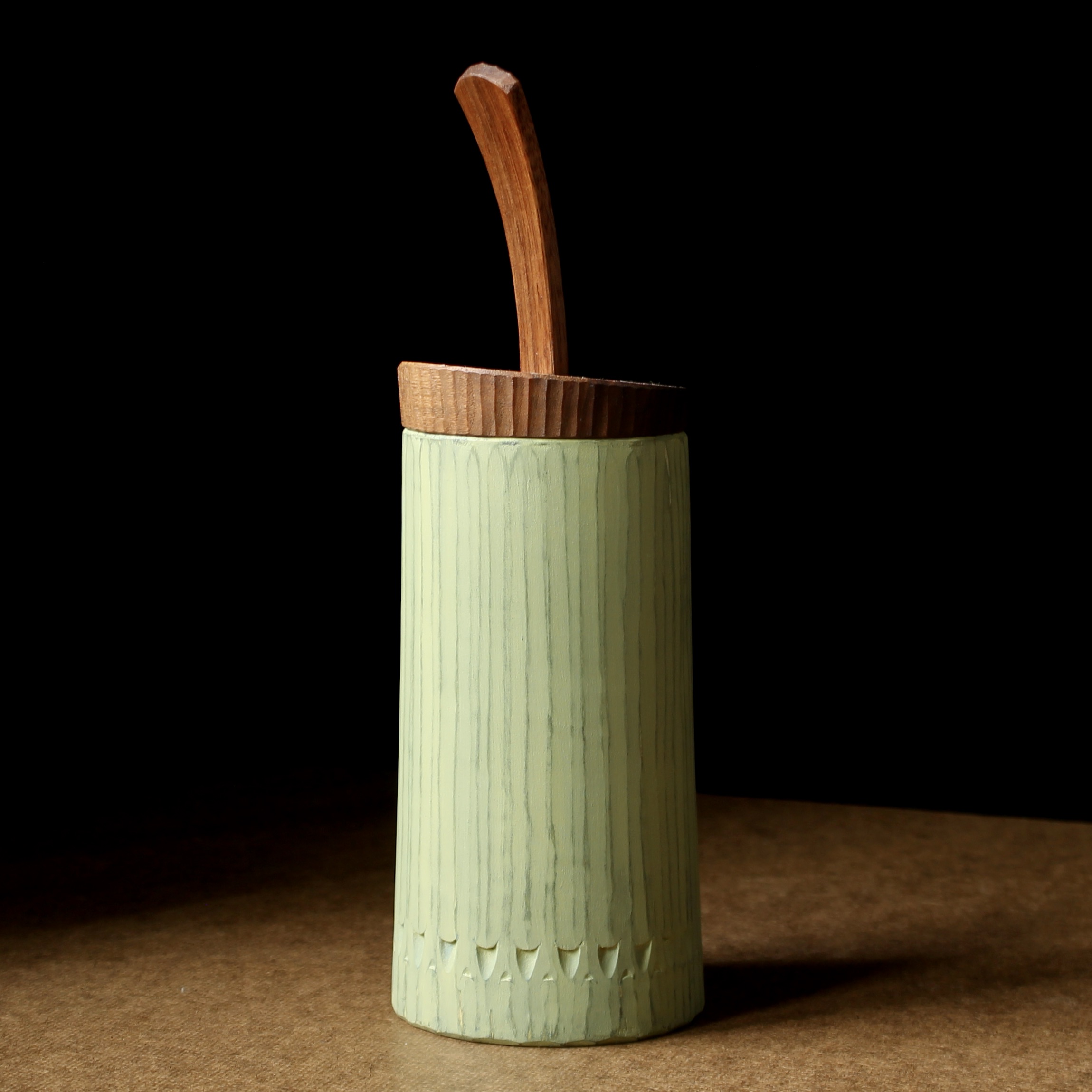
I’ll start with the pot on the left, Riven Twist, It’s related to my most recent post in which I mentioned making a stain from black walnut husks. I made the body from a maple tree that fell just across the road from us. I formed the outside with four strikes of the fro and left the natural split surface, along with the twist in the tree revealed by the splits.

I stained the bright white maple wood with two applications of the walnut husk stain. More applications would have darkened it more. After the lid was finished, I went over everything with a linseed/beeswax blend.

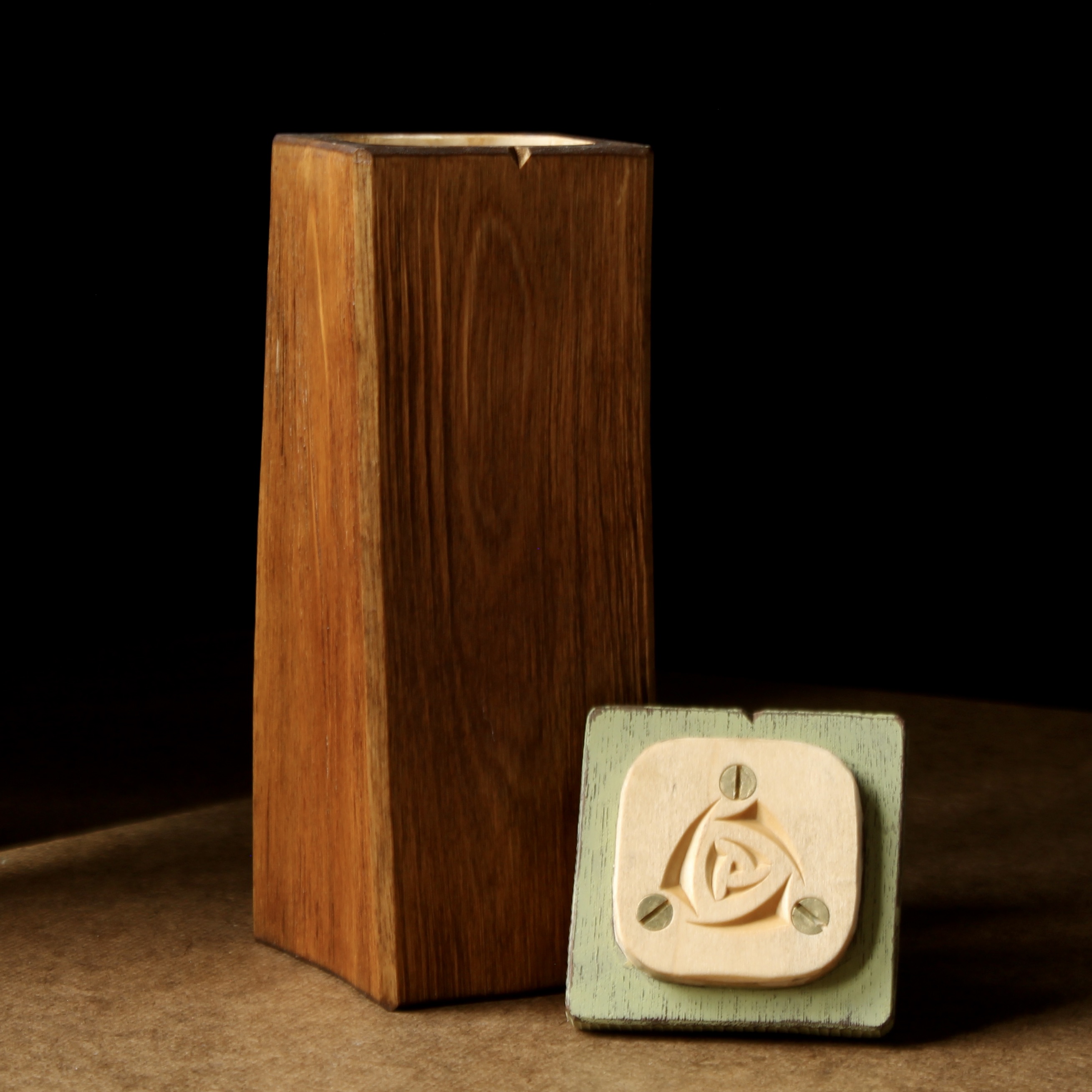
The lid is made from black walnut wood with “granny smith” milk paint. The “finial” is a burl I set aside years ago from a maple or birch log. I pealed the fresh bark from the outside back then and left the surface under the bark to oxidize. This finally seemed like an appropriate spot for it.

The rabbet under the lid is formed by a basswood board with a little chip carving. Three brass screws secure the burl to the lid from below. 9 1/4″ x 3″. $400 includes shipping. SOLD

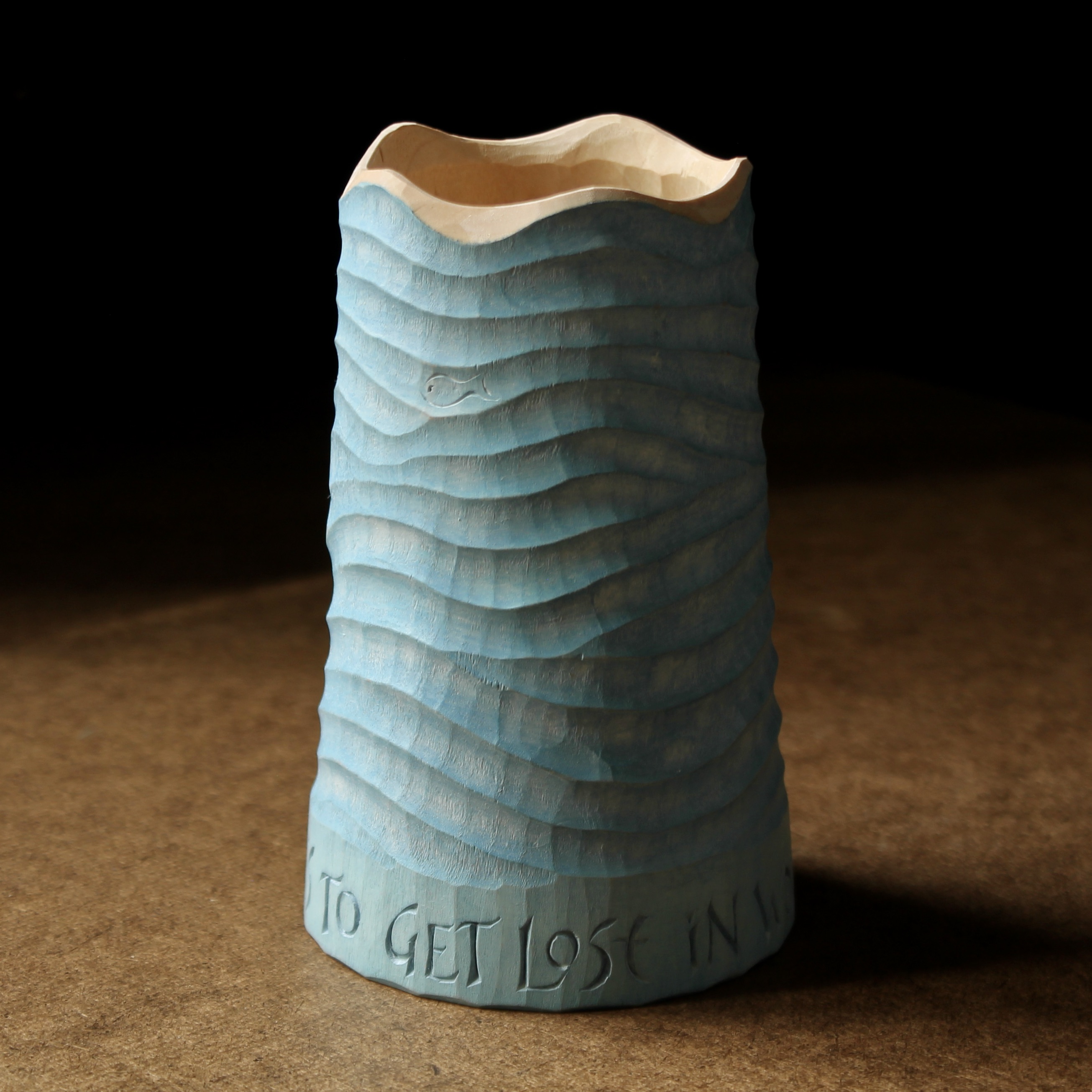
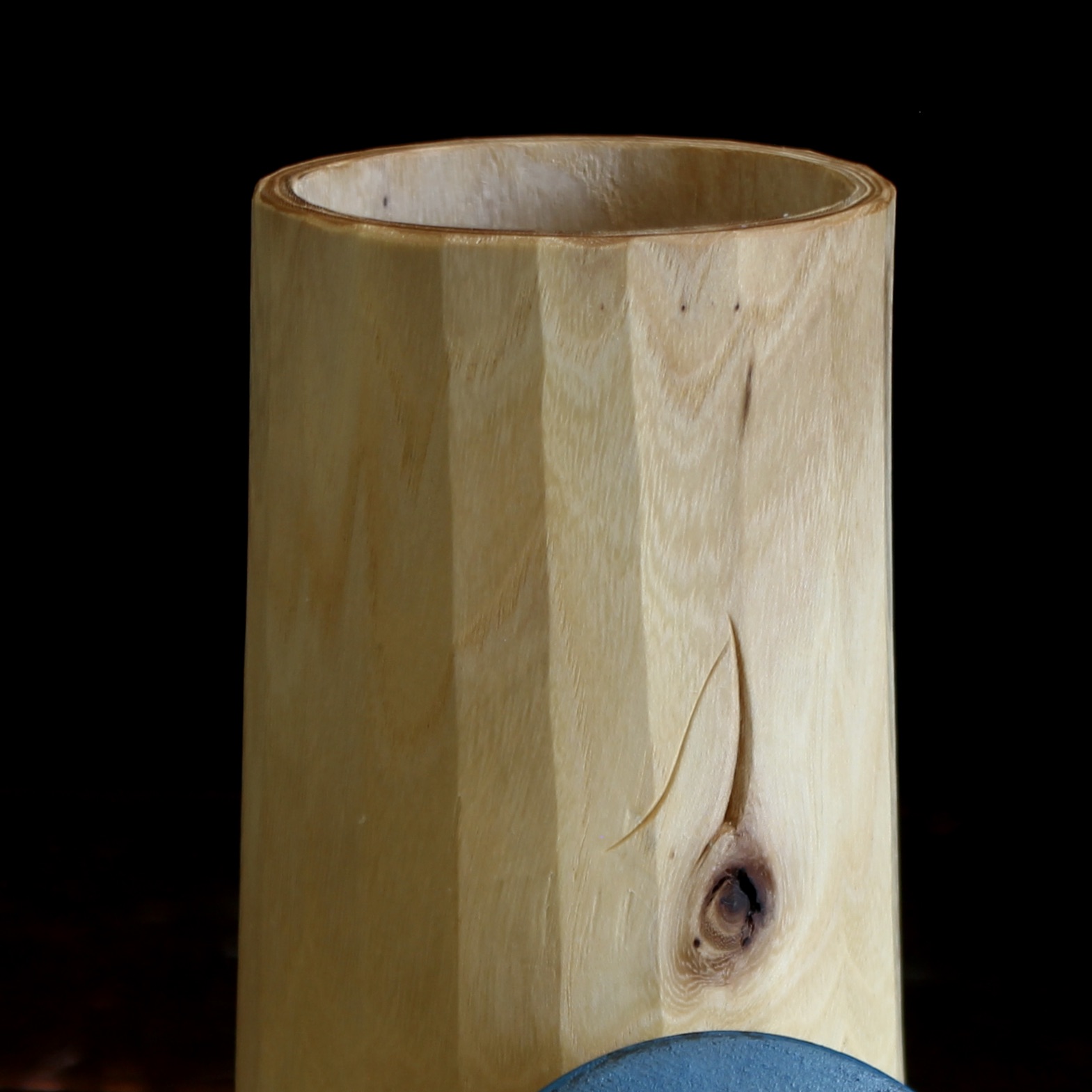
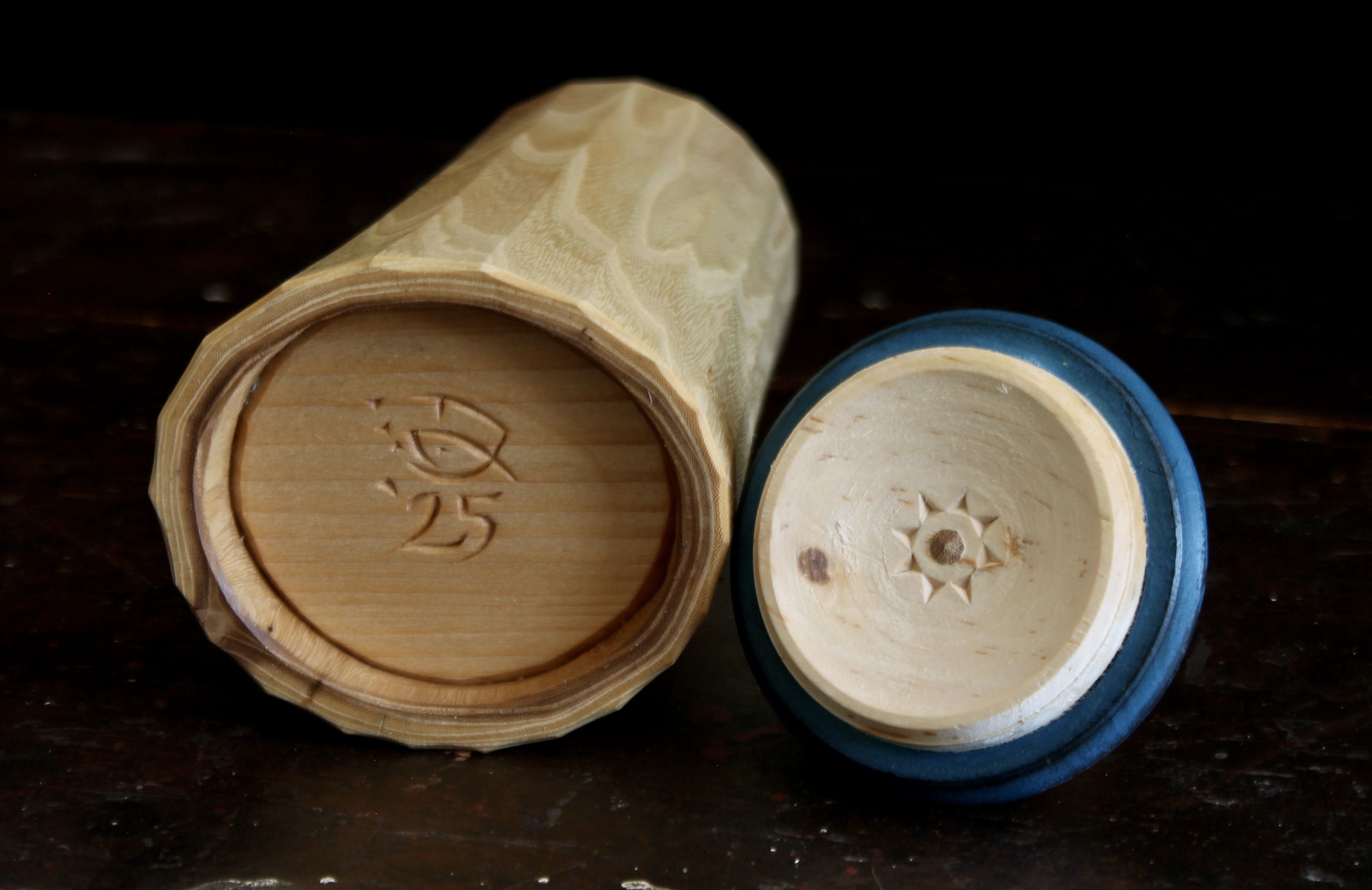
Now onto the next one, All the Fish Needs. This birch pot with no lid is ideal for holding pencils and pens, or it could have all sorts of other uses.

I carved the outer surface with a gouge to create a texture of wavy random flutes. On the side wall of the pot, there was a tight pin knot. I made that the eye of a fish that merges with the water. With my pen knife, around the lower portion of the pot, I carved a line from Thomas Merton’s translation of Chuang Tzu (Zhuang Zhou) from Merton’s 1965 book The Way of Chuang Tzu: “All the fish needs is to get lost in water.”

After carving, I painted with artist oil paint, blue first, followed by a coat of white which I rubbed back. 5 1/4″ high x 3 1/4″. $350 includes shipping. SOLD

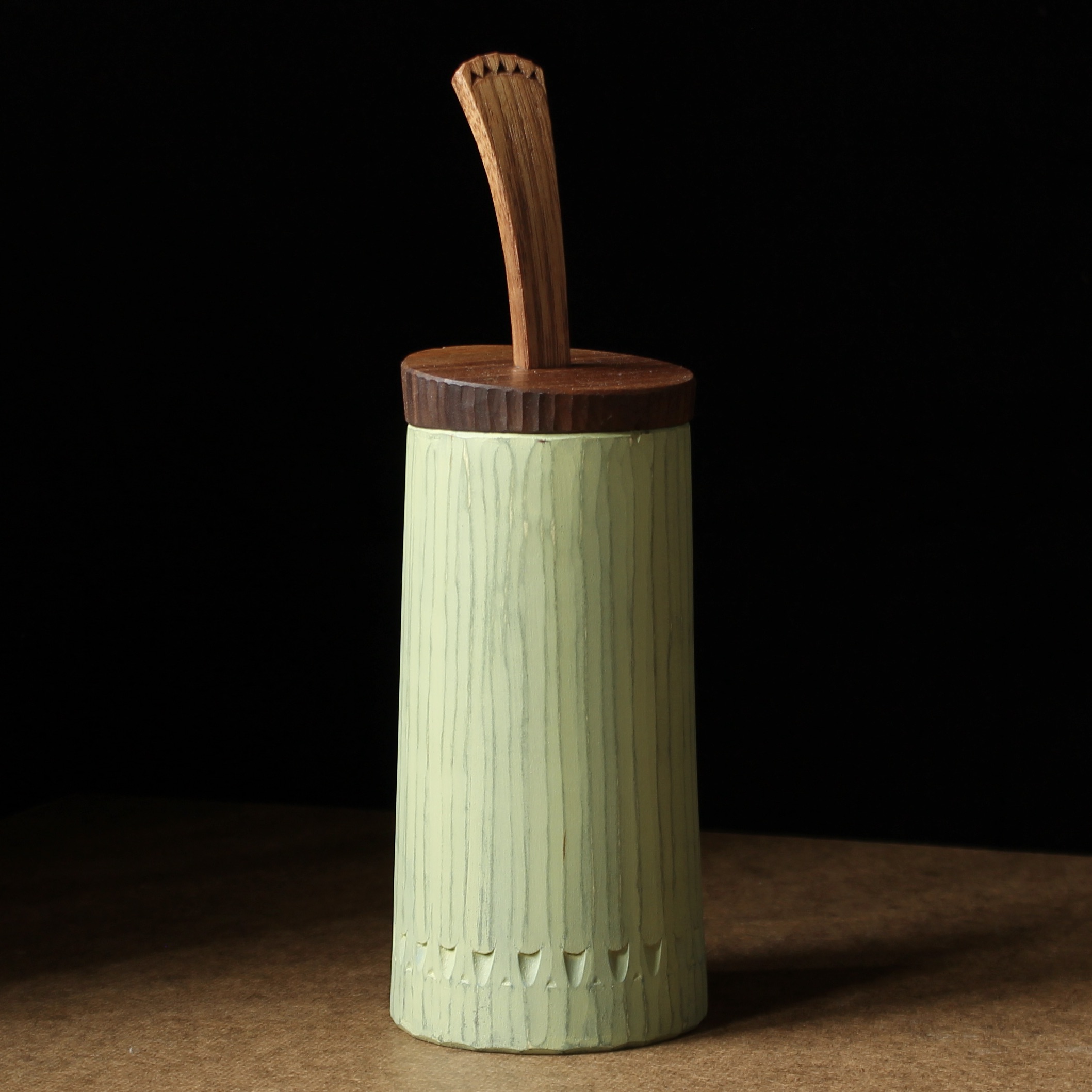
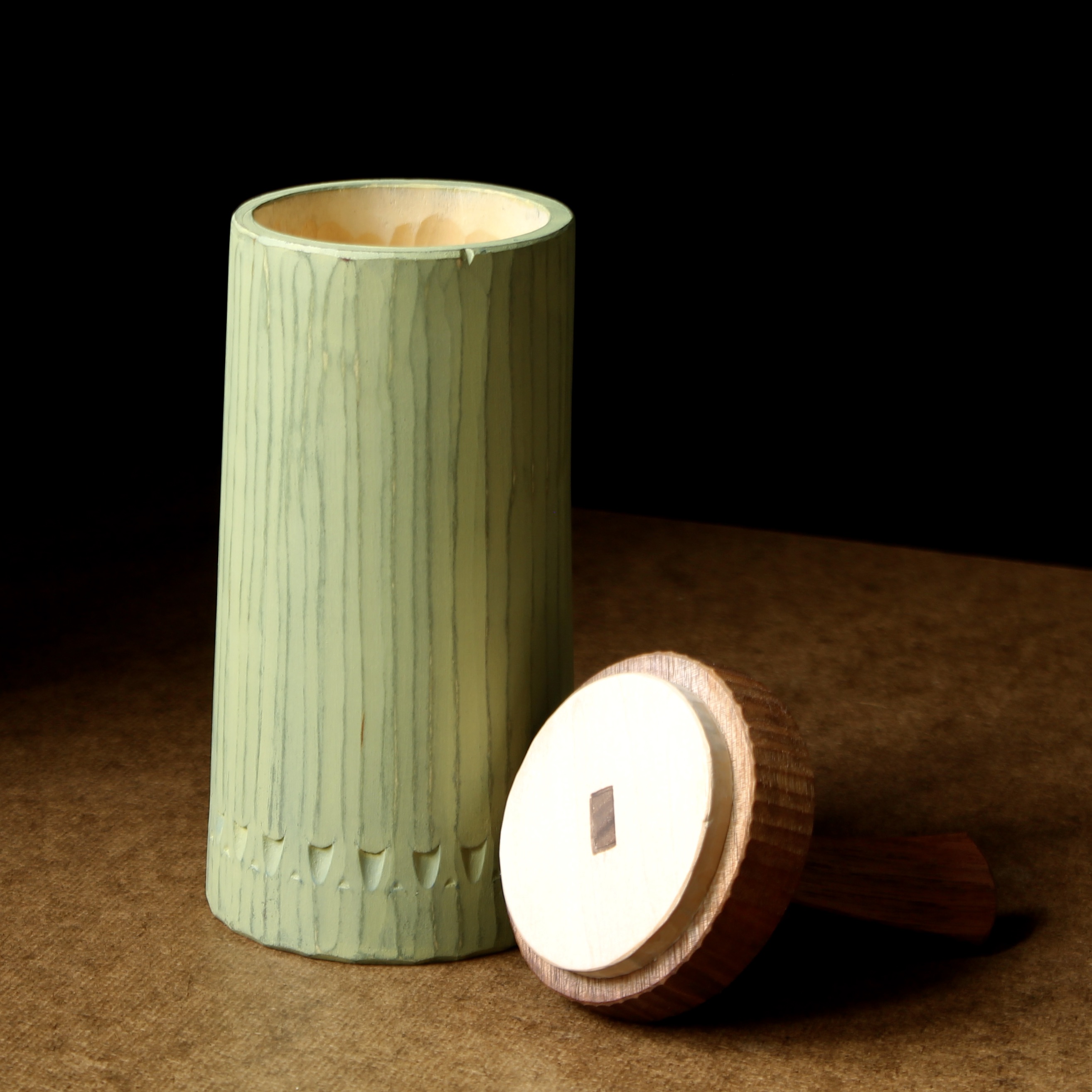
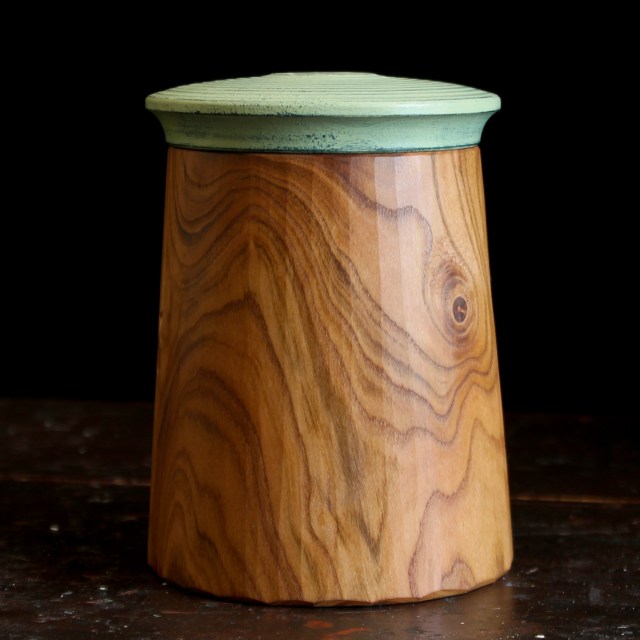
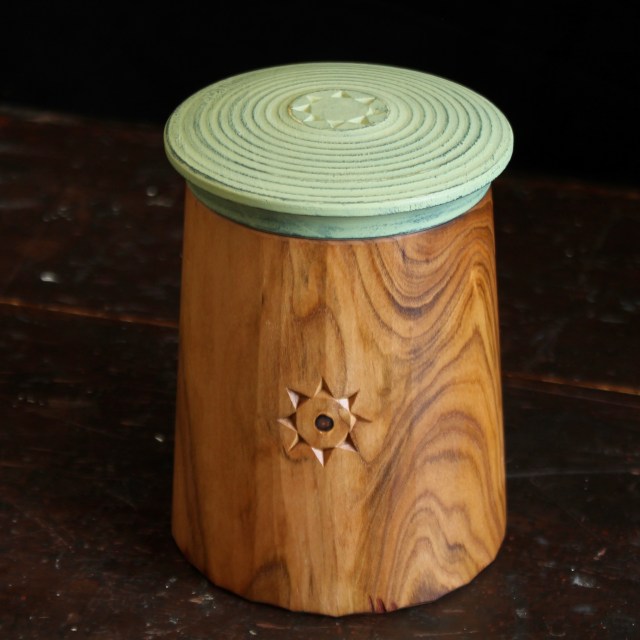
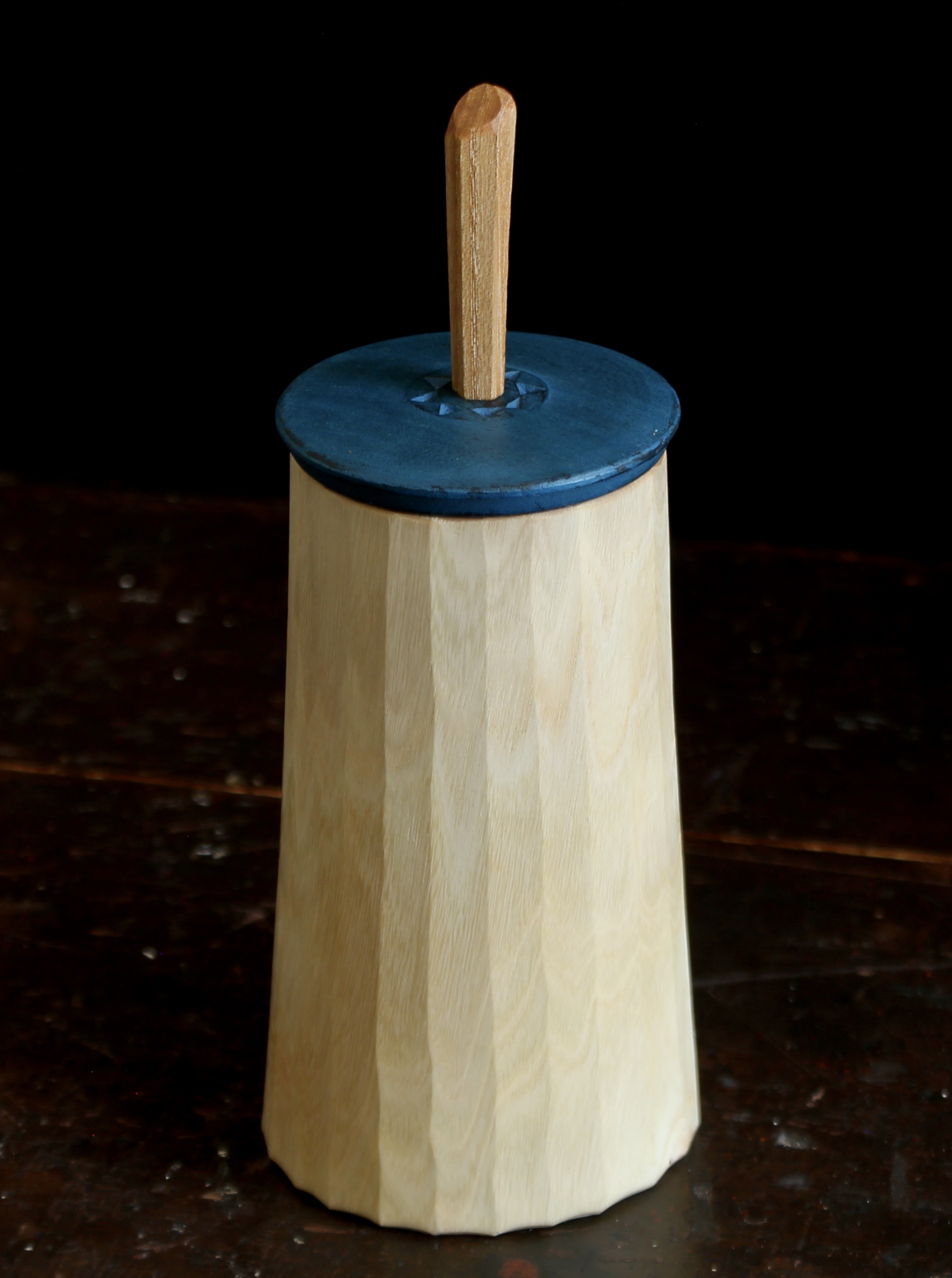
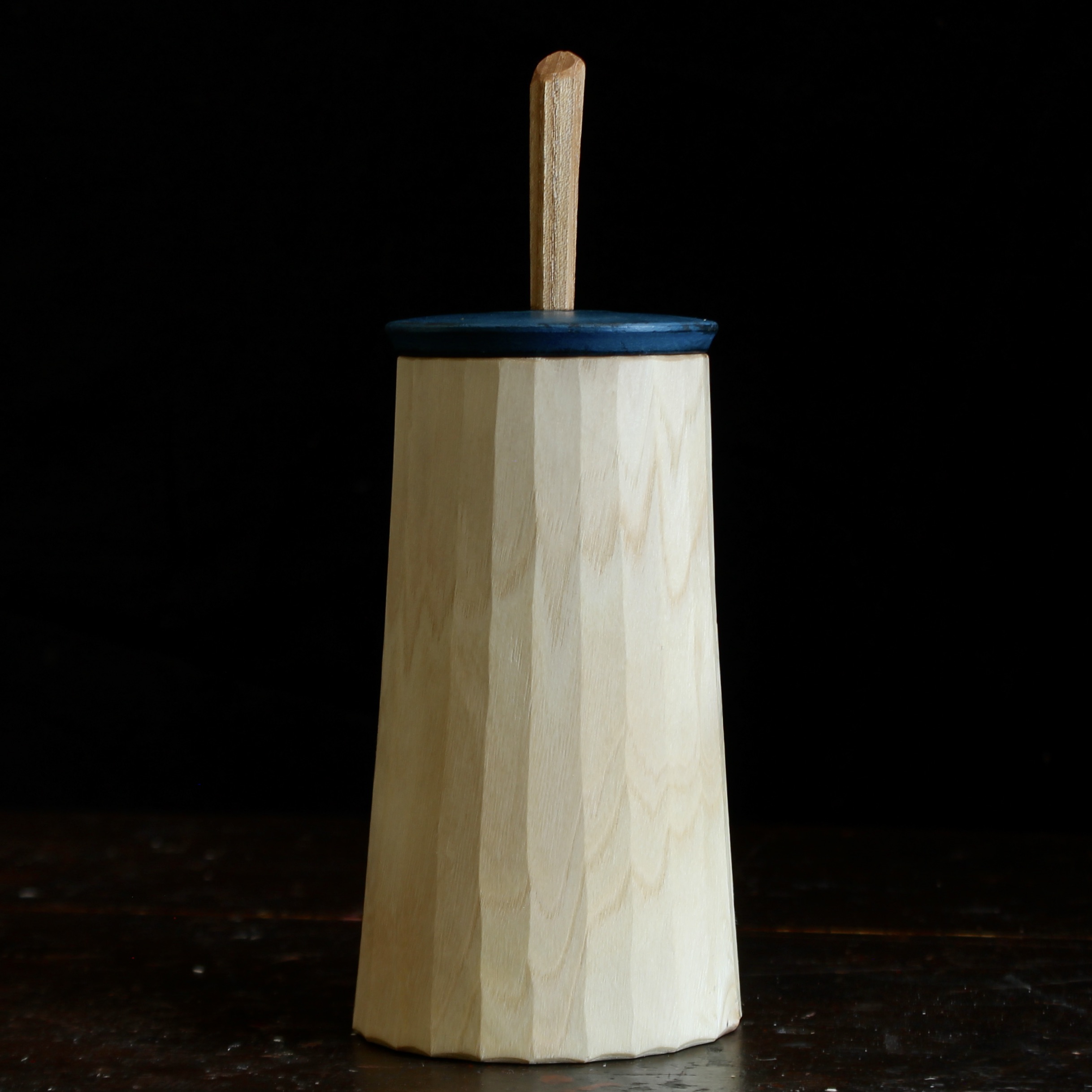
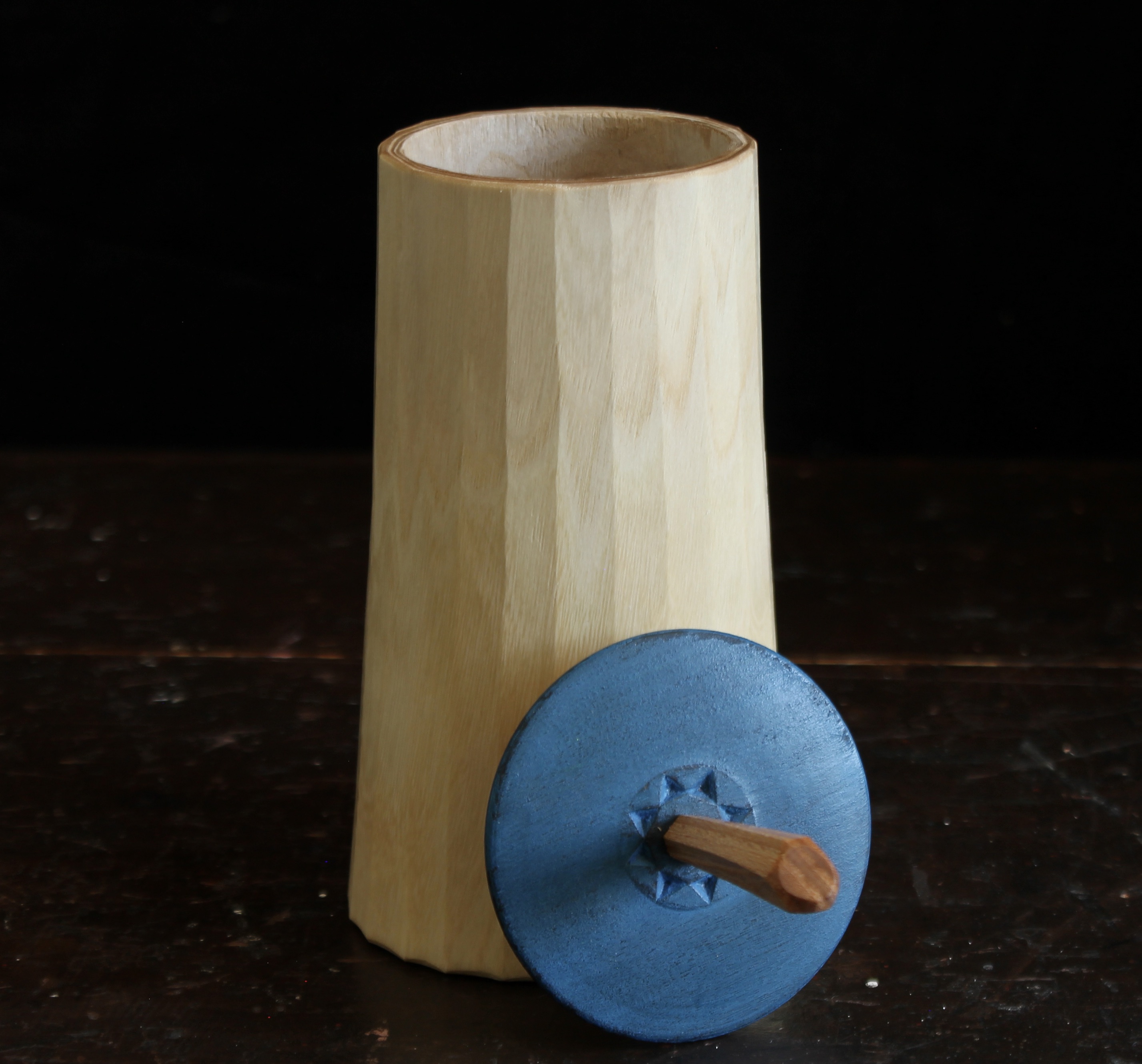
The final pot in this group, No Longer Blue, might look familiar. I showed it in a post several weeks ago, but I had painted it a (too) bright blue. The more I looked at it, the more I wished I had done something different with the color. So I did. I shaved the surface down to fresh wood and repainted. This time with two shades of milk paint, “granny smith” over “blue spruce”. The lid and finial are black walnut. The body of the pot is quaking aspen.

11″ high x 3 5/8″. $400 includes shipping. SOLD

Posted in shrink box, Uncategorized | 5 Comments

More than Wood: Black Walnut Season

Backyard Black Walnut Tree — with nuts!

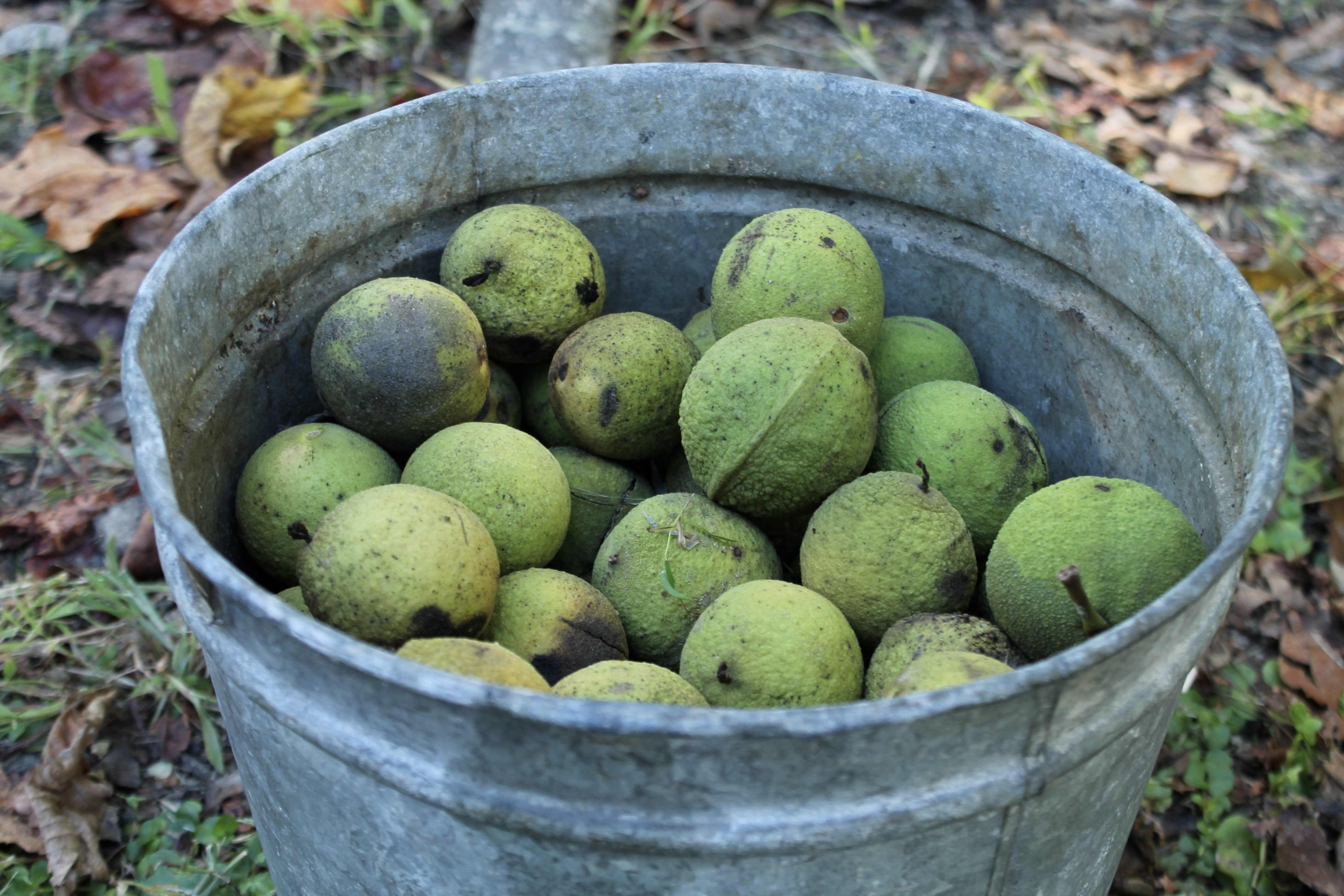
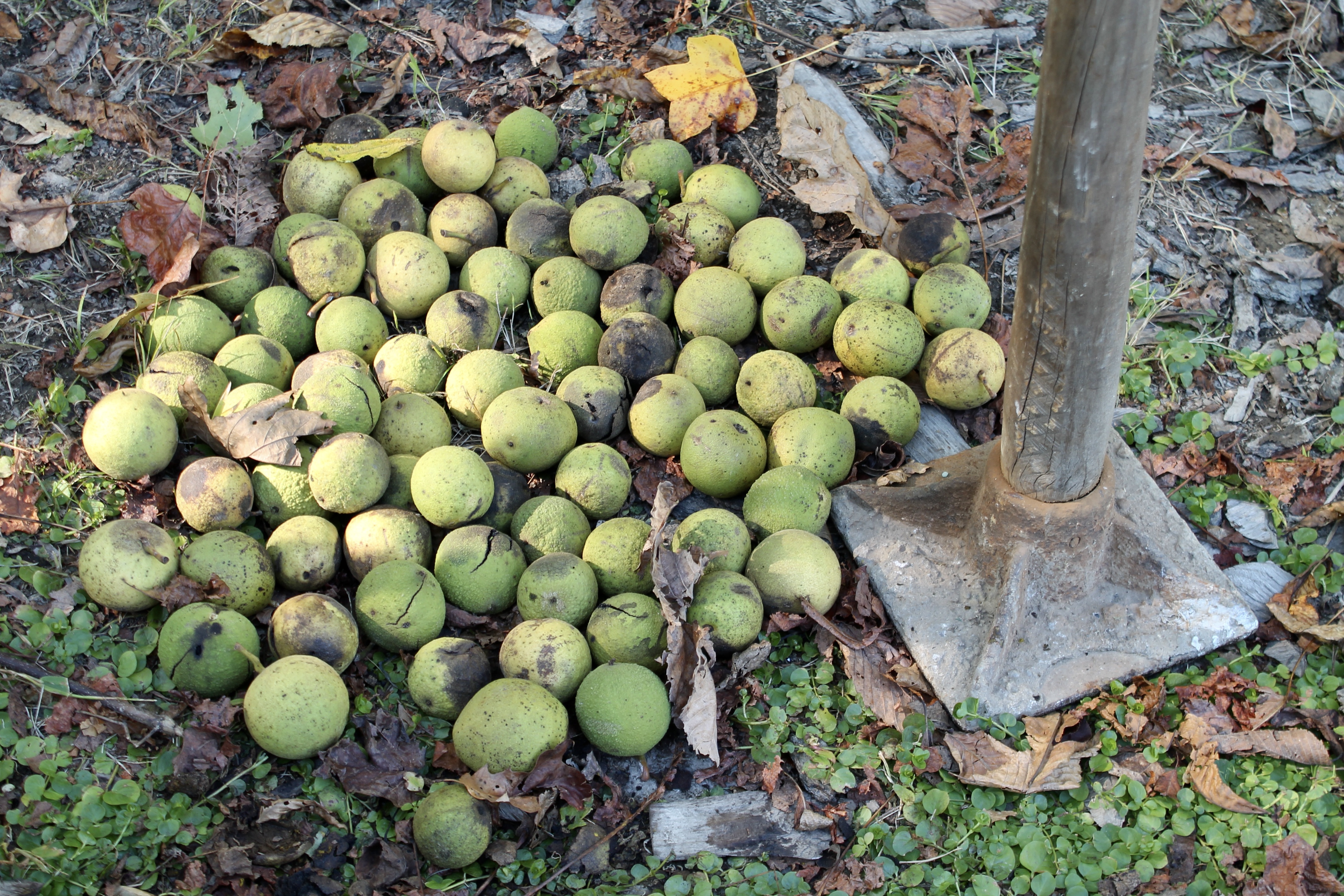
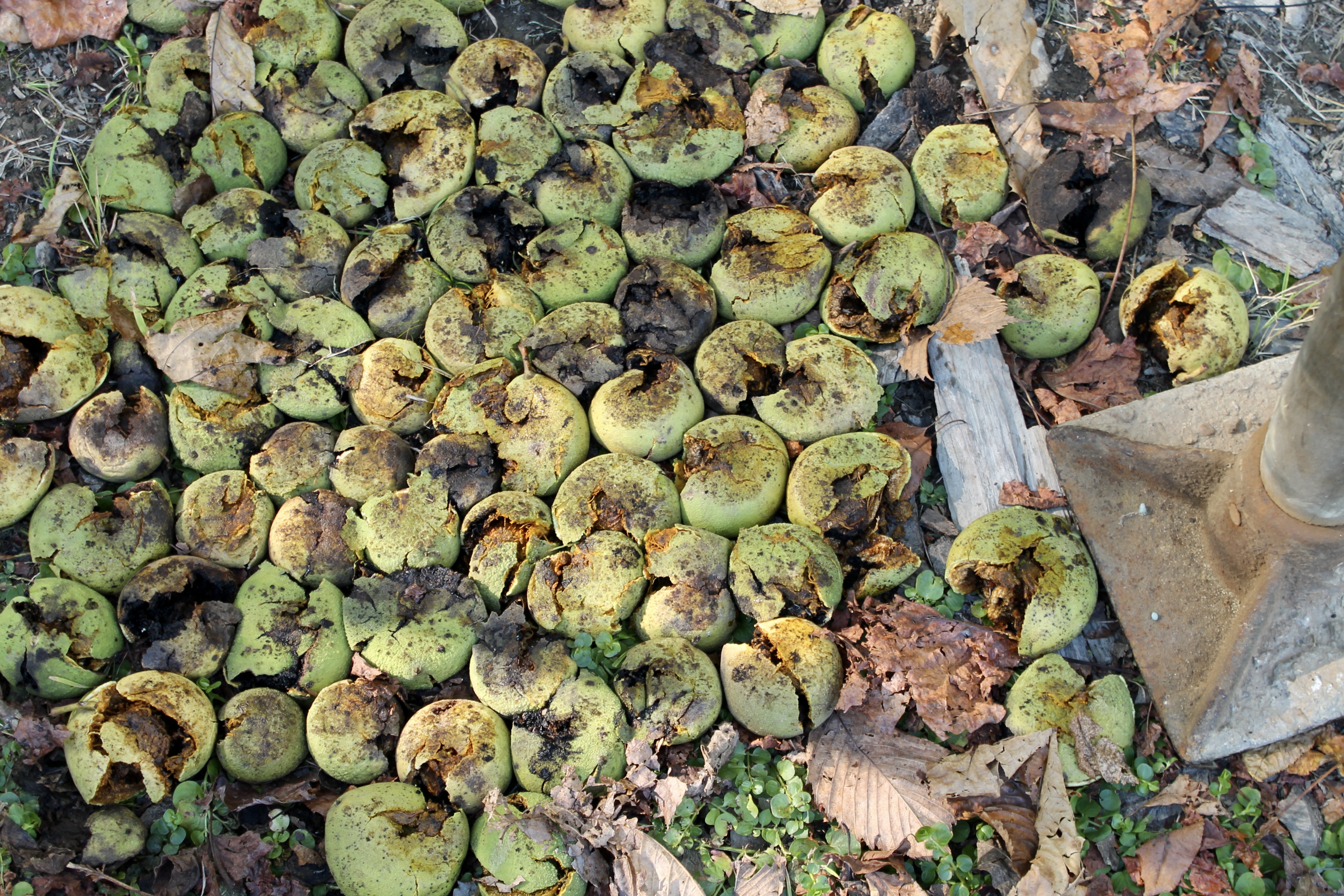
You’ve got to watch your head walking around here in October as the black walnut trees drop their heavy fruits. A walk is accompanied by a chorus of soft plinks and solid thunks. The plinks are acorns, the thunks are walnuts.

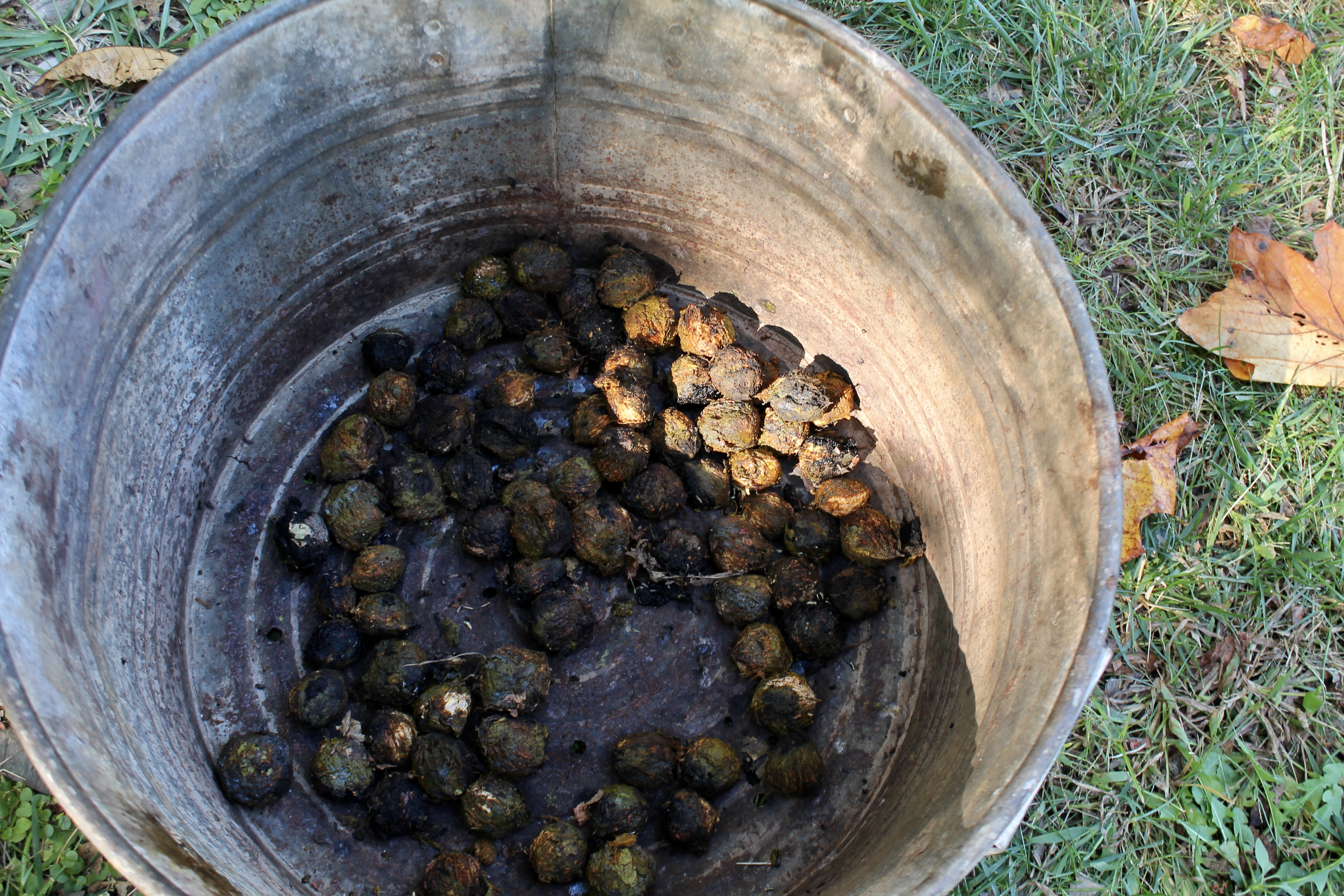
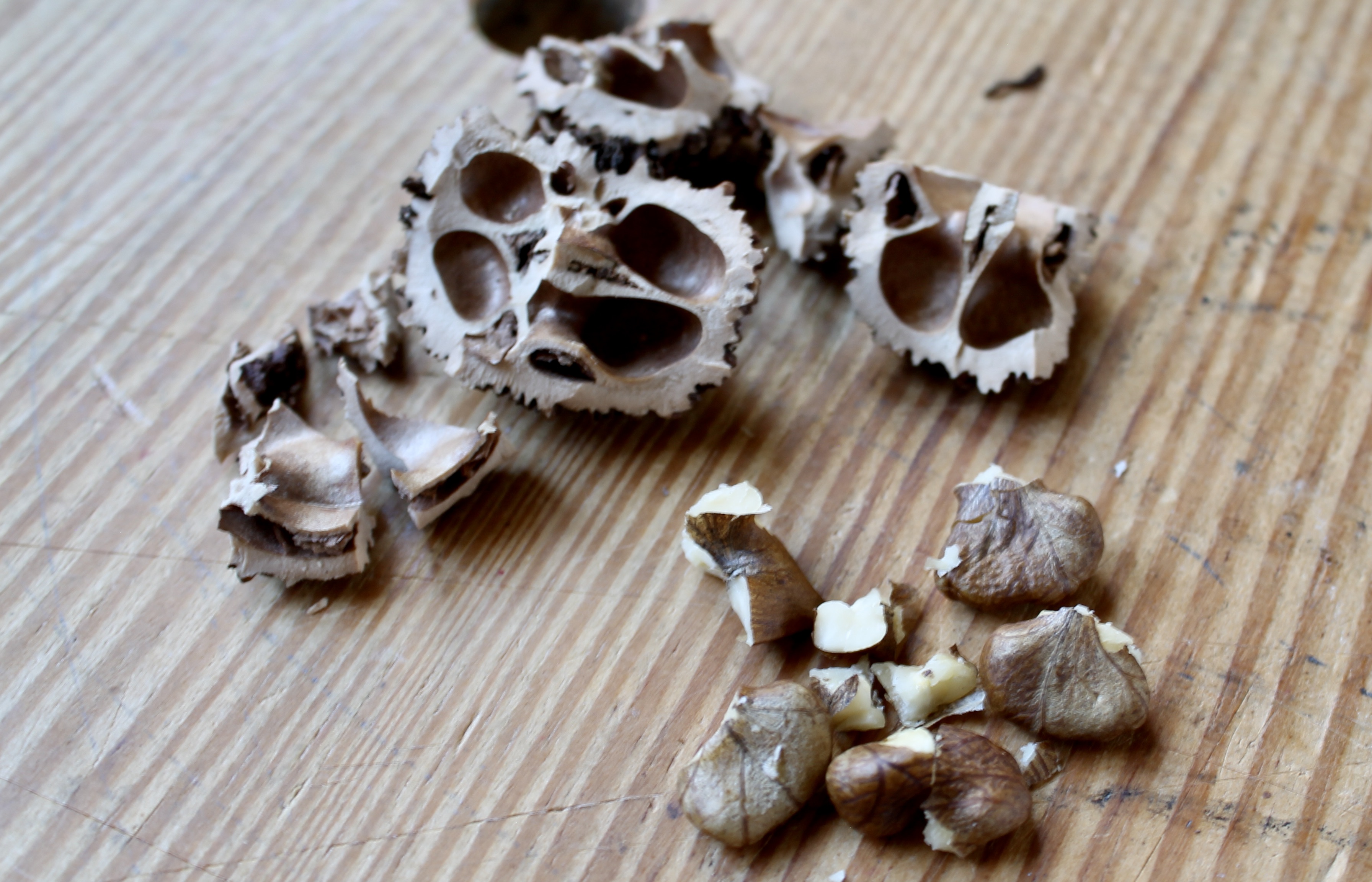
This year a slender walnut tree that lives among the brambles and brush at the edge of our backyard produced nuts for the first time. I sketched it two years ago (above). I decided to celebrate the rite of passage this year by gathering the nuts, along with those from other nearby trees, to eat through the winter like the squirrels. I also made some stain/dye from the husks (the drupes).

The slideshow below goes through the basic stages of the process I used, based on input from my walnut-experienced neighbor, Jerry.

I’ve got a good bunch drying in their shells, so it might be a good opportunity for a nutting party, a tradition described by Donald Culross Peattie in his book A Natural History of Trees. In 1948 he wrote:

In a more innocent age nutting parties were the most highly prized of children’s festivities in autumn, throughout the eastern forest belt, and though butternut and hickory nut, hazelnut, chestnut and chinquapin, and even beechnut and kingnut were gathered, walnut was the favorite. The charm of the nutting party, of course, did not depend solely on the subsequent pleasure of cracking the rough shell and extracting the delicious, oily sweet kernel from its intricate walls. It derived much from the tingling autumn airs, the flaming forest leaves, the wild telegraphing calls of the crows, and the shouts and games of the other children.

As for the brown brew in the yellow bucket… I used some of that natural stain on the body of a shrink pot. More on that possibly tomorrow, when I plan to post three new shrink pots for sale.

And one final note for this post with some exciting news from Jeff Lefkowitz. First, Jeff will be joining me and the other presenters/demonstrators at Handtool Haven in May. I’m looking forward to finally meeting Jeff in person. He’s a woodworker, chairmaker, teacher, graphic designer, and more. He did all of the digital rendering on my Bowl Horse plans and has worked his magic with all sorts of plans for other folks, as many of you will already know.

Now, Jeff has made plans available for the Lefkowitz Shave Horse, a design that’s easy to build from readily available construction lumber and hardware. So, if you’re ready for some chair making, check it out here at Jeff’s website.

Posted in historical reference, nature, quotes and excerpts, sketch, trees, Uncategorized, walnut | Tagged , , , , , , | 12 Comments

2026: Pete’s and Hand Tool Haven

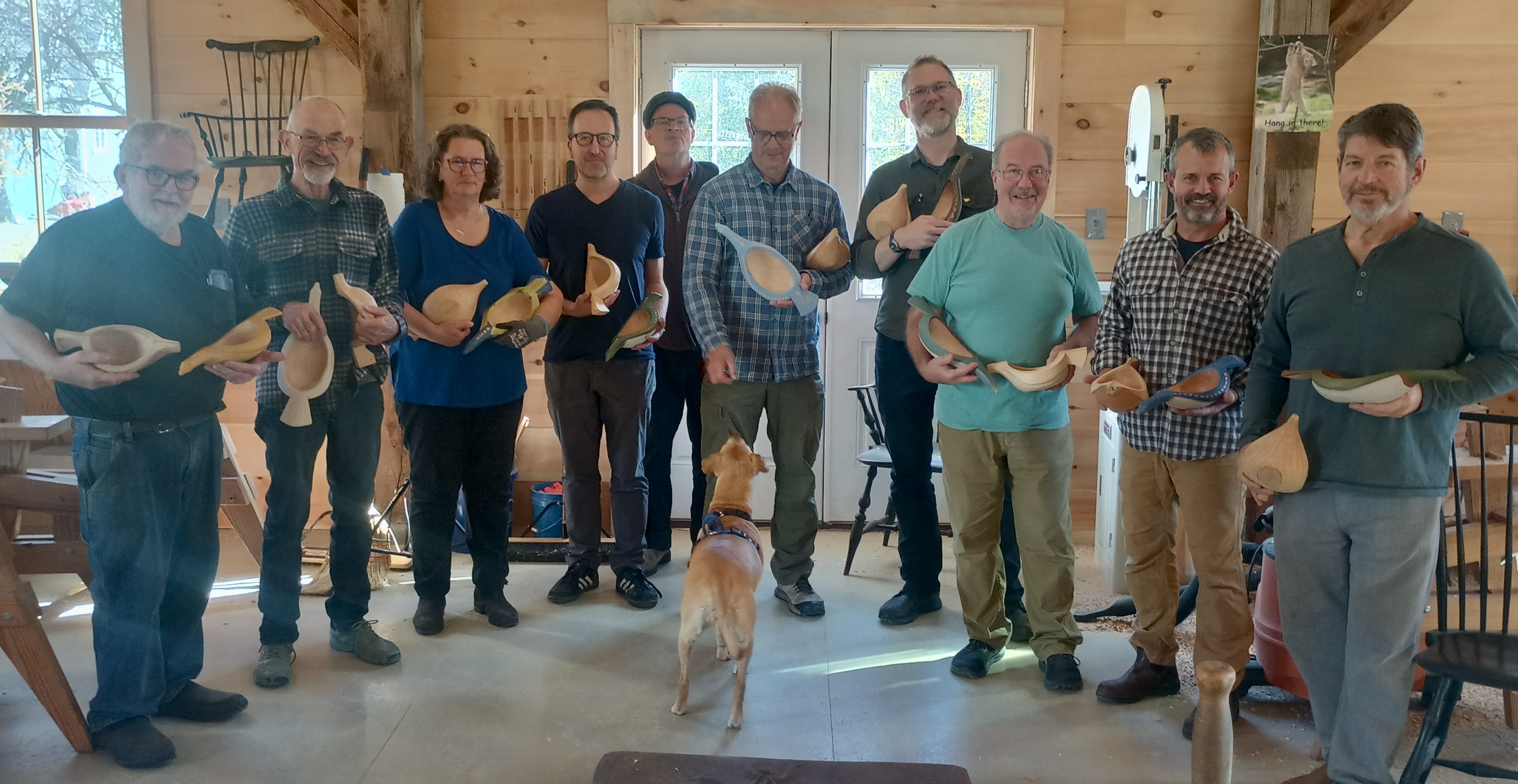
Student Goose Bowls, October 2025

I just returned from a week teaching a bird bowl class at Pete Galbert’s in Berwick, Maine. I’ll be settling into my shop for the next few months with lots of projects in mind. I’ll also be thinking about 2026. Of course, I’ll be returning to Pete’s to teach some classes, but Im also excited that I’ll be demonstrating and presenting at the second annual Hand Tool Haven fundraising event May 16-17 in Butler, Pennsylvania.

Hand Tool Haven is a gathering of hand tool enthusiasts and vendors that raises funds for Plane Wellness, a non-profit organization founded by Jamie Harpster in 2023 with a mission to improve mental wellness through woodworking. You can learn more about Plane Wellness at the link above, and here is another link with Jamie being interviewed by James Wright of Wood by Wright if you’d like to learn more.

I hope to see you there. I’ll be making some chips fly both days and I might have a few things for sale. Vendors are still signing up, but tickets are already available.

Now a few more shots from Pete’s. Beginning with an overhead shot of the students’ goose bowls.

Lew’s goose flew south a little too early to get into the group shot, but I did get this shot of the nice texture Lew carved on the underside.

It was great to reconnect with so many students from last year and also to get together in person with some people I had only known through email. Every student had taken at least one class at Pete’s before. I’ll be posting my 2026 classes for Pete’s in the next month or so. I’m just thinking about timing and what exactly to offer. Meanwhile, there are still some great classes with Tim Manney in November and December, as well as some classes lined up for spring. Check out the schedule here.

Our second bowl of the week was the hen bowl. There’s Josh marking his hen’s beak to guide some cuts. Painting the hens was homework.

Jayna carving flutes on her hen.

Georgia knows that Scott has the biscuits.

There’s the crew with the guy who keeps everything running smoothly while I fumble about, Joel Paul (5th from left).

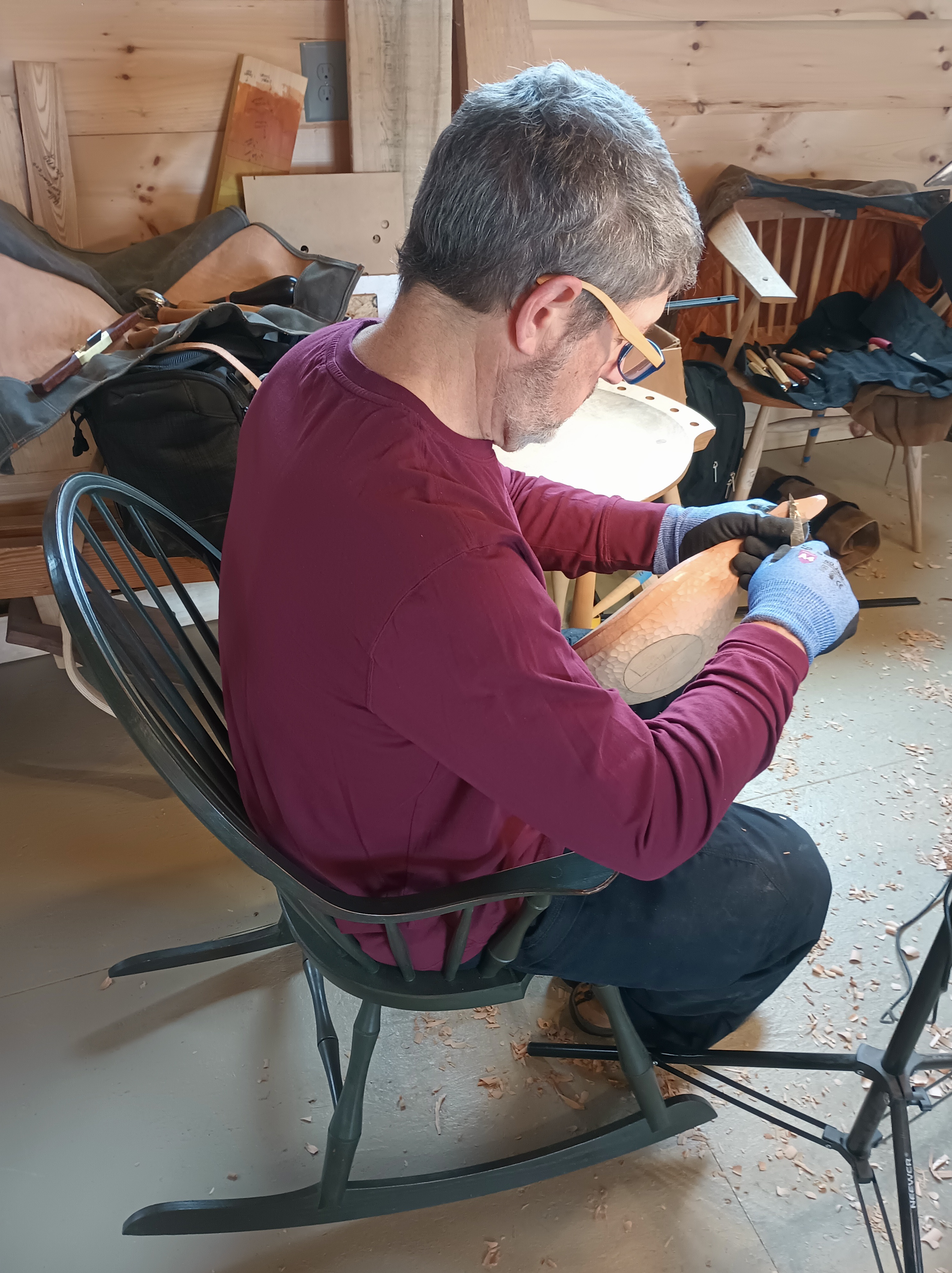
You may have noticed in some of the shots that chairs and stools made by Pete are all around. Lew found a good spot to sit and carve in a continuous arm rocker.

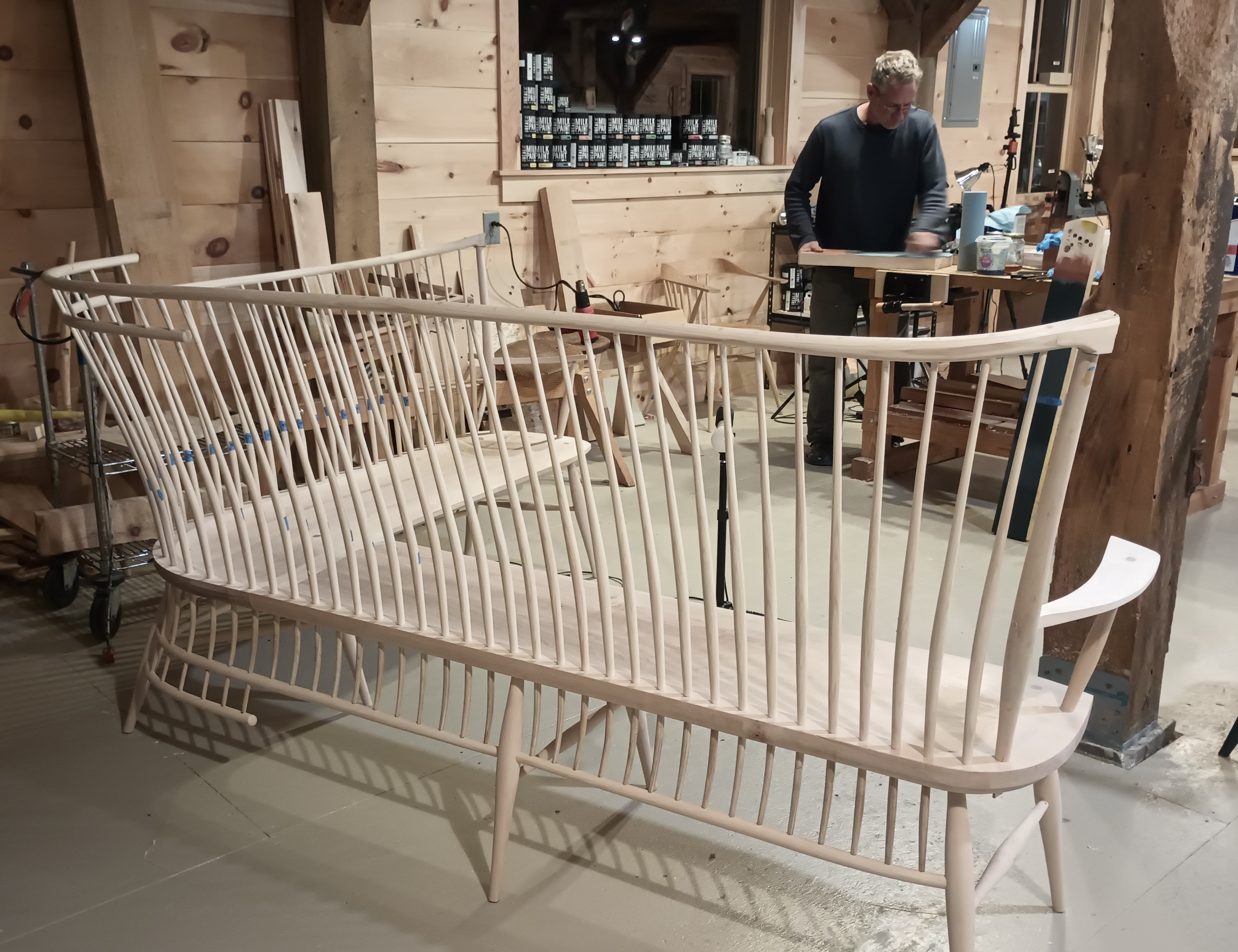
And speaking of sitting…if you haven’t seen Pete’s posts about this incredible bench he and Aspen Golan are making for the Museum of Fine Arts in Boston, they’re worth checking out. Here’s one. The photo above was taken one evening last week as Pete worked up paint samples on test boards in preparation for finishing the bench.

Not a bad view from Pete’s shop/school after a day of carving.

Posted in classes, events, Uncategorized | 5 Comments

Ready for Maine

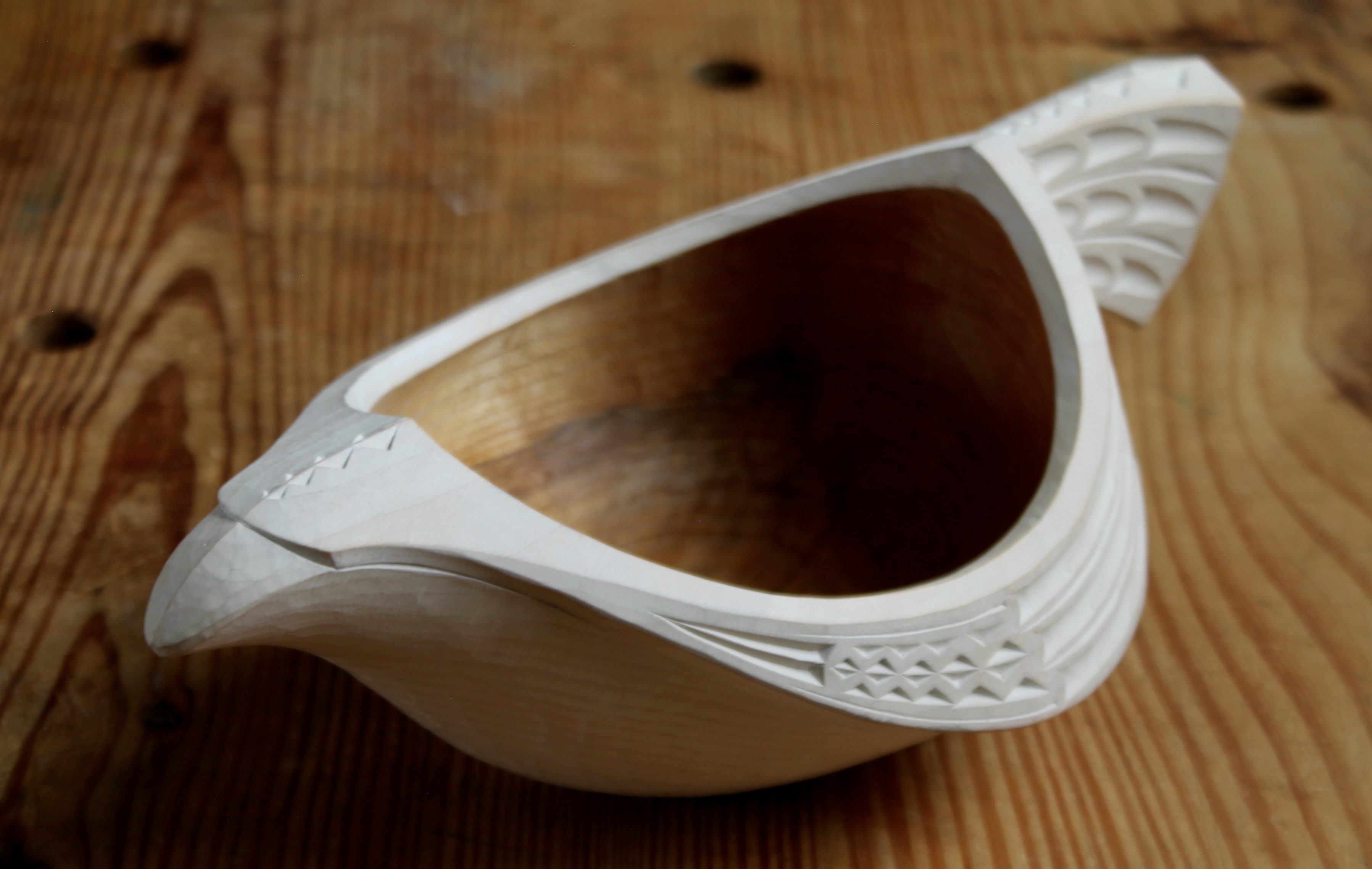
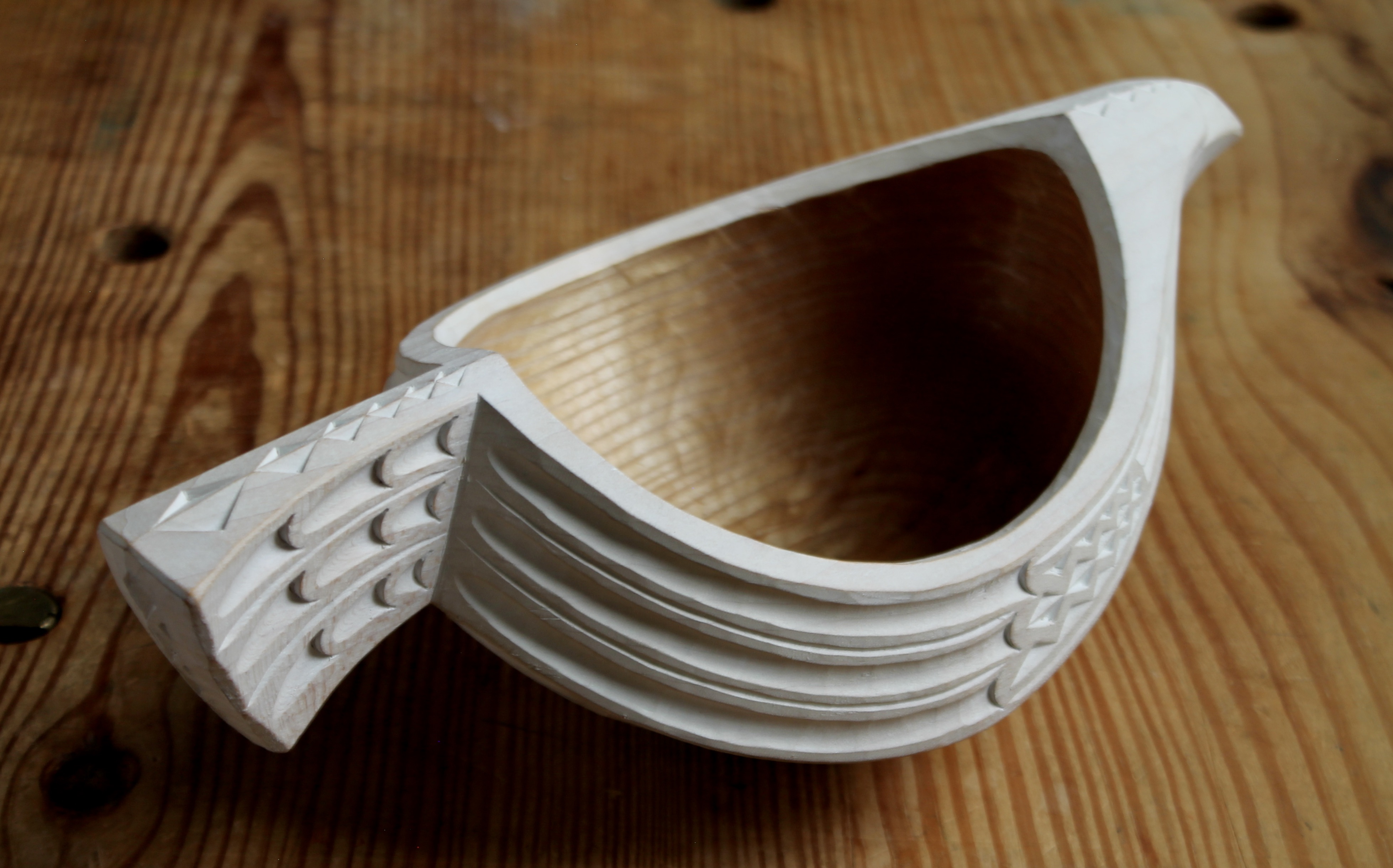
I’m returning to Peter Galbert Workshops in Berwick, Maine to teach another bird bowl class this week. As part of my preparations, I carved another hen bowl to make sure I remembered how.

We’ll carve a long and sleek goose-inspired form and this short and stout hen-inspired form. Both can be easily tweaked to represent various other birds.

As an alternative to the more colorful examples I’ll have there, I painted the exterior of this latest one with a simple wash coat of white. It quiets the grain and allows the form and shadows of the carving to read more clearly.

The possibilities for various forms of decorative carving are endless, but you do have to keep the requirements of grain direction in mind.

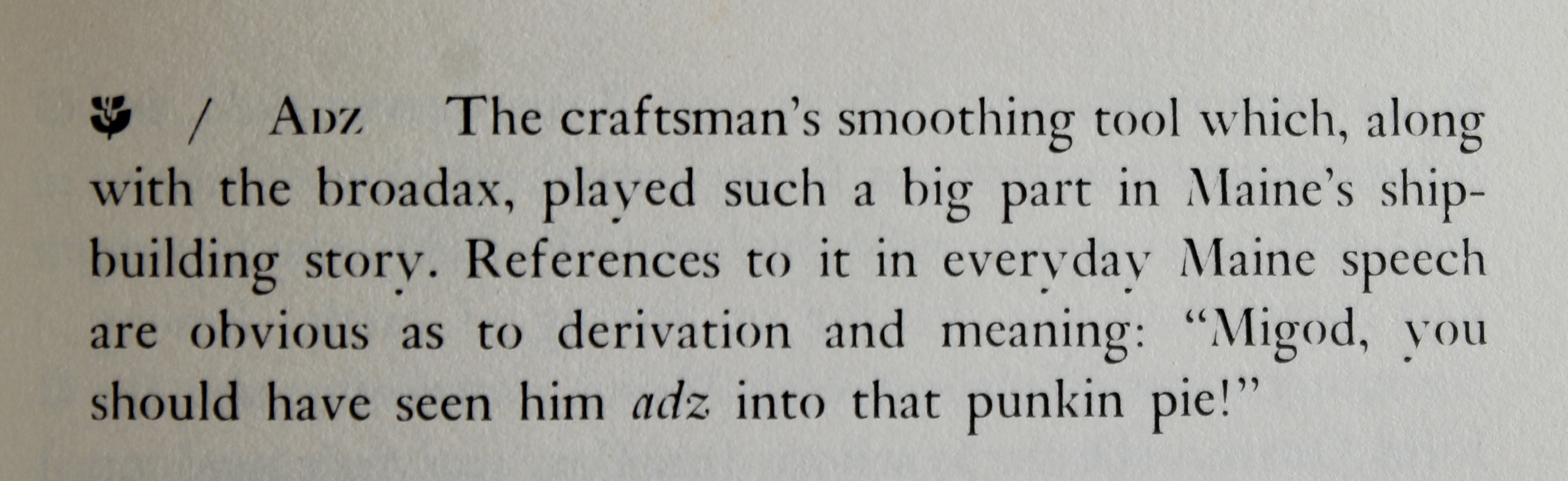
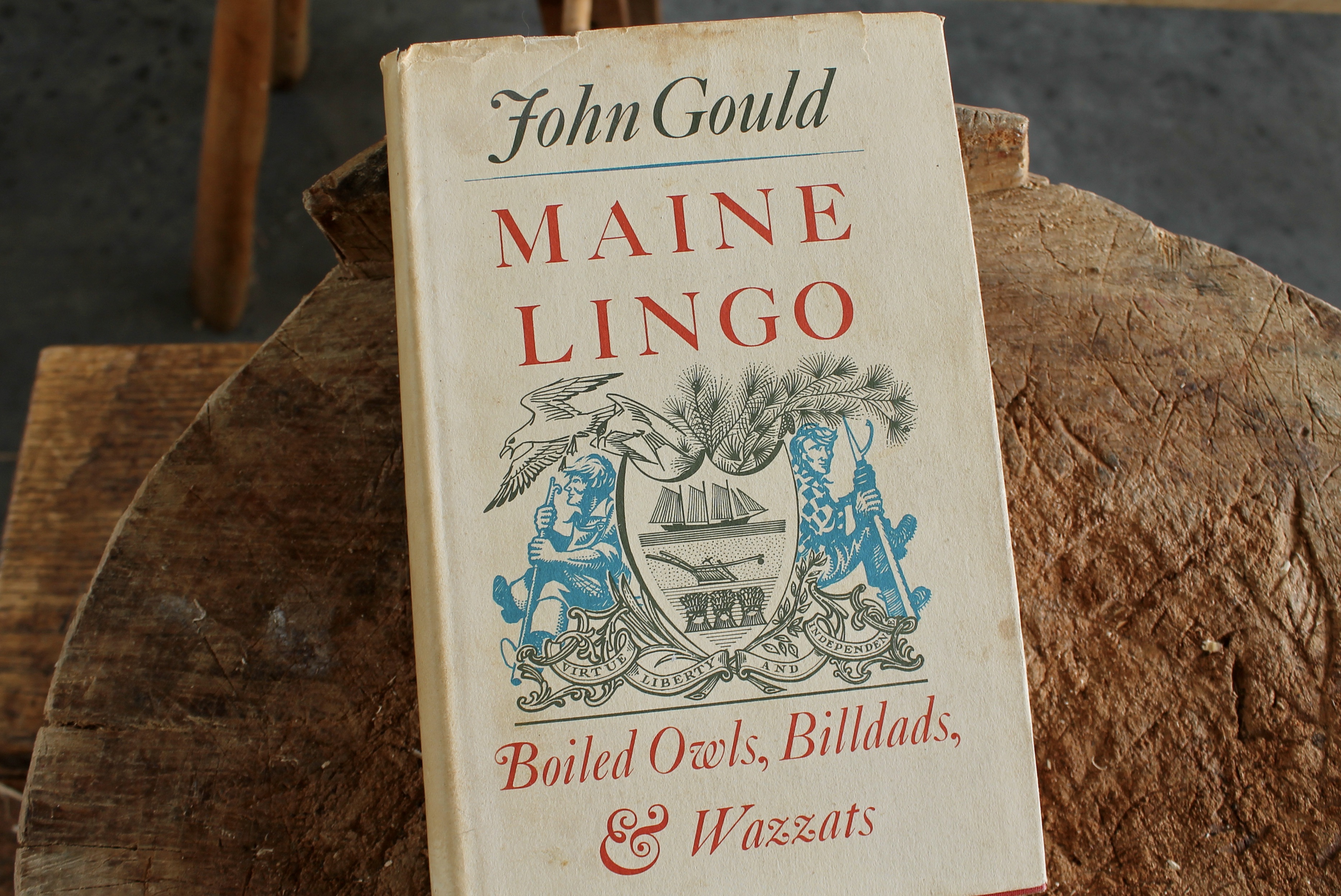
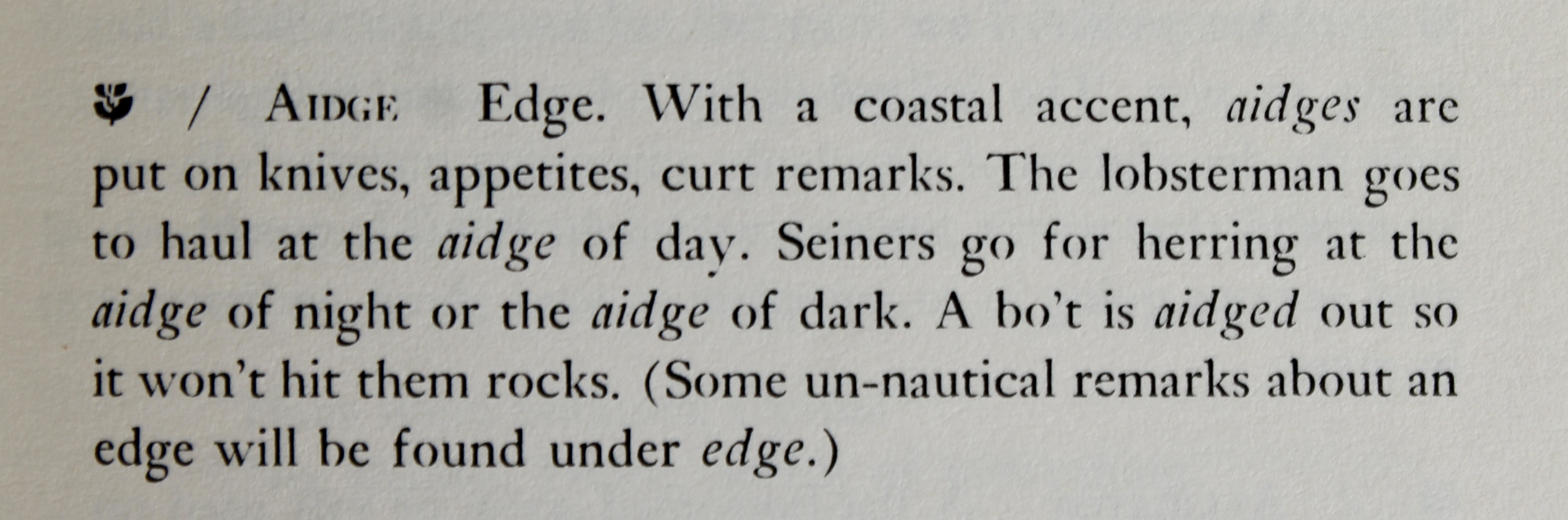
A timely discovery at our annual local library book sale a couple weeks ago will help me be even more prepared. A sort of dictionary of popular Maine phrases and terminology. Published by Down East magazine in 1975.

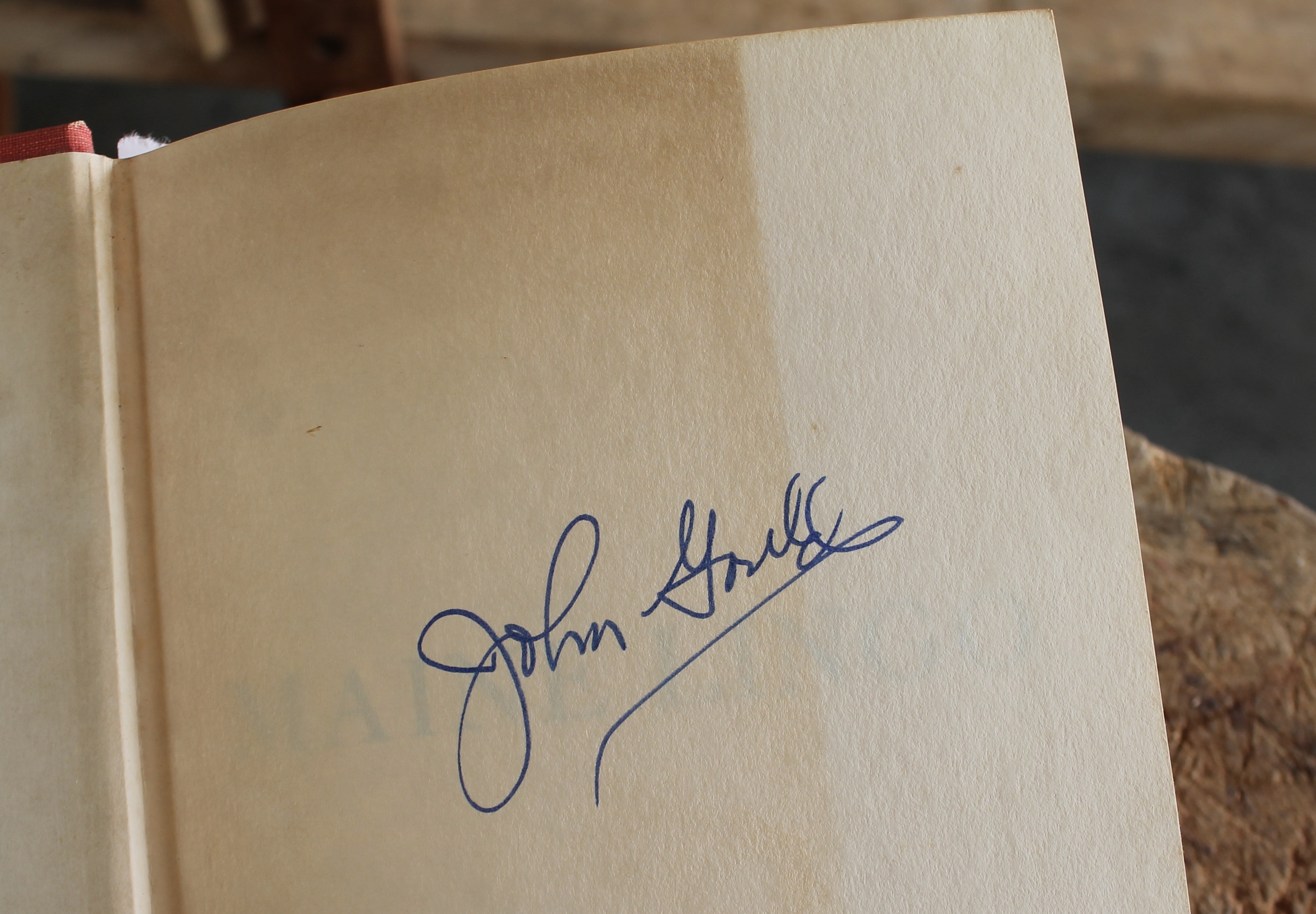
Even signed by the author.

This one will come in handy as we’ll be working on getting and keeping the aidges of our tools sharp. Joel Paul can help me with the pronunciation.

This one could be used during lunch.

After this class, I’ll sort out what I’m teaching at Pete’s in 2026 and get the classes posted.

Posted in bird bowls, books, classes, teaching, Uncategorized | 6 Comments

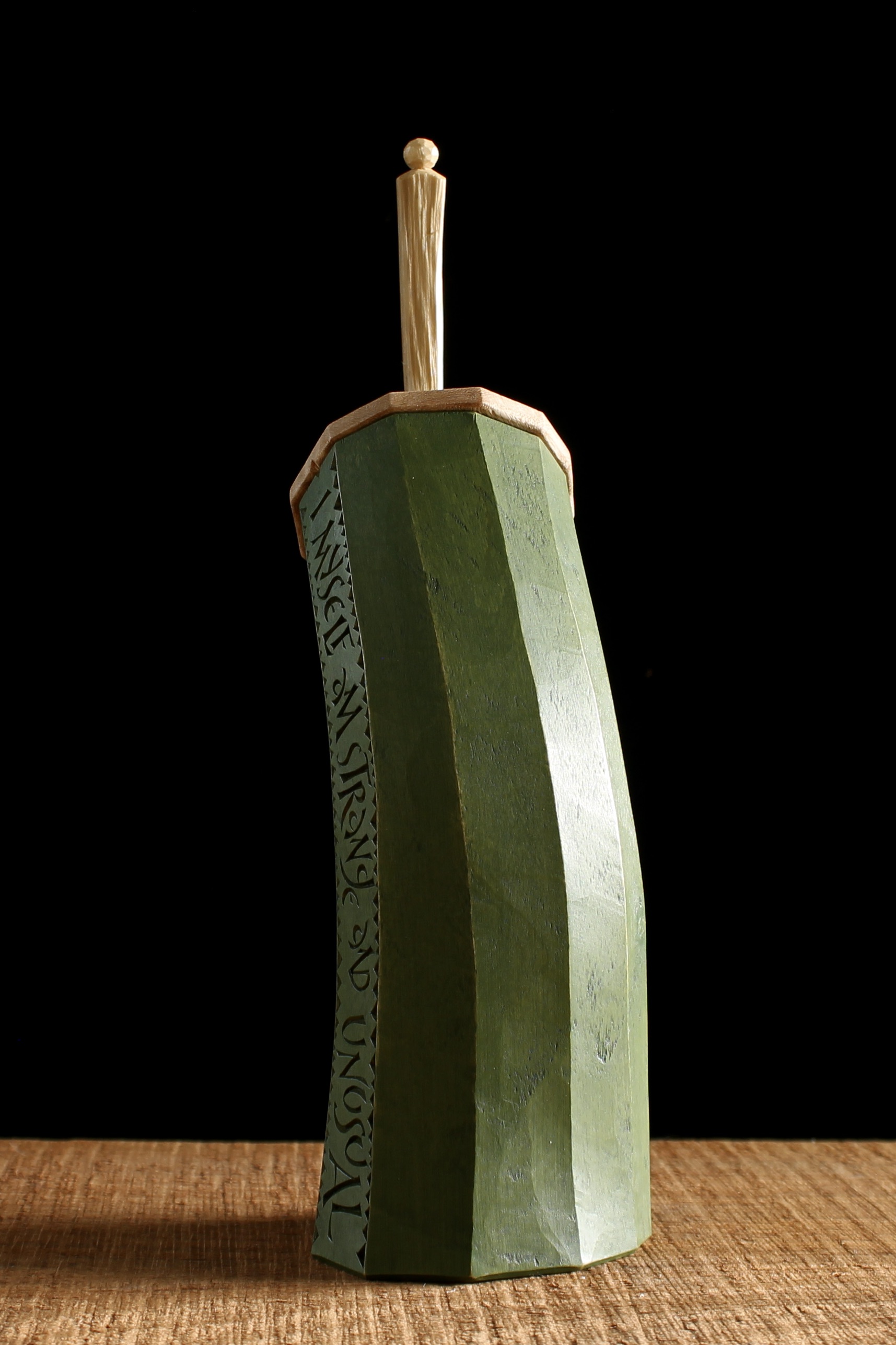
Strange and Unusual Shrink Pot

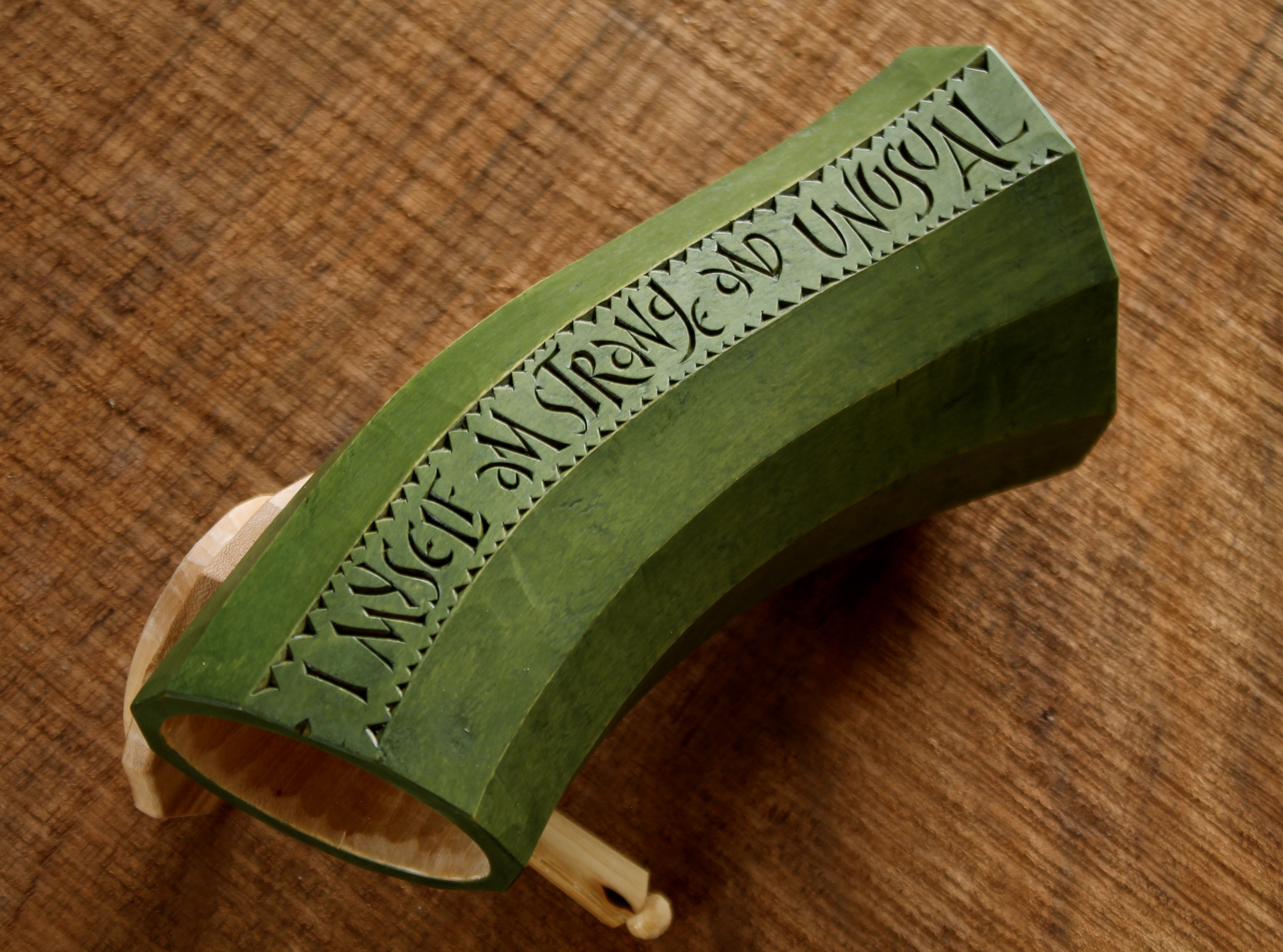
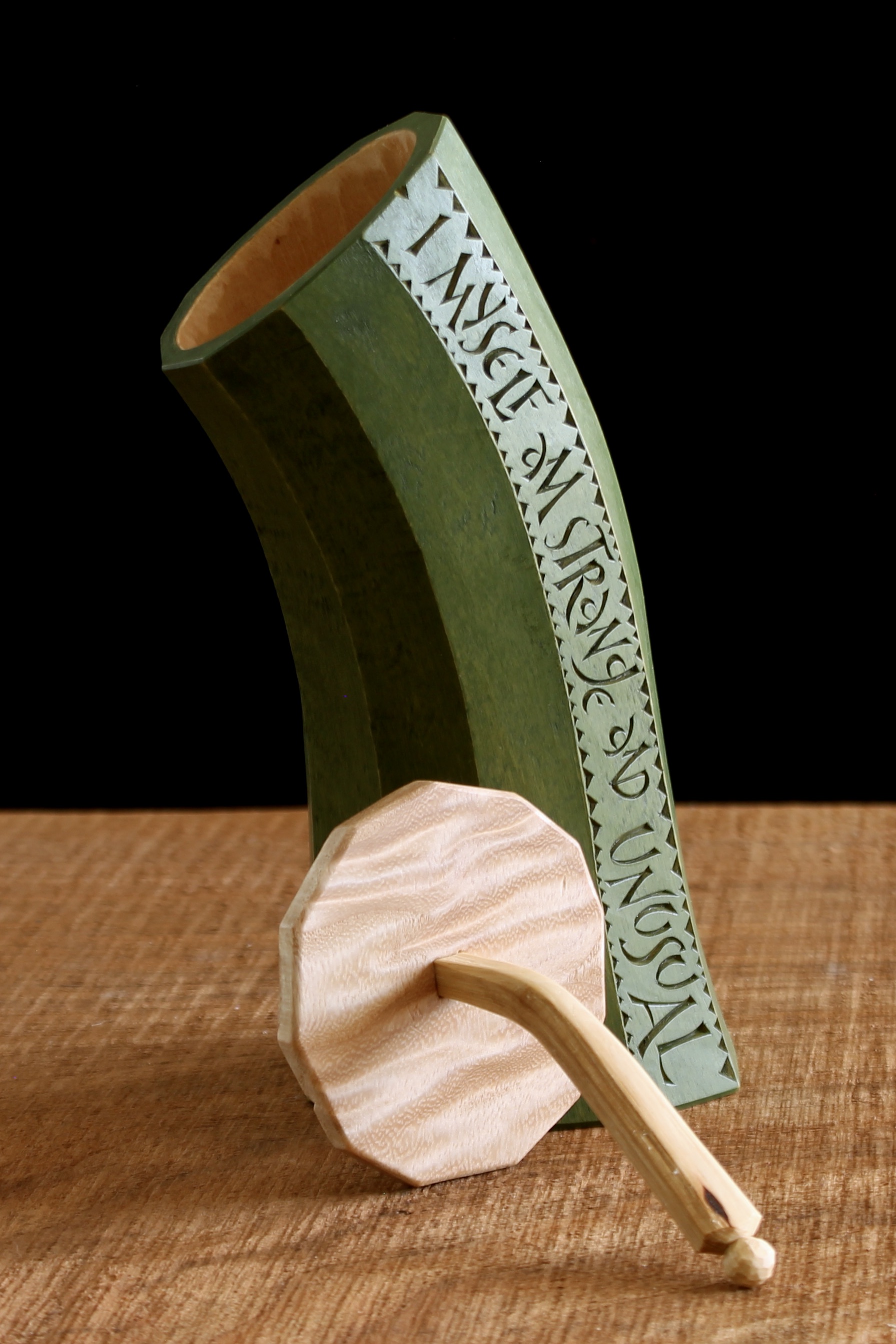
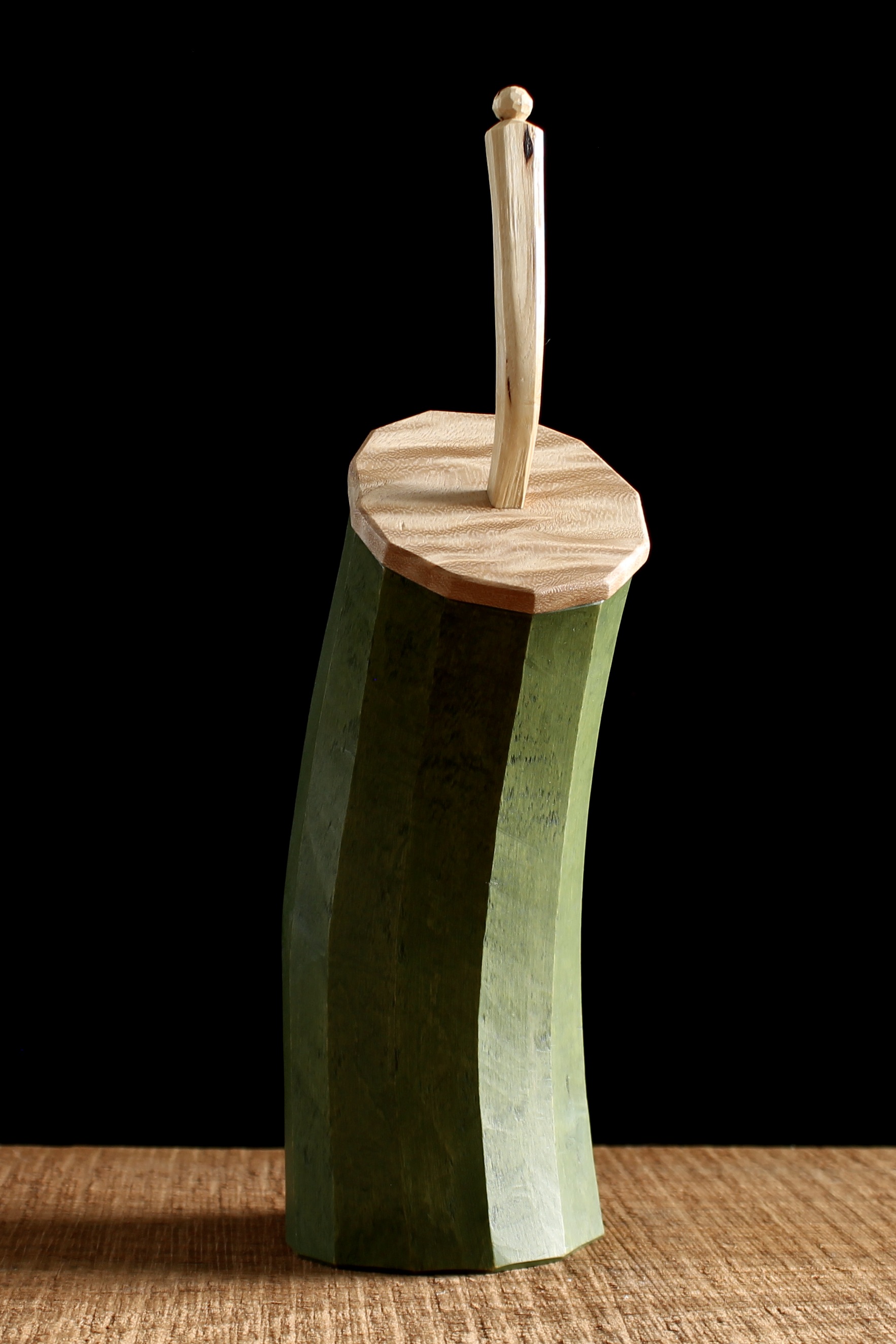
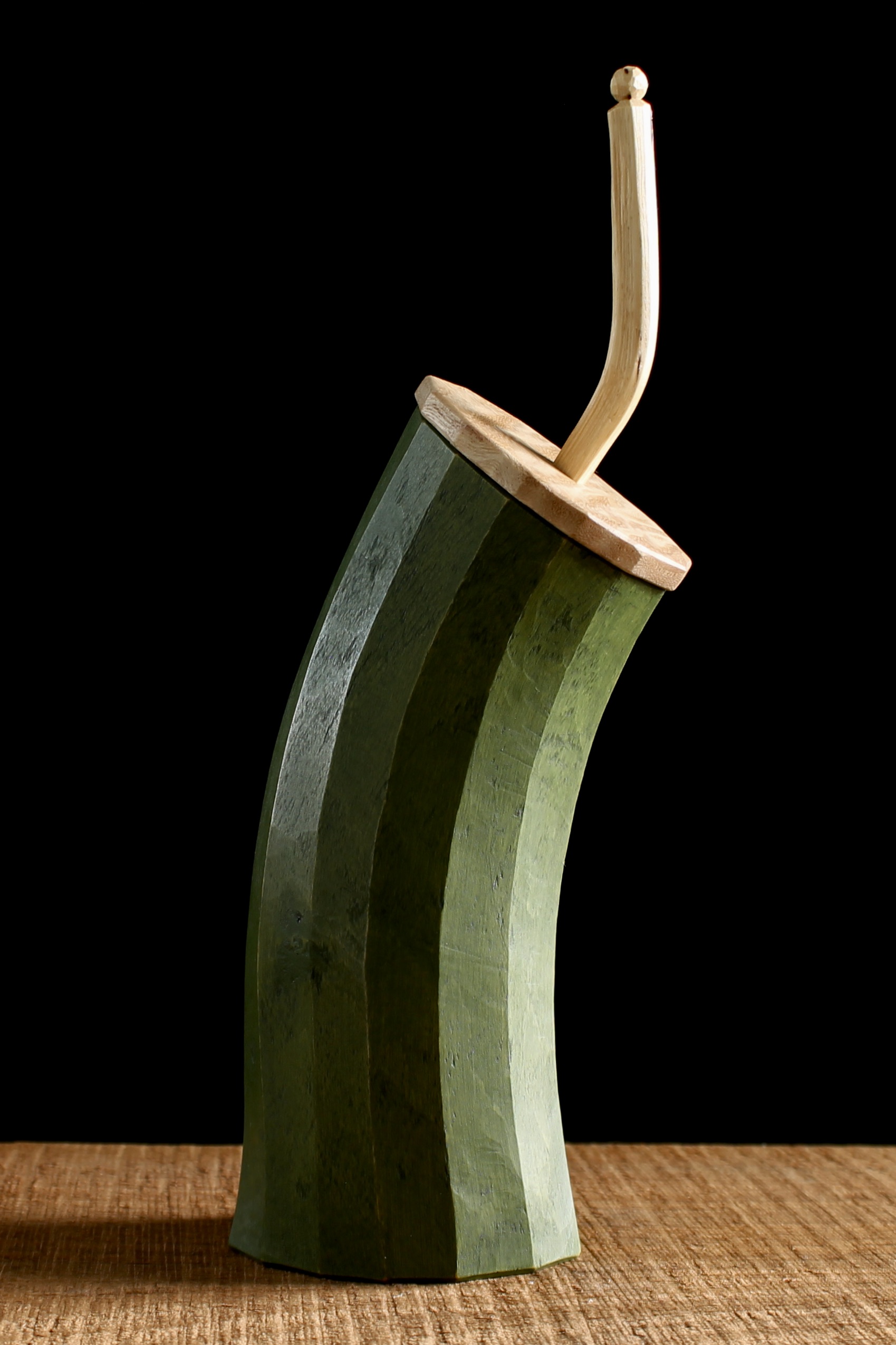
“Strange and Unusual” Shrink Pot 2025, 11.5″ high x 4″ base. DF

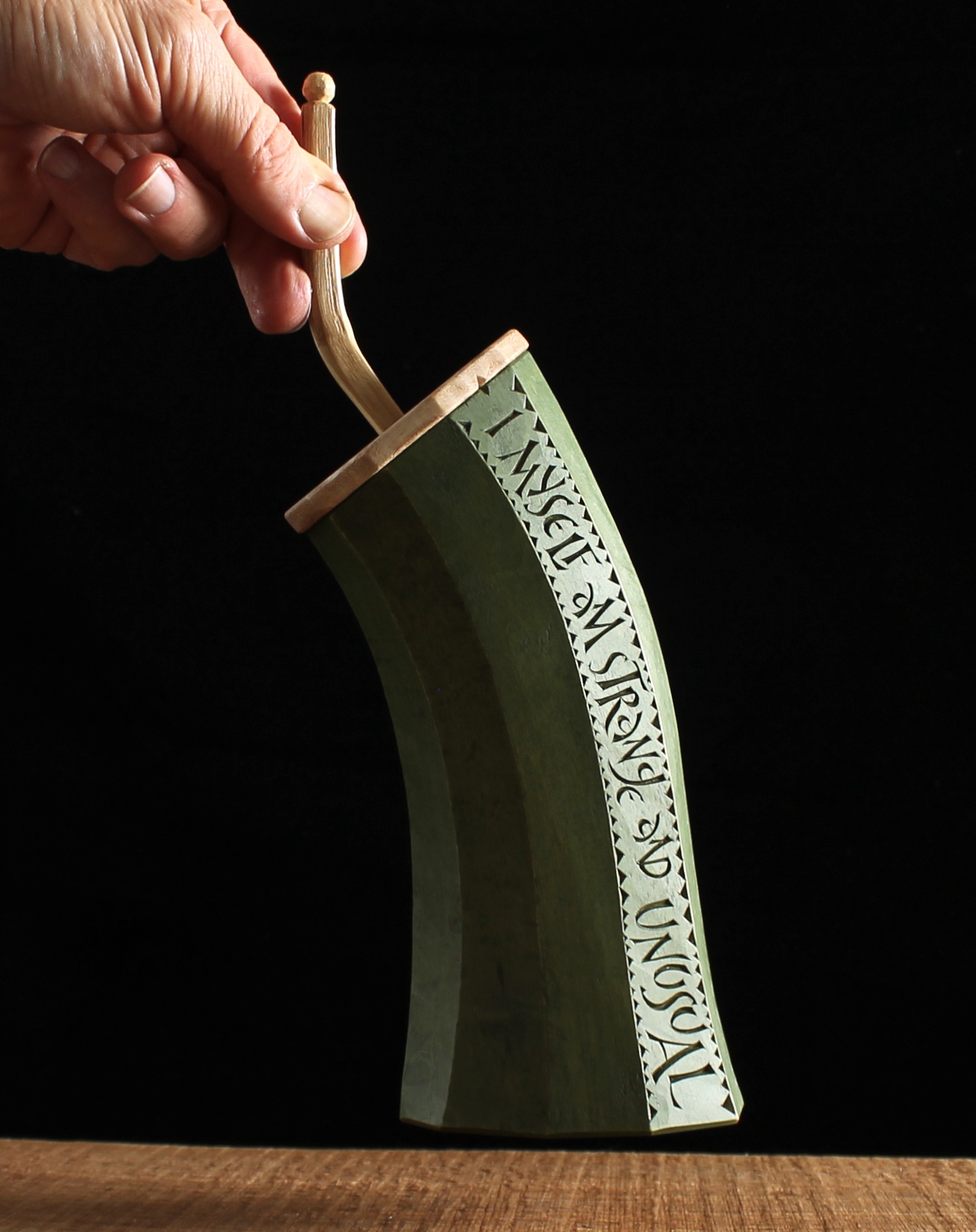
In the 1988 movie Beetlejuice, Winona Ryder, as Lydia, professes her strangeness with quiet self-assurance: “I myself am strange and unusual.” About a year ago I was asked to incorporate that line into a piece, and the idea developed in stages just recently.

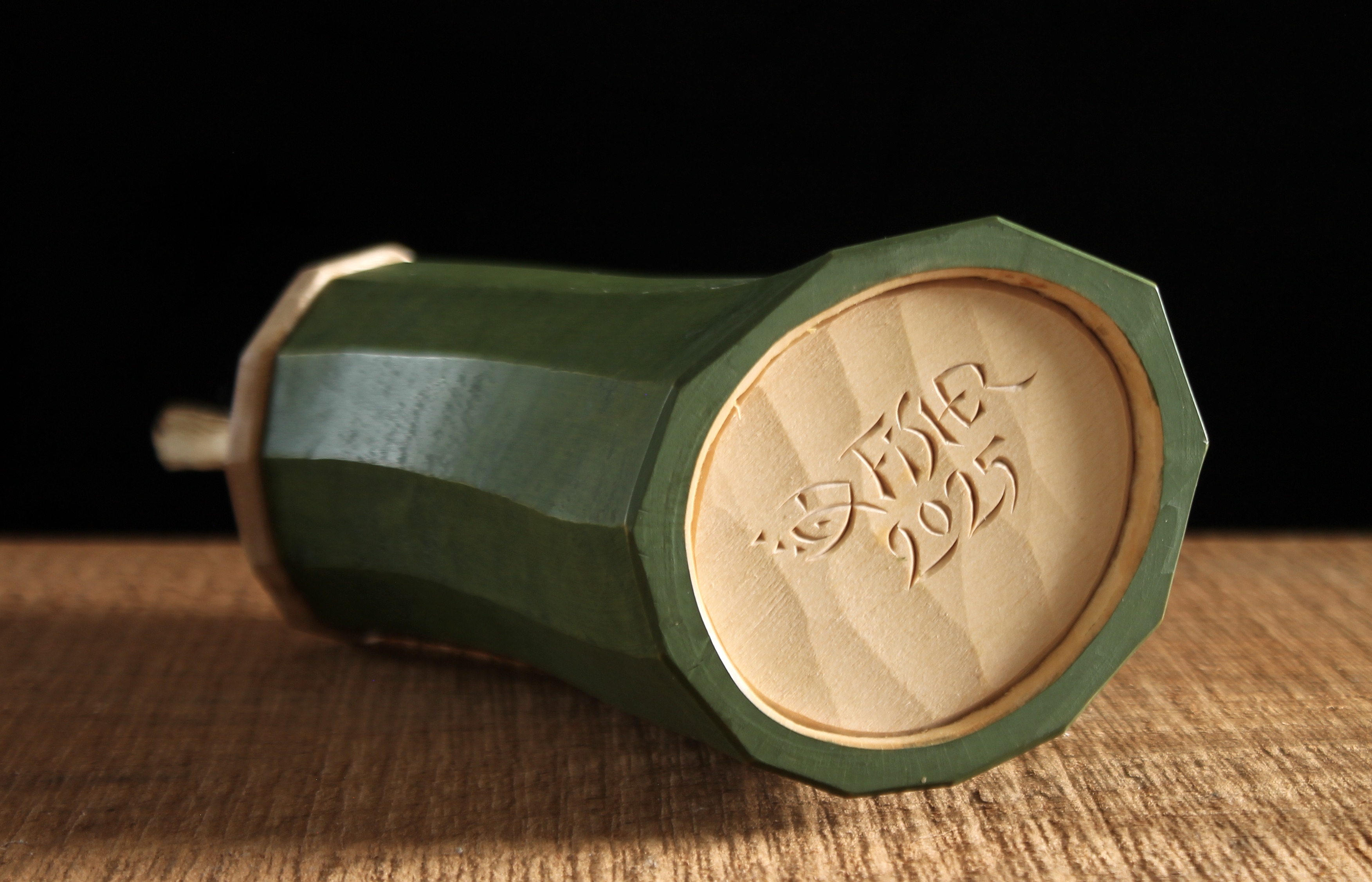
This shrink pot began with a twisty curvy section of a birch tree. In order to hollow it out, I began by boring a hole from each end. The holes were at different angles, but met somewhere in the middle. Then it was some gouge and hook knife work to shape the interior. The facets on the outside were carved with a drawknife at the bowl horse.

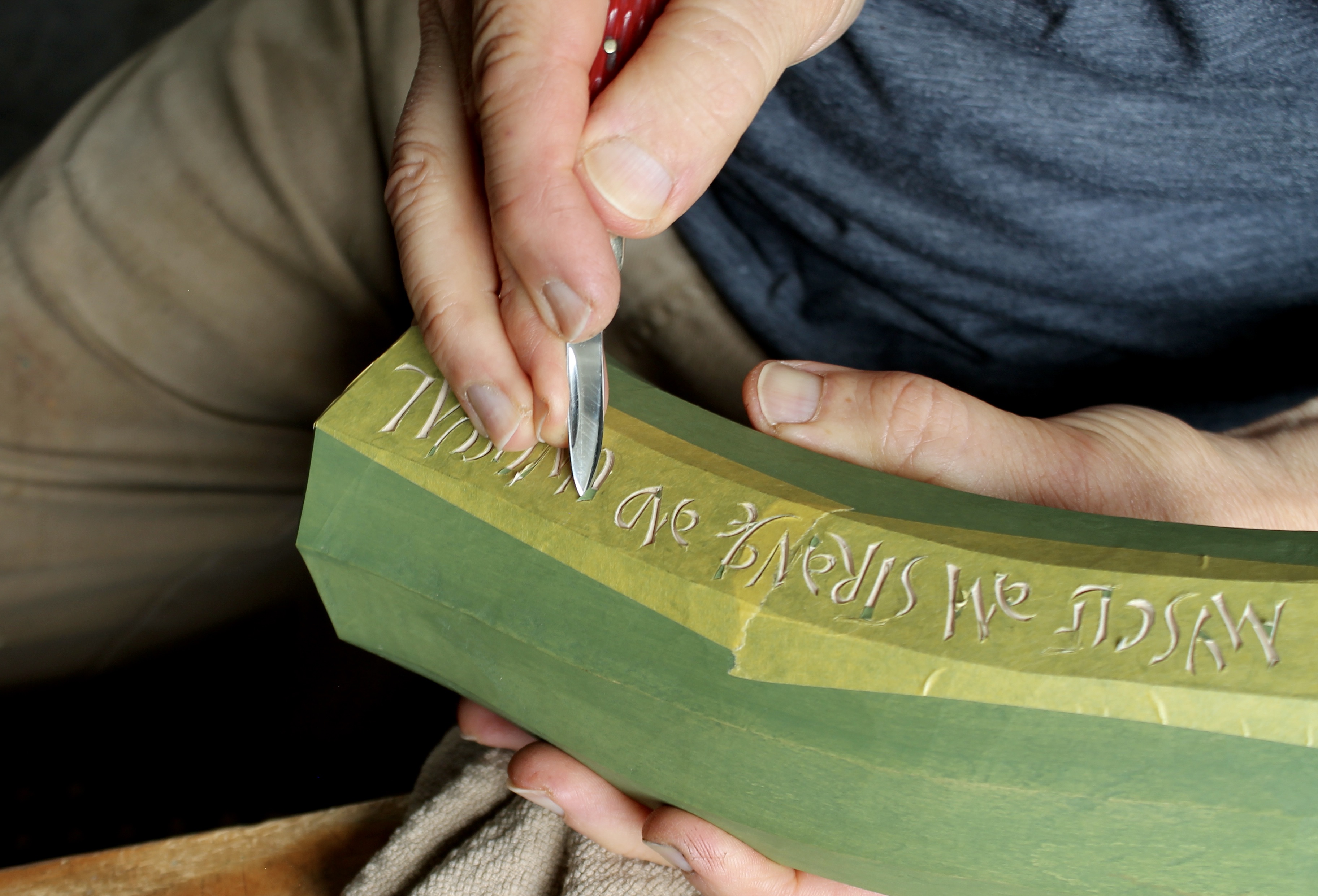
For the lettering, I put some yellow Frog Tape over one facet. This was after a base coat of green paint. The tape allowed me to draw the lettering, erase, smudge, whatever without messing up the surface of the pot. Once I was satisfied with the layout, I carved the letters right through the tape, but not quite to a finished state.

When I remove the tape, a good deal of detail work and touch up remains. That’s easier to see and do once the tape is gone.

After the lettering was finished, I put a second glazing coat of darker green over everything. It reminds me a bit of the strange and unusual shapes of zucchinis that are so plentiful this time of year. Maybe that’s what led me to this green. Or maybe I only made the zucchini connection afterward. Memory is a funny thing. I do know that I started shaving the facets without a plan for the color, lettering design, lid….Trying to plan out every aspect of a piece ahead of time can be paralyzing — and presumptuous.

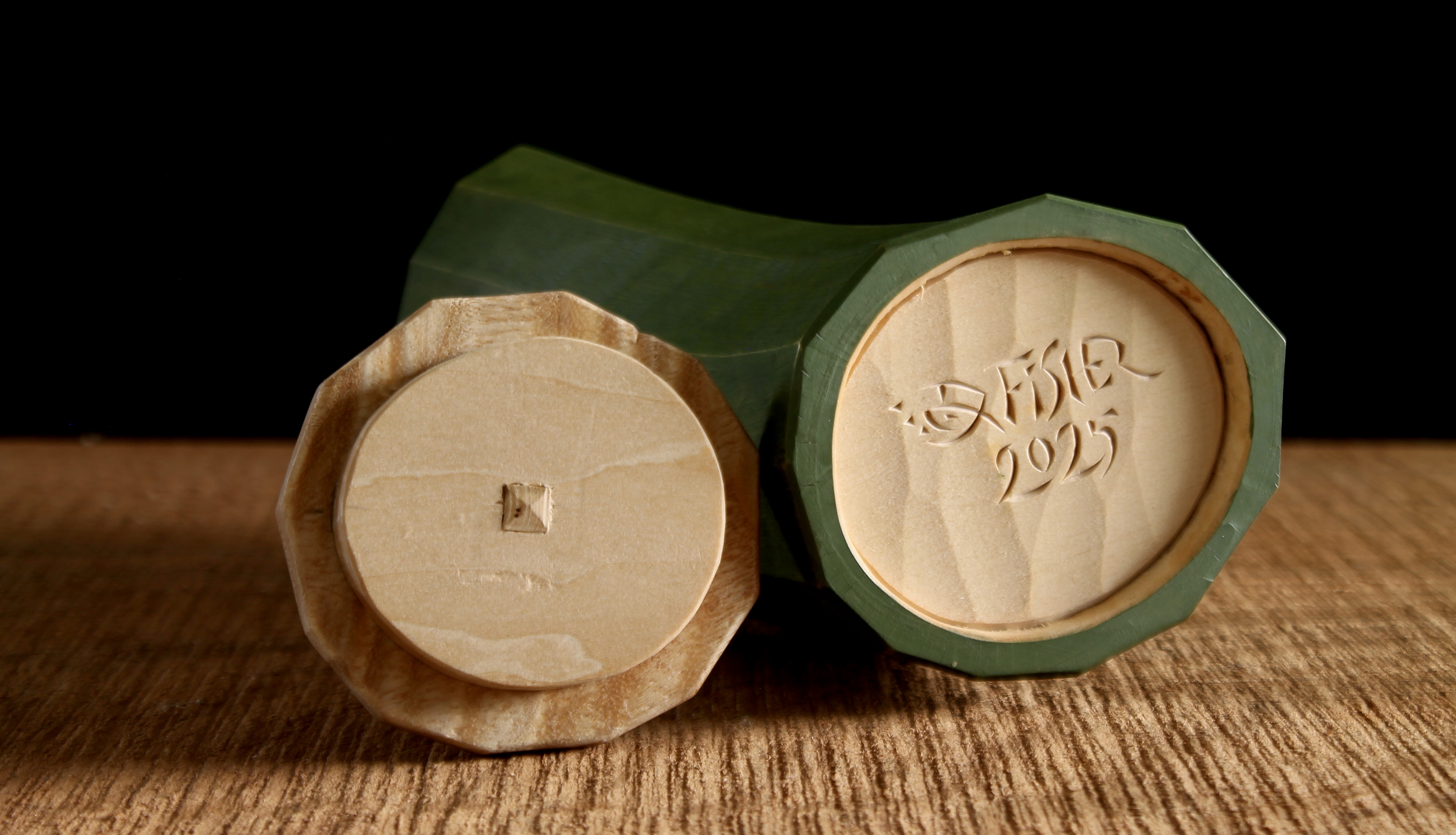
The lid is a wood I had never worked before, sent to me by a friend. It’s paulownia, a section from the root flare at the base of the tree with lovely figure. The finial was split from a hickory branch crook. The slide show below has some additional photos.

This one is already in the hands of its new owner. But I’ve got some other pieces underway.

Posted in design, Lettering, shrink box, Uncategorized | Tagged , | 17 Comments

Drew Langsner’s “The Chairmaker’s Workshop”

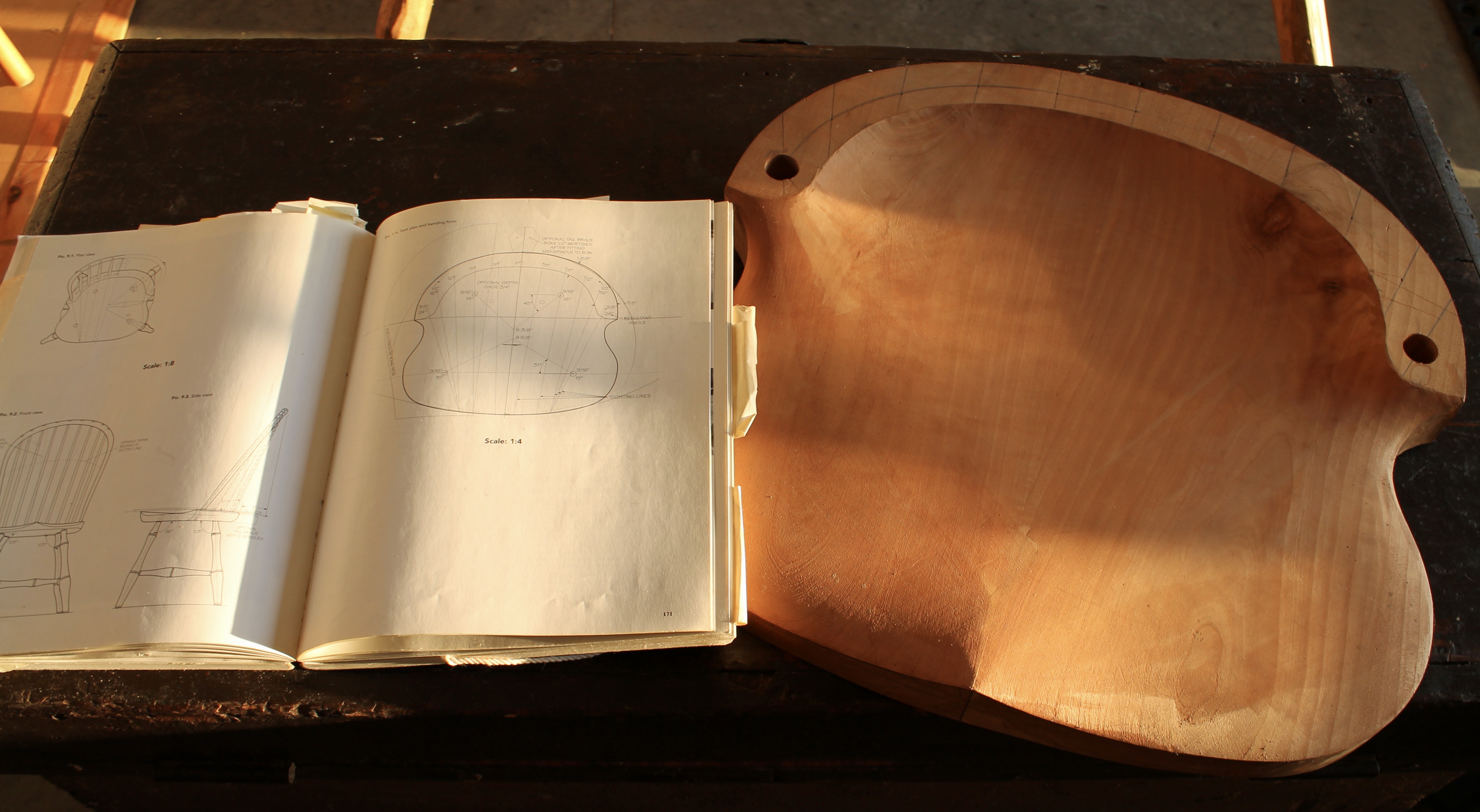
I’ve written before about how influential Drew Langsner and his books have been in my woodworking life. But I haven’t mentioned much about his book The Chairmaker’s Workshop specifically. That’s my copy from the ’90s. I love it and I learned so much from it, about chairs, but also tools, sharpening, and much more. A new edition has just been published by Lost Art Press, expanded and made to hold up better than my tattered copy.

With my attention being diverted early on toward bowls and carving, I’ve only made a dozen or so chairs. But I’m not done with them. In fact I’ve had some individual chairs underway for years! I started carving that cherry Windsor seat probably ten years ago, based on plans in Drew’s book. I’ll get back to that chair this winter, I tell myself.

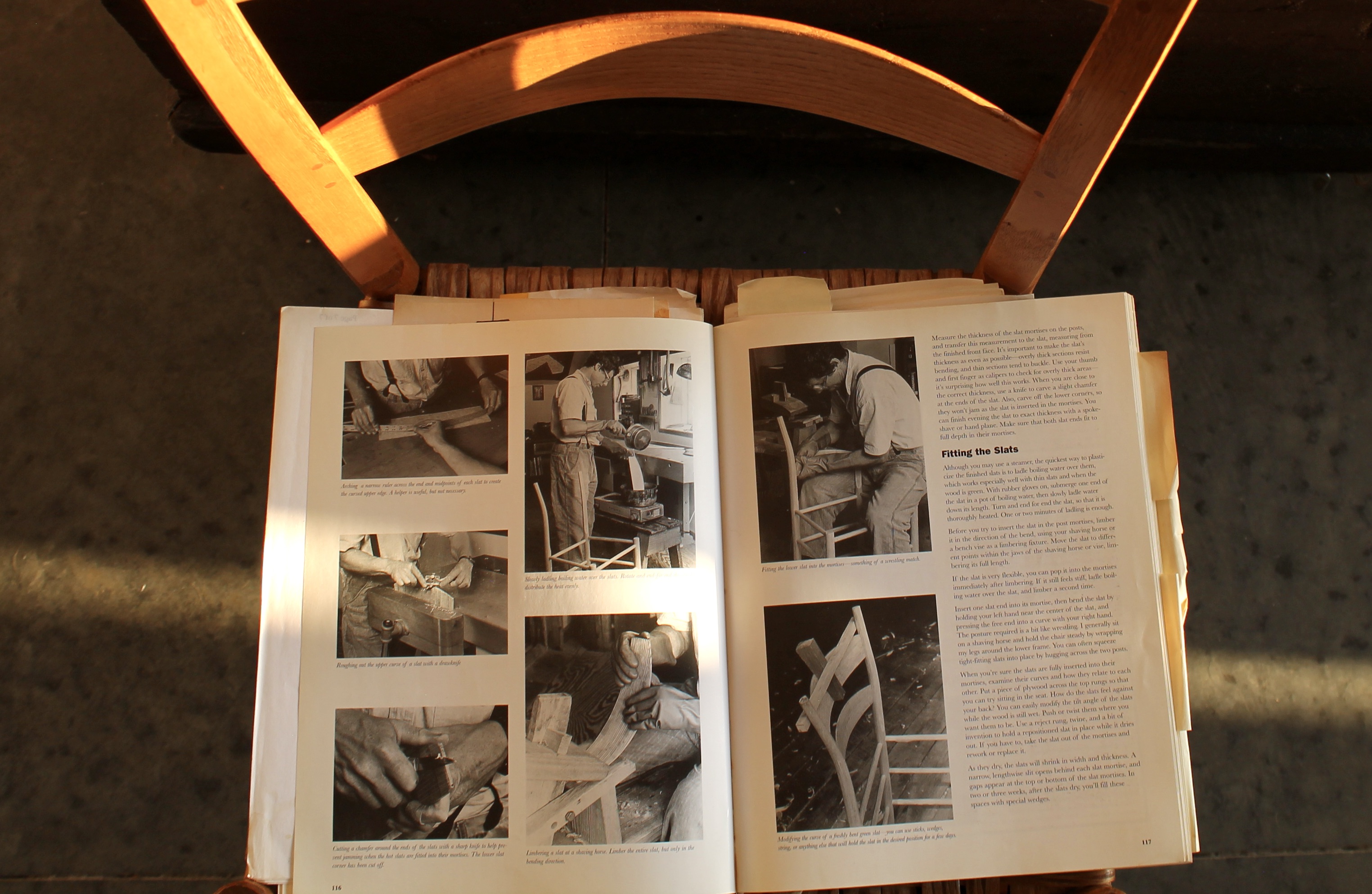
And I referenced the book constantly as I made my first ladder-back chair. Based on Jenny Alexander’s design, Drew documented the ever-evolving methods used to teach the chair at Country Workshops in his book. Windsors, post-and-rung, stick chairs…they’re all in there.

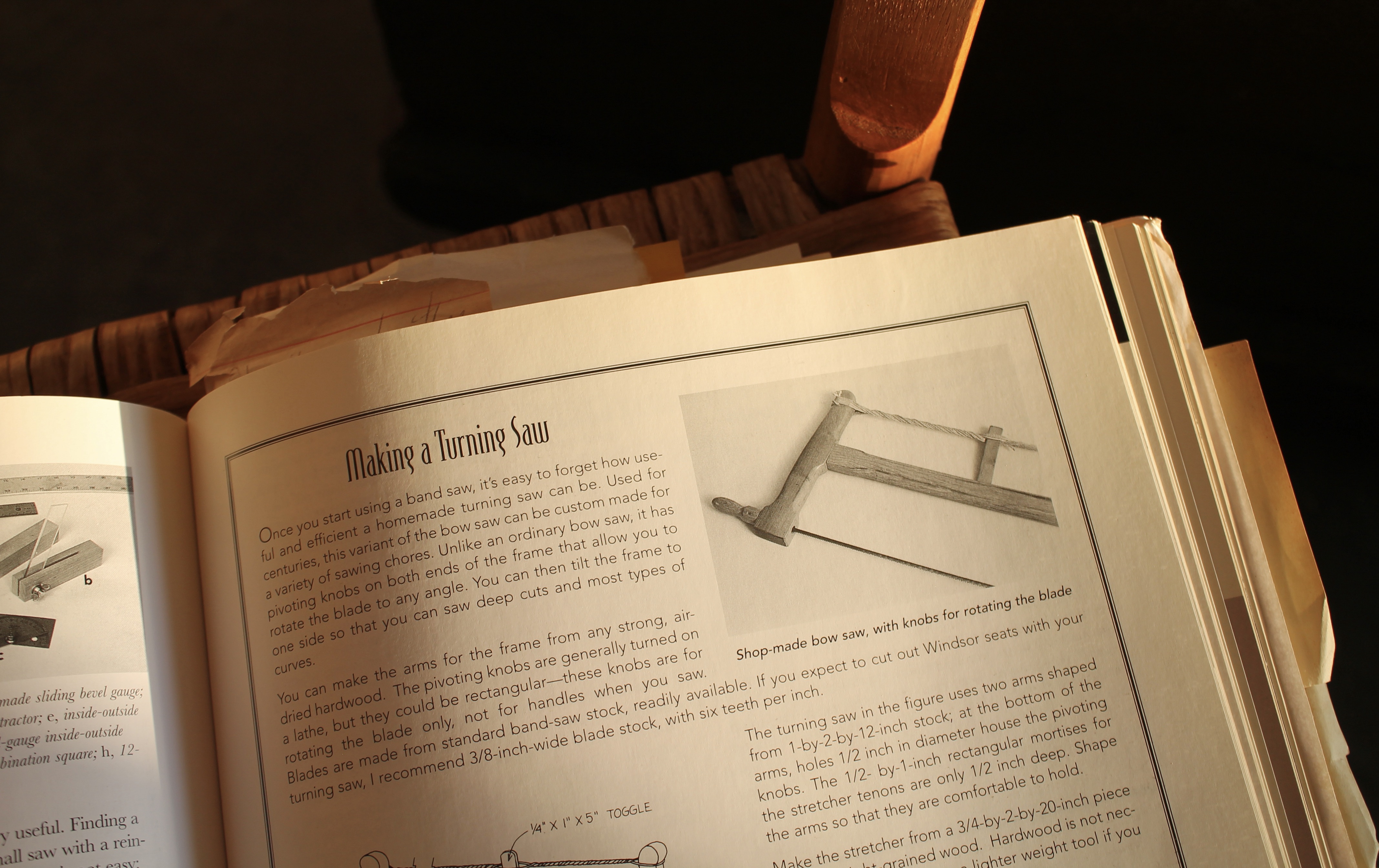
The helpfulness and attention to detail in the book is empowering. Based on his personal experience, Drew leads you through the making of many of your own tools. Not only does this save some money, it builds skills and understanding.

I’m glad to see that it’s back and even better.

Posted in books, chairs, Uncategorized | Tagged , | 1 Comment

Four Shrinkpots and Some Tool Thoughts

I’ve just finished four shrink pots that are available for purchase. They are made from various wood species, which I’ll detail below. All are finished with a mixture of linseed oil and beeswax. The lidded ones all have tight-fitting lids (to seal in any dry goods you choose to store in them) and unfinished interiors. If you’re interested, please email me at dandkfish@gmail.com. Prices include shipping. More information, measurements, and slideshows for each one below, followed by a few thoughts on in-cannel vs out-cannel gouges for hollowing shrink pots and groove cutters.

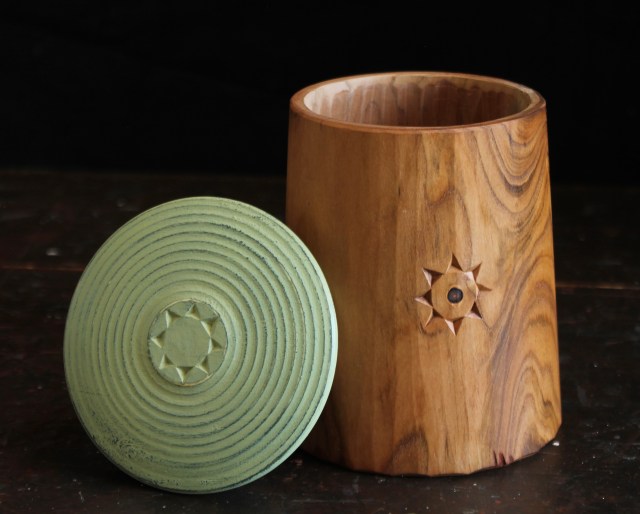
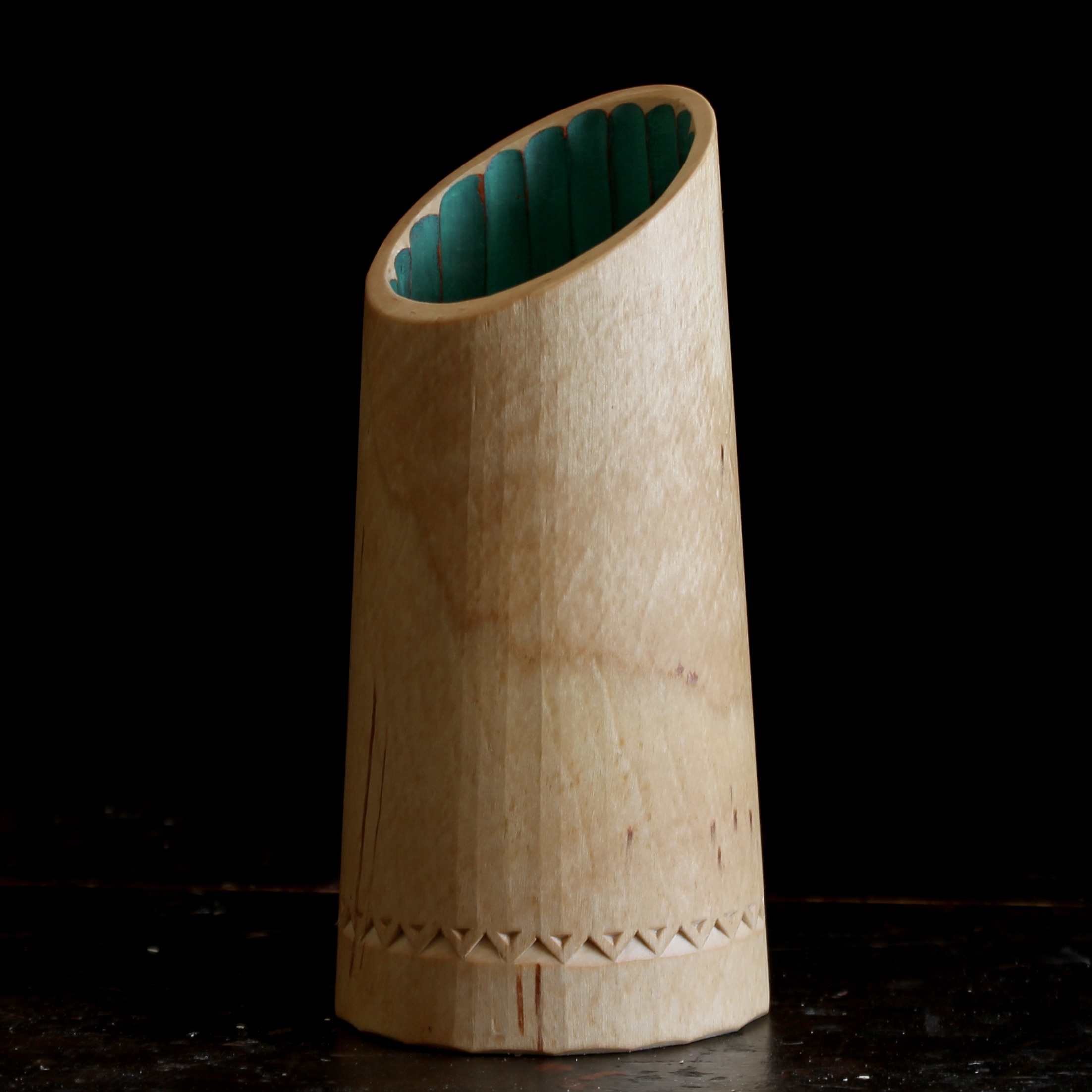
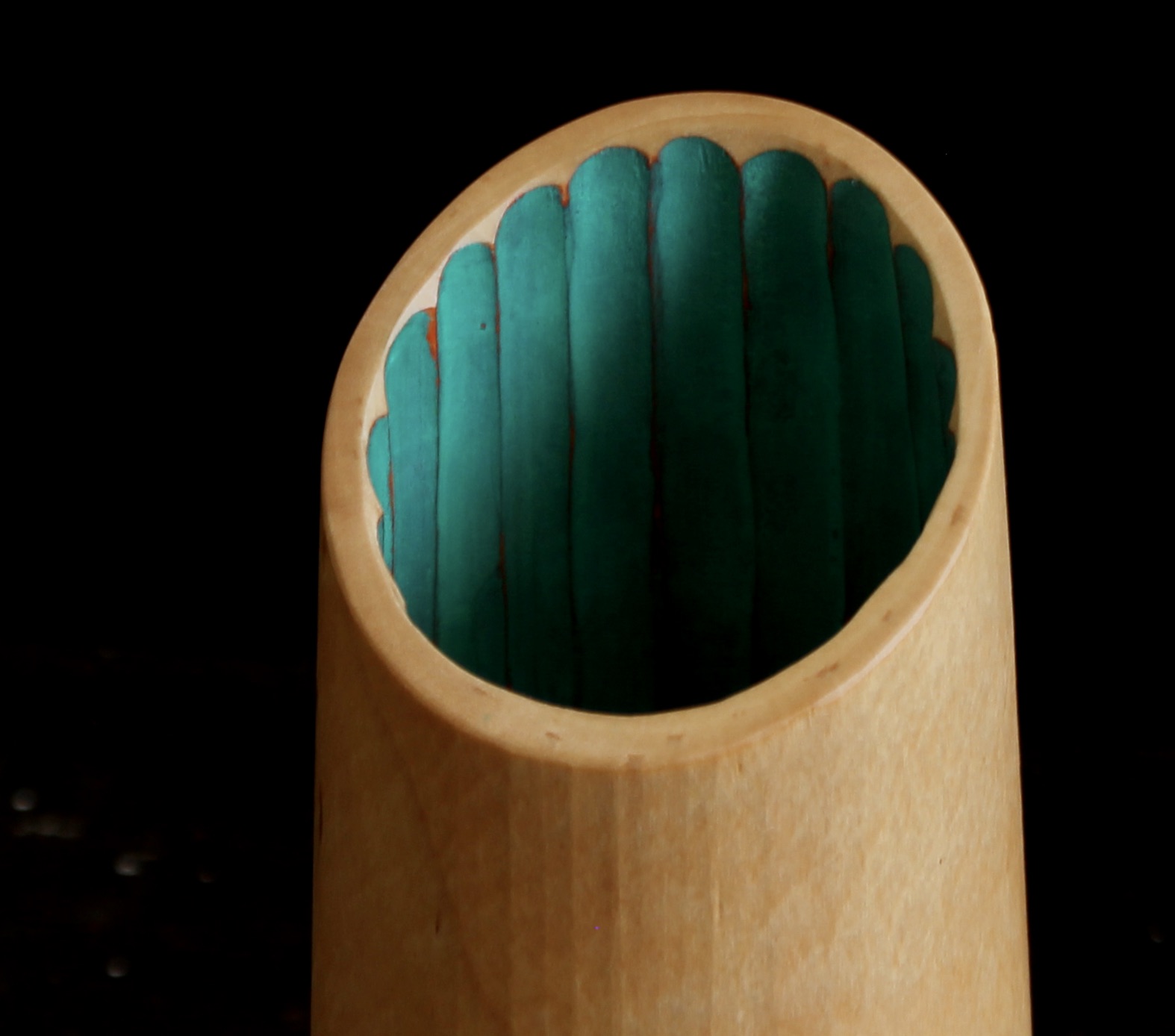
1: 5 1/2″ high, 4″ wide. Apricot body, aspen lid. A while ago, some fresh apricot wood became available. Never having tried it, I roughed out a few spoons and this shrink pot. Looks great, but a bear to work with. It’s safe to say that this will be my last tribute to apricot. I made sure to carve the top of the pot truly round, then I turned a lid from a chunk of aspen, so this lid fits snuggly no matter how you put it on. I played off of that tight pin knot on the side of the pot with some chip carving, then complemented that with some more on the inside and outside of the lid. Milk paint on the lid, Granny Smith over peacock. Detail photos above. $450 includes shipping. SOLD

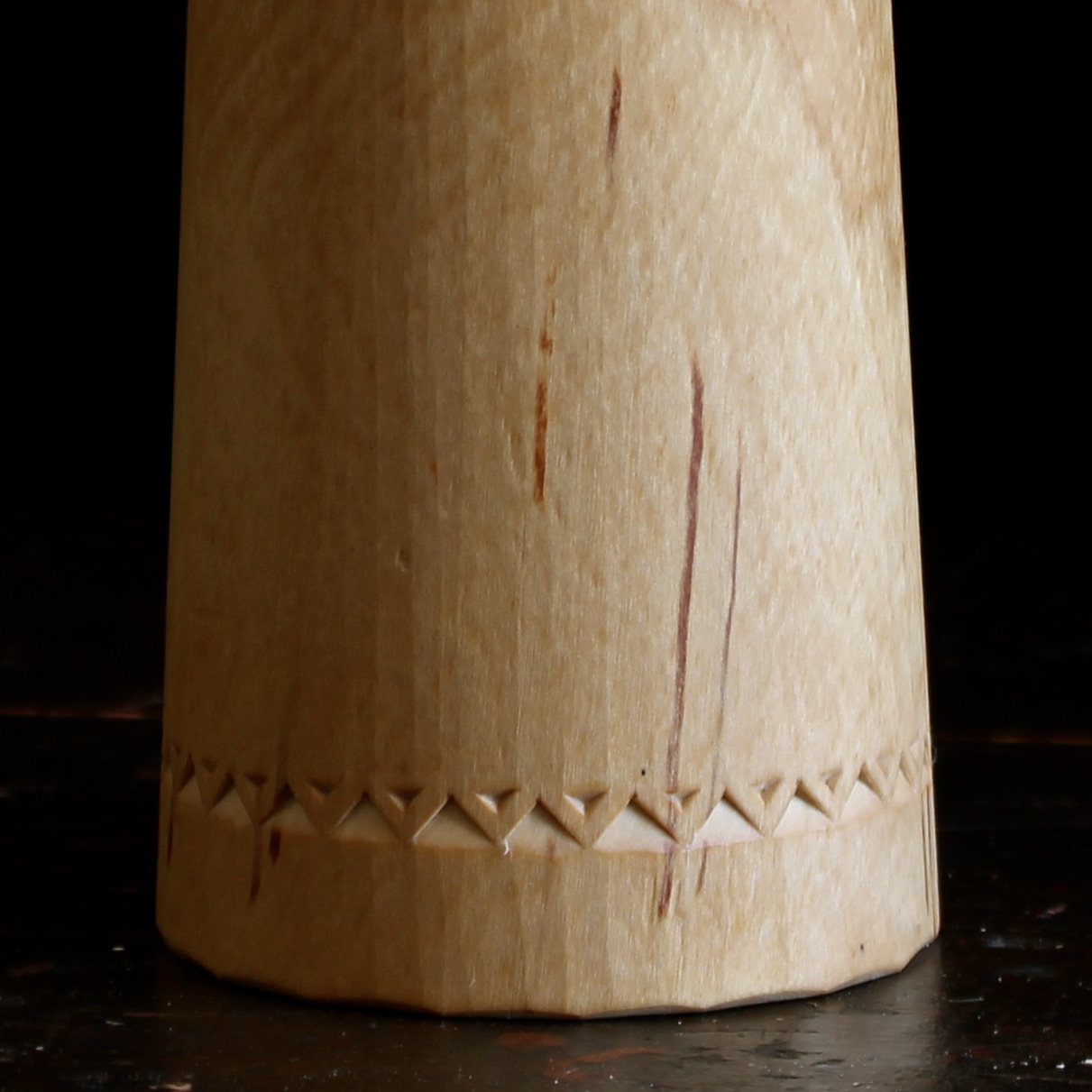
3: 7 1/4″ high x 3 3/8″ wide. Birch. Milk-painted interior, spearmint over persimmon. No lid on this one, which allows it to hold longer things you want to access like pencils, paint brushes, kitchen spoons…wrenches? The combination of the two milk paint colors reminds me of patinated copper. Detail photos above. $350 includes shipping. SOLD

4: 8 5/8″ overall, 6 1/4″ without the finial/handle. Base is 3 1/2″ x 3″ oval. Elm body and finial. Birch lid with blue milk paint (mix) over black India ink. I carve the outside of shrink pots at the bowl horse. In this case, with a drawknife. Some fibers lifted just above a knot and it struck me how much it looked like an eye and an indication of a beak. I just enhanced the tear-out with a bit of carving, leaving a subtle image that may or may not be noticed. Detail photos above. $400 includes shipping. SOLD

I’ve got lots of posts about making shrink pots, but I’ve been asked a couple times recently about whether I use an out-cannel or in-cannel gouge for hogging away the material after boring a central hole. I guess I’ve never addressed it specifically.

An “out-cannel” gouge has the bevel on the outside, so a typical gouge used for carving. An “in-cannel” gouge has the bevel on the inside with the outside of the tool straight all the way to the cutting edge. In-cannel gouges were/are used for special purposes, by pattern makers for example.

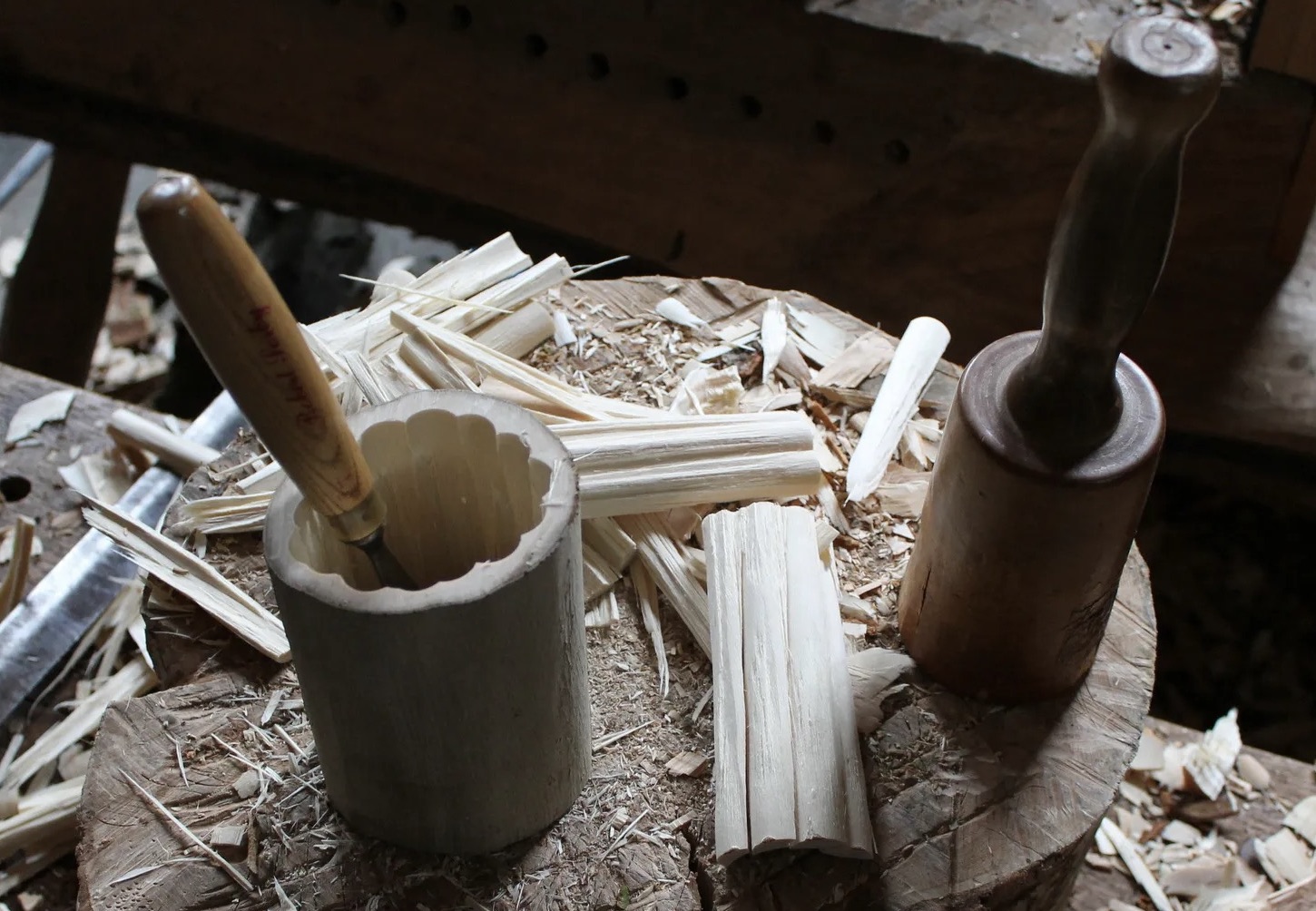
I understand the logic of using an in-cannel gouge for this, and I suppose it would work fine. But I’ve always used a “normal” out-cannel gouge for two reasons. One, I don’t have an in-cannel gouge, and, two, an out-cannel gouge works fine. In the photo above, from a post almost ten years ago, that is an out-cannel gouge. I just tip the handle toward the center so the bevel lies in the direction of travel. If I need to direct the cut back to the center, I can lean the handle back away from center to lever gently off the back of the bevel. The final surface can be pared with gouges, or with a hook knife, or whatever.

One last thing…In that post link, I show a groove cutter (a croze) made from a thread-cutter insert. I still use that one sometimes, but I more often use one made from a v-tool blade. you can see how I made that in this post.

Posted in carving, paint, shrink box, tools, trees, Uncategorized | Tagged , , , , , , | 2 Comments

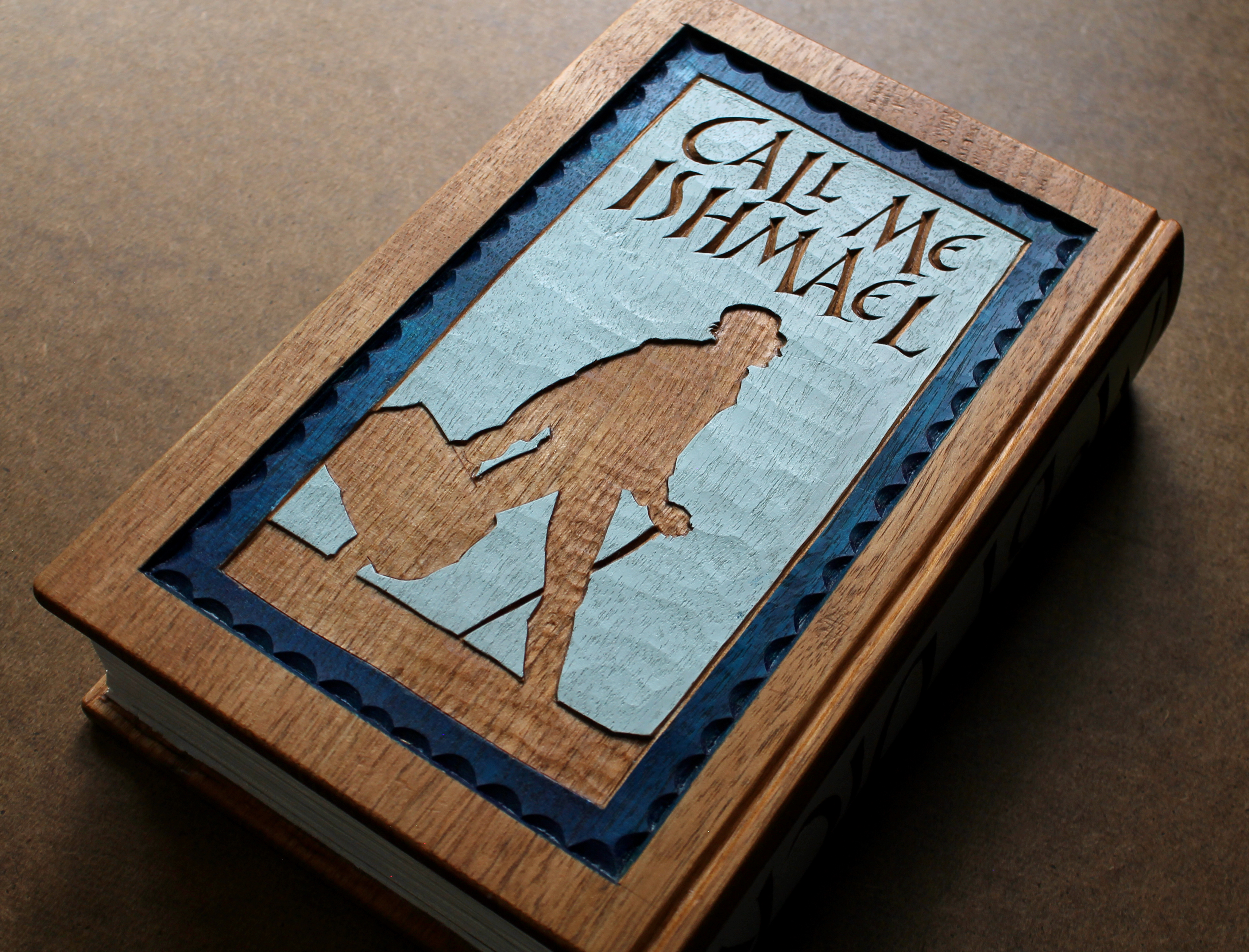
Moby Dick Book Box

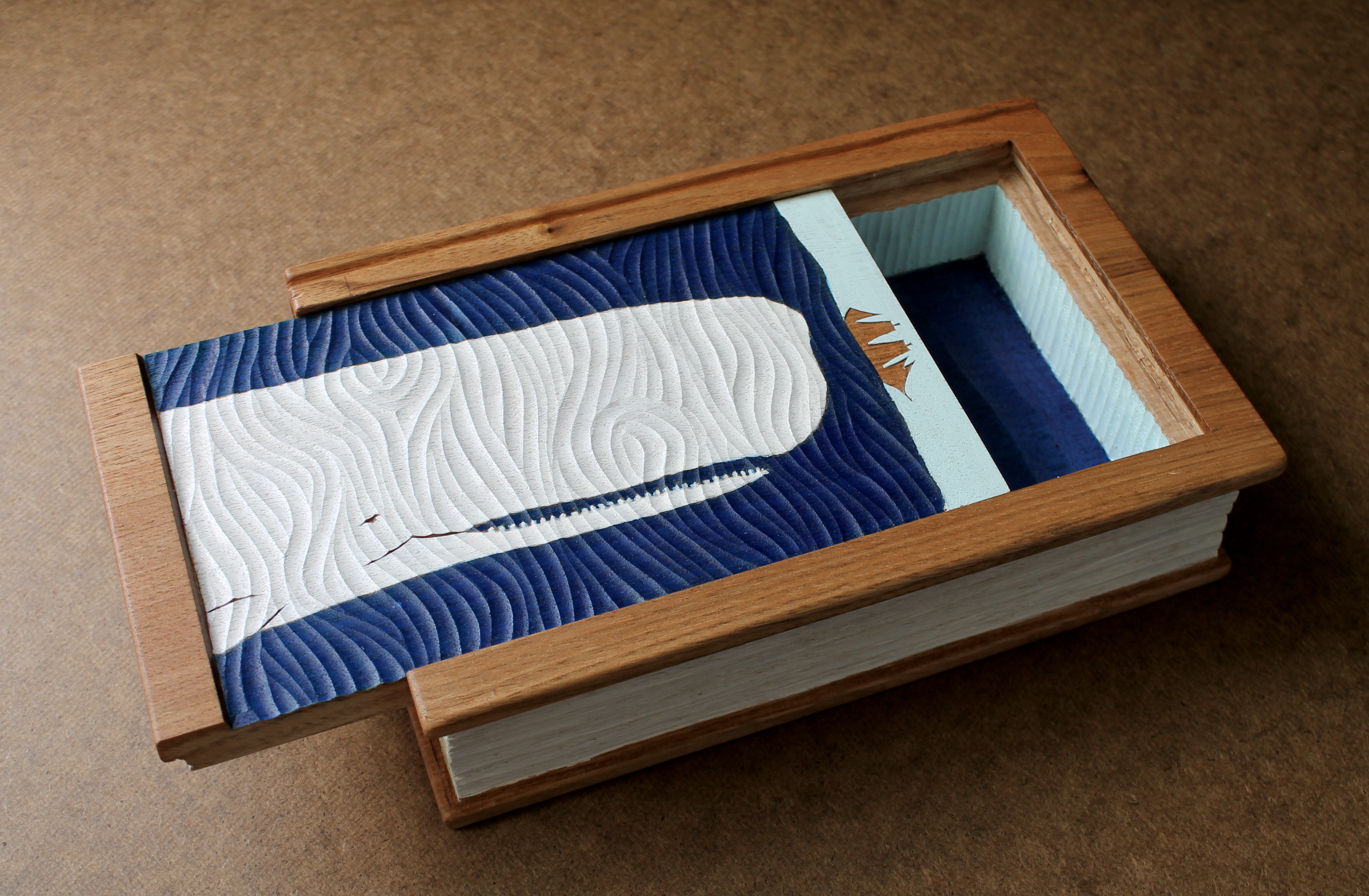
Moby Dick Book Box 2025, 9 3/8″ x 6 1/4″ x 2 1/4″ DF

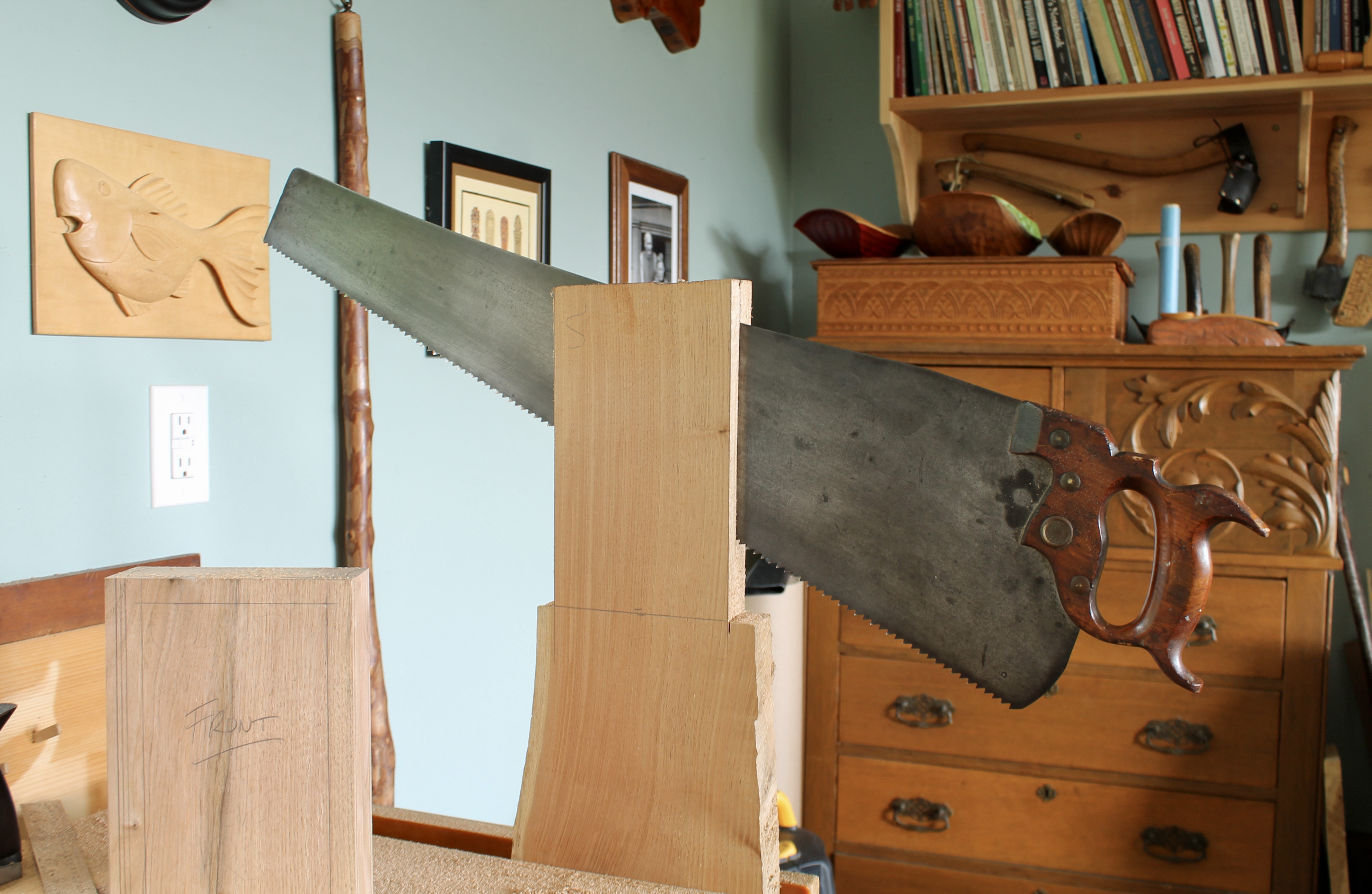
There’s a long tradition of making boxes and other items in the form of books. I’ve made a few now, each in a different way. In an old post I showed one joined from several pieces and another example made with shrink pot construction. For this latest one, made for a birthday gift, I started with a dry block of butternut and a separate piece for the sliding dovetail lid/cover.

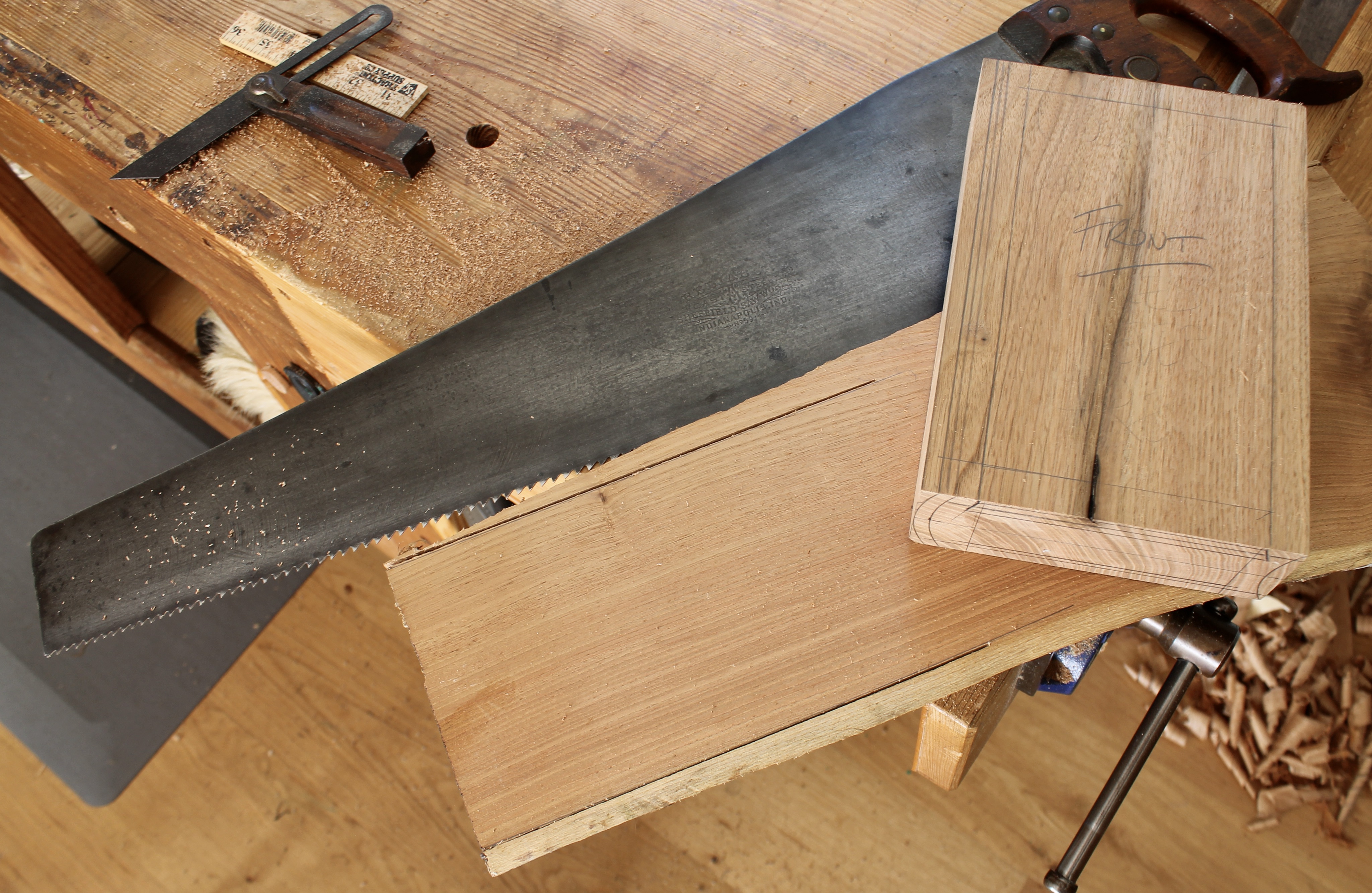
This is stock that I split from a large butternut log several years ago, quite dry now. In the photo above, I’ve sawed and planed the the block for the book itself into general shape then laid out the essentials for the rest of the work with pencil. Under the main block is another piece of the butternut in the process of being sawn to size for the sliding lid.
After sawing the sides, I marked the rough thickness and resawed. The lid, and the block, have a quarter sawn orientation to minimize wood movement.

Before I shaped the outside of the block at all, I carved the sliding dovetails in the box, then gradually planed the edges and end of the lid to match, sneaking up on the final fit. In the photo above, that’s as far as the lid would go at that point. There’s a very slight taper from the open end to the closed end. One or two more shavings off the side of the lid, then it was on to shaping the top of the lid and carving the background for the cover image.

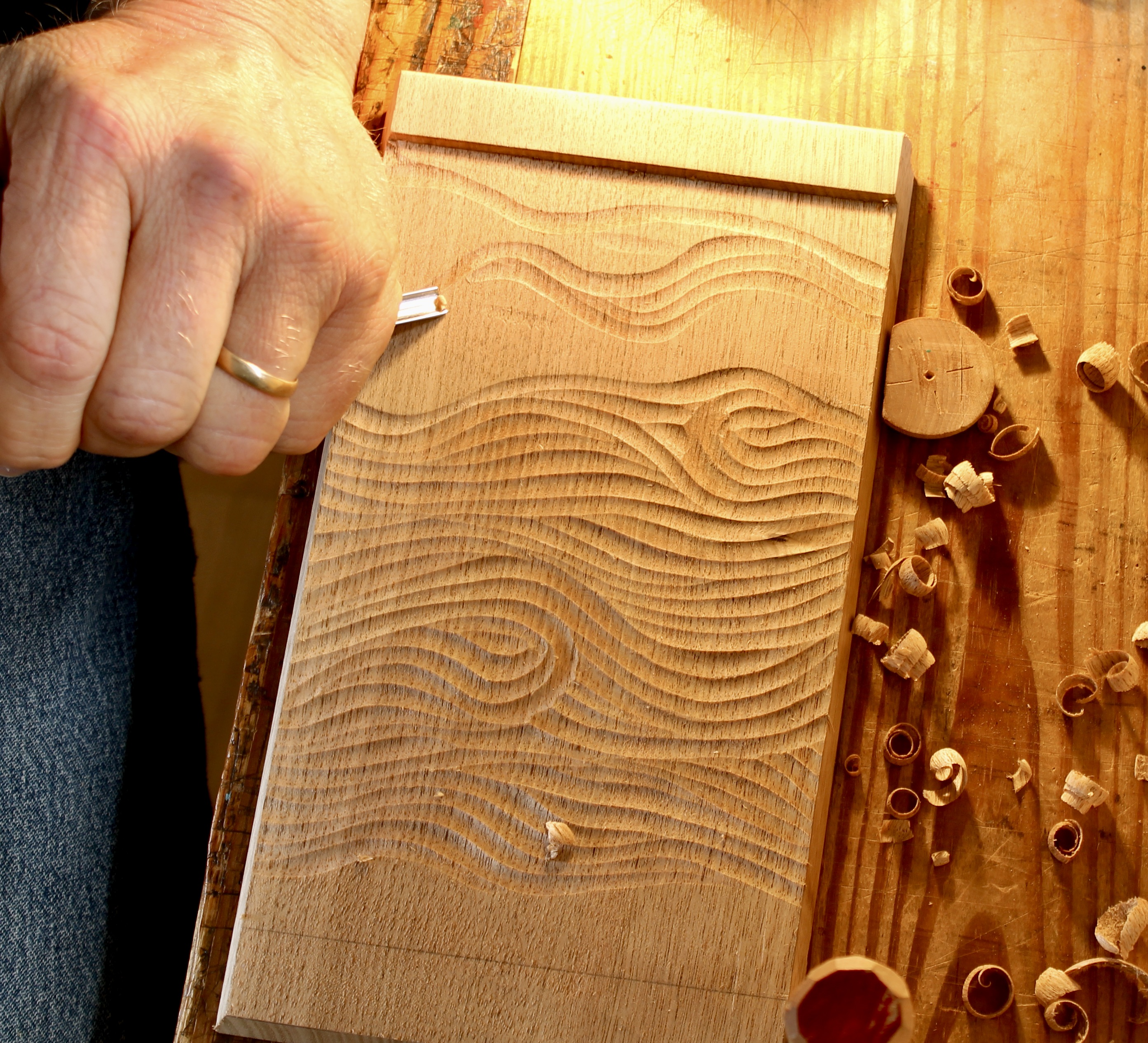
I carved the wavy flutes with a small #7 gouge. With that texture carved and the lid fitting well, I went on one step at a time. I didn’t take any more process photos, but here are some more shots of the finished book box:

The book box standing upright with the cover closed. The paint is artist acrylics. Artist oils would have achieved what I wanted as well, but I didn’t have time to wait for them to dry. The paint comes out of the tube thick like toothpaste. I thinned it a lot with water so that it wouldn’t obscure the carved texture and would allow the grain of the wood to read through a bit.

With the light hitting at this angle you can get a better sense of how much the color is in the wood.

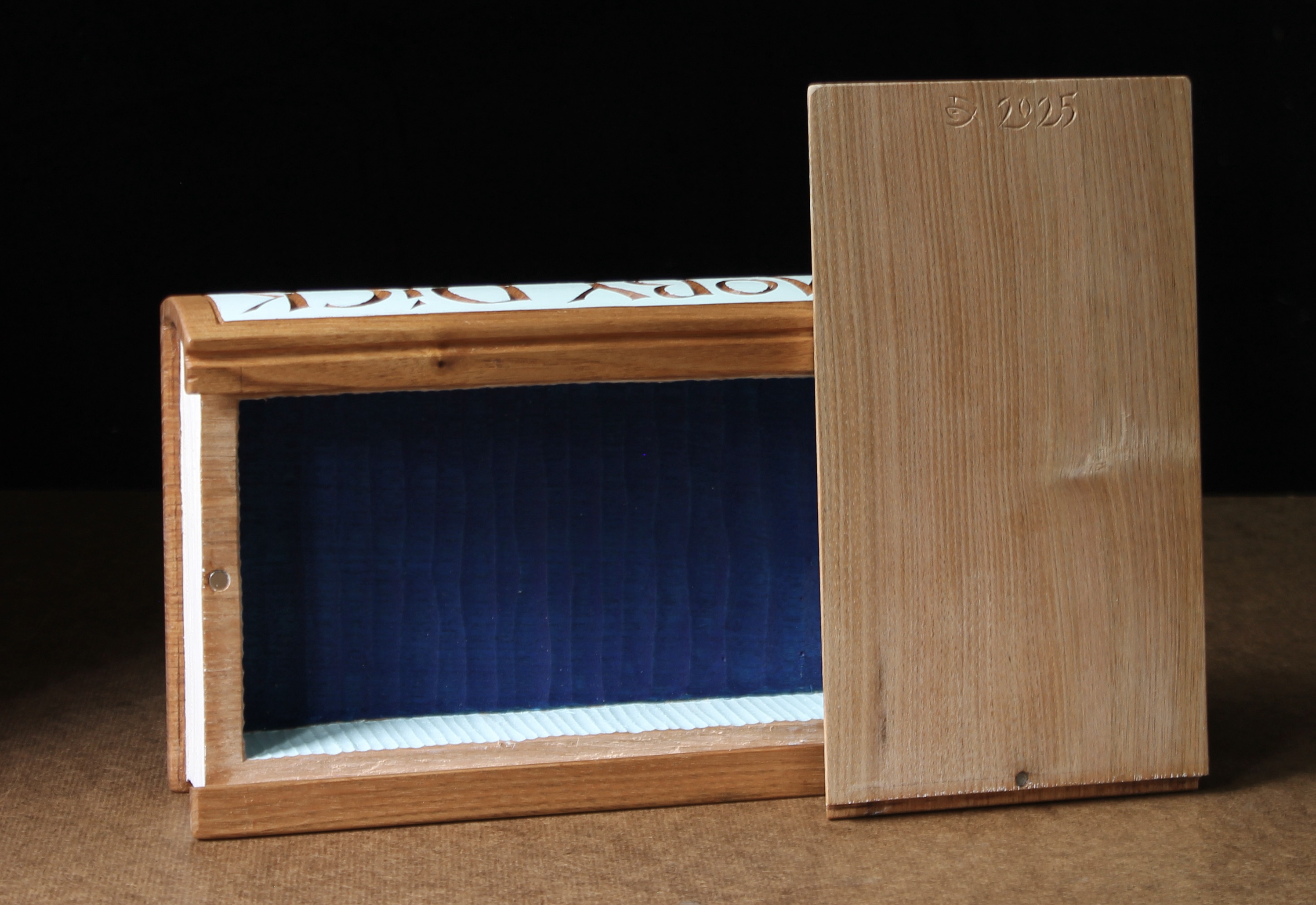
The interior of the box has a texture left from the carving tools and is painted to match. Might make a good lunch box.

The lid fits just right now, but if it should loosen with moisture changes, there are magnets in the box and lid that will keep the lid from sliding out too easily.

There’s the back cover. The silhouette is based on an illustration by Rockwell Kent for the 1930 Lakeside Press edition of Moby Dick. The whole exterior was finished with a linseed/beeswax blend.

If you want to explore many more book-inspired objects, I just discovered that there was an exhibition at the Metropolitan Museum of Art last year. The MET website has background information on the collection and a page with detailed photographs. Many of the bookish things are made from wood, but also metal, stone, fiber and other materials. Books translated into spruce gum boxes, jewelry, pin cushions…

Posted in books, historical reference, Lettering, paint, patterns, shrink box, Uncategorized | Tagged , | 13 Comments

August 2025 Spoons (and Such)

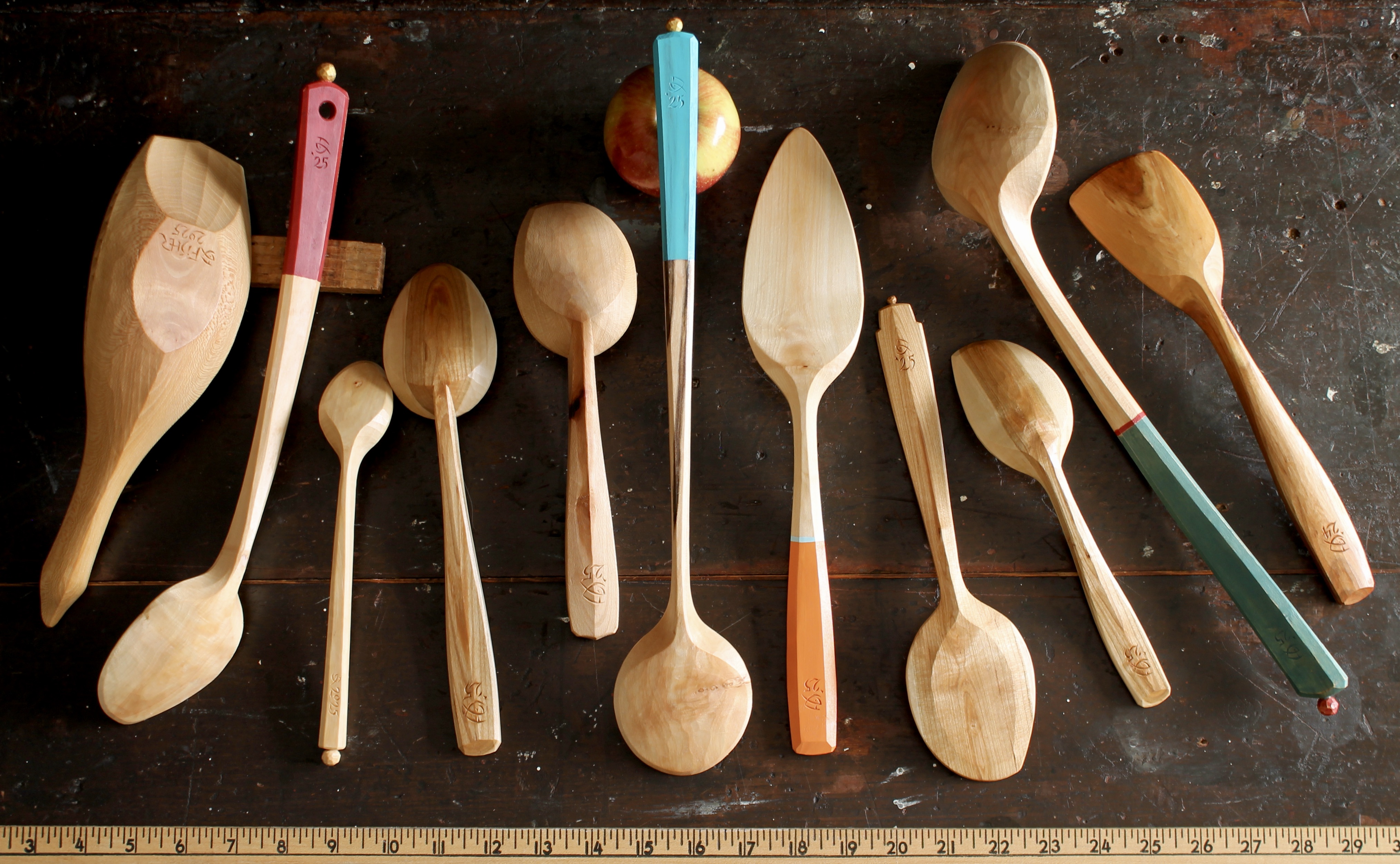
DF Spoons August 2025, Front View

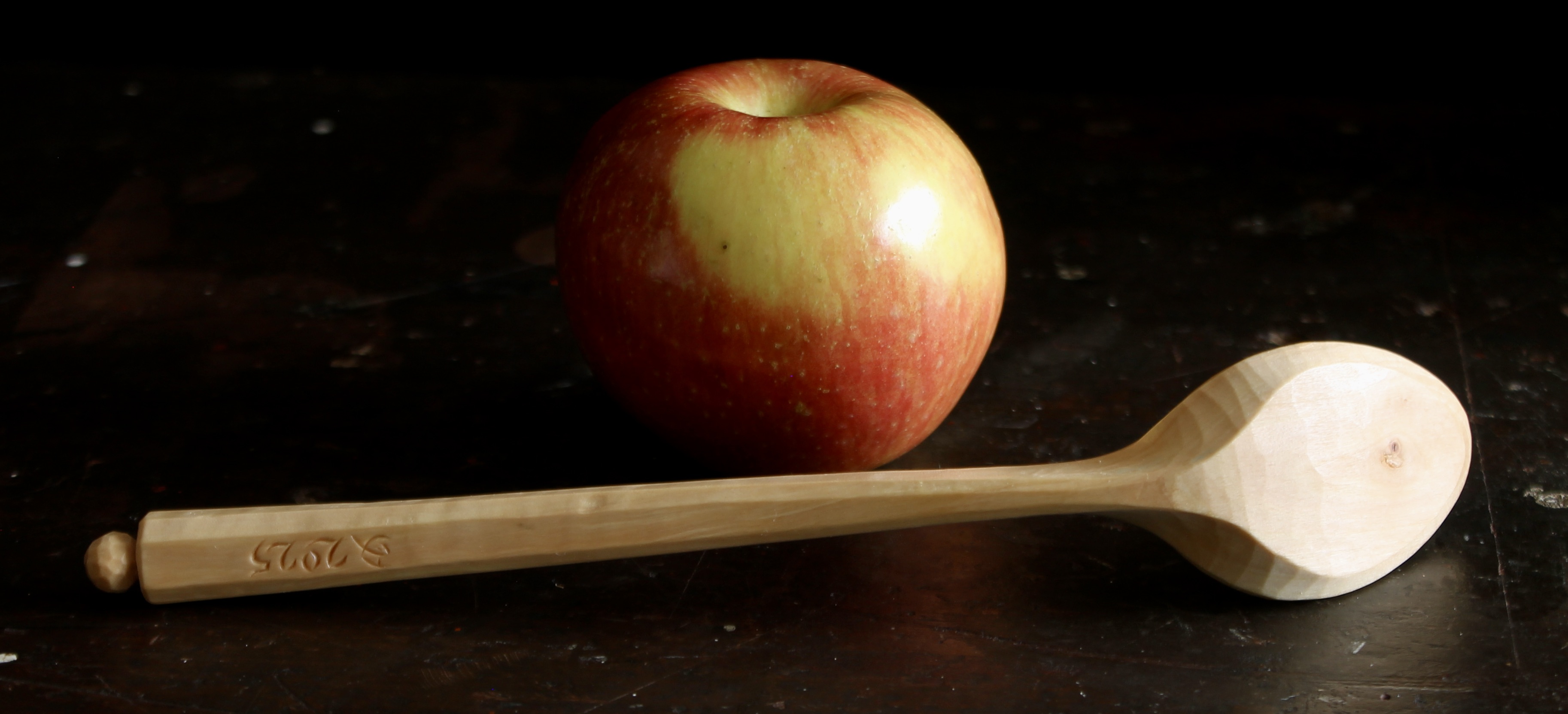
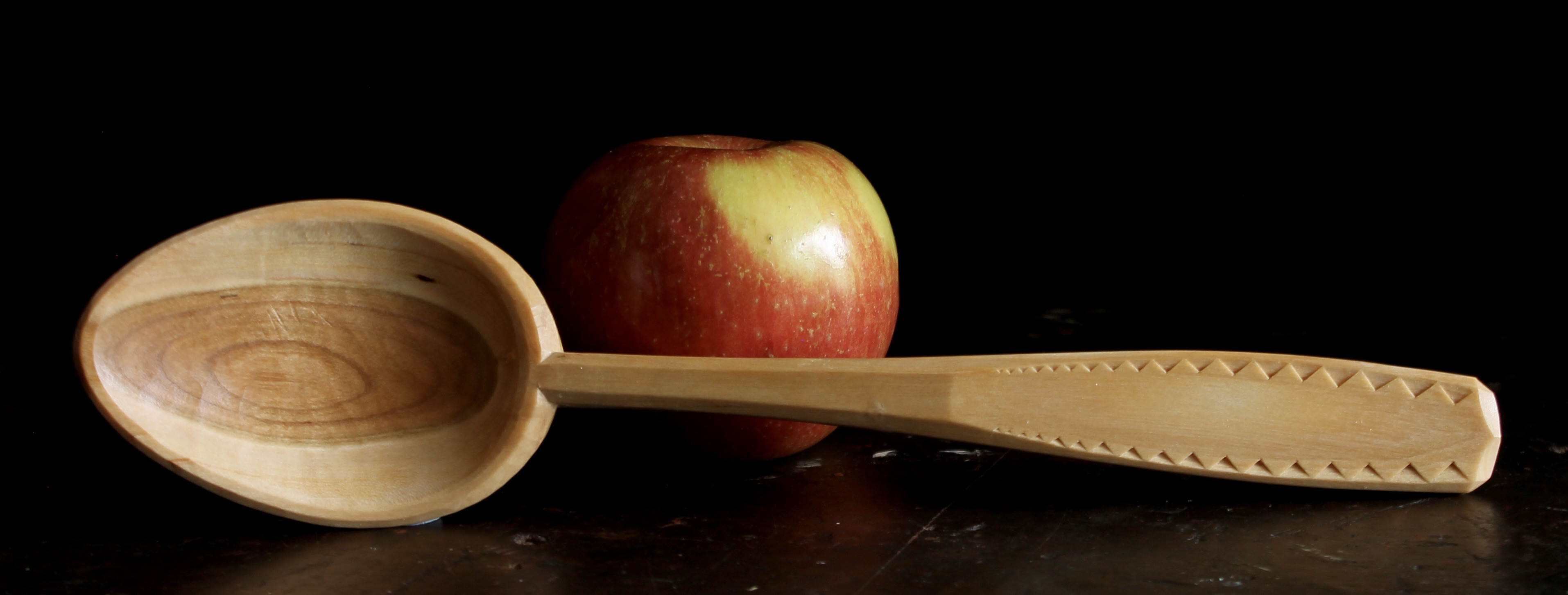
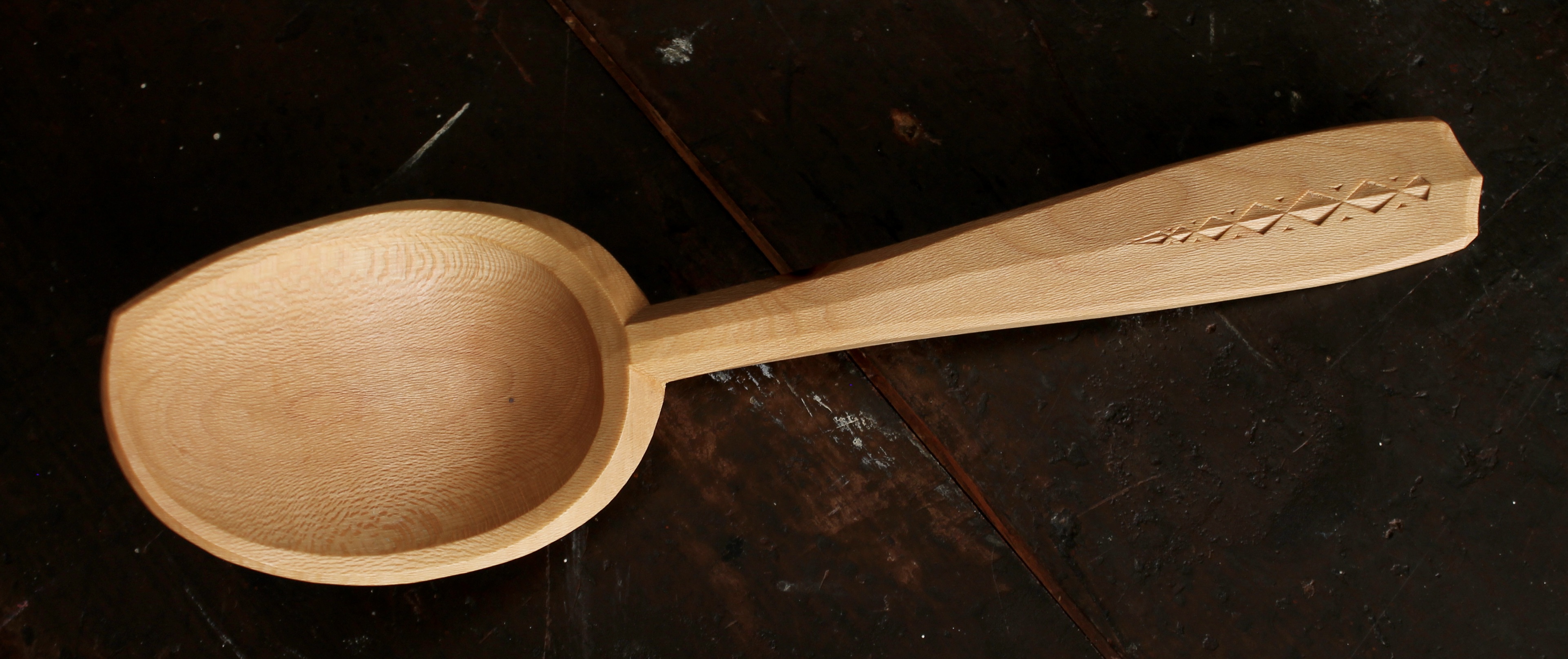
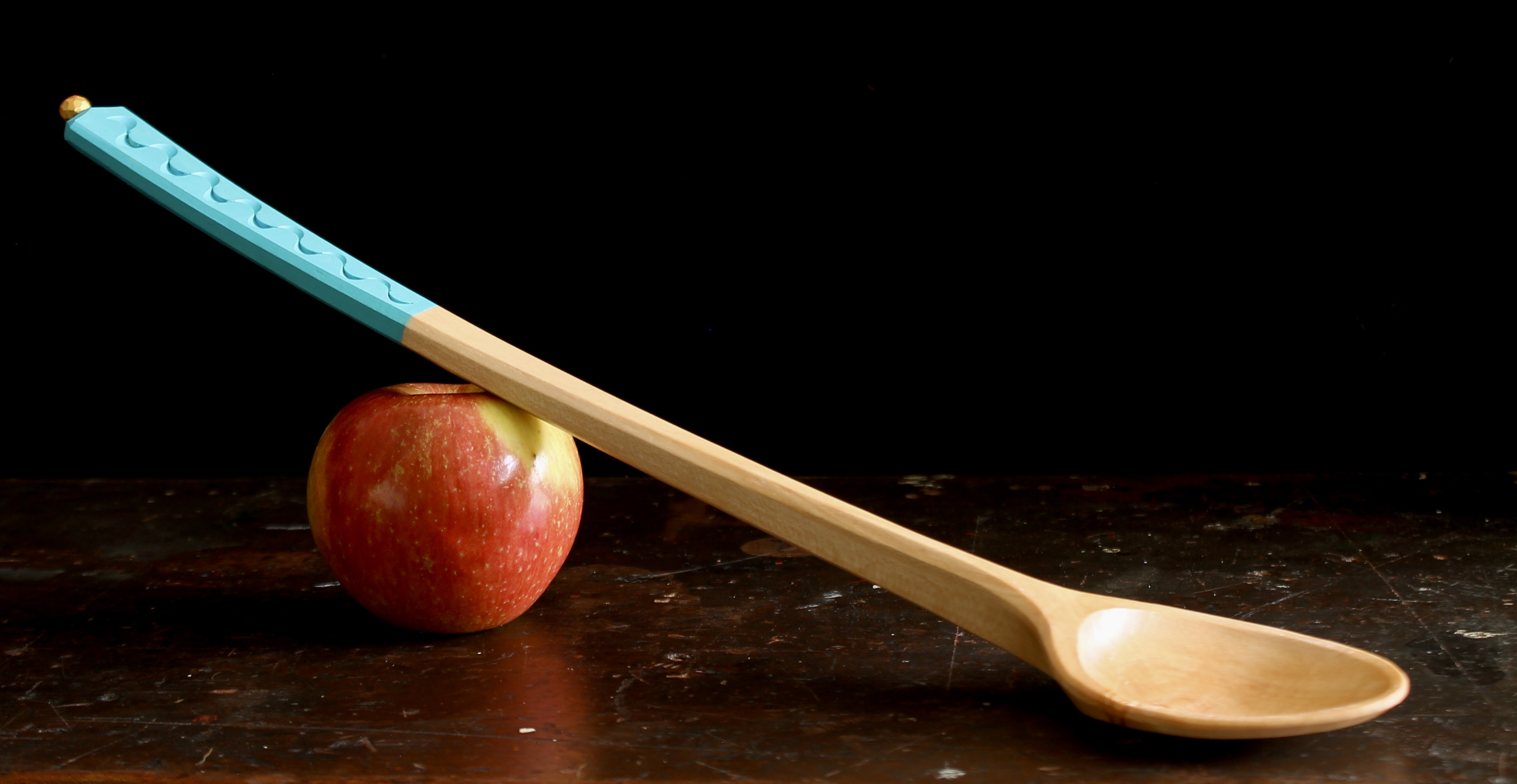
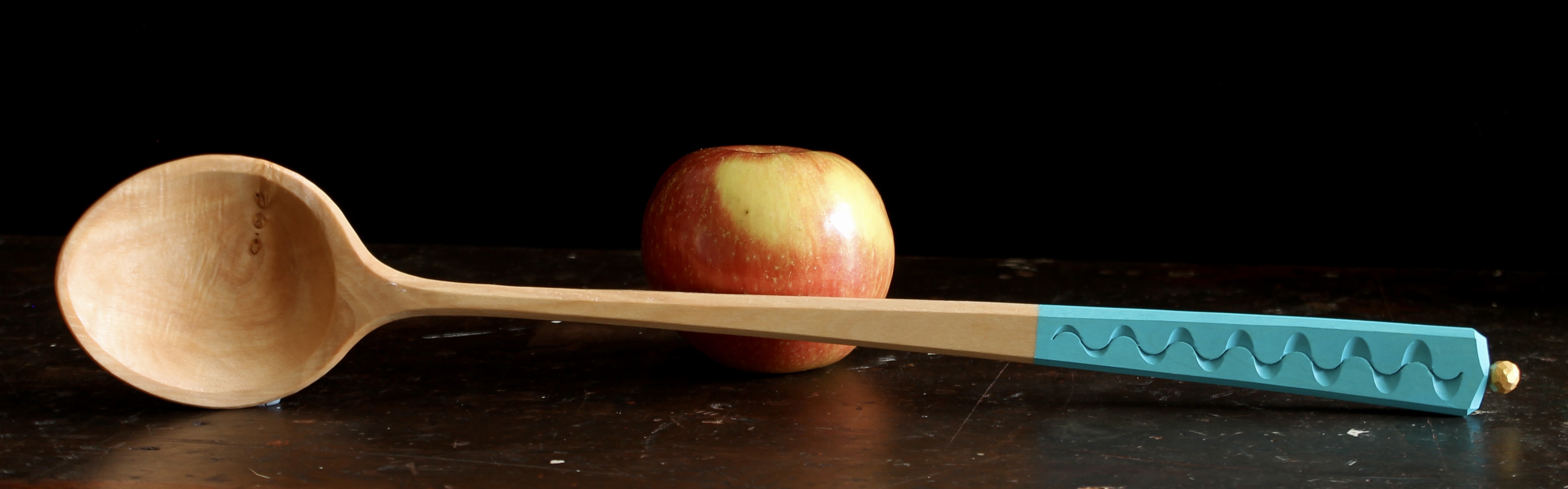
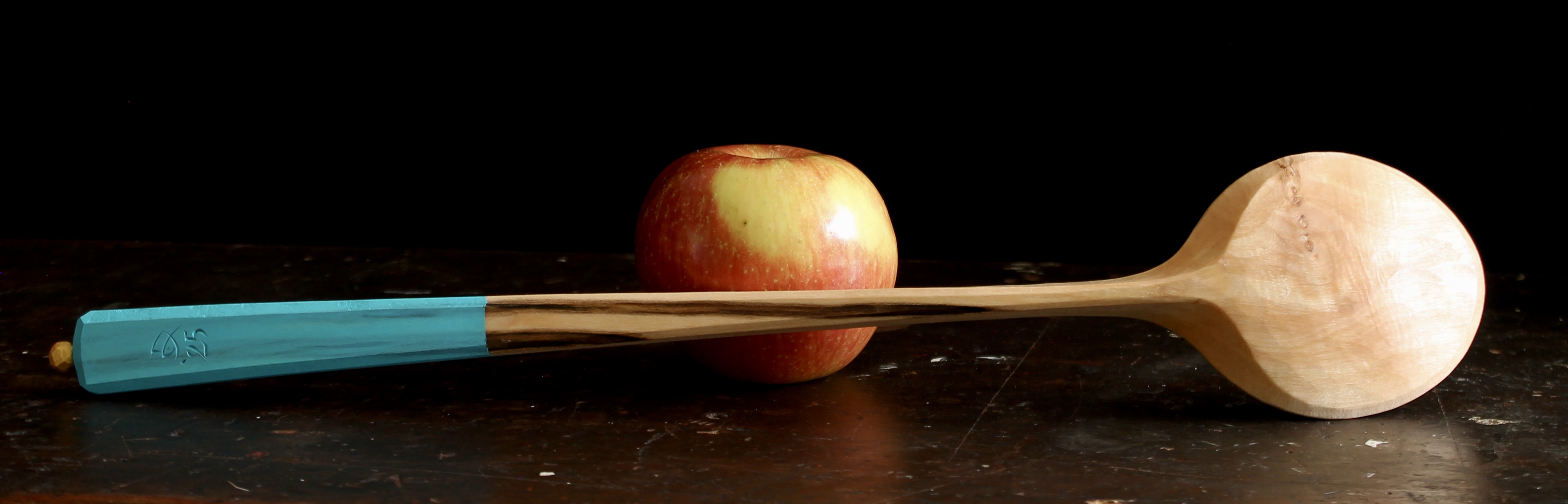
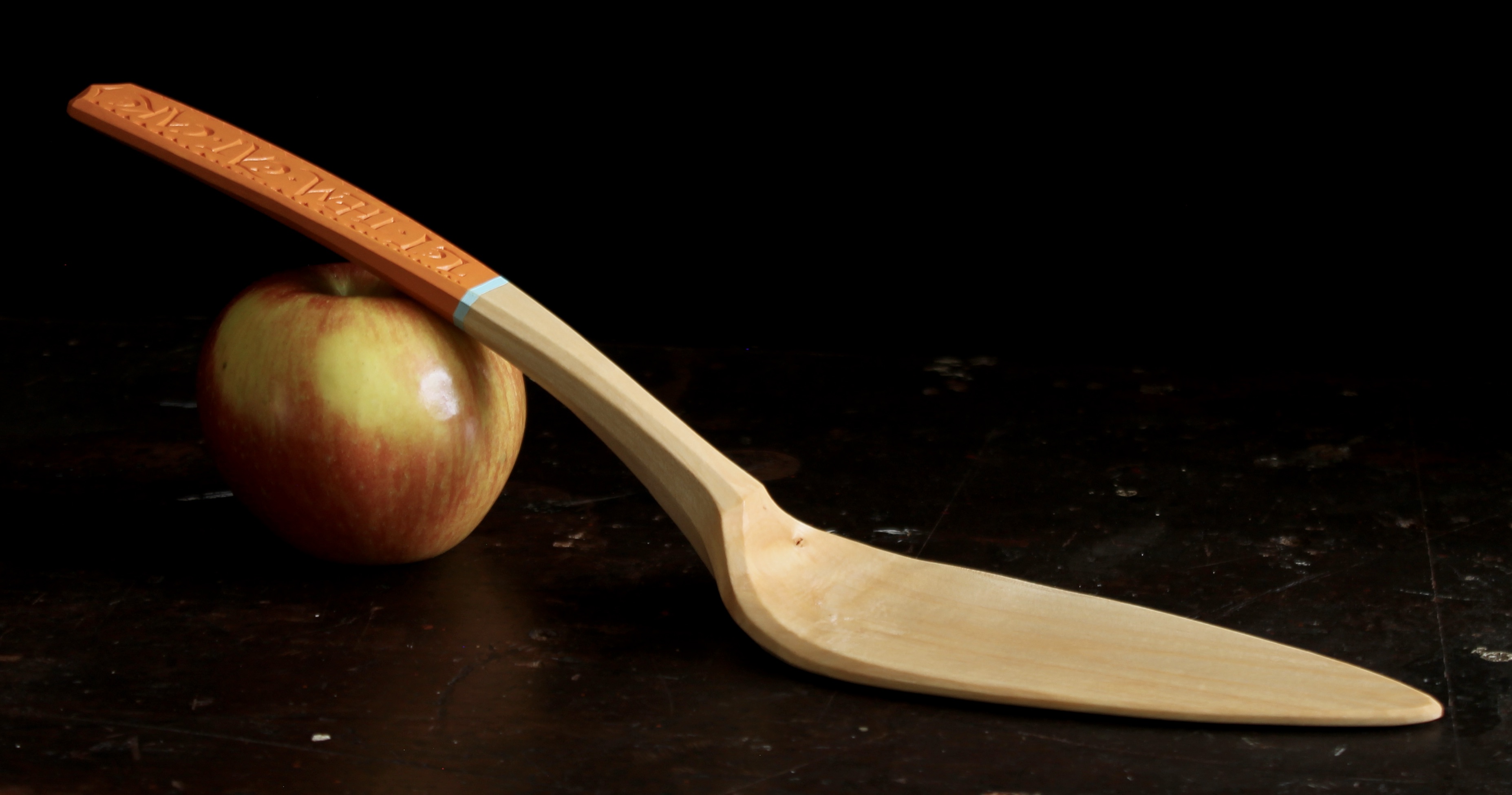
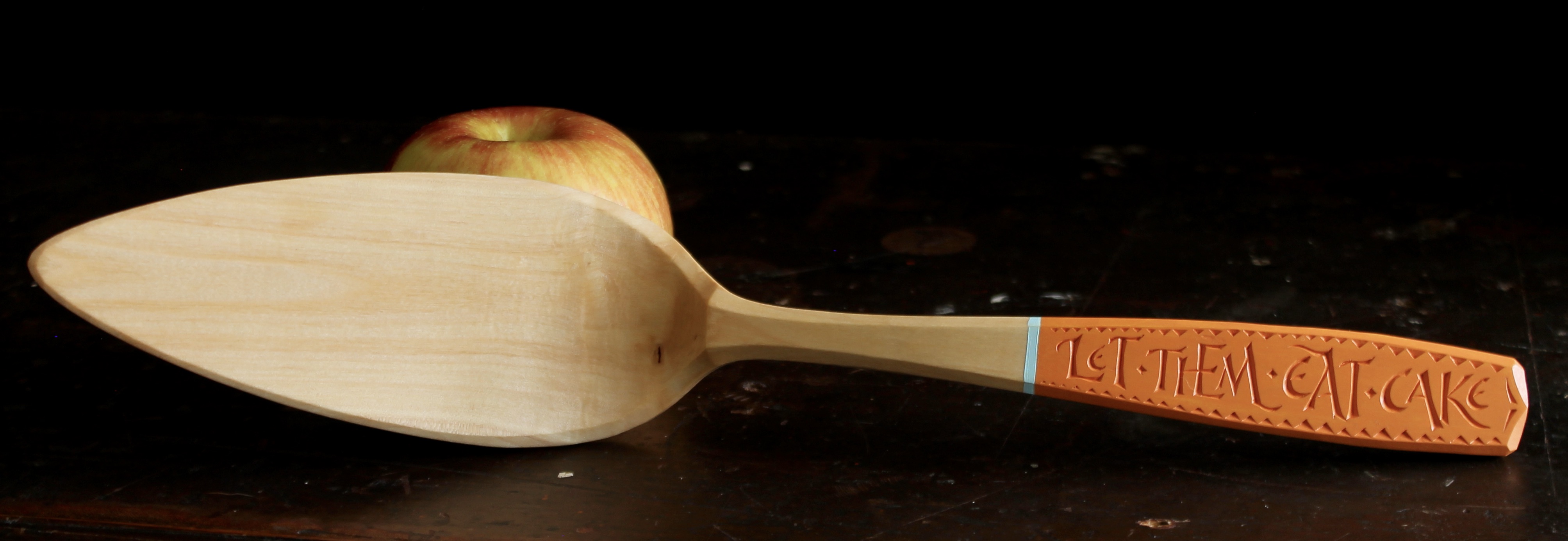
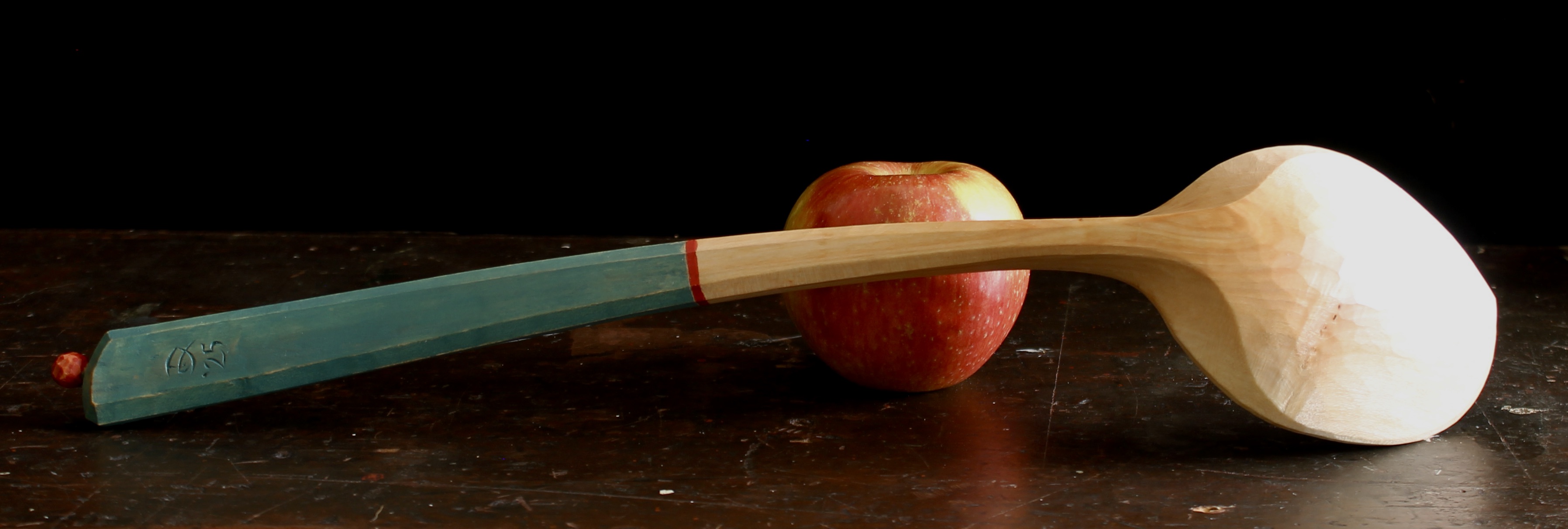
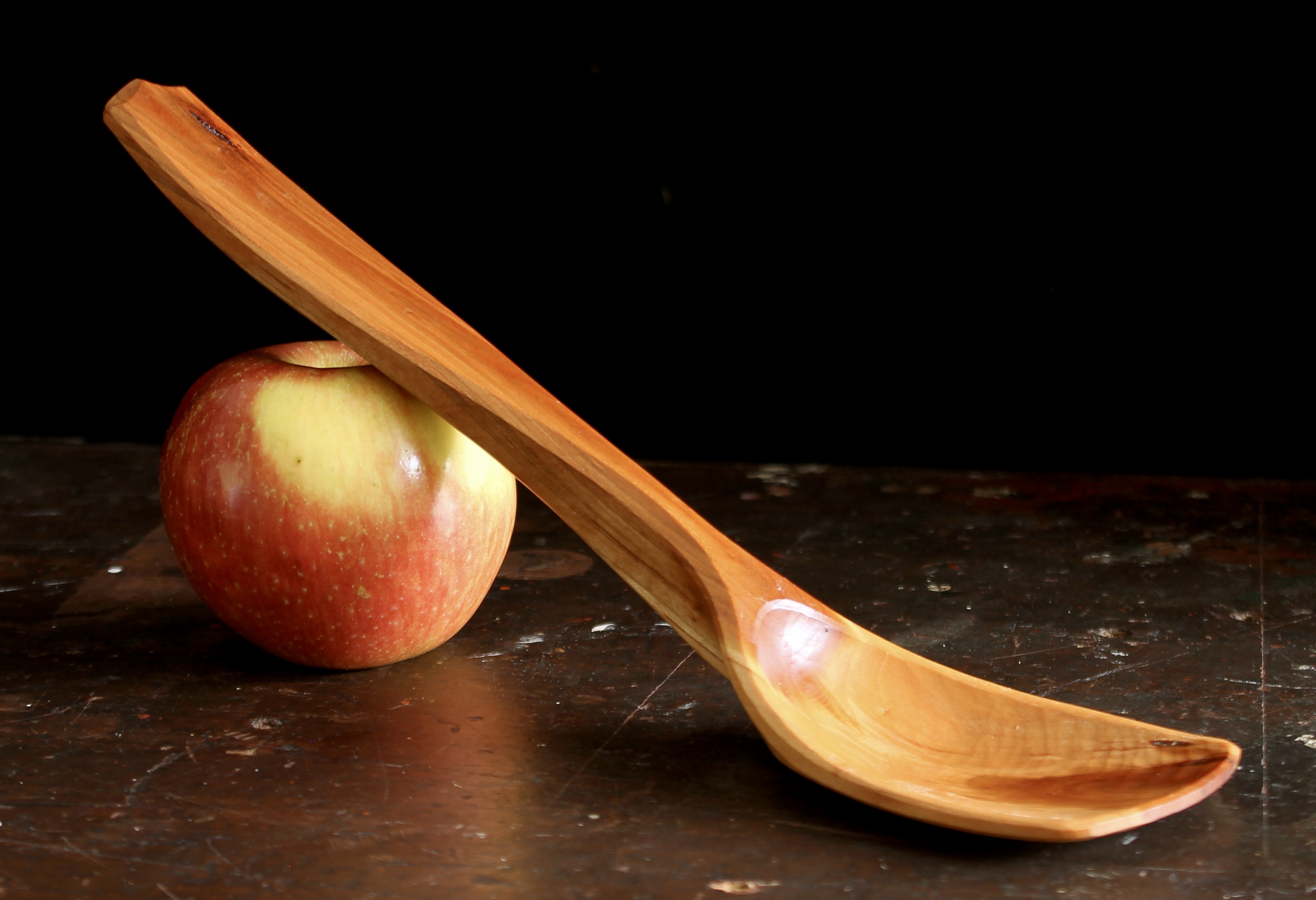
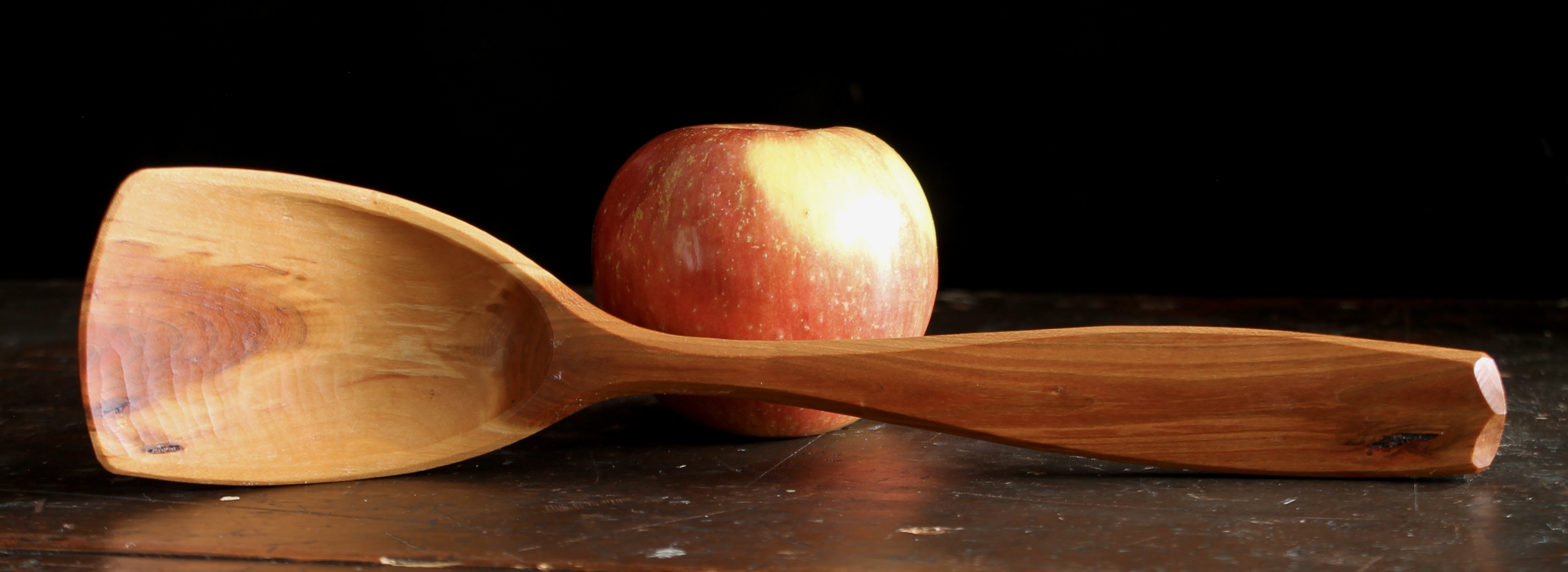
I always keep my eyes open for interesting branch crooks that can make good spoons or other things. Here I’ve got a group of 11 available for purchase now. All of these were carved from branch crooks with the design strongly influenced by what nature provided. All surfaces are straight from the cutting edge and all have been treated with pure linseed/flaxseed oil and kiln-cured. Ready to serve.
You can get a general sense of scale from the photo above. I’ve got another photo further below of the back sides. In the list just below, I’ve provided wood species and dimensions for each spoon. And in the slideshow at the bottom of the post, I’ve got individual photos with the corresponding item number in the captions. All so you can see clearly what you’re getting. Some have deep or shallow bowls, more or less crank, and so on. The photos should make all of that pretty clear.

If you’re interested, email me at dandkfish@gmail.com. Let me know which one(s) you’d like and if you’d prefer to send a check or receive a Paypal invoice via email. Prices include domestic shipping. A little more if outside the US. I’ll try to keep the status updated on the list below. Thank you.
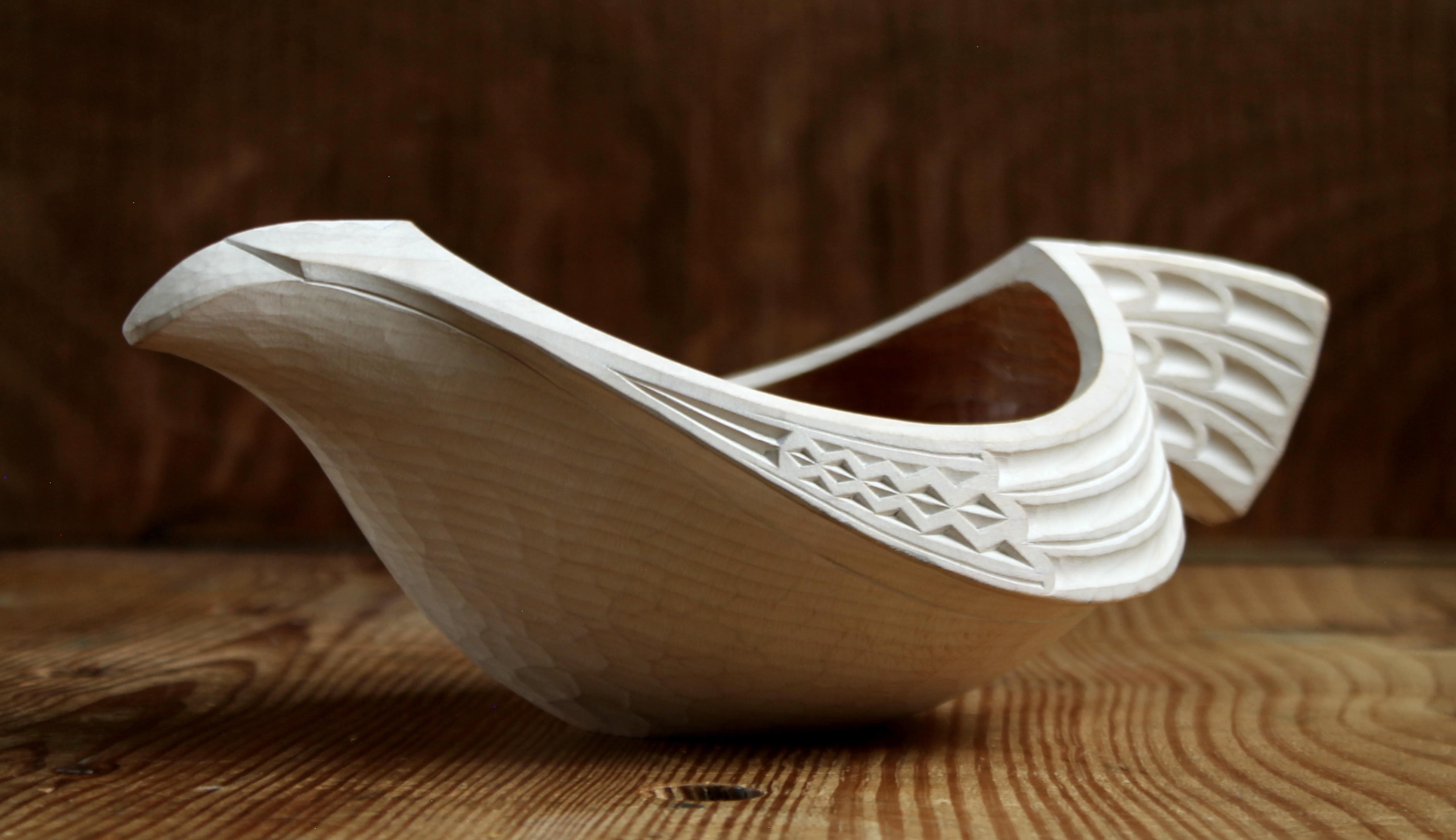
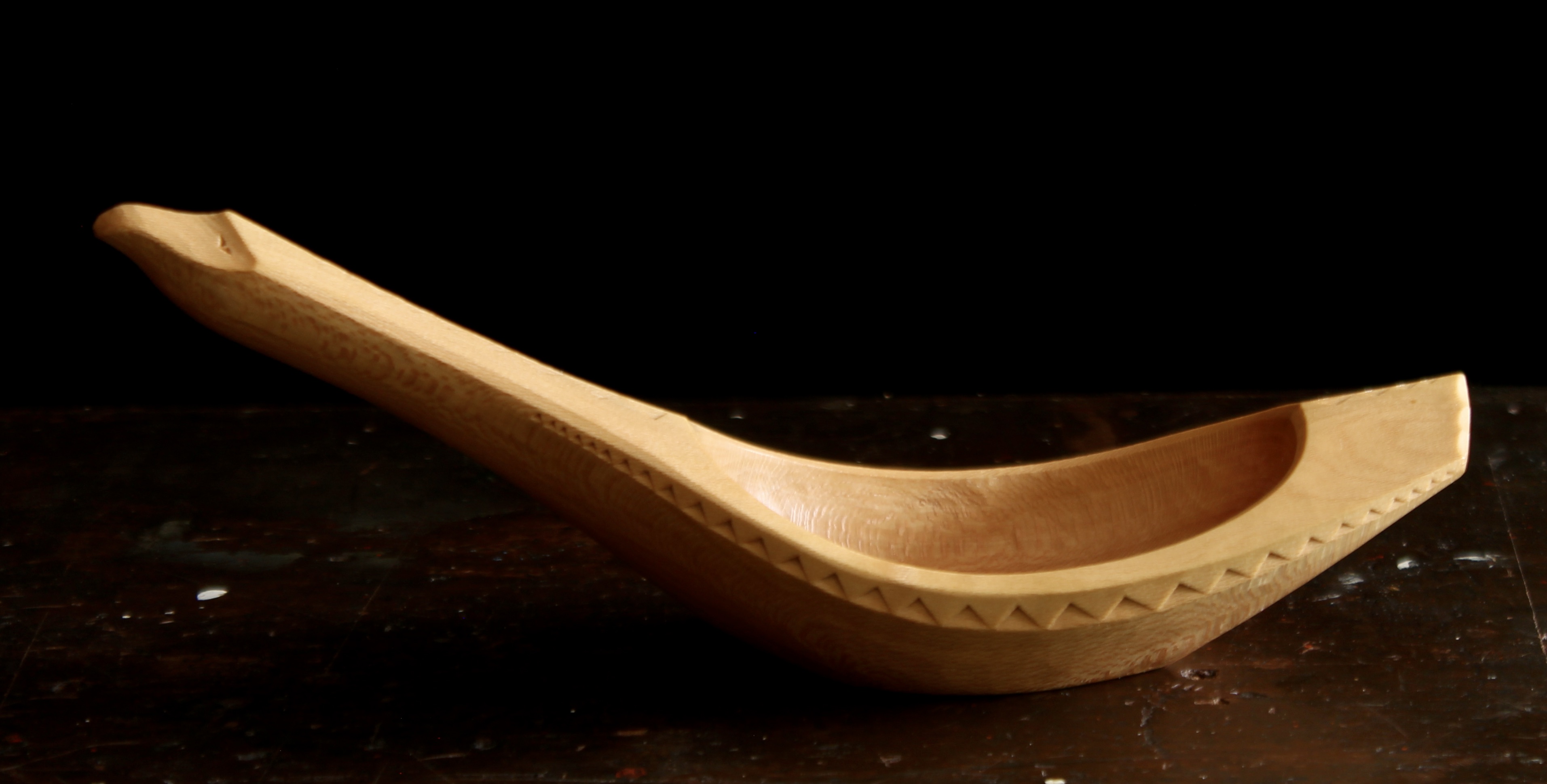
  • 1: American Sycamore, 10 1/2″ x 3 1/8″, A small goose-inspired bowl carved from a crook. Good for holding candy, nuts, or even olives or other small things at the table. SOLD
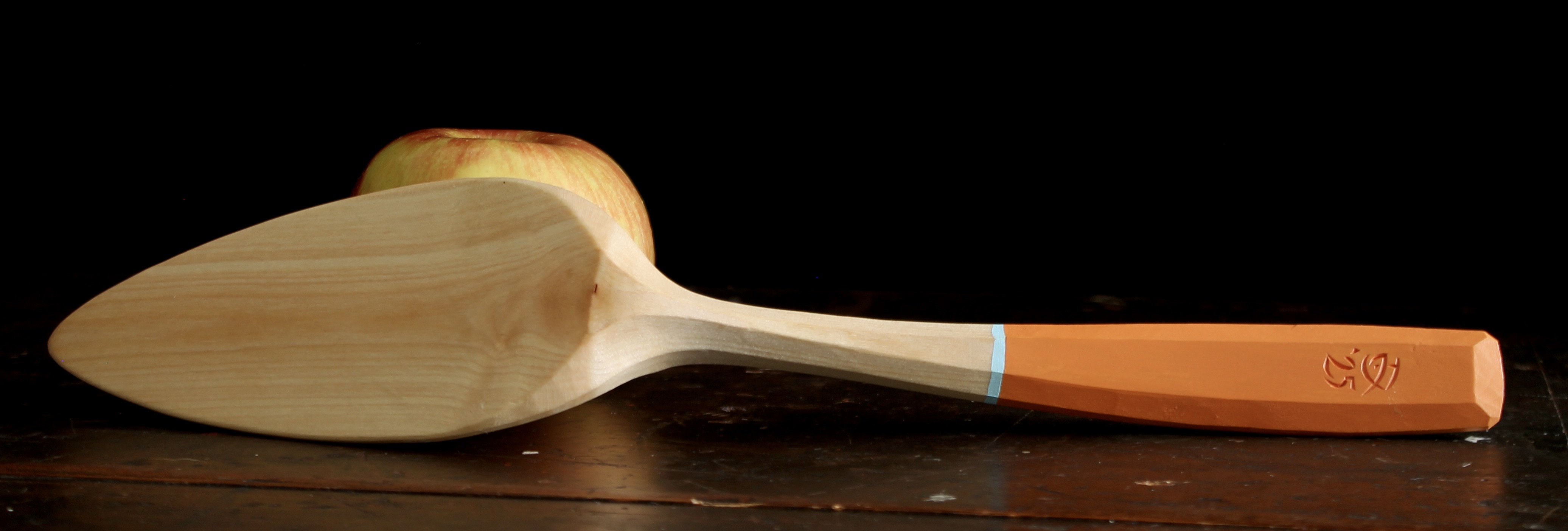
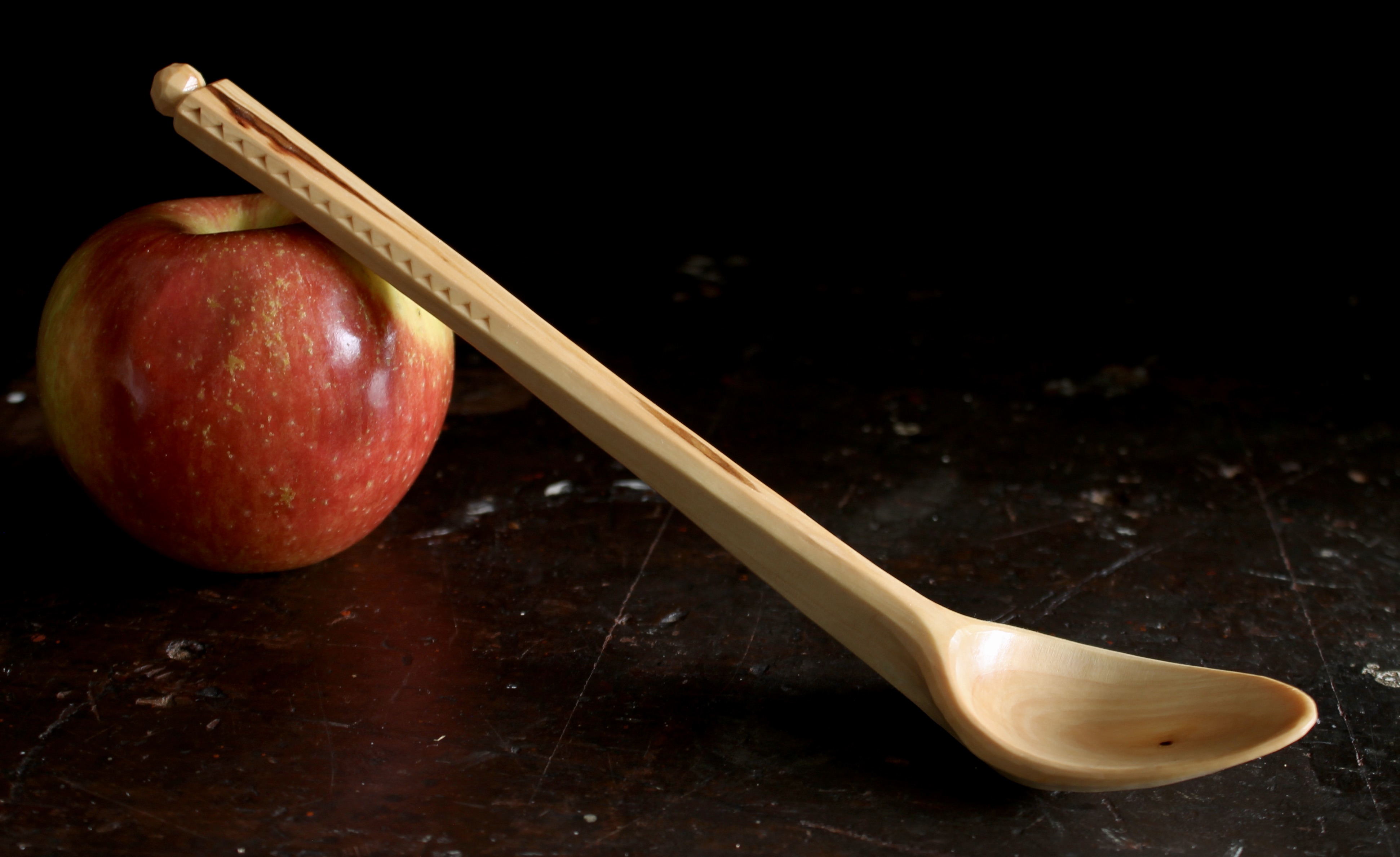
  • 2: Maple, 14″ x 2 1/8″, milk paint on handle, artist linseed oil paint on finial. SOLD
  • 3: Apple, 8 1/4″ x 1 1/2″ SOLD
  • 4: Cherry, 10 1/4″ x 2 3/8″ SOLD
  • 5: American Sycamore, 9 1/4″ x 2 1/2″ SOLD
  • 6: Maple, 15″ x 2 3/4″, artist linseed oil paint. SOLD
  • 7: Maple, 13″ x 2 1/2″, cake server/spatula, artist linseed oil paint, carved lettering “Let them eat cake.” SOLD
  • 8: Cherry, 10″ x 2 1/2″, very shallow bowl SOLD
  • 9: Cherry, 8 1/4″ x 2″ SOLD
  • 10: Maple, 15 1/2″ x 3″, milk paint SOLD
  • 11: Cherry, 10 1/4″ x 2 1/4″. Darker than the others because I carved it months ago. SOLD
DF Spoons August 2025, Back View

The slideshow above has individual photos. The caption provides the item number for each piece.

Posted in spoons, Uncategorized | Tagged , , | 12 Comments