
Trees do funny things. This cherry was taken down a few months ago in a friend’s yard. This section has a 4 1/2″ radius and 55 growth rings. We tend to think of the fibers going straight up the trunk as the tree grows, but sometimes they grow in a spiral. And sometimes the tree changes its mind and reverses the spiral for a few years, creating interlocked grain. Some species, such as elm, normally reverse the spiral regularly throughout the tree’s life, making the wood more resistant to splitting.
You can see evidence of the interlocked grain in the above photo of the split log. The deep furrows at upper right and lower left are areas where the fibers spiral contrary to the direction of the fibers in the rest of the log. For some reason, from about 1977-1989, this cherry tree flipped out a bit. Makes sense I guess; I remember my dad even had a “perm” for a while then, and I wore parachute pants.
Interlocked grain creates challenges for working the wood, especially when planing or cutting on the quartered face, or ray plane, of a piece with interlocked grain. Grain direction in a bowl is usually pretty straightforward, but areas of this piece were a little tricky.
So how to deal with it? I used a chunk of this same tree in my livestream demo I did on Mary May’s Twitch channel a couple weeks ago. Afterward, I decided to finish carving the piece. The challenges with the interlocked grain showed up mainly after drying when I was trying to cut a nice final surface.
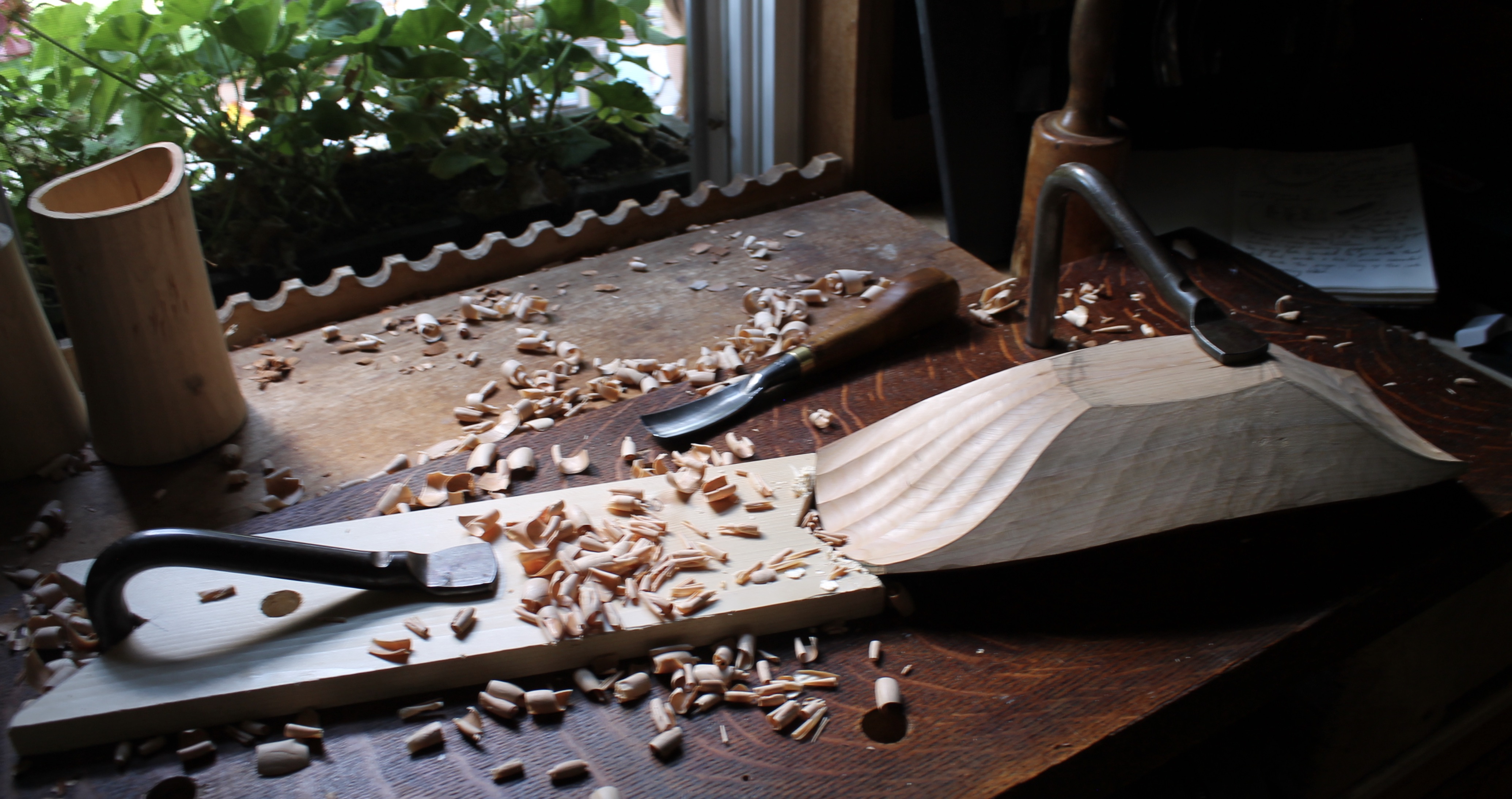
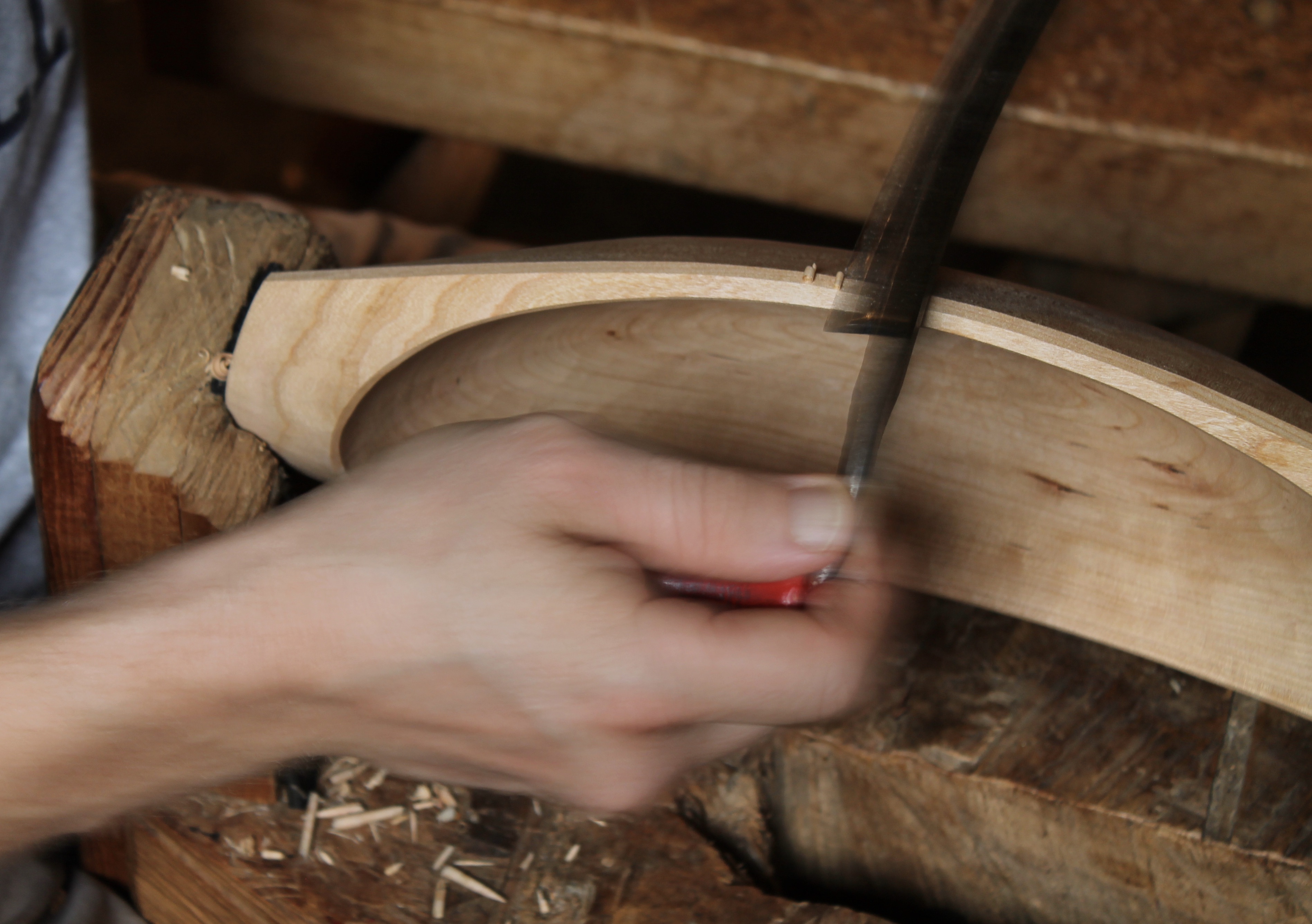
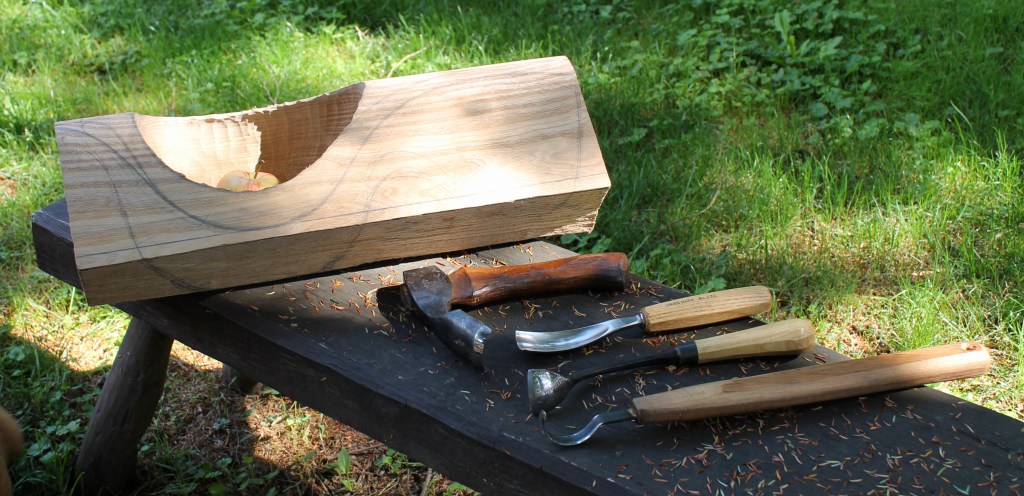
The grain was no problem for the fluted ends, especially since that doesn’t involve cutting on the quartered face. The photo above shows how I set up for that procedure. The combination of the arrangement of the holdfasts and the V-notched board worked well and didn’t risk any damage to the gouge at the end of the cuts.
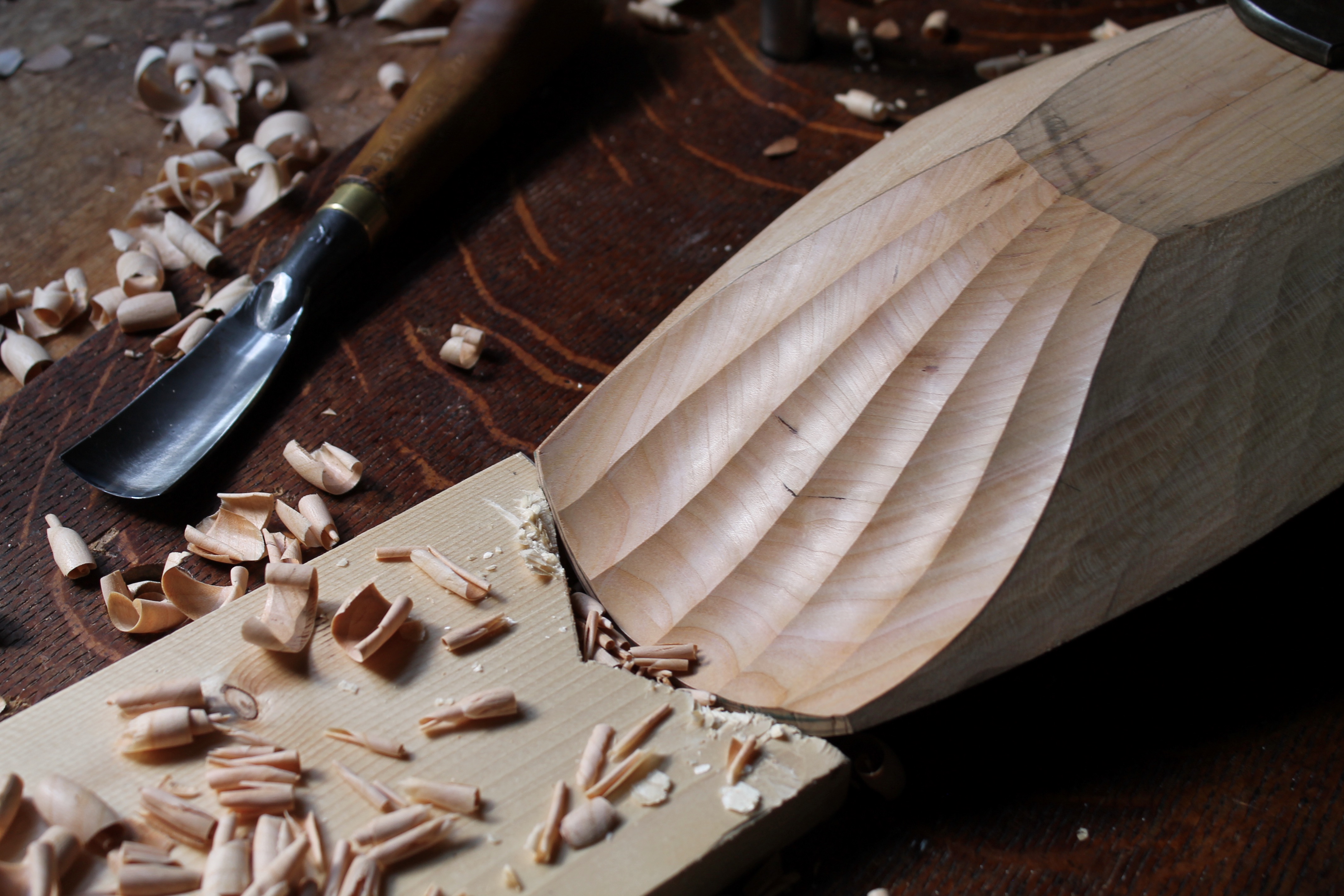
The two outer points of contact provide stability across the arched end and the pine allows the gouge to exit harm free.
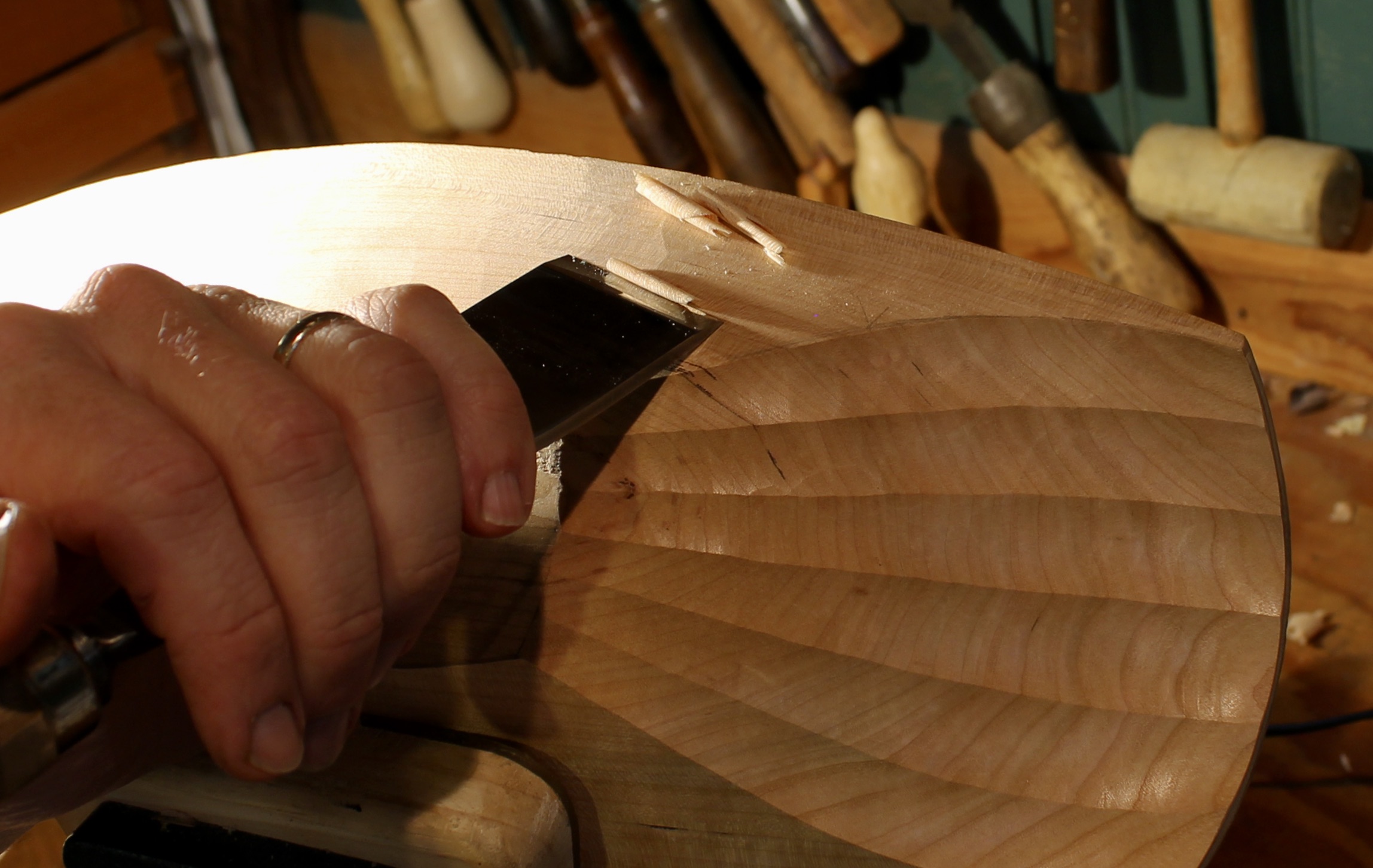
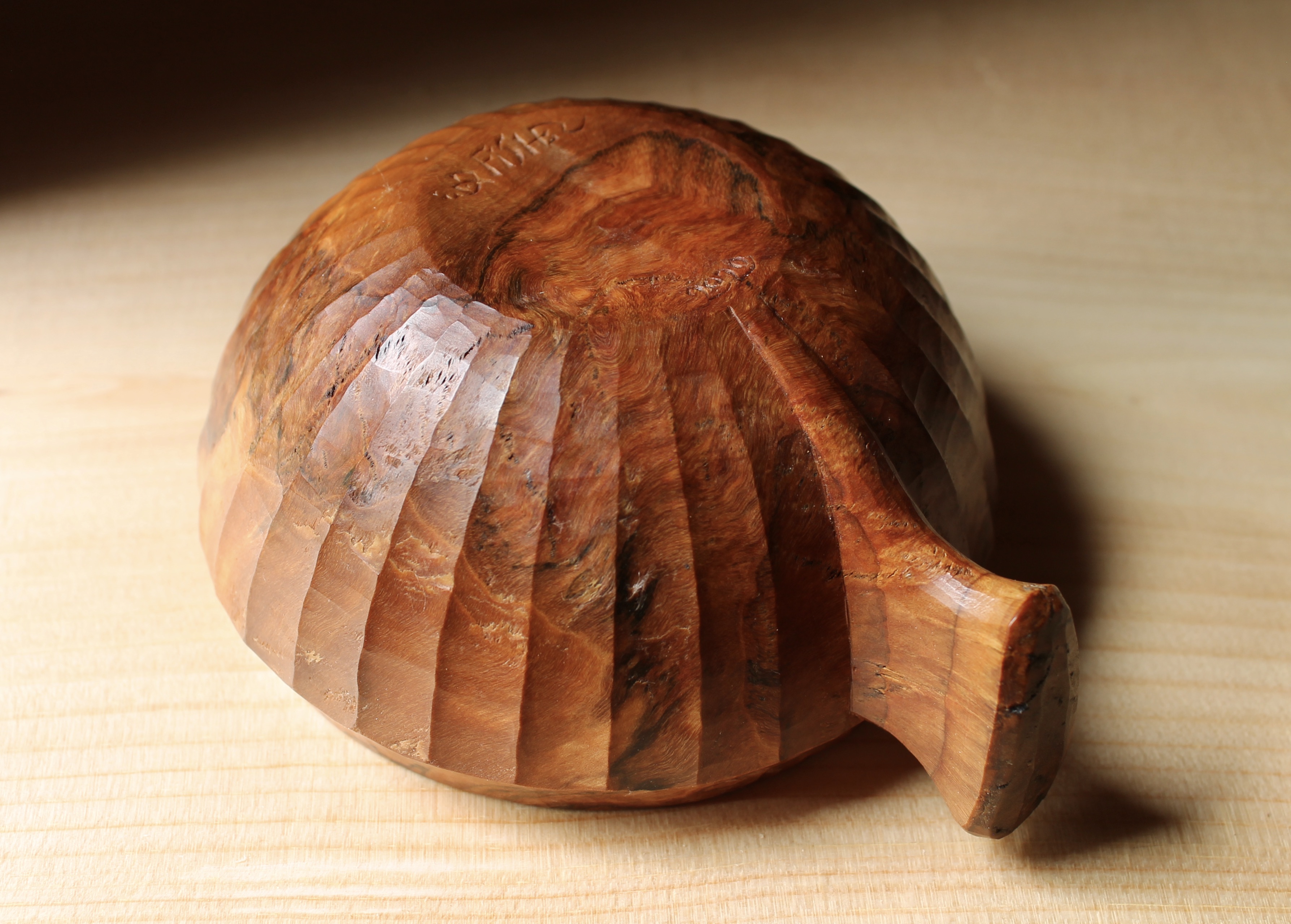
The interlocked grain did present a challenge on the exterior and interior sidewalls. Here on the exterior, I pared the entire sidewall surface with a wide straight carving chisel across the grain (at a slight angle) from foot to rim. Light cuts.
Another possibility is to use a finely set block plane or spokeshave. Pete Galbert presented a brilliant webinar on spokeshaves last week through Fine Woodworking. You can still watch it here.
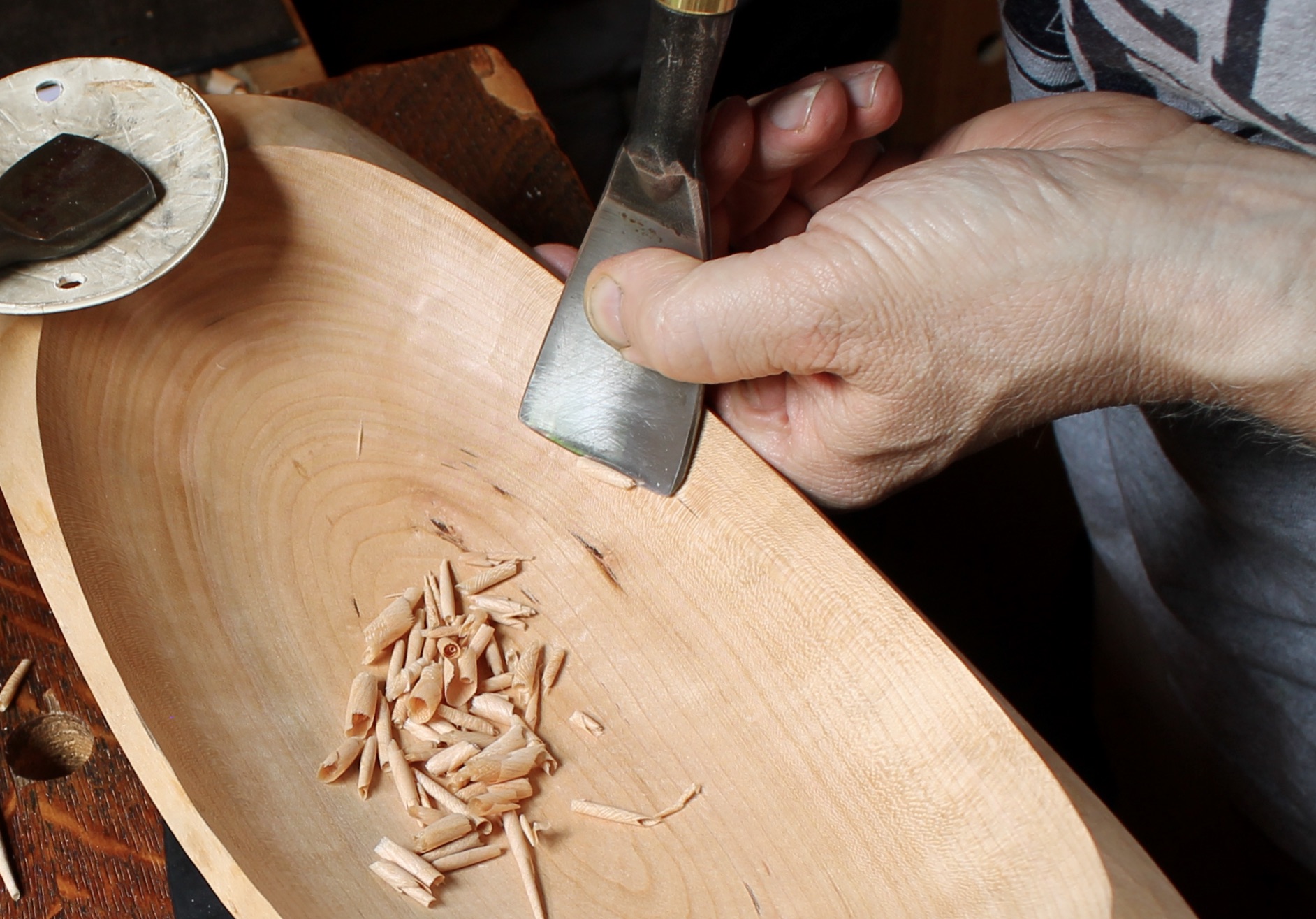
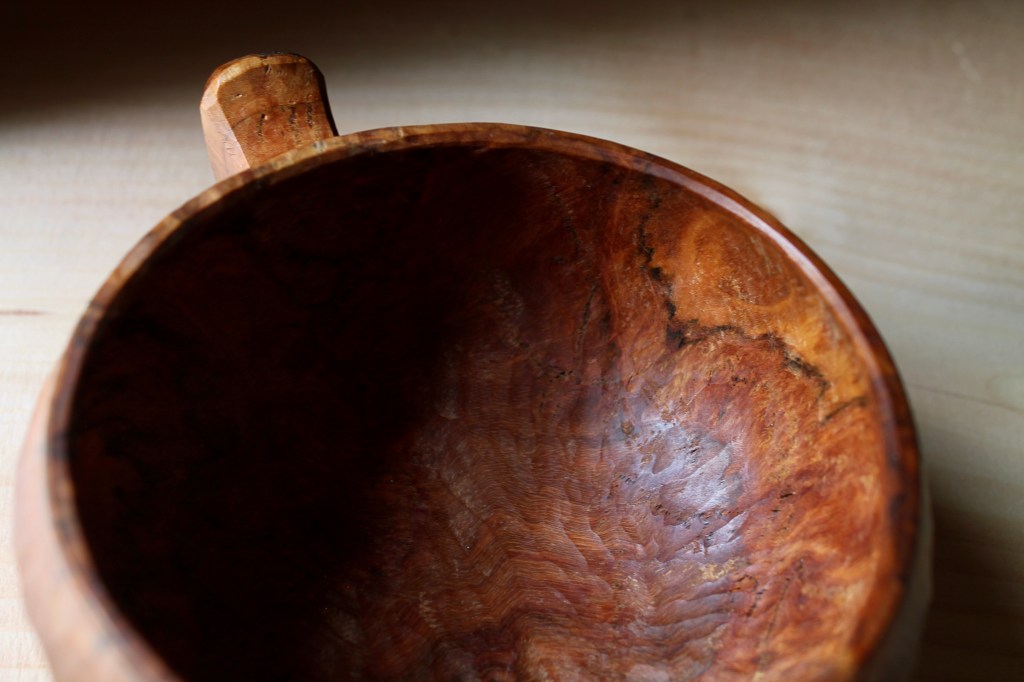
Same idea on the inside, working from rim to center with a freshly and finely sharpened gouge. Very light cuts are key in this situation. The underlying fibers release a wispy shaving cleanly from their hold more easily than they do a thick one. The same idea goes for when you’re cleaning up the area in the center of any bowl since the grain direction transitions there.

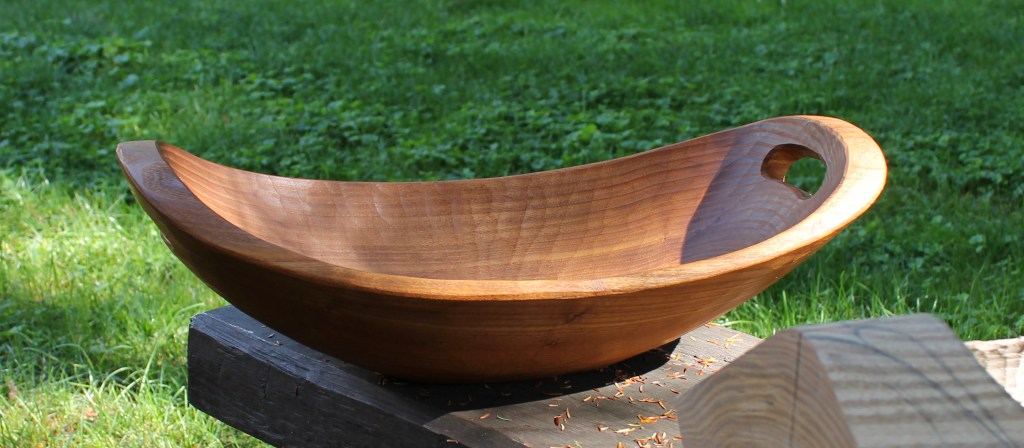
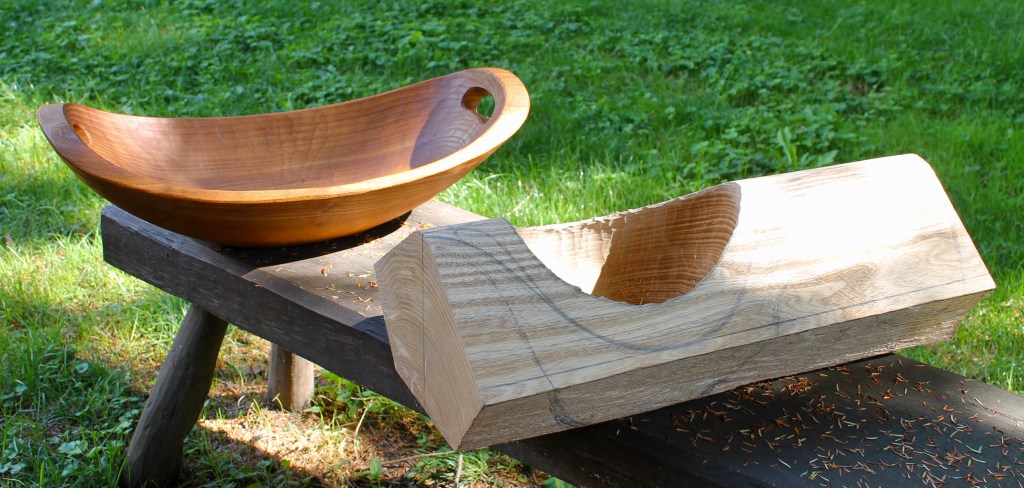
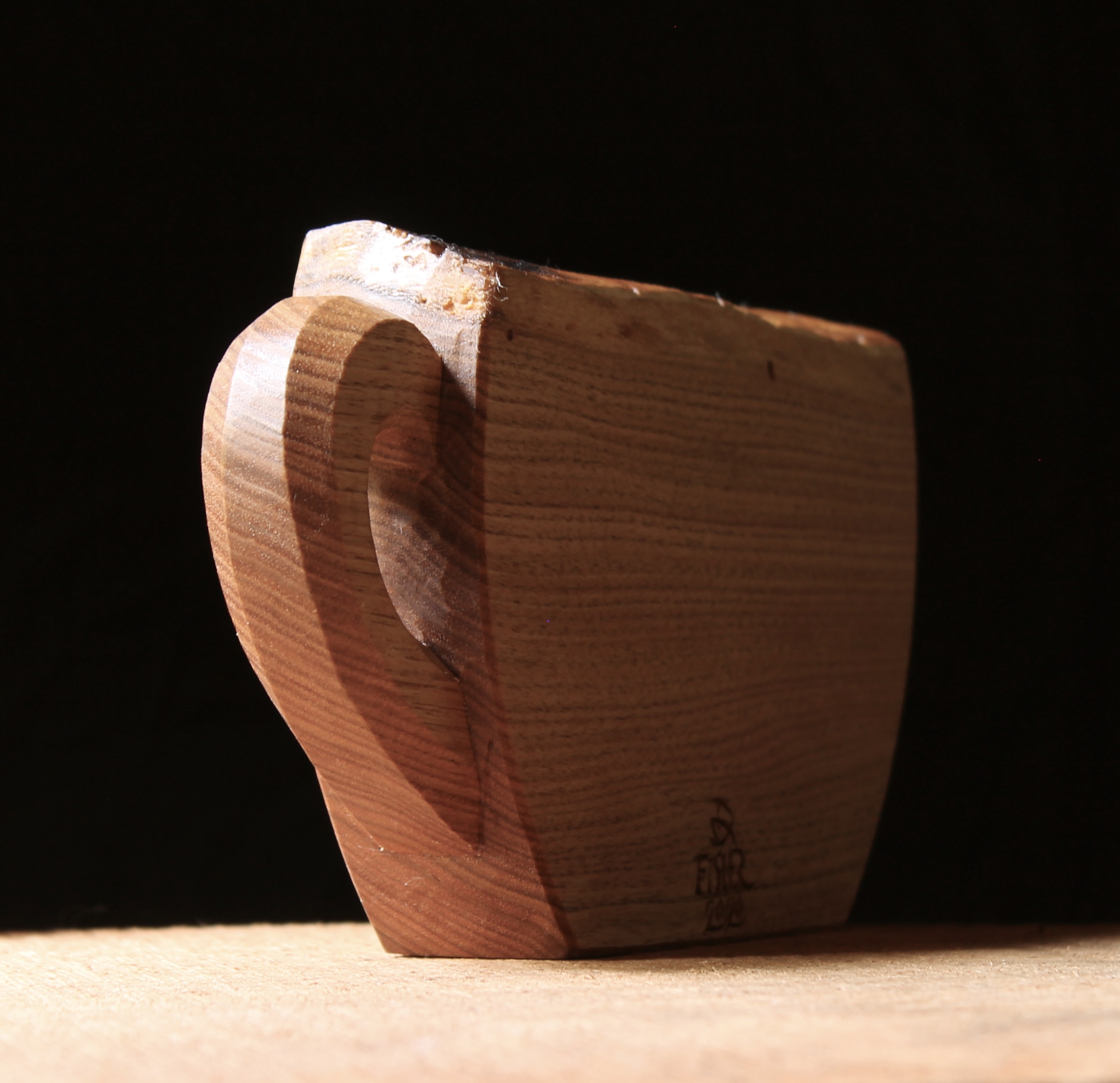
So here is the finished bowl. This design is based on a classic trough style, but the arched top adds some additional dimension. It serves well, and particular aspects of the design make it quite accessible even for beginners. These include the relatively shallow and open hollow, the fact that the handles aren’t deeply undercut, and the outer edge doesn’t flare back out at the handles.
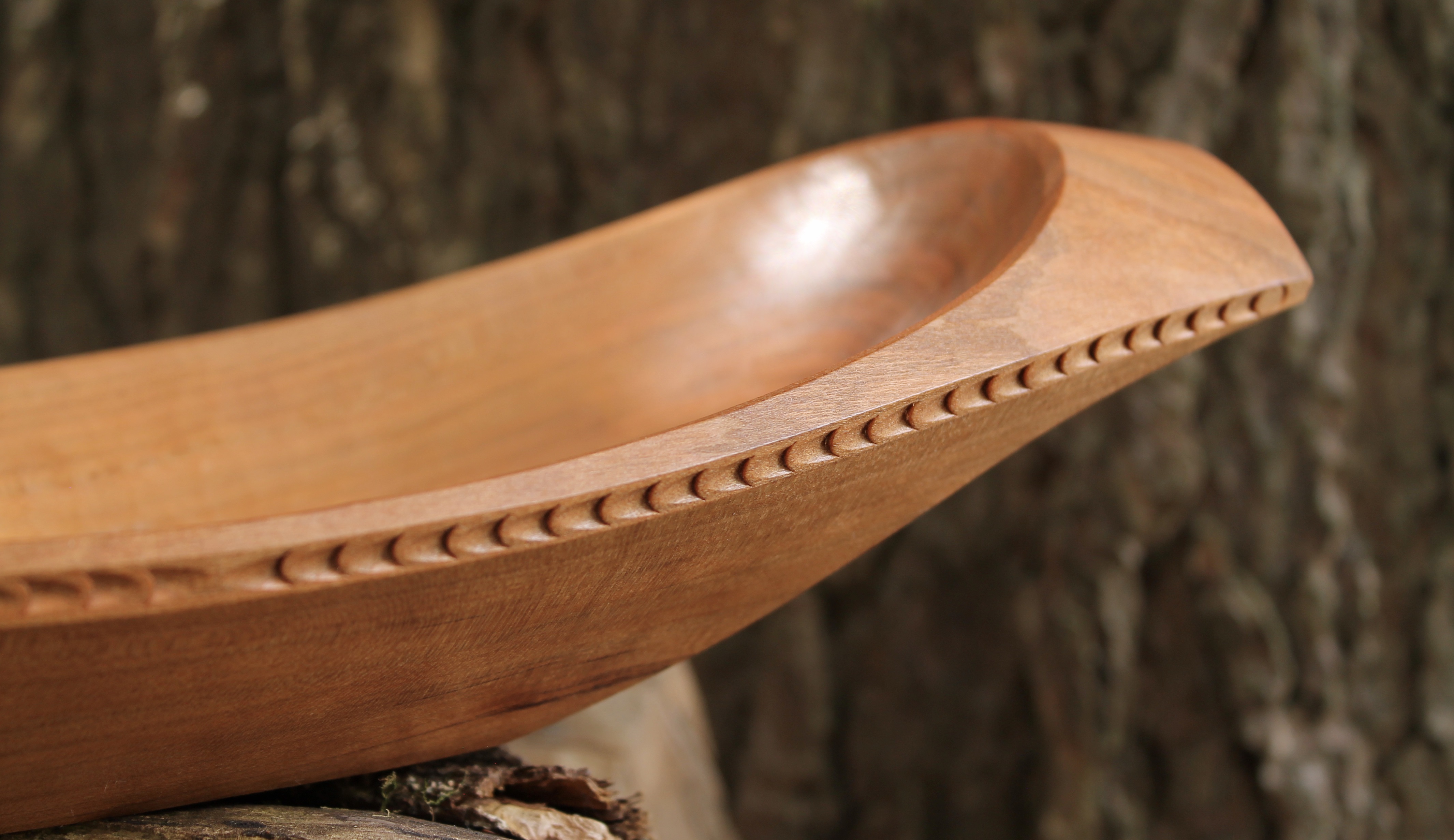
One decorative touch I added to this one is the narrow band of gouge chip cuts just under the edge of the rim. To make a canvas for them, I just carved a small flat from the corner of the rim and sidewall after all else was done.
I’ve already got a few sample bowls in this general style for me, so if you’re interested in this one, I’ll ship it to you. It’s 14 1/4″ long, 6 1/8″ wide, and 3 1/8″ high. Update: SOLD













 David Fisher, Carving Explorations