Breakfast for Five

FF6BFC32-DC73-4A55-B09B-94B6B2C31C61_1_201_a

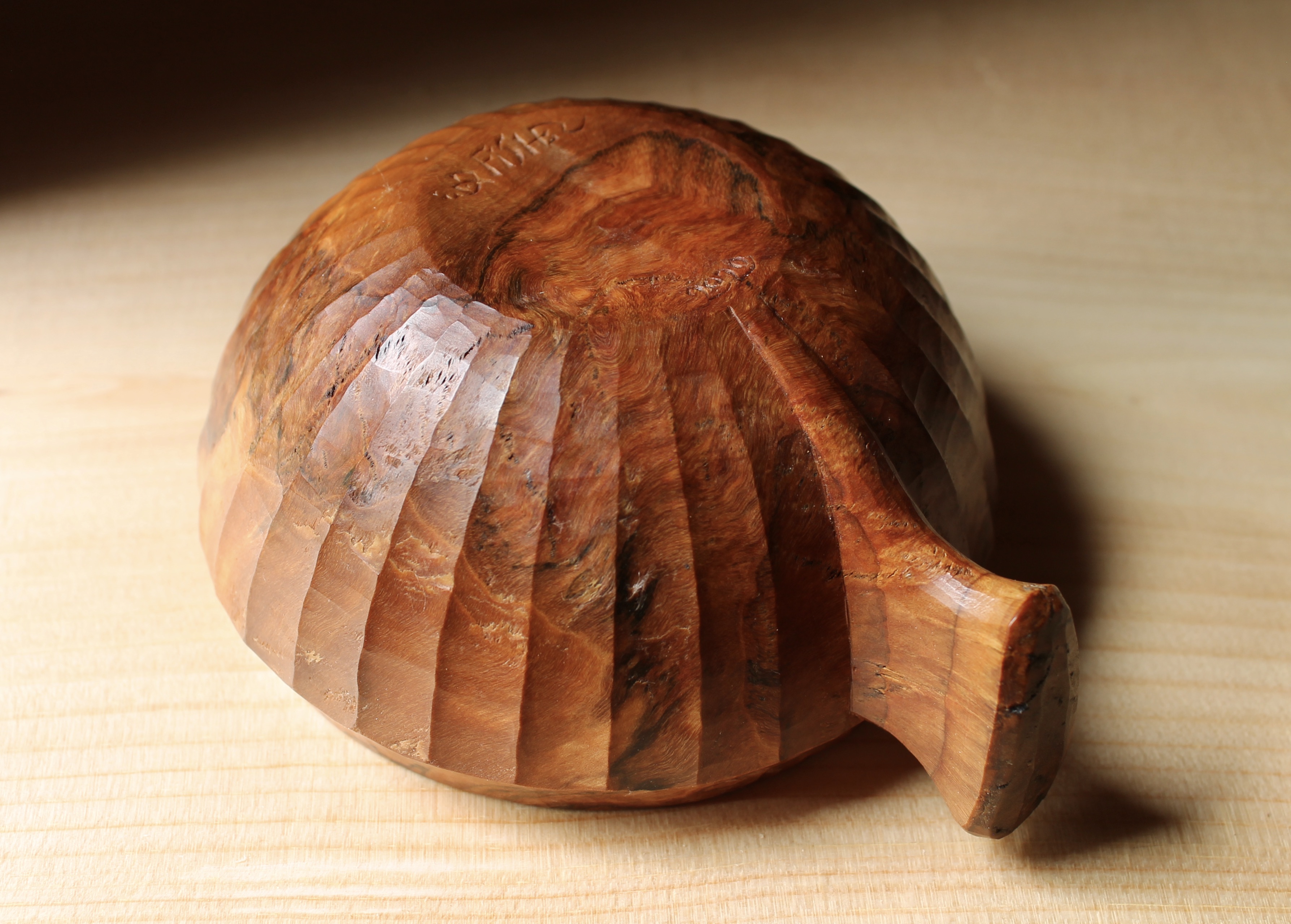
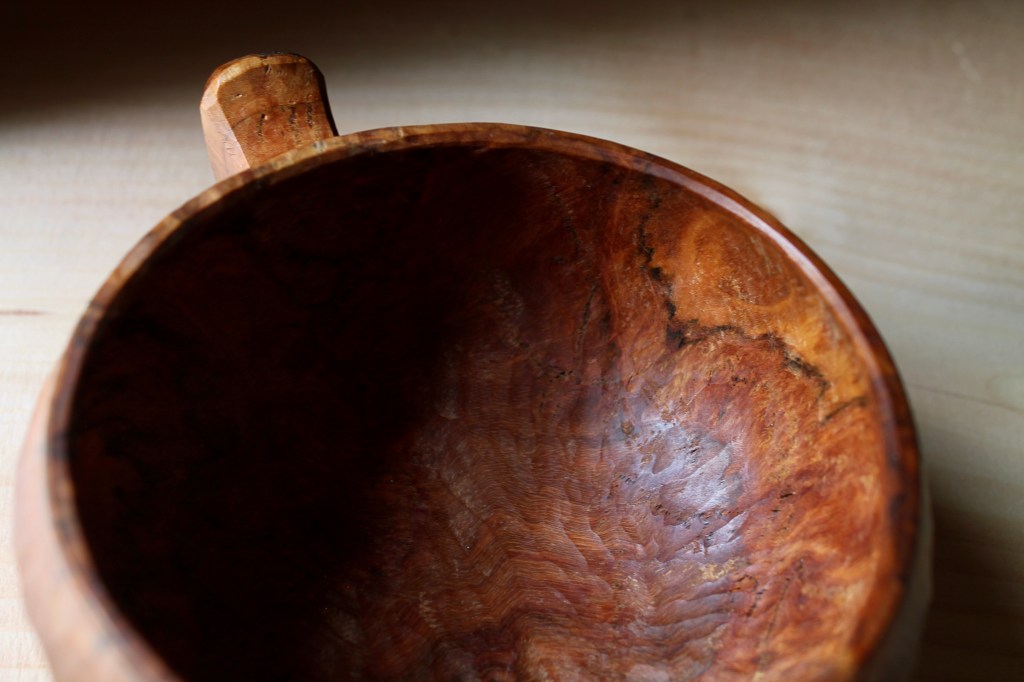
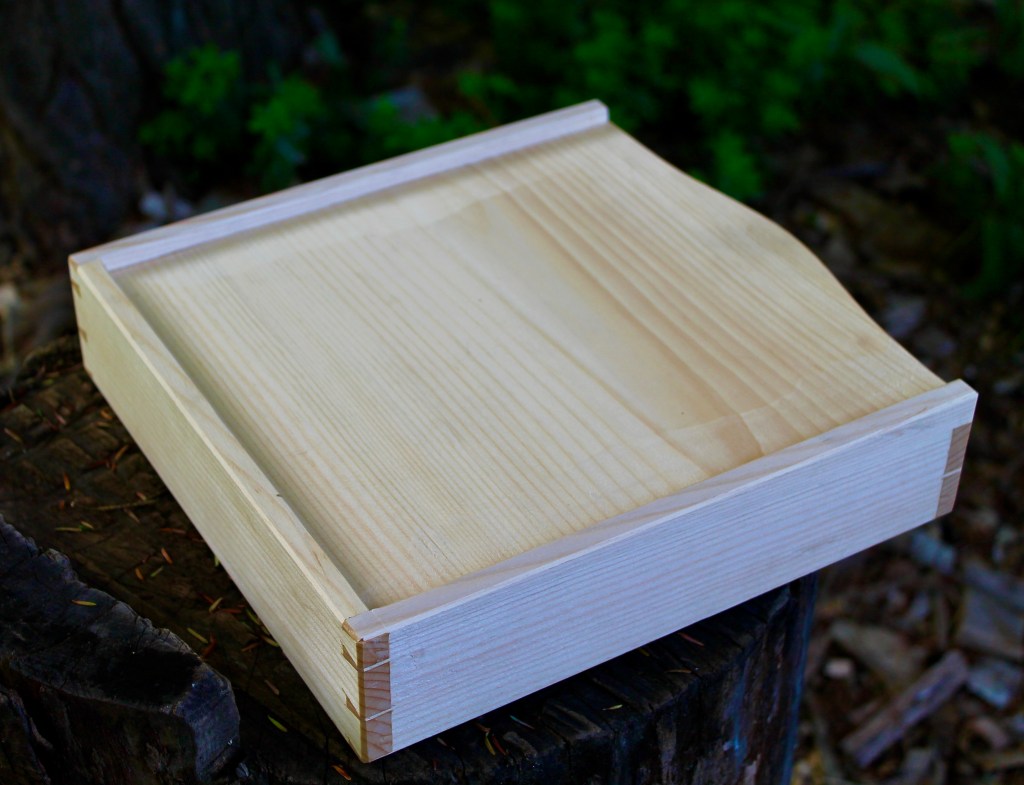
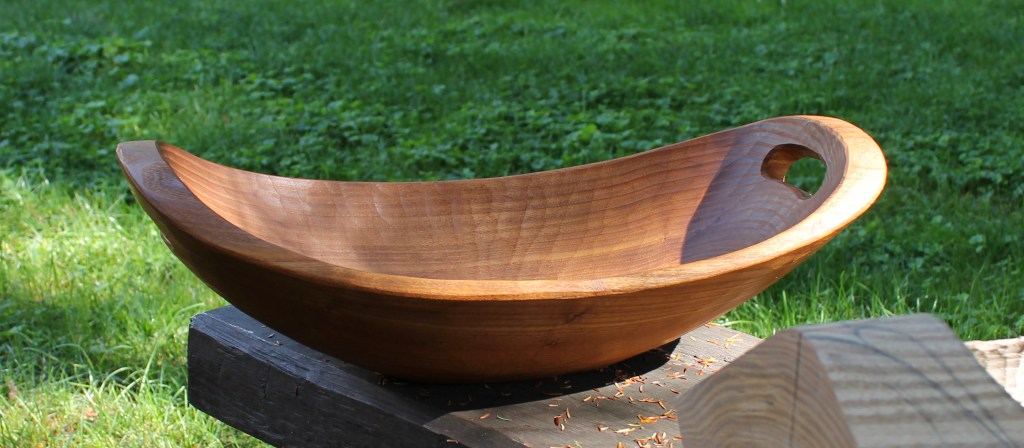
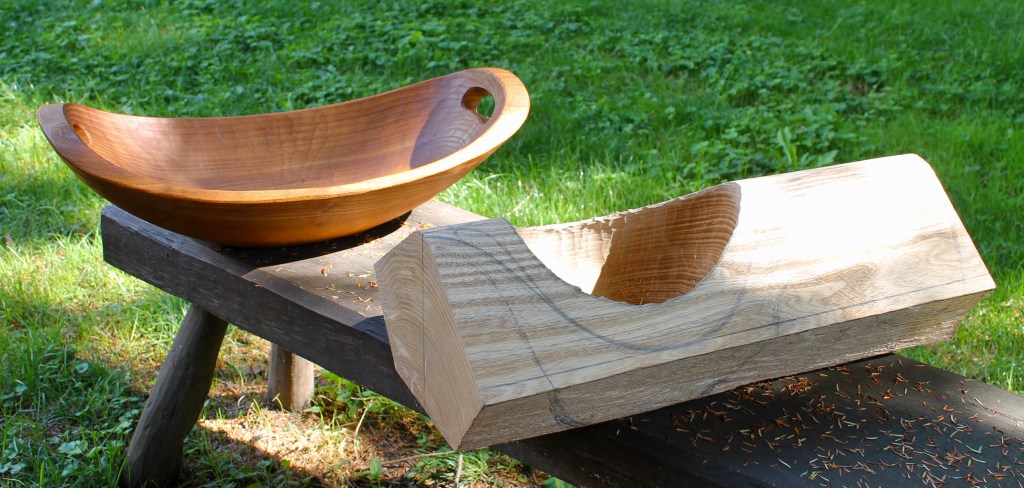
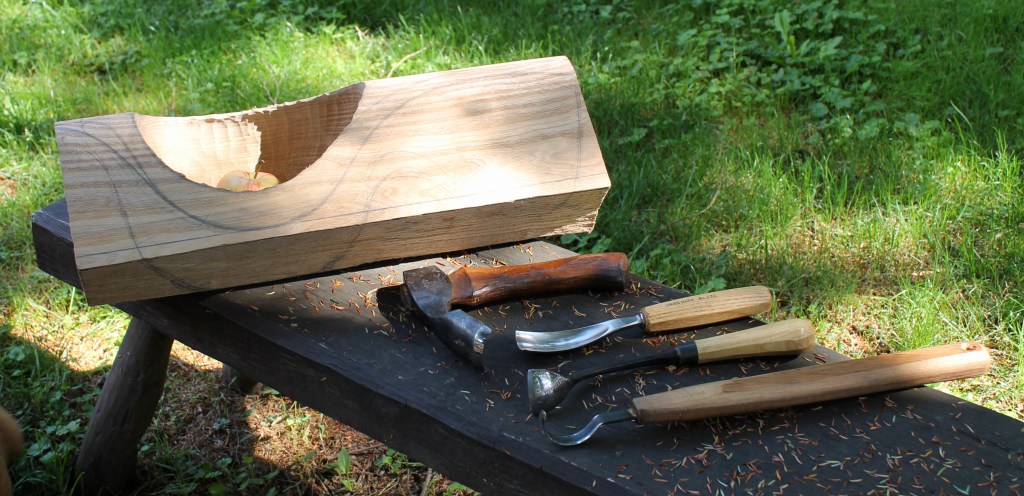
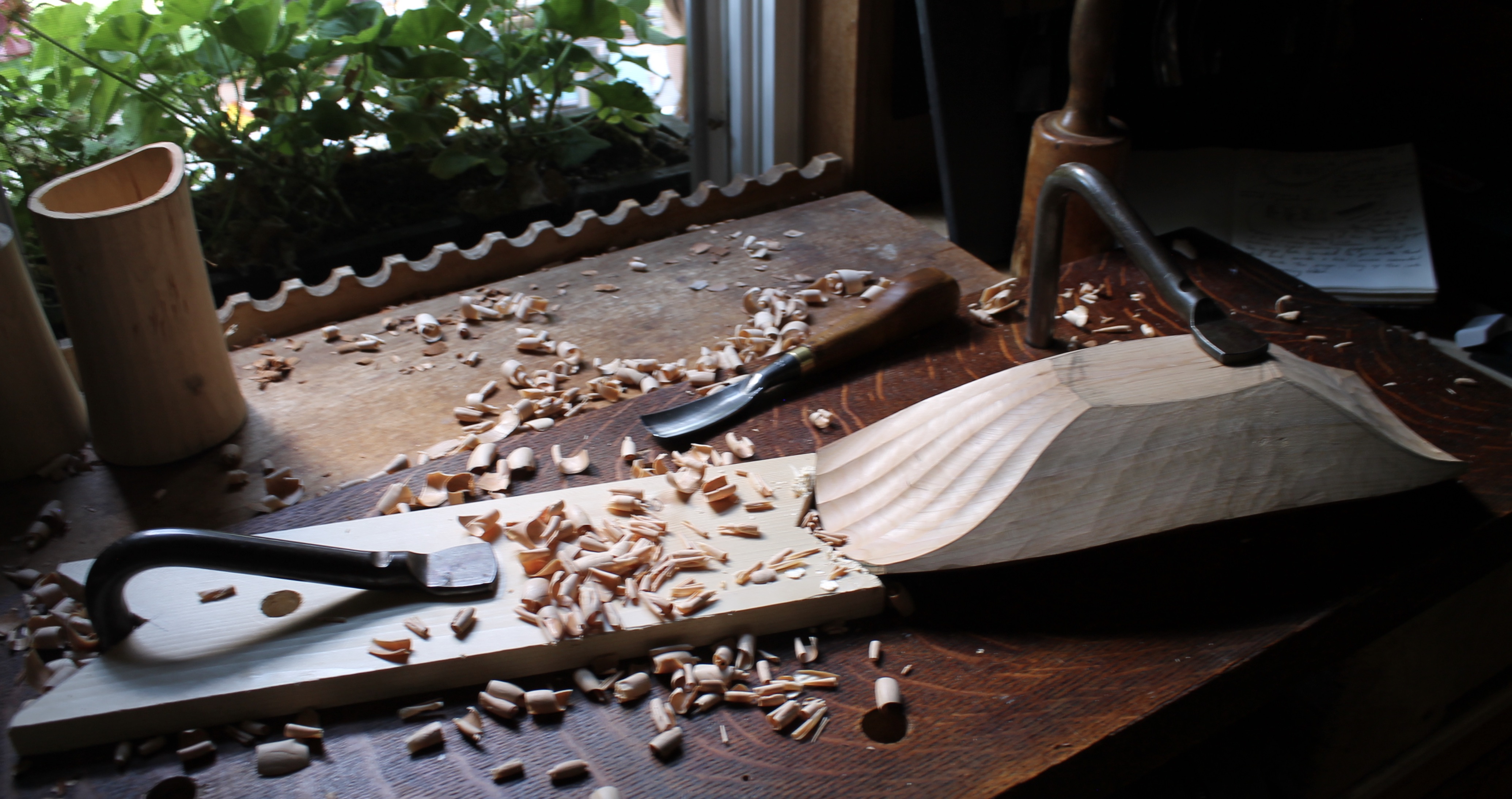
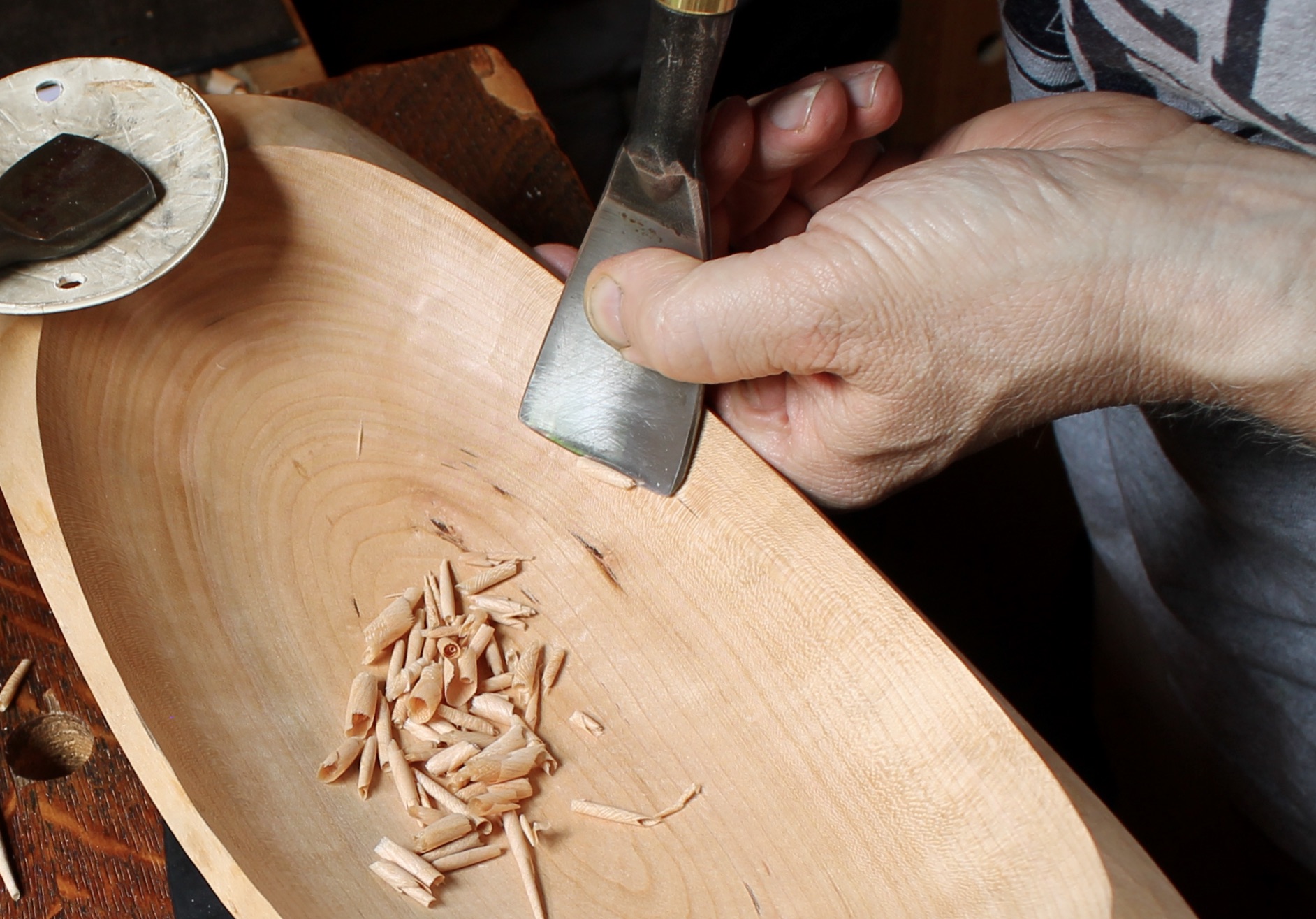
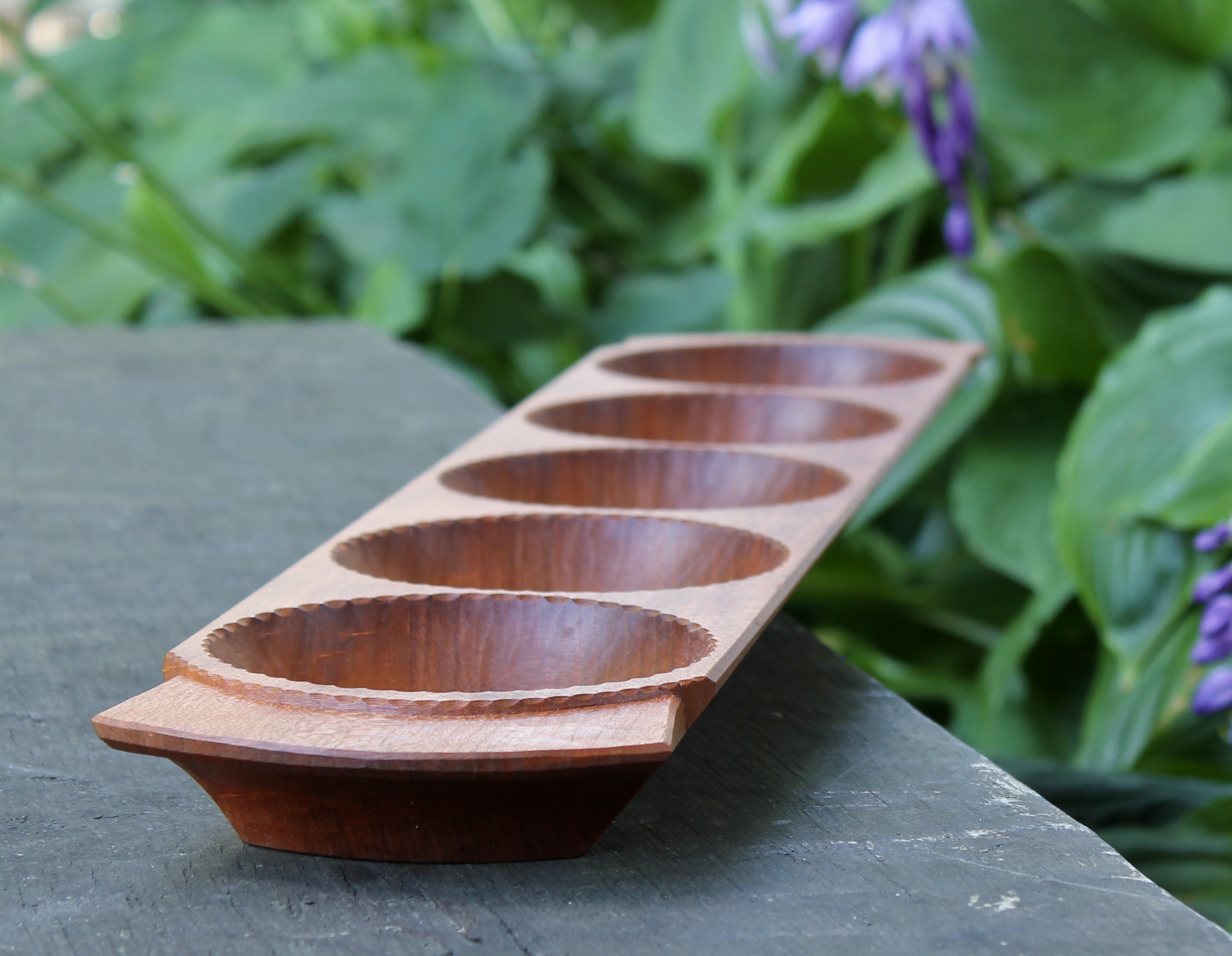
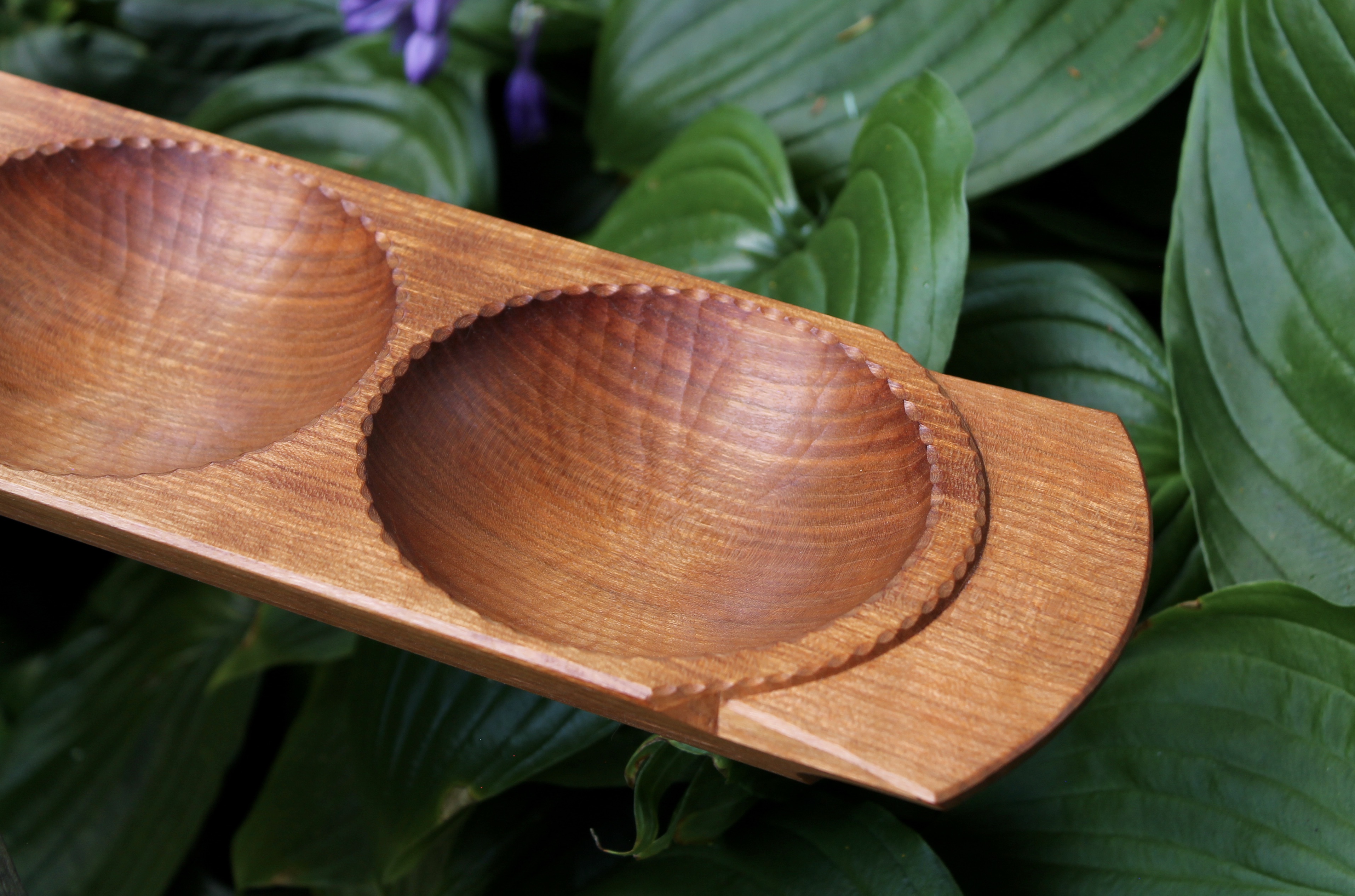
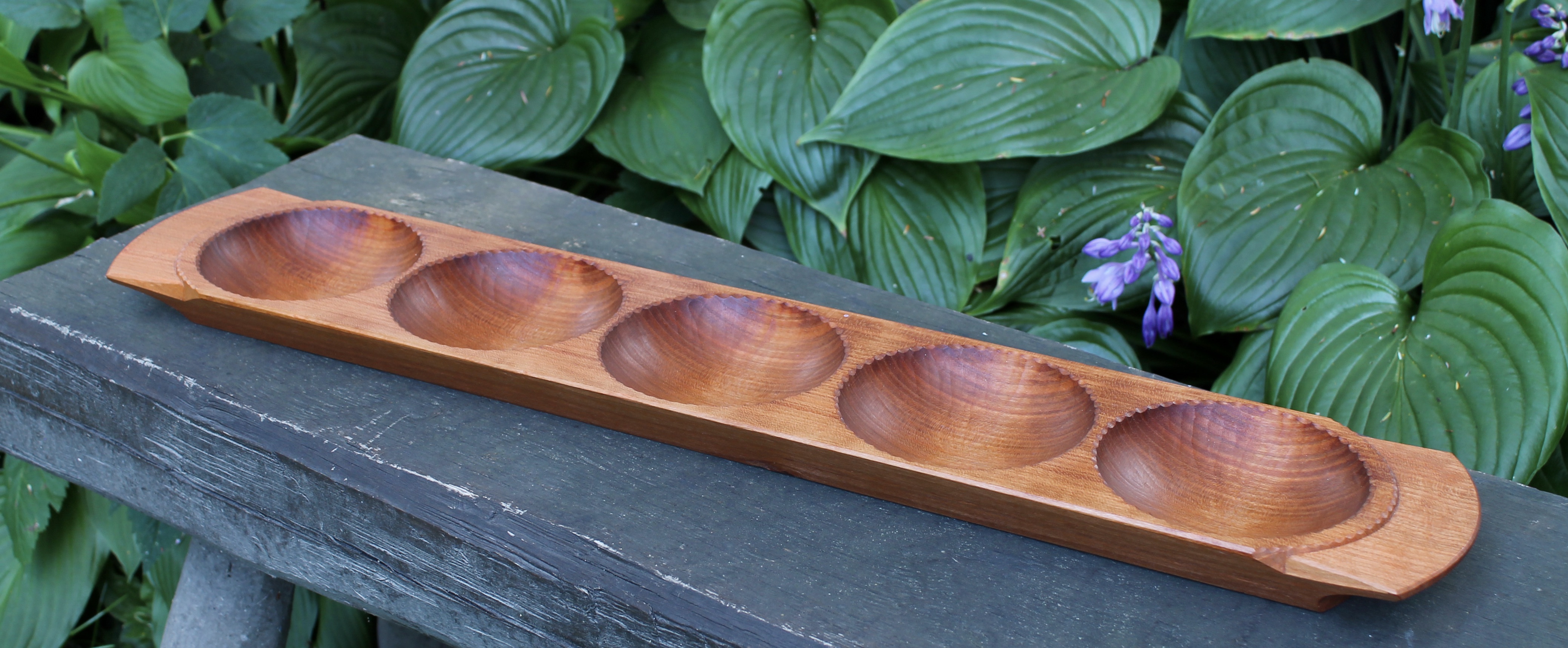
About two years ago, I wrote a post about busting up a big cherry log into various bowl blanks.  This experimental piece came from either the billet labeled A or B, so it has vertical grain (had I sawn it instead of splitting it, it could be called quarter sawn).  I had the general idea for this bowl back then and roughed it out.  Finally got around to the rest of the carving recently.

0C32B8E0-81DF-4326-A7DF-86ECB433B6F0_1_201_a

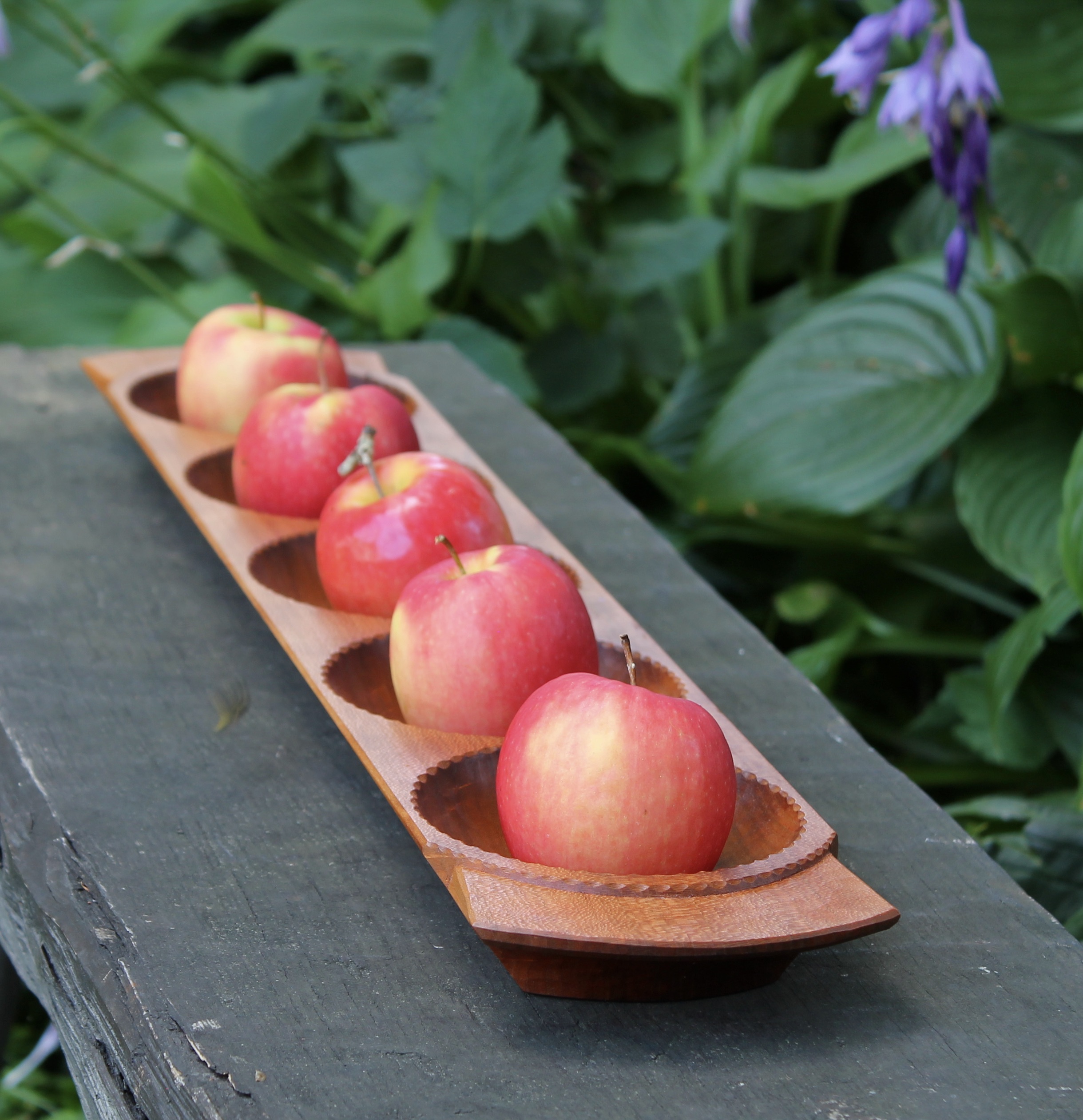
The first step in making it is to hew and plane the upper and lower surfaces into a plank with no twist.   In fact, you could make one from a 2 x 6 — sort of.  The final dimensions of this piece are 26″ long, 4 3/4″ wide, and 1 3/8″ high.  The hollows are 4 1/4″ in diameter.

EA41291D-2D19-4D85-8A9D-6459768F036C_1_201_a

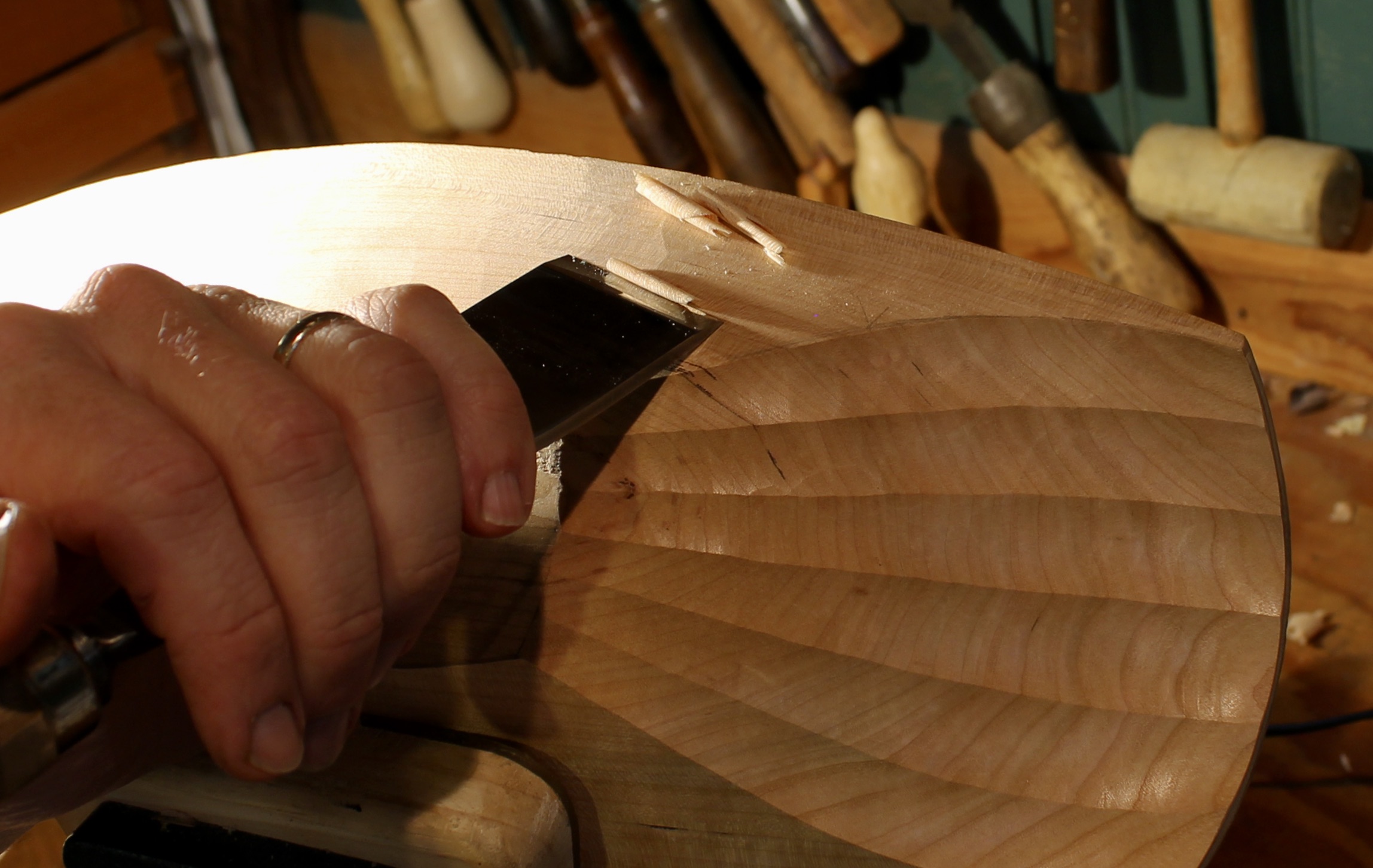
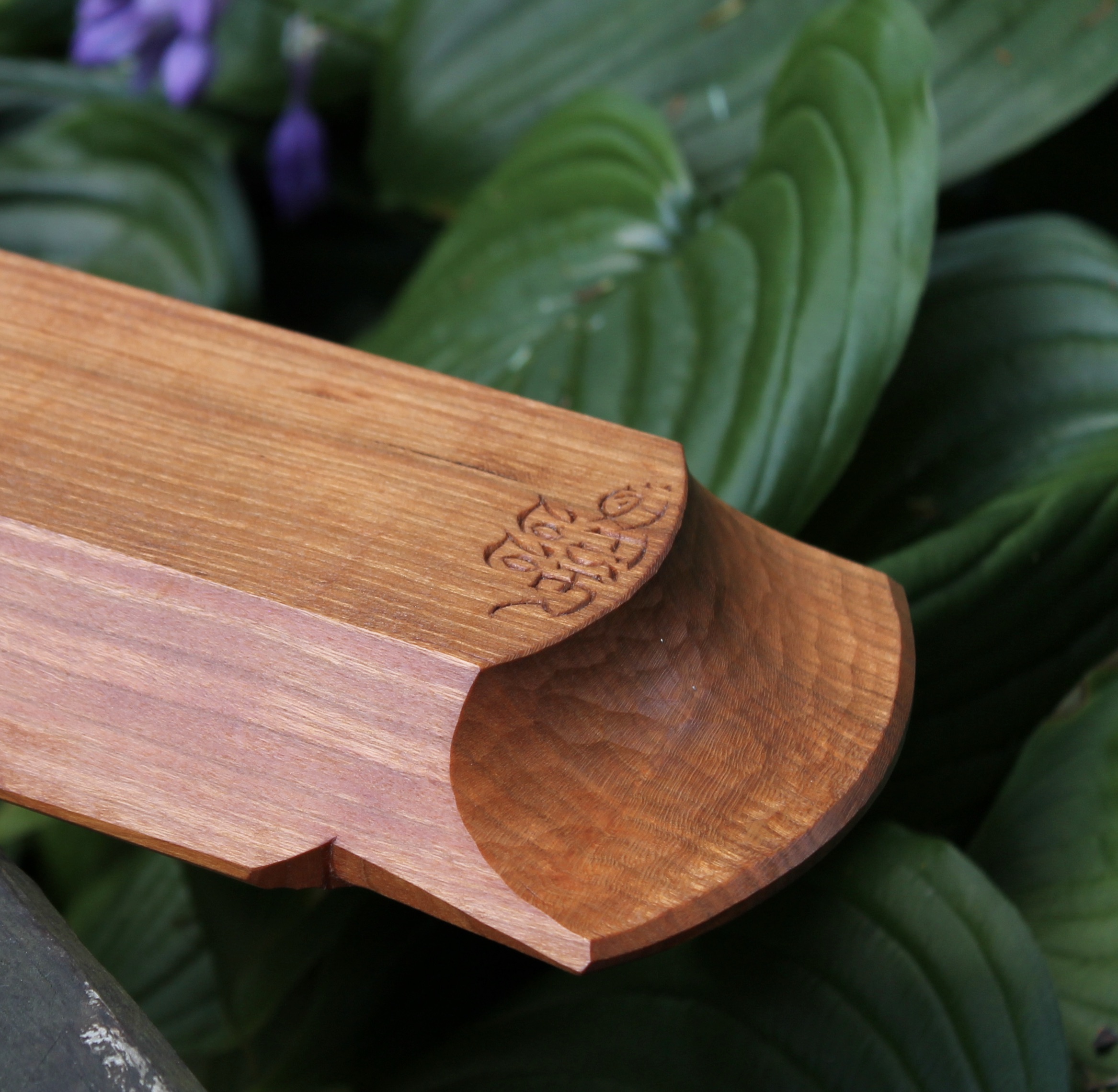
The exterior surfaces are flat except for the sculpted handles.

863B6659-6033-4A33-BCE2-E9C5A81563D8_1_201_a

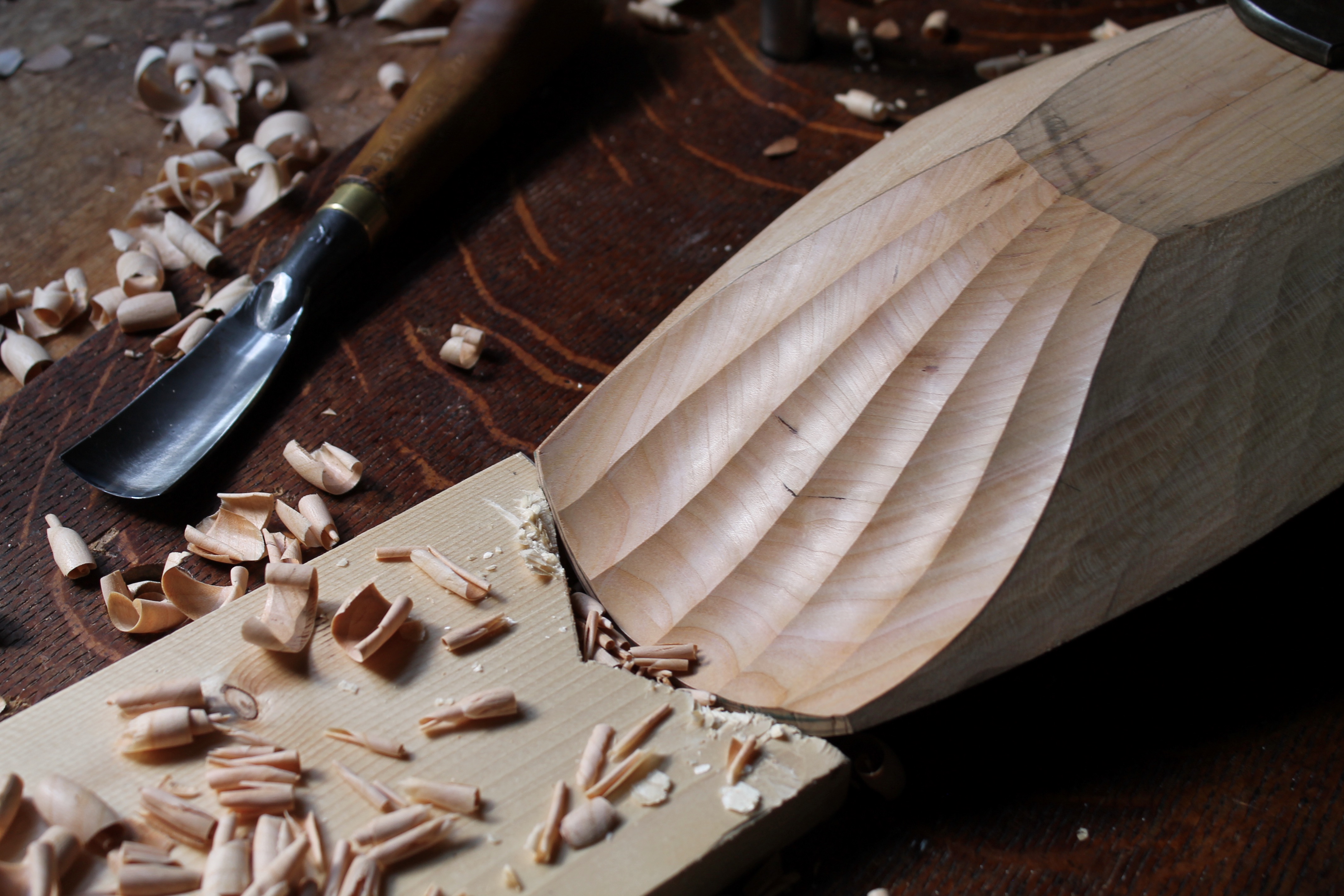
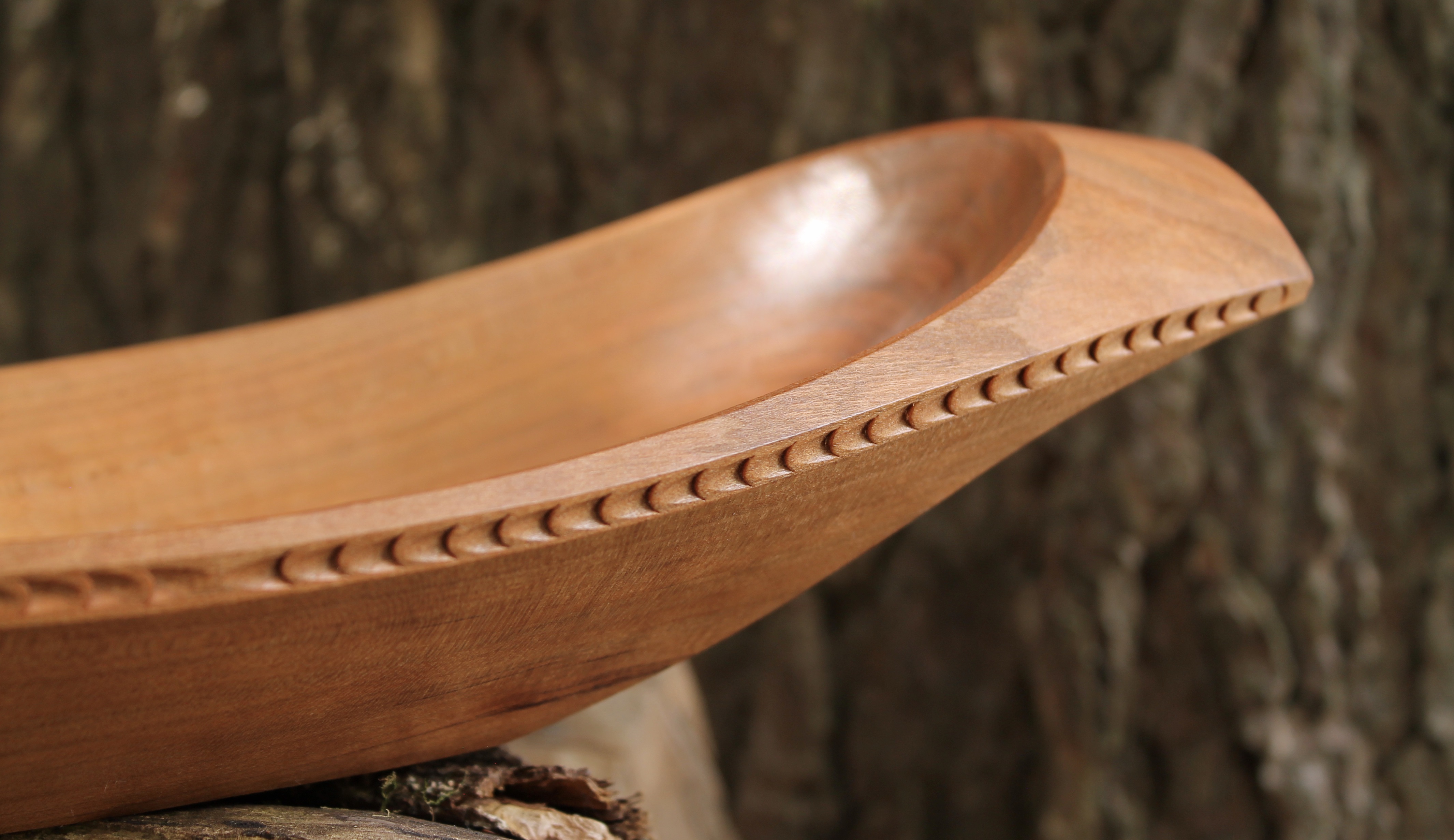
I used a small gouge to detail the edges of the hollows.  Depending on the light and perspective it can create the effect of a rope twist.

A02793DF-7F6E-4860-A537-04E8A6C852BB_1_201_a

I just put the apples in there for a sense of scale.  I imagine the piece being used to serve things at supper or a dinner party.  Maybe ice cream toppings, or salad accoutrements, or taco toppers.  And if you have five kids, they could eat their cereal side by side each morning!  I’m sure you’ll have more ideas.

This one is for sale.  If you’d like it, send me an email at dandkfish@gmail.com.  $400 includes shipping to you.  Update: SOLD

Posted in bowls, cherry, layout, Uncategorized | Tagged , , | 5 Comments

Live with Mary this Thursday

Panel Content

I’ve had the good fortune of hanging out with Mary May at a couple Fine Woodworking events.  Not only is she an incredibly talented and accomplished carver, she’s a wonderful person too.  This Thursday, July 23rd, at 1:00 pm (Eastern Daylight Time), I’m going to get the chance to spend some time with Mary online, as she has kindly asked me to be a guest on her Twitch live stream broadcast.

Mary started the live stream back in the spring with the beginning of the quarantine restrictions and has also had special guests on, including Peter Follansbee and Roy Underhill, who was last week’s guest.  That’s right, I’m following Roy Underhill.  And as if that weren’t hopeless enough, I have to manage an ipad.  This should be good.

Basically, the idea is that anyone can go the website and watch live as I talk and demonstrate for an hour or an hour and a half or so.  You can type in questions and comments, and Mary will supervise the screens and relay the questions and such to me.  You can get the idea by watching Peter’s appearance (< that’s a link) which I think mine will resemble, but for the beard.

Many of Mary’s regular viewers may be unfamiliar with the idea of greenwood carving, so the plan is for me to introduce the idea of carving a bowl from green wood — a log.  Obviously, given the time limit, I’ll work small and/or jump around to some pieces at various stages, demonstrating some tools and techniques.  I’ll sort it out over the next few days and fit in what I can.  It’s free, so you’ll get your money’s worth.

If you can’t make it Thursday afternoon, the whole thing will be available on Mary’s Twitch channel for viewing later.  Whether you’re joining in live or you want to check out old broadcasts of Mary and/or her guests, here is the link to use.

Mary was way ahead of the curve with online carving instruction.  For years, she has had an online carving school called Mary May’s School of Traditional Woodcarving.  There’s access to tons of instructional videos, a store for carving materials, and lots more.  Oh, and she also wrote a great book called Carving the Acanthus Leaf!

See you Thursday.

Posted in events, teaching, Uncategorized, video | Tagged , , | 18 Comments

Take a Whiff

9730A806-5214-4D43-AB49-D95467D5E805

Yesterday, I was carving the flutes in a walnut bowl and I started thinking about what a big role smell plays among the pleasures of working with wood.  As I savored the rich aroma of the walnut, I thought of a photo I stumbled upon a few months ago while leafing through an old Time-Life book.  The photo was of a man taking simple delight in the odor of a truffle.  It struck me enough that I made a little sketch of it then.

I don’t know about truffles, but I can identify with that guy when I’m carving.   Most species have a distinct odor, and woodworkers come to recognize them and, often, associate them with memories.  Whether it’s the sweet almond extract scent of fresh cherry, the tangy vanilla of white oak, the spiciness of sassafras, or some other wonder, I hope you get to take a whiff this weekend.
22D5787E-6178-4357-9F74-ED914CE2151F_1_201_a

Posted in green woodworking, sketch, Uncategorized, walnut | Tagged , , , | 22 Comments

An Egg Today

BDD209A6-EABF-49A5-BC82-A3FE5959FC36_1_201_a

“Better an egg today than a hen tomorrow.”

 –traditional proverb

Each piece of tree comes with it’s own history and quirks.  I look closely and start thinking about possibilities.  Usually this will result in a variation on some design I’ve carved before, but this cherry log directed me toward something a little more different.  I neglected to take photos of the log, but it was the location of a few big knots that led me to this asymmetrical egg-shaped bowl with the flat split-side up.

065A1F42-98CB-4884-AE96-FA7623964A88_1_201_a

I had a call for a big family salad bowl and this design would fit the bill.  This is a relatively deep bowl steeply rising on the wide end…

B9AE0723-FAF9-4A40-9F68-6ED960A6BF4A_1_201_a

…with a more gradual slope at the narrow end.  Like it swallowed an egg.

F3AA5D5F-36B2-4EAC-A3F8-A1D1E95E74EA_1_201_a

For most of my bowls, a bent gouge can negotiate the entire hollow, but on the steep end of this one, the bent gouge — a Hans Karlsson in this case, but it would be the same for others as well — reaches its limits partway down.  The handle begins to hit the inner edge of the rim, preventing the cutting edge from following the contour any further.

8B8EF1BD-36FB-410C-844C-60D258DB67CF_1_201_a

So, I finish the rest with a spoon bent gouge with a similar sweep.  (A “swan-neck” or “dog-leg” gouge would do it as well.  Different names, same idea.)  The darker surface to the left is still waiting for these after-drying paring cuts.

7D527EAF-5A94-4449-8070-16044B9F1ABD_1_201_a

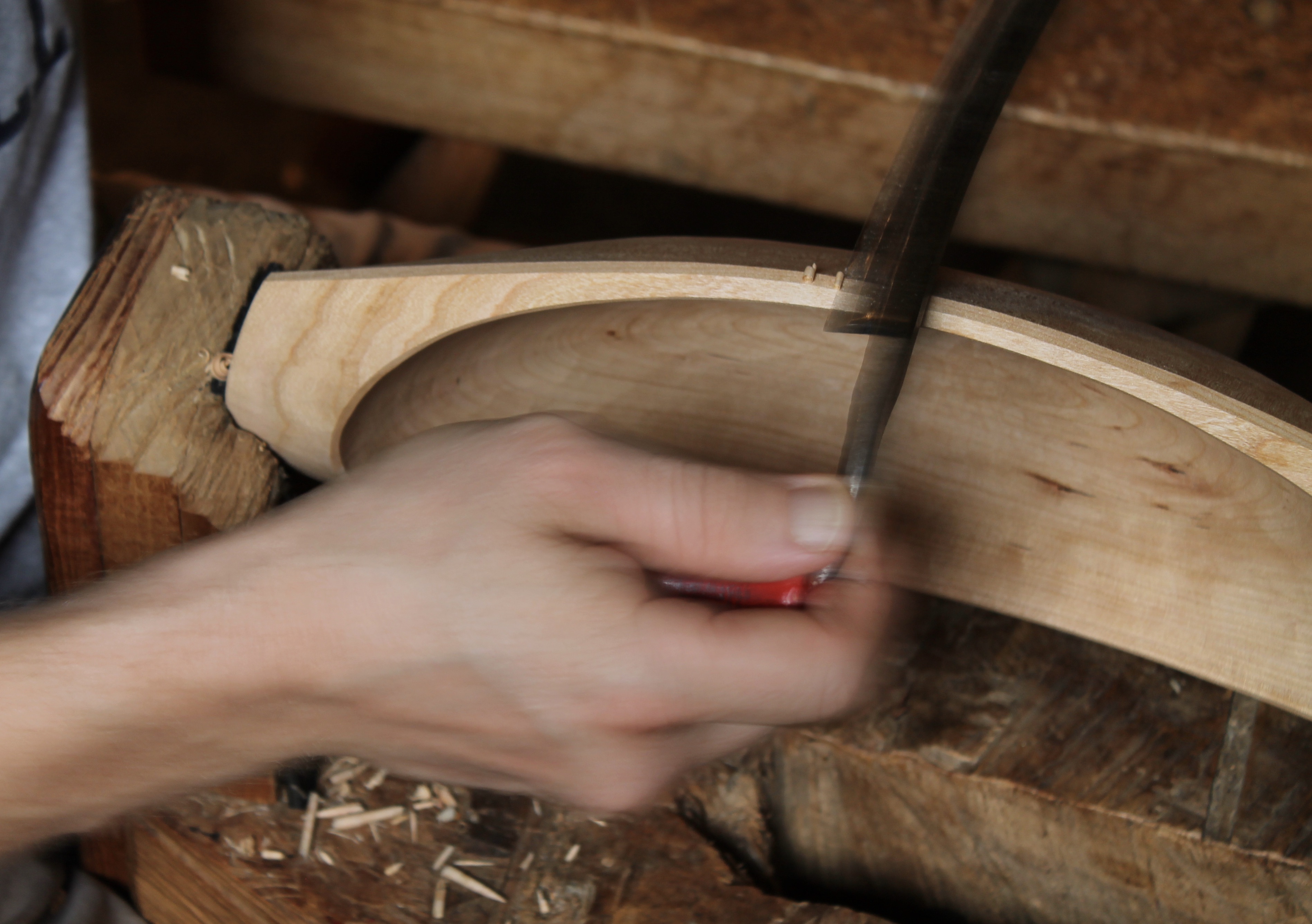
After sketching out the pattern of graduated chips around the rim, I begin by stabbing the vertical sidewalls of the chips with a chisel.  Same idea as chip carving with a knife, but with this many chips in dry cherry, the chisel makes sense.  The deepest part is at the apex of the triangle toward the inside of the bowl, so I’ve angled the chisel that way and will stop the downward pressure when the cutting edge just kisses the outer edge of the rim.

CCC740F1-5172-4779-907B-1C9EBBBC3789_1_201_a

Then the same chisel can cut the bottom and remove the chip.  The corner of the chisel rides along one sidewall.  When the cutting edge meets the other sidewall, out pops the chip.

6CAB50D0-AAA8-43E0-825E-157C3EB720D7_1_201_a

There’s an apple down in there for scale in the photo below.  Plenty of room for a big salad.

5369E0F9-E339-476F-A4C2-BC9E54224A78_1_201_a

Posted in bowls, cherry, patterns, tools, Uncategorized | Tagged , , | 15 Comments

Letter Carving Close-Ups

C03CE584-9829-4DF4-BBA1-98298BC63126_1_201_a

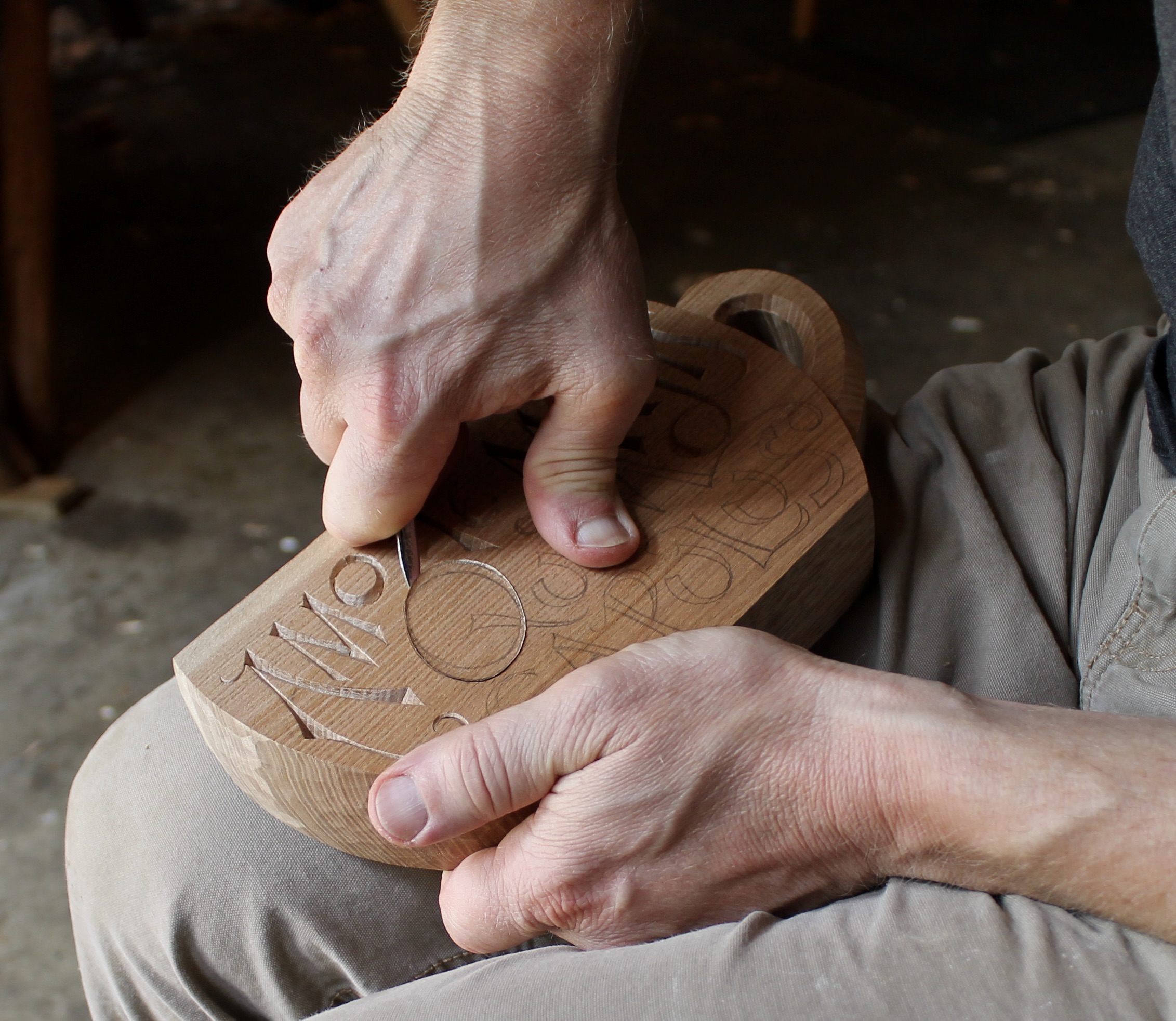
When I was carving the lettering on a recent spoon, I paused to set up the camera behind my shoulder.  I used the timer to take a few photos as I worked a section, and they show some of my typical hand positioning.

When working a spoon handle, there’s not a lot of support on the piece itself for your hand, so the leg becomes an additional support.  The spoon needs to move as much as the knife, so the left hand participates in the dance as well.

D603FD5D-BE0D-40A3-A951-CD8ECA685179_1_201_a

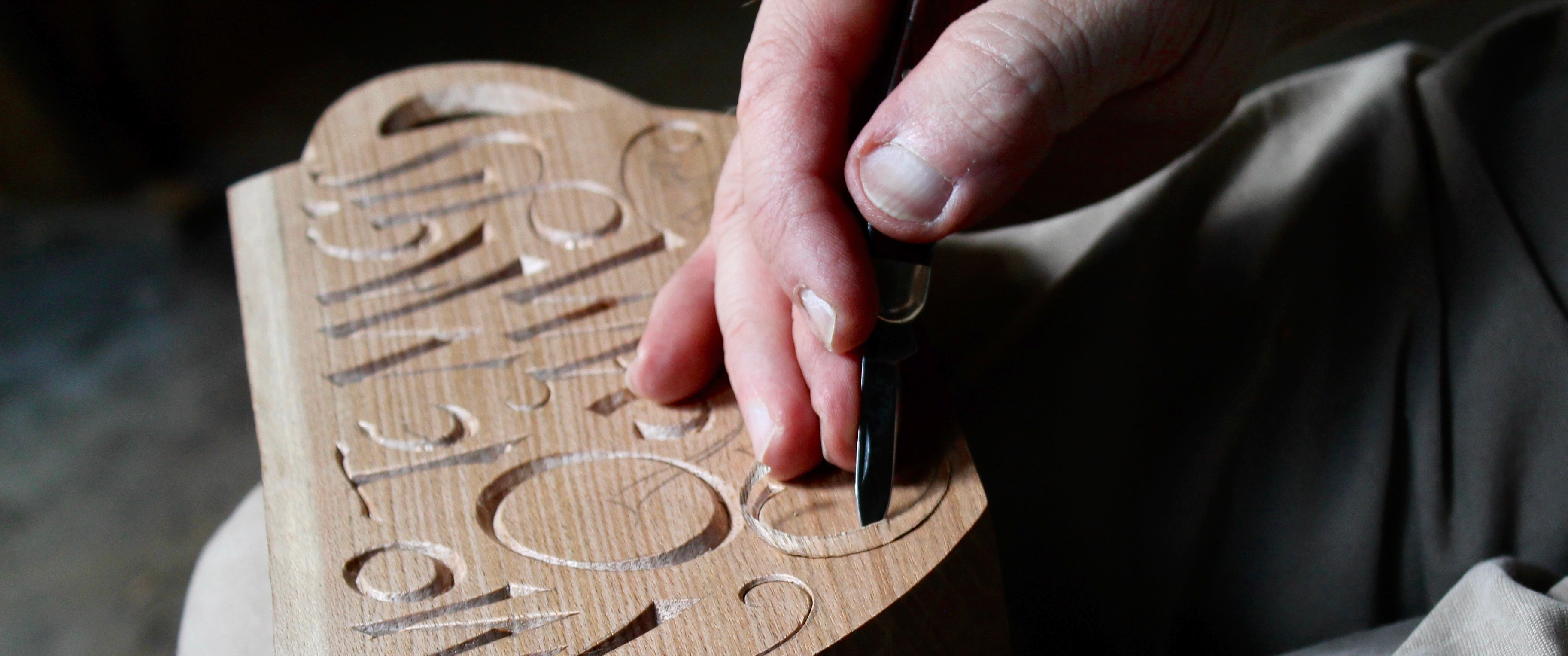
Here’s another shot of the same grip seen in the first photo.  The knife is stable in the hand with three points of pressure and can be handled nimbly and with good visibility.  Feels a bit like carving with a fingernail.  Notice that in all of the photos, there is at least one finger in contact with the spoon and/or my leg.  That is critical for control.  These points of contact act as pivot points or fulcrums or a combination of the two.

26C18ACF-C46A-4C36-9CB6-C629742B2F08_1_201_a

Above, I’ve come to the upper end of the left side of the A and am carefully slicing to touch up the root of the v channel and the junction at the apex of the A.  It takes time and is good training in patience and focus.

086CCC46-E35F-4A14-9B37-4D7918A80591_1_201_a

Here’s a version of the grip I typically use for the first side of the v-groove.   It’s a more powerful grip.  Leverage and downward pressure into the wood are critical in order to have control.  That’s important for both executing the cut well, and also for safety.  The blade remains firmly engaged in the wood as it makes deliberate progress.  It wouldn’t hurt anything to have a thick piece of leather over my leg I guess, but control is even more important.

Whatever the letter, it’s these same sort of cuts.  And it’s about considering various sizes, situations, and materials.  In the little video below, I’m working at a bit of a larger scale (so that it’s easier for the viewer to see) and in basswood.  If I wanted to carve at that larger scale in the same maple as the spoon above, it would make more sense to remove some material from the central portion of the letters with a v-tool before using the knife.

Tom Hepworth shot this video during Spoonfest last August.  Hard to believe that eleven months ago we were all gathered in England.   I’ve referred to the video before, but in case you missed it:

Isn’t it refreshing to see that British-American cooperation 244 years after the breakup letter was signed?

Posted in Lettering, Uncategorized, video | Tagged , , | 11 Comments

Some Spoons

262D686C-7D67-4DDF-B9CA-27836E74ED8B_1_201_a

The spoons are spoken for now, but I’ll keep the photos and information up for reference:

#1: Cherry.  13 1/4″ x 3 1/4″.  This is the one in the top photo and the next two photos below.  This is a large ladle or serving spoon with a significant bend from handle to bowl.  The lateral bend in the crook also makes it particularly ideal for left handers, but righties can still manage fine.

95C61F14-1DBA-4CFF-B9F4-40283BD59CBF_1_201_a

2DC4FBC4-E2AD-497F-A702-BDAE7266B443_1_201_a

#2: Rhododendron.  10″ x 3″.  This sculptural serving spoon follows the curves of a Rhododendron branch.  This is another lateral bend that is ideal for left-handed use.  In fact, I almost lettered it with “Lefty” like those scissors when I was in kindergarten.  In the end I went with “Rassasy,”  I’m still a lot unsure about this word, but it seems that it’s an old word meaning to satisfy a hunger.  While the etymology remains a mystery to me, I do like the way it fits onto the spoon handle, and I’m not changing it now.  I added a bit of texture to the field by tapping a nail repeatedly into the wood.

07688BF5-D983-4C12-A19D-08FB0258363C_1_201_a

9966FFBB-15A1-481A-B8F6-795096393D27_1_201_a

DD55D19A-F125-4C3F-B977-0BFBC2A1E4F7_1_201_a

#3: Rhododendron.  8″ x 2 5/16″.  This one has a right hand twist and a good bit of figure through the bowl.  An average sized serving spoon.

485986F8-1066-4FA0-BA2D-FA80AD26E540_1_201_a

C4B61EA8-0E14-4DEE-BFB2-77DF760752F3_1_201_a

#4: Cherry.  12″ x 3″.  This cherry spoon has an octagonal handle and would be a versatile spoon for everything from cooking to serving.

0594B7A1-9651-4AC2-B7CC-49D93A19BFC7_1_201_a

F8F94FFB-ACFC-4B25-BF9B-F4A6C48CCAF2_1_201_a

B3310FCF-572A-44EF-8D56-3BDCCAE402D3_1_201_a

#5: Cherry.  12″ x 3″.  A versatile spoon like the one above with enough crank to feel comfortable as a serving spoon, but useful for lots more.  This one is mostly sapwood, thus the lighter color.

AA7CFC78-14E6-4AB6-A1CB-33C548572B93_1_201_a

70BBDB91-8A1B-416C-B239-BD9862E8C526_1_201_a

26DBE86E-C7B4-44CB-84C2-5FE9D6809B68_1_201_a

#6: Maple.  11 1/2″ x 3 1/4″.  This one has steep bend to make it a comfortable server ready to reach deep.

943A34A4-3A70-471D-BFBC-5CE31E40CB5A_1_201_a

55F9CCD1-7F50-4C14-B7F6-0981968189DB_1_201_a

#7: Norway Maple.  11 1/2″ x 2 7/8″.  I returned to a Latin phrase I’ve used before meaning “Hunger sweetens the beans.”

3C8AE305-ED67-4A01-8F18-EBABBFFC376D_1_201_a

4EC22672-D625-43CF-A29B-605B86133C21_1_201_a

4A9795E6-6310-409E-BF10-6C840763768C_1_201_a

#8: Norway maple.  17 1/2 x 3 1/8.  This one got lost in the shuffle at the end of last year, a leftover, so I thought I’d add it to this group now.  This is a very long, slender, slotted ladle.  If you’ve got a use for it, it will serve well.  I don’t think there is an extra unnecessary tiny bit of wood on this spoon.  Light and strong with the fibers running true.

IMG_0780

IMG_0778

IMG_0775

Posted in spoons, Uncategorized | Tagged | 2 Comments

Late June

3A897987-8A17-4959-AA2D-AF6B732B9E54_1_201_a

“If man is ever going to admit that he belongs to the earth, not the other way round, it probably will be in late June.

DF910C44-FDFD-4C30-87F4-201CBF74D54A_1_201_aThen it is that life surpasses man’s affairs with incredible urgency and outreaches him in every direction…


00EEF7A0-9CFF-4722-8588-E639BA722FA0_1_201_a

The incalculable energy of chlorophyll, the green leaf itself, dominates the earth, and the root in the soil is the inescapable fact.

58A599D0-825D-4704-8C02-1A7094CB887F_1_201_aEven the roadside weed ignores man’s legislation.”


–Hal Borland, “The Urgency” (1961).  Collected in Sundial of the Seasons (1964)

Posted in nature, quotes and excerpts, trees, Uncategorized | Tagged , | 9 Comments

Spoon Stages

I’ve been finishing up several spoons that have been sitting around, partially carved, for months.  For me, spoon carving breaks down into these stages:

  1.  Finding and collecting the crook
  2.  Splitting
  3.  Axe and adze work
  4.  Green knife work
  5.  Dry knife work
  6.  Possibly decorative carving/lettering/painting
  7.  Oiling and curing

Here’s what that looks like in a little more detail:

DF photos spoon blanks from cherry branches

Good crooks are harder to find than it might seem.  Sometimes I find crooks here and there in fallen branches when I’m walking.  Sometimes I’ll come across a bunch at a time where trees have been trimmed or from treetops in recently logged areas.  Rather than risk end grain checks and the loss of the piece, I partially process these crooks right away.  Above, you can see some cherry blanks that have been split.  I could put them in a plastic bag at that point, but I like to get rid of even more excess before pausing.

DF photos spoon blanks maple firewood 1

Keep your eyes open when splitting firewood too.  I often find nice crooks within larger logs like the Norway maple above.

DF photos spoon blanks maple firewood 3

Some further thoughtful splitting can yield some wonderful crooks.  And that could be split again to make two.

DF photos spoon blanks

So I take those splits and get to work with axe and adze, making decisions on the design of each spoon based largely on what the individual crook brings.  Above are some blanks that have been axed and adzed out.  The adze is used across the grain in this case for shaping, but not so much for hollowing.

That is an ideal stage for storing for later carving.  I place them in a plastic bag, and, if there’s room, into the freezer.  The freezer is only necessary for long term storage when, otherwise, you may get a bit of a science experiment going on in the bag and the wood could get stained.  Most of the excess wood has been removed from the blanks, which leaves more room for ice cream.  Of course, if you’ve got time and only one blank or two, don’t store at all, go ahead and keep carving.

5C74A639-95D7-4577-9AD9-E3B4B7EE79A0_1_201_a

Whenever I get back to them, I do some knife work while they’re still green, including hollowing the bowl.  I want to remove all the wood I can, but still leave a bit for the refinements and surface clean up after drying.  I then leave them to dry for at least a couple days, but sometimes I don’t get back to them for a couple years.  The point is, they’re totally stable at that point and I can come back to them for all of the final carving whenever it works out.  The one’s above are dry and waiting for the finishing knifework.

E5C52AB2-BCE2-499E-8DBF-1DD21E60A9F0

It’s nice to have a few hanging around in that state; it’s easy to grab one to take with you somewhere, along with a knife.  You can casually carve while hanging out with a friend or just sitting by the river.  No need for chopping blocks and such at this point, and the chips are small and relatively few.

095E9DD9-F85E-4B7F-B192-57551E891E89_1_201_a

Here are a few above done with the dry knife work and ready for the possibility of decorative carving.  The final lines of the spoon have taken shape and the surface is cut cleanly.

D603FD5D-BE0D-40A3-A951-CD8ECA685179_1_201_a

Here, I’m doing some lettering with the pen knife, but there are all sorts of possibilities.

7E86D53D-79BB-4F57-8D60-C7A4555E50B4_1_201_a

The final step for me is oil treatment.  I submerge the spoon in pure linseed oil (flaxseed oil) for a day or two.  Then I put it in my little lightbulb kiln at around 120 or 130 degrees Farenheit for another day or so.    Then it’s ready to serve.  The one above is one of the spoons from the Norway maple firewood chunk.  I’ll have some others to share soon.

Posted in finding wood, green woodworking, spoons, Uncategorized | Tagged , | 24 Comments

Literate Bugs

982754FC-9BDA-40D5-9347-FC9295E42D41_1_201_a

I’ve had this welcome sign hanging outside on the house for a little over a year now.  Lately it seems to be attracting some interesting little creatures.  I tried for a little while to identify them, but it proved to be more difficult than I expected.  I know there are moth people out there, so if you recognize one of these guys, let me know.

E03D0A7A-85E8-4BD0-8E04-641E7C6B245B_1_201_a

If they can’t read then it might be the smell of linseed oil that attracts them, or maybe it’s the southern exposure.

1DDD7533-A8FD-4D7E-92E0-664B55EE9DCA

This one with the tail coming right at you really struck me because of the way it positioned itself, with the dark line situated right along the border of the letter.  Probably just a coincidence.

996B3F42-0403-432E-9AAF-E1B00CC51744_1_201_a

One last one, a real beauty, and I even know what it is — a yellow mayfly.  He’s a good distance from a stream.  He hung out there for a couple hours and then was off.  If I had been a trout…


Posted in Lettering, nature, Uncategorized | Tagged , | 14 Comments

Little Hens

E6DE591A-1380-4FB9-A694-56A7486862A0

The walnut rooftop chickens I roughed out back in the spring are waiting for me.  Meanwhile, a friend took down a cherry tree in his yard and I used a piece to make a pair of mini versions.  It gave me a chance to experiment with a couple things before returning to the large ones.

C65934AC-E2E1-4DFF-B193-AEAB4E9275E9_1_201_a

There they are above, carving done but waiting for oil.  Basically a matched pair except for the carving on the wings, which may be more clear the way the light is hitting them in the admittedly odd photo below.  I guess I was curious about the negative space.

9731DE54-28A2-46F6-874E-90187F0DA143_1_201_a

Much of the process is the same as for making the larger versions.  These two are 7 1/2 inches long and started as a 1/4 section of a green log.  After trimming the bark and a little wood off the outer edges, the blanks had a radius of 3 inches and a length of 7 1/2 inches.

2DA4A5FB-ECA4-4978-AD5A-F1AA65ECFACC_1_201_a

After roughing away most of the material with a carving hatchet, I hollowed the interior with a little gouge work, followed my a hook knife.  The sloyd knife followed the hatchet on the outside.  After drying, I refined the shape and went over all of the surfaces again.  I carved the flutes in the dry cherry with a gouge.

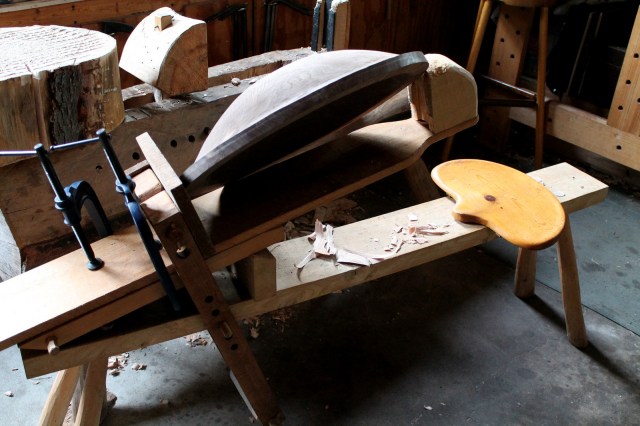
It’s nice to hold a small piece like this up off the bench top to work in a more comfortable position.  This was a good occasion to get out the vise above.  You’ll see it called all sorts of things from a pattern maker’s carving vise, to a guitar repair vise, to “exceptionally flexible workbench vise”.  The details and the price vary.  I purchased mine from Woodcraft, but it looks like they no longer carry it there.

Another option is the ever-versatile….

7908E3F8-433A-4639-A65F-02ECCE6C5499_1_201_a

Wooden Handscrew Clamp.  My daughter, Emma, and I have been doing a 10-15 minute sketch each day together for a month or two now.  Often, we just grab something out of the house or workshop as a subject, like a handscrew clamp.

D90FAC2B-1F8E-42E4-A2D4-BCFF7DBCD255_1_201_a

You can do all sorts of things by securing wooden handscrews to each other, and or to another surface with holdfasts, a vise, screws, etc.  The Dubuque Clamp Works makes some nice ones over in Iowa.

89351CEB-3791-488C-AFCF-834BB3EFC780

They come in all sorts of sizes, and are easily modified since the jaws are of wood.  One of these days, I’m going to take the fifteen minutes to glue the pads onto the jaws.

82DFED4F-1918-4734-9C1C-DFD05F4AD5A8_1_201_a

Other than the fluting, I did the rest of the carving with bowl in one hand, knife in the other.  Of course, you wouldn’t need to carve flutes at all.

1D858137-B89A-4AE3-866F-B60D8E75A5C2_1_201_a

I snapped a bunch of shots with the timer while I was doing the knife work, so I’ll just pile some into a slideshow below.  If you want to make one, they may at least provide an idea of some of the cuts and grasps.  I don’t think the slideshow will show up in an email program, you’ll have to go to the actual blog site to see it.

This slideshow requires JavaScript.

This may help too.  Here’s a pattern that you can print out to whatever size.  This will only represent the edges on the flat surfaces.  The rest is revealed as you carve according to your eye.  For example, the curve of the front of the chest from the foot (the foot is represented by the lower shape in the drawing) up through to the tip of the beak.  That can’t be on a pattern.  Just keep taking wood away until it looks and feels right.

1E9212C6-F275-41F9-AE5E-0EEE0C6ADCAE_1_201_a

While the oil on these two little ones is curing, I’ve got some lettering to design and carve.  I’m looking forward to it.  The big walnut hens are patient.

Posted in bird bowls, bowls, cherry, green woodworking, holding, layout, patterns, sketch, tools, Uncategorized | Tagged , | 19 Comments