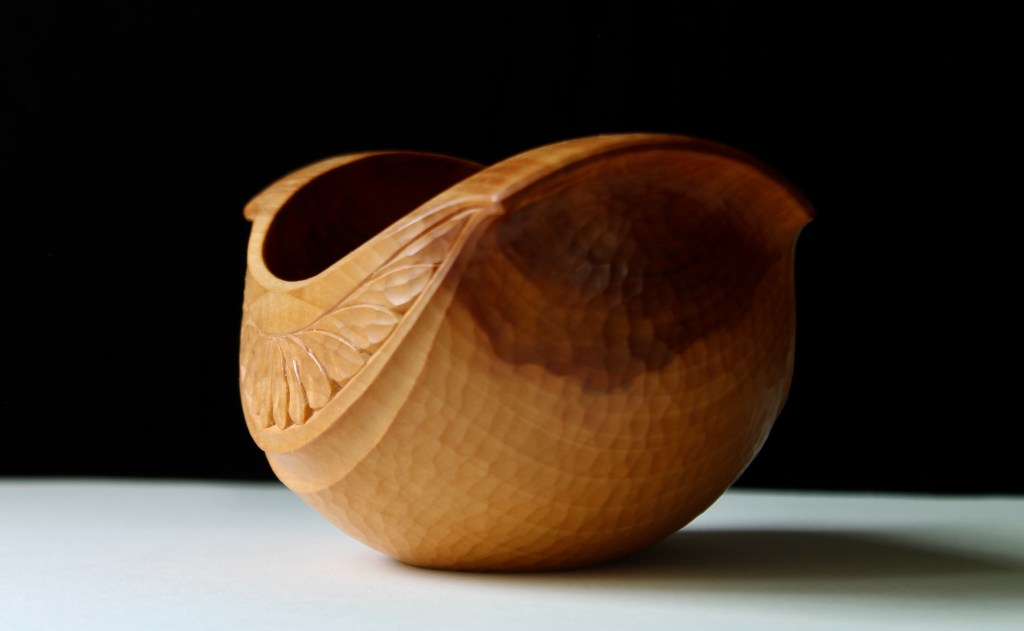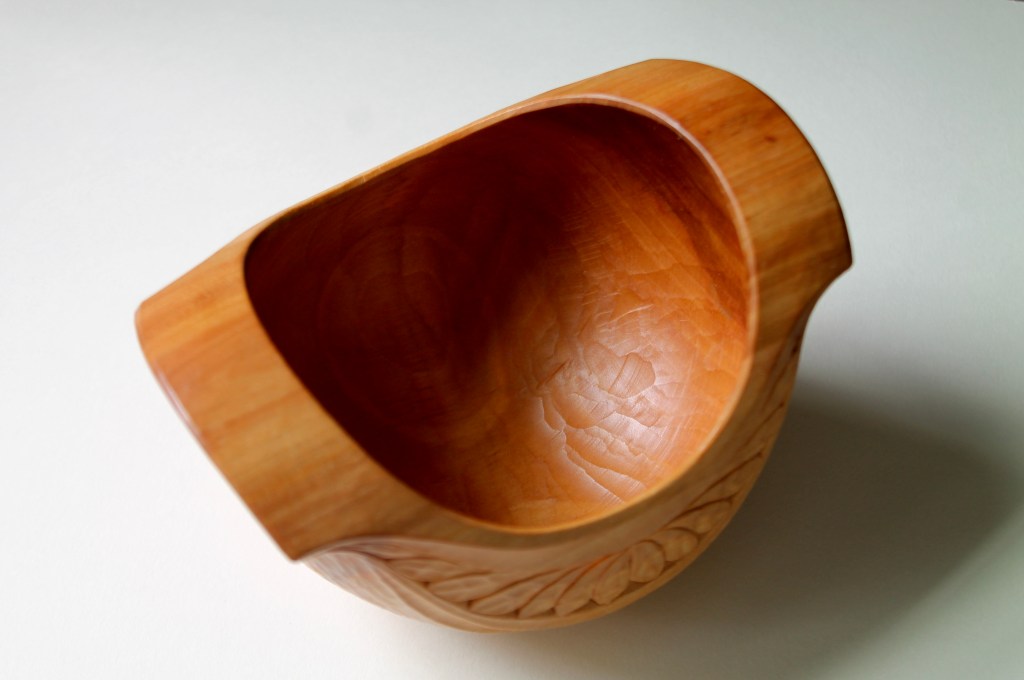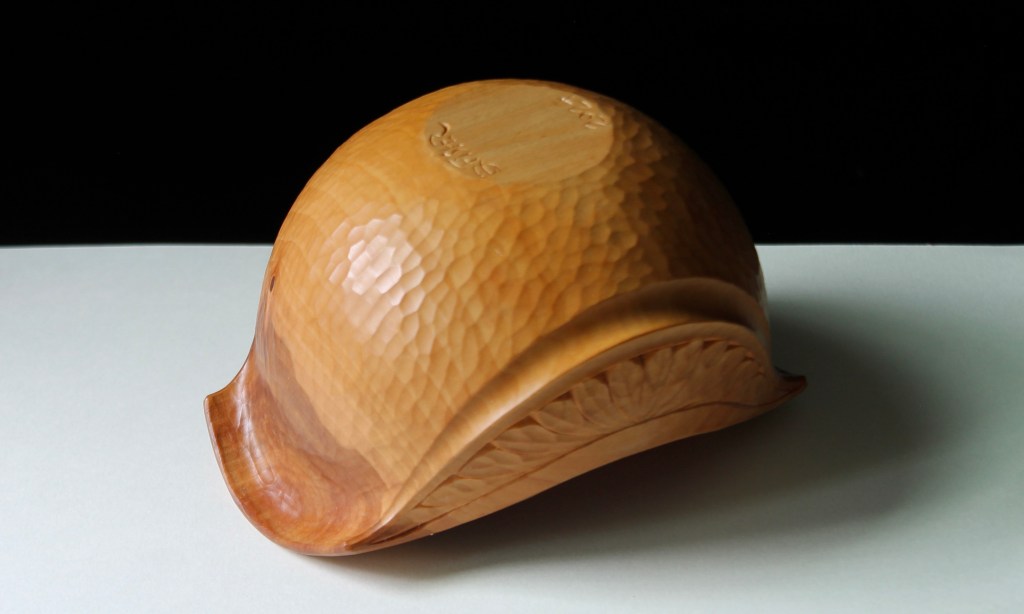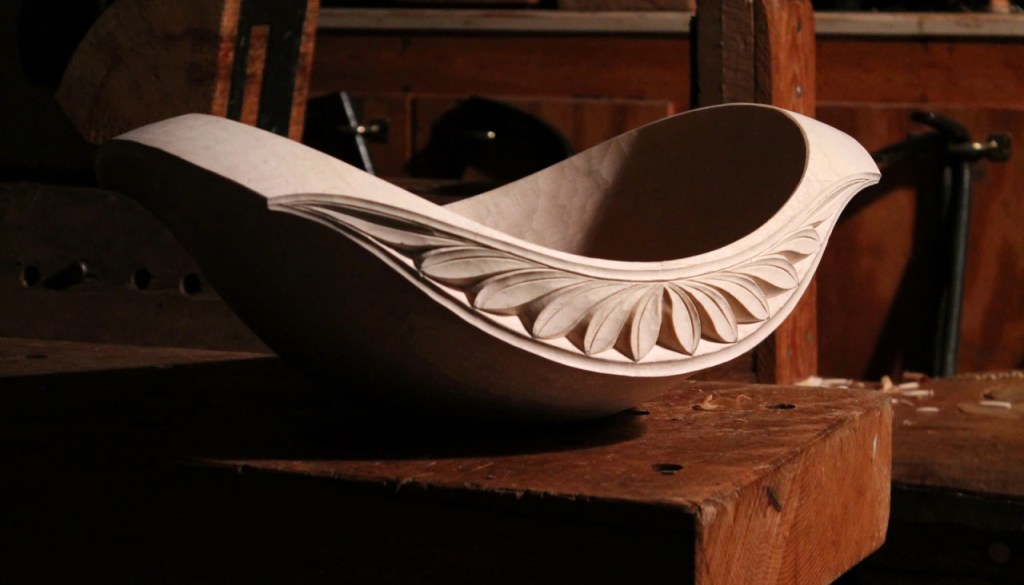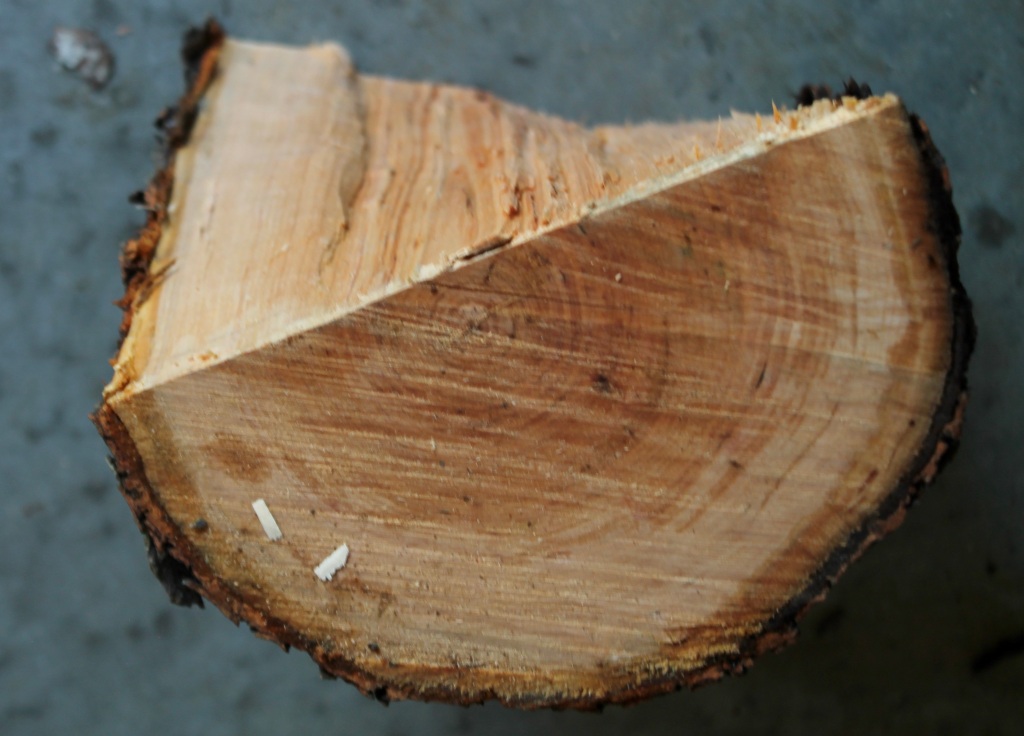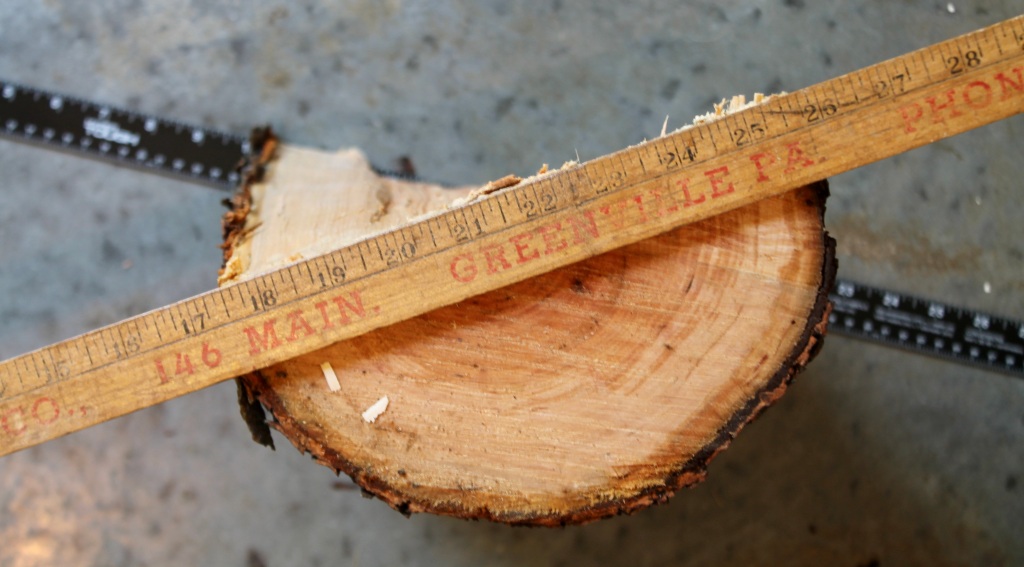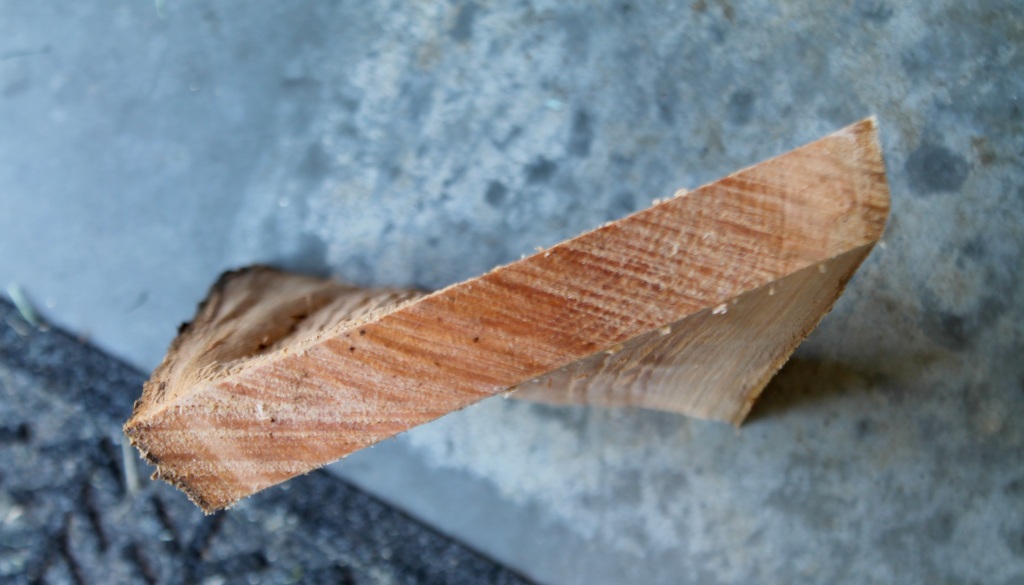
A friend alerted me to an old fruit-bearing pear tree that had fallen in a windstorm, just a couple minutes down the road. When I went to check it out, I wasn’t optimistic about its prospects. Most of the tree had rotted beyond use. The tree had been hollow for decades and mountains of old nutshells had spilled onto the ground. But, near the base the tree had been holding on with a ring of healthy wood to one side of the hollow.
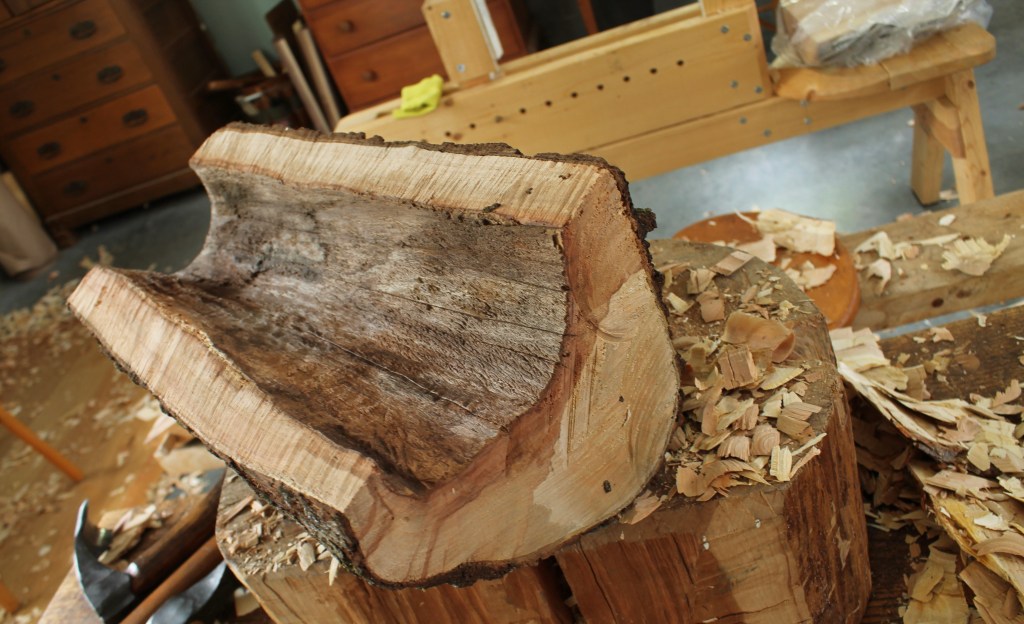
I carved a spoon from a smaller piece and found the wood to be wonderful. But I stared at that bigger piece on and off for a couple weeks, coming up empty. But I kept thinking. It seemed to me that what made this log special was the character of that boundary area between the darker wood and the deeper, lighter sapwood beyond it.
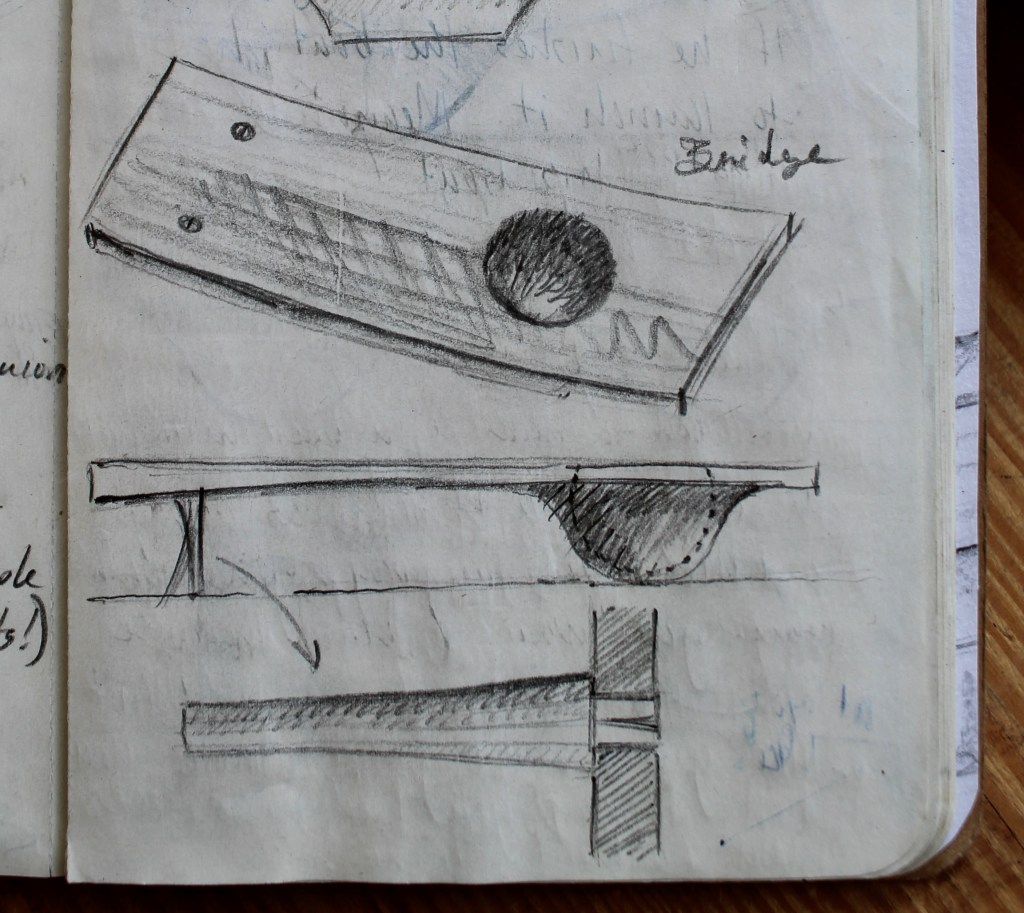
As I thought about that and another long narrow log (more on that later), I sketched a little idea in my notebook. Knowing that the details would evolve a bit as I worked, I had enough in mind to start shaping the log.
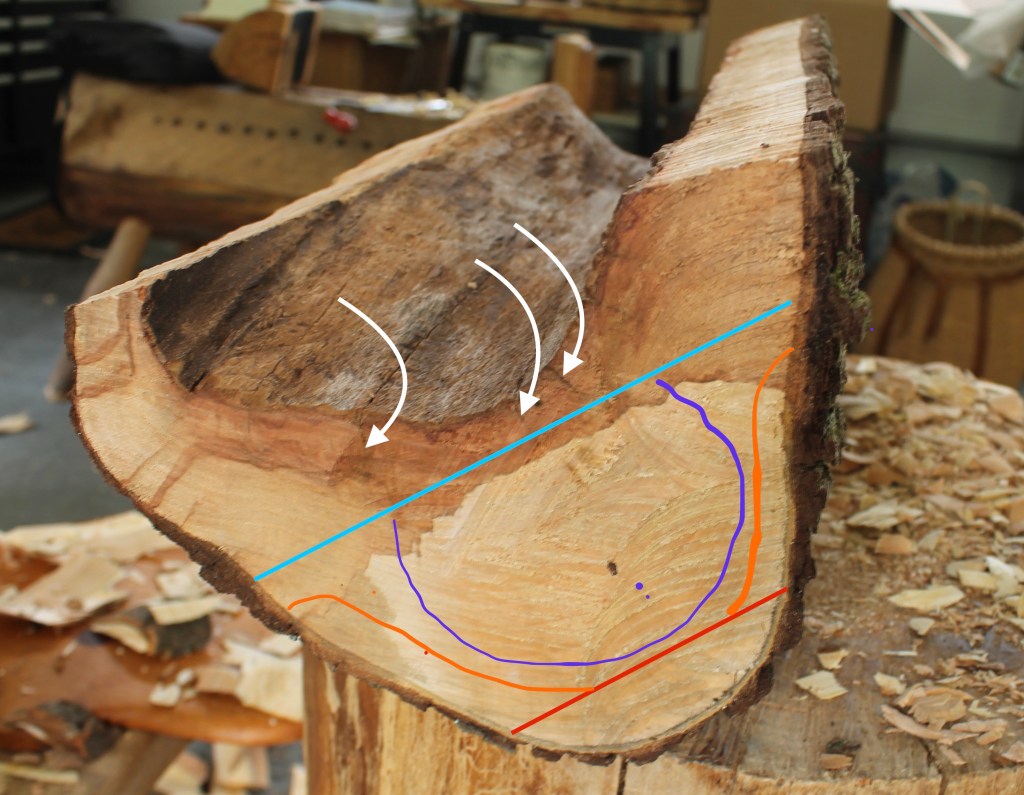
This is a rough idea of how the piece was oriented from the end. The light blue line is the top. I had to get it below the compromised wood and cracks (indicated by white arrows) next to the tree hollow. The red line is the foot. The purple and orange lines are the general idea of the deep round bowl interior and exterior.
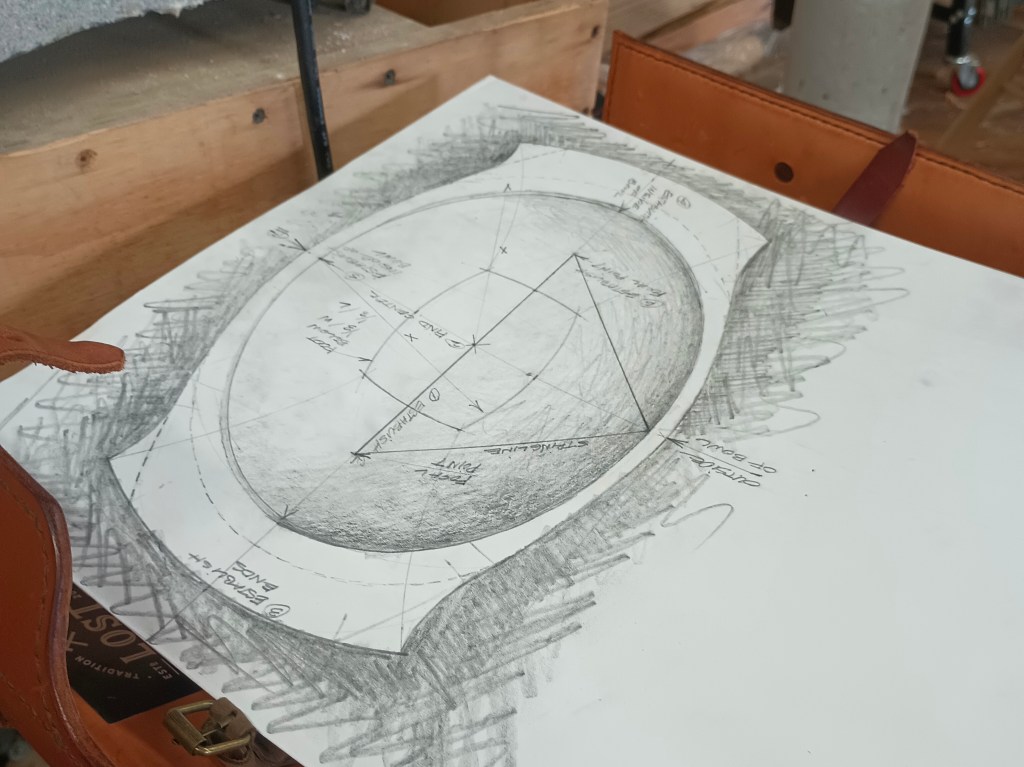
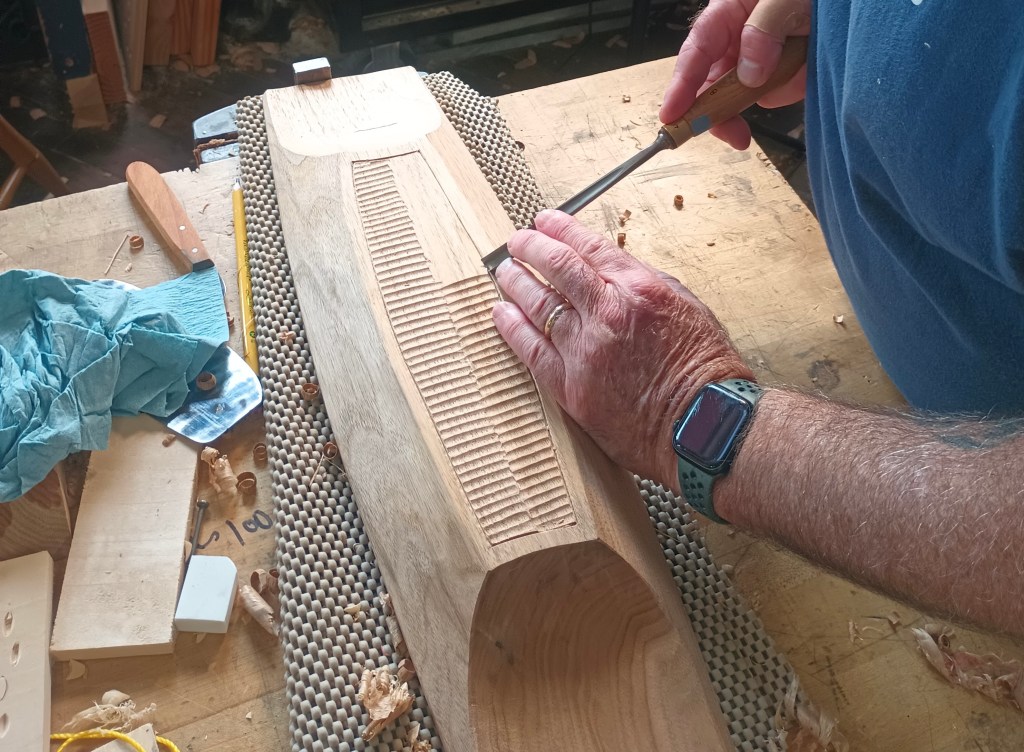
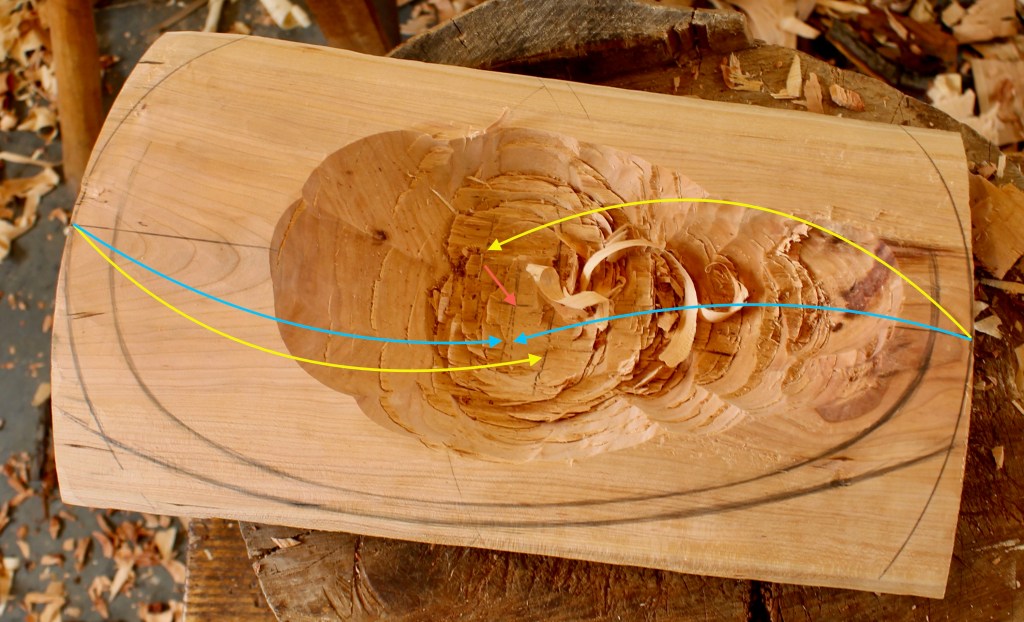
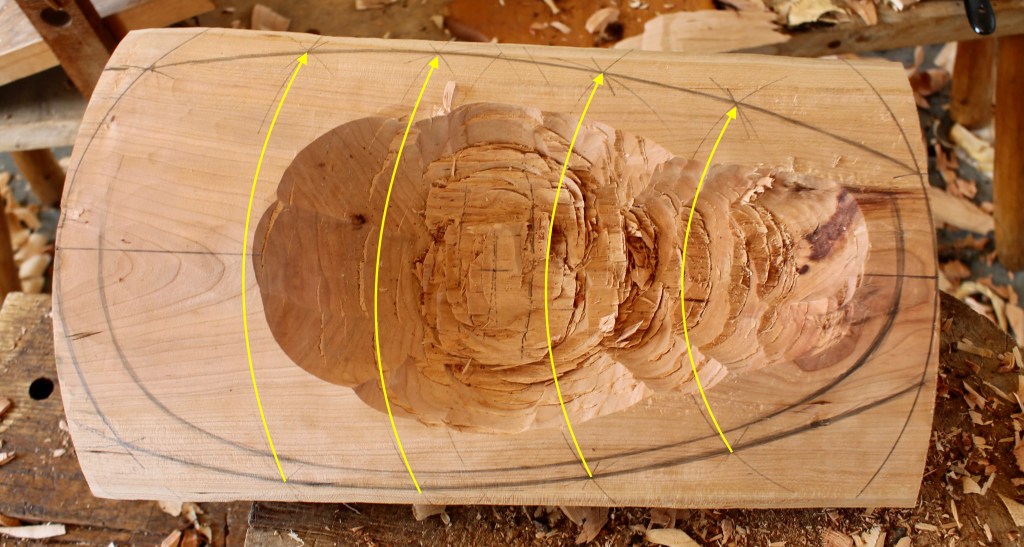
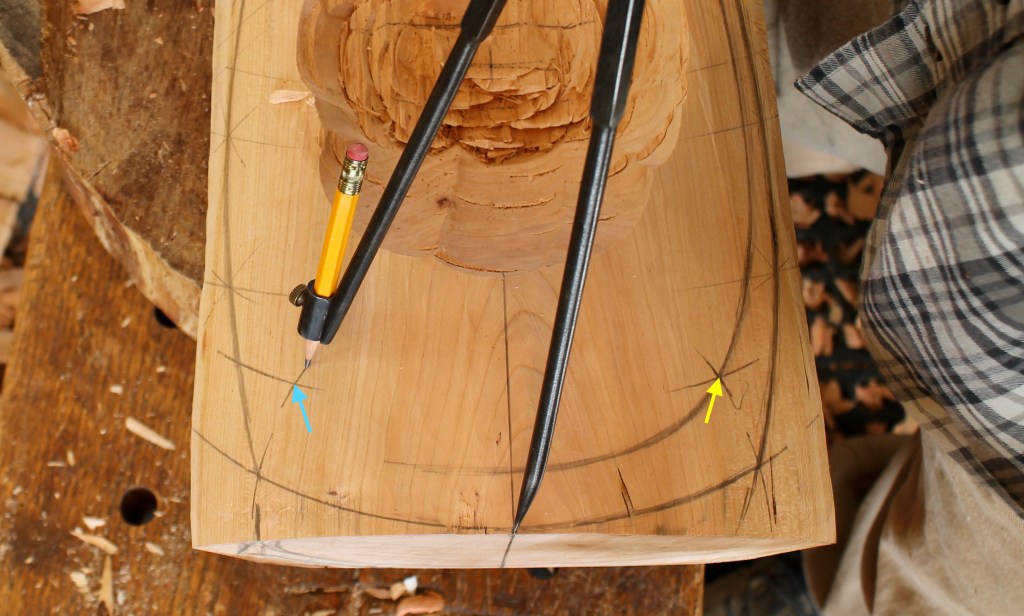
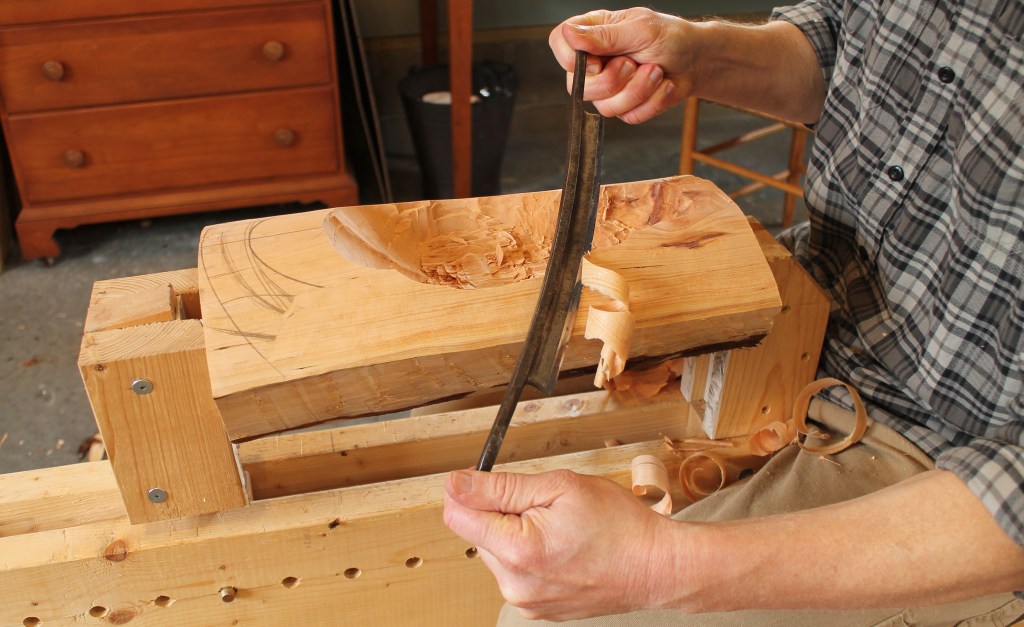
Just like any bowl, I established the upper and lower surfaces. In this case, both flat. I split, hewed and planed. The curly figure in the pear wood was a nice surprise, and the subtle color variation was even better than expected. So, now it was a matter of not messing up such a unique piece of tree. I sketched my layout and then began to excavate the hollow with a gouge, followed by hook knives to achieve the undercut shape. I’ve put some process images into a slideshow, below.

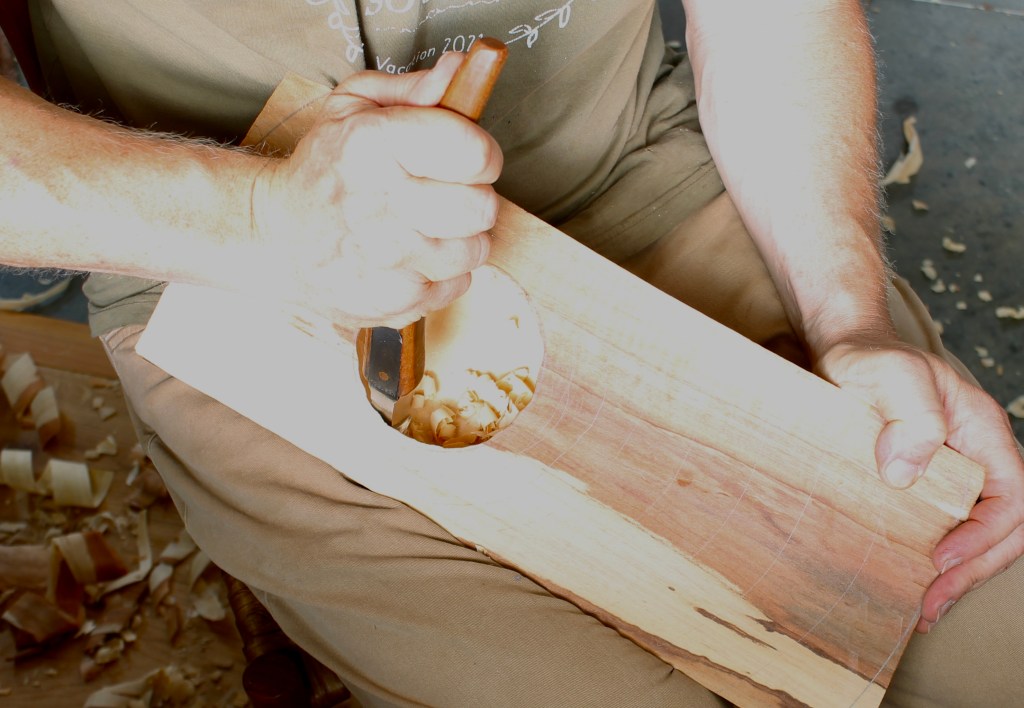
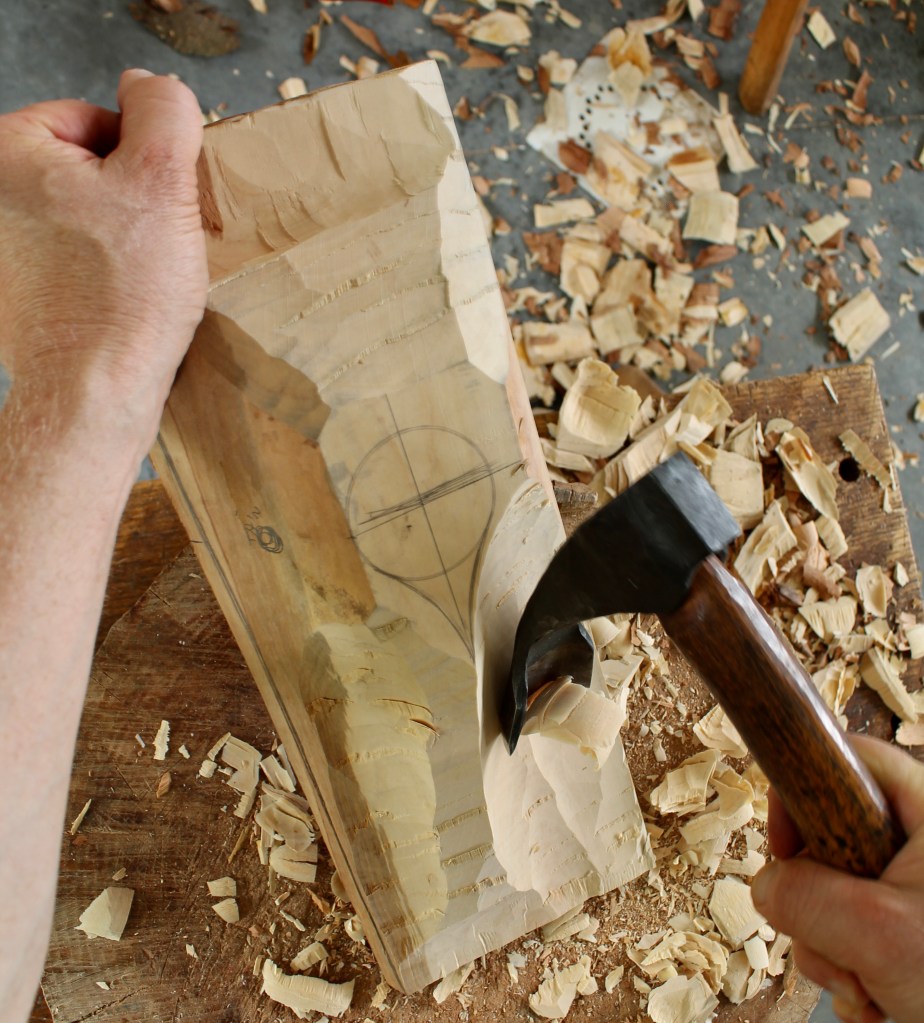

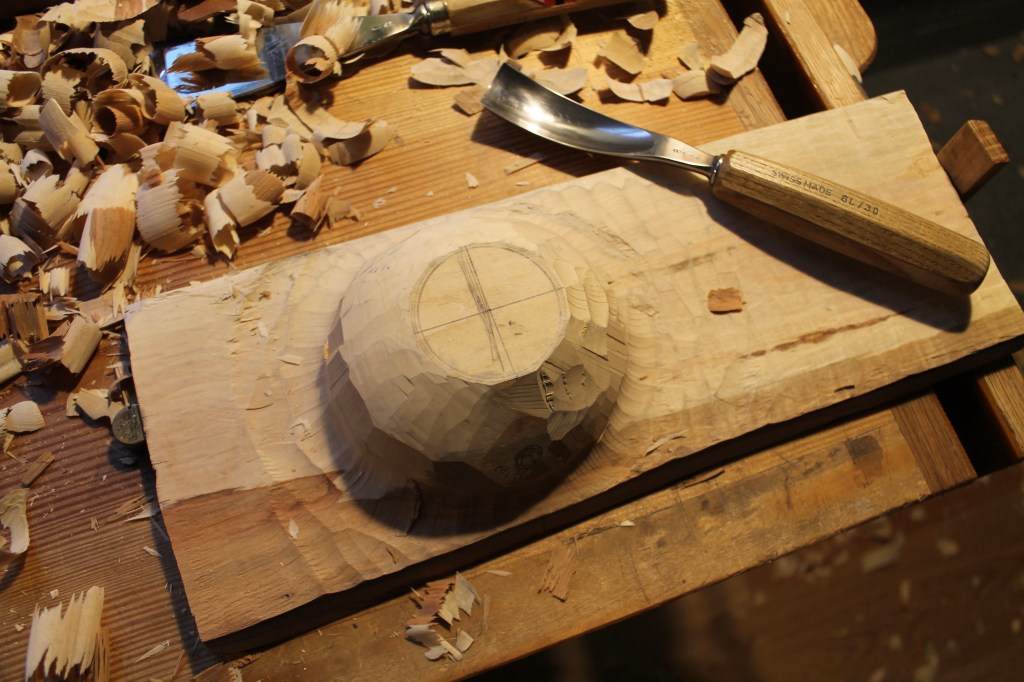
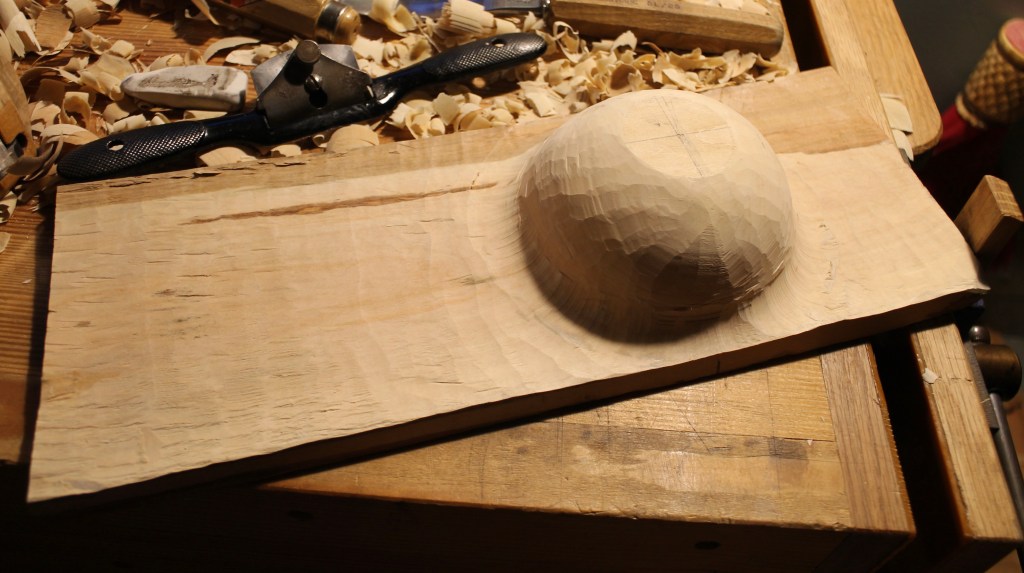
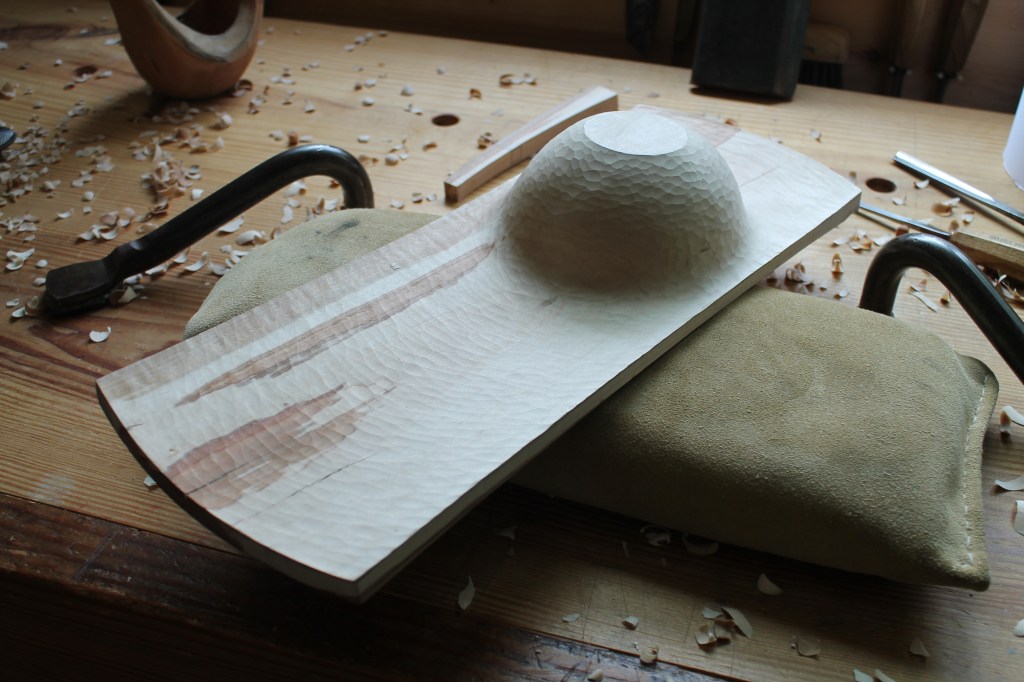
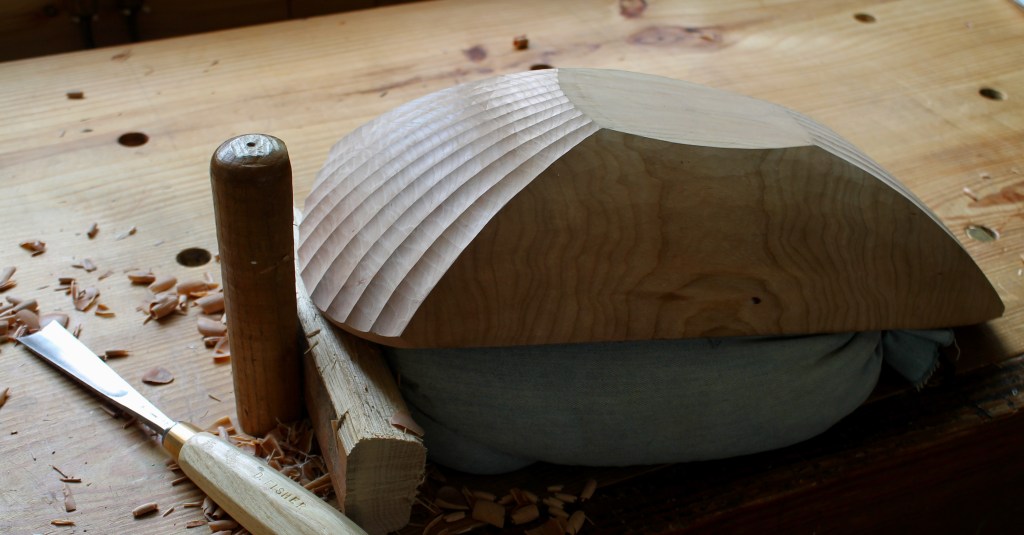
After a few weeks of drying, I returned to do the final shaping and refining of all the surfaces. During drying, the top took on a gentle arch from side to side. In the photo above, I had been using a sand bag and holdfasts to hold the bowl while working on the underside.
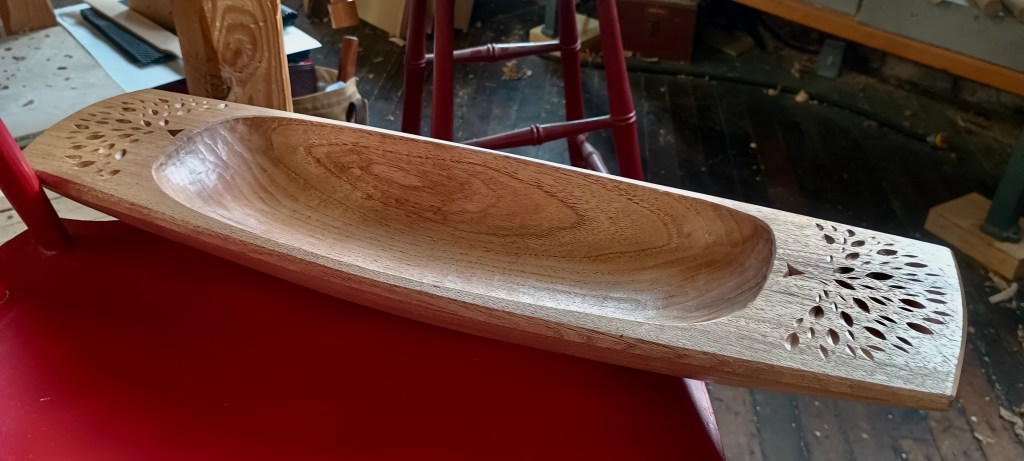
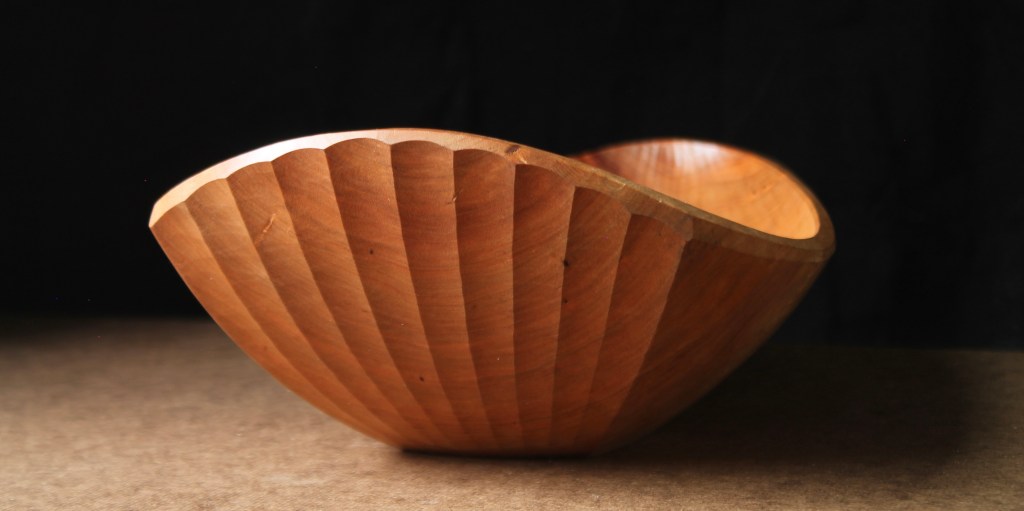
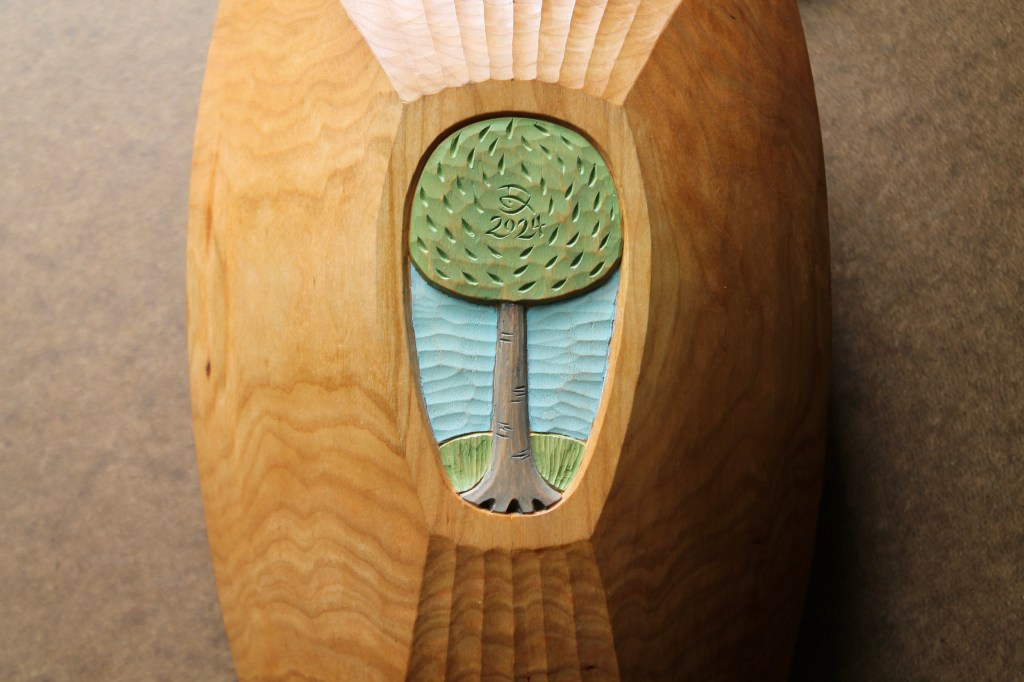
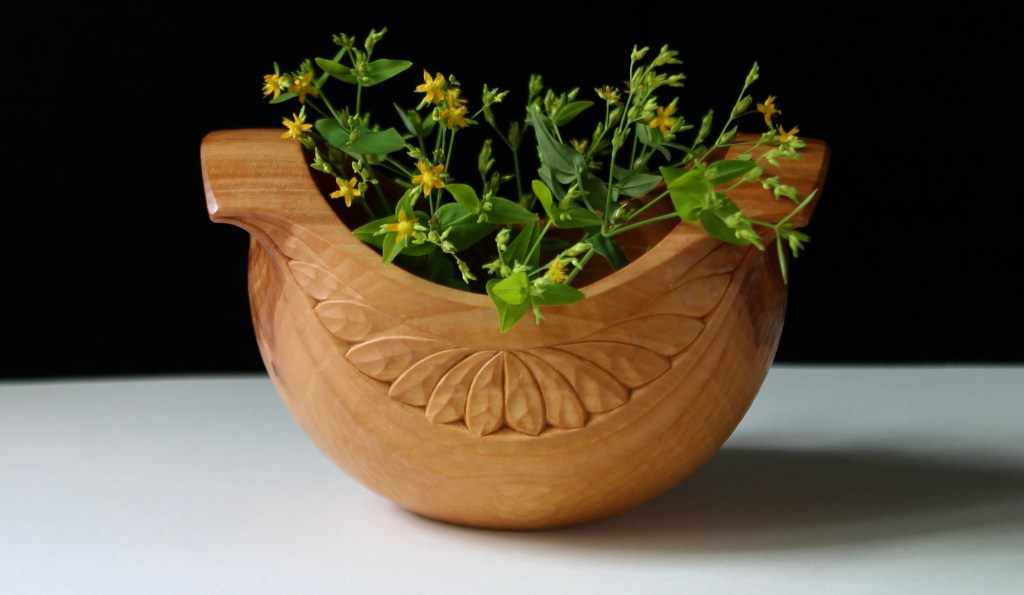
I’ll put a few photos of the finished bowl below.

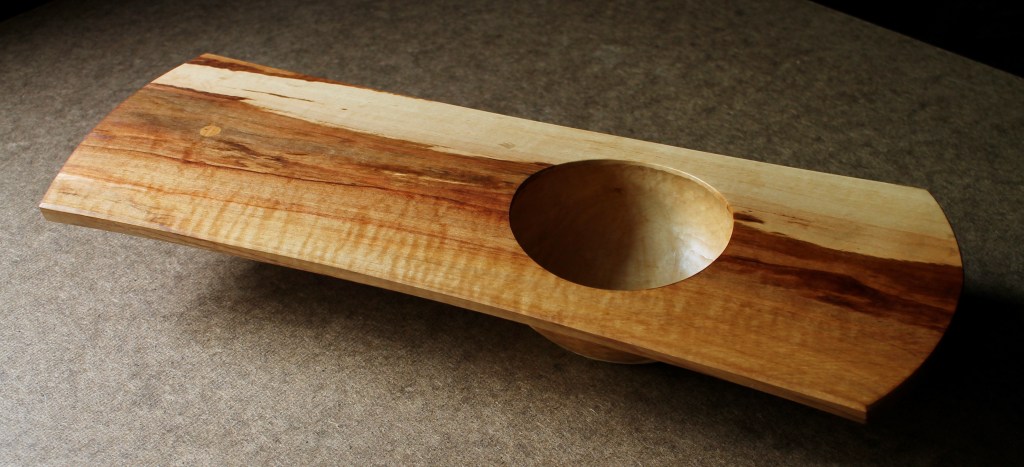
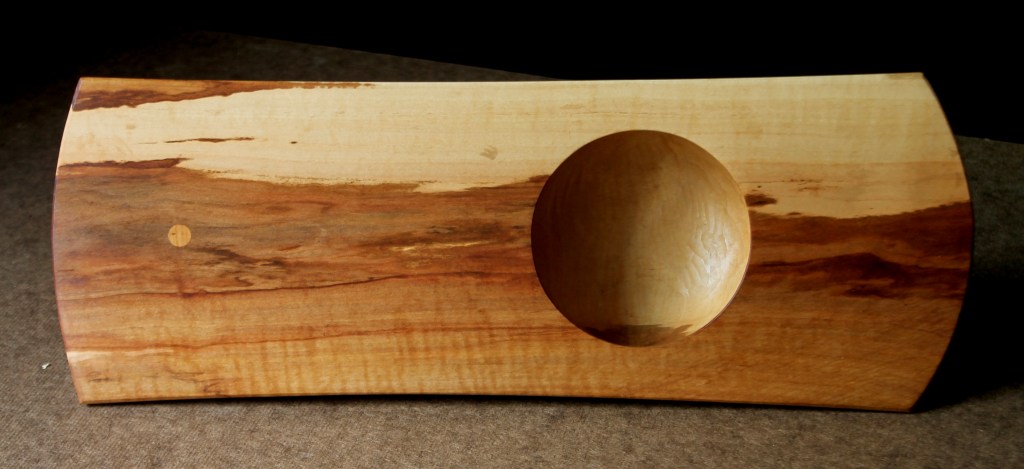
In the photo above, for me, the illusion of a sphere hovering in front of a board appears. Now I have trouble unseeing it! “Venus” is represented by the round end of the leg tenon.
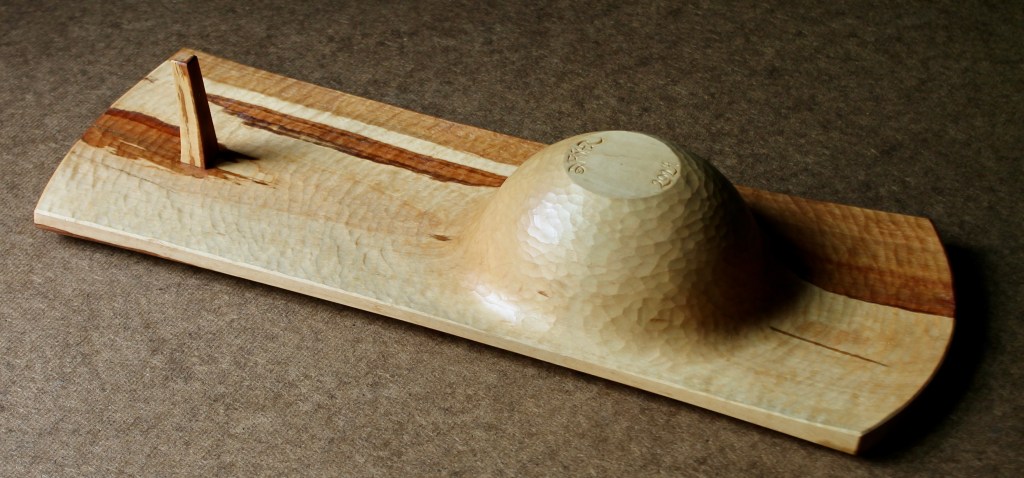
After some experimenting I determined that only one leg was needed. I dried a small piece of the same pear and carved it with a curving taper. Then carved a shouldered tenon to fit tightly into the mortise in the top.
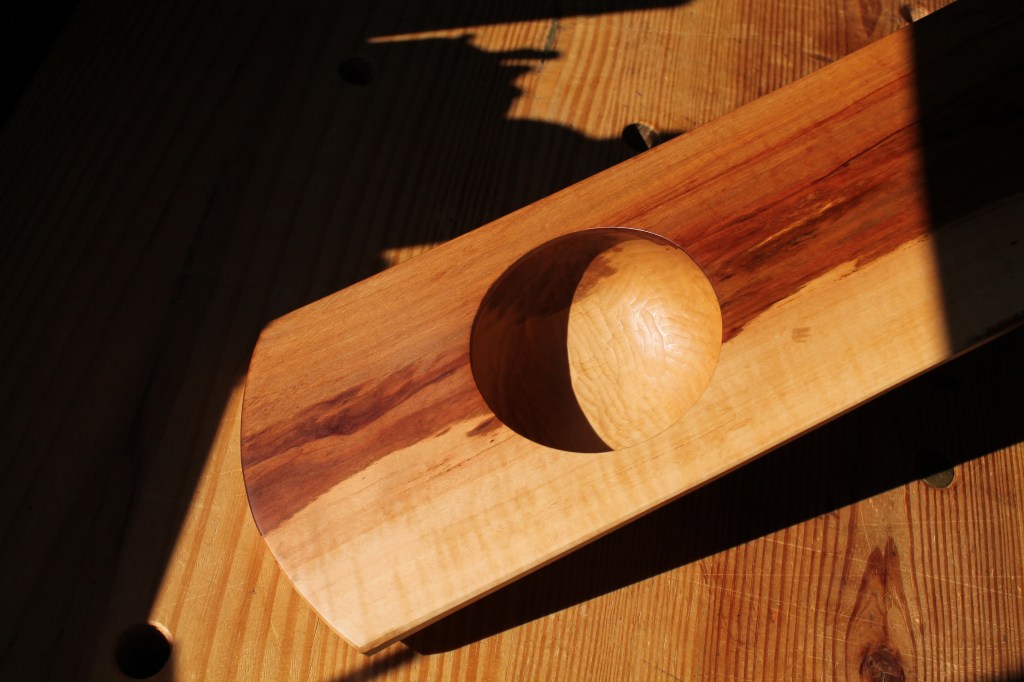
In very direct light (like this late afternoon light coming through my shop window) the shadow cast by the rim of the bowl creates a crisp crescent.