Sharp makes everything better; less force is required to cut, control is gained, and the surface left from the tool is superior. As obvious as that is, it is easily forgotten in the midst of a project and the haste to get to work.
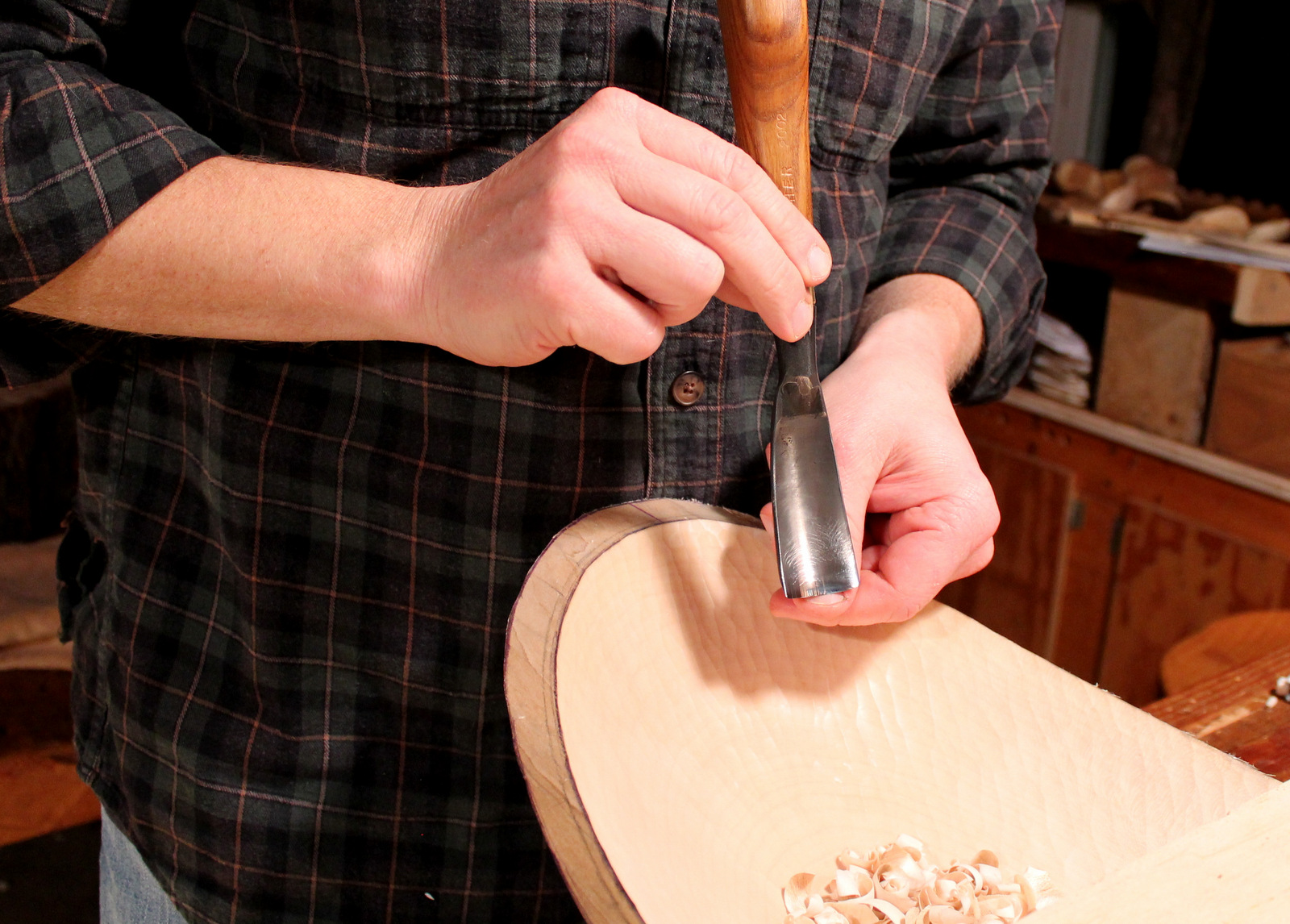
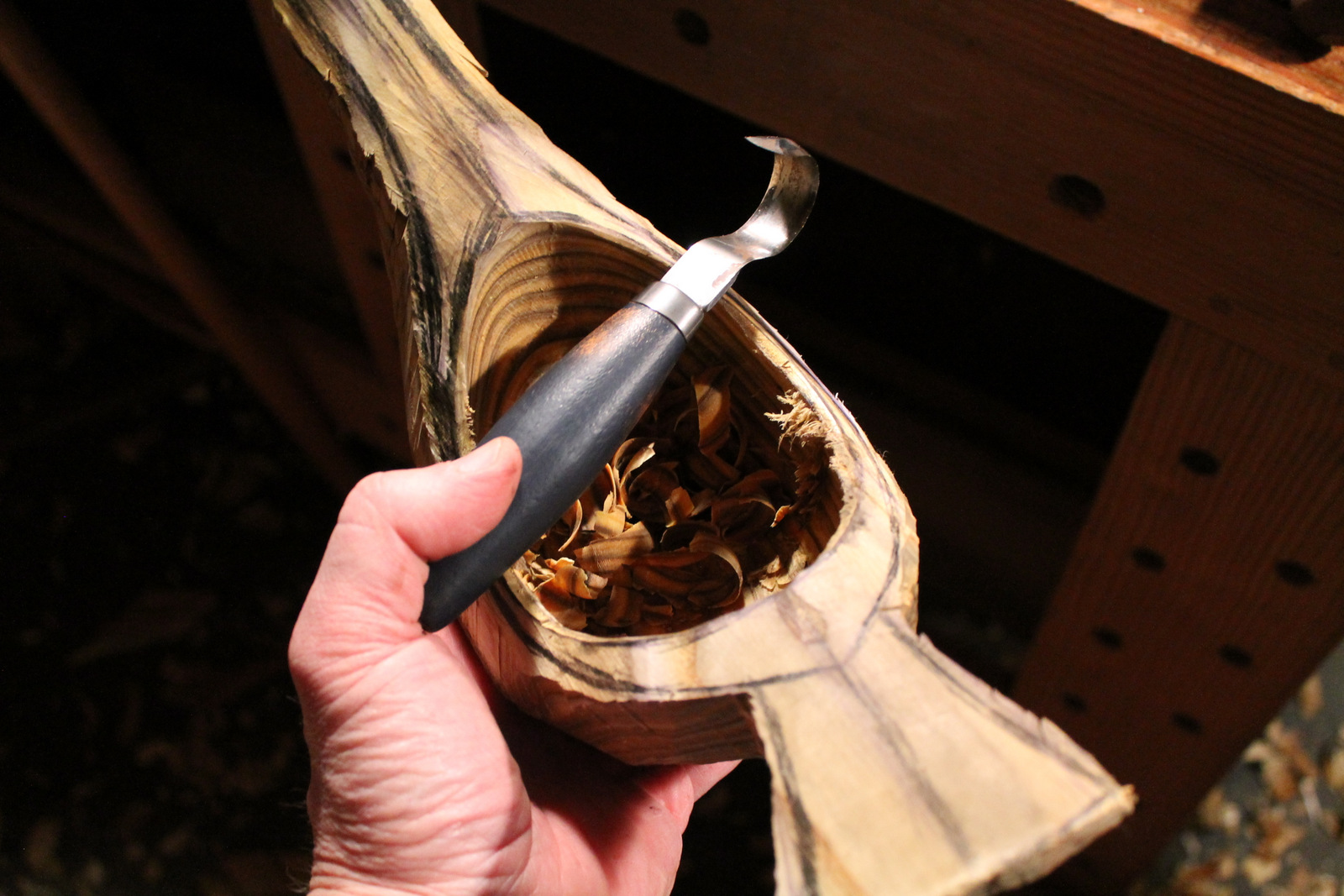
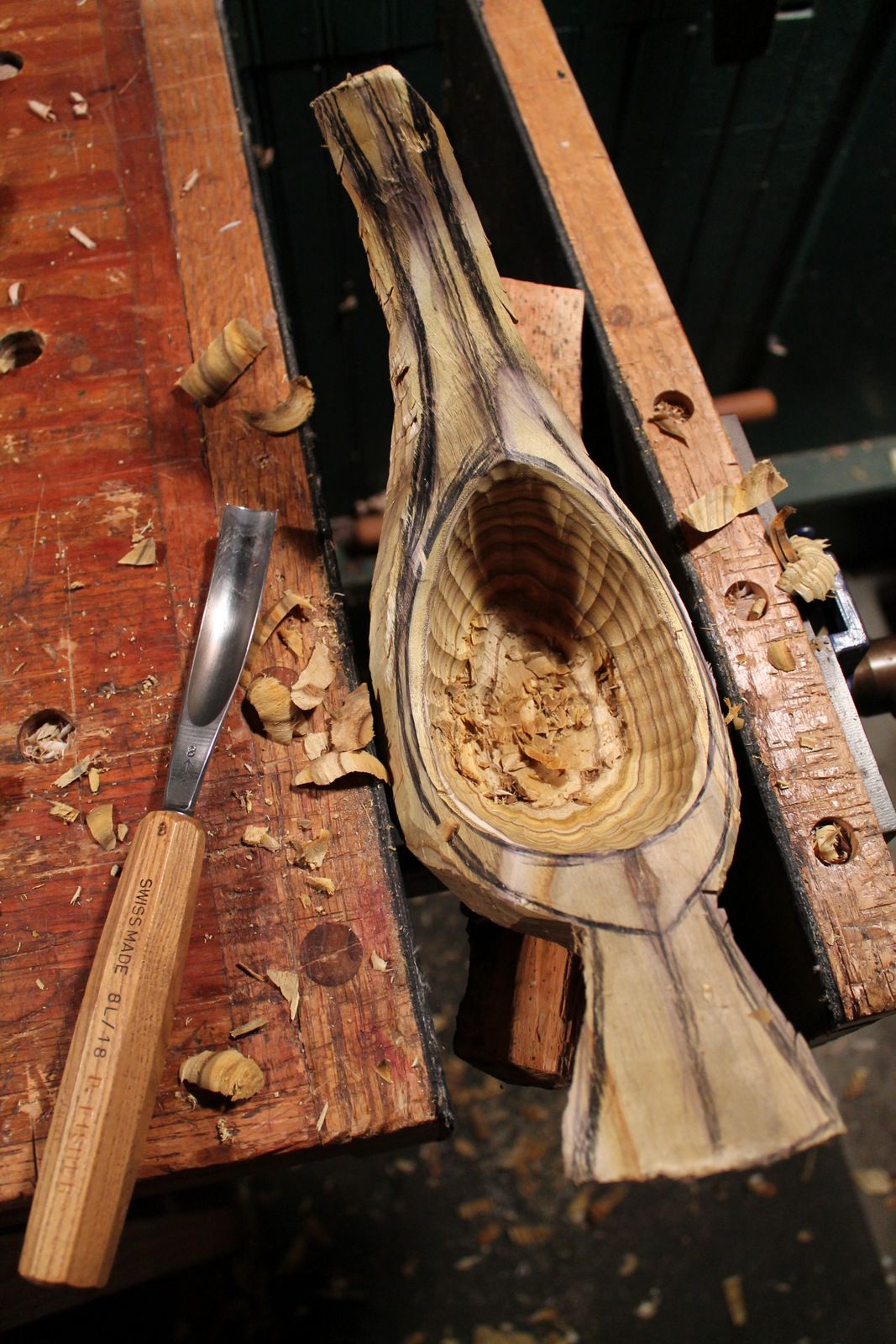
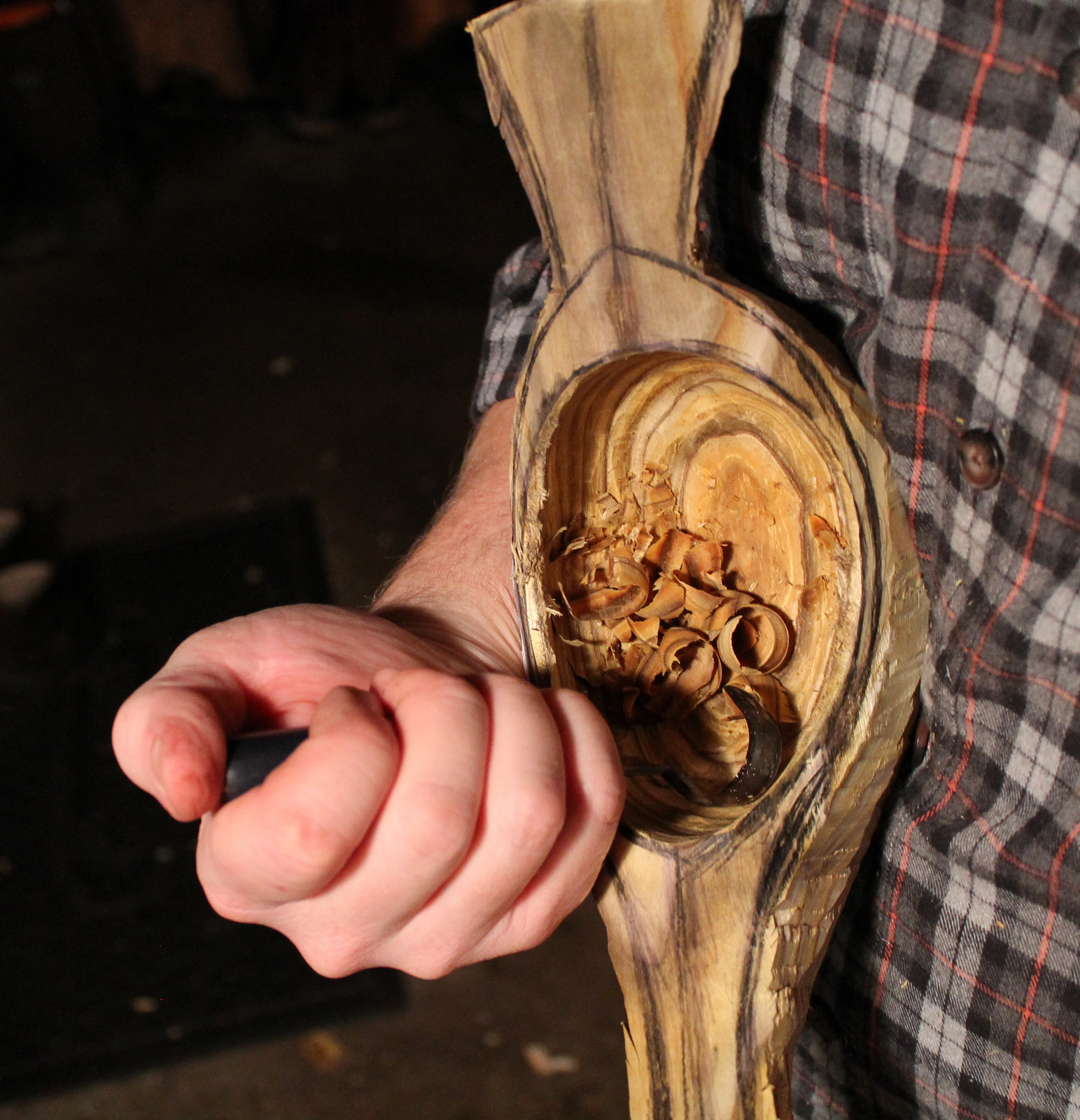
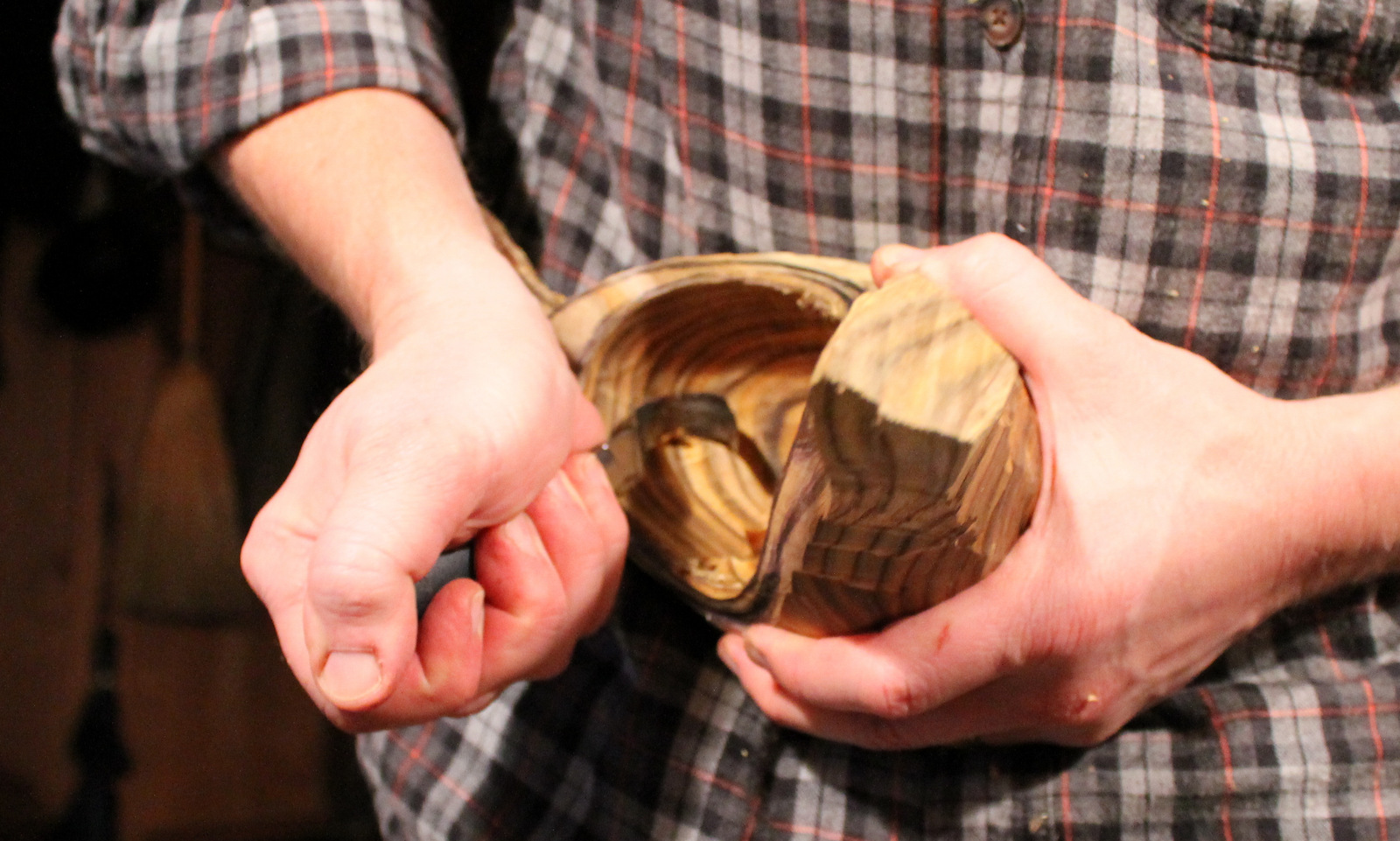
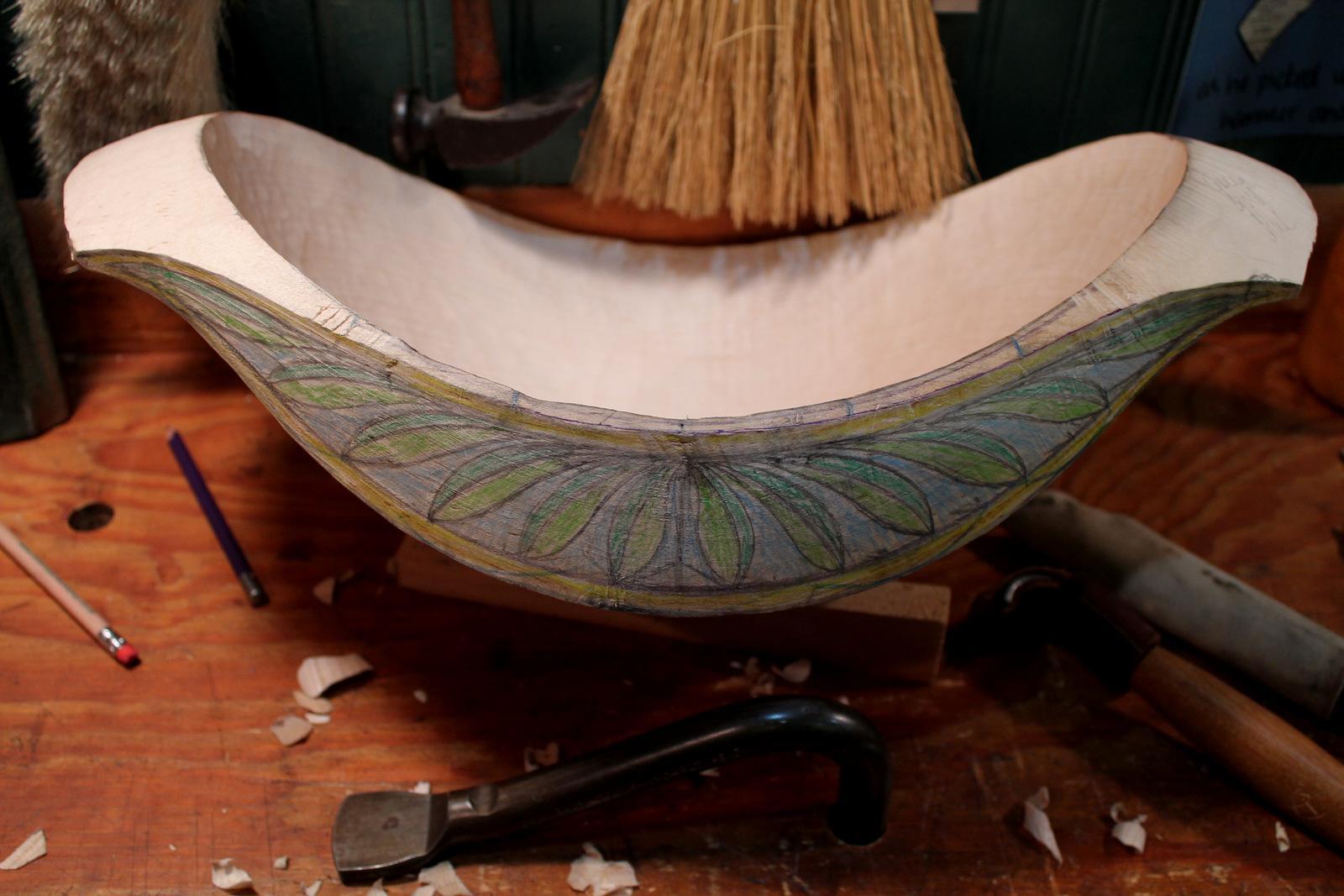
I was reminded of this once again as I was paring the interior of this maple bowl a couple days ago. I had been working for about ten minutes and the gouge was cutting, but maybe not as sweetly as I’d have liked. The amount of effort required to propel a tool and the quality of the wood surface left behind provide feedback, but I also find a quick and simple test often helps to confirm suspicions of an edge in need of a touch-up.
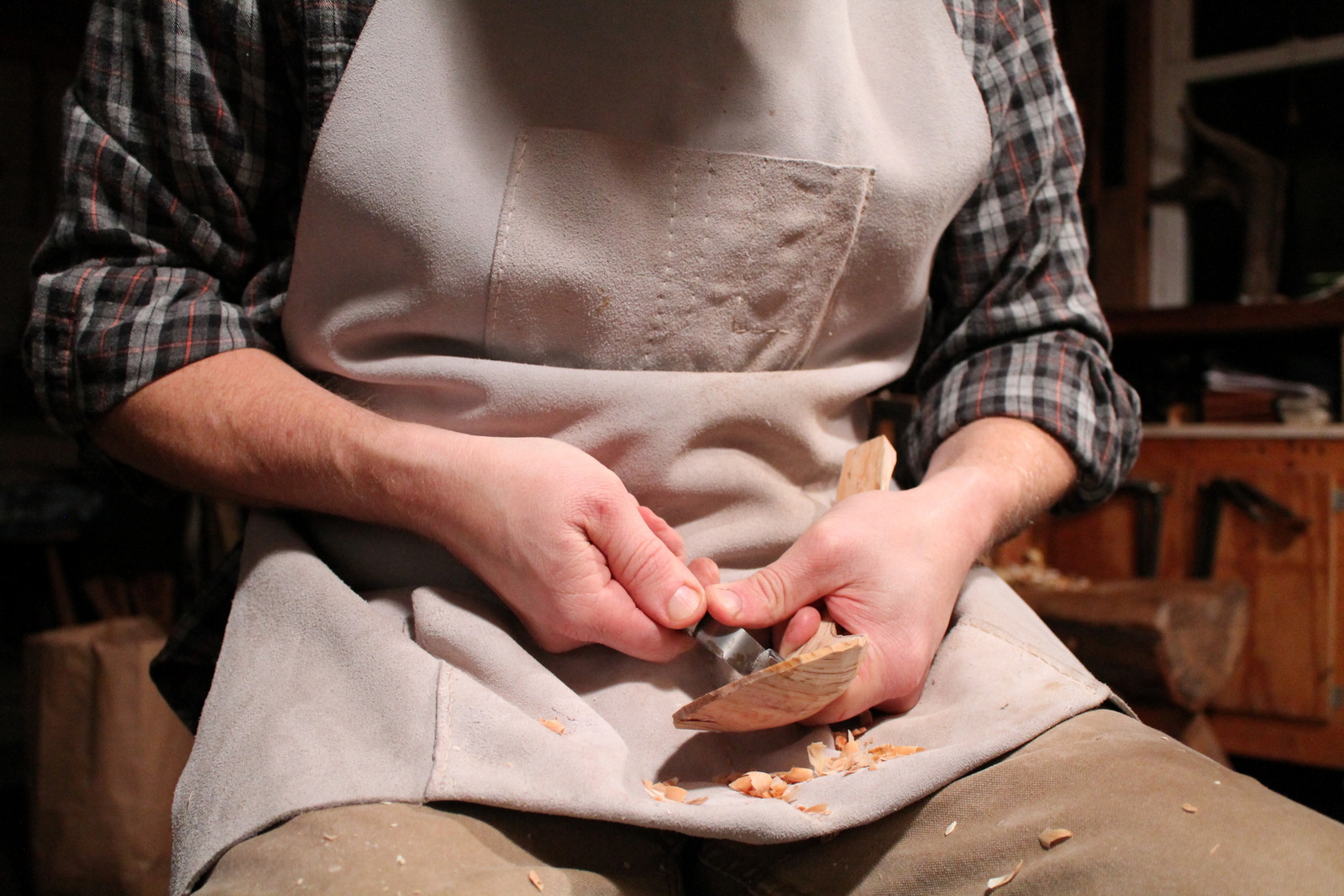
I hold the gouge (or chisel, knife, axe…) very lightly and at a shallow angle to my thumbnail. With just the slightest of pressure — no more than the weight of the tool, for most tools, less — the edge should bite instantly rather than slide down the thumbnail. In the case of my gouge, only the wings of the edge bit instantly, the more-used middle portion slid.
Often, a bit of stropping is all it takes to get back to work. But eventually the area near the very edge of the tool becomes too rounded. You’ll find that the tool has to be raised to a much higher angle to get a good thumbnail bite. So the thumbnail test not only tells you about the sharpness of the very edge, but also about the geometry near the edge. It may tell you it is time for a touch up on a stone, as it did for me in this case.
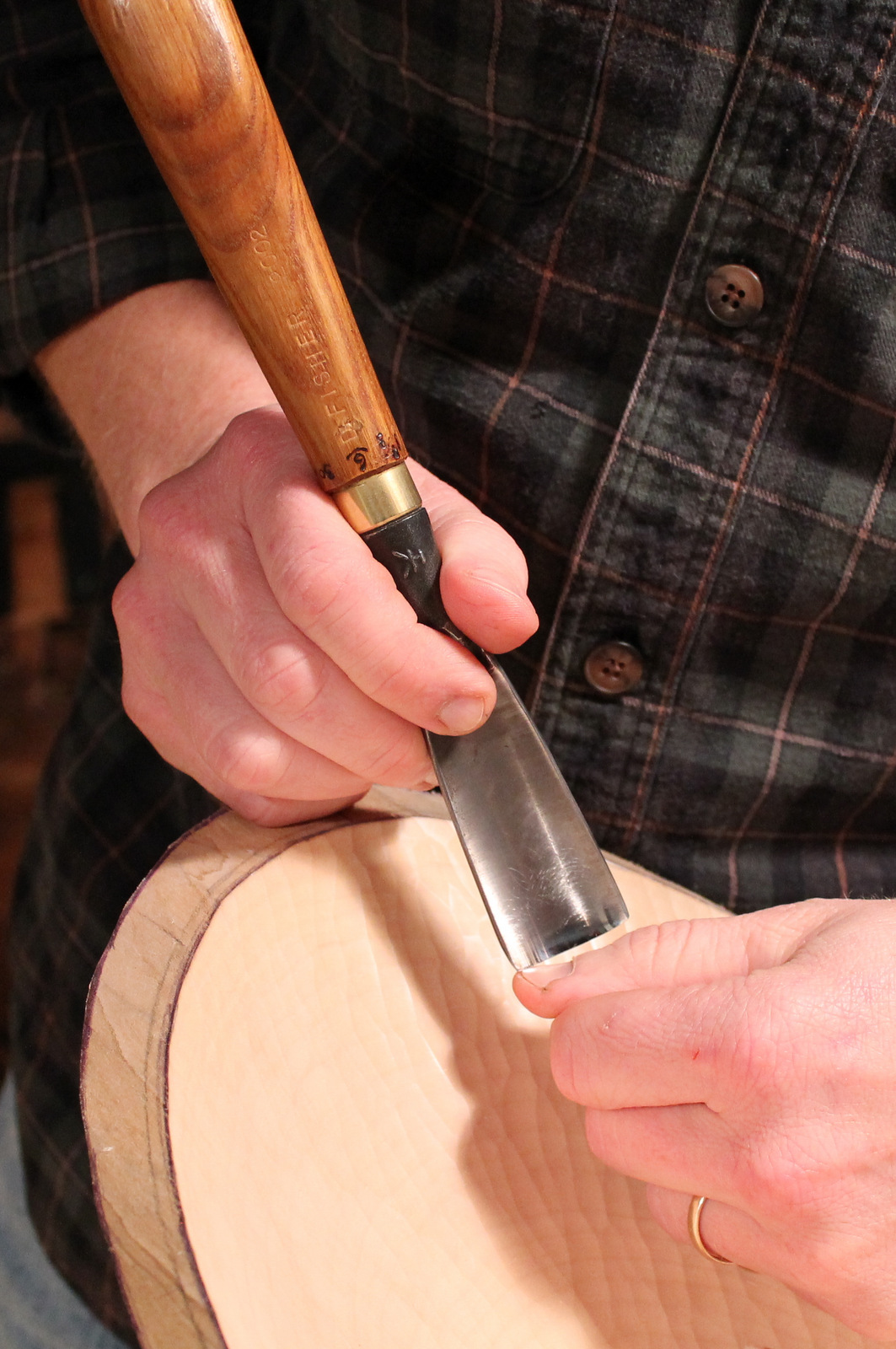
Start at the far corner of the edge…
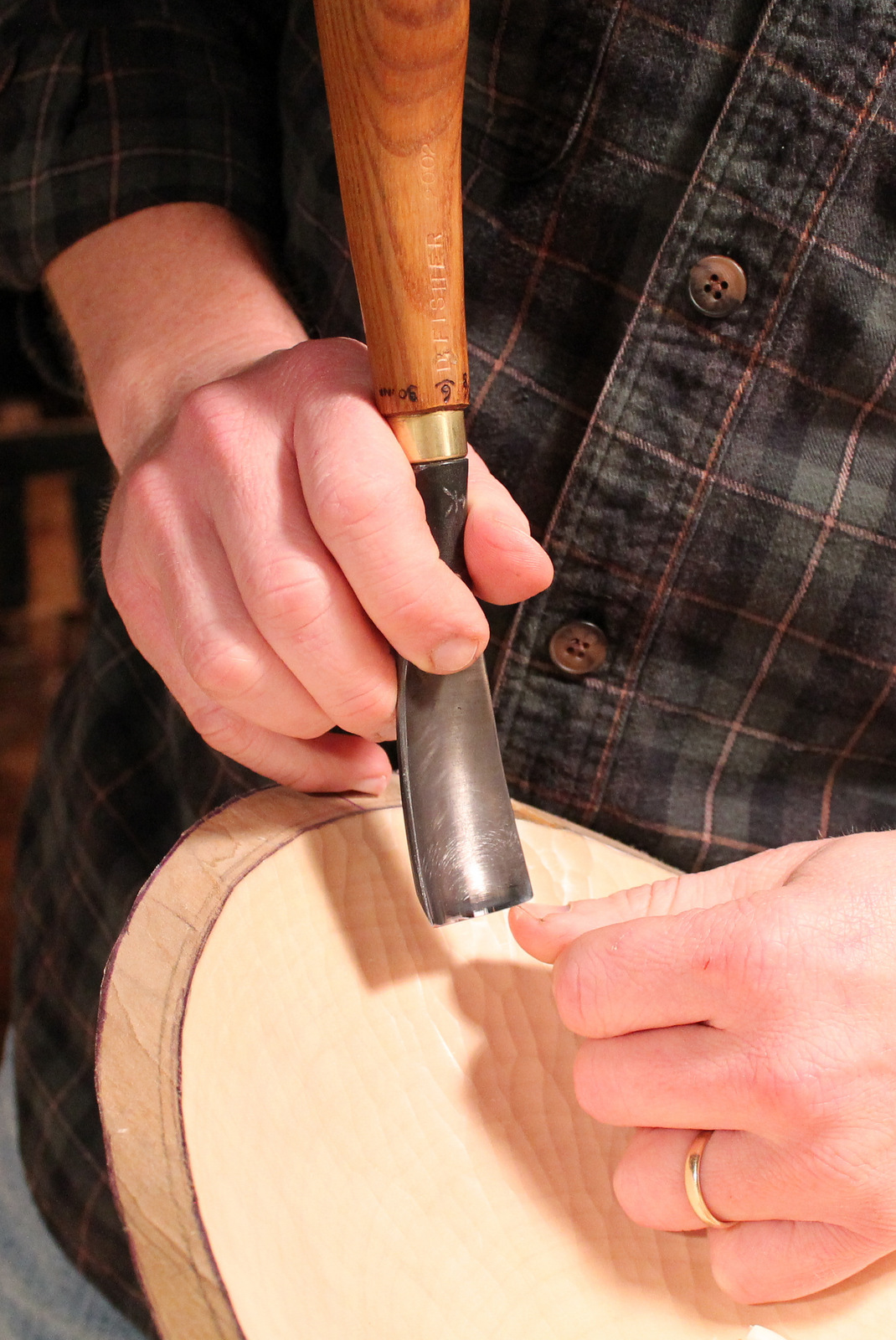
…and slide the tool forward with the lightest pressure along the edge of the thumbnail. Obviously, avoid contact with any skin in front of the nail.
Another thumbnail test involves running the edge of the tool very lightly along the end of the thumbnail. I often do this test during the final stages of sharpening. It will reveal even the slightest of nicks or wire-edge remnants. It is amazing how something imperceptible to the naked eye can be revealed through a vibration transferred through the thumbnail. This one might make observers cringe, but there is really no danger if you’re careful.
You might wonder why a thumbnail? Why not a scrap piece of wood, or something else not attached to your body? What about my manicure? I think the best answer is feel. You feel the subtle bite not only with the hand holding the tool, but in the thumb as well. You receive more information. You will not end up with gouges in your thumbnail; the edge leaves just the slightest of nicks. Plus, thumbnails just seem to be about the right hardness — and they’re always there when you need them! I guess that’s what they’re there for.










 David Fisher, Carving Explorations