
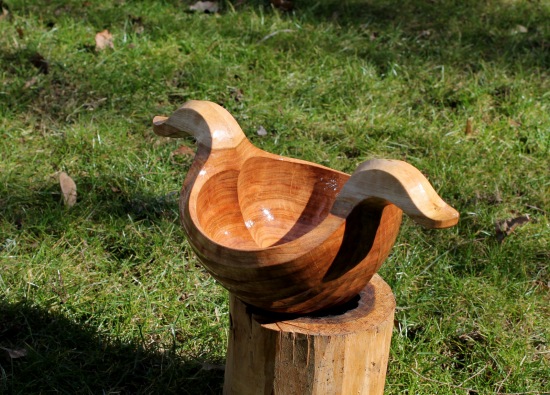
I’ve carved several of these horse-head ale bowls now, and each one seems to end up with it’s own personality. Much of that, thankfully, happens in spite of me. Each log is different, imparting it’s character on the finished piece. And much of the final design is a result of spontaneous decisions made with the knife, rather than with a pencil long before.
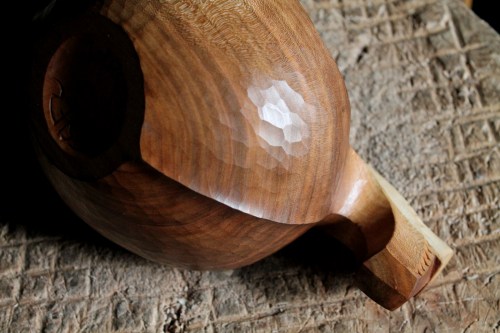 This one in cherry brings to my mind a team of workhorses, a lovely thought. I live in an area where one can still see Amish farmers working with teams of horses, but I’ve not had the opportunity to spend much time on a farm, and, admittedly, my knowledge of horses is so limited that I may have a difficult time distinguishing a mare from a stallion. Still, whenever I am around one (like Sue, the beautiful haflinger at the home of my brother-in-law and sister-in-law), there is no denying the magnificence and magnetism of a horse, and it is easy to understand why they have a special place in the hearts of so many.
In the horse barn at a local fair, the workhorses strike me with awe and feelings of nostalgia. To think of the work that was done with such muscle power before the advent of the internal combustion engine….
James Herriot wrote of this transition in his story “A Change of Horse Power for Cliff” which begins:
Probably the most dramatic occurrence in the history of veterinary practice was the disappearance of the draught horse. It is an almost incredible fact that this glory and mainstay of the profession just melted quietly away within a few years. And I was one of those who was there to see it happen.
The story goes on to describe the personal attachment, even love, that practical men such as Cliff had for their horses. It reminds me of Gary Paulsen’s depiction of Bill and Bob, a team of workhorses in his book Harris and Me. When my son was younger, we enjoyed reading many of Paulsen’s books together, including the well-known Hatchet. But none was more touching, or made us laugh more, than Harris and Me.
The book tells of a childhood summer spent on a Midwestern farm in the late ’40s and the adventures of two cousins that become close friends. Bill and Bob are a constant presence:
Then, from a stand of poplars close to the river, two huge grey horses walked out into the open… They weren’t just big, they were almost prehistoric — like two hair-covered dinosaurs walking slowly up from the river — and when they moved closer I could see that very little of their bulk was fat. Bunched beneath the skin on their rear ends and in their shoulders were great bulges of muscles.
Everything about them was massive. Huge heads that lowered to nuzzle Knute’s hand while he stood in the back of the barn, enormous round feet that sunk forever into the mud in back of the barn, great, soulful brown eyes that somehow made me want to hug the giants.
There’s a scene later in the book of a plan involving Bill that the boys cook up after watching too many Gene Autry movies that may make you pee your pants, especially if you’re old enough to remember Gene Autry.

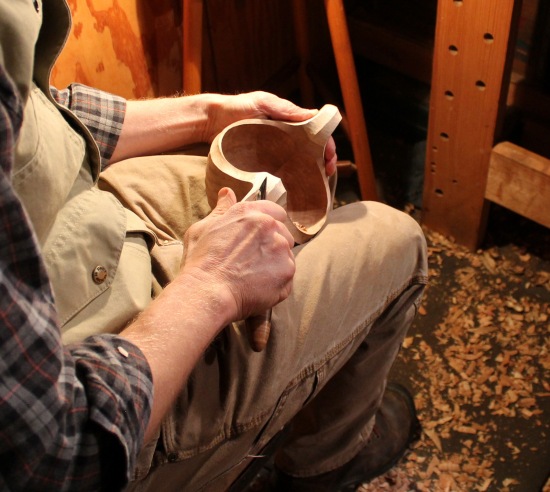
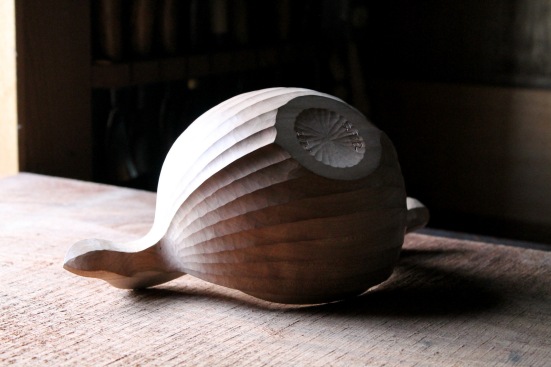
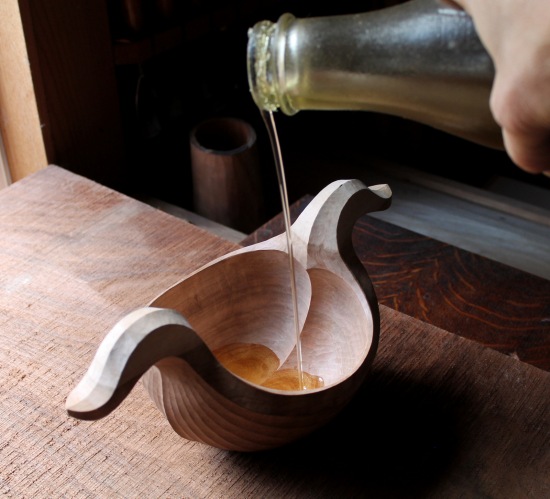
It’s not a complete accident that this bowl made me think of work horses. I decided to make the neck a little thicker and the face a little nobler. I thought the bold tool marks along the back of the neck added a feeling a strength as well. And it holds a bold draft of ale, topping out at about 24 ounces.
One final workhorse reference is this episode of the BBC’s Edwardian Farm series, the beginning of which discusses the transition from horses to tractors. Set just before World War I, this episode also includes a portable sawmill, a blacksmith, and hedgerow laying. This series is just one of many of the brilliant BBC productions in the same family.




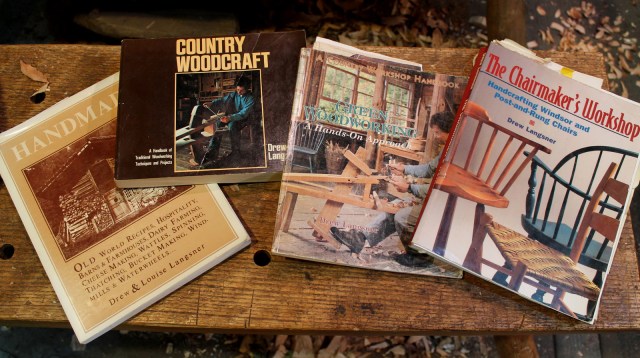 There was a time when I didn’t know an adze from a hoe in the ground, then I found Drew Langsner. Here was a guy who could make anything from a tree, and explain the process in writing so that even I could understand it. His

 “Let’s see where this road goes,” my dad would say as he turned the car onto an unknown route. We’d wander around back roads, unencumbered by any sweetly demanding GPS voice. We would see old farms that were new to us, and stop to look down into an unknown stream. I often assumed we were completely lost. Yet we always, magically it seemed, found the way home, richer from the adventure.
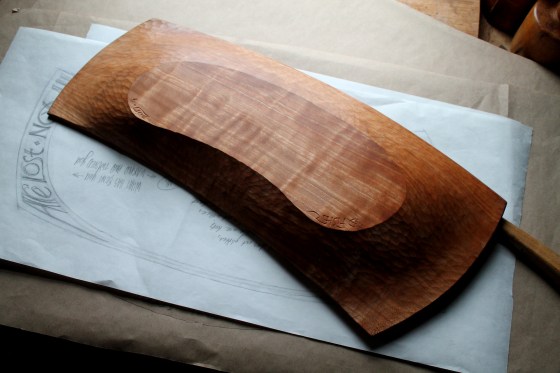

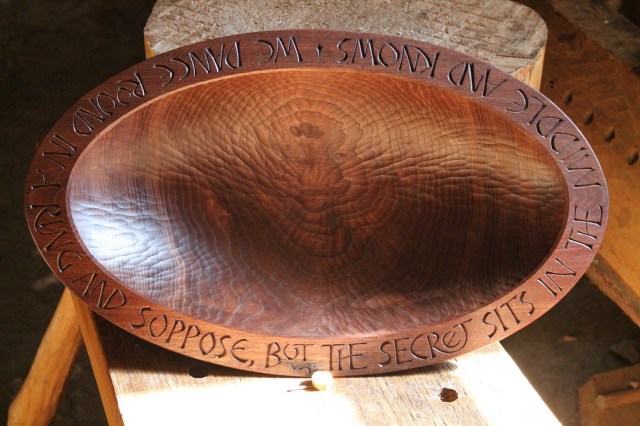
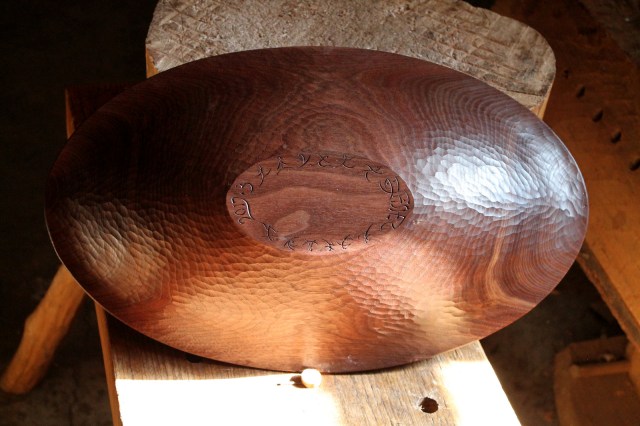


 Since I listed a spokeshave on my tools-to-bring list for the Greenwood Fest class, I’ve received a couple questions about choosing and using one.
 After doing all the hollowing and hewing at the block, refine the surfaces with a spokeshave. The bowl can be held steady by leaning into it while the opposite end is registered in a notch in the edge of the block or against a stop on the far side. A couple woooden pegs could substitute for the integral upper stop.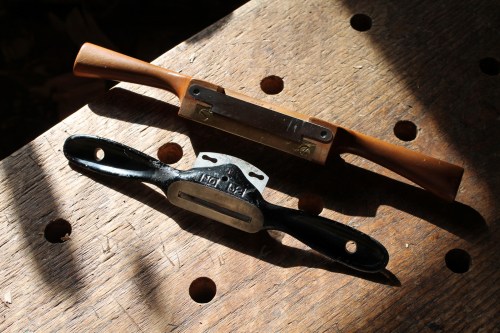
 The one’s I use most are a standard metal shave by Stanley and a low angle shave I made from a Ron Hock blade and some apple firewood many years ago. I do prefer the old Stanley #52 to their #51. The handles are lower — more in line with the blade, so it’s easier to control.


 David Fisher, Carving Explorations